New
Hindi Medium: (Delhi) - GS Foundation (P+M) : 10th Aug 2026, 3:00 PM Hindi Medium: (Prayagraj) - GS Foundation (P+M) : 18th Aug 2026, 8:00 AM English Medium: (Delhi) - GS Foundation (P+M) : 6th Aug 2026 English Medium: (Prayagraj) - GS Foundation (P+M) : 19th Aug 2026, 8:00 AM Hindi Medium: (Delhi) - GS Foundation (P+M) : 10th Aug 2026, 3:00 PM Hindi Medium: (Prayagraj) - GS Foundation (P+M) : 18th Aug 2026, 8:00 AM English Medium: (Delhi) - GS Foundation (P+M) : 6th Aug 2026 English Medium: (Prayagraj) - GS Foundation (P+M) : 19th Aug 2026, 8:00 AM

Current Affairs for 21 August 2026

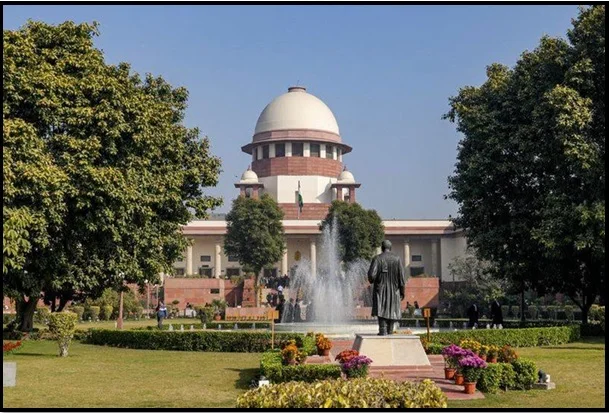
Supreme Court Modifies ‘Industry’ Definition: Bangalore Water Supply Case & Triple Test Explained

Why in News?

  • A nine-judge Constitution Bench of the Supreme Court has modified the broad interpretation of the term “industry” laid down in the landmark Bangalore Water Supply & Sewerage Board v. R. Rajappa (1978) judgment.
  • The Court held that the refined interpretation will apply prospectively to fresh cases under the Industrial Relations Code, 2020, and will not affect pending or already decided disputes under the repealed Industrial Disputes Act, 1947.

Background

  • In the 1978 Bangalore Water Supply case, a seven-judge Bench gave a broad and worker-friendly interpretation to the term “industry”.
  • The judgment held that even organisations engaged in non-profit activities could qualify as an industry if they satisfied the prescribed “triple test”.
  • Over the years, conflicting judicial interpretations emerged, particularly regarding whether government welfare departments and charitable activities should be treated as industries.
  • In 2005, a five-judge Constitution Bench referred the issue to a larger Bench. Subsequently, in 2017, the matter was placed before a nine-judge Bench because of its “serious and wide-ranging implications”.

What was the 1978 “Triple Test”?

According to the Bangalore Water Supply judgment, an organisation could be considered an industry if the following conditions were satisfied:

  1. Systematic and organised activity was being carried out;
  2. The activity involved cooperation between employer and employees; and
  3. The activity was directed towards the production or distribution of goods and services.

Under this broad interpretation, the profit motive was not essential for an organisation to be treated as an industry.

Supreme Court’s Latest Verdict

The nine-judge Bench delivered its verdict by a 5:4 majority.

Key Rulings

  • The Supreme Court retained the basic framework of the 1978 triple test. However, it held that certain aspects of the test and its accompanying guidelines required further refinement.
  • The indiscriminate application of the triple test should not result in an unwarranted expansion of the definition of industry.
  • The Court accepted the need to distinguish genuine industrial activities from certain government welfare and charitable functions.
  • The ruling will operate prospectively.
  • It will not apply to pending or already decided cases under the Industrial Disputes Act, 1947.
  • The Court did not examine or interpret the new statutory definition of “industry” under the Industrial Relations Code, 2020.

Centre’s Stand

The Union government argued that the broad application of the 1978 judgment had expanded the scope of “industry” excessively.

According to the Centre:

  • Welfare activities undertaken by the State should not automatically be classified as industries.
  • Charitable and public welfare functions require a different legal treatment.
  • The mechanically broad application of the triple test could bring several non-industrial activities within labour law unnecessarily.

The Attorney General argued that although the triple test was logically sound, its indiscriminate application had resulted in an over-expansive interpretation.

Timeline of the Dispute

Year

Development

1978

Seven-judge Bench in Bangalore Water Supply gave a broad definition of “industry”.

1996

A three-judge Bench held that the Social Forestry Department could fall within the definition of industry.

2001

Another Bench took a different view, creating an apparent conflict.

2005

A five-judge Constitution Bench referred the issue to a larger Bench.

2017

A seven-judge Bench referred the matter to a nine-judge Bench due to its wide-ranging implications.

2026

Nine-judge Bench refined the 1978 interpretation by a 5:4 majority.

What is the Industrial Relations Code, 2020?

The Industrial Relations Code, 2020 is one of India's four consolidated labour codes. It seeks to rationalise and consolidate laws relating to:

  1. Trade unions;
  2. Conditions of employment in industrial establishments;
  3. Investigation and settlement of industrial disputes.

It replaces and consolidates provisions of:

  1. Trade Unions Act, 1926;
  2. Industrial Employment (Standing Orders) Act, 1946; and
  3. Industrial Disputes Act, 1947.

Significance of the Judgment

  1. Clarifies the Scope of Labour Laws :-The judgment seeks to prevent an excessively broad interpretation under which almost every organised activity involving employees could be treated as an industry.
  2. Protects the Basic Worker-Oriented Framework :-The Court has not completely discarded the 1978 triple test. Instead, it has refined its application.
  3. Greater Clarity for Government Activities :-The ruling is important for determining whether welfare, charitable and sovereign functions performed by the government can be subjected to industrial dispute mechanisms.
  4. Prospective Application Ensures Legal Stability ;-By applying the ruling prospectively, the Court has avoided reopening settled disputes and creating uncertainty in pending cases.
  5. Important for Labour Law Reforms :-The judgment assumes significance in the context of the transition from the Industrial Disputes Act, 1947 to the Industrial Relations Code, 2020.

UPSC Prelims MCQs

Q1. With reference to the Supreme Court’s interpretation of the term “industry”, consider the following statements:

  1. The 1978 Bangalore Water Supply & Sewerage Board v. R. Rajappa judgment was delivered by a seven-judge Bench. 
  2. The judgment held that profit motive is essential for an activity to qualify as an industry. 
  3. The judgment evolved the “Triple Test” for determining whether an activity constitutes an industry. 

Which of the statements given above is/are correct?

A. 1 and 3 only

B. 2 and 3 only

C. 1 and 2 only

D. 1, 2 and 3

FAQs: Supreme Court Modifies ‘Industry’ Definition

Q1. Which landmark judgment on the definition of “industry” has the Supreme Court modified?

Answer: The Supreme Court has modified the broad interpretation of “industry” laid down in the Bangalore Water Supply & Sewerage Board v. R. Rajappa (1978) judgment.

Q2. What was the significance of the 1978 Bangalore Water Supply judgment?

Answer: A seven-judge Bench gave a broad and worker-friendly interpretation of “industry” and held that the profit motive was not essential for an activity to qualify as an industry.

Q3. What is the “Triple Test” laid down in the 1978 judgment?

Answer: The Triple Test considers three key factors:

  1. Systematic and organised activity
  2. Cooperation between employers and employees; and 
  3. Production or distribution of goods and services.

31st Southern Zonal Council Meeting: Members, Functions, Composition and Significance

Prelims: Indian Polity and Governance – Constitution, Political System, Federalism, Centre-State Relations and Statutory Bodies
Mains: GS Paper II: Functions and responsibilities of the Union and the States; issues and challenges pertaining to the federal structure; Centre-State relations and cooperative federalism.

Why in the News

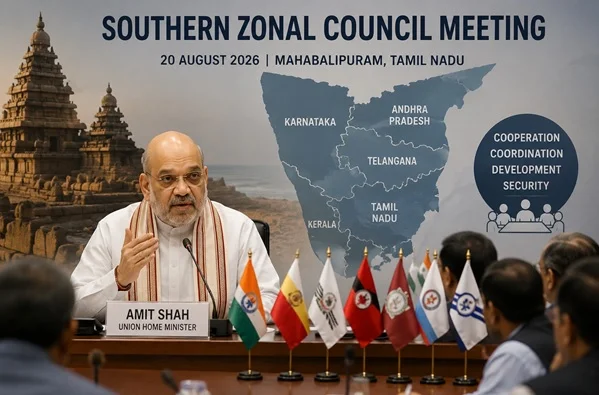
Union Home Minister and Minister of Cooperation Amit Shah chaired the 31st meeting of the Southern Zonal Council (SZC) on August 20, 2026, in Mahabalipuram, Tamil Nadu. The meeting brought together representatives of southern states and Union Territories to discuss important Centre-State and inter-State issues and strengthen regional cooperation.
Key facts 

Aspect

Details

Meeting 

31st Southern Zonal Council Meeting

Date 

20 August 2026

Venue 

Mahabalipuram, Tamil Nadu

Chairperson

Union Home Minister Amit Shah

Organised by

Inter-State Council Secretariat, Ministry of Home Affairs

Host 

Government of Tamil Nadu

Nature of Zonal Councils 

Statutory and advisory bodies

Legal Basis 

States Reorganisation Act, 1956

What are Zonal Councils?

  • Zonal Councils are statutory bodies created to promote cooperation and coordination among states and between the Centre and states. 
  • The idea of such councils was proposed by Prime Minister Jawaharlal Nehru in 1956 in the context of the reorganisation of states. They were intended to reduce tensions arising from linguistic reorganisation and develop a habit of cooperative working among states.
  • They are statutory bodies, established under Part III, Sections 15–22 of the States Reorganisation Act, 1956.

How Many Zonal Councils are there?

The States Reorganisation Act, 1956 provides for five Zonal Councils:

  • Northern Zonal Council (Haryana, Himachal Pradesh, Punjab, Rajasthan, Chandigarh, Delhi, Jammu & Kashmir, Ladakh)
  • Central Zonal Council (Chhattisgarh, Madhya Pradesh, Uttar Pradesh, Uttarakhand)
  • Eastern Zonal Council (Bihar, Jharkhand, Odisha, West Bengal) 
  • Western Zonal Council (Goa, Gujarat, Maharashtra, Dadra & Nagar Haveli and Daman & Diu)
  • The North-Eastern region has a separate institutional mechanism known as the North Eastern Council (NEC). The NEC was established under the North Eastern Council Act, 1971 and became operational in 1972. It is different from the five Zonal Councils established under the States Reorganisation Act.
  • Southern Zonal Council (Andhra Pradesh, Karnataka, Kerala, Tamil Nadu, Telangana, Union Territories, Puducherry, Andaman and Nicobar Islands, and Lakshadweep) 

Composition of Zonal Councils

  • Under the States Reorganisation Act, the broad structure includes Chairman, The Union Home Minister chairs the Zonal Councils, Vice-Chairman, One of the Chief Ministers of the member states acts as Vice-Chairman by rotation. 
  • The councils include Chief Ministers of member states, two ministers from each member state, Representatives of the concerned Union Territories, senior officials from the Centre and states. 
  • The Act provides for the Union Minister nominated by the President to chair the Council and for Chief Ministers to serve as Vice-Chairman by rotation.

What Issues Can Zonal Councils Discuss?

Zonal Councils can deliberate on matters of common regional interest, particularly where cooperation between multiple governments is required.

  • Inter-State Water Disputes: Southern India has several sensitive river-water issues involving states such as Karnataka, Tamil Nadu, Andhra Pradesh, Telangana and Kerala. Water sharing therefore remains an important area where political dialogue and coordination are necessary.
  • Inter-State Disputes: Disagreements concerning boundaries, resources, administration or implementation of agreements can be discussed.
  • Infrastructure and Connectivity: States can coordinate on highways, railways, transport, power infrastructure, and regional connectivity
  • Internal Security: Coordination becomes important for issues such as drug trafficking, organised crime, cybercrime, cross-border criminal networks, and inter-state policing. 
  • Social Sector Issues: States and the Centre can coordinate policies relating to education, health, women and child safety, and social welfare.
  • State Reorganisation Issues: Pending issues resulting from state reorganisation can also be discussed. This is particularly significant for Andhra Pradesh and Telangana in relation to matters arising from the Andhra Pradesh Reorganisation Act.

Important Issues at the 31st Meeting

  • Reports from the meeting indicated discussion of a broad range of regional concerns, including inter-state disputes, security, development priorities, river-water questions and centre-state coordination.
  • Some southern-state representatives also raised wider federal questions such as fiscal federalism and political representation/delimitation, while water-related projects and disputes continued to feature prominently in discussions.

Objectives of Zonal Councils

The major objectives can be understood through five broad ideas:

  • Cooperation: Encouraging states to work together instead of approaching every disagreement as a political dispute.
  • Coordination: Improving coordination between the Union Government and State Governments.
  • Conflict Resolution: Providing an institutional forum where inter-State problems can be discussed before they become larger disputes.
  • National Integration: Reducing regional tensions and strengthening mutual understanding among different states. The Ministry of Home Affairs describes Zonal Councils as mechanisms for resolving inter-State and Centre-State problems and promoting balanced regional development and harmonious relations.
  • Role in Cooperative Federalism: India has a federal political system in which the Union and states have constitutionally defined responsibilities. However, many modern governance problems such as water management, transport, migration, internal security and infrastructure cross state boundaries.

Significance of the Southern Zonal Council

  • Platform for Inter-State Dialogue: It brings neighbouring states together to discuss disputes directly instead of relying only on courts or political confrontation.
  • Strengthens Centre-State Relations: Regular interaction between Union and State governments improves coordination and communication.
  • Helps Resolve Regional Problems: Many problems such as water sharing, transportation, infrastructure and security have an inter-State dimension.
  • Encourages Consensus-Based Governance: The councils are primarily advisory, making dialogue and consensus their principal tools.
  • Supports Balanced Regional Development: States can coordinate development priorities and infrastructure projects affecting the wider region.
  • Strengthens National Integration: Institutional dialogue helps reduce regional tensions and creates greater trust among states.

Limitations of Zonal Councils

  • Advisory Nature: Their recommendations are not legally binding on states or the Union Government.
  • Political Differences: Political disagreements between governments can prevent consensus.
  • Complex Inter-State Disputes: Long-standing issues such as river-water disputes may require judicial, tribunal or other statutory mechanisms in addition to Zonal Council discussions.
  • Implementation Gap: Agreement during meetings does not automatically guarantee timely implementation.
  • Need for Regular Follow-up: Effective functioning depends on continuous monitoring through Standing Committees and concerned ministries.

Way Forward

  • Zonal Councils should be strengthened through regular meetings, time-bound implementation of agreed decisions and stronger follow-up by Standing Committees. 
  • They should complement constitutional, judicial and statutory mechanisms while serving as an effective platform for cooperative and competitive federalism.

Prelims MCQ

Q. With reference to the Zonal Councils in India, consider the following statements:

  1. Zonal Councils are statutory bodies established under the States Reorganisation Act, 1956.
  2. The Union Home Minister is the Chairman of each Zonal Council.
  3. The North Eastern Council is one of the five Zonal Councils.

Which of the statements given above are correct?

(a) 1 and 2 only

(b) 2 and 3 only

(c) 1 and 3 only

(d) 1, 2 and 3

Mains Practice Question 

Q. Despite being advisory bodies, Zonal Councils play an important role in India's federal architecture. Critically examine.

FAQs

What are Zonal Councils?

They are statutory regional forums for promoting Centre-State and inter-State cooperation.

Under which law were Zonal Councils established?

They were established under the States Reorganisation Act, 1956.

Who is the Chairman of Zonal Councils?

The Union Home Minister is the Chairman of each Zonal Council.

What is the main purpose of Zonal Councils?

To promote cooperation, resolve inter-State issues and strengthen regional coordination.

Which states are members of the Southern Zonal Council?

Andhra Pradesh, Karnataka, Kerala, Tamil Nadu and Telangana.

World Senior Citizens' Day 2026: History, Significance, Senior Citizens’ Rights, Government Schemes and Challenges

Why in News?

World Senior Citizens' Day is observed every year on 21 August to honour older adults for their achievements and contributions, and to draw attention to the challenges they face in health, financial security, dignity, and social inclusion.

Key Facts 

Aspect

Details

Observed on

21 August every year

First observed

21 August 1988

Origin

United States

Associated with

US President Ronald Reagan

Purpose

Recognising senior citizens and promoting their dignity, welfare and participation

Senior Citizen in India

Generally a person aged 60 years or above

Key Indian Ministry

Ministry of Social Justice and Empowerment

Major Indian legislation

Maintenance and Welfare of Parents and Senior Citizens Act, 2007

History and Background

  • In 1988, the US Congress designated 21 August 1988 as National Senior Citizens Day. Subsequently, President Ronald Reagan issued Proclamation 5847 on 19 August 1988, formally proclaiming 21 August as National Senior Citizens Day.
  • The proclamation recognised the contribution of older citizens to families, communities and the nation and emphasised creating communities where older people could continue to live with independence and dignity.
  • The observance gradually moved beyond the United States and is now marked informally in many countries including India, the UK, Australia, and several Asian and African nations through community events, felicitation programmes, health camps, and media campaigns.

Confusion With Other Days 

International Day of Older Persons

1 October

UN General Assembly Resolution 45/106 (1990)

World Elder Abuse Awareness Day 

15 June

UN General Assembly in 2011

Why is it important?

  • Improvements in healthcare, nutrition and living conditions have increased life expectancy in many parts of the world. At the same time, declining fertility means that older persons are forming an increasingly large proportion of the population.
  • This demographic transition affects healthcare systems, pension systems, social security, labour markets, housing and urban planning, family-based care systems, digital accessibility, and long-term and geriatric care. 

Major Challenges 

  • Healthcare Challenges: Older people are more vulnerable to chronic and age-related diseases and may require regular healthcare, rehabilitation and long-term care. 
  • Financial Insecurity: UNFPA's India Ageing Report noted that more than 40% of elderly persons were in the poorest wealth quintile, while around 18.7% lived without an income.
  • Feminisation of Ageing: Women generally have greater longevity than men. However, many elderly women face widowhood, lower lifetime earnings, and limited ownership of assets, financial dependence, and inadequate pension coverage. 
  • Elder Abuse: Senior citizens may experience physical abuse, emotional abuse, financial exploitation, neglect, abandonment, and property-related disputes. Protection of the life, dignity and property of senior citizens is therefore a significant governance concern.
  • Loneliness and Social Isolation: Urbanisation, migration and the shift from joint to nuclear families can leave some elderly persons socially isolated. Loneliness can also affect mental health and overall quality of life.
  • Dementia and Mental Health: Age-related cognitive conditions such as dementia and Alzheimer's disease require specialised care and greater social awareness. Stigma surrounding mental-health and cognitive conditions remains a concern.
  • Accessibility and Mobility: Public transport, buildings, footpaths, housing and public spaces are often not designed according to the needs of elderly persons or people with reduced mobility.

Constitutional Provisions Related to Senior Citizens

Article 21

The constitutional guarantee of life and personal liberty has developed through judicial interpretation into a broad protection of life with dignity, which is highly relevant to elderly welfare.

Article 41

This article directs the State, within its economic capacity and development, to make effective provision for public assistance in cases including old age, sickness and disablement.

Article 47

Directs the improvement of public health and nutrition.

Maintenance and Welfare of Parents and Senior Citizens Act, 2007

  • This is India's principal legislation dealing specifically with the welfare and maintenance of parents and senior citizens. The Act seeks to provide more effective legal provisions for their maintenance and welfare. Some provisions are: 
    • Maintenance: Parents and eligible senior citizens who cannot maintain themselves can seek maintenance from children or specified relatives.
    • Maintenance Tribunals: The Act provides for Maintenance Tribunals to deal with maintenance claims.
    • Old-age homes: Section 19 provides for the establishment of old-age homes.
    • Medical support: Section 20 deals with medical support for senior citizens.
    • Protection of property: Section 23 provides protection in situations involving transfer of property subject to the transferee providing basic amenities and care.
    • Abandonment: The Act contains provisions concerning exposure and abandonment of senior citizens.

Global and Institutional Response

  • Madrid International Plan of Action on Ageing (MIPAA), 2002: Adopted at the UN's Second World Assembly on Ageing, it remains the primary global policy framework guiding national responses to population ageing, built around three priority directions older persons and development, advancing health and well-being into old age, and ensuring enabling and supportive environments.
  • UN Principles for Older Persons (1991): Set out core principles of independence, participation, care, self-fulfilment, and dignity that should guide the treatment of older persons.
  • World Health Organization's Decade of Healthy Ageing (2021-2030): A global collaborative launched by the WHO, together with UN partners, to improve the lives of older people, their families, and communities through four pillars-combating ageism, developing age-friendly environments, delivering integrated care, and providing access to long-term care.

India-Specific Framework

  • Maintenance and Welfare of Parents and Senior Citizens Act, 2007: Makes it a legal obligation for children and legal heirs to provide maintenance to senior citizens and parents, and establishes Maintenance Tribunals for speedy redress; it also empowers authorities to evict children/relatives who neglect senior citizens residing in properties owned by them.
  • National Policy on Older Persons (1999) and National Policy for Senior Citizens (2011): Provide the broad policy framework for state support to income security, healthcare, shelter, welfare, and protection of life and property of older persons.
  • Atal Vayo Abhyuday Yojana (AVYAY): An umbrella scheme of the Ministry of Social Justice and Empowerment that consolidates sub-schemes for the welfare of senior citizens, including old-age homes, day-care centres, and the Rashtriya Vayoshri Yojana for distribution of assistive devices to senior citizens from the BPL category.
  • Rashtriya Vayoshri Yojana: Provides free aids and assisted-living devices-walking sticks, wheelchairs, hearing aids, spectacles, and artificial dentures-to senior citizens belonging to the Below Poverty Line category.
  • Indira Gandhi National Old Age Pension Scheme (IGNOAPS): A component of the National Social Assistance Programme providing a monthly pension to elderly persons living below the poverty line.
  • Income-tax and other concessions: Senior and "super senior" citizens in India receive higher income-tax exemption limits, concessional rates on select train and air travel, priority healthcare access, and preferential treatment in various public services.
  • Ayushman Bharat PM-JAY (Vay Vandana card, 2024 expansion): Extended free health-insurance coverage to all senior citizens aged 70 and above, regardless of income, marking a significant expansion of elder healthcare Senior Citizens and the Sustainable Development Goals

Links with SDGs:

SDG 1 (No Poverty)

Social protection and income security for elderly people

SDG 3 (Good Health and Well-being)

Universal access to geriatric and long-term healthcare

SDG 5 (Gender Equality)

Addressing vulnerabilities faced by elderly women

SDG 10 (Reduced Inequalities)

Preventing age-based discrimination and exclusion

SDG 11 (Sustainable Cities and Communities)

Developing accessible and age-friendly cities

SDG 16 (Peace, Justice and Strong Institutions)

Protecting older persons against abuse, exploitation and denial of rights access in India

Ageing Population in India

According to UNFPA's India Ageing Report 2023:

  • India had around 149 million persons aged 60 years and above in 2022.
  • They constituted approximately 10.5% of the population.
  • Their share is projected to reach approximately 20.8% by 2050.
  • By 2050, India could have around 347 million elderly persons.
  • By 2046, India's elderly population is projected to become larger than the population of children aged 0–15 years.
  • The report also projects that India's population aged 80 years and above could grow by around 279% between 2022 and 2050, with older women forming an especially vulnerable group.

Prelims MCQ

Q. With reference to World Senior Citizens’ Day, which of the following is correct?

A. It is observed on 21 August

B. It is observed on 1 October

C. It was established by WHO

D. It is observed only in India

Mains Practice Question 

Q. Examine the impact of India’s demographic transition on healthcare, social security and family-based elderly care systems.

FAQs

Who initiated Senior Citizens’ Day?

It is associated with US President Ronald Reagan, who proclaimed 21 August as National Senior Citizens Day in 1988.

Who is considered a senior citizen in India?

Under the 2007 Act, an Indian citizen aged 60 years or above is a senior citizen.

What is the International Day of Older Persons?

It is a UN-designated observance celebrated on 1 October every year.

What is Elderline?

Elderline 14567 is India's National Helpline for Senior Citizens.

What is AVYAY?

Atal Vayo Abhyuday Yojana is an umbrella scheme aimed at improving senior citizens’ quality of life.

Kuril Islands Dispute: History, Strategic Importance and Why Japan Opposes Russia

Why in News?

Russian President Vladimir Putin visited Iturup Island in the disputed Kuril Islands on August 13, 2026, triggering strong protests from Japan.

Key Points

  • The visit was particularly significant because it was reported as Putin's first in-person visit to the disputed island chain and came amid already strained Russia-Japan relations.
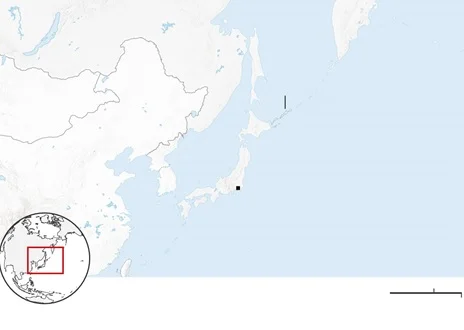
  • Japan considers Iturup and three other islands to be its “Northern Territories”, while Russia administers them as part of its Sakhalin Region and calls them the Southern Kuril Islands.

Where are the Kuril Islands Located?

  • The Kuril Islands are a volcanic archipelago in the North Pacific Ocean.

Key geographical facts

  • The archipelago comprises around 56 major islands and several smaller islets.
  • It stretches for approximately 1,200 km.
  • It lies between the Sea of Okhotsk and the Pacific Ocean.
  • The island chain extends from Russia's Kamchatka Peninsula towards Japan's Hokkaido.
  • Russia controls the entire Kuril Island chain.

The Four Disputed Islands

  • Japan claims sovereignty over four southern islands:
    • Iturup (Etorofu in Japanese) - the largest of the disputed islands
    • Kunashir (Kunashiri in Japanese)
    • Shikotan
    • Habomai Islands
  • Japan calls these islands the Northern Territories, whereas Russia refers to them as the Southern Kurils.

What is the Kuril Islands Dispute?

  • The dispute is a long-standing territorial conflict between Russia and Japan over the sovereignty of the four southernmost islands.
  • The Soviet Union took control of the islands at the end of the Second World War in 1945. Russia has administered them ever since.
  • However, Japan maintains that these four islands are historically and legally part of Japan and should not be considered part of the Kuril Islands that Japan renounced after World War II.

Why Are the Islands Important to Russia?

  • The Kuril Islands are important to Russia because they have rich fishing resources and potentially valuable mineral deposits. 
  • They are also strategically located between the Sea of Okhotsk and the Pacific Ocean. 
  • Russia has strengthened its military presence there because control of the islands provides its navy with year-round access to the Pacific Ocean, as the nearby sea route remains ice-free even in winter.

Historical Background of the Dispute

1. Treaty of Shimoda, 1855

  • The treaty established the boundary between Russia and Japan between Iturup and Urup islands.
  • Under Japan's interpretation, Iturup, Kunashir, Shikotan and Habomai were recognised as Japanese territory.

2. Treaty of St. Petersburg, 1875

  • Under this agreement:
    • Japan gave up its claims over Sakhalin.
    • In exchange, Russia transferred the Kuril Islands to Japan.

3. Russo-Japanese War and Treaty of Portsmouth, 1905

  • Following Japan's victory in the Russo-Japanese War, Japan gained the southern part of Sakhalin.

4. Second World War, 1945

  • Towards the end of World War II, the Soviet Union entered the war against Japan and occupied the Kuril Islands.
  • The Soviet Union subsequently established control over the islands and Japanese residents were removed.

5. San Francisco Peace Treaty, 1951

  • Japan renounced claims to the Kuril Islands under the treaty.
  • However, Japan argues that the four disputed islands are not part of the Kuril Island chain referred to in the treaty.
  • The Soviet Union did not sign the San Francisco Peace Treaty.

Why Does Russia Claim the Islands?

  • Russia argues that its sovereignty over the islands is based on the outcome of World War II and the post-war international settlement.
  • Moscow refers to arrangements associated with:
    • Yalta Agreement
    • Potsdam Declaration
    • The broader post-World War II territorial settlement
  • Russia maintains that the islands became Soviet territory following Japan's defeat and that the current territorial arrangement is an established historical and legal reality.

Why Did Putin Visit Iturup Island?

Putin's visit had both political and strategic significance.

1. Assertion of Russian Sovereignty

  • The visit sent a clear message that Moscow considers the islands an integral part of Russian territory.
  • Putin stated that the islands' current status emerged from the outcome of World War II and is reflected in international arrangements.

2. Strategic Importance

  • Iturup is the largest and strategically important of the four disputed islands.
  • Control over the southern Kurils gives Russia a significant geographical and military presence in the northwestern Pacific region.

3. Domestic Political Messaging

  • A presidential visit to the disputed territory also reinforces Russia's position before its domestic audience that Moscow will not compromise on national sovereignty.

4. Demonstrating Effective Control

  • During his visit, Putin reportedly visited:
    • A fish-processing plant
    • A hospital
    • A school
    • Local residents and regional officials
  • Such visits highlight Russia's de facto administration and development activities on the disputed territory.

Why Did Japan React So Strongly?

  • Japan described Putin's visit as “absolutely unacceptable” and lodged a strong protest.
  • Tokyo's objection is based on its position that:
    • The Northern Territories are an inherent part of Japan, both historically and under international law.
    • For Japan, a Russian President's visit is not merely a diplomatic event. It represents a high-profile assertion of Russian sovereignty over territory that Tokyo continues to claim.
  • The visit is therefore seen as:
    • Challenging Japan's territorial claim
    • Weakening the atmosphere for diplomatic negotiations
    • Increasing anti-Russian sentiment in Japan
    • Making a future territorial settlement more difficult

Why is the Dispute Important?

1. No Formal Peace Treaty After World War II

  • The territorial dispute is the principal reason why Japan and Russia have not concluded a formal peace treaty ending World War II.
  • This makes the dispute one of the most enduring unresolved territorial issues in international relations.

2. Strategic Location

  • The islands are located at the intersection of the:
    • Sea of Okhotsk
    • North Pacific Ocean
    • Russian Far East
    • Northern approaches to Japan
  • Their location gives them significant strategic value.

3. Military Significance

  • The island chain is important for Russia's access to and operations in the Pacific.
  • Control over the Kurils also has implications for the security of the Sea of Okhotsk, an important maritime area for Russia.

4. Maritime Resources

  • The surrounding waters are rich in:
    • Fisheries
    • Marine resources
  • The region may also hold wider economic and resource potential.

5. Wider Indo-Pacific Geopolitics

  • The dispute has acquired additional significance because of:
    • Russia-West tensions
    • Japan's close alliance with the United States
    • Growing military competition in the Indo-Pacific
    • China's expanding regional role
    • North Korean missile activities

Russia-Japan Relations: The Larger Context

The Kuril dispute has repeatedly complicated efforts to normalise relations between Moscow and Tokyo.

The 1956 Soviet-Japanese Declaration

  • In 1956, the two countries restored diplomatic relations.
  • The Soviet Union indicated the possibility of transferring Shikotan and Habomai to Japan after the conclusion of a peace treaty.
  • However, a final agreement could not be reached because of disagreements over:
    • The status of Iturup and Kunashir
    • The terms of any territorial settlement
    • Security concerns and alliance politics

Post-Cold War Developments

  • In 1991, the Soviet Union formally acknowledged that a territorial dispute existed.
  • However, decades of negotiations have failed to produce a final settlement.

Why Does It Matter for India?

India's Interests

  • India has traditionally maintained close strategic relations with Russia.
  • India has developed growing economic and strategic ties with Japan.
  • Both Russia and Japan are important partners for India.
  • Escalating Russia-Japan tensions could further complicate the geopolitical balance in the Indo-Pacific.

Prelims Question

Q. Consider the following statements regarding the Kuril Islands dispute:

  1. The Kuril Islands are located between the Sea of Okhotsk and the Pacific Ocean.
  2. Japan claims sovereignty over Iturup, Kunashir, Shikotan and Habomai.
  3. Russia refers to the disputed islands as the Northern Territories, while Japan calls them the Southern Kurils.
  4. The territorial dispute has been a major obstacle to the signing of a formal Russia-Japan peace treaty after World War II.

Which of the statements given above are correct?

  1. 1, 2 and 4 only

  2. 1 and 3 only

  3. 2, 3 and 4 only

  4. 1, 2, 3 and 4

Mains Question 

“The Kuril Islands dispute is a legacy of the Second World War that continues to shape Russia-Japan relations and Indo-Pacific geopolitics.” Discuss.

FAQs : Kuril Islands Dispute

1. What is the Kuril Islands dispute?

The Kuril Islands dispute is a territorial conflict between Russia and Japan over four southern islands: Iturup, Kunashir, Shikotan and Habomai.

2. Where are the Kuril Islands located?

The Kuril Islands are located in the North Pacific Ocean, between the Sea of Okhotsk and the Pacific Ocean, extending from Russia's Kamchatka Peninsula towards Japan's Hokkaido.

3. Which islands does Japan claim?

Japan claims Iturup, Kunashir, Shikotan and Habomai, collectively calling them the Northern Territories.

4. Who currently controls the disputed islands?

The islands are administered and controlled by Russia and form part of Russia's Sakhalin Region.

5. Why does Japan claim the islands?

Japan argues that the four islands are historically and legally part of Japanese territory and should not be considered part of the Kuril Islands it renounced after World War II.

Space Telescopes and Exoplanet Exploration

Prelims: Exoplanets | Transit Method | Radial Velocity | Gravitational Microlensing | Astrometry | Kepler | TESS | JWST | CHEOPS | Gaia | PLATO | Ariel | Nancy Grace Roman Space Telescope | Habitable Worlds Observatory
Mains: GS Paper III – Science & Technology | Space Technology | Astronomy | Search for Extraterrestrial Life | International Space Cooperation
Keywords: Exoplanets, Space Telescopes, Transit Photometry, Doppler Spectroscopy, Direct Imaging, Microlensing, Astrometry, Kepler, TESS, JWST, CHEOPS, Gaia, PLATO, Ariel, Roman Space Telescope, Habitable Zone, Biosignatures

Why in News?

The study of exoplanets—planets orbiting stars outside our Solar System—has entered a new phase

Important Point 

  • The next generation of observatories will take this search further. NASA’s Nancy Grace Roman Space Telescope is currently scheduled for launch on August 30, 2026, while ESA’s latest schedule places PLATO’s launch in March 2027.
  • Habitable Worlds Observatory are expected to deepen the search for potentially habitable worlds.

What is an Exoplanet?

An exoplanet or extrasolar planet is a planet located outside our Solar System. Most known exoplanets orbit stars, although planetary-mass objects can also exist without being gravitationally bound to a star. Exoplanets vary enormously in size, temperature, composition and orbital characteristics. They include:

  • Rocky Earth-sized planets
  • Super-Earths
  • Sub-Neptunes
  • Neptune-like planets
  • Gas giants
  • Hot Jupiters

The ultimate scientific objective is not merely to count these worlds but to understand how planetary systems form, how common Earth-like environments are, and whether conditions suitable for life exist elsewhere.

How are Exoplanets Detected?

Because stars are extremely bright and planets are comparatively small and faint, directly observing an exoplanet is difficult. Scientists therefore often detect planets indirectly through their effects on their parent stars.

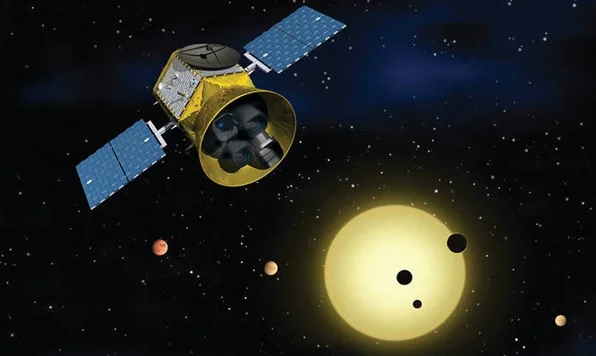
1. Transit Photometry: When a planet passes between its parent star and a telescope, it blocks a tiny fraction of the star’s light.

  • This temporary decrease in brightness is known as a transit.
  • Star Planet passes in front Brightness decreases Transit detected
  • The amount of light blocked helps scientists estimate the radius or size of the planet.
  • NASA’s Kepler and TESS missions have extensively used this technique. TESS continues to search for transiting planets around relatively nearby bright stars.

2. Radial Velocity or Doppler Method: A planet and its star actually orbit their common centre of mass. Consequently, the planet’s gravity causes the star to make a small periodic wobble. Scientists observe changes in the star’s spectrum:

  • Moving towards us Blueshift
  • Moving away from us Redshift
  • These Doppler shifts can reveal the presence of an orbiting planet and help determine its minimum mass.

3. Direct Imaging: Instead of detecting a planet indirectly, scientists sometimes capture light coming from the planet itself. The major difficulty is the enormous brightness of the parent star.

Special instruments such as coronagraphs suppress the star’s light so that faint nearby planets can be studied. NASA’s Roman telescope will carry a Coronagraph Instrument as a technology demonstration, advancing techniques needed for future direct imaging of exoplanets.

4. Gravitational Microlensing: According to Einstein’s theory of general relativity, gravity can bend light.

  • If the foreground star has a planet, the planet can create an additional signature in the magnification pattern.
  • Microlensing is particularly useful for detecting planets in wider orbits that can be difficult to find using the transit method. NASA’s Roman mission will conduct a major microlensing survey.

5. Astrometry: Astrometry measures extremely small changes in the position of a star across the sky. An unseen planet can gravitationally pull its parent star, producing a tiny positional wobble. ESA’s Gaia mission, designed to map stellar positions and motions with extraordinary precision, has made astrometry an important tool for investigating planetary systems.

Historic Exoplanet Space Missions

Kepler Space Telescope

Agency: NASA
Launch: 2009
Mission ended: 2018
Main Technique: Transit Photometry

Spitzer Space Telescope

Agency: NASA
Launch: 2003
Retired: 2020
Observation: Infrared

CoRoT

Agency: CNES with ESA participation
Launch: 2006

Major Operational Exoplanet Observatories

Hubble Space Telescope

Agencies: NASA/ESA
Launch: 1990

TESS

Full Name: Transiting Exoplanet Survey Satellite
Agency: NASA
Launch: April 18, 2018
Status: Extended Mission
Method: Transit Photometry

James Webb Space Telescope

Agencies: NASA/ESA/CSA
Launch: December 25, 2021
Main Strength: Infrared Astronomy and Spectroscopy

Upcoming Exoplanet Missions

Nancy Grace Roman Space Telescope

  • Agency: NASA
  • Current scheduled launch: August 30, 2026
  • Major Exoplanet Technique: Gravitational Microlensing
  • Additional Capability: Coronagraph technology demonstration
  • Roman will have a field of view at least 100 times larger than Hubble's.
  • Its microlensing survey will investigate planetary systems across the Milky Way, while its coronagraph will demonstrate advanced technology for suppressing starlight and directly observing exoplanets and planet-forming disks. 
  • NASA currently expects Roman to discover more than 100,000 exoplanets, including planets identified through both microlensing and transit observations. 

PLATO

  • Full Name: PLAnetary Transits and Oscillations of stars
  • Agency: ESA
  • Current planned launch: March 2027
  • Destination: Sun-Earth L2
  • Number of cameras: 26
  • PLATO will concentrate on terrestrial planets in orbits extending into the habitable zones of Sun-like stars. It will simultaneously study host stars through asteroseismology, allowing scientists to determine stellar properties more accurately.ESA says PLATO will observe more than 200,000 stars

Ariel

  • Full Name: Atmospheric Remote-sensing Infrared Exoplanet Large-survey
  • Agency: ESA
  • Planned launch: 2029
  • Ariel represents another major transition in exoplanet research.
  • Rather than primarily searching for planets, it will conduct a systematic chemical census of exoplanet atmospheres.
  • ESA plans for Ariel to observe approximately 1,000 exoplanets, ranging from rocky worlds to gas giants. 

Habitable Worlds Observatory

  • NASA’s proposed Habitable Worlds Observatory (HWO) represents an even more ambitious stage in exoplanet science.
  • Its major scientific objective would be to directly investigate Earth-like planets around Sun-like stars and search their atmospheres for potential signs associated with habitability or life.
  • NASA’s technology planning currently describes HWO as a future observatory recommended for a 2040s launch timeframe, rather than a confirmed late-2030s launch.
  • Its ultimate question is simple but profound: “Are we alone in the Universe?”

    Key Exoplanet Missions at a Glance

    Mission

    Agency

    Launch

    Main Role

    Kepler/K2

    NASA

    2009

    Transit-based exoplanet census

    TESS

    NASA

    2018

    Planets around nearby bright stars

    CHEOPS

    ESA/Switzerland

    2019

    Precise characterisation of known planets

    JWST

    NASA/ESA/CSA

    2021

    Atmospheric spectroscopy

    Roman

    NASA

    2026 scheduled

    Microlensing + coronagraph demonstration

    PLATO

    ESA

    2027 planned

    Terrestrial planets around Sun-like stars

    Ariel

    ESA

    2029 planned

    Atmospheric chemical census

    HWO

    NASA

    Proposed

    Earth-like planets and potential biosignatures

    Challenges

    • Despite extraordinary technological advances, exoplanet astronomy faces major limitations.
    • Earth-sized planets are extremely faint compared with their parent stars.
    • Atmospheric signals can be extraordinarily weak.
    • Stellar activity can mimic or contaminate planetary signals.
    • Habitable-zone location does not guarantee actual habitability.
    • Potential biosignatures may also have non-biological origins.
    • Direct imaging of an Earth analogue around another Sun-like star requires extremely advanced starlight suppression.

    Therefore, discovering a planet is much easier than determining whether it actually supports life.

    Prelims MCQs

    Q1. Which of the following space missions primarily uses the transit method to discover exoplanets around nearby bright stars?

    (a) Gaia
    (b) TESS
    (c) Chandra
    (d) Voyager 2

    Mains Practice Question

    “Space-based observatories have transformed exoplanet science from the discovery of distant planets to the characterisation of potentially habitable worlds.” Discuss with reference to major current and future space telescope missions.

    FAQs

    1. What is an exoplanet?

    An exoplanet is a planet located outside our Solar System, generally orbiting another star.

    2. Which telescope discovered the most exoplanets historically?

    NASA’s Kepler/K2 mission revolutionised the field and discovered thousands of exoplanets, with more than 2,600 confirmed discoveries credited to the mission. 

    3. What is the difference between TESS and JWST?

    TESS primarily discovers transiting planets around bright nearby stars, whereas JWST is especially powerful for detailed characterisation, including atmospheric spectroscopy.

    4. Which upcoming mission will search for Earth-like planets around Sun-like stars?

    ESA’s PLATO is specifically designed to study terrestrial planets extending into the habitable zones of Sun-like stars. Its current planned launch is March 2027.

    5. Have scientists discovered life on an exoplanet?

    No confirmed extraterrestrial life has been discovered. Scientists can detect atmospheric molecules and investigate potential biosignatures, but such observations require extensive confirmation before they can be interpreted as evidence of life

    upsc english
    « »
    • SUN
    • MON
    • TUE
    • WED
    • THU
    • FRI
    • SAT
    Have any Query?

    Our support team will be happy to assist you!

    OR