New
Civil Services Day Offer - Valid Till : 23rd April GS Foundation (P+M) - Delhi : 4th May 2026, 6:30 AM GS Foundation (P+M) - Prayagraj : 1st May 2026, 8:30PM Civil Services Day Offer - Valid Till : 23rd April GS Foundation (P+M) - Delhi : 4th May 2026, 6:30 AM GS Foundation (P+M) - Prayagraj : 1st May 2026, 8:30PM

Current Affairs for 22 April 2026

How Did the Pahalgam Attack Trigger a Structural Shift in Jammu & Kashmir’s Counter-Terrorism Strategy?

Prelims : Internal Security + CA
Mains : GS Paper 3 – Internal Security; Role of Security Forces; Terrorism

Why in News ?

The aftermath of the Pahalgam terror attack (2025) has led to a profound transformation in the security architecture of Jammu & Kashmir (J&K), marking a decisive shift in India’s counter-terrorism approach in the region.

  • The attack exposed deep-rooted vulnerabilities in security deployment, particularly in areas that were previously perceived as safe, such as tourist destinations
  • It forced security agencies to reassess the nature, intent, and evolving tactics of terrorist organisations, especially their willingness to target civilians and economic lifelines
  • In response, India has undertaken a multi-layered restructuring of its counter-terrorism framework, integrating intelligence, technology, force deployment, and civilian security measures

This transformation is widely seen as a strategic recalibration from a reactive security model to a proactive, intelligence-driven, and prevention-oriented approach.

What Happened in the Pahalgam Attack ?

  • In April 2025, heavily armed terrorists launched a coordinated attack on tourists in the Pahalgam region, a well-known destination in Jammu & Kashmir
  • The attack resulted in :
    • Significant loss of civilian lives
    • Injuries to several individuals
    • Widespread panic and disruption of normal activities
  • The incident was particularly alarming because :
    • The location was considered relatively secure due to its tourism importance
    • Security presence in such areas was comparatively light, based on prior threat perceptions
  • The attackers exploited :
    • Gaps in surveillance
    • Terrain advantages such as forest cover and remote access routes

This incident highlighted a critical mismatch between perceived security and actual threat levels, making it a turning point in security planning.

Why Was the Attack a Strategic Turning Point ?

1. Shift in Terrorist Targeting Strategy

  • Traditionally, terrorist groups in J&K focused on :
    • Security personnel
    • Government institutions
    • Political figures
  • The Pahalgam attack marked a deliberate shift toward :
    • Soft targets such as tourists and civilians, which are more vulnerable and symbolically significant
  • This change reflects a broader strategic objective :
    • To undermine normalcy in the region
    • To create a perception that even safe zones are insecure
    • To attract international attention and media coverage

This evolution indicates that terrorism is no longer confined to military confrontation but is increasingly aimed at psychological warfare and economic disruption.

2. Exposure of Critical Security Gaps

  • The attack revealed systemic weaknesses such as:
    • Inadequate security coverage in remote and tourist-heavy areas
    • Insufficient real-time intelligence inputs at the local level
    • Lack of coordination between surveillance systems and ground deployment
  • It demonstrated that:
    • Static deployment strategies are ineffective against mobile and adaptive terror networks
    • Threat assessment models need constant updating

This forced a comprehensive re-evaluation of security planning and resource allocation.

3. Economic and Psychological Impact

  • Tourism is a key driver of J&K’s economy, providing :
    • Employment
    • Revenue
    • Opportunities for local businesses
  • By targeting tourists, the attack aimed to :
    • Disrupt economic recovery
    • Create fear among visitors
    • Damage the region’s image as a safe destination
  • Psychologically, such attacks :
    • Generate widespread fear
    • Erode public confidence in state institutions

Thus, the attack was not just a security incident but a strategic attempt to destabilise both economy and public morale.

Key Structural Shifts in J&K Security Strategy

1. Transition to Proactive and Intelligence-Driven Operations

  • Earlier approach:
    • Predominantly reactive, responding after incidents occurred
  • New approach:
    • Focuses on pre-emptive neutralisation of threats before execution
  • This involves:
    • Real-time intelligence gathering
    • Continuous monitoring of suspicious activities
    • Swift, targeted operations against identified threats

This shift reflects a move toward anticipatory security rather than reactive defence, significantly enhancing effectiveness.

2. Expansion and Deepening of Security Grid

  • Security presence has been significantly increased across :
    • Remote villages
    • Forest areas
    • Mountainous terrains
  • Establishment of :
    • Forward operating bases
    • Temporary camps in previously under-monitored areas
  • Increased frequency of :
    • Patrols
    • Area domination exercises

This ensures that no region remains outside the surveillance and operational reach of security forces, reducing safe havens for militants.

3. Specialisation in Terrain-Specific Warfare

  • Terrorists increasingly exploit difficult terrains such as :
    • Dense forests
    • High-altitude regions
  • In response, specialised units have been developed and trained in :
    • Jungle warfare
    • Mountain combat
    • Survival in extreme conditions
  • This improves :
    • Tactical mobility
    • Operational effectiveness

Such adaptation demonstrates a shift toward context-specific counter-terrorism strategies tailored to geographical realities.

4. Integration of Advanced Technology

  • Technology is being increasingly used to strengthen security, including :
    • Surveillance drones for aerial monitoring
    • Sensors and tracking systems
    • Digital identification systems for workforce verification
  • Data analytics and communication tracking are used to :
    • Identify suspicious patterns
    • Track terror networks

This represents a transition toward technology-driven policing and intelligence, reducing dependence on manual surveillance alone.

5. Strengthening Intelligence Architecture

  • Greater emphasis is placed on :
    • Human Intelligence (HUMINT), involving local informants and community networks
    • Technical Intelligence (TECHINT), including digital monitoring and signal interception
  • Coordination between intelligence agencies has been enhanced to ensure:
    • Faster information sharing
    • Better decision-making

This improves the ability to detect threats at an early stage and disrupt terror activities proactively.

6. Targeting the Terror Ecosystem

  • Focus has expanded beyond militants to include :
    • Overground workers (OGWs)
    • Financial and logistical support networks
  • Measures include :
    • Identification and surveillance of suspects
    • Disruption of funding channels
    • Legal action against collaborators

This approach recognises that terrorism thrives on a support ecosystem, and dismantling it is essential for long-term success.

7. Enhanced Protection of Civilian and Tourist Areas

  • Security measures in tourist zones have been strengthened through :
    • Regular sanitisation operations
    • Increased deployment of personnel
    • Monitoring of local workforce and service providers
  • This ensures :
    • Safety of visitors
    • Restoration of confidence in tourism

The focus has shifted toward civilian-centric security, recognising the importance of protecting everyday life.

8. Multi-Dimensional Strategic Response

  • Counter-terrorism strategy now integrates :
    • Military operations
    • Intelligence coordination
    • Diplomatic efforts
    • Administrative measures
  • This holistic approach ensures that terrorism is addressed at :
    • Operational level
    • Strategic level
    • Structural level

Significance of the Security Shift

1. Restoration of Normalcy and Public Confidence

  • Strong security measures reassure :
    • Local population
    • Tourists and investors
  • This is essential for :
    • Social stability
    • Economic revival

2. Enhanced Deterrence Against Terror Groups

  • Proactive operations signal : 
    • Zero tolerance policy
    • Increased risk for militants

This discourages :

  • Recruitment
  • Planning of large-scale attacks

3. Reduction in Frequency and Scale of Attacks

  • Improved intelligence and deployment : 
    • Prevent large-scale incidents
    • Limit operational capacity of terrorist groups

4. Strengthening of Internal Security Framework

  • Better coordination among :
    • Army
    • Police
    • Central forces
  • Leads to :
    • Efficient response mechanisms
    • Unified command structures

5. Support for Economic Development

  • Security stability enables : 
    • Tourism revival
    • Infrastructure projects
    • Investment

Challenges Ahead

1. Rise of Hybrid and Decentralised Terrorism

  • Use of local recruits and small cells : 
    • Makes detection difficult
    • Reduces reliance on large networks

2. Difficult Geography

  • Natural terrain continues to: 
    • Provide cover to militants
    • Complicate operations

3. External Support and Cross-Border Factors

  • Continued support from across borders remains a persistent threat

4. Balancing Security and Civil Liberties

  • Increased surveillance may : 
    • Raise privacy concerns
    • Lead to allegations of overreach

5. Sustaining Long-Term Vigilance

  • Security gains require : 
    • Continuous monitoring
    • Adaptation to evolving threats

Way Forward

1. Strengthening Intelligence Networks

  • Expand grassroots intelligence
  • Integrate advanced surveillance technologies

2. Continuous Modernisation of Forces

  • Invest in : 
    • Equipment
    • Training
    • Technology

3. Community Engagement and Trust-Building

  • Encourage local participation in : 
    • Intelligence sharing
    • Peace-building initiatives

4. Counter-Radicalisation Efforts

  • Address ideological roots of terrorism
  • Promote education and awareness

5. Integrated Development Approach

  • Combine : 
    • Security measures
    • Economic development
    • Political outreach

Practice Questions

Prelims

Q. The recent shift in J&K’s counter-terror strategy emphasises :
(a) Reduction in troop deployment
(b) Reactive response after attacks
(c) Proactive and intelligence-driven operations
(d) Withdrawal from remote areas

Mains

“The Pahalgam attack marked a turning point in India’s counter-terrorism strategy in Jammu & Kashmir.” Critically analyse the nature of this transformation and its implications.

FAQs

Q1. Why was the Pahalgam attack significant ?

It targeted civilians and exposed security gaps.

Q2. What major change followed ?

Shift to proactive and intelligence-based operations.

Q3. What is the biggest challenge now ?

Hybrid and decentralised terrorism.

Q4. How has technology helped ?

Through surveillance, tracking, and data analysis.

Q5. What is the long-term goal ?

Sustainable peace and stability in the region.

What is the Prajna System and How Can It Revolutionise India’s Internal Security and Surveillance Capabilities?

Prelims : Science & Technology + Internal Security + CA
Mains : GS Paper 3 – Internal Security; Science & Technology; Role of Technology in Security

Why in News ?

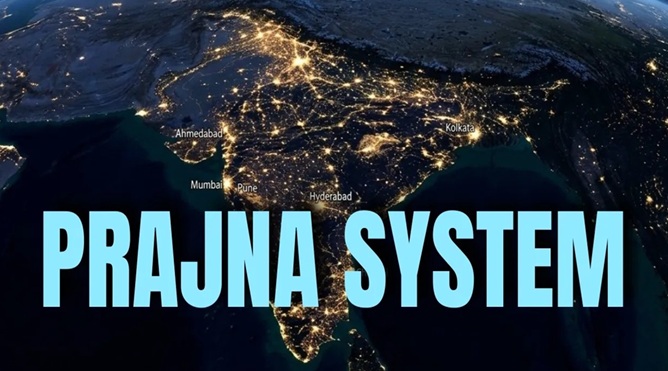
The Prajna System, an indigenously developed AI-enabled satellite imaging platform, has recently been handed over to the Ministry of Home Affairs, marking a significant step in strengthening India’s internal security architecture.

  • The system represents a major advancement in the integration of artificial intelligence with satellite-based surveillance, enabling real-time monitoring of sensitive regions
  • It reflects India’s growing capability in developing indigenous high-tech security solutions, reducing dependence on foreign technologies
  • The deployment comes at a time when internal security challenges such as terrorism, border infiltration, and organised threats require faster, data-driven and intelligence-led responses
  • It is expected to enhance the ability of security agencies to anticipate threats rather than merely react to them

Thus, the Prajna System signifies a shift toward technology-driven, predictive, and proactive internal security management.
What is the Prajna System ?

The Prajna System is an AI-enabled satellite imaging and analytics platform designed to support security agencies with real-time, actionable intelligence.

  • It combines :
    • Satellite imagery
    • Artificial intelligence algorithms
    • Advanced data analytics
  • It has been developed indigenously by the Defence Research and Development Organisation (DRDO) through its specialised lab, the Centre for Artificial Intelligence and Robotics (CAIR)
  • The system is designed to :
    • Monitor sensitive and high-risk regions
    • Detect suspicious patterns and activities
    • Assist in decision-making during security operations

In essence, Prajna acts as an intelligent surveillance system that transforms raw satellite data into meaningful insights for operational use.

Key Features of the Prajna System

1. Integration of Satellite Imagery with Artificial Intelligence

  • The system processes high-resolution satellite images using AI algorithms to :
    • Identify objects, movements, and changes on the ground
    • Detect unusual or suspicious activities
  • Unlike traditional surveillance, which relies heavily on human interpretation, Prajna :
    • Automates analysis
    • Reduces human error
    • Enhances speed and accuracy

This integration allows for continuous, intelligent monitoring of vast and inaccessible areas.

2. Real-Time Data Processing and Decision Support

  • One of the most critical features is its ability to :
    • Analyse incoming data in real time
    • Provide immediate insights to security agencies
  • This enables :
    • Faster operational decisions
    • Quick deployment of forces
    • Timely response to emerging threats

Thus, it shifts security operations from delayed response to instantaneous action.

3. Advanced Pattern Recognition and Anomaly Detection

  • The system uses AI to :
    • Recognise recurring patterns in activities
    • Identify deviations or anomalies that may indicate potential threats
  • For example :
    • Unusual movement patterns in border areas
    • Sudden infrastructure changes in sensitive zones

This capability is crucial for early warning systems and threat anticipation.

4. Processing of Large Volumes of Data

  • Satellite systems generate enormous amounts of data, which :
    • Are difficult to analyse manually
  • Prajna can :
    • Process and filter massive datasets efficiently
    • Extract relevant information quickly

This ensures that critical intelligence is not lost in data overload.

5. Enhanced Situational Awareness

  • By combining multiple data inputs, the system provides :
    • A comprehensive picture of ground realities
  • Security agencies can :
    • Visualise developments in real time
    • Understand the broader operational context

This improves coordination and strategic planning during operations.

6. Indigenous Development and Strategic Autonomy

  • Being developed within India :
    • Ensures data security
    • Reduces reliance on foreign surveillance technologies
  • It contributes to :
    • Technological self-reliance
    • Strengthening national security infrastructure

Applications of the Prajna System

1. Counter-Terrorism Operations

  • Helps identify :
    • Movement of suspected militants
    • Potential hideouts or infiltration routes
  • Enables :
    • Pre-emptive strikes
    • Disruption of terror activities before execution

2. Border and Coastal Security

  • Monitors :
    • Border areas for infiltration
    • Coastal zones for illegal activities
  • Enhances :
    • Vigilance in remote and difficult terrains

3. Internal Security and Law Enforcement

  • Assists in :
    • Tracking organised crime networks
    • Monitoring sensitive regions prone to unrest
  • Supports :
    • Police and paramilitary forces in planning operations

4. Disaster Management and Emergency Response

  • Provides :
    • Real-time imagery during natural disasters
  • Helps in :
    • Assessing damage
    • Planning rescue and relief operations

5. Infrastructure and Strategic Asset Monitoring

  • Tracks :
    • Critical infrastructure such as dams, highways, and defence installations
  • Ensures :
    • Protection against sabotage or threats

Significance of the Prajna System

1. Shift Toward Predictive Security

  • Traditional systems focus on responding to incidents
  • Prajna enables : 
    • Anticipation of threats
    • Preventive action

This marks a transition to predictive and intelligence-led security governance.

2. Force Multiplier for Security Agencies

  • Enhances efficiency of :
    • Armed forces
    • Police
    • Intelligence agencies
  • Allows better utilisation of :
    • Limited manpower
    • Resources

3. Strengthening National Security

  • Improves : 
    • Surveillance capability
    • Response time
    • Coordination among agencies

4. Promoting Indigenous Technology Development

  • Demonstrates India’s capability in : 
    • AI
    • Satellite technology
    • Defence innovation

5. Enhancing Decision-Making Accuracy

  • Data-driven insights reduce :
    • Guesswork
    • Delays
  • Leads to :
    • More precise and effective operations

Challenges and Concerns

1. Privacy and Civil Liberties

  • Increased surveillance may : 
    • Raise concerns about misuse
    • Impact individual privacy

2. Data Security Risks

  • Sensitive data must be : 
    • Protected from cyber threats
    • Secured against breaches

3. Dependence on Technology

  • Over-reliance may : 
    • Reduce human intelligence inputs
    • Create vulnerabilities if systems fail

4. High Cost and Maintenance

  • Advanced systems require : 
    • Significant investment
    • Continuous upgrades

5. Need for Skilled Personnel

  • Effective use requires : 
    • Trained analysts
    • Technical expertise

Way Forward

1. Strengthening Legal and Ethical Frameworks

  • Ensure : 
    • Proper regulation of surveillance
    • Protection of privacy rights

2. Enhancing Cybersecurity Measures

  • Safeguard systems against : 
    • Cyber attacks
    • Data breaches

3. Capacity Building

  • Train personnel in : 
    • AI tools
    • Data analysis

4. Integration with Other Security Systems

  • Combine Prajna with : 
    • Ground intelligence
    • Other surveillance technologies

5. Continuous Technological Upgradation

  • Invest in : 
    • R&D
    • Innovation

to keep pace with evolving threats

Practice Questions

Prelims

Q. The Prajna System is associated with :
(a) Space exploration
(b) AI-enabled satellite surveillance for security
(c) Agricultural monitoring
(d) Weather forecasting

Mains

“Artificial Intelligence is transforming internal security frameworks in India.” Discuss with reference to systems like Prajna.

FAQs

Q1. What is the Prajna System?

An AI-enabled satellite imaging system for security.

Q2. Who developed it?

DRDO’s Centre for Artificial Intelligence and Robotics.

Q3. What is its main purpose?

Real-time monitoring and decision support.

Q4. Why is it important?

Enhances predictive and proactive security.

Q5. What is the key challenge?

Balancing surveillance with privacy.

What is 3D Glass Semiconductor Technology and How Can It Transform India’s Semiconductor Ecosystem?

Prelims : Science & Technology + CA
Mains : GS Paper 3 – Science & Technology; Indigenisation of Technology; Economic Development

Why in News ?

India has made a significant advancement in semiconductor research with the development of 3D glass-based semiconductor technology, which is being seen as a potential breakthrough in next-generation chip manufacturing.

  • The innovation represents a shift from traditional silicon-based planar chips to multi-layered, high-density chip architectures using glass substrates
  • It aligns with India’s broader goal of achieving self-reliance in semiconductor manufacturing and reducing dependence on imports
  • The development comes at a time when global semiconductor supply chains are undergoing restructuring due to geopolitical and economic considerations
  • It has the potential to position India as a key player in advanced semiconductor packaging and design technologies, even if full-scale fabrication capabilities are still evolving

This breakthrough is significant because semiconductors are the backbone of modern digital economies, powering everything from smartphones to defence systems.

What is 3D Glass Semiconductor Technology ?

3D glass semiconductor technology refers to the use of glass substrates to stack multiple layers of electronic circuits vertically, creating highly compact and efficient chips.

  • Unlike traditional chips that are :
    • 2D (planar) and spread across a flat silicon surface
  • 3D glass technology :
    • Enables vertical stacking of components, increasing density and performance
  • Glass is used because it offers :
    • High thermal stability
    • Better electrical insulation
    • Lower signal loss

This technology is a part of the broader trend toward advanced packaging and heterogeneous integration, where multiple chip components are combined into a single system.

Key Features of 3D Glass Semiconductor Technology

1. Vertical Integration of Circuits (3D Architecture)

  • Multiple layers of circuits are stacked vertically, allowing :
    • Higher transistor density
    • Reduced footprint of chips
  • This leads to :
    • More powerful processors in smaller devices
    • Efficient use of space in compact electronics

2. Use of Glass Substrates Instead of Traditional Materials

  • Glass provides :
    • Superior flatness and smoothness
    • Excellent thermal resistance
    • Reduced electrical interference
  • It overcomes limitations of silicon interposers, such as :
    • Heat management issues
    • Signal distortion

3. Improved Performance and Speed

  • Shorter interconnections between layers result in :
    • Faster data transmission
    • Reduced latency
  • This is critical for :
    • High-performance computing
    • Artificial Intelligence applications

4. Enhanced Energy Efficiency

  • Reduced signal loss and efficient heat dissipation lead to :
    • Lower power consumption
    • Longer battery life in devices
  • This is particularly important for :
    • Mobile devices
    • Data centres

5. Scalability and Future Readiness

  • 3D architecture allows :
    • Integration of diverse components such as memory, logic, and sensors
  • It supports :
    • Next-generation technologies like IoT, AI, and 5G

How is it Different from Traditional Semiconductor Technology ? 

Aspect

Traditional (2D Silicon Chips)

3D Glass Semiconductor

Structure

Planar (2D)

Vertical (3D stacked)

Material

Silicon substrate

Glass substrate

Performance

Limited by scaling laws

Higher performance due to compact design

Power Efficiency

Moderate

High

Space Utilisation

Larger footprint

Compact and dense

This shift represents a transition from scaling (Moore’s Law) to architecture innovation (3D integration).

Significance for India

1. Boost to Semiconductor Self-Reliance

  • India currently depends heavily on imports for semiconductor needs
  • Development of advanced technologies like 3D glass chips :
    • Reduces dependency
    • Strengthens domestic capabilities
  • Supports initiatives such as :
    • Semiconductor manufacturing missions
    • Electronics production

2. Entry into Advanced Packaging Segment

  • Semiconductor value chain includes :
    • Design
    • Fabrication
    • Packaging
  • India has strong capabilities in :
    • Chip design
  • 3D glass technology allows India to :
    • Enter high-value advanced packaging segment, which is less capital-intensive than fabrication

3. Strategic Importance in Global Supply Chains

  • Semiconductors are critical for :
    • Defence
    • Telecommunications
    • Space technology
  • Indigenous capabilities enhance :
    • Strategic autonomy
    • National security

4. Economic Growth and Employment

  • Semiconductor ecosystem can :
    • Generate high-skilled jobs
    • Attract global investment
  • It contributes to :
    • Manufacturing growth
    • Export potential

5. Technological Leapfrogging Opportunity

  • Instead of catching up in traditional fabrication, India can :
    • Leapfrog into next-generation technologies
  • This reduces the gap with :
    • Established semiconductor leaders

Challenges in Adoption

1. High Capital and Infrastructure Requirements

  • Semiconductor ecosystem requires : 
    • Significant investment
    • Advanced manufacturing facilities

2. Technological Complexity

  • 3D integration involves :
    • Precision engineering
    • Complex fabrication processes
  • Requires skilled workforce and R&D capabilities

3. Limited Domestic Ecosystem

  • India lacks :
    • Fully integrated semiconductor supply chain
  • Dependence on imports for :
    • Equipment
    • Raw materials

4. Global Competition

  • Countries like : 
    • USA
    • Taiwan
    • South Korea

are already leaders in semiconductor technology

5. Policy and Execution Challenges

  • Implementation of semiconductor policies requires : 
    • Efficient coordination
    • Long-term commitment

Way Forward

1. Strengthening R&D Ecosystem

  • Increase investment in : 
    • Research institutions
    • Industry-academia collaboration

2. Building Semiconductor Infrastructure

  • Develop : 
    • Fabrication units
    • Packaging facilities

3. Skill Development

  • Train workforce in : 
    • Chip design
    • Advanced manufacturing

4. Global Partnerships

  • Collaborate with : 
    • Leading semiconductor nations
    • Technology companies

5. Policy Support and Incentives

  • Provide : 
    • Financial incentives
    • Ease of doing business

Practice Questions

Prelims

Q. What is the key advantage of 3D semiconductor technology ?
(a) Increased size of chips
(b) Reduced performance
(c) Vertical stacking for higher efficiency
(d) Elimination of transistors

Mains

“Emerging technologies such as 3D glass semiconductors can help India achieve technological self-reliance.” Discuss.

FAQs

Q1. What is 3D glass semiconductor technology ?

It is a method of stacking circuits vertically using glass substrates.

Q2. Why is glass used ?

For better thermal and electrical properties.

Q3. Why is it important for India ?

It supports self-reliance and technological advancement.

Q4. What is the main challenge ?

High cost and technological complexity.

Q5. What is its future potential ?

Key role in AI, 5G, and advanced electronics.

Why Does the Justice Varma Case Raise Critical Questions About Judicial Accountability in India?

Prelims : Polity + CA
Mains : GS Paper 2 – Judiciary; Accountability; Transparency; Governance

Why in News ?

The issue of judicial accountability has come into sharp focus in light of the Justice Varma case, which has triggered debates on transparency, ethics, and mechanisms to hold members of the higher judiciary accountable.

  • Allegations and controversies surrounding a sitting or former judge have highlighted institutional gaps in accountability mechanisms within the judiciary
  • The case has reignited discussions on the balance between :
    • Judicial independence, which is essential for a functioning democracy
    • Judicial accountability, which ensures integrity and public trust
  • It has also raised concerns about the effectiveness of existing in-house procedures and constitutional provisions to deal with misconduct

This development is significant as it touches upon the credibility of one of the most important pillars of Indian democracy.

What is Judicial Accountability ?

Judicial accountability refers to the mechanisms and processes through which judges are held responsible for their conduct, decisions, and adherence to ethical standards.

  • It ensures that judges :
    • Act with integrity, impartiality, and independence
    • Do not misuse their authority
    • Remain answerable for misconduct
  • At the same time, accountability must be balanced with judicial independence, which protects judges from :
    • Political pressure
    • Executive interference

Thus, judicial accountability is about ensuring responsibility without compromising independence.

Constitutional and Legal Framework for Judicial Accountability in India

1. Impeachment Process

  • Judges of the Supreme Court and High Courts can be removed through impeachment under :
    • Articles 124 and 217 of the Constitution
  • The process involves :
    • Motion in Parliament
    • Investigation by a committee
    • Special majority for removal

Limitations :

  • Extremely difficult to execute due to : 
    • Political considerations
    • High threshold of proof
  • No judge has been successfully impeached so far

2. In-House Procedure

  • The judiciary has developed an internal mechanism to : 
    • Investigate complaints against judges
    • Maintain discipline within the institution

Limitations :

  • Lack of transparency
  • No statutory backing
  • Limited public accountability

3. Judicial Standards and Accountability Bill (Proposed)

  • Aimed to : 
    • Define judicial misconduct
    • Establish a complaint redressal mechanism

Status :

  • The bill has not been enacted, leaving a gap in formal accountability mechanisms

4. Contempt of Court Provisions

  • Protect the judiciary from : 
    • Defamation
    • Scandalising the court

Challenge :

  • May sometimes discourage : 
    • Legitimate criticism
    • Public scrutiny

Key Issues Highlighted by the Justice Varma Case

1. Lack of Transparency in Handling Complaints

  • The case has exposed concerns regarding :
    • Opaque processes in dealing with allegations
    • Absence of publicly accessible information
  • This reduces :
    • Public confidence
    • Institutional credibility

2. Ineffectiveness of Existing Mechanisms

  • Current systems such as impeachment and in-house procedures are :
    • Either too rigid or too informal
  • This creates a gap between accountability and enforceability

3. Absence of an Independent Oversight Body

  • Unlike other branches of government, the judiciary lacks :
    • An external, independent body to investigate misconduct
  • This raises concerns about :
    • Conflict of interest
    • Institutional bias

4. Balance Between Independence and Accountability

  • Excessive accountability mechanisms may :
    • Undermine judicial independence
  • Weak accountability may :
    • Lead to misuse of power

The challenge lies in achieving an optimal balance between the two principles.

5. Impact on Public Trust

  • Allegations against judges directly affect :
    • Public perception of fairness
    • Legitimacy of judicial decisions
  • Trust is a critical component of judicial authority, and any erosion can have far-reaching consequences.

Significance of Judicial Accountability

1. Ensuring Rule of Law

  • Accountability ensures that : 
    • Judges adhere to legal and ethical standards
    • Justice is delivered fairly

2. Maintaining Institutional Integrity

  • Strong accountability mechanisms : 
    • Prevent misuse of power
    • Uphold the dignity of the judiciary

3. Strengthening Democracy

  • Judiciary is a key pillar of democracy
  • Accountability ensures it remains : 
    • Transparent
    • Responsible

4. Enhancing Public Confidence

  • Transparent processes build : 
    • Trust among citizens
    • Faith in the justice delivery system

Challenges in Ensuring Judicial Accountability

1. Fear of Undermining Judicial Independence

  • Excessive external control may : 
    • Compromise impartial decision-making

2. Lack of Clear Legal Framework

  • Absence of a comprehensive law leads to : 
    • Ambiguity
    • Inconsistency

3. Institutional Resistance

  • Judiciary may resist external oversight due to : 
    • Concerns over autonomy

4. Political Influence in Impeachment

  • Parliamentary process may : 
    • Be influenced by political considerations

5. Limited Public Awareness

  • Lack of understanding about judicial processes : 
    • Reduces effective public scrutiny

Way Forward

1. Establishment of an Independent Judicial Oversight Body

  • Create a statutory body to : 
    • Investigate complaints
    • Ensure impartiality

2. Enacting Judicial Accountability Law

  • Revive and pass a comprehensive legislation to : 
    • Define misconduct
    • Provide clear procedures

3. Enhancing Transparency

  • Make inquiry processes : 
    • More open
    • Accessible to the public

4. Strengthening In-House Mechanisms

  • Improve internal processes by : 
    • Introducing checks and balances
    • Ensuring accountability

5. Promoting Ethical Standards

  • Encourage : 
    • Judicial training
    • Ethical guidelines

Practice Questions

Prelims

Q. Which of the following mechanisms exist for judicial accountability in India ?

  1. Impeachment by Parliament
  2. In-house procedure of judiciary
  3. Independent statutory oversight body

Select the correct answer :
(a) 1 and 2 only
(b) 2 and 3 only
(c) 1 and 3 only
(d) 1, 2 and 3

Mains

“Judicial independence and judicial accountability are complementary, not contradictory.” Discuss in the context of recent debates such as the Justice Varma case.

FAQs

Q1. What is judicial accountability ?

It refers to holding judges responsible for their conduct and actions.

Q2. What is the main mechanism for removing judges ?

Impeachment by Parliament.

Q3. What is the key issue in the Justice Varma case ?

Concerns over lack of transparency and accountability.

Q4. Why is accountability important ?

It ensures trust, integrity, and rule of law.

Q5. What is the main challenge ?

Balancing accountability with judicial independence.

What is the Role of the United Nations Economic and Social Commission for Asia and the Pacific (ESCAP) in Regional Development?

Prelims : International Organisations + CA
Mains : GS Paper 2 – International Relations; GS Paper 3 – Economic Development

Why in News ?

A recent report by the United Nations Economic and Social Commission for Asia and the Pacific (ESCAP) has projected that inflation in developing economies of the Asia-Pacific region is likely to rise to 4.6% in 2026 from 3.5% in 2025, indicating growing macroeconomic pressures.

  • The report highlights concerns regarding :
    • Rising inflationary trends
    • Economic recovery challenges in developing economies
    • Vulnerabilities due to global uncertainties such as supply chain disruptions and geopolitical tensions
  • It underscores the need for :
    • Coordinated regional policy responses
    • Strengthened economic cooperation

This brings ESCAP into focus as a key regional institution guiding policy dialogue and development strategies in Asia-Pacific.

What is ESCAP ?

The United Nations Economic and Social Commission for Asia and the Pacific (ESCAP) is a regional arm of the United Nations aimed at promoting inclusive and sustainable economic and social development in the Asia-Pacific region.

  • It was established in 1947, making it one of the oldest regional commissions of the UN
  • It serves as the most comprehensive intergovernmental platform in the region
  • It facilitates : 
    • Policy dialogue
    • Regional cooperation
    • Knowledge sharing

ESCAP acts as a bridge between global development goals and regional implementation strategies.

Institutional Framework

1. Membership and Composition

  • ESCAP consists of :
    • 53 member States
    • 9 associate members
  • Members include :
    • Developed economies
    • Developing countries
    • Least Developed Countries (LDCs)
    • Small Island Developing States (SIDS)
  • This diversity makes ESCAP :
    • Highly representative
    • Inclusive in addressing varied developmental challenges

2. Headquarters

  • Located in Bangkok, Thailand, which serves as: 
    • A strategic hub for regional coordination
    • A centre for policy discussions and research

3. Part of UN System

  • ESCAP is one of the five regional commissions of the United Nations, alongside others in :
    • Africa
    • Europe
    • Latin America
    • Western Asia
  • These commissions aim to :
    • Address region-specific challenges
    • Complement global UN initiatives

Mandate and Objectives

1. Promotion of Economic Development

  • ESCAP works to :
    • Enhance economic growth
    • Improve productivity
    • Strengthen macroeconomic stability
  • It supports countries in :
    • Policy formulation
    • Economic planning

2. Social Development and Inclusion

  • Focuses on :
    • Poverty reduction
    • Gender equality
    • Social protection
  • Ensures that development is :
    • Inclusive
    • Equitable

3. Regional Cooperation and Integration

  • Encourages collaboration among countries in areas such as :
    • Trade
    • Infrastructure
    • Connectivity
  • Promotes :
    • Cross-border initiatives
    • Regional value chains

4. Sustainable Development

  • Aligns its work with :
    • Sustainable Development Goals (SDGs)
  • Focuses on :
    • Environmental sustainability
    • Climate resilience

Key Functional Areas

1. Macroeconomic Policy and Financing for Development

  • Provides guidance on :
    • Fiscal and monetary policies
    • Inflation management
    • Public finance
  • Helps countries :
    • Mobilise resources
    • Achieve sustainable growth

2. Trade, Investment, and Innovation

  • Promotes :
    • Trade liberalisation
    • Investment flows
    • Technological advancement
  • Supports:
    • Integration into global value chains

3. Transport and Connectivity

  • Develops frameworks for :
    • Regional transport networks
    • Infrastructure connectivity
  • Enhances :
    • Economic integration
    • Market access

4. Environment and Sustainable Development

  • Addresses :
    • Climate change
    • Resource management
    • Environmental degradation
  • Promotes :
    • Green growth strategies

5. Information and Communication Technology (ICT)

  • Encourages :
    • Digital connectivity
    • E-governance
  • Bridges :
    • Digital divide among countries

6. Disaster Risk Reduction

  • Supports countries in :
    • Disaster preparedness
    • Risk mitigation
  • Particularly important for :
    • Climate-vulnerable regions

7. Social Development

  • Focuses on :  
    • Inclusive policies
    • Human development
    • Welfare measures

Significance of ESCAP

1. Platform for Regional Dialogue

  • Provides a forum for :
    • Policy discussions
    • Consensus-building
  • Helps countries :
    • Share best practices
    • Learn from each other

2. Addressing Regional Challenges

  • Tackles issues such as :
    • Poverty
    • Inequality
    • Climate change
  • Offers region-specific solutions

3. Supporting Developing Economies

  • Assists :
    • Least developed countries
    • Small island nations
  • Provides :
    • Technical expertise
    • Capacity-building support

4. Enhancing Economic Integration

  • Promotes :
    • Trade cooperation
    • Infrastructure connectivity
  • Strengthens :
    • Regional economic resilience

5. Contribution to Global Goals

  • Helps implement :
    • Sustainable Development Goals (SDGs)
  • Acts as a link between global commitments and regional action

Challenges Faced by ESCAP

1. Diverse Development Levels

  • Wide variation among member countries leads to : 
    • Differing priorities
    • Uneven progress

2. Limited Enforcement Power

  • ESCAP primarily provides :
    • Recommendations and guidance
  • Implementation depends on :
    • National governments

3. Resource Constraints

  • Limited financial and technical resources may : 
    • Restrict impact

4. Geopolitical Tensions

  • Regional conflicts can : 
    • Affect cooperation
    • Delay initiatives

Way Forward

1. Strengthening Regional Cooperation

  • Encourage : 
    • Greater collaboration
    • Joint initiatives

2. Enhancing Policy Coordination

  • Align national policies with : 
    • Regional strategies

3. Increasing Financial and Technical Support

  • Mobilise resources for : 
    • Development projects
    • Capacity building

4. Leveraging Technology

  • Promote : 
    • Digital transformation
    • Innovation

5. Focus on Inclusive Growth

  • Ensure development benefits : 
    • All sections of society

Practice Questions

Prelims

Q. With reference to ESCAP, consider the following statements:

  1. It was established in 1947
  2. It is one of the regional commissions of the United Nations
  3. Its headquarters is in Geneva

Which of the above statements is/are correct ?
(a) 1 and 2 only
(b) 2 and 3 only
(c) 1 and 3 only
(d) 1, 2 and 3

Mains

“Regional organisations like ESCAP play a crucial role in promoting sustainable development in Asia-Pacific.” Discuss.

FAQs

Q1. What is ESCAP ?

A UN regional commission for Asia-Pacific.

Q2. When was it established ?

1947.

Q3. Where is it headquartered ?

Bangkok, Thailand.

Q4. What is its main function ?

Promoting economic and social development.

Q5. Why is it important ?

It supports regional cooperation and sustainable growth.

« »
  • SUN
  • MON
  • TUE
  • WED
  • THU
  • FRI
  • SAT
Have any Query?

Our support team will be happy to assist you!

OR