Prelims : Polity + CA
Mains : GS Paper 2 – Judiciary; Accountability; Transparency; Governance |
Why in News ?
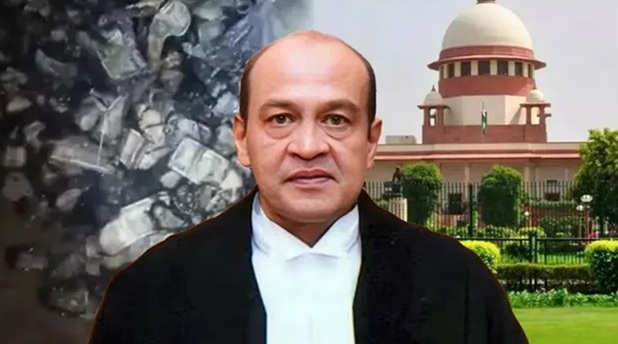
The issue of judicial accountability has come into sharp focus in light of the Justice Varma case, which has triggered debates on transparency, ethics, and mechanisms to hold members of the higher judiciary accountable.
- Allegations and controversies surrounding a sitting or former judge have highlighted institutional gaps in accountability mechanisms within the judiciary
- The case has reignited discussions on the balance between :
- Judicial independence, which is essential for a functioning democracy
- Judicial accountability, which ensures integrity and public trust
- It has also raised concerns about the effectiveness of existing in-house procedures and constitutional provisions to deal with misconduct
This development is significant as it touches upon the credibility of one of the most important pillars of Indian democracy.
What is Judicial Accountability ?
Judicial accountability refers to the mechanisms and processes through which judges are held responsible for their conduct, decisions, and adherence to ethical standards.
- It ensures that judges :
- Act with integrity, impartiality, and independence
- Do not misuse their authority
- Remain answerable for misconduct
- At the same time, accountability must be balanced with judicial independence, which protects judges from :
- Political pressure
- Executive interference
Thus, judicial accountability is about ensuring responsibility without compromising independence.
Constitutional and Legal Framework for Judicial Accountability in India
1. Impeachment Process
- Judges of the Supreme Court and High Courts can be removed through impeachment under :
- Articles 124 and 217 of the Constitution
- The process involves :
- Motion in Parliament
- Investigation by a committee
- Special majority for removal
Limitations :
- Extremely difficult to execute due to :
- Political considerations
- High threshold of proof
- No judge has been successfully impeached so far
2. In-House Procedure
- The judiciary has developed an internal mechanism to :
- Investigate complaints against judges
- Maintain discipline within the institution
Limitations :
- Lack of transparency
- No statutory backing
- Limited public accountability
3. Judicial Standards and Accountability Bill (Proposed)
- Aimed to :
- Define judicial misconduct
- Establish a complaint redressal mechanism
Status :
- The bill has not been enacted, leaving a gap in formal accountability mechanisms
4. Contempt of Court Provisions
- Protect the judiciary from :
- Defamation
- Scandalising the court
Challenge :
- May sometimes discourage :
- Legitimate criticism
- Public scrutiny
Key Issues Highlighted by the Justice Varma Case
1. Lack of Transparency in Handling Complaints
- The case has exposed concerns regarding :
- Opaque processes in dealing with allegations
- Absence of publicly accessible information
- This reduces :
- Public confidence
- Institutional credibility
2. Ineffectiveness of Existing Mechanisms
- Current systems such as impeachment and in-house procedures are :
- Either too rigid or too informal
- This creates a gap between accountability and enforceability
3. Absence of an Independent Oversight Body
- Unlike other branches of government, the judiciary lacks :
- An external, independent body to investigate misconduct
- This raises concerns about :
- Conflict of interest
- Institutional bias
4. Balance Between Independence and Accountability
- Excessive accountability mechanisms may :
- Undermine judicial independence
- Weak accountability may :
The challenge lies in achieving an optimal balance between the two principles.
5. Impact on Public Trust
- Allegations against judges directly affect :
- Public perception of fairness
- Legitimacy of judicial decisions
- Trust is a critical component of judicial authority, and any erosion can have far-reaching consequences.
Significance of Judicial Accountability
1. Ensuring Rule of Law
- Accountability ensures that :
- Judges adhere to legal and ethical standards
- Justice is delivered fairly
2. Maintaining Institutional Integrity
- Strong accountability mechanisms :
- Prevent misuse of power
- Uphold the dignity of the judiciary
3. Strengthening Democracy
- Judiciary is a key pillar of democracy
- Accountability ensures it remains :
4. Enhancing Public Confidence
- Transparent processes build :
- Trust among citizens
- Faith in the justice delivery system
Challenges in Ensuring Judicial Accountability
1. Fear of Undermining Judicial Independence
- Excessive external control may :
- Compromise impartial decision-making
2. Lack of Clear Legal Framework
- Absence of a comprehensive law leads to :
3. Institutional Resistance
- Judiciary may resist external oversight due to :
4. Political Influence in Impeachment
- Parliamentary process may :
- Be influenced by political considerations
5. Limited Public Awareness
- Lack of understanding about judicial processes :
- Reduces effective public scrutiny
Way Forward
1. Establishment of an Independent Judicial Oversight Body
- Create a statutory body to :
- Investigate complaints
- Ensure impartiality
2. Enacting Judicial Accountability Law
- Revive and pass a comprehensive legislation to :
- Define misconduct
- Provide clear procedures
3. Enhancing Transparency
- Make inquiry processes :
- More open
- Accessible to the public
4. Strengthening In-House Mechanisms
- Improve internal processes by :
- Introducing checks and balances
- Ensuring accountability
5. Promoting Ethical Standards
- Encourage :
- Judicial training
- Ethical guidelines
Practice Questions
Prelims
Q. Which of the following mechanisms exist for judicial accountability in India ?
- Impeachment by Parliament
- In-house procedure of judiciary
- Independent statutory oversight body
Select the correct answer :
(a) 1 and 2 only
(b) 2 and 3 only
(c) 1 and 3 only
(d) 1, 2 and 3
Mains
“Judicial independence and judicial accountability are complementary, not contradictory.” Discuss in the context of recent debates such as the Justice Varma case.
FAQs
Q1. What is judicial accountability ?
It refers to holding judges responsible for their conduct and actions.
Q2. What is the main mechanism for removing judges ?
Impeachment by Parliament.
Q3. What is the key issue in the Justice Varma case ?
Concerns over lack of transparency and accountability.
Q4. Why is accountability important ?
It ensures trust, integrity, and rule of law.
Q5. What is the main challenge ?
Balancing accountability with judicial independence.
|






 Contact Us
  New Batch : 9555124124/ 7428085757
  Tech Support : 9555124124/ 7428085757