New
GS Foundation (P+M) - Delhi : 23rd March 2026, 11:30 AM GS Foundation (P+M) - Prayagraj : 15th March 2026 GS Foundation (P+M) - Delhi : 23rd March 2026, 11:30 AM GS Foundation (P+M) - Prayagraj : 15th March 2026

Current Affairs for 23 February 2026

Exercise Vajra Prahar 2026: India–US Special Forces Strengthen Tactical Synergy

Prelims: (Defence Exercises; India–US Relations; Internal Security)
Mains: (GS 2 – Bilateral Relations; GS 3 – Security, Defence Preparedness)

Why in the News?

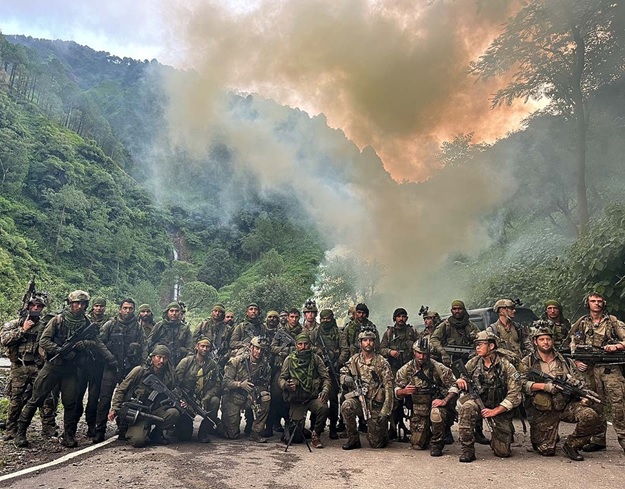
The Indian Army and the United States Army will conduct the 16th edition of the joint Special Forces exercise, Vajra Prahar 2026, at the Special Forces Training School, Bakloh, Himachal Pradesh.

The exercise reflects the growing depth of defence cooperation between India and the United States.
exercise-vajra-prahar-2026

Background and Context

India–US defence ties have strengthened significantly over the past two decades, marked by increasing joint exercises, logistics agreements, and strategic convergence in the Indo-Pacific.

  • Among bilateral military engagements, Exercise Vajra Prahar focuses specifically on Special Forces cooperation, enhancing joint operational capability in counter-terror and high-risk mission environments.
  • The 2026 edition marks the 16th iteration of the exercise, underlining its continuity and strategic importance.

About Exercise Vajra Prahar

Nature of the Exercise

  • A joint Special Forces exercise between the Indian Army and US Army.
  • Conducted alternately in India and the United States.
  • Focused on high-intensity, small-team operations.

Venue and Edition

  • 16th edition in 2026.
  • Held at the Special Forces Training School, Bakloh, Himachal Pradesh.
  • The location offers terrain suited for realistic combat simulations.

Objectives

The exercise is designed to:

  • Deepen defence cooperation.
  • Enhance interoperability between Special Forces units.
  • Improve joint operational readiness.
  • Facilitate exchange of advanced tactics, techniques, and procedures (TTPs).

Key Focus Areas in 2026 Edition

1. Counter-Terror Operations

  • Training will emphasise:
  • Hostage rescue.
  • Direct action missions.
  • Counter-insurgency drills.
  • Urban warfare scenarios.

2. Precision Strikes

Special Forces will conduct:

  • Targeted strike simulations.
  • Intelligence-driven assault operations.
  • Rapid deployment missions.

3. Intelligence-Based Missions

The exercise includes:

  • Surveillance and reconnaissance operations.
  • Intelligence gathering and integration.
  • Coordinated planning under simulated battlefield conditions.

4. Joint Planning & Battlefield Simulation

Participants will engage in:

  • Integrated mission planning.
  • Multi-domain coordination.
  • Realistic combat drills replicating hybrid warfare environments.

Significance of the Exercise

Strategic Significance

  • Reinforces India–US strategic partnership.
  • Strengthens operational synergy in special operations.
  • Enhances preparedness against terrorism and asymmetric threats.

Operational Significance

  • Improves interoperability in equipment use and communication systems.
  • Facilitates sharing of combat experience and best practices.
  • Builds mutual trust at tactical and operational levels.

Geopolitical Context

In an evolving security environment marked by terrorism, hybrid warfare, and regional instability, joint Special Forces exercises enhance deterrence capability and readiness.

Broader Defence Cooperation Context

Exercise Vajra Prahar complements other India–US military engagements such as:

  • Army-level exercises.
  • Naval and air force drills.
  • Logistics and intelligence-sharing agreements.

It reflects a shift from basic interoperability drills to high-end tactical integration.

FAQs

1. What is Exercise Vajra Prahar?

It is a joint Special Forces exercise conducted between the Indian Army and the US Army.

2. Where will the 2026 edition be held?

At the Special Forces Training School, Bakloh, Himachal Pradesh.

3. What is the main objective of the exercise?

To enhance interoperability, operational readiness, and exchange of advanced special operations tactics.

4. Which type of operations are emphasised?

Counter-terrorism, precision strikes, intelligence-based missions, and joint battlefield planning.

5. Why is it significant?

It strengthens India–US defence cooperation and improves preparedness against asymmetric and hybrid threats.

Baglihar Hydropower Project Temporarily Halted After Flooding in Chenab Basin

Prelims: (Geography + CA)
Mains: (GS 3 – Infrastructure, Disaster Management, Energy Security; GS 1 – Physical Geography)

Why in the News?

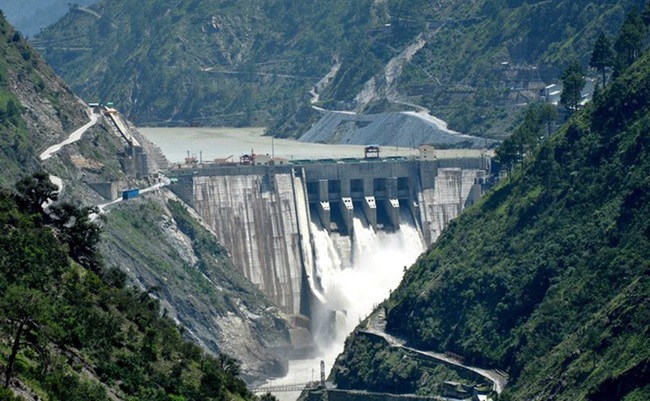
Operations at the 450 MW Stage-I of the Baglihar Hydropower Project were recently suspended after flooding affected the project site on the Chenab River in Jammu & Kashmir.

The incident has raised concerns about the vulnerability of hydropower infrastructure to extreme weather and river flow fluctuations.
baglihar-hydropower-project

Background and Context

The Chenab River basin is prone to heavy rainfall, glacial melt, and flash floods, particularly during monsoon and extreme weather events. Hydropower projects located in Himalayan river systems face increasing climate variability risks.

The temporary shutdown of a major generating unit highlights the need for improved flood management, dam safety protocols, and climate-resilient infrastructure planning.

About the Baglihar Hydropower Project

The Baglihar Hydropower Project is a 900 MW run-of-the-river power project located on the Chenab River in Ramban district of Jammu and Kashmir.

Key Features

  • Type: Run-of-the-river hydroelectric project.
  • Total Installed Capacity: 900 MW.
  • Structure: Concrete gravity dam.
  • Stages:
    • Stage I – 450 MW.
    • Stage II – 450 MW.

The project is a major contributor to northern India’s power supply and plays a role in regional energy security.

Key Facts About the Chenab River

1. Position in Indus Basin

  • The Chenab is the largest of the five tributaries of the Indus River.
  • It is one of the western rivers governed under the Indus Waters Treaty framework.

2. Course

  • Origin: Formed by the confluence of the Chandra and Bhaga streams in Lahaul and Spiti district of Himachal Pradesh.
  • In upper reaches, it is known as Chandrabhaga.
  • Flows through Himachal Pradesh and Jammu & Kashmir.
  • Enters Pakistan after crossing the Line of Control.
  • Joins the Sutlej after receiving waters from the Jhelum near Trimmu (in Pakistan).

The Chenab valley is a structural trough formed between the Great Himalayan and Pir Panjal ranges.

3. Major Tributaries

Left Bank Tributaries:

  • Niru
  • Tawi
  • Neeru
  • Liddrari

Right Bank Tributaries:

  • Ans
  • Bhut Nalla
  • Bichleri
  • Kalnai
  • Marusudar
  • Miyar Nalla

4. Major Dams on the Chenab

  • Salal (rockfill dam)
  • Aalal (concrete dam)
  • Baglihar
  • Dul

Significance of the Baglihar Project

1. Energy Security

  • Contributes significantly to the northern grid.
  • Supports peak power demand.

2. Strategic Importance

  • Located on a western river under the Indus Waters Treaty.
  • Infrastructure development on Chenab has geopolitical significance.

3. Flood Management

Although primarily a run-of-the-river project, dam infrastructure helps moderate river flows to some extent.

Challenges Highlighted by Recent Flooding

  • Increased frequency of extreme rainfall events.
  • Siltation and debris flow affecting turbines.
  • Structural vulnerability in Himalayan hydropower projects.
  • Climate change-induced hydrological unpredictability.

Temporary suspension of operations underscores the need for:

  • Improved dam safety audits.
  • Real-time flood forecasting systems.
  • Strengthened early warning mechanisms.
  • Climate-resilient infrastructure design.

Broader Implications

Infrastructure Resilience: Hydropower projects in fragile Himalayan terrain must integrate disaster risk reduction measures.

Environmental Concerns: Run-of-the-river projects, though less storage-intensive, remain vulnerable to flash floods and glacial lake outburst floods (GLOFs).

Policy Perspective: The incident highlights the importance of balancing renewable energy expansion with ecological sensitivity and safety planning.

FAQs

1. What is the capacity of the Baglihar project?

It has a total installed capacity of 900 MW, with two stages of 450 MW each.

2. On which river is it located?

It is located on the Chenab River in Jammu & Kashmir.

3. What type of dam is constructed?

It is a concrete gravity dam under a run-of-the-river scheme.

4. Why were operations suspended?

Due to flooding that affected Stage-I operations.

5. Why is the Chenab River important?

It is the largest tributary of the Indus River and holds hydrological and strategic significance.

US Imposes Temporary 15% Tariff: Legal Reset in Trade Policy and Implications for India

Prelims: (International Relations + CA)
Mains: (GS 2 – India–US Relations; GS 3 – External Sector, Trade Policy)

Why in News?

After the Supreme Court of the United States struck down tariffs imposed under the International Emergency Economic Powers Act (IEEPA), President Donald Trump invoked Section 122 of the Trade Act, 1974 to reimpose trade levies.

He initially announced a 10% universal tariff, later raising it to 15% — the maximum allowed under Section 122. However, the measure is temporary and can remain in force for only about five months unless approved by the US Congress.

us-imposes-temporary

Background and Context

The Supreme Court ruling significantly curtailed the President’s ability to impose sweeping tariffs using emergency powers. IEEPA was originally designed for sanctions and asset freezes, not broad-based trade levies.

With that route closed, the administration shifted to Section 122 — a rarely used balance-of-payments provision allowing temporary tariffs up to 15% for 150 days unless extended by Congress.

This marks a shift from executive-driven emergency tariffs to more legally constrained mechanisms.

Impact of the New 15% US Tariff

Countries Better Off Under Flat Rate

Under the temporary flat 15% tariff, several major economies now face lower duties compared to earlier differential and punitive tariffs. These include:

  • India
  • China
  • Japan
  • South Korea
  • ASEAN nations
  • Brazil
  • Mexico
  • Canada

For many of these countries, the 15% rate is lower than the previously imposed reciprocal or penalty-based tariffs.

Countries Facing Higher Tariffs

Conversely, some countries that earlier faced lower duties may now be subject to relatively higher rates under the uniform structure, including:

  • Russia
  • Australia
  • United Kingdom
  • Saudi Arabia
  • United Arab Emirates
  • Qatar
  • Argentina
  • Colombia

India’s Position

India had been facing cumulative tariffs of up to 50% since August 2025 due to reciprocal measures and penalties linked to Russian oil imports.

Following a recent trade framework and removal of the oil penalty:

  • Indian goods are currently taxed at about 25%.
  • Expectations suggest a reduction toward 18%.
  • If the flat 15% regime applies fully, India’s relative competitiveness improves compared to earlier punitive rates.

Additionally, around 55% of India’s exports to the US may revert to standard Most Favoured Nation (MFN) rates after IEEPA-based measures were struck down.

China’s Position

China had faced cumulative tariffs of roughly 45%, including reciprocal and fentanyl-related levies under IEEPA.

With IEEPA invalidated, the flat 15% tariff could temporarily place India and China on comparable footing — unless fresh measures are introduced under other statutory provisions.

Supreme Court Ruling Curtails Tariff Powers

The Supreme Court ruling:

  • Reaffirmed Congressional primacy in taxation.
  • Limited unilateral executive tariff authority.
  • Required stricter statutory justification for future measures.
  • Potentially triggered refund liabilities for previously collected tariffs.

This weakens the administration’s leverage in trade negotiations, as partners may adopt firmer negotiating stances.

Mounting Legal and Political Challenges

Limited Congressional Path

To restore broader tariff authority, the President would require Congressional approval — difficult given slim legislative majorities and upcoming midterm elections.

Political Risks

  • Tariffs have contributed to inflationary pressures.
  • Voter sensitivity to price increases complicates aggressive protectionism.
  • Party divisions may deepen over trade strategy.

Alternative Tools

The administration may rely on:

  • Section 122 (temporary balance-of-payments tariffs).
  • Section 232 (national security tariffs).
  • Section 301 (unfair trade practices investigations).

However, these involve procedural safeguards and narrower scope compared to IEEPA.

Shifting Trade Dynamics After IEEPA Ruling

Continued Sectoral Tariffs

Section 232 tariffs remain in force:

  • 50% on steel and aluminium.
  • 25% on certain auto parts.

Meanwhile, about 40% of India’s exports — including smartphones, petroleum products, and pharmaceuticals — remain exempt.

Erosion of Trade Leverage

With reciprocal tariffs struck down:

  • US bargaining power in ongoing trade talks may weaken.
  • Trade policy shifts from executive-driven to legally constrained frameworks.
  • Greater judicial and legislative oversight emerges in US trade governance.

India has reportedly postponed high-level trade engagements to reassess legal and strategic implications.

Significance for India

Short-Term Relief

Lower average tariffs improve export competitiveness.

Strategic Caution

India anticipates that the US may deploy alternative statutory mechanisms.

Trade Diplomacy

The evolving landscape underscores the importance of:

  • Diversifying export markets.
  • Securing sectoral exemptions.
  • Strengthening bilateral trade frameworks.

FAQs

1. Why did the US shift to Section 122 tariffs?

Because the Supreme Court struck down IEEPA-based tariffs, limiting executive emergency powers.

2. How long can the 15% tariff remain in force?

Up to 150 days unless extended by Congress.

3. Is India better off under the new regime?

Yes, compared to earlier cumulative tariffs of up to 50%, the 15% structure is relatively favourable.

4. Do other US tariff provisions still apply?

Yes, Section 232 and Section 301 tariffs remain valid in specific sectors.

5. What does this mean for global trade?

It signals stronger judicial oversight and a move toward more legally constrained, rules-based tariff measures.

AI-Led Data Centre Surge: Is India’s Power Grid Ready for the Load?

Prelims: (Economics + CA)
Mains: (GS 3 – Infrastructure, Energy Security, Emerging Technologies; GS 2 – Governance & Regulatory Frameworks)

Why in News?

According to the chief of Grid India, India’s power system is set for major transformation as AI-driven data centres expand rapidly.
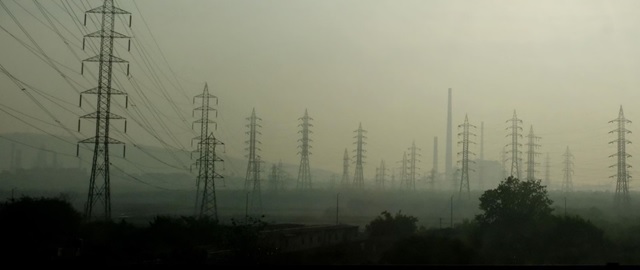
  • India’s current data centre capacity of about 1.2 GW is projected to quadruple—reaching 8–10 GW by 2030—due to surging AI-led computing demand.
  • While artificial intelligence relies on algorithms, it simultaneously requires vast quantities of reliable electricity, turning data centres into large, complex, and dynamic loads on the national grid.

ai-led-data-centre-surge

Background and Context

India is emerging as a global digital hub, driven by AI adoption, cloud services, fintech growth, and semiconductor expansion. Data centres—particularly hyperscale AI facilities—are energy-intensive and demand uninterrupted, high-quality power supply.

Unlike traditional industrial loads, AI data centres exhibit:

  • Rapid load ramp-ups.
  • High baseload consumption.
  • Power electronics-based (inverter-heavy) operations.
  • Sudden withdrawal risks (“silent exits”).

This transformation requires fundamental changes in grid planning, transmission infrastructure, and regulatory standards.

Rising Grid Risks from Data Centre Expansion

1. High-Intensity Transmission-Level Loads

AI-driven data centres require direct high-voltage transmission connectivity rather than conventional sub-transmission systems.

  • Projected load: 8–10 GW by 2030.
  • Individual hyperscale centres may require ~1 GW each.

Sudden withdrawal of 1–2 GW from inverter-based loads could destabilise grid frequency and voltage stability.

2. Planning and Resource Adequacy

Experts highlight the need for:

  • Strong transmission corridors.
  • Resource adequacy planning (primary generation + reserves).
  • Compliance with balancing requirements.
  • Enhanced forecasting systems.

Given AI’s unpredictable computational surges, peak load forecasting becomes increasingly complex.

Grid authorities emphasise that risks cannot be absorbed solely by the supply side—demand-side management and compliance norms are essential.

3. Evolving Standards and Storage Integration

Globally, several jurisdictions mandate dedicated generation capacity for hyperscale facilities.

India’s grid codes and technical standards must evolve to:

  • Integrate large dynamic loads.
  • Mandate storage-backed supply.
  • Improve energy storage integration (battery + pumped hydro).

Risk of Chaos Without Strategic Planning

1. Infrastructure Stress

Rapid hyperscale expansion without coordination could:

  • Overburden substations.
  • Lead to ad hoc transmission expansion.
  • Increase tariffs for other consumers.

High-voltage substations and central-state coordination are critical.

2. Baseload Generation Requirement

Hyperscale data centres require stable, long-duration power.

While the United States increasingly relies on nuclear energy for such loads, India may require a diversified mix including:

  • Coal-based baseload.
  • Hydropower.
  • Renewables with storage.
  • Pumped hydro storage.

3. Mixed Energy and Storage Solutions

Experts recommend:

  • Hybrid supply models (grid + captive generation).
  • Long-duration battery storage (6–9 hours).
  • Renewable energy procurement via open access.

Without pre-planned data centre zones, uncoordinated expansion could result in inefficient capital allocation and higher system costs.

Renewables and Efficiency in Data Centre Expansion

1. Open Access for Green Power

Under India’s open access framework, consumers above 1 MW can procure power directly from generators or exchanges, bypassing DISCOMs.

This allows hyperscalers to:

  • Secure renewable energy contracts.
  • Ensure price predictability.
  • Meet ESG commitments.

Surplus generation capacity and upcoming pumped hydro projects could support round-the-clock green supply.

2. Semiconductor-Level Efficiency Gains

Energy efficiency improvements at the chip level are critical.

Companies like Intel are advancing technologies such as:

  • RibbonFET architecture.
  • Backside power delivery.
  • Advanced packaging.

These innovations can improve efficiency by ~15% and reduce energy use by minimising data movement.

Additionally, a “heterogeneous AI” approach—allocating workloads across CPUs, GPUs, and specialised processors—can significantly cut power consumption.

3. Hyperscalers’ Investment Conditions

Large AI data centre investors prioritise:

  • Assured renewable power supply.
  • Grid reliability.
  • Regulatory clarity.
  • Long-term tariff certainty.
  • Fast-track power approvals.

India’s AI ecosystem is still scaling, offering policymakers a strategic window for pre-emptive planning.

Significance for India

Energy Security: Data centres could become one of the fastest-growing electricity demand segments.

Grid Stability: Large inverter-based loads increase frequency and voltage management challenges.

Climate Commitments: Meeting AI demand while adhering to renewable targets requires integrated planning.

Economic Opportunity:  India can position itself as a global AI and cloud hub if power infrastructure is reliable and competitively priced.

Challenges

  • Weak transmission capacity in high-demand corridors.
  • Regulatory fragmentation between central and state utilities.
  • Financial stress of DISCOMs.
  • Risk of tariff cross-subsidisation.
  • Limited long-duration storage capacity.

Way Forward

1. Dedicated Data Centre Zones-Pre-plan high-capacity substations and transmission corridors.

2. Mandated Hybrid Energy Mix-Require captive + renewable + storage-backed supply models.

3. Strengthen Grid Codes-Update standards to manage dynamic inverter-heavy loads.

4. Expand Pumped Hydro & Storage- Long-duration storage will be essential for stability.

5. Improve Forecasting & Digital Grid Management-Leverage AI-driven grid analytics to predict load variability.

FAQs

1. Why are AI data centres a challenge for the grid?

Because they are high-intensity, dynamic loads that can rapidly ramp up or withdraw large amounts of power.

2. What is India’s projected data centre demand by 2030?

It may rise from 1.2 GW currently to 8–10 GW.

3. How can renewables support AI growth?

Through open access procurement and integration with battery and pumped hydro storage.

4. Why is storage critical?

It ensures grid stability during demand spikes and renewable variability.

5. Can India turn this into an opportunity?

Yes—if infrastructure planning, regulatory clarity, and energy diversification are aligned with AI expansion needs.

J&K Apple Sector Faces Headwinds Amid Reduced Import Duties Under Trade Deals

Prelims: (Economics + CA)
Mains: (GS 3 – Agriculture, External Sector, Inclusive Growth; GS 2 – Federalism & Trade Policy)

Why in the News?

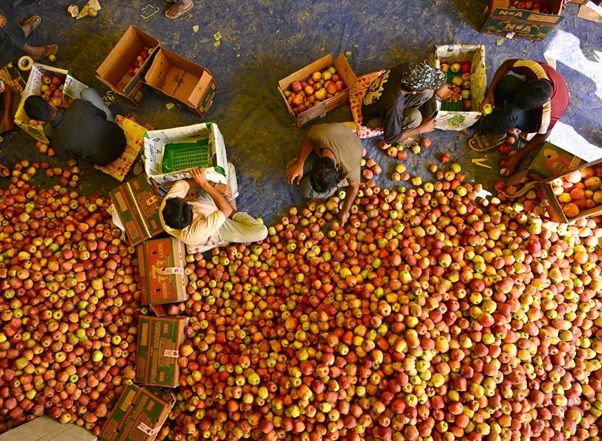
Apple traders and political leaders in Jammu and Kashmir have expressed concern over reduced import duties on apples from the United States and the European Union under recent trade agreements.

They argue that lower tariffs could undermine the region’s horticulture sector, which forms the backbone of its rural economy.
apple-sector

Background of the Trade Decisions

US Apple Imports

India has reduced the basic customs duty on apples imported from the United States from 50% to 25%, while imposing a Minimum Import Price (MIP) of ₹80 per kilogram.

EU Apple Imports

Under the India–EU trade framework:

  • Import duty on fresh fruits has been reduced to 20%.
  • A Tariff Rate Quota (TRQ) system has been introduced.
  • Initially, 50,000 tonnes per year of apples will be allowed at the concessional rate.
  • The quota will gradually increase to 1,00,000 tonnes over 10 years.

Political leaders in J&K have termed these moves potentially harmful to domestic orchardists.

Importance of Apple Production in J&K

Apple cultivation is central to the region’s economy. According to the J&K Economic Survey 2025–26:

  • Apples constitute nearly 50% of total horticulture output.
  • The horticulture sector generates approximately ₹10,000 crore in revenue.
  • Around 35 lakh individuals are directly or indirectly employed.
  • Nearly seven lakh families depend on horticulture.

In 2024, J&K produced around 21 lakh metric tonnes of apples, contributing over 70% of India’s total apple output.

This makes the region the backbone of India’s apple supply chain.

Structural Challenges Faced by J&K Orchardists

1. Small and Fragmented Landholdings

  • Average orchard size in J&K: 0.40 hectares.
  • In countries like the US, New Zealand, and EU states: average farms exceed 50 hectares.

Fragmentation limits mechanisation and economies of scale.

2. Lower Productivity

India produces about 7–8 tonnes per hectare, compared to:

  • 40–70 tonnes per hectare in the US, Iran, New Zealand, and China.

Higher productivity abroad is driven by:

  • Mechanised farming.
  • Advanced pruning and harvesting techniques.
  • AI-based farm systems.
  • Superior climate conditions.

3. Variety and Quality Gap

Popular global varieties like Gala apples are well established in Western markets.

Though India has recently introduced Gala cultivation, issues remain regarding:

  • Yield consistency.
  • Colour and visual appeal.
  • Taste and shape standardisation.

This creates a perception gap in quality when compared to imports.

Impact on Cold Storage and Off-Season Prices

J&K has invested heavily in controlled-atmosphere (CA) cold storage infrastructure to stabilise prices.

  • 397.08 lakh metric tonnes of apples are stored.
  • 92 cold storage units operate in the region.

Reduced import duties may allow fresh apples from countries like New Zealand to enter the Indian market at competitive prices during the off-season.

Possible consequences:

  • Reduced profitability of stored apples.
  • Cold storage investments becoming economically unviable.
  • Distress sales by farmers.
  • Collapse of price-stabilisation mechanisms developed over years.

Political and Policy Demands

Political leaders and trade bodies in J&K have urged the Centre to:

  • Re-evaluate trade agreements.
  • Consider excluding apples from tariff concessions.
  • Expand high-density apple cultivation (currently limited to 30,000 kanals out of 30 lakh kanals).
  • Provide interest-free loans under the Holistic Agriculture Development Programme (HADP).
  • Expand CA storage capacity.
  • Operationalise dry port projects to improve export logistics.

They argue that without improvements in productivity and quality, local producers cannot compete effectively.

Broader Economic and Policy Implications

Trade-Off in Trade Policy

  • Lower tariffs benefit consumers through reduced prices.
  • Domestic producers face increased competitive pressure.

Competitiveness Imperative

The debate highlights the need for:

  • Technological upgradation.

  • Farm consolidation.
  • AI-enabled precision horticulture.
  • Improved grading, branding, and packaging.
  • Supply chain modernisation.

Federal Concerns

The issue reflects tension between national trade diplomacy and regional economic interests.

Significance

For J&K Economy-Apple cultivation supports livelihoods, rural income, and social stability.

For Agricultural Reform-Trade exposure could push productivity improvements but may cause short-term distress.

For Consumer Welfare-Lower prices could benefit urban consumers.

For Trade Strategy-India must balance market access commitments with safeguards for sensitive sectors.

Way Forward

  1. Phased Liberalisation with Safeguards Use TRQ ceilings and MIP effectively.
  2. Productivity EnhancementExpand high-density plantations and mechanisation.
  3. Value Chain Integration Invest in branding, export diversification, and food processing.
  4. Targeted Financial SupportInterest subvention and infrastructure subsidies.
  5. Market Intelligence SystemsReal-time price monitoring to prevent import shocks.

FAQs

1. Why are J&K apple traders concerned?

Reduced import duties may allow cheaper foreign apples to undercut local produce.

2. How important is apple cultivation to J&K?

It contributes over 70% of India’s apple production and supports millions of livelihoods.

3. What is a Tariff Rate Quota (TRQ)?

It allows a fixed quantity of imports at reduced duty, beyond which higher tariffs apply.

4. What structural issues affect J&K orchardists?

Small landholdings, lower productivity, and quality gaps.

5. What is the long-term solution?

Improving productivity, modernising infrastructure, and enhancing competitiveness rather than relying solely on tariff protection.

Forest Fires in North India: Arunachal Pradesh and Nagaland

Context

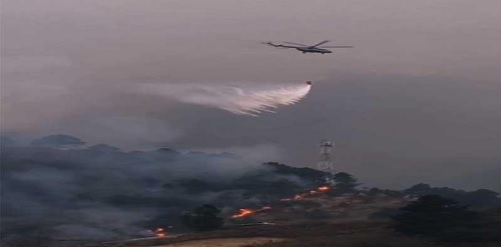
  • Arunachal Pradesh and Nagaland have been experiencing severe forest fires for the past week, forcing the Indian Air Force (IAF) to conduct aerial firefighting operations in high-altitude areas.
  • These operations are primarily concentrated in the Lohit Valley and Dzukou Valley, where helicopters are dropping thousands of liters of water to protect the sensitive Himalayan ecosystem.

forest-fires

Forest Fires in Northeast India

Fire Pattern

  • Fires in the Northeast are primarily surface fires that spread through dry leaves, grass, and forest debris. These fires spread more rapidly up slopes than the crown fires seen in Western countries, especially during the dry winter (December–March).
  • The region is a global biodiversity hotspot. Fires pose a serious threat to rare species, local livelihoods, and mountain soil stability.

Key Facts and Figures

  • Increasing Fires: In early 2026, fires in Arunachal Pradesh were nearly 200 times more frequent than in the same period in 2025.
  • High-Altitude Operations: The Indian Air Force is conducting water-dropping missions above 9,500 feet, which are technically challenging.
  • Water Supply: In the Walong area alone, Mi-17 V5 helicopters dropped more than 1.4 lakh liters of water in a week.
  • Ecological Sensitivity: The forest cover in the Northeast accounts for approximately 36% of India's total forest cover, making it the country's most sensitive fire hotspot.
  • Seasonal Extremes: Nearly 80% of annual fires in the region occur in March–April, but in 2026, this peak occurred untimely in February.

Major Causes of Fire

  1. Dry Weather and Climate Change: Long dry periods and a lack of adequate winter rainfall (Western Disturbances) dry out the forest floor. Example: In 2026, the lack of moisture in the Lohit Valley made vegetation susceptible to fire.
  2. Slash-and-Burn/Jhum Cultivation: Traditional farming involves clearing land by setting fires that can spread to forests. Example: Uncontrolled shifting cultivation was identified as the main cause of the Walong fire in Anjaw district.
  3. Fuel Accumulation: Dry bamboo bushes and pine needles are highly combustible fuels. Example: Dry alpine grass and small rhododendrons in the Dzukou Valley helped the fire spread to Japfu Peak.
  4. Human Negligence: Negligence by trekkers, hunters, or villagers can cause fires. Example: The recent Dzukou fire required emergency evacuation of 30 trekkers.
  5. Topographic wind currents: Winds from slopes and valleys push fires rapidly upwards. Example: Strong winds near Japfu Peak helped the fire spread up steep hills.

Steps taken so far

  • IAF HADR mission: Precise water drop using Bambi buckets from Mi-17 V5 helicopters
  • Coordinated action: Ground operations with the Indian Army's Spear Corps, state forest departments, and local disaster management officials
  • FSI monitoring: The Forest Survey of India (FSI) provided real-time fire information through the SNPP-VIIRS system
  • Central financial assistance: Support for building fire lines and deploying fire watchers under the Forest Fire Prevention and Management (FPM) scheme

Key challenges

  • Inaccessible terrain: Fire trucks are unable to reach many areas due to the inaccessibility of the Himalayas. Example: In Anjaw, ground teams took several days to reach the fire site.
  • Thin air and low visibility: Flying helicopters at high altitudes is difficult. Example: IAF pilots in Nagaland had to take water from Padumpokhiri Lake.
  • Lack of water sources: Large reservoirs are rare in high-altitude areas. Example: In the Dzukou mission, helicopters had to travel long distances to reach the lakes in Dimapur.
  • Communication lag: The time lag between satellite fire information and ground response. Example: By the time the fire information reached remote guards, the fire had already transformed from a surface fire to a more dangerous slope fire.
  • Cultural and social factors: Maintaining a balance between traditional farming and forest conservation. Example: Shifting cultivation continues in Arunachal Pradesh because it is linked to tribal culture and food security.

The Way Forward

  • Community Fire Fighting Squads: Encouraging local Panchayats to be first responders
  • Technology Integration: Drone Night Surveillance and AI-Based Fire Spread Modeling
  • Infrastructure Development: Building Permanent Reservoirs in High-Altitude Areas
  • Fuel Management: Promoting Commercial Collection of Dry Vegetation (Biofuel)
  • Inter-State Coordination: Establishing a Northeast Fire Task Force

Conclusion

The 2026 Northeast forest fires clearly demonstrate that climate-related disasters pose a growing threat to sensitive ecological regions. The swift action by the IAF and Army has been commendable, but the long-term solution lies in striking a balance between traditional practices and modern fire management. Protecting this region is essential for India's climate commitments and regional environmental security.

CJ-1000 Missile

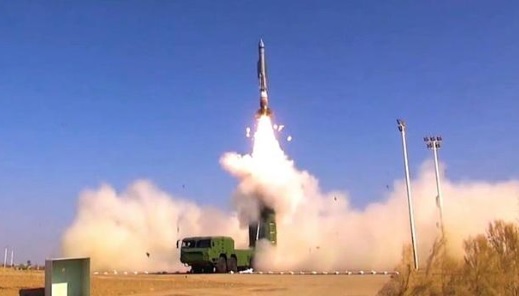
China recently publicly demonstrated the CJ-1000 ground-launched scramjet-powered hypersonic missile during a military parade in Beijing.

About the CJ-1000 Missile

  • The CJ-1000 is a road-mobile hypersonic cruise missile indigenously developed by China. It is believed to be the first and only operational land-based scramjet-powered hypersonic missile to date.
  • The missile is deployed on a 10-wheel diesel-electric hybrid transporter-erector-launcher (TEL) vehicle, enhancing its mobility and rapid deployment capability.
  • Its range is estimated to be at least 2,500 kilometers, enabling it to strike long-range strategic targets.

CJ-1000-Missile

Scramjet vs. Hypersonic Glide Vehicle

  • Scramjet technology is considered highly advanced but technically complex in the field of hypersonic weapons.
  • Comparatively, systems like China's DF-17 and Russia's Avangard are based on hypersonic glide vehicles (HGVs).

Reasons for the danger of scramjet missiles

  • Low flight altitude: Scramjet missiles typically fly at altitudes of 20 to 30 km, while glide vehicles operate at altitudes of 60 to 80 km. Flying at low altitudes makes them difficult for enemy radar to detect.
  • Radar evasion capability: It is more challenging for any air defense system to detect and respond in time to a missile flying at low altitudes.
  • Continuous engine operation: The scramjet engine remains active throughout the cruise and terminal phases. This gives the missile the ability to change direction during flight, maintain greater maneuverability, and strike the target with higher accuracy.
  • Limitations of Glide Vehicles: In contrast, hypersonic glide vehicles rely primarily on inertia in the final stages, which can limit their maneuverability.
« »
  • SUN
  • MON
  • TUE
  • WED
  • THU
  • FRI
  • SAT
Have any Query?

Our support team will be happy to assist you!

OR
X