New
Hindi Medium: (Delhi) - GS Foundation (P+M) : 10th Aug 2026, 3:00 PM Hindi Medium: (Prayagraj) - GS Foundation (P+M) : 18th Aug 2026, 8:00 AM English Medium: (Delhi) - GS Foundation (P+M) : 6th Aug 2026 English Medium: (Prayagraj) - GS Foundation (P+M) : 19th Aug 2026, 11:00 AM Hindi Medium: (Delhi) - GS Foundation (P+M) : 10th Aug 2026, 3:00 PM Hindi Medium: (Prayagraj) - GS Foundation (P+M) : 18th Aug 2026, 8:00 AM English Medium: (Delhi) - GS Foundation (P+M) : 6th Aug 2026 English Medium: (Prayagraj) - GS Foundation (P+M) : 19th Aug 2026, 11:00 AM

Current Affairs for 26 August 2026

SIM Card Rules 2026: What Changes After August 24 and How It Affects Mobile Users

Prelims: Department of Telecommunications (DoT), Digital Intelligence Platform (DIP), SIM Card Limits, Customer Application Form (CAF), Telecom Cyber Security
Mains: GS Paper II: Government Policies and Interventions
GS Paper III: Cyber Security, Communication Networks, Internal Security, Digital Technology

Why in News?

The Department of Telecommunications (DoT) has tightened the enforcement of rules governing the number of mobile connections that an individual can hold in India. From 24 August 2026, telecom service providers are required to identify subscribers who have already reached the prescribed limit of mobile connections and prevent them from obtaining additional connections beyond that limit.


What is the SIM Card Limit in India?

  • The maximum number of mobile connections that can be held by one individual is:

Region

Maximum Mobile Connections

Most parts of India

9

Jammu & Kashmir

6

Assam

6

North-East

6

  • The limit applies to mobile connections registered in an individual's name across telecom operators and Licensed Service Areas.

What are the changes?

  • Earlier: Verification across different operators and service areas was comparatively difficult because an individual could have connections from multiple telecom operators.
  • Now: The government's Digital Intelligence Platform (DIP) will help telecom companies identify subscribers who have already reached the permitted limit.

Subscriber → Identity Check → DIP Verification → Existing Connections Checked → SIM Issued/Rejected

What is a SIM Card?

  • SIM stands for Subscriber Identity Module. It is a small electronic module used in mobile devices to identify and authenticate a subscriber on a mobile network.
  • A SIM contains information that enables a telecom network to recognise the subscriber and provide services such as voice calls, SMS and mobile data.

How Does a SIM Work?

  • SIM inserted/activated → Mobile connects to network → Subscriber authenticated → Network services provided

What is an eSIM?

  • An eSIM (Embedded SIM) performs the basic function of a conventional SIM without requiring the familiar removable plastic SIM card. 
  • It is embedded in the device and can be provisioned digitally with an operator profile.

Why Has the Government Tightened the Rules?

  • Multiple mobile connections obtained through false or misused identities can facilitate cybercrime.
  • Fraudsters may use such connections for phishing, impersonation, fraudulent calls and messages, financial scams, fake identities and organised cybercrime.
  • Better coordination between telecom companies and government databases can make suspicious mobile connections easier to identify.
  • The broader objective is therefore:

Verified Identity → Controlled SIM Issuance → Better Traceability → Reduced Telecom Fraud

Impact on Ordinary Mobile Users

  • For the majority of consumers who have only one or a few SIM cards, the immediate impact is expected to be limited.
  • The greatest impact will be on individuals holding many mobile connections, applicants already at the prescribed limit, cases involving multiple connections issued using the same identity and fraudulent or unauthorised connections.
  • The reform therefore targets better subscriber verification rather than restricting ordinary mobile use.

Benefits of the New Enforcement System

  • Stronger Cyber-Security: Better identity verification can make it more difficult to obtain large numbers of connections for fraudulent purposes.
  • Better Subscriber Accountability: Mobile connections can be more effectively associated with verified subscribers.
  • Cross-Operator Verification: DIP can help overcome information gaps where connections are spread across different telecom companies.
  • Detection of Identity Misuse: Consumers may be better protected against unauthorised connections obtained using their identity.
  • Real-Time Monitoring: The planned transition to real-time checks can prevent an impermissible connection at the enrolment stage rather than detecting it later.

What Should Consumers Do?

  • Consumers should:
    • Check how many mobile connections are registered in their name.
    • Report connections they do not recognise.
    • Keep subscriber/KYC details accurate.
    • Provide correct information while applying for a new connection.
    • Avoid allowing others to misuse connections issued in their name.

Prelims MCQ

Q. With reference to the rules governing mobile connections in India, consider the following statements:

  1. An individual can generally hold a maximum of nine mobile connections in most parts of India.
  2. The permitted limit is six in Jammu & Kashmir, Assam and the North-East.
  3. The Digital Intelligence Platform is being used to strengthen verification of subscribers who have reached the prescribed limit.

Which of the statements given above are correct?

A. 1 and 2 only

B. 2 and 3 only

C. 1 and 3 only

D. 1, 2 and 3

Mains Practice Questions

Q. “The regulation of mobile connections has increasingly become an issue of digital identity and cyber-security rather than merely telecom administration.” Discuss.

FAQs

What changed from August 24, 2026?

Telecom operators must strengthen checks to prevent subscribers from obtaining mobile connections beyond the prescribed limit. 

How many SIM connections can a person have?

Generally, a person can have up to nine mobile connections in most parts of India.

Where is the limit six?

The limit is six connections in Jammu & Kashmir, Assam and the North-East 

What is DIP?

The Digital Intelligence Platform supports information-sharing and verification to help detect misuse of telecom resources. 

When will real-time verification be introduced?

Telecom operators have been directed to move towards the required real-time verification arrangements by 30 November 2026. 

India’s Non-Fossil Power Capacity Reaches 300.5 GW: Key Facts, Government initiatives, Significance and Challenges

Prelims: Non-Fossil Fuel Energy, Renewable Energy, Solar Power, Wind Power, Hydropower, Nuclear Power, Nationally Determined Contributions (NDCs), Green Energy Corridor
Mains: GS Paper II: International Agreements and India's Climate Commitments
GS Paper III: Energy, Infrastructure, Environment, Climate Change, Sustainable Development

Why in News?

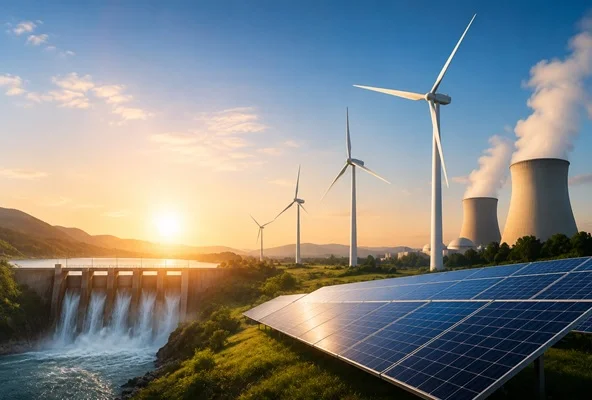
The Ministry of New and Renewable Energy (MNRE) announced that India's installed non-fossil fuel-based electricity generation capacity has crossed 300 GW, reaching 300.50 GW as on 31 July 2026. This constitutes over 54% of India's total installed power capacity (around 552 GW) and represents more than 60% of India's 2030 target of 500 GW non-fossil capacity under its climate commitments.
Key Facts at a Glance

Indicator Key Fact
Non-fossil capacity 300.50 GW
Date of milestone data 31 July 2026
Total installed power capacity Around 552 GW
Non-fossil share Over 54%
Largest non-fossil source Solar Power
Solar power 164.59 GW
Wind capacity 58.14 GW
Hydropower  57.24 GW
Bio-power 11.75 GW
Nuclear power 8.78 GW
2030 non-fossil capacity target 500 GW
Target already achieved Over 60%

Remaining to 500 GW

About 199.5 GW

Updated NDC

About 50% cumulative installed electric-power capacity from non-fossil sources by 2030

Net Zero target

2070

Nodal ministry for renewable energy

Ministry of New and Renewable Energy (MNRE)

Major international framework

Paris Agreement

Panchamrit announced at

COP26, Glasgow (2021)

What Does 'Non-Fossil Fuel Power' Mean?

  • It refers to energy obtained from sources other than fossil fuels such as coal, petroleum and natural gas. 
  • India's non-fossil electricity capacity primarily includes:

Solar + Wind + Hydropower + Bio-power + Nuclear Power

Composition of India's 300.50 GW Non-Fossil Capacity

  • Solar Power-164.59 GW: Solar energy is the largest contributor to India's non-fossil fuel power capacity. India's solar capacity has increased dramatically from around 2.8 GW in 2014 to around 165 GW in 2026. Major government initiatives supporting solar expansion include:

National Solar Mission

  • PM Surya Ghar: Muft Bijli Yojana
  • PM-KUSUM
  • Solar Parks Scheme
  • Production Linked Incentive (PLI) Scheme for High-Efficiency Solar PV Modules
  • Rooftop solar programmes

Green Energy Corridors

  • Wind Power-58.14 GW: India's installed wind-power capacity reached 58.14 GW by 31 July 2026. It has increased from around 21 GW in 2014, highlighting the expansion of India's wind-energy ecosystem. Wind-rich states include Gujarat, Tamil Nadu, Karnataka, Maharashtra, Rajasthan and Andhra Pradesh. India is also increasingly exploring offshore wind energy, particularly along the Gujarat and Tamil Nadu coasts.
  • Hydropower-57.24 GW: Large and small hydropower together contribute 57.24 GW to India's non-fossil electricity capacity. Hydropower has additional importance because it can complement variable renewable sources such as solar and wind. Pumped Storage Projects (PSPs) are particularly important for storing energy and balancing the electricity grid.
  • Bio-Power-11.75 GW: India's bio-power capacity stands at 11.75 GW. Bio-power can utilise agricultural residues, Bagasse, biomass, organic waste and other biodegradable materials. It can simultaneously contribute to waste management, rural income generation and energy security.
  • Nuclear Power-8.78 GW: India's nuclear-power capacity stands at 8.78 GW. Unlike solar and wind, nuclear power can provide relatively continuous electricity generation.

India's Journey towards Clean Energy

  • Solar power has emerged as the principal driver. MNRE states that installed solar capacity increased from around 2.8 GW in 2014 to about 165 GW in 2026, while wind capacity increased from around 21 GW to more than 58 GW.
  • During 2025-26 alone, India installed a record 55.29 GW of non-fossil fuel-based electricity capacity, including Solar – 44.6 GW and Wind – 6 GW

Link with India's Updated NDCs

India submitted its updated Nationally Determined Contribution (NDC) under the Paris Agreement in 2022. One of its major commitments is to achieve about 50% cumulative electric-power installed capacity from non-fossil fuel-based energy resources by 2030. India has now crossed 54%, meaning that, on the installed-capacity metric, it has moved beyond this 2030 NDC threshold ahead of schedule.

India's Panchamrit Commitments

  • At COP26 in Glasgow in 2021, India announced the 'Panchamrit' climate commitments. They included:
  • Reaching 500 GW non-fossil energy capacity by 2030.
  • Meeting 50% of energy requirements from renewable energy by 2030.
  • Reducing projected carbon emissions by 1 billion tonnes by 2030.
  • Reducing the carbon intensity of the economy by 45% by 2030 compared with 2005.
  • Achieving Net Zero by 2070.

Major Government Initiatives Supporting the Transition

  • National Solar Mission: Promotes large-scale development of solar power and supports India's transition towards a solar-based energy economy.
  • PM Surya Ghar-Muft Bijli Yojana: Promotes rooftop solar installations among residential households.
  • PM-KUSUM: Encourages solarisation of agriculture through solar pumps and decentralised renewable-power plants.
  • Green Energy Corridor: Strengthens transmission infrastructure to facilitate the evacuation and integration of renewable electricity into the national grid.
  • PLI Scheme for Solar PV Modules: Aims to strengthen India's domestic manufacturing ecosystem for high-efficiency solar photovoltaic modules.
  • National Green Hydrogen Mission: Aims to develop India as a major producer, user and exporter of green hydrogen and its derivatives, while supporting decarbonisation of hard-to-abate sectors.
  • Renewable Purchase Obligations: Require designated electricity consumers/entities to procure a prescribed share of electricity from renewable sources.
  • Green Energy Open Access: Facilitates greater access to renewable electricity for commercial and industrial consumers.

Why is the 300 GW Milestone Significant?

  • Progress towards Climate Commitments: Crossing 300 GW demonstrates substantial progress towards India's climate and clean-energy goals.
  • Energy Security: India imports significant quantities of fossil fuels. Expanding domestic renewable energy can reduce exposure to volatile international fuel markets.
  • Reduction in Carbon Emissions: Replacing fossil-fuel-based electricity with low-carbon sources can support the decarbonisation of India's economy.
  • Economic and Industrial Competitiveness: Access to clean electricity is increasingly important for industries facing global carbon-related standards and supply-chain requirements.
  • Green Employment: Expansion of solar, wind, battery storage, green hydrogen and associated manufacturing can generate employment across construction, manufacturing, operations and maintenance.
  • Rural Development: Decentralised solar, biomass and agricultural solarisation can provide new income opportunities and improve electricity access in rural areas.
  • Strategic Autonomy: Domestic renewable energy reduces dependence on imported fossil fuels and strengthens India's long-term energy sovereignty.

Installed Capacity vs Actual Electricity Generation

  • Installed Capacity: It represents the maximum rated capacity of installed power plants.
  • Electricity Generation: It represents the actual electricity produced over a given period.
  • Solar and wind are intermittent because their generation depends on sunlight and wind availability. Coal and nuclear plants can generally operate for longer periods and therefore may have higher capacity factors.

Major Challenges

  • Intermittency: Solar electricity is unavailable at night, while wind generation fluctuates according to weather conditions.
  • Energy Storage: Large-scale battery storage and pumped-storage capacity need to expand alongside renewable power.
  • Transmission Infrastructure: Many renewable-energy projects are located far from major consumption centres, requiring extensive transmission infrastructure.
  • Renewable Energy Curtailment: Insufficient transmission capacity can force producers to reduce generation even when renewable resources are available. This has emerged as a significant issue in renewable-rich states.
  • Land Acquisition: Large solar and wind projects require substantial land and may generate conflicts involving agriculture, biodiversity and local communities.
  • Import Dependence: India continues to depend on global supply chains for some critical renewable-energy components and minerals.
  • DISCOM Financial Stress: Weak finances of electricity distribution companies can affect payment security and investment in clean energy.
  • Grid Stability: Increasing penetration of variable renewable energy requires advanced forecasting, storage, flexible generation and smarter grids.
  • Environmental Concerns: Renewable projects themselves can create ecological challenges, including impacts of hydropower projects, large solar parks and wind installations on local ecosystems.

Prelims MCQ

Q. With reference to India's non-fossil fuel-based electricity capacity, consider the following statements:

  1. India's installed non-fossil fuel power capacity crossed 300 GW in 2026.
  2. Solar power constitutes the largest component of India's installed non-fossil capacity.
  3. Nuclear power is included within non-fossil fuel electricity capacity.

Which of the statements given above are correct?

A. 1 and 2 only
B. 2 and 3 only
C. 1 and 3 only
D. 1, 2 and 3

Mains Practice Questions

Q. Examine the significance of renewable energy in strengthening India's energy security and achieving its climate commitments.

FAQs

How much non-fossil fuel power capacity does India have?

India had 300.50 GW of installed non-fossil electricity capacity as of 31 July 2026. 

What percentage of India's installed capacity is non-fossil?

Non-fossil sources account for over 54% of India's total installed electricity capacity. 

Which is India's largest source of non-fossil power capacity?

Solar power, with 164.59 GW installed capacity. 

What is India's non-fossil capacity target for 2030?

India aims to achieve 500 GW of non-fossil fuel-based electricity capacity by 2030.

What is India's Net Zero target?

India has announced a target to achieve Net Zero emissions by 2070

Made in India: 100% Indigenous AK-203 Sher Rifle Test-Fired Successfully in Uttar Pradesh

Why in News?

India’s AK-203 Sher assault rifle has achieved a major milestone in indigenous defence manufacturing. Indo-Russian Rifles Private Limited (IRRPL) has produced and test-fired the first AK-203 rifle made entirely from Indian components and input materials at its Amethi facility in Uttar Pradesh.


First 100% Indigenous AK-203 Rifle

  • The rifle produced at IRRPL’s Amethi facility marks the first AK-203 manufactured using 100% Indian components and input materials.
  • The development is an important step towards increasing self-reliance in defence manufacturing and reducing dependence on imported components. Following the initial firing trials, IRRPL plans to produce additional rifles for further testing and evaluation.


Indian Armed Forces Trials from September 2026

  • The next major phase of the programme will involve trials by the Indian Armed Forces.
  • Additional AK-203 rifles manufactured with indigenous components are expected to be made available for trials from September 2026. These trials will assess the performance, reliability and operational suitability of the fully indigenous version of the rifle.
  • The results will help determine the next stage of development and large-scale production.

Target: One AK-203 Rifle Every 100 Seconds

  • Alongside increasing indigenous content, IRRPL is working to expand its manufacturing capacity and improve production efficiency.
  • The company has set a target of producing one AK-203 rifle every 100 seconds. To achieve this, it is working to optimise manufacturing processes and expand production capacity.
  • The target forms part of IRRPL’s broader effort to meet the requirements of its contract to manufacture AK-203 rifles for the Indian Armed Forces.

₹5,200 Crore Contract for 6,01,427 Rifles

  • IRRPL has a ₹5,200 crore contract to manufacture and supply 6,01,427 AK-203 rifles to the Indian Armed Forces.
  • The company aims to complete deliveries by December 2030, bringing forward the completion timeline by nearly two years from the original deadline of October 2032.
  • The contract remains a key part of IRRPL’s production plans as the company simultaneously works on increasing manufacturing capacity and developing the fully indigenous AK-203.

What’s Next for the AK-203 Sher?

  • The immediate focus will be on producing additional 100% indigenous AK-203 Sher rifles and preparing them for trials by the Indian Armed Forces from September 2026.
  • The first prototype has already completed its initial firing trials, including burst firing, with the results described as encouraging by IRRPL. Further trials will determine the performance and future development of the indigenous version.
  • At the same time, IRRPL is working towards its ambitious production target of one rifle every 100 seconds and plans to optimise its manufacturing processes and expand capacity.
  • If successful, the programme will strengthen India’s domestic defence manufacturing ecosystem and support the country’s broader goal of achieving greater self-reliance in defence production.

Prelims Question

Q. With reference to the AK-203 Sher assault rifle, consider the following statements:

  1. It is being manufactured by Indo-Russian Rifles Private Limited (IRRPL).
  2. The first rifle made entirely from Indian components was produced at Amethi, Uttar Pradesh.
  3. Trials of additional indigenous rifles by the Indian Armed Forces are scheduled to begin in September 2026.

Which of the statements given above is/are correct?

  1. 1 only

  2. 1 and 2 only

  3. 2 and 3 only

  4. 1, 2 and 3

Mains Question

The development of a 100% indigenous AK-203 Sher rifle represents an important step towards achieving self-reliance in India’s defence manufacturing sector.” Discuss.

FAQs:  

Q1. What is the AK-203 Sher rifle?

AK-203 Sher is an assault rifle being manufactured in India for the Indian Armed Forces under the Indo-Russian Rifles Private Limited (IRRPL) programme.

Q2. Where was the first 100% indigenous AK-203 rifle produced?

The first rifle made entirely from Indian components and input materials was produced and test-fired at the IRRPL facility in Amethi, Uttar Pradesh.

Q3. What makes the latest AK-203 significant?

It is the first AK-203 produced using 100% Indian components and input materials, marking an important step towards self-reliance in defence manufacturing.

Q4. When will the Indian Armed Forces conduct trials of the indigenous AK-203?

Trials of additional indigenous AK-203 rifles are scheduled to begin in September 2026.

Q5. What is IRRPL’s production target for the AK-203?

IRRPL aims to achieve a production rate of one AK-203 rifle every 100 seconds.

DRDO Missile Technology Transfer to Indian Defence Industry: Key Features and Significance

Prelims: DRDO, Transfer of Technology (ToT), Defence Manufacturing, Conventional Missiles, Aatmanirbhar Bharat, MSMEs, Defence Industry
Mains: GS Paper II: Government Policies and Interventions, Aatmanirbhar Bharat
GS Paper III: Defence Technology, Indigenisation of Defence, Security Challenges, Defence Manufacturing
Keywords: DRDO, Transfer of Technology, ToT, Conventional Missile Systems, Defence Industry, Indigenous Manufacturing, Private Sector, MSMEs, Aatmanirbhar Bharat, Defence Indigenisation, Technology Absorption

Why in News?

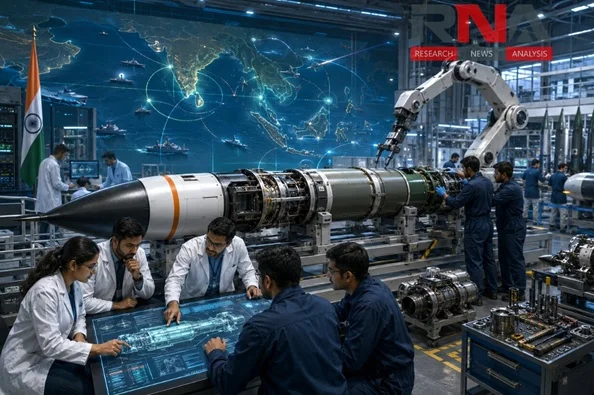
Union Defence Minister Rajnath Singh approved the Transfer of Technology (ToT) for all conventional missile systems developed by the Defence Research and Development Organisation (DRDO) to eligible Indian defence industries on 25 August 2026.
Important Points

  • The policy covers conventional, or non-nuclear, missile systems developed by DRDO.
  • Eligible Indian defence companies will be able to manufacture these missile systems after fulfilling prescribed qualification, certification and regulatory requirements.
  • The move is expected to increase domestic value addition and reduce India's dependence on imported defence equipment and technologies.
  • DRDO will continue to support public and private sector companies in technology transfer and technology absorption.
  • The policy can also create opportunities for MSMEs and other technology partners involved in components, sub-systems, fabrication, testing and maintenance.

What is Transfer of Technology (ToT)?

Transfer of Technology (ToT) refers to the process through which the developer of a technology transfers the necessary technical knowledge and know-how to another organisation for its production and use.

In defence manufacturing, this may include:

  • Design and technical know-how
  • Manufacturing processes
  • Testing procedures
  • System integration
  • Quality-control requirements
  • Production-related technical documentation

In simple terms, DRDO develops the technology, while qualified Indian industries can use the transferred know-how to manufacture the system at scale.

What are Conventional Missile Systems?

Conventional missile systems are non-nuclear missile platforms designed to perform military roles such as:

  • Tactical strikes
  • Air defence
  • Battlefield operations
  • Precision engagement of targets

DRDO develops missile technologies through its specialised laboratories, research facilities and testing infrastructure under the Ministry of Defence.

Industrial and Policy Framework

  • The new policy is intended to strengthen the transition from research and development to industrial-scale manufacturing.
  • Indian companies receiving the technology will have to comply with the necessary qualification, certification, security and regulatory requirements before undertaking production.
  • This approach can allow India's defence industry to develop stronger capabilities in the manufacturing, integration, testing and life-cycle support of sophisticated missile systems.

Role of Private Sector and MSMEs

The decision could expand the role of India's private defence industry and Micro, Small and Medium Enterprises (MSMEs) in missile manufacturing.

MSMEs and specialised firms can become part of the wider supply chain by providing:

  • Missile components
  • Electronic and mechanical sub-systems
  • Precision fabrication
  • Testing services
  • Maintenance and life-cycle support

This can help create a broader domestic ecosystem rather than concentrating missile production capabilities within a limited number of organisations.

Link with Aatmanirbhar Bharat

The decision is aligned with the government's Aatmanirbhar Bharat approach, which seeks to strengthen domestic capabilities and reduce dependence on imports in strategic sectors.

In the defence sector, self-reliance involves developing domestic capabilities across the complete equipment cycle:

Design → Development → Testing → Manufacturing → Maintenance → Upgradation

Therefore, transferring DRDO technologies to Indian industry can help convert indigenous research capabilities into large-scale domestic production capacity.

What is Technology Absorption?

  • Technology transfer alone does not guarantee successful manufacturing.
  • Technology absorption refers to the ability of the receiving industry to understand, assimilate and effectively use the transferred technical knowledge.
  • A company receiving DRDO technology therefore needs the required infrastructure, skilled manpower, quality-control systems and manufacturing capabilities to successfully produce the missile system.

Significance for India

  1. Defence Indigenisation: Greater domestic production can reduce dependence on imported missile systems and critical technologies.
  2. Faster Industrial Production: Technologies developed by DRDO can move more efficiently from laboratories to production lines.
  3. Stronger Private Defence Industry: Private companies can play a larger role in manufacturing sophisticated defence systems.
  4. MSME Opportunities: A wider missile-production ecosystem can generate demand for components, electronics, materials, fabrication and testing services.
  5. Strategic Autonomy: Domestic manufacturing capacity can improve India's ability to maintain defence preparedness without excessive dependence on foreign suppliers.
  6. Innovation Ecosystem: Closer interaction between DRDO and industry can strengthen technological capabilities and manufacturing expertise within the country.
  7. Export Potential: A stronger domestic missile manufacturing ecosystem may also support India's long-term ambition to expand defence exports, subject to government approvals and export-control regulations.

Challenges

  • Protection of sensitive and classified defence technologies
  • Maintaining consistent quality standards across manufacturers
  • Developing specialised manufacturing infrastructure
  • Ensuring effective technology absorption
  • Availability of skilled technical manpower
  • Securing critical components and materials
  • Maintaining strict testing and certification standards

Way Forward

  • India needs to complement technology transfer with investment in advanced manufacturing, skilled manpower, testing facilities, quality assurance and secure defence supply chains.
  • DRDO–industry collaboration should also focus on continuous technological upgrades so that Indian companies gradually move beyond licensed production towards stronger capabilities in indigenous design, innovation and development.

Prelims MCQs

Q1. With reference to Transfer of Technology (ToT) in defence manufacturing, consider the following statements:

  1. It can involve transfer of manufacturing and testing know-how.
  2. It can help move technologies from research institutions to industrial production.
  3. It necessarily transfers ownership of the original research organisation to the receiving company.

Which of the statements given above are correct?

A. 1 only
B. 1 and 2 only
C. 2 and 3 only
D. 1, 2 and 3

Mains Practice Question

“Transfer of defence technologies from research institutions to domestic industry can play an important role in achieving strategic autonomy.” Discuss in the context of India's defence indigenisation efforts.

FAQs

1. What is DRDO?

DRDO is India’s premier defence research organisation under the Ministry of Defence.

2. What is Transfer of Technology (ToT)?

ToT is the transfer of technical know-how from a developer to an industry for production.

3. What has the government approved?

The government approved ToT of DRDO-developed conventional missile systems to eligible Indian defence industries.

4. What are conventional missiles?

Conventional missiles are non-nuclear missile systems used for strike, air defence and tactical roles.

5. How will this decision benefit India?

It will boost indigenous defence production and reduce dependence on defence imports.

CSIR-NAL Unveils Indigenous Micro Gas Turbine Engines: Key Features and Significance

Prelims: CSIR-NAL, Gas Turbine Engine, Brayton Cycle, UAVs, Indigenous Defence Technology, Aerospace Propulsion
Mains: GS Paper II: Government Policies and Interventions, Aatmanirbhar Bharat GS Paper III: Defence Technology, Indigenisation of Defence, Science and Technology, Defence Manufacturing
Keywords: CSIR-NAL, NJ-05, NJ-50, NJ-100, Micro Gas Turbine Engine, Indigenous Propulsion, UAVs, Drone Interceptors, Missile Systems, Brayton Cycle, Atmanirbhar Bharat, Defence Indigenisation

Why in News?

The CSIR-National Aerospace Laboratories (CSIR-NAL) unveiled three indigenous micro and small gas turbine engines — NJ-05, NJ-50 and NJ-100  at the SSB Auditorium, CSIR Headquarters, New Delhi, on 25 August 2026.
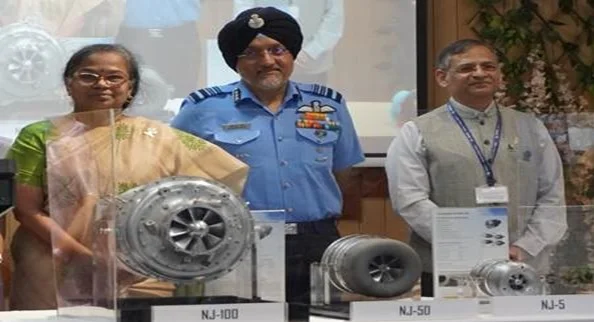
Important Points

  • NJ-05: 5 kg thrust
  • NJ-50: 50 kg thrust
  • NJ-100: 100 kg thrust
  • The engines have been developed indigenously by CSIR-NAL.
  • They are intended for compact defence and aerospace platforms.
  • Potential applications include tactical UAVs, drone interceptors and compact missile systems.
  • The NJ-100 was developed using data obtained from earlier flight tests of the scaled-down NJ-5 technology demonstrator.
  • The NJ engine family demonstrates an indigenous thrust range extending from 5 kg to 100 kg.

What is a Micro Gas Turbine Engine?

  • A gas turbine engine is an internal combustion engine that generates thrust or shaft power by compressing air, mixing it with fuel and burning the mixture before expanding the hot gases through a turbine.
  • Micro and small gas turbine engines apply the same basic principle in a smaller and lighter configuration.
  • Their compact size and high power-to-weight characteristics make them useful for lightweight aerospace platforms where space and weight are major constraints.

How Does a Gas Turbine Engine Work?

The basic working process can be understood as:

Air Intake Compression Fuel Injection Combustion Turbine Exhaust Thrust

Air first enters the engine and is compressed. Fuel is then mixed with the compressed air and burned inside the combustion chamber. The resulting high-temperature and high-pressure gases expand through the turbine and exhaust system, producing useful power and thrust.

Brayton Cycle

Gas turbine engines primarily operate on the Brayton Cycle, an important thermodynamic cycle used in gas turbines and jet propulsion.

The major stages are:

  1. Compression of air
  2. Heat addition/combustion
  3. Expansion of hot gases
  4. Heat rejection/exhaust

Key Technologies Involved

  • High-RPM Turbomachinery: Micro gas turbines operate at very high rotational speeds. Designing compressors, turbines, bearings and shafts capable of operating safely at such speeds is a major technological challenge.
  • High-Temperature Combustion: Efficient combustion at high temperatures is essential for generating sufficient thrust while maintaining engine reliability and efficiency.
  • Precision Manufacturing: Small turbine engines require high manufacturing precision because even minor variations in turbine blades, compressors or other components can affect engine performance.
  • Lightweight Materials: Aerospace propulsion systems require materials capable of combining low weight, high strength and resistance to high temperatures.

Defence Applications

The indigenous engines can potentially support several categories of compact defence platforms.

  • Tactical UAVs: Small gas turbine engines can provide propulsion for unmanned platforms requiring higher speed and endurance.
  • Drone Interceptors: Compact propulsion systems can support high-speed platforms designed to intercept hostile drones.
  • Compact Missile Systems: Small turbine engines can be relevant for missile systems requiring sustained propulsion within limited dimensions.
  • Target Drones: Such engines can also support aerial targets used for training and testing air-defence systems.

Significance for India

  1. Indigenous Propulsion Capability: Propulsion technology is one of the most complex areas of aerospace engineering. Indigenous development can strengthen India's domestic technological capability in small gas turbine systems.
  2.  Reduced Import Dependence: Domestic production of compact engines can reduce dependence on foreign propulsion systems and associated components.
  3. Boost to Drone EcosystemIndia's expanding military UAV and counter-drone requirements create demand for reliable indigenous propulsion technologies.
  4. Defence Indigenisation: The development supports the broader objective of increasing indigenous content in defence platforms under Atmanirbhar Bharat.
  5. Opportunities for Private Industry: CSIR-NAL has called for participation from Indian aerospace startups and industrial manufacturers, opening possibilities for technology transfer, manufacturing and supply-chain development.
  6. Technology Scaling: The progression from NJ-05 to NJ-100 demonstrates the potential to scale indigenous gas turbine technology across different thrust requirements.

Role of CSIR-NAL

  • The National Aerospace Laboratories (NAL) is a constituent laboratory of the Council of Scientific and Industrial Research (CSIR).
  • It is one of India's major civilian aerospace research institutions and works in areas such as aerospace structures, aerodynamics, propulsion, flight systems and related technologies.
  • CSIR-NAL Director Dr. Abhay A. Pashilkar described the laboratory as a multi-stage integrator and emphasised the need for manufacturing support from Indian aerospace startups and industry.

Institutional Support

  • Air Marshal Tejinder Singh, Chief of Integrated Defence Staff, attended the unveiling event as Chief Guest.
  • Dr. N. Kalaiselvi, Director General of CSIR and Secretary, Department of Scientific and Industrial Research (DSIR), linked the development of indigenous aerospace subsystems with India's Atmanirbhar Bharat initiative.

Challenges

  • Manufacturing high-precision turbine components
  • Developing high-temperature resistant materials
  • Maintaining reliability at very high RPM
  • Achieving efficient fuel consumption
  • Scaling laboratory technology for mass production
  • Ensuring flight certification and operational reliability
  • Developing a sustainable domestic supply chain

Way Forward

  • India will need to move from successful indigenous development towards flight validation, certification and large-scale industrial production.
  • Greater collaboration among CSIR-NAL, defence organisations, private aerospace companies, startups and MSMEs can help create a domestic ecosystem for compact propulsion systems.
  • Further development of higher-thrust variants and improvements in fuel efficiency, materials and manufacturing technologies could expand their applications across India's UAV and missile ecosystem.

Prelims MCQs

Q1. Gas turbine engines primarily operate on which thermodynamic cycle?

(a) Rankine Cycle
(b) Otto Cycle
(c) Brayton Cycle
(d) Carnot Cycle

Mains Question

“Indigenous propulsion technology is critical for achieving self-reliance in India's emerging unmanned and defence aerospace ecosystem.” Discuss in the context of CSIR-NAL's indigenous micro and small gas turbine engines.

FAQs

What are the three engines unveiled by CSIR-NAL?

NJ-05, NJ-50 and NJ-100.

What are their thrust ratings?

They produce 5 kg, 50 kg and 100 kg thrust respectively.

Which cycle is used in gas turbine engines?

Gas turbine engines primarily operate on the Brayton Cycle.

Where can these engines be used?

They can support tactical UAVs, drone interceptors and compact missile systems.

What is CSIR-NAL?

It is a constituent aerospace research laboratory of CSIR.

COSPAR Vikram Sarabhai Medal 2026: Annapurni Subramaniam Becomes First Indian Woman to Receive Prestigious International Award

Mains: GS Paper III (Science & Technology), India's Space Programme, International Scientific Cooperation, Astronomy and Space Research, Scientific Awards and Innovation
Keywords: Annapurni Subramaniam, COSPAR Vikram Sarabhai Medal 2026, COSPAR, Vikram Sarabhai Medal, ISRO, Indian Institute of Astrophysics (IIA), Centre for Nano and Soft Matter Sciences (CeNS), Florence Italy, International Science Council, UN-COPUOS, AstroSat, UVIT, Thirty Metre Telescope (TMT), Rashtriya Vigyan Puraskar, Vigyan Shri, Stellar Physics, Space Research, UPSC Current Affairs

Why in news?

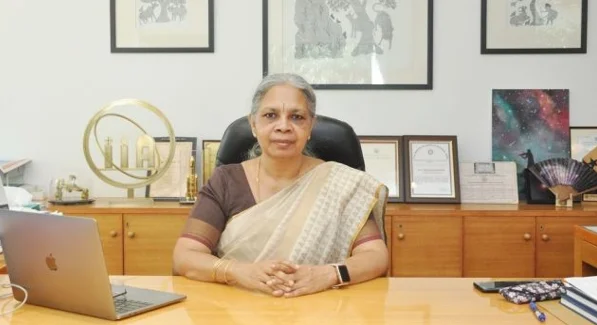
India has achieved another significant milestone in global space science. Renowned astrophysicist Dr. Annapurni Subramaniam has been awarded the prestigious COSPAR Vikram Sarabhai Medal 2026 for her outstanding contributions to space research.
Important Point

  • The award was presented during the 46th COSPAR Scientific Assembly held in Florence, Italy. With this achievement, she becomes the first Indian woman scientist, the third woman globally, and the fourth Indian to receive this prestigious international honour.
  • Dr. Annapurni Subramaniam, Director of the Indian Institute of Astrophysics (IIA), Bengaluru, has been awarded the COSPAR Vikram Sarabhai Medal 2026 for her exceptional contributions to space science and astrophysics.
  • She also holds the additional charge of Director at the Centre for Nano and Soft Matter Sciences (CeNS).
  • The award recognizes her pioneering work in stellar physics, star clusters, nearby galaxies, and her significant contribution as the Calibration Scientist for the Ultra-Violet Imaging Telescope (UVIT) aboard AstroSat, India's first space observatory.

Who is Dr. Annapurni Subramaniam?

Dr. Annapurni Subramaniam is one of India's leading astrophysicists specializing in stellar astronomy.

Major Contributions

  • Expert in Stellar Physics.
  • Conducted extensive research on Star Clusters and Nearby Galaxies.
  • Worked on both space-based and ground-based astronomical instruments.
  • Served as the Calibration Scientist for the Ultra-Violet Imaging Telescope (UVIT) onboard AstroSat.
  • Associated with the international Thirty Metre Telescope (TMT) project.
  • Fellow of the Indian Academy of Sciences.
  • Member of the International Astronomical Union (IAU).
  • Awarded the Rashtriya Vigyan Puraskar – Vigyan Shri (2024) in the category of Space Science & Technology.

What is the COSPAR Vikram Sarabhai Medal?

The COSPAR Vikram Sarabhai Medal is an international award presented to scientists from developing countries for their outstanding contributions to space research.

Established: 1990

Named After: Dr. Vikram Sarabhai, the founder of India's Space Programme and the father of ISRO.

Presented Jointly By

  • Committee on Space Research (COSPAR)
  • Indian Space Research Organisation (ISRO)

About COSPAR

The Committee on Space Research (COSPAR) is one of the world's leading international scientific organizations promoting space research and global scientific cooperation.

Established: 1958, following the launch of Sputnik-1 by the Soviet Union in 1957.

Affiliations

  • International Science Council (ISC)
  • United Nations Committee on the Peaceful Uses of Outer Space (UN-COPUOS)

Major Functions

  • Promotes international cooperation in space research.
  • Facilitates exchange of scientific data and research.
  • Organizes one of the world's largest scientific assemblies on space science every two years.

46th COSPAR Scientific Assembly

  • Venue: Florence, Italy
  • Frequency: Biennial (Every Two Years)
  • Participants: Around 3,000 scientists from across the world.
  • It is regarded as one of the largest global gatherings of space scientists.

Indian Recipients of the COSPAR Vikram Sarabhai Medal

Year

Recipient

1996

Dr. U. R. Rao

2014

Prof. Gurbax Singh Lakhina

2024

Dr. Anil Bharadwaj

2026

Dr. Annapurni Subramaniam

Important Points (Quick Revision)

  • Dr. Annapurni Subramaniam received the COSPAR Vikram Sarabhai Medal 2026.
  • She is the first Indian woman and fourth Indian to receive the award.
  • The medal is jointly presented by COSPAR and ISRO.
  • She played a key role in AstroSat's UVIT instrument and is associated with the Thirty Metre Telescope (TMT) project.

Prelims MCQ

Q. With reference to the COSPAR Vikram Sarabhai Medal, consider the following statements:

  1. It is awarded to scientists from developing countries for outstanding contributions to space research.
  2. The medal is jointly presented by COSPAR and ISRO.
  3. It was instituted in 1990 in memory of Dr. Vikram Sarabhai.

Which of the statements given above is/are correct?

A. 1 and 2 only
B. 2 and 3 only
C. 1 and 3 only
D. 1, 2 and 3

Mains Practice Question

"Discuss the significance of international scientific cooperation in strengthening India's space research capabilities. Explain with reference to COSPAR, AstroSat, and the Thirty Metre Telescope (TMT)."

FAQs

1. Who received the COSPAR Vikram Sarabhai Medal 2026?

Dr. Annapurni Subramaniam, an eminent Indian astrophysicist and Director of the Indian Institute of Astrophysics (IIA).

2. What is the COSPAR Vikram Sarabhai Medal?

It is an international award presented to scientists from developing countries for outstanding contributions to space research.

3. Who jointly presents this medal?

The medal is jointly presented by COSPAR and ISRO.

4. What is AstroSat?

AstroSat is India's first dedicated multi-wavelength space observatory, launched in 2015 to study celestial objects across different wavelengths.

5. Why is this news important for UPSC?

The topic is relevant for Science & Technology, ISRO, International Scientific Organisations, Space Research, and scientific awards, making it important for both UPSC Prelims and GS Paper III Mains.

upsc english
« »
  • SUN
  • MON
  • TUE
  • WED
  • THU
  • FRI
  • SAT
Have any Query?

Our support team will be happy to assist you!

OR