| Prelims: (Environment & Ecology + CA)) Mains: (GS 3: Environment & Climate Change; Science & Technology; Infrastructure & Industrial Development) |
Carbon Capture and Utilisation (CCU) technologies are gaining policy and industry attention in India as the country explores pathways to decarbonise hard-to-abate sectors such as cement, steel, power, and chemicals. Unlike Carbon Capture and Storage (CCS), which stores CO₂ underground, CCU converts captured carbon dioxide into useful products like fuels, chemicals, polymers, and construction materials — integrating emissions back into the economic cycle.
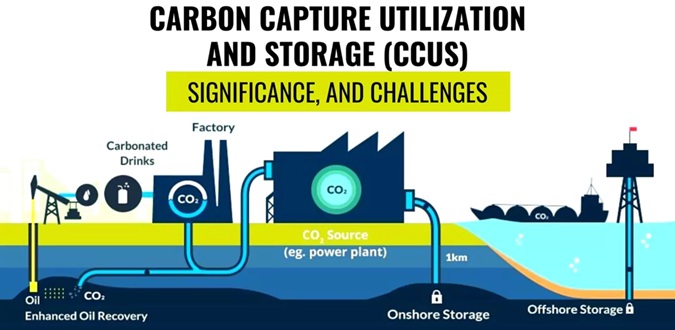
India is currently the world’s third-largest CO₂ emitter, with emissions largely driven by coal-based power generation and energy-intensive industries. While renewable energy expansion is progressing rapidly, several industrial processes inherently release CO₂ due to chemical reactions (e.g., clinker production in cement, blast furnaces in steel).
Globally, CCU has emerged as a complementary strategy to renewable energy, energy efficiency, and green hydrogen. International climate frameworks under the United Nations Framework Convention on Climate Change increasingly recognise carbon management technologies as part of long-term decarbonisation pathways.
For India, which has pledged to achieve net-zero emissions by 2070, CCU offers a bridge technology — reducing emissions while creating new industrial value chains and promoting a circular carbon economy.
CCU involves three key steps:
Unlike CCS, which focuses on permanent geological storage, CCU reintegrates carbon into productive economic uses.
1. Addressing Hard-to-Abate Sectors
Sectors such as cement, steel, fertilisers, and refining account for significant industrial emissions. Renewable electricity alone cannot eliminate process emissions in these industries.
2. Supporting Net Zero 2070
CCU complements renewable expansion and green hydrogen strategies, aligning with India’s long-term climate commitments.
3. Promoting a Circular Carbon Economy
By converting waste CO₂ into value-added products, CCU reduces dependence on virgin fossil feedstocks.
4. Energy Security & Industrial Competitiveness
CO₂-derived fuels and chemicals can reduce import dependency and create new manufacturing opportunities.
These initiatives indicate early-stage experimentation but remain limited in scale.
1. European Union – Circular Economy Integration
The European Union integrates CCU into its Circular Economy Action Plan and Bioeconomy Strategy, promoting CO₂-derived fuels and materials.
2. United States – Incentive-Based Scaling
The United States promotes CCU through tax credits and funding support for industrial carbon conversion projects.
3. United Arab Emirates – Hydrogen Integration
The United Arab Emirates integrates CCU with green hydrogen in projects like Al Reyadah to decarbonise heavy industry.
4. China – Industrial-Scale Deployment
China is expanding CCUS projects in coal-based power and chemical sectors, focusing on converting CO₂ into fuels and building materials.
CO₂ capture and conversion are energy-intensive. Without carbon pricing or incentives, CCU products struggle against cheaper fossil-based alternatives.
Effective deployment requires:
Such infrastructure remains underdeveloped.
Over-reliance on CCU without parallel renewable deployment may slow the clean energy transition.
Climate Mitigation Tool
Reduces industrial emissions where electrification is difficult.
Industrial Innovation Driver
Encourages advanced materials science and green chemistry innovation.
Strategic Autonomy
Supports domestic fuel and chemical production.
Economic Diversification
Creates new value chains and green employment opportunities.
Global Climate Leadership
Enhances India’s role in emerging carbon management technologies.
A balanced approach combining renewable expansion, green hydrogen, energy efficiency, and CCU will be essential for India’s low-carbon transition.
FAQsQ1. How is CCU different from CCS ? CCS stores captured CO₂ underground permanently, while CCU converts it into useful products, reintegrating carbon into economic cycles. Q2. Can CCU alone solve India’s emission problem ? No. CCU is a complementary strategy. Renewable energy, energy efficiency, and green hydrogen remain essential pillars. Q3. Which sectors benefit most from CCU ? Cement, steel, fertilisers, refining, and chemical industries — sectors with unavoidable process emissions. Q4. Is CCU commercially viable today ? Currently, it remains costly and requires policy incentives, technological innovation, and market support. Q5. Why is CCU important for India’s net-zero target ? It helps decarbonise hard-to-abate sectors and promotes a circular carbon economy, supporting India’s 2070 net-zero commitment. |
| Prelims: (Science & Technology + CA) Mains: (GS 2: Issues Relating to Development & Management of Social Sector/Health; GS 3: Science & Technology in Health, Human Development) |
The Union government is preparing to launch a nationwide 90-day single-dose HPV vaccination campaign targeting 14-year-old girls to reduce the burden of cervical cancer in India. The initiative marks a major preventive public health intervention aimed at tackling one of the leading causes of cancer-related deaths among Indian women.

Cervical cancer is primarily caused by persistent infection with high-risk strains of the Human Papillomavirus (HPV), a common sexually transmitted infection. Nearly 90% of cervical cancer cases are linked to HPV infection, especially types 16 and 18.
India accounts for nearly one-fifth of the global cervical cancer burden. Despite screening and treatment efforts, late diagnosis remains common due to low awareness, limited screening coverage, and social stigma.
Globally, HPV vaccines have demonstrated strong effectiveness in preventing pre-cancerous lesions and cervical cancer. In 2022, the World Health Organization endorsed a single-dose HPV vaccine schedule for girls aged 9–14 years, significantly strengthening the case for mass immunisation in low- and middle-income countries like India.
The current campaign aligns with India’s broader goal of reducing preventable cancers and improving women’s health outcomes.
The strategy focuses on age-based cohort vaccination rather than school-based targeting alone, ensuring wider inclusion.
The campaign will use Gardasil, manufactured by MSD Pharmaceuticals, due to its established global efficacy and safety record.
India has developed its own HPV vaccine, Cervavac, produced by the Serum Institute of India.
However, it is not being used in the current drive because:
A transition to Cervavac may occur in the coming years once regulatory processes are completed.
The GAVI, The Vaccine Alliance will supply 2.6 crore doses over two years.
In 2022, the WHO’s Strategic Advisory Group of Experts recommended a single-dose schedule for girls and women up to 20 years, citing strong immune response and sustained protection.
Guidelines:
This simplified schedule enhances feasibility and reduces programmatic costs.
India contributes nearly 20% of global cervical cancer cases, making preventive action urgent.
Global evidence shows significant reduction in HPV infection rates and pre-cancerous lesions following vaccination.
Vaccinating girls reduces HPV transmission to boys, lowering risks of other HPV-related cancers and strengthening community-level protection.
Countries like Australia introduced HPV vaccination in 2007 and extended it to boys in 2013. Within a decade:
Australia is now on track to nearly eliminate cervical cancer as a public health problem.
No. Several states have piloted HPV vaccination drives earlier:
State-Level Initiatives
The current initiative marks the first nationwide, centrally coordinated HPV immunisation campaign.
Strategic Public Health Intervention
Shifts policy focus from cancer treatment to prevention — aligning with global best practices.
Women-Centric Healthcare Reform
Strengthens reproductive and preventive health systems targeting adolescent girls.
Digital Health Integration
Leverages digital platforms like U-Win, improving tracking, transparency, and coverage.
Alignment with Global Health Goals
Supports WHO’s global strategy to eliminate cervical cancer as a public health problem by 2030.
Economic and Social Impact
Prevention reduces catastrophic health expenditure for families and enhances long-term human capital formation.
FAQsQ1. Why is the HPV vaccine targeted at 14-year-old girls ? Vaccination before sexual debut ensures stronger immune response and maximum preventive benefit against HPV infection. Q2. Is a single dose scientifically validated ? Yes. WHO recommendations in 2022 endorsed a single-dose schedule for girls up to 20 years based on strong evidence of long-term protection. Q3. Why is India not using its indigenous vaccine yet ? Cervavac is awaiting WHO prequalification, and studies are ongoing to confirm its efficacy under a single-dose schedule. Q4. Can HPV vaccination eliminate cervical cancer completely ? While vaccination significantly reduces incidence, elimination requires a combination of vaccination, screening, and early treatment. Q5. How does this campaign fit into India’s broader health policy ? It strengthens preventive healthcare, reduces cancer burden, promotes women’s health, and aligns with long-term public health and human development goals. |
| Prelims: (Economics + CA) Mains: (GS 2: India–US Relations; GS 3: Infrastructure, Energy Security, Industrial Policy, External Sector) |
The United States has imposed preliminary countervailing duties (CVD) of 126% on crystalline silicon photovoltaic (CSPV) cells and modules imported from India, following an investigation into alleged unfair government subsidies. The decision could significantly affect India’s rapidly expanding solar manufacturing sector, which has relied heavily on exports to the US market.
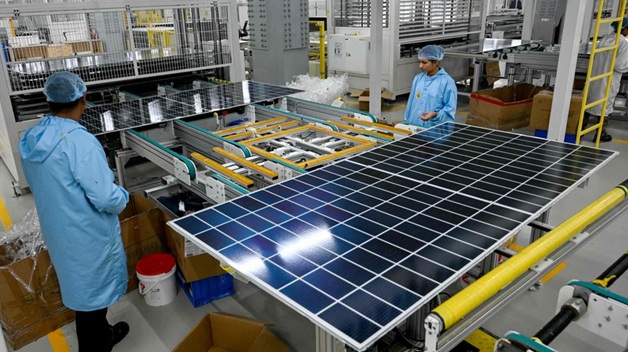
The duties were announced by the United States Department of Commerce after a subsidy probe into Indian solar manufacturers. The investigation also covered imports from Indonesia and Laos, assigning varying duty rates.
Countervailing duties are imposed to offset subsidies provided by exporting countries that allegedly distort fair trade. These measures are distinct from anti-dumping duties and are consistent with global trade rules under the World Trade Organization framework.
The move comes amid rising trade tensions in the clean energy sector, where governments are increasingly promoting domestic manufacturing through subsidies and industrial policies.
The final determination on the duties is expected later this year.
India has significantly scaled up its solar module production capacity:
This indicates a structural supply-demand imbalance, making exports crucial for sustaining capacity utilisation.
Between 2021 and 2024:
Thus, the US market has been central to India’s solar export strategy.
A 126% duty significantly increases the landed cost of Indian modules in the US, potentially making the market commercially unviable for many exporters.
If export-bound modules are redirected to India:
Tariff disruptions may affect:
India’s renewable sector is already facing:
Further disruptions could impact renewable capacity addition targets.
Not all manufacturers are equally exposed.
Thus, impact may vary depending on company-specific export strategies.
The investigation reportedly stems from allegations that Chinese manufacturers, facing US tariffs, shifted production to countries such as India, Indonesia, and Laos to retain access to the American market.
In the first half of 2025:
The duties are aimed at protecting US domestic solar manufacturing under broader industrial policy measures.
However, higher import duties may:
This reflects the growing intersection of climate policy and trade protectionism.
India has committed to achieving 500 GW of non-fossil fuel capacity by 2030 and net-zero emissions by 2070.
A strong domestic solar manufacturing ecosystem is essential for:
The US duties may compel India to:
1. Diversify Export Markets
Explore opportunities in Europe, Africa, Middle East, and Latin America.
2. Strengthen Domestic Demand
Enhance policy incentives such as Production-Linked Incentive (PLI) schemes and domestic procurement mandates.
3. Encourage Overseas Manufacturing
Shift from exporting products to exporting capital — establishing manufacturing bases abroad to bypass trade barriers.
4. Improve Competitiveness
Invest in technology upgrades, efficiency improvements, and cost reductions.
Trade Policy Implications
Highlights increasing use of trade remedies in the renewable energy sector.
Strategic India–US Economic Dimension
Adds complexity to clean energy cooperation between India and the US.
Industrial Policy Test
Challenges India’s ambition to become a global solar manufacturing hub.
Energy Transition Risks
Excess capacity and pricing pressure could destabilise domestic manufacturers.
Global Climate Paradox
Protectionist measures may conflict with global climate cooperation goals.
FAQsQ1. What are countervailing duties (CVD) ? They are tariffs imposed to offset subsidies provided by exporting countries that allegedly give unfair price advantages to their manufacturers. Q2. Why is the US imposing duties on Indian solar panels ? Following an investigation, the US determined that Indian manufacturers benefited from government subsidies that distorted market competition. Q3. How dependent is India on the US solar market ? Between 2021 and 2024, over 90% of India’s solar module exports were shipped to the US, making it a critical export destination. Q4. Will this affect India’s renewable energy targets ? Indirectly, yes. Oversupply and pricing pressure may strain domestic manufacturers, potentially impacting long-term capacity expansion plans. Q5. What strategic options does India have ? India can diversify export markets, enhance domestic demand, strengthen industrial competitiveness, and consider overseas manufacturing investments. |
| Prelims: (Defence + CA) Mains: (GS 2: International Relations; GS 3: Security, Defence Preparedness, Joint Military Exercises) |
The 7th edition of Exercise Dharma Guardian, the annual joint military exercise between the Indian Army and the Japan Ground Self-Defense Force (JGSDF), has commenced at the Foreign Training Node, Chaubattia in Uttarakhand. The exercise aims to enhance interoperability and joint operational capabilities in semi-urban combat environments.
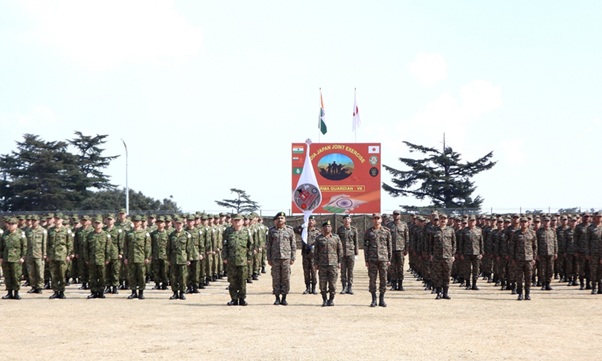
India and Japan have steadily deepened defence and strategic cooperation over the past decade, particularly under their “Special Strategic and Global Partnership.” The annual Dharma Guardian exercise serves as a cornerstone of this growing military engagement.
The strengthening of India–Japan defence ties aligns with:
Defence cooperation between the two countries has expanded to include logistics agreements, high-level military dialogues, and participation in multilateral naval exercises.
The exercise remains a key pillar of India–Japan defence engagement and reflects growing military trust and operational coordination.
The primary objective of Exercise Dharma Guardian is to:
The exercise focuses on realistic, scenario-based operations, including:
1. Establishment of Temporary Operating Base (TOB)
Simulating deployment and operational readiness in hostile environments.
2. Intelligence, Surveillance & Reconnaissance (ISR) Grid Development
Coordinated surveillance planning to detect and neutralise threats.
3. Mobile Vehicle Check Posts
Simulating urban security operations to detect infiltration or contraband.
4. Cordon and Search Operations
Joint drills in hostile and semi-urban terrain to neutralise simulated insurgents.
5. Heliborne Operations
Rapid insertion of troops using helicopters to secure strategic locations.
6. House Intervention Drills
Room-clearing and close-quarter battle techniques for urban warfare scenarios.
These exercises enhance tactical synchronisation and operational compatibility.
1. Malabar (Naval Exercise)
The multilateral naval exercise Malabar involves India, Japan, the United States, and Australia. It enhances maritime interoperability and Indo-Pacific naval coordination.
Participants include the United States and Australia.
2. JIMEX (Japan-India Maritime Exercise)
A bilateral naval exercise focusing on maritime security, anti-submarine warfare, and tactical manoeuvres.
3. SHINYUU Maitri
An air force exercise between the Indian Air Force and the Japan Air Self-Defense Force, focusing on air mobility and disaster relief cooperation.
Together, these exercises indicate expanding tri-service defence cooperation.
1. Strengthening India–Japan Strategic Partnership
The exercise reinforces defence ties within the broader framework of their special strategic relationship.
2. Enhancing Indo-Pacific Security Architecture
Improves preparedness to respond to regional contingencies, including terrorism and maritime threats.
3. Improving Interoperability
Standardising operational procedures ensures seamless coordination during joint missions.
4. Confidence Building & Trust
Regular bilateral exercises build mutual understanding, trust, and strategic alignment.
5. Expanding India’s Defence Diplomacy
Positions India as a reliable security partner in the Indo-Pacific region.
India and Japan are both active members of the Quad grouping, alongside the United States and Australia, which promotes a free and open Indo-Pacific.
Military cooperation through exercises like Dharma Guardian reflects:
FAQsQ1. What is Exercise Dharma Guardian ? It is an annual joint military exercise conducted between the Indian Army and the Japan Ground Self-Defense Force. Q2. Where is the current edition being held ? The 7th edition is being conducted at the Foreign Training Node, Chaubattia, Uttarakhand. Q3. What is the primary objective of the exercise ? To enhance interoperability and strengthen joint operational capabilities in semi-urban combat scenarios. Q4. How often is the exercise conducted ? It is held annually and alternates between India and Japan. Q5. How does it contribute to Indo-Pacific security ? By improving military coordination and operational readiness between two major Indo-Pacific democracies, it strengthens regional stability and collective deterrence. |
| Prelims: (Science Technology + CA) Mains: (GS 2: International Relations; GS 3: Security, Defence Technology, Maritime Strategy) |
Reports indicate that Iran is close to finalising a deal with China to procure the CM-302 supersonic anti-ship cruise missile. The potential acquisition has drawn attention due to the missile’s advanced capabilities and its possible impact on regional maritime security, particularly in the Persian Gulf and Strait of Hormuz region.
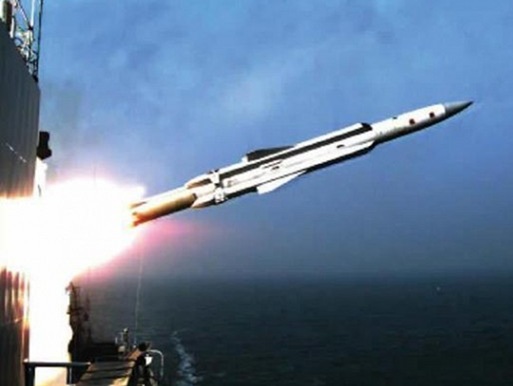
The CM-302 is an export variant of the YJ-12 missile deployed by the People's Liberation Army Navy. China has increasingly emerged as a key exporter of advanced missile systems, particularly to countries facing Western arms restrictions.
Iran has historically invested in anti-access/area denial (A2/AD) capabilities to deter superior naval forces operating near its coastline. The acquisition of a high-speed anti-ship missile like the CM-302 would significantly enhance its maritime strike capabilities.
The development reflects broader trends in:
The CM-302 is a supersonic anti-ship cruise missile designed to target large naval vessels and maritime assets.
It is primarily intended to:
1. Enhancement of Anti-Access/Area Denial (A2/AD)
The missile strengthens the ability of coastal states to deter naval incursions by threatening high-value targets such as aircraft carriers.
2. Impact on Gulf Maritime Security
If inducted by Iran, the CM-302 could:
3. Shift in Regional Military Balance
Supersonic anti-ship missiles complicate defence planning for technologically advanced navies, including those of the US and its regional partners.
4. China’s Expanding Defence Exports
The deal underscores China’s growing role as an alternative arms supplier, particularly for states under Western sanctions.
5. Implications for Global Trade Routes
Given the proximity of the Strait of Hormuz — a critical global energy chokepoint — enhanced missile capabilities may influence maritime risk calculations.
|
Feature |
CM-302 |
Subsonic Missiles |
|---|---|---|
|
Speed |
Supersonic (Mach 2.5–3) |
Subsonic (Mach 0.8–0.9) |
|
Interception Difficulty |
High |
Moderate |
|
Reaction Time for Target |
Very Limited |
Relatively Higher |
|
Strategic Role |
A2/AD, Carrier Strike |
Tactical/Surface Engagement |
While geographically distant, developments in advanced anti-ship missile proliferation:
For maritime powers, including India, strengthening naval air defence and early warning capabilities remains essential in an era of high-speed cruise missiles.
FAQsQ1. What is the CM-302 missile ? It is a Chinese-developed supersonic anti-ship cruise missile designed to strike large naval vessels and maritime targets. Q2. How fast is the CM-302 ? It travels at sustained supersonic speeds of approximately Mach 2.5–3, making interception challenging. Q3. How does it differ from subsonic anti-ship missiles ? Its higher speed drastically reduces reaction time for defensive systems and increases penetration capability. Q4. Why is Iran’s potential acquisition significant ? It would enhance Iran’s maritime deterrence posture and could alter the security dynamics of the Persian Gulf region. Q5. What role does satellite navigation play in the missile ? The missile uses China’s BeiDou satellite system for mid-course guidance, improving accuracy and strike probability. |

Our support team will be happy to assist you!


 Contact Us
  New Batch : 9555124124/ 7428085757
  Tech Support : 9555124124/ 7428085757