New
Hindi Medium: (Delhi) - GS Foundation (P+M) : 8th June 2026, 6:30 PM Hindi Medium: (Prayagraj) - GS Foundation (P+M) : 1st June 2026, 5:30 PM English Medium: (Prayagraj) - GS Foundation (P+M) : 7th June 2026, 8:00 AM Hindi Medium: (Delhi) - GS Foundation (P+M) : 8th June 2026, 6:30 PM Hindi Medium: (Prayagraj) - GS Foundation (P+M) : 1st June 2026, 5:30 PM English Medium: (Prayagraj) - GS Foundation (P+M) : 7th June 2026, 8:00 AM

Current Affairs for 27 May 2026

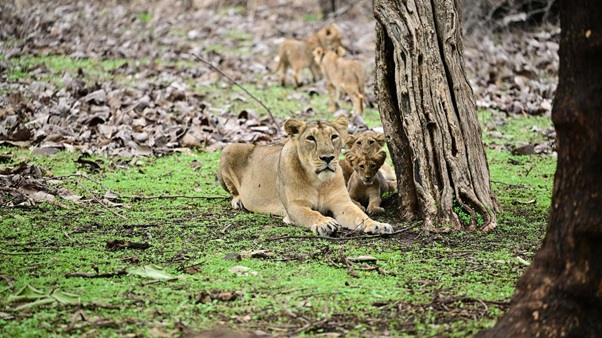
Babesia infection: Death of lion cubs in Gir raises concern over tick-borne disease

  • Recently, two lion cubs died in the Gir National Park region of Gujarat due to a suspected Babesia infection.
  • The incident has raised concerns about vector-borne diseases in the wildlife ecosystem, although the Forest Department has not yet confirmed any major outbreak. Other lion deaths have been attributed to natural causes and territorial conflicts.
  • Gir National Park is an important protected habitat where such infections can spread through tick populations.

What is Babesia ?

  • Babesia is a microscopic protozoan parasite that infects the red blood cells (RBCs) of humans and animals, causing a disease known as babesiosis.
  • It is an important tick-borne zoonotic disease with implications for both wildlife and human health. It can lead to hemolytic anemia and other complications in the body.

Mode of transmission

  • The Babesia parasite primarily spreads through the bite of infected ticks, especially Ixodes ticks (deer ticks), which are also known to transmit Lyme disease.
  • When an infected tick feeds on the blood of a host (human or animal), the parasite enters the body.

Affected organisms

  • Babesiosis can affect both animals and humans, but it is more commonly found in animals such as cattle, dogs, sheep, and wildlife species.
  • Human infections are relatively rare but can be severe in some cases, especially in individuals with weakened immune systems.

Geographical distribution

Babesia infection is mainly found in the following regions:

  • Northeastern United States
  • Parts of Europe
  • Some regions of Asia

Human infections are more commonly seen in areas with a high tick population.

Is it contagious ?

Babesiosis does not spread from person to person. It mainly spreads through tick bites. In very rare cases, it may spread through:

  • Mother to fetus during pregnancy
  • Infected blood transfusion

Treatment

Babesiosis is usually treated with combination therapy because it is a parasitic disease. This includes:

  • Atovaquone (antiparasitic drug)
  • Azithromycin (antibiotic, used in combination) 

In severe cases, hospitalization and blood transfusion may be required.
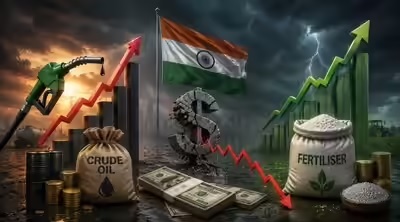
India’s “3F” Concerns: Impact of West Asia Crisis on Fuel, Fertiliser and Foreign Exchange Reserves

  • Recently, in the context of rising concerns over the Indian economy amid the West Asia crisis, the “3F” framework—Fuel, Fertilizer, and Foreign Exchange—has been highlighted.
  •  High and volatile international crude oil prices, unprecedented increases in fertilizer prices, and rising gold prices are creating pressure on India’s external sector.
  • The Prime Minister had earlier called for adopting Covid-like consumption habits to conserve foreign exchange reserves.
  • This includes promoting work from home, encouraging virtual meetings, avoiding non-essential foreign travel, limiting gold purchases for one year, and prioritising local products. Since these activities involve imports and foreign exchange outflow, the objective was to reduce pressure on foreign exchange reserves.
  • Subsequently, the government took several measures to prevent rupee depreciation and conserve foreign exchange. These included increasing import duties on gold, silver, and platinum, restricting duty-free gold imports under export incentive schemes, and multiple hikes in petrol and diesel prices.
  • Due to foreign capital outflows and weak investment inflows, the Indian rupee has remained under pressure. After the West Asia conflict began, foreign portfolio investors (FPIs) withdrew about $24.4 billion from Indian equities and bonds. As a result, the rupee weakened by nearly 5% since late February and reached close to ₹97 per US dollar.
  • To prevent excessive depreciation of the rupee, the Reserve Bank of India (RBI) intervened in the foreign exchange market.
  •  However, this increased pressure on foreign exchange reserves, and reports suggest a decline of nearly $40 billion compared to pre-war levels.
  • RBI’s gross forex sales in March stood at $29.6 billion, the highest in the last 13 months.
  • Economists have warned that rising import costs, rupee depreciation, and inflation due to energy shocks could lead India to face a Balance of Payments (BoP) deficit for the third consecutive year in 2026–27.
  • Although the RBI has projected GDP growth of 6.9% for 2026–27, several experts estimate it to be between 6% and 6.5%.
  • The Finance Minister rejected negative assessments of the economy, stating that such pessimistic views create unnecessary fear and weaken public confidence. She emphasized that India remains a strong economy and that confidence-building is essential.

Rising Fertilizer Import Bill Amid West Asia Crisis

  • Concerns related to 3F (Fuel, Fertiliser, Foreign Exchange) and rupee depreciation are expected to increase India’s fertiliser import expenditure. Experts believe that India’s fertiliser import bill in 2026–27 may surpass the record level of $33.4 billion recorded in 2022–23.

Status of India’s Fertilizer Sector

  • India is the world’s second-largest fertilizer consumer and third-largest producer. Total fertilizer production in the country increased from 385.39 lakh metric tonnes (LMT) in 2014–15 to 503.35 LMT in 2023–24.
  • Despite rising production, India’s fertilizer consumption remains high. In 2023–24, total fertilizer consumption was about 601 LMT, of which around 177 LMT was met through imports.
  • Fertilizer subsidy in India is also expected to exceed the FY26 budget estimate of ₹1.67 trillion, mainly due to higher consumption of urea and Di-Ammonium Phosphate (DAP).

Major Challenges in the Fertilizer Sector

  • India is heavily dependent on imports for fertilisers and raw materials due to limited domestic mineral resources. Key inputs such as LNG, rock phosphate, ammonia, and potash are imported in large quantities. This makes the sector vulnerable to global conflicts, price volatility, and foreign exchange pressures.
  • In FY26, the total import bill for fertilizers and related inputs reached approximately $27.2 billion.
  • Another challenge is the subsidy–productivity paradox. The Commission for Agricultural Costs and Prices (CACP) has warned that removal of fertilizer subsidies could reduce usage by farmers, thereby affecting agricultural productivity.
  • Additionally, delays in subsidy payments create working capital stress for private and cooperative fertilizer companies.

Way Forward: CACP Recommendations (Kharif 2026–27)

  • The Commission for Agricultural Costs and Prices (CACP), in its Kharif 2026–27 price policy report, recommended using digital platforms like AgriStack to promote balanced nutrient use and reduce the subsidy burden.
  •  It also suggested revising India’s traditional Nitrogen: Phosphorus: Potassium (N:P:K) ratio of 4:2:1, as agro-climatic conditions, cropping patterns, and irrigation systems are changing.
  • Further, it emphasized promoting the use of micronutrients and secondary nutrients, and adopting soil organic carbon improvement strategies.

Conclusion

  • India’s “3F” challenge—Fuel, Fertiliser, and Foreign Exchange—reflects the increasing impact of global geopolitical events on the domestic economy.
  • Rising fuel costs, fertilizer import dependency, and pressure on foreign exchange reserves have emerged as major concerns.
  • For long-term economic stability, reducing import dependence, increasing domestic production, and efficient resource management are essential.

Wi-Fi 7: India enters a new era of faster and advanced wireless connectivity

Why in the news ?

  • India has entered the era of next-generation wireless technology—Wi-Fi 7—with TP-Link starting local manufacturing of Wi-Fi 7 equipment. This move is being considered a major transformation in the field of digital connectivity, internet speed, and network efficiency.

What is Wi-Fi 7 ?

  • Wi-Fi 7, officially known as the IEEE 802.11be standard, is the latest and most advanced generation of wireless networking.
  • Its main objective is to significantly improve internet speed, performance, and efficiency compared to previous versions—Wi-Fi 6 and Wi-Fi 6E.

Key Features of Wi-Fi 7

  1. Extremely Fast Speeds
    • Wi-Fi 7 is approximately 4.8 times faster than Wi-Fi 6. Its maximum data transfer capacity (throughput) can reach approximately 46 Gbps, making the internet experience extremely fast.
  2. Multi-Link Operation (MLO)
    • Under this technology, devices can use all three bands: 2.4 GHz, 5 GHz, and 6 GHz simultaneously. This makes the connection more stable, fast, and reliable.
  3. Low Latency
    • The data transmission delay (latency) in Wi-Fi 7 is approximately 4 times lower than that of Wi-Fi 6/6E. This technology is especially useful for online gaming, video calls, and real-time applications.
  4. Greater Bandwidth Capacity
    • This technology allows for greater data transfer times, resulting in improved performance even during network congestion.
  5. Enhanced Target Wake Time (TWT)
    • This feature allows devices to connect to the network only when necessary, reducing power consumption and increasing mobile/device battery life.
  6. Preamble Puncturing
    • Even if a portion of a network channel is disrupted or interfered with, data transmission continues through the remaining channel. This increases network reliability and stability.

Importance of Wi-Fi 7

  • Wi-Fi 7 is not just a technology upgrade; it will provide a new dimension to high-speed internet access, further strengthening smart devices and the IoT (Internet of Things) ecosystem, making high-bandwidth applications like 4K and 8K streaming and cloud gaming more accessible, and effectively supporting the goals of Digital India as well as the 5G and upcoming 6G network ecosystem.

Conclusion

The arrival of Wi-Fi 7 is a major technological step for digital networking in India and globally. Its faster speeds, lower latency, and improved network capacity could completely transform the internet usage experience in the coming years. TP-Link's launch of its local manufacturing is a significant step towards establishing India as a global hub for advanced wireless technology.
Article 142 and “Complete Justice” Constitutional Power or Judicial Overreach?

Why in the News ?

  • Recently, the Supreme Court took suo motu cognizance of two road accidents that occurred in November 2025, in which 34 people died. In the case of Phalodi Accident vs. NHAI and Others (2025), the Court recognized the right to safe travel on national highways as a fundamental right under Article 21 (right to life and personal liberty).
  • During this period, the Court exercised its extraordinary powers under Article 142 and issued comprehensive directions to the government to ensure "complete justice." This has sparked debate about the scope, necessity, and impact of Article 142.

Road Safety Crisis in India: Background to Court Intervention

  • The Supreme Court's intervention was prompted by alarming road accident statistics:
  • National highways constitute only 2% of India's total roads, but account for approximately 30% of road accident deaths
  • Approximately 26,770 people died on national highways in the first six months of 2025.
  • The death rate decreased by approximately 11% compared to 2024, yet the situation remains serious.
  • The Government of India has set a target of reducing road accidents by 50% by 2030.
  • A "4E strategy" has been adopted for this:
    • Four Pillars of Road Safety (4E Strategy)
      • Education - Promoting traffic awareness and safe driving behavior.
      • Engineering - Improving road design and infrastructure.
      • Enforcement - Effective enforcement of traffic rules.
      • Emergency Medical Services - Providing prompt treatment after an accident.

What is Article 142 ?

  • Article 142 of the Indian Constitution empowers the Supreme Court of India to issue such order or decree as is necessary to ensure "complete justice" in any pending suit or matter.

Article 142(1)

  • The Supreme Court may, in the exercise of its jurisdiction, pass such order or decree as is necessary to do complete justice in any pending suit or matter.
  • This power allows the Court to grant relief in situations where existing laws are inadequate, procedural hurdles are obstructing justice, and a legal gap exists.
  • For this reason, Article 142 is also called the "Constitutional Safety Valve."

Nature of Article 142

  • The power under Article 142 is residuary and extraordinary in nature.
  • Its main dimensions are:
    • A means of filling legal gaps
      • This power is exercised when ordinary law fails to provide a solution.
    • Constitutional power
      • This power derives directly from the Constitution, not from an Act.
    • Beyond procedural justice
      • It allows the court to go beyond strict procedural limits and ensure substantive justice.
    • Use in exceptional circumstances
      • It is generally used when there is a clear error and serious injustice would result from the court's failure to intervene.

Judicial Interpretation of Article 142

Delhi Judicial Services Association v. State of Gujarat (1991)

  • In this case, the Supreme Court held that the power to provide "complete justice" under Article 142 is a constitutional power distinct from and superior to ordinary laws, and therefore, ordinary legal provisions cannot limit it.
  • This decision reinforced the concept of ensuring substantive justice by placing constitutional justice above procedural hurdles.

Canara Bank v. Debashis Das (2003)

  • In this case, the Supreme Court held that the Constitution aims to ensure substantive justice, not merely formal or procedural justice; therefore, where legal justice is insufficient or fails to provide justice, the principles of natural justice must be prioritized.

Hitesh Bhatnagar v. Deepa Bhatnagar (2011)

  • In this case, the Supreme Court held that the extraordinary powers under Article 142 must be exercised with utmost caution, judicial restraint, and prudence, so as to maintain constitutional balance and judicial decorum while ensuring “complete justice.”

Why is “complete justice” needed ?

  • The question naturally arises: can justice ever be imperfect? ​​The answer lies in the distinction between law and justice.
  • Laws are made according to the social, economic, and political circumstances of a particular time, but over time, new changes and challenges emerge in society, such as live-in relationships, LGBTQ+ rights, environmental crises, digital privacy, and technological change.
  • In such circumstances, the existing legal framework is often insufficient to provide justice. Therefore, Article 142 empowers the Supreme Court with the constitutional power to ensure “complete justice” by bridging the gap between formal justice and substantive justice.

Can High Courts also deliver “complete justice”?

  • In Anil Kumar Jain v. Maya Jain (2009), the Supreme Court clarified that the powers granted to High Courts under Article 226 are not the same as the Supreme Court's extraordinary powers to deliver “complete justice” under Article 142.
  • Nevertheless, High Courts can ensure justice within a limited scope within their constitutional jurisdiction. That is, the difference between the two is not one of principle, but of jurisdiction and scope.

Article 142 and the Separation of Powers Debate
  • The most prominent criticism of the use of Article 142 has been that of judicial overreach. Critics argue that this provision allows the judiciary to interfere in the domain of the executive and legislature, sometimes going beyond established legal procedures, and even influencing matters that primarily fall within the scope of policy decisions.
  • According to them, the extensive use of Article 142 can sometimes lead to judicial activism, which can lead to judicial overreach, raising concerns about weakening the role of the legislature, undermining the principle of separation of powers, and overextending judicial discretion.

Counter-Argument: Judicial Activism

  • According to supporters of Article 142, it is not appropriate to view it solely as judicial overreach, as judicial activism is an important means of ensuring justice in changing social, economic, and political circumstances.
  • According to them, the fundamental purpose of Article 142 is to effectively enforce social, economic, political, and legal justice. The Court exercises this extraordinary power not in normal circumstances, but when other constitutional institutions become inactive, or existing laws prove inadequate to provide justice in accordance with changing circumstances.
  • In such cases, Article 142 provides the Court with the constitutional basis to ensure true and complete justice.

Conclusion

  • Article 142 is one of the most distinctive provisions of the Indian Constitution. It empowers the Supreme Court to transcend procedural boundaries and ensure “complete justice.”
  • However, due to its extraordinary nature, it must be exercised with restraint, discretion, and constitutional balance.
  • The recent road safety judgment demonstrates that Article 142 continues to serve as a bridge between law and justice, especially in situations where the legislative system is unable to provide immediate solutions.

Changing weather patterns in Europe: Spring heatwave breaks old records

Why in the News ?

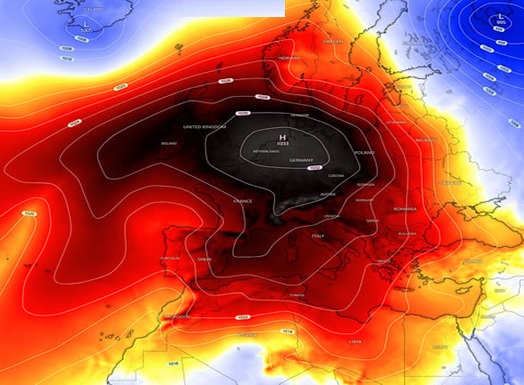
  • The United Kingdom (UK) and many parts of Western and Central Europe are currently in the grip of a record-breaking spring heatwave. Scientists believe this is due to a weather system called the "Heat Dome," which has trapped extremely hot air over Europe.
  • Experts believe that climate change is making these early heatwaves hotter, longer, and more frequent, increasing public health risks.

May Temperature Record Broken in Britain

  • On May 26, 2026, the Kew Gardens area recorded a daytime temperature of 35.1°C, a new temporary record for May.
  • The previous day, the temperature had reached 34.8°C, surpassing the previous record of 32.8°C, set in 1922.
  • Apart from this, “Tropical Night” was also recorded in London, in which the night temperature does not fall below 20°C.

Abnormal heat in many European countries

  • Several European countries are experiencing abnormal heat.
  • Temperatures reached 36°C in southwestern France on May 25, while many areas experienced persistent tropical nights.
  • Additionally, Spain, Portugal, Ireland, Germany, and Italy are also experiencing abnormal heat.
  • Temperatures in these regions have been recorded approximately 12°C–16°C above the normal climatic average.

What is a 'Heat Dome'?

  • A heat dome is a weather condition in which a high-pressure system becomes stationary over an area for a long period of time, acting like a lid on the atmosphere, trapping warm air below.
  • As a result, the sun's intense energy heats the surface, increasing air compression, and causing surface temperatures to rise rapidly.
  • According to experts, the current heat dome has developed from North Africa and spread to Western and Central Europe, causing record-breaking heat in many countries.

Growing Health Risks

  • Extreme heat is particularly severe for the elderly, children, those with pre-existing medical conditions, farmers and outdoor workers, and poor and vulnerable communities.
  • Prolonged exposure to extreme temperatures can lead to heat exhaustion, which can cause dehydration, dizziness, weakness, and extreme fatigue.
  • Without timely treatment and care, this condition can worsen and lead to heat stroke, which can be fatal.

Why is the Heat Index important ?

  • Experts say that not only temperature but also humidity increases the intensity of heat.
  • This is why the Heat Index is used, which reflects the actual heat felt by the body based on the combined effect of temperature and humidity.

Scientists warn: Climate change is increasing the risk

  • According to Garyfalos Konstantinoudis, early-season heatwaves are more dangerous because the human body doesn't have enough time to acclimatize to rising temperatures. He estimates that this heatwave could cause more than 250 additional deaths in England and Wales alone.

  • Meanwhile, Friederike Otto stated that the 35°C temperature recorded in Britain during spring is extremely unusual and demonstrates the clear impact of climate change. She warned that if global greenhouse gas emissions are not rapidly reduced, temperature records will continue to be broken in the future, and such extreme weather events could become more common.

What's next ?

  • Experts predict the heat dome could persist over Western and Central Europe for the remainder of May, potentially setting new temperature records, increasing health risks, and putting additional pressure on energy and water resources.
  • This situation once again highlights that climate change is no longer a future challenge, but a present reality, with its effects being reflected in extreme weather events across various regions of the world.

Conclusion

  • This record-breaking spring heatwave in the United Kingdom and Western Europe is not just a seasonal phenomenon, but a clear indicator of the increasing impacts of climate change.
  • Extreme weather events like heat domes are becoming more intense, prolonged, and frequent, severely impacting human health, water resources, energy systems, and socio-economic activities. This situation demonstrates that greenhouse gas emission reductions, climate adaptation strategies, and disaster preparedness are urgently needed to mitigate such risks in the future.

Koraga Tribe and India’s Housing Challenge: Analysis of the UN-Habitat World Cities Report 2026

  • The recently released UN-Habitat World Cities Report 2026 has highlighted the growing severity of housing inequality, housing accessibility issues, social exclusion, and urban crises at the global level.
  • The report specifically mentions the Koraga tribe of India, stating that social discrimination, caste-based barriers, and policy gaps continue to deprive many communities of secure and dignified housing.
  • According to the report, the rental burden in India has been increasing continuously. In 2010, households spent nearly 20% of their income on rent, which increased to 26% in 2023.

Koraga Tribe: Introduction and Geographical Distribution

  • The Koraga are an indigenous tribal community of India, primarily residing in the Dakshina Kannada and Udupi districts of Karnataka and the Kasaragod district of Kerala.
  • In addition, small populations of the community are found across several districts of Karnataka.
  • The Government of India has classified the Koraga community as a Particularly Vulnerable Tribal Group (PVTG), reflecting their social, economic, and educational backwardness.

Language and Social Structure

  • Members of the Koraga community use the Koraga language (Koraga Bhasha), while Tulu is also widely spoken among them. Socially, the community follows a matrilineal family system, where lineage and social identity are associated with women.
  • Their social organization is based on a distinct clan system called “Bali”, which plays an important role in community organization. The community is led by the senior-most person of the village, known as the “Mooppan”, who ensures welfare and social coordination among members.

Economic Life and Cultural Identity

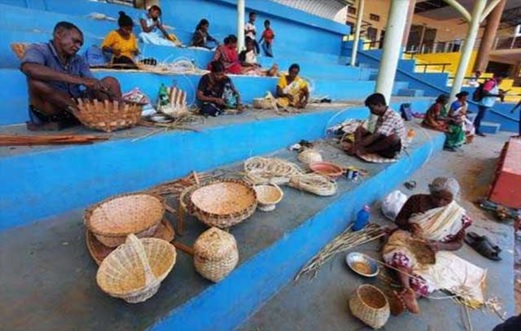
  • The livelihood of the Koraga community is primarily based on agriculture and forest resources. They are also known for traditional handicrafts, especially basket making.
  • The community actively participates in folk dances, music, and traditional rituals, reflecting its rich cultural heritage. Music occupies an important place in their social and religious ceremonies.
  • Dholu and Voote are their major traditional musical instruments, corresponding respectively to the drum and flute. The rhythmic sound of the Dholu is regarded as an integral part of Koraga cultural identity and is widely used during religious and community events.

Religious Beliefs

  • Although the Koraga community broadly follows Hinduism, they also retain distinct tribal religious beliefs.
  • The community worships “Bhutas” (spirits) and believes in magical and ritualistic traditions.
  • Community members believe that religious ceremonies and traditional rituals provide protection from evil forces and negative influences.

Why is the Koraga Community Mentioned in the UN-Habitat Report?

  • The UN-Habitat World Cities Report 2026 mentions the Koraga community in the context of their housing challenges.
  • According to the report, home ownership remains difficult for the Koraga people, influenced not only by economic conditions but also by caste structures and policy gaps.
  • The report states that limited education, social exclusion, and structural barriers prevent the community from adequately accessing government housing schemes.
  • It also highlights the initiative “Restoration of Dignity and Human Rights of Indigenous Tribal Community in Karnataka”, undertaken by ActionAid India, Koraga Federation, and Samagra Grameena Ashram.
  • Through this initiative, Koraga families were assisted in accessing state government housing schemes.

Global Housing Crisis and Urbanization Challenges

  • According to the report, nearly 40% of the world’s population, approximately 3.4 billion people, are currently affected by housing challenges. Expensive housing, housing shortages, poor-quality settlements, and lack of basic urban services such as water and sanitation are the major causes of this crisis.
  • The report warns that the situation could become more severe if timely action is not taken. It is estimated that by 2050, around 2 billion additional people will be added to urban areas worldwide, placing greater pressure on already stressed housing systems.
  • Furthermore, the report states that climate change-induced disasters may destroy nearly 167 million homes by 2040.

Every City Has a Different Problem

  • At the World Urban Forum (WUF13), Jeffrey D. Sachs stated that the global urban crisis cannot be viewed through a uniform approach.
  • He emphasized that economic, demographic, and land-related conditions differ across regions; therefore, urban challenges also vary accordingly.
  • According to him, Latin America is experiencing significant social change due to smaller family sizes, whereas Sub-Saharan Africa faces serious challenges related to rapidly increasing urban populations, land use, urban planning, and housing systems.
  • He also noted that South Asia and Southeast Asia continue to face relatively lower but still important urban challenges requiring special attention.

Conclusion

  • The situation of the Koraga tribe is not merely the issue of one tribal community; rather, it represents a broader question of social justice, inclusive development, and housing equality.
  • The UN-Habitat World Cities Report 2026 makes it clear that housing construction schemes alone will not be sufficient.
  • Ensuring secure and dignified housing requires addressing social discrimination, caste barriers, and policy deficiencies. Only then can the goals of “Housing for All” and inclusive urban development be effectively realized.
« »
  • SUN
  • MON
  • TUE
  • WED
  • THU
  • FRI
  • SAT
Have any Query?

Our support team will be happy to assist you!

OR