Current Affairs for 29 October 2026

Tawang Hosts International Tourism Mart after 13 Years: Key Facts, Major Highlights, Importance and Challenges

Prelims: Indian Geography, Tourism, Northeast India, Arunachal Pradesh, Government Initiatives
Mains: GS Paper II: Centre-State Cooperation, GS Paper III: Regional Economic Development, Tourism and Employment, Sustainable Development

Why in news?

Tawang, Arunachal Pradesh, is hosting the 14th International Tourism Mart (ITM) from 29-31 October 2026, returning to the town after 13 years.

Key Facts

Particular

Details

Edition

14th International Tourism Mart

Venue

Tawang, Arunachal Pradesh

Dates

29-31 October 2026

Organising body

Ministry of Tourism, Government of India

Expected participants

Over 200

International buyers

43 from 22 countries

Previous edition

Gangtok, Sikkim, November 2025

Last hosted in Tawang

2013

What is the International Tourism Mart?

  • The International Tourism Mart is an annual flagship initiative of the Ministry of Tourism, Government of India, aimed at promoting the North Eastern Region in domestic and international tourism markets.
  • It brings together tourism businesses, tour operators, entrepreneurs, government agencies, media representatives and other stakeholders to explore business opportunities and develop tourism partnerships.

Major highlights of the event

  • Participation of All Eight North-eastern States
  • The event will showcase the tourism destinations, cultural heritage, adventure activities and tourism products of all eight North-eastern states.

State

Capital

Arunachal Pradesh

Itanagar

Assam

Dispur

Manipur

Imphal

Meghalaya

Shillong

Mizoram

Aizawl

Nagaland

Kohima

Sikkim

Gangtok

Tripura

Agartala

  • Business-to-Business (B2B) Meetings
    • B2B sessions scheduled for 30 October will connect domestic and international buyers with tourism service providers from the Northeast.
    • These meetings aim to encourage business partnerships, develop tourism packages and improve market access for regional tourism entrepreneurs.
  • North East Bazaar
    • The North East Bazaar will showcase traditional arts, handicrafts, textiles and cultural heritage. Regional cuisines and cultural performances will also highlight the diversity of the eight states.
  • Focus on Emerging Tourism Opportunities
    • Live events and concert economy: Exploring how concerts and live events can generate tourism and economic opportunities.
    • Protected and Restricted Areas: Discussing ways to facilitate tourist access to these areas, led by the Ministry of Home Affairs.
    • Experience-based tourism: A presentation by Royal Enfield titled Beyond Destinations: Creating Immersive Journeys in North East India will explore opportunities for immersive travel experiences.
  • Regional Meeting of Tourism Ministers
    • A Regional Meeting of Tourism Ministers from the North-eastern states will be held on 30 October under the chairmanship of Union Tourism and Culture Minister Gajendra Singh Shekhawat.
    • The meeting will focus on tourism development and cooperation among the states.

Why is Tawang important for Tourism?

  • Tawang is a Himalayan destination in Arunachal Pradesh known for its Buddhist heritage, scenic landscapes and cultural traditions.
  • Technical visits to these destinations will familiarise delegates with the region's spiritual heritage, natural landscapes and rural tourism potential. 
  • Familiarisation tours for international delegates are scheduled to begin from Guwahati on 1 November 2026.

Tourist Attraction

Significance

Tawang Monastery

Important centre of Buddhist heritage

Jaswant Garh War Memorial

Memorial associated with the 1962 India-China War

Jang Waterfall

Natural attraction near Tawang

Urgelling Gompa

Traditionally recognised as the birthplace of the Sixth Dalai Lama

Pankang Teng Tso Lake

Scenic high-altitude lake

Buddha Park

Cultural and spiritual attraction

Shernup Village

Rural tourism and local cultural experiences

Why is this initiative important?

  • Economic Development: Tourism can generate income for hotels, restaurants, transport operators, homestays and local businesses.
  • Employment Generation: It can create direct and indirect employment in hospitality, travel services, handicrafts and food services.
  • International Visibility: Participation by international buyers can help regional tourism businesses reach wider markets.
  • Cultural Preservation: Showcasing local arts, textiles, cuisine and traditions can support artisans and cultural practitioners.
  • Regional Cooperation: Joint tourism circuits can encourage visitors to explore multiple North-eastern states.
  • Infrastructure Development: Greater tourism demand can encourage improvements in connectivity, accommodation and visitor facilities.

Challenges in Tourism Development

  • Connectivity: Difficult terrain and long travel times can limit access to remote destinations.
  • Infrastructure Gaps: Some destinations require better transport, accommodation and visitor facilities.
  • Environmental Pressure: Unplanned tourism can damage fragile mountain ecosystems and increase waste.
  • Access Restrictions: Protected and Restricted Area regulations may affect travel planning in certain locations.
  • Seasonality: Weather conditions and seasonal accessibility can affect tourist arrivals and local livelihoods.

Prelims MCQ

Q. With reference to the International Tourism Mart 2026, consider the following statements:

  1. It is being held in Tawang, Arunachal Pradesh.
  2. It is organised by the Ministry of Tourism, Government of India, in association with the Government of Arunachal Pradesh and other North-eastern states.
  3. The event focuses exclusively on religious tourism.

Which of the statements given above is/are correct?

(A) 1 only
(B) 1 and 2 only
(C) 2 and 3 only
(D) 1, 2 and 3

Mains Practice Question

Q. Discuss the role of tourism in promoting economic development and employment generation in Northeast India. 

FAQs

Why is Tawang in the news?

For hosting the 14th International Tourism Mart from 29-31 October 2026, returning to the town after 13 years.

What is the main objective of the International Tourism Mart?

To promote Northeast India as a tourism destination and strengthen business partnerships between domestic and international stakeholders.

How many participants are expected at ITM 2026?

Over 200 participants are expected, including 43 international buyers from 22 countries.

Which states are included in Northeast India for this event?

Arunachal Pradesh, Assam, Manipur, Meghalaya, Mizoram, Nagaland, Sikkim and Tripura.

How can tourism benefit local communities?

Tourism can create employment, support local businesses and artisans, generate income and encourage the preservation of cultural heritage.

Allocaecilius nilgiriensis: New Barklice Species Discovered in Nilgiri Hills of Western Ghats

Prelims: Species in News, Western Ghats, Zoological Survey of India
Mains: GS Paper III – Environment, Biodiversity and Conservation
Keywords: Allocaecilius nilgiriensis, Barklice, Nilgiri Hills, Western Ghats, Zoological Survey of India, Shola Forests, Biodiversity Hotspot, Insect Taxonomy

Why in News?

  • The discovery represents only the second recorded species of the genus Allocaecilius in India.
  • With this discovery, the total number of known species belonging to this genus worldwide has increased to 13.
  • The findings were published on October 12, 2026, in the scientific journal Zootaxa. 

About Allocaecilius nilgiriensis

Allocaecilius nilgiriensis is a newly identified species of barklouse, a small insect found in moist forest environments.

Feature

Description

Scientific name

Allocaecilius nilgiriensis

Common group

Barklice (singular: Barklouse)

Order

Psocodea

Family

Pseudocaeciliidae

Genus

Allocaecilius

Discovered by

Zoological Survey of India

Location

Nilgiri Hills, Southern Western Ghats

Distribution

Tamil Nadu and Kerala

Habitat

Shola and evergreen rainforests

Known species in genus

13 worldwide

Distinctive Physical Characteristics

  • Forewings: Brown patches in specific wing cells identified as R1, R3 and R5.
  • Male reproductive structure: Thumb-like structures on the hypandrium, a plate on the lower abdomen.
  • Female reproductive structure: A deeply indented subgenital plate.
  • Scientific importance: Examination of both male and female specimens supports accurate identification and classification.

What are Barklice?

Barklice are tiny, generally harmless insects that live on tree bark, leaves and vegetation, particularly in humid environments.

  • They feed on fungi, mould, algae, lichens and decaying organic matter.
  • They contribute to nutrient cycling by consuming organic debris and microorganisms.
  • Despite their name, barklice are not the same as parasitic lice found on humans and animals.
  • Their presence contributes to the functioning of forest microecosystems.

Habitat and Distribution

The newly discovered species inhabits the moist, shaded vegetation of high-altitude shola and evergreen rainforests in the Southern Western Ghats.

About the Nilgiri Hills

Feature

Details

Location

Tamil Nadu, Kerala and Karnataka region

Mountain system

Western Ghats

Highest peak

Doddabetta (2,637 metres)

Major ecosystem

Shola forests and montane grasslands

UNESCO recognition

Western Ghats World Heritage Site includes Nilgiri landscape components

Ecological significance

Rich biodiversity, endemic species and important watersheds

What are Shola Forests?

Shola forests are tropical montane evergreen forests found in sheltered valleys and depressions of high-altitude landscapes in South India.

  • They are commonly surrounded by montane grasslands, forming a distinctive shola-grassland ecosystem.
  • They occur in the higher elevations of the Western Ghats, particularly in the Nilgiri, Anamalai and Palani Hills.
  • They support many endemic plant and animal species.
  • They play an important role in water retention, stream regulation and maintaining ecological balance.

About the Zoological Survey of India (ZSI)

The Zoological Survey of India is a scientific organisation responsible for studying and documenting India's animal diversity.

Feature

Details

Established

1 July 1916

Headquarters

Kolkata, West Bengal

Administrative ministry

Ministry of Environment, Forest and Climate Change

Main responsibility

Faunal surveys, taxonomy, classification and biodiversity documentation

Important collections

National Zoological Collections

The organisation conducts scientific expeditions, identifies previously undocumented animal species and maintains collections for biological research. 

Significance of the Discovery

  1. Biodiversity Documentation: The discovery adds to the scientific understanding of India's insect diversity, particularly in the Western Ghats.
  2. Ecological Importance: Barklice contribute to forest ecosystem functioning by feeding on microorganisms and decaying organic material.
  3. Taxonomic Advancement: Studying both male and female specimens helps resolve identification difficulties and improves classification accuracy.
  4. Conservation Importance: The discovery highlights the need to protect specialised habitats such as shola forests and evergreen rainforests.
  5. Scientific Research: The findings provide reference characteristics for future taxonomic and biogeographical studies in the Oriental region.

Challenges to Conservation

  • Habitat fragmentation: Infrastructure development and land-use changes can disrupt forest ecosystems.
  • Climate change: Changes in temperature and rainfall may affect moisture-dependent organisms.
  • Invasive species: Non-native plants can alter natural shola-grassland landscapes.
  • Limited scientific knowledge: Many small insects remain insufficiently studied, making conservation assessments difficult.

Way Forward

  • Strengthen conservation measures in ecologically sensitive regions of the Western Ghats.
  • Encourage detailed faunal surveys and taxonomic research.
  • Protect shola forests and surrounding montane grasslands from habitat degradation.
  • Develop long-term monitoring programmes to understand the effects of climate change on forest insects.
  • Promote collaboration between research institutions, conservation organisations and local communities.

Prelims Practice Question

Q. With reference to Allocaecilius nilgiriensis, recently discovered in India, consider the following statements:

  1. It is a newly discovered barklouse species recorded from the Nilgiri Hills.
  2. It inhabits moist shola and evergreen forests of the Southern Western Ghats.
  3. It is a parasitic insect that feeds primarily on the blood of mammals.
  4. It was discovered and described by scientists from the Zoological Survey of India.

Which of the statements given above are correct?

(a) 1 and 2 only

(b) 1, 2 and 4 only

(c) 2, 3 and 4 only

(d) 1, 2, 3 and 4

Mains Practice Question

Q. Discuss the ecological significance of newly discovered insect species in biodiversity hotspots. How can taxonomic research contribute to conservation strategies in the Western Ghats?

FAQs

Q1. What is Allocaecilius nilgiriensis?

It is a newly described species of barklouse insect discovered in the Nilgiri Hills of the Southern Western Ghats.

Q2. Which organisation discovered the species?

Scientists from the Zoological Survey of India (ZSI) discovered and scientifically described the species.

Q3. Where is Allocaecilius nilgiriensis found?

It has been recorded from moist shola and evergreen forest habitats in the Southern Western Ghats, covering parts of Tamil Nadu and Kerala.

Q4. What do barklice eat?

Barklice mainly feed on fungi, algae, lichens, mould and decaying organic material present on tree surfaces.

Q5. Why is this discovery important?

It expands knowledge of India's insect biodiversity and helps scientists better understand the taxonomy and distribution of the genus Allocaecilius.

Pradhan Mantri Viksit Gram Swaraj Yojana: Strengthening Rural Governance

Why in News?

  • On 28 October 2026, the Union Cabinet approved the Pradhan Mantri Viksit Gram Swaraj Yojana.
  • The Centrally Sponsored Scheme will be implemented from 2026–27 to 2030–31, with a total financial outlay of ₹7,395.55 crore.
  • It aims to empower Gram Panchayats, enhance public participation in rural development and make local governance more transparent, accountable and effective.

Objectives of the Scheme

  • The primary objective of the Pradhan Mantri Viksit Gram Swaraj Yojana is to develop Gram Panchayats into capable institutions for planning and implementing rural development initiatives.
  • It seeks to establish better coordination among local needs, government schemes and available financial resources.
  • The broader objective is to promote participatory development in rural areas and strengthen rural governance in line with the national vision of Viksit Bharat.

Key Features of the Scheme

  • Financial Outlay: The scheme has a total outlay of ₹7,395.55 crore, comprising ₹4,869.48 crore from the Central Government and ₹2,526.07 crore from State Governments.
  • Implementation Period: The scheme will be implemented from FY 2026–27 to FY 2030–31.
  • Coverage: It will cover Gram Panchayats across all States and Union Territories. Eligible traditional rural local government institutions in areas where the Panchayati Raj system under Part IX of the Constitution does not apply will also be covered.
  • Beneficiaries: Approximately 32 lakh elected representatives, Panchayat functionaries and other stakeholders will receive capacity-building and technical support.
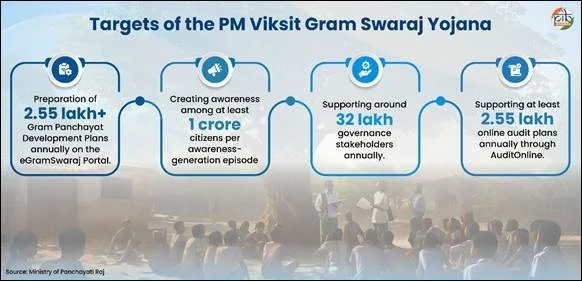
  • Annual Targets: The scheme aims to support the preparation of more than 2.55 lakh Gram Panchayat Development Plans and at least 2.55 lakh online audit plans annually. Each coordinated public awareness campaign will aim to reach at least one crore citizens.

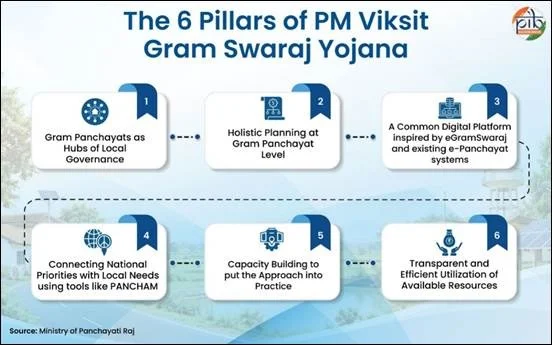
Six Key Pillars of the Scheme

1. Gram Panchayats as Centres of Local Governance

  • The scheme will place Gram Panchayats at the centre of local development planning.
  • Panchayats will coordinate community priorities, government schemes and available resources.
  • This will help prioritise development activities according to local needs.

2. Comprehensive Gram Panchayat Development Planning

  • The scheme will improve coordination among the development programmes of various Central and State Government departments.
  • This will help make Gram Panchayat Development Plans (GPDPs) more comprehensive and effective.
  • Better coordination among departments will facilitate the identification of development gaps and the efficient utilisation of resources.

3. Promoting Digital Governance

  • The scheme will strengthen digital integration by building on the existing eGramSwaraj platform and other e-Panchayat systems.
  • A common digital platform will facilitate access to information on government schemes, beneficiaries, benefits, community assets and available resources.
  • This will help Panchayats identify development gaps, monitor schemes and learn from the experiences of Panchayats in other States.

E-Gram Swaraj: Launched in 2020, eGramSwaraj is a digital platform that integrates various aspects of Panchayat functioning, including planning, budgeting, accounting, monitoring and asset management. It is integrated with platforms such as the Public Financial Management System (PFMS), Government e-Marketplace (GeM), BHASHINI, BharatNet and the India Meteorological Department (IMD).
4. Connecting National Priorities with Local Needs

  • The scheme will promote awareness of government schemes and national development initiatives through Gram Sabhas and Panchayat forums.
  • It aims to encourage citizens to participate in local development-related decision-making.
  • The Panchayat Assistance and Messaging Chatbot (PANCHAM) will also support this initiative.
  • Launched in January 2026, PANCHAM is a WhatsApp-based platform that provides Panchayat representatives, officials and citizens with information on government schemes, training materials, surveys and Panchayat services.
  • It supports AI-enabled multilingual communication in 17 Indian languages.

5. Capacity Building and Training

  • The scheme will provide training and technical assistance to elected Panchayat representatives and Panchayat functionaries.
  • Training will cover the use of digital platforms, development planning, financial resource management, preparation of technical estimates and effective communication with citizens.
  • These initiatives will strengthen the administrative and technical capacities of Panchayats.

6. Transparent and Efficient Utilisation of Resources

  • The scheme will help Panchayats utilise Finance Commission grants and other available resources more effectively.
  • It will also encourage the mobilisation of Own Source Revenue (OSR).
  • Online accounting, auditing and public disclosure will strengthen financial transparency and accountability.

Major Annual Targets of the Scheme

  • Gram Panchayat Development Plans: Support the preparation of more than 2.55 lakh Gram Panchayat Development Plans annually on the eGramSwaraj portal.
  • Public Awareness: Reach at least one crore citizens through each awareness-generation campaign. Gram Sabhas, Panchayat forums and digital platforms will be used to disseminate information about government schemes.
  • Capacity Building: Provide training and digital support to approximately 32 lakh Panchayat representatives, functionaries and other stakeholders.
  • Online Audits: Support at least 2.55 lakh online audit plans annually and facilitate the timely completion of the corresponding audits through AuditOnline.
  • AuditOnline: Launched in 2020, AuditOnline is a digital platform for conducting online audits of Panchayati Raj accounts. It aims to strengthen financial management and transparency in Panchayats.

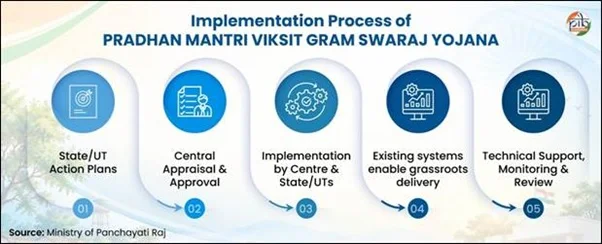
How Will the Scheme Be Implemented?

  • The scheme will operate through existing government institutions and administrative systems.
  • State Governments and Union Territory Administrations will submit Annual Action Plans.
  • These plans will outline proposed activities, priorities and requirements.
  • The designated Central Empowered Committee will appraise and approve the plans.
  • The Central Government, State Governments and Union Territory Administrations will implement activities within their respective areas of responsibility.
  • Technical assistance, monitoring and periodic reviews will support effective implementation.
  • The scheme does not provide for the creation of permanent posts. However, contractual personnel may be engaged at the State, District and Block levels, depending on requirements.

Significance of the Scheme

  • The Pradhan Mantri Viksit Gram Swaraj Yojana is an important initiative to make rural local governance more capable and accountable.
  • It will help Gram Panchayats prepare development plans according to local needs, coordinate with government departments and utilise financial resources efficiently.
  • The expansion of digital systems can improve scheme monitoring and financial transparency.
  • Gram Sabhas and public awareness campaigns will create opportunities to strengthen citizen participation.
  • The initiative can contribute to more inclusive, participatory and outcome-oriented rural development.

Major Challenges

  • Effective coordination among State Governments and Gram Panchayats will be essential for the scheme's success.
  • Differences in the digital and administrative capacities of Panchayat representatives may affect implementation.
  • Limited internet connectivity and technological infrastructure in some rural areas may hinder digital integration.
  • Integrating data across different government departments and completing audits on time may pose additional challenges.
  • Strengthening Panchayats' own revenue sources and ensuring that digital governance remains responsive to the actual needs of rural communities will also be important.

Way Forward

  • Regular training for Panchayat representatives, expansion of digital infrastructure and improved coordination among government departments should be prioritised.
  • Gram Sabhas should play an effective role in identifying local development priorities.
  • Regular social and financial audits, public disclosure of information and outcome-based monitoring should be strengthened to improve accountability.
  • Greater emphasis should be placed on developing the own-source revenue capacity of Panchayats.
  • Implementation should be assessed through measurable outcomes to ensure that development plans translate into tangible improvements in rural communities.

Conclusion

  • The Pradhan Mantri Viksit Gram Swaraj Yojana aims to transform Gram Panchayats from institutions primarily responsible for implementing government schemes into capable, participatory and accountable institutions of local development. 
  • By integrating digital governance, capacity building, financial transparency and public participation, the initiative can strengthen rural self-governance and contribute to the broader vision of Viksit Bharat.

Multiple-Choice Question (MCQ)

Question 1. Consider the following statements regarding the Pradhan Mantri Viksit Gram Swaraj Yojana:

  1. It will be implemented from 2026–27 to 2030–31.
  2. It aims to strengthen the planning capacity, digital governance and financial accountability of Gram Panchayats.
  3. It provides for the creation of permanent posts.

Which of the statements given above is/are correct?

(a) 1 and 2 only

(b) 2 and 3 only

(c) 1 and 3 only

(d) 1, 2 and 3

India Becomes World’s Third-Largest Automobile Market: Industry Valued at ₹22 Lakh Crore

Prelims & Mains: (GS Paper III – Indian Economy, Infrastructure, Industrial Growth, Energy Security and Sustainable Development)
Keywords: Automobile Industry, Nitin Gadkari, Third-Largest Automobile Market, ₹22 Lakh Crore, Logistics Cost, National Green Hydrogen Mission, Electric Vehicles, Make in India, Automotive Exports

Why in News?

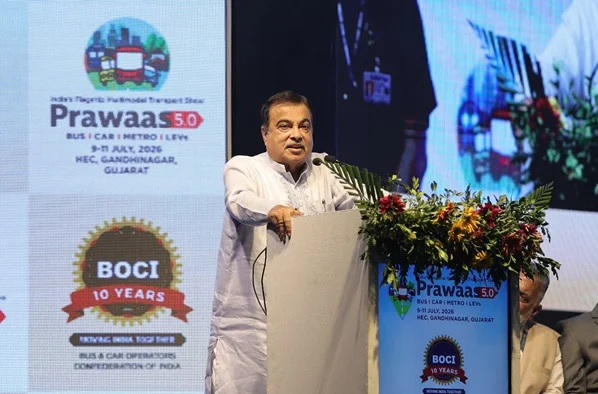
  • Union Minister for Road Transport and Highways Nitin Gadkari has stated that India has overtaken Japan to become the world's third-largest automobile market, with the domestic automobile industry valued at approximately ₹22 lakh crore.
  • Addressing a conclave in New Delhi, the Minister highlighted the contribution of highway development, improved logistics infrastructure and alternative energy sources to India's economic growth.

Key Highlights

  • Global Position: India is the world's third-largest automobile market by new-vehicle sales, following China and the United States.
  • Industry Size: The Minister cited an industry value of approximately ₹22 lakh crore.
  • Infrastructure Development: Expansion of expressways and national highways is improving transport efficiency and regional connectivity.
  • Logistics Cost: The Minister stated that improved road infrastructure has helped reduce India's logistics costs by 6%, although the precise measurement basis was not specified in the report.
  • Energy Security: Greater use of hydrogen and other alternative fuels could reduce dependence on imported fossil fuels.
  • Future Outlook: The government aims to strengthen India's position as a global automobile manufacturing and exporting hub. 

Growth of India's Automobile Industry

  • India's automobile industry has undergone significant transformation since the economic liberalisation of 1991.
  • The removal of industrial licensing restrictions, greater foreign investment and growing domestic demand encouraged international automobile manufacturers to establish production facilities in India.
  • Over time, the country developed a strong manufacturing ecosystem comprising passenger vehicles, commercial vehicles, two-wheelers, three-wheelers and automotive components.
  • According to the Press Information Bureau, vehicle production increased from approximately 2 million units in 1991–92 to 28 million units in 2023–24.
  • The automobile sector also contributes substantially to India's GDP, manufacturing activity and employment generation. 

Importance of the Automobile Industry in the Indian Economy

Sector

Contribution

Economic Growth

Contributes approximately 6% to India's GDP, according to PIB's March 2025 assessment

Employment

Supports millions of direct and indirect jobs

Manufacturing

Promotes steel, rubber, electronics, glass and engineering industries

Exports

Strengthens India's presence in international automobile and auto-component markets

Technological Development

Encourages investment in electric vehicles, batteries, automation and advanced manufacturing

Investment

Attracts domestic and foreign investment into manufacturing infrastructure

The industry also plays an important role in the development of micro, small and medium enterprises (MSMEs), which supply automobile components and supporting services. 

Role of Road Infrastructure in Automobile Industry Growth

The development of national highways, expressways and economic corridors has become an important factor supporting India's automobile sector.

Major benefits include:

  1. Lower Transportation Costs: Better roads can reduce fuel consumption, vehicle operating costs and goods transportation expenses.
  2. Improved Supply Chains: Faster connectivity between manufacturing units, ports, warehouses and markets can improve logistics efficiency.
  3. Industrial Development: Highway corridors encourage the establishment of industrial clusters, logistics parks and manufacturing facilities.
  4. Regional Economic Growth: Improved road connectivity supports investment, tourism, trade and employment opportunities in surrounding regions.
  5. Enhanced Export Competitiveness: Efficient transportation can reduce delivery times and improve the competitiveness of Indian automobile manufacturers in international markets.

Role of Hydrogen and Alternative Fuels

  • Union Minister Nitin Gadkari also highlighted the growing importance of Indian farmers in producing alternative energy sources.
  • The development of green hydrogen, biofuels and other renewable energy products could contribute to reducing India's dependence on imported fossil fuels.

Major Benefits

  • Energy Security: Domestic production of clean fuels can reduce dependence on imported petroleum and other energy resources.
  • Rural Economy: Biomass and agricultural residues can provide additional income opportunities for farmers.
  • Environmental Protection: Green hydrogen and sustainable biofuels can contribute to reducing greenhouse gas emissions.
  • Industrial Development: Hydrogen technologies can support the decarbonisation of industries and selected transport applications.
  • Export Opportunities: India could potentially develop into an exporter of green hydrogen and its derivatives.

However, the future expansion of hydrogen-based transportation will depend on production costs, storage infrastructure, distribution networks and technological development.

Major Government Initiatives Supporting the Automobile Industry

Initiative

Objective

Make in India

Promote domestic manufacturing and investment

Production Linked Incentive (PLI) Scheme for Automobile and Auto Components

Encourage advanced automotive technology manufacturing

PLI Scheme for Advanced Chemistry Cell Batteries

Support domestic battery manufacturing

PM E-DRIVE Scheme

Promote electric mobility and charging infrastructure

National Green Hydrogen Mission

Develop India as a production, utilisation and export hub for green hydrogen

PM Gati Shakti National Master Plan

Improve integrated multimodal infrastructure planning

National Logistics Policy, 2022

Improve logistics efficiency and reduce associated costs

Vehicle Scrappage Policy

Encourage replacement of older, polluting vehicles and improve resource efficiency

Challenges Facing India's Automobile Industry

Despite significant growth, the Indian automobile sector faces several challenges:

  1. Dependence on Imports: Critical components, semiconductor chips, battery materials and advanced technologies remain areas of import dependence.
  2. Electric Vehicle Infrastructure: Inadequate charging infrastructure in several regions restricts the wider adoption of electric vehicles.
  3. High Manufacturing Costs: Energy prices, logistics expenses and technology costs can affect competitiveness.
  4. Environmental Concerns: Rising vehicle numbers contribute to air pollution, traffic congestion and greenhouse gas emissions.
  5. Global Competition: Indian manufacturers face competition from major automobile-producing economies such as China, Japan, Germany and South Korea.

Way Forward

  • Strengthen Domestic Manufacturing: Increase localisation of automobile components, battery systems and semiconductor technologies.
  • Promote Electric Mobility: Expand charging infrastructure, battery recycling and clean transportation systems.
  • Enhance Research and Development: Encourage collaboration among automobile manufacturers, research institutions and technology companies.
  • Improve Logistics Infrastructure: Develop efficient road, rail, port and multimodal transport networks.
  • Diversify Export Markets: Expand automobile exports to emerging markets in Africa, Latin America and Southeast Asia.
  • Encourage Sustainable Fuels: Support the development of green hydrogen, biofuels and other cleaner transport technologies.

Conclusion

  • India's emergence as the world's third-largest automobile market reflects the growing strength of its manufacturing sector, domestic consumer demand and industrial infrastructure.
  • The industry offers significant opportunities for employment generation, exports, technological innovation and economic development.
  • The integration of industrial growth, sustainable mobility and energy security will be essential for strengthening India's position in the global automobile industry.

UPSC Prelims Practice MCQs

Q1. Consider the following statements regarding India's automobile industry:

  1. India is the world's third-largest automobile market by new-vehicle sales.
  2. China is the world's largest automobile market by new-vehicle sales.
  3. India is the world's largest producer of all categories of motor vehicles combined.

Which of the statements given above is/are correct?

(A) 1 and 2 only

(B) 2 and 3 only

(C) 1 and 3 only

(D) 1, 2 and 3

UPSC Mains Practice Question

Discuss the role of infrastructure development and technological innovation in making India a global automobile manufacturing hub. What are the major challenges facing the sector?

FAQs

1. What is India's rank in the global automobile market?

India ranks third globally in new motor vehicle sales, after China and the United States.

2. Which country did India overtake to become the third-largest automobile market?

India overtook Japan in vehicle market sales rankings.

3. How do highways contribute to automobile industry growth?

Highways improve supply-chain connectivity, reduce travel times, support industrial development and can lower vehicle transportation costs.

4. Which government schemes support the electric vehicle industry in India?

Major initiatives include the PM E-DRIVE Scheme, the PLI Scheme for Automobile and Auto Components, and the PLI Scheme for Advanced Chemistry Cell Batteries.

5. What is the role of green hydrogen in India's automobile sector?

Green hydrogen has potential applications in certain heavy-duty and commercial transportation segments, subject to technological feasibility, cost competitiveness and infrastructure availability.

Exercise Garuda Shakti 2026: Objectives, Major training activities, Historical Background, Significance and Challenges

Prelims: Exercise Garuda Shakti 2026, India-Indonesia Relations, Joint Military Exercises, Indian Army Special Forces, Banyuwangi, Indo-Pacific.
Mains: GS Paper II: International Relations, India-Indonesia Defence Cooperation, Indo-Pacific, GS Paper III: Defence Preparedness and Counter-Terrorism.

Why in news?

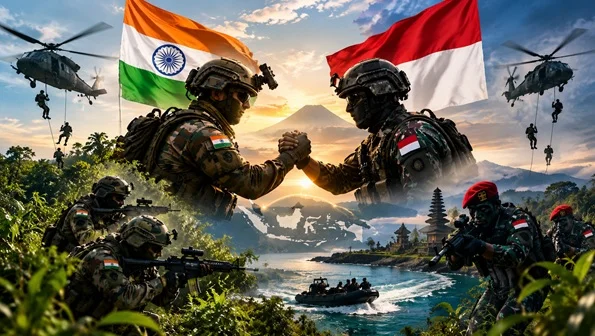
The 11th edition of the India–Indonesia Joint Special Forces Exercise GARUDA SHAKTI commenced on 27 October 2026 at Banyuwangi, Indonesia. 
Key facts 

Particular

Details

Name of exercise

Exercise Garuda Shakti

Edition

11th

Participating countries

India and Indonesia

Commencement date

27 October 2026

Scheduled end date

6 November 2026

Venue

Banyuwangi, Indonesia

Indian contingent

Parachute Regiment (Special Forces)

Indonesian contingent

Indonesian Special Forces

Nature

Bilateral joint military exercise

Major focus

Jungle warfare and special operations

Organised by

Indian Army and Indonesian military counterparts

What is Exercise Garuda Shakti?

  • Exercise Garuda Shakti is a bilateral military exercise between the special forces of India and Indonesia. It forms part of the broader military-to-military engagement between the two countries.
  • The exercise provides an opportunity for participating troops to practise specialised military techniques, exchange operational knowledge and develop the ability to coordinate during joint missions.
  • Its focus on jungle environments is particularly important because dense vegetation, difficult terrain, limited visibility and challenging movement conditions require specialised tactics, physical endurance and close coordination among personnel.

Objectives of Exercise Garuda Shakti 2026

  • Interoperability: Improve the ability of Indian and Indonesian Special Forces to coordinate and operate together.
  • Tactical cooperation: Exchange tactics, techniques and procedures for special operations.
  • Jungle warfare preparedness: Practise operating in dense forest environments and other challenging terrain.
  • Professional knowledge-sharing: Exchange experience concerning weapons, equipment and operational practices.
  • Defence diplomacy: Strengthen military-to-military relations and the broader defence partnership between the two countries. 

Major Training Activities under Garuda Shakti 2026

Training component

Purpose and significance

Obstacle crossing

Develops agility, mobility and the ability to negotiate difficult terrain.

Combat marksmanship

Improves weapon-handling skills and shooting accuracy under demanding conditions.

Mountaineering

Strengthens the ability to operate in elevated and rugged terrain.

Air assault training

Develops skills for operations involving air-based insertion and coordinated ground action.

Combat-hardening sessions

Build physical endurance, resilience and readiness for demanding military operations.

Exchange of operational practices

Enables personnel to learn from each other's equipment, techniques and experience.

Validation exercise

Tests coordination, endurance and combat readiness in simulated operational scenarios.

What is a Validation Exercise?

  • A validation exercise is a concluding training activity used to assess whether the participating personnel can apply the skills and procedures practised during the exercise.
  • In Garuda Shakti 2026, it is designed to simulate realistic operational situations and evaluate the endurance, coordination and combat readiness of both contingents. 
  • It helps assess how effectively the troops can integrate their training into a coordinated operational response. 

Historical Background 

  • Garuda Shakti is an established component of India–Indonesia military cooperation. 
  • The two countries have conducted successive editions to improve professional interaction and strengthen the operational understanding of their special forces.
  • The previous, 10th edition was held at the Special Forces Training School in Bakloh, Himachal Pradesh, from 3 to 12 December 2025. 
  • The training included counter-terrorism activities, unarmed combat, combat shooting, sniping, heliborne operations and planning involving drones and counter-drone systems in semi-mountainous terrain. 

Edition

Venue

Period

8th edition (2022)

Sangga Buana Training Area, Karawang, Indonesia

21 November 2022

10th edition (2025)

Special Forces Training School, Bakloh, Himachal Pradesh

3-12 December 2025

11th edition (2026)

Banyuwangi, Indonesia

27 October-6 November 2026

India-Indonesia Defence Relations

  • Defence cooperation is an important part of this partnership, covering military exercises, defence dialogues, maritime security and professional exchanges between their armed forces.
  • The two countries signed a Defence Cooperation Agreement on 30 May 2018, during Prime Minister Narendra Modi's visit to Indonesia.
  • The agreement provided a framework for expanding defence engagement, including strategic information-sharing and military cooperation. 

Major areas of Defence Cooperation

Area

Initiative

Significance

Army

Exercise Garuda Shakti

Special forces training and tactical cooperation

Navy

Exercise Samudra Shakti

Bilateral naval cooperation

Maritime security

IND-INDO Coordinated Patrol (CORPAT)

Maritime coordination and regional security

Defence policy

Defence Cooperation Agreement and defence dialogues

Institutional framework for bilateral engagement

Significance

  • Strengthening the Indo-Pacific Partnership: India and Indonesia are important maritime partners in the Indo-Pacific. Regular military engagement supports communication, mutual understanding and cooperation on shared regional security concerns.
  • Improving Counter-Terrorism Preparedness: Special forces training helps personnel exchange techniques and procedures relevant to complex operations, including counter-terrorism and other demanding security situations. Previous editions of Garuda Shakti have explicitly included counter-terrorism training.
  • Developing Operational Interoperability: Differences in military procedures, equipment and communication practices can complicate joint operations. Training together helps participating forces understand each other's working methods and improve coordination.
  • Enhancing Jungle Warfare Capabilities: Jungle terrain presents distinct operational challenges, including restricted visibility, difficult movement and demanding environmental conditions. Specialised training can improve adaptability and tactical preparedness.
  • Strengthening Defence Diplomacy: Military exercises create regular channels of professional interaction between armed forces. They complement diplomatic engagement and help sustain long-term bilateral defence cooperation.

Why is Banyuwangi important?

  • Banyuwangi is located in East Java, Indonesia, at the eastern end of Java Island. It is the venue for the 11th edition of Exercise Garuda Shakti.
  • The selection of an Indonesian venue provides the participating troops with an opportunity to train in the host country's operating environment.
  • The official announcement identifies Banyuwangi as the venue, while the exercise's stated training focus is jungle special operations. 

Challenges 

  • Procedural differences: Participating forces may follow different operational procedures and communication protocols.
  • Terrain adaptation: Troops must adjust to unfamiliar environments and local conditions.
  • Coordination: Joint activities require clear communication, planning and role allocation.
  • Equipment compatibility: Differences in equipment and operational systems can complicate coordination.
  • Sustaining cooperation: Long-term benefits depend on continued training, institutional dialogue and follow-up engagement.

Prelims MCQ

Q. Exercise Garuda Shakti is conducted between India and which country?

A. Thailand

B. Indonesia

C. Vietnam

D. Malaysia

Mains Practice Question

Q. Examine the significance of bilateral military exercises in strengthening India's defence cooperation and regional security.

FAQs

What is Exercise Garuda Shakti?

It is a bilateral special forces exercise between India and Indonesia.

When did Garuda Shakti 2026 commence?

27 October 2026.

Where is the 2026 exercise being held?

Banyuwangi, Indonesia.

Which edition is being conducted in 2026?

The 11th edition.

Which Indian unit participates in the exercise?

The Parachute Regiment (Special Forces).

International Day of Care and Support 2026: Theme, History, Global Care Economy, Significance and Challenges

Why in news?

The United Nations International Day of Care and Support is observed annually on 29 October to recognise the importance of paid and unpaid care work, promote gender equality and encourage investment in inclusive and sustainable care systems. 

Key Facts 

Particular

Details

Observance

International Day of Care and Support

Date

29 October

First established

2023

Established by

United Nations General Assembly

Resolution

A/RES/77/317

Core focus

Care work, gender equality and inclusive care systems

2026 Theme 

Voices of Care

Relevant SDGs

SDG 5, SDG 8 and SDG 10

Why is the day observed?

  • Care work is essential for the functioning of families, communities and economies including both direct care, such as looking after children, nursing sick people and assisting older persons, and indirect care, such as cooking, cleaning and other household responsibilities. However, much of this work remains unpaid or underpaid. 
  • Care responsibilities are also distributed unequally, with women performing a disproportionately large share of unpaid care work. 
  • The observance seeks to make this contribution visible and promote policies that ensure fair working conditions and access to quality care services. 

History and Establishment

  • The United Nations General Assembly adopted Resolution A/RES/77/317 on 24 July 2023, officially proclaiming 29 October as the International Day of Care and Support. The resolution was adopted without a vote. 
  • The resolution calls on governments, UN organisations, civil society, businesses, academic institutions and individuals to recognise the value of care and support and invest in strong, inclusive care systems.
  • It also emphasises that care policies should respect human rights and respond to the needs of women, children, older persons and persons with disabilities. 

Global Care Economy

Indicator

Key fact

Women’s share of unpaid care work

76.2%

Women’s unpaid care work compared with men

3.2 times as much

Global care workforce

249 million women and 132 million men

Projected care recipients by 2030

2.3 billion

Why is Care Work important for Gender Equality?

  • Unpaid care responsibilities can limit women’s opportunities to pursue education, employment, entrepreneurship and leadership roles. 
  • When household and caregiving responsibilities fall disproportionately on women, their participation in the formal economy may be restricted.
  • The UN resolution therefore calls for the recognition, reduction and redistribution of unpaid care work. 
  • This includes improving public services, strengthening social protection and encouraging the equal sharing of responsibilities between women and men. 

Significance 

  • Economic significance: Care services support the functioning of the wider economy. Investment in childcare, healthcare and elderly care can also create employment opportunities.
  • Social significance: Affordable and accessible care services can improve the well-being of children, older persons, persons with disabilities and other people requiring assistance.
  • Gender equality: Recognising unpaid care work can help reduce the unequal burden of domestic responsibilities and expand women's economic opportunities.
  • Workers' rights: Paid caregivers, nurses, domestic workers and other care professionals need fair wages, social protection, safe working conditions and decent employment.

Relevance for India

  • Care and support are important policy concerns for India because families, community networks and formal service providers all contribute to caring for children, older persons, people with disabilities and those who are ill.
  • Key areas for policy attention include:
    • Childcare services: Improving the availability and quality of childcare facilities to support children's development and parents' participation in employment.
    • Elderly care: Expanding accessible and affordable care services as the population ages.
    • Care workers' welfare: Strengthening training, fair remuneration, workplace safety and social protection for care professionals and domestic workers.
    • Shared household responsibilities: Encouraging a more equal distribution of unpaid domestic and caregiving work.

Linkages with the Sustainable Development Goals (SDGs)

SDG

Connection with care and support

SDG 5 (Gender Equality)

Target 5.4 recognises and values unpaid care and domestic work.

SDG 8 (Decent Work and Economic Growth)

Promotes decent employment and workers' rights in the care economy.

SDG 10 (Reduced Inequalities)

Supports more inclusive access to care and support services.

SDG 3 (Good Health and Well-being)

Relates to healthcare access and the well-being of care recipients.

Challenges in the Care Economy

  • Invisible work: Unpaid domestic and caregiving activities are often undervalued and inadequately reflected in economic statistics.
  • Gender inequality: Women continue to perform a disproportionate share of unpaid care work.
  • Poor working conditions: Some paid care workers face low wages, limited social protection and inadequate workplace safeguards.
  • Unequal access: Quality care services may be unaffordable or unavailable, particularly in underserved communities.
  • Ageing populations: Increasing demand for long-term care requires stronger public services, trained workers and sustainable financing. 

Prelims MCQ

Q1. The International Day of Care and Support is observed on:

A. 24 October

B. 29 October

C. 31 October

D. 10 December

Mains Practice Question

Q. Discuss the role of care work in promoting gender equality and inclusive economic development. 

FAQs

When is the International Day of Care and Support observed?

29 October every year.

Which UN resolution established the day?

Resolution A/RES/77/317.

When was the resolution adopted?

24 July 2023.

What is the 2026 campaign called?

Voices of Care.

Which SDG target focuses on unpaid care work?

SDG Target 5.4.

Jio Platforms IPO 2026: India's Largest Public Issue, Listing Gains and Significance

Prelims: Initial Public Offering (IPO), SEBI, Book Building, Fresh Issue, Offer for Sale (OFS), Stock Exchanges and Investor Categories.
Mains: GS Paper III – Indian Economy, Mobilisation of Resources, Capital Market Reforms, Investment and Economic Growth.
Keywords: Jio Platforms IPO 2026, Initial Public Offering, SEBI, Primary Market, Book Building, Listing Gains, Capital Formation, Retail Investors, Investor Protection.

Why in News?

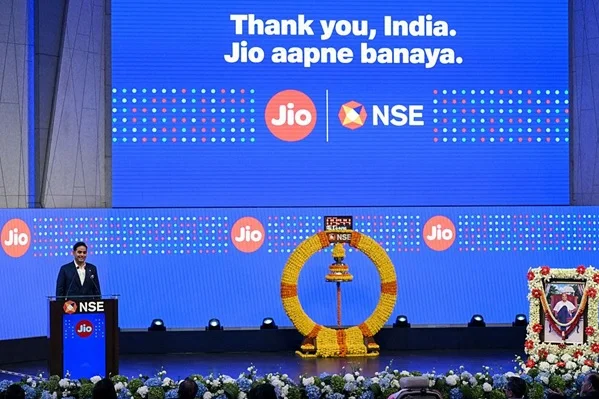
Jio Platforms Limited, the digital services subsidiary of Reliance Industries Limited (RIL), made its stock market debut on 28 October 2026, following India's largest Initial Public Offering (IPO), valued at approximately ₹30,213 crore.
Key Highlights of Jio Platforms IPO 2026

Particulars

Details

Company

Jio Platforms Limited

Parent company

Reliance Industries Limited

IPO size

Approximately ₹30,213 crore

IPO opening date

21 October 2026

IPO closing date

23 October 2026

Price band

₹1,065–₹1,119 per share

Final issue price

₹1,119 per share

Lot size

12 shares

Minimum investment at issue price

₹13,428

Overall subscription

22.19 times

Listing date

28 October 2026

Listing price

₹1,358

Listing premium

21.36%

First-day closing price

₹1,419

Gain over issue price at closing

26.81%

Closing market capitalisation

Approximately ₹13.07 lakh crore

What is an Initial Public Offering (IPO)?

  • An Initial Public Offering (IPO) is the process through which a company offers its shares to the public for the first time and becomes listed on a recognised stock exchange.
  • An IPO allows investors to purchase shares and become part-owners of the company. It marks the transition from a privately held company to a publicly listed company.
  • An IPO is part of the primary market, where securities are offered to investors. Once listed, the shares can be bought and sold in the secondary market, such as the NSE and BSE.

Objectives of an IPO

  1. Capital Mobilisation: Companies raise funds for business expansion, infrastructure and technology development.
  2. Debt Repayment: Fresh issue proceeds may be used to repay existing borrowings and improve financial stability.
  3. Business Diversification: Companies can invest in new products, services and markets.
  4. Investor Exit: Early investors and existing shareholders may sell their holdings through an Offer for Sale.
  5. Corporate Visibility: Listing increases public visibility and subjects companies to greater disclosure and governance requirements.

Types of Initial Public Offering (IPO)

Basis

Fresh Issue

Offer for Sale (OFS)

Meaning

Company issues new shares

Existing shareholders sell their shares

Recipient of funds

Issuing company

Selling shareholders

Effect on share capital

Increases issued share capital

Does not create new shares

Main objective

Raise new capital

Provide liquidity or an exit

Ownership impact

Dilutes existing percentage ownership

Transfers ownership between shareholders

How is an IPO Priced?

In India, IPO pricing generally follows two methods:

Book Building Method

Fixed Price Method

Company announces a price band

Company announces a fixed issue price

Investors bid within the specified range

Investors apply at the fixed price

Final price is determined after evaluating bids

Price is known before subscription

Market demand contributes to price discovery

No price discovery through competitive bidding

Who Can Invest in an IPO?

Investor Category

Description

Retail Individual Investors (RIIs)

Individuals applying for shares worth up to ₹2 lakh

Qualified Institutional Buyers (QIBs)

Mutual funds, insurance companies, eligible banks, pension funds and foreign portfolio investors

Non-Institutional Investors (NIIs)

Investors who do not qualify as retail or institutional investors, including high-value individual applicants

Anchor Investors

Eligible institutional investors participating before the public issue opens

Employee/Shareholder Categories

Eligible investors applying under specific reserved portions, where provided

Eligibility Criteria for IPOs in India

Under Regulation 6(1) of the SEBI (Issue of Capital and Disclosure Requirements) Regulations, 2018, the principal financial requirements for the main-board profitability route include:

Criterion

Requirement

Net tangible assets

At least ₹3 crore in each of the preceding three full years

Operating profit

Average operating profit of at least ₹15 crore during the preceding three years, with operating profit in each year

Net worth

At least ₹1 crore in each of the preceding three full years

Change of company name

Where applicable, at least 50% of preceding-year revenue must arise from the activity indicated by the new name

Alternative route

Companies not satisfying Regulation 6(1) may use the book-building route with at least 75% of the net offer allotted to QIBs, subject to conditions

Legal and Regulatory Framework for IPOs in India

Law / Regulation

Major Provisions

SEBI Act, 1992

Establishes SEBI and its powers to regulate the securities market

Companies Act, 2013

Governs company affairs, share issuance, prospectuses and corporate disclosures

SEBI (ICDR) Regulations, 2018

Regulates eligibility, issue procedures and capital-raising disclosures

Securities Contracts (Regulation) Act, 1956

Provides the legal framework for regulating securities contracts and recognised stock exchanges

SEBI (LODR) Regulations, 2015

Establishes listing obligations, corporate governance and continuous disclosure requirements

Depositories Act, 1996

Provides the framework for holding and transferring securities electronically

Role of SEBI: SEBI safeguards investor interests, regulates market intermediaries and promotes transparency. It does not determine the commercial success of an IPO or set the issue price.

Significance of the Jio IPO for the Indian Economy

  1. Strengthening Capital Markets: Jio's public issue demonstrates the ability of Indian capital markets to mobilise substantial investment from domestic and international investors.
  2. Capital Formation and Debt Reduction: The company reportedly planned to use approximately ₹27,500 crore of the IPO proceeds for debt repayment, helping strengthen its balance sheet. 
  3. Promoting India's Digital Economy: The listing provides a platform for a major digital services company involved in telecommunications, broadband, cloud computing and emerging technologies.
  4. Encouraging Institutional Investment: Participation by domestic mutual funds, foreign investors and other institutions can deepen India's financial markets.
  5. Greater Corporate Transparency: Public listing brings additional financial reporting, disclosure and governance responsibilities.
  6. Supporting Digital Infrastructure: Access to capital markets can support long-term investments in communication networks, data infrastructure and digital services.

Challenges and Risks Associated with IPOs

Challenge

Explanation

Overvaluation

High issue prices may exceed sustainable business fundamentals

Market volatility

Share prices can fall after listing due to changing market conditions

Information asymmetry

Retail investors may struggle to interpret complex financial disclosures

Listing-day speculation

Short-term trading may increase volatility

Corporate governance risks

Related-party transactions and ownership concentration require monitoring

Sectoral competition

Business performance can be affected by competitors and technological changes

Dilution of ownership

A fresh issue reduces existing shareholders' percentage ownership unless they participate proportionately

Way Forward

  • Strengthening Financial Literacy: SEBI and market institutions should continue improving investor awareness, especially among first-time retail investors.
  • Improving IPO Disclosures: Offer documents should present clear, accessible information about risks, debt, valuations and intended utilisation of funds.
  • Encouraging Long-Term Investment: Investors should assess company fundamentals rather than rely only on listing-day gains or grey-market premiums.
  • Strengthening Corporate Governance: Listed companies should maintain transparent reporting, independent oversight and accountability.
  • Promoting Inclusive Capital Markets: Wider financial participation, supported by strong investor protection, can improve resource mobilisation and economic development.

Conclusion

The listing of Jio Platforms on 28 October 2026 represents an important milestone in the evolution of India's capital markets. Its ₹30,213 crore IPO, strong institutional participation and substantial listing-day gains highlight the growing scale of India's equity market and investor interest in digital businesses.

Prelims Practice Questions

Q. Which of the following institutions is the principal securities-market regulator responsible for regulating public issues of equity shares in India?

A. Reserve Bank of India

B. Securities and Exchange Board of India

C. Insurance Regulatory and Development Authority of India

D. Competition Commission of India

Mains Practice Question

"Initial Public Offerings (IPOs) play an important role in capital mobilisation, financial deepening and corporate governance." Examine the significance of IPOs for India's economic development.

Frequently Asked Questions (FAQs)

1. What is an Initial Public Offering (IPO)?

An IPO is the first public offering of a company's shares, generally associated with its listing on a stock exchange.

2. Why was the Jio Platforms IPO significant?

Jio Platforms raised approximately ₹30,213 crore through India's largest IPO, attracting strong investor demand and becoming one of India's most valuable listed companies.

3. What is the difference between an IPO and an FPO?

An IPO is a company's first public offering of shares, whereas a Follow-on Public Offer (FPO) involves an already listed company making a subsequent public issue.

4. What is a listing premium?

A listing premium is the percentage by which a share's initial stock exchange trading price exceeds its IPO issue price. Jio Platforms listed at a premium of 21.36%.

5. What is the role of SEBI in IPOs?

SEBI regulates the securities market, prescribes disclosure and issue requirements, supervises intermediaries and protects investor interests.

upsc english
« »
  • SUN
  • MON
  • TUE
  • WED
  • THU
  • FRI
  • SAT