
- UPSC Exam
- State PCS
- One Day Exam
- Current Affairs
- PT Quiz
- Downlaods
- About Coaching
- Blog
- Videos

The selection of India’s official entry for the Best International Feature Film category at the 99th Academy Awards has renewed debate over India’s Oscar strategy. The discussion centres on whether selection should focus primarily on Indian cultural representation or give greater weight to cinematic merit, international visibility and effective campaigning.

The Film Federation of India (FFI) is responsible for selecting India’s official entry for the Academy Awards’ Best International Feature Film category.
India’s Oscar selections have frequently generated debate. Some notable examples include:
The FFI has often emphasised selecting films that represent Indian culture.
However, cultural representation alone may not determine success at international film awards. A strong contender also requires:
Key point: Cultural specificity can become a strength when it is combined with strong filmmaking and a compelling universal narrative.
International film festivals can significantly increase a film’s global visibility.
Recognition at platforms such as:
can help films attract international critics, distributors, studios and awards-season attention.
What are the Oscar Awards?The Oscar Awards, officially known as the Academy Awards, are among the world’s most prestigious film awards. They are presented annually by the Academy of Motion Picture Arts and Sciences (AMPAS).
|
India can approach the Oscars through a broader international cinema strategy rather than viewing selection only through the lens of cultural representation.
Key measures include:-
Q1. Who selects India’s official entry for the Oscars?Answer :- The Film Federation of India (FFI) is responsible for selecting India’s official entry for the Best International Feature Film category. Q2. What is the Best International Feature Film category?Answer :- It is an Academy Award category recognising outstanding feature-length films produced outside the United States, generally in a language other than English. Q3. Is cultural representation the only criterion for Oscar success?Answer :- No. Cinematic quality, storytelling, direction, performances, technical excellence, originality and international visibility can also contribute to a film’s recognition. Q4. What role do international film festivals play?Answer :- Festivals such as Cannes and TIFF can provide films with critical recognition, international exposure and greater visibility during the awards season. Q5. Why is Oscar campaigning important?Answer :- Strategic campaigning can help a film gain visibility among critics, industry professionals and Academy members during the awards season. |
| Prelims: General Studies Paper I: Current Affairs, Internal Security, National Counter-Terrorism Policy, PRAHAAR and its seven pillars. Mains: General Studies Paper III – Internal Security: Terrorism, cross-border terrorism, intelligence coordination. Keywords: PRAHAAR, National Counter-Terrorism Policy, Counter-Terrorism Strategy, Internal Security, Terrorism in India, Whole-of-Government Approach, Whole-of-Society Approach, Counter-Radicalisation, Intelligence Sharing, ATS. |
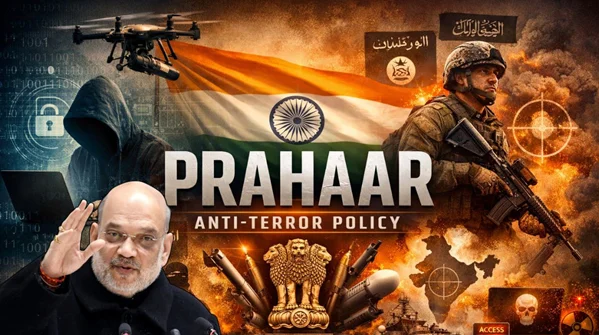
Amit Shah also highlighted inter-agency action against the Shahzad Bhatti network, which was linked to cross-border smuggling of weapons, explosives and narcotics.
According to the government:
This illustrates the importance of intelligence sharing and coordination between central and state agencies in tackling organised and cross-border networks.
MCQWith reference to PRAHAAR, India’s Counter-Terrorism Policy and Strategy, consider the following statements:
Which of the statements given above are correct? (A) 1 and 2 only Mains Question“PRAHAAR seeks to transform India’s counter-terrorism architecture from a reactive response mechanism into an integrated and proactive framework.” Discuss. |
1. What is PRAHAAR?PRAHAAR is India’s National Counter-Terrorism Policy and Strategy, aimed at strengthening the country’s comprehensive response to terrorism. 2. How many pillars does PRAHAAR have?PRAHAAR has seven pillars covering prevention, response, internal capacities, human rights, conditions conducive to terrorism, international cooperation, and recovery and resilience. 3. What approach does PRAHAAR follow?It follows a whole-of-government and whole-of-society approach to counter-terrorism. 4. What is the Extradition Portal?The Extradition Portal is designed to improve coordination among agencies involved in bringing fugitives back to India from other countries. 5. How many fugitive criminals were brought back to India between 2019 and 2026?According to the Home Minister, 288 fugitive criminals were brought back from 36 countries during this period. |
Developing a drug for a rare disease involves:
Consequently, companies may charge extremely high prices. For example, some rare-disease therapies can cost millions of dollars for a single treatment, while certain medicines may cost hundreds of thousands of dollars annually. This creates a major problem of affordability and access, particularly in developing countries.
The U.S. enacted the Orphan Drug Act in 1983 to encourage the development of medicines for rare diseases.
It provided incentives such as:
According to the article, before the Act, only 38 relevant drugs had been approved in the U.S.; by 2022, the number of approvals had increased to 1,122. Similar policy frameworks were subsequently introduced in countries and regions such as Japan, Australia and the European Union.
India has several structural advantages.
This can:
However, the article argues that greater regulatory transparency and clear guidance documents are required.
National laboratories and research institutions can collaborate with companies on:
Rare-disease medicines could potentially be distributed through:
India could leverage its low-cost manufacturing capability to supply affordable rare-disease medicines to low- and middle-income countries.
UPSC Prelims MCQQ. Consider the following statements regarding Rare-Disease Drugs in India:
Which of the statements given above are correct? A. Only 1 and 2 |
Q1. What are Rare Diseases?Answer-Rare diseases are conditions that affect a very small number of people individually. However, there are around 8,000 rare diseases globally, and collectively they affect hundreds of millions of people. Q2. What are Orphan Drugs?Answer-Orphan drugs are medicines developed to treat rare diseases. Since the number of patients is small, pharmaceutical companies have historically had limited commercial incentives to develop these medicines. Q4. What steps has the U.S. taken to promote Rare-Disease Drugs?Answer-The U.S. enacted the Orphan Drug Act in 1983. It provided incentives such as tax benefits, grants, regulatory fee waivers, and market exclusivity for qualifying products. Q5. What are the major challenges related to Rare Diseases in India?Answer-The major challenges include the high cost of medicines, limited availability of treatments, difficulty in identifying patients for clinical trials, and inadequate research and development for rare diseases. |
| Keywords: World Heart Day 2026, World Heart Federation, Don’t Miss a Beat, Cardiovascular Diseases, CVD, Heart Attack, Stroke, Hypertension, Cholesterol, Non-Communicable Diseases, WHO Global Hearts Initiative, Preventive Healthcare, Primary Healthcare, SDG 3.4, Public Health, Air Pollution. |
World Heart Day is an annual global health-awareness campaign focused on cardiovascular diseases. The idea was introduced by the World Heart Federation in 1999 with support from WHO, while the first official World Heart Day was observed in 2000. Since 2011, it has been observed on a fixed date, 29 September.
Major challenges include delayed diagnosis, inadequate awareness of symptoms, unequal access to healthcare and insufficient prevention of hypertension, diabetes and high cholesterol. Cardiovascular risks are also influenced by urbanisation, ageing populations, unhealthy lifestyles and environmental pollution.
A comprehensive approach should focus on prevention, early screening, stronger primary healthcare, affordable medicines, healthier urban environments and public awareness. Governments can also strengthen national cardiovascular-health plans and integrate CVD prevention into broader non-communicable disease strategies.
MCQConsider the following statements regarding World Heart Day:
Which of the statements given above is/are correct? A. 1 and 2 only Mains QuestionDiscuss the major risk factors associated with cardiovascular diseases. How can strengthening preventive and primary healthcare help reduce the global burden of CVDs? |
1. When is World Heart Day observed?World Heart Day is observed annually on 29 September. 2. Who leads World Heart Day globally?The campaign is led by the World Heart Federation (WHF). 3. What is the theme of World Heart Day 2026?The 2026 campaign continues “Don’t Miss a Beat”, focusing on recognising overlooked signs and symptoms of heart disease. 4. What are the major risk factors for cardiovascular diseases?Important risk factors include tobacco use, unhealthy diet, physical inactivity, harmful alcohol use, hypertension, high blood glucose, obesity and abnormal blood lipids. 5. What is the WHO Global Hearts Initiative?It is a WHO initiative launched in 2016 to strengthen prevention and management of cardiovascular diseases through primary healthcare. |
| Mains: GS Paper II: International Relations India and West Asia, bilateral relations, strategic partnerships. GS Paper III: Indian Economy foreign investment, infrastructure, financial-sector cooperation, technology and emerging economic sectors. Keywords: India-UAE relations, High Level Joint Task Force on Investments, HLJTFI, UAE investment in India, Abu Dhabi Investment Authority, ADIA, GIFT City, Dholera, local-currency settlement, CBDC, bilateral investment, Fast Track Mechanism, India-UAE economic partnership, foreign investment, financial cooperation, logistics and infrastructure. |
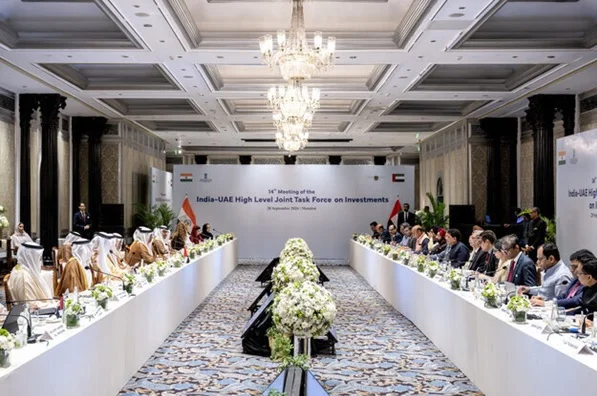
The High Level Joint Task Force on Investments (HLJTFI) was established in 2013 by India and the UAE.
It serves as an institutional mechanism to:
The Joint Task Force has therefore become an important component of the broader India-UAE economic partnership.
The two sides reviewed progress in several investment projects, including the Food Park project in Gujarat. They also discussed opportunities for expanding cooperation in sectors such as infrastructure, logistics, industry and technology.
The meeting noted several significant recent investment developments, including:
These developments highlight the growing role of UAE-based investors in India's financial and industrial sectors.
Financial cooperation was identified as an important pillar of the bilateral economic relationship. The Reserve Bank of India and Central Bank of the UAE are working on initiatives involving:
Such measures can potentially reduce transaction costs and make bilateral trade and investment more efficient.
The two sides noted the expected operationalisation of an Invest India office in the UAE before the end of 2026.
The office is expected to facilitate investment-related engagement and strengthen connections between investors and Indian opportunities.
The meeting also noted the opening of branch offices of:
This reflects the growing financial-sector linkages between India and the UAE.
The two sides reviewed cooperation in the energy sector under the MoUs signed during Prime Minister Narendra Modi's visit to the UAE in May 2026.
Energy remains an important area of bilateral cooperation because of India's energy requirements and the UAE's position as a major energy-producing and investment economy.
Civil aviation cooperation between Abu Dhabi and India was also discussed.
The two countries explored investment and cooperation opportunities related to developing an aviation and logistics hub at Dholera in Gujarat.
The Joint Task Force identified several sectors with potential to increase two-way investment flows:
This indicates that India-UAE economic relations are increasingly moving towards technology-intensive and strategic sectors.
The two sides also reviewed the UAE–India Fast Track Mechanism, which is designed to address outstanding issues affecting:
The mechanism provides an additional institutional channel for resolving investment-related concerns and improving the business environment.
The India-UAE relationship has evolved from a primarily trade-oriented relationship into a broader economic and strategic partnership.
The UAE is important for India because of its role as:
For the UAE, India's large consumer market, expanding infrastructure, digital economy and growth opportunities provide significant avenues for investment.
Despite growing economic cooperation, several challenges remain:
India and the UAE can strengthen the partnership by:
MCQQ. With reference to the India-UAE High Level Joint Task Force on Investments (HLJTFI), consider the following statements:
Which of the statements given above is/are correct? A. 1 and 2 only Mains Question“The India-UAE economic partnership has evolved from conventional trade relations towards investment, financial integration, technology and strategic sectors.” Discuss the significance of this transformation for India's economic and strategic interests. |
1. What is the India-UAE High Level Joint Task Force on Investments?It is a bilateral mechanism established in 2013 to promote investment, identify opportunities and address investment-related issues between India and the UAE. 2. Where was the 14th HLJTFI meeting held?The 14th meeting was held in Mumbai. 3. Who co-chaired the 14th HLJTFI meeting?It was co-chaired by Piyush Goyal from India and Sheikh Hamed bin Zayed Al Nahyan from the UAE. 4. What are the major areas of India-UAE investment cooperation?Major areas include energy, infrastructure, logistics, technology, AI, space, food security, agriculture and startups. 5. What is the India-UAE Fast Track Mechanism?It is an institutional mechanism aimed at resolving outstanding issues affecting Indian and UAE companies and investments in the two countries. |
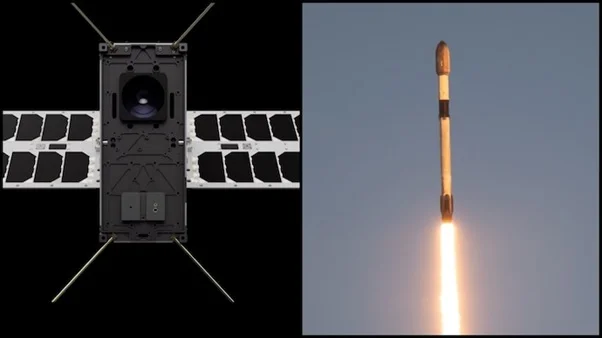
TakeMe2Space has signed 23 customers for the mission, according to company statements reported by Reuters.
Potential applications include:
US-based space-data analytics company Little Place Labs is among the customers.
TakeMe2Space’s MOI-1A mission represents an emerging approach in which satellites can collect, process and analyse data in orbit before transmitting the results to Earth. By combining satellite technology with artificial intelligence and edge computing, the mission aims to reduce the need for transmitting large volumes of raw data and create new commercial applications for space-based computing.
Prelims Practice QuestionMOI-1A satellite, recently in the news, is associated with which of the following?
Select the correct answer using the code given below: (A) 1 and 2 only Mains practice QuestionQ. What is orbital computing? Discuss how processing satellite data directly in space can transform Earth-observation services. Also examine the challenges associated with this emerging technology. |
1. What is MOI-1A?MOI-1A is an orbital computing satellite developed by Indian space startup TakeMe2Space. 2. What is orbital computing?Orbital computing means processing and analysing data directly on a satellite in space instead of sending all raw data to Earth. 3. When will MOI-1A be launched?MOI-1A is scheduled to launch on October 1, 2026, aboard SpaceX’s Transporter-18 rideshare mission. 4. What is the main purpose of MOI-1A?Its main purpose is to process satellite data in orbit using onboard computing and Artificial Intelligence, and send processed results back to Earth. 5. What type of satellite is MOI-1A?MOI-1A is a 6U CubeSat weighing around 14 kg. |
| Prelims: Exercise KAZIND, India–Kazakhstan Relations, Joint Military Exercises, Garhwal Rifles, Counter-Terrorism, Central Asia, United Nations Peacekeeping, Unmanned Aerial Systems (UAS). Mains: GS Paper II: India and its Neighbourhood, Bilateral Relations and Regional Cooperation; GS Paper III: Security Challenges, Terrorism, Defence Cooperation and Emerging Security Technologies. |
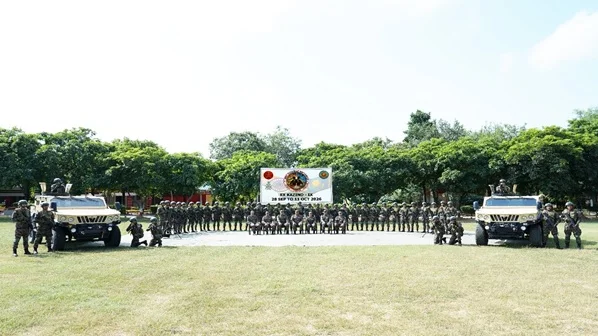
The India–Kazakhstan Joint Military Exercise is being conducted from 28 September to 11 October 2026.
|
Particular |
Details |
|
Exercise |
KAZIND-2026 |
|
Participating countries |
India and Kazakhstan |
|
Edition |
9th |
|
Date |
28 September–11 October 2026 |
|
Venue |
Oskemen, Kazakhstan |
|
Indian contingent |
60 personnel |
|
Main Indian Army unit |
Garhwal Rifles |
|
Other Indian participants |
Personnel from other arms and services and the Indian Air Force |
|
Kazakhstan contingent |
Matching strength, mainly from Kazakhstan Land Forces |
|
Main focus |
Joint Counter-Terrorism Operations |
|
Operational environment |
Sub-conventional environment under a UN mandate |
|
Terrain |
Semi-urban and mountainous terrain |
|
Major technology focus |
UAS and Counter-UAS capabilities |
Prelims MCQQ. With reference to Exercise KAZIND-2026, consider the following statements:
Which of the statements given above are correct? (a) 1 and 2 only (b) 2 and 3 only (c) 1 and 3 only (d) 1, 2 and 3 Mains Practice QuestionQ. How do joint military exercises such as KAZIND contribute to India's defence cooperation and security engagement with Central Asia? |
What is Exercise KAZIND?KAZIND is a joint military exercise conducted between India and Kazakhstan. Where is KAZIND-2026 being held?It is being held at Oskemen in Kazakhstan. When is KAZIND-2026 being conducted?From 28 September to 11 October 2026. Which edition of KAZIND is being held in 2026?The 9th edition. How many Indian personnel are participating?A 60-member Indian Armed Forces contingent is participating. |

Our support team will be happy to assist you!

 Contact Us
  New Batch : 9555124124/ 7428085757
  Tech Support : 9555124124/ 7428085757

