New
GS Foundation (P+M) - Delhi : 19th Jan. 2026, 11:30 AM New Year offer UPTO 75% + 10% Off | Valid till 03 Jan 26 GS Foundation (P+M) - Prayagraj : 09th Jan. 2026, 11:00 AM New Year offer UPTO 75% + 10% Off | Valid till 03 Jan 26 GS Foundation (P+M) - Delhi : 19th Jan. 2026, 11:30 AM GS Foundation (P+M) - Prayagraj : 09th Jan. 2026, 11:00 AM

Current Affairs for 30 December 2025

Instability in Bangladesh and Strategic Challenges Facing India

(Preliminary Examination: Current Events of National and International Importance)
(Mains Examination, General Studies Paper 2: India and Its Neighborhoods - Relations; Bilateral, Regional, and Global Groupings and Agreements Concerning India and/or Affecting India's Interests)

Context

Bangladesh is currently going through a period of deep political crisis and widespread violence. Against this backdrop, the return of Tarique Rahman, the acting president of the Bangladesh Nationalist Party (BNP), after 17 years of exile, has given a new twist to the country's politics. However, this development, along with the intensification of anti-India rhetoric, has raised serious questions not only about internal stability but also about regional diplomacy.
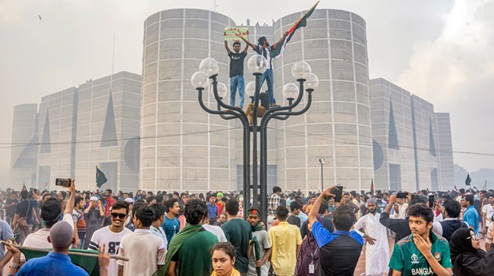
Spontaneous Rebellion or Other Factors

  • The unrest that began in July-August 2024 was often described as a sudden expression of public discontent, but facts that have emerged over time indicate that it was a well-planned regime change operation. Muhammad Yunus, Bangladesh's current Chief Advisor, publicly acknowledged in September 2024 that an organized strategy was at work behind this movement.
  • In this process, Jamaat-e-Islami, with its historical alliance with Pakistan, has emerged as an influential force. Today, this organization appears to be expanding its influence not only on the streets but also within the administrative structure.

Attack on the Legacy of 1971

  • A central goal of the current turmoil has been to undermine the political and cultural legacy created after the 1971 Liberation War.
  • Since August 5, 2024, symbols, monuments, and institutions associated with the Awami League and the Liberation War have been systematically targeted. This appears to be not just a political protest but an attempt to redefine national memory.

Increasing Pressure on Minorities

  • A serious aspect of this political shift is the increasing violence against minorities and the trend of open Islamization. Indeed, there have been allegations of attacks on Hindu, Buddhist, Christian, and Ahmadi communities, destruction of property, land grabbing, and even murders.

Mobocracy and Media Clampdown

  • Mobocracy: It is becoming increasingly common for mobs to surround government offices, officials, and judges to enforce their demands.
  • Institutional Capture: Appointments of Jamaat-supporters in the bureaucracy and educational institutions have increased.
  • Media Repression: Pressure on independent journalism has increased. The offices of respected newspapers like Prothom Alo and The Daily Star have been attacked, and some journalists have been detained without trial.

Economic Decline and Distance from India

  • Political instability has had a direct impact on the economy. Bangladesh, which had been growing at an average rate of 6.5-7% over the past 15 years, has now seen a change:
  • Growth rates have declined
    • Factories are closing
    • Unemployment is rising
    • Private investment is stagnant and inflation is high.
  • A major reason for this is the disruption of decades-long economic and trade cooperation with India, which was a hallmark of Sheikh Hasina's rule.

Tarique Rahman's Return: Hope or Illusion

  • Tarique Rahman's return home after 17 years has generated enthusiasm among BNP supporters. Sympathy for his ailing mother and his story of exile are likely to garner him public support. However, the reality is far more complex:
  • No election appears free and fair due to the exclusion of the Awami League from the electoral process.
  • The BNP itself is internally fragmented.
  • The power of Jamaat-e-Islami is steadily growing.
  • Therefore, while Rahman's return is symbolically significant, structural realities limit his scope for rapid political change.

Anti-India Sentiment: Old Currents, New Rise

  • Anti-India sentiment is not new in Bangladesh. Even in 1971, a segment of the population was opposed to India's role. This undercurrent has coexisted with politics for decades.
  • Despite this, India-Bangladesh relations have been based on trade, education, medical care, tourism, and people-to-people contacts, which have created deep mutual interests beyond politics.

Strategic Priorities for India

  • Reassuring the Bangladeshi people: India must convey its message of goodwill to the general public, not just governments. Aid, trade, and dialogue must be continued. The recent export of 50,000 metric tons of rice to Bangladesh is an important step in this direction.
  • Emphasis on inclusive elections: New Delhi should make it clear that long-term stability is possible only through free, fair, and inclusive elections involving all parties, including the Awami League.

The Importance of India-Bangladesh Relations

  • India has been a central pillar of Bangladesh's economic development, and its geographical proximity, competitive prices, and historical ties make it a natural partner.
  • Even growing engagement with Pakistan, China, or Turkey cannot match the speed, scale, and depth of India's support.

The Question of India's Security

  • Bangladesh's importance to India is not merely diplomatic but also directly linked to security. In fact, cooperation is essential due to our shared border of over 4,000 kilometers and maritime connectivity.
  • In the past, Pakistan-backed terrorist networks and militant groups from the Northeast have used Bangladeshi territory, which the Hasina government played a key role in curbing.

Growing Risks After August 2024

After August 2024, there have been growing fears that the Pakistani government and military may seek to re-establish pre-1971 military-strategic relations with Bangladesh, which could include a deeper military presence near the India-Bangladesh border. This scenario poses a serious regional security concern.

Conclusion

The current turmoil in Bangladesh is not merely an internal political crisis. Its far-reaching implications extend to India-Bangladesh relations, as well as regional stability and the security architecture of South Asia. However, for India, balance, dialogue, and a long-term strategic vision are now more essential than ever.

Somaliland Recognition Issue

(Preliminary Examination: Current Events of International Importance, World Geography)
(Mains Examination, General Studies Papers 1 and 2: Events in World History from the 18th Century onwards, Redrawal of National Boundaries, Agreements Affecting India's Interests, Impact of Policies and Politics of Developed and Developing Countries on India's Interests)

Context

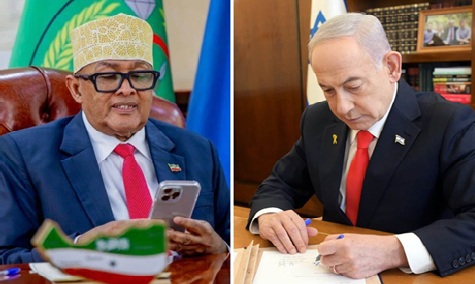
Recently, Israel formally recognized the Republic of Somaliland, which declared itself independent, as an independent and sovereign nation.
Key Points Related to the Decision

  • Israel is the first United Nations (UN) member state to do so. It is known that Somaliland has been governing itself since 1991 after separating from Somalia and has been seeking diplomatic recognition.
  • Somaliland has had diplomatic contacts with countries such as Ethiopia, the United States, and the United Arab Emirates (UAE). The UAE also claims to have a military base in Somaliland. DP World, a major UAE port company, also has a port in the Somaliland city of Berbera.

Criticism of the Decision

This decision has now pitted China against Israel, following the Arab League, Gulf Cooperation Council, African Union, and Organization of Islamic Cooperation (OIC) countries.

  • Several other countries, including Turkey and Somalia, have strongly criticized this move. For Turkey, Somalia is a strategic pillar of its Africa policy and one of the continent's key partners. Somalia is home to Turkey's largest overseas military base. Somalia has received significant military, economic, and humanitarian assistance from Turkey.
  • This decision could pose a strategic and economic challenge for Turkey. Turkey is about to begin drilling for energy in areas along the Somali coast. Turkey has increased its activities there by signing several agreements over the past year.
  • Somalia was angered by an agreement reached last year between landlocked Ethiopia and Somaliland that ceded a portion of its coastal territory to Ethiopia for a port and military base.

Introduction to Somaliland

Historical Background

  • Somaliland has been a British protectorate since the late nineteenth century. It gained independence as the State of Somaliland on June 26, 1960.
  • Subsequently, on July 1, 1960, it merged with Italian Somaliland to form the Republic of Somalia.
  • However, under the Somali government, the northern regions faced political neglect, economic inequality, and administrative neglect. Repressive policies intensified during the reign of Siad Barre in the 1970s and 1980s, leading to civil war, violence, and widespread displacement in the north.
  • After the collapse of the Somali state in 1991, Somaliland declared itself an independent nation and established its own political and administrative institutions.

Geographical Location

Somaliland is located in the Horn of Africa region. It borders Djibouti, Ethiopia, Somalia, and the Puntland region. It also has a strategic coastline near the Gulf of Aden.

Governance and Administration

  • Capital: Hargeisa (Hargeisa)
  • Political System: Somaliland functions as a de facto independent state with its own constitution, elected government, independent judiciary, security forces, passports, a separate currency, and national symbols.
  • Its governance system integrates modern democratic institutions and traditional tribal systems, contributing to social stability and dispute resolution.
  • It has a bicameral legislature, including a House of Elders (Gurti). Its institutional legitimacy is strengthened through regular elections.

Economy

Somaliland's economy is primarily based on animal husbandry, with livestock exports to Gulf countries being a significant source of foreign exchange earnings.

Reasons for Recognizing Somaliland

Strategic Reasons

  • Israel needs allies in the Red Sea region for several strategic reasons. One of these reasons includes a potential future campaign against the Houthi rebels. However, this comment was made in reference to Iran-backed rebels in Yemen.
  • Somaliland is an ideal country for such cooperation because it could give Israel access to an operational area near the conflict zone.
  • Israel's historic recognition of Somaliland as a sovereign nation opens the door to a key strategic region. This would provide direct access to the port of Berbera, improve security in the Red Sea amid the Houthi threat, and counter Iranian influence.

Economic Reasons

  • Lack of international recognition has hindered Somaliland's access to foreign loans, aid, and investment, and the region continues to face poverty.
  • The Horn of Africa region is considered strategically important due to its proximity to the Red Sea and the Bab al-Mandeb Strait. Approximately 30% of the world's container trade passes through this sea route.

Shadow Campaigns and Gaps in India’s Election Regulation Framework

Prelims: (Polity & Governance + CA)
Mains: (GS 2 – Electoral Reforms, Democracy, Governance; GS 3 – Cyber Space & Regulation; GS 4 – Ethics)

Why in News ?

Recent analysis of digital political advertisements during Assembly elections has exposed significant gaps in India’s election regulatory framework, particularly in regulating third-party and surrogate campaigners operating outside formal political party structures.
Background & Context

India’s election laws were framed in an era where political parties and individual candidates were the primary agents of voter mobilisation. Campaigning was largely physical, traceable, and geographically bounded.

However, the rise of digital platforms, social media, algorithm-driven advertising, political consultancies, influencers, and interest groups has fundamentally altered the nature of electioneering. Political persuasion today often occurs through actors who are neither candidates nor officially affiliated to political parties, creating regulatory blind spots in the electoral ecosystem.
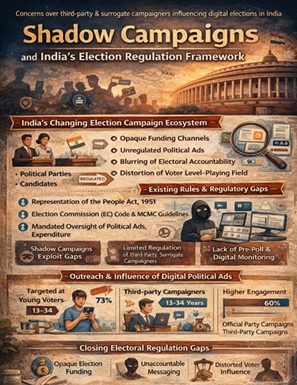
India’s Election Campaign Ecosystem: A Structural Shift

  • Traditional election regulations assume:
    • Campaigning is conducted by recognised political parties or candidates
    • Expenditure is direct, identifiable, and auditable
  • The contemporary ecosystem is increasingly shaped by:
    • Digital marketing agencies
    • Influencers and content creators
    • Ideological or interest-based groups
    • Anonymous or surrogate social media pages
  • These actors often operate outside formal party hierarchies, yet exert substantial electoral influence, weakening the effectiveness of existing election rules.

Existing Legal and Regulatory Framework

Key Laws and Guidelines

  • Representation of the People Act, 1951
    • Section 77 mandates disclosure of election expenditure by candidates
  • Election Commission of India (ECI) Guidelines
    • Pre-certification of political advertisements by the Media Certification and Monitoring Committee (MCMC)
    • Restrictions on political advertisements during the final phase of polling
  • Model Code of Conduct (MCC)

Regulatory Assumptions

  • Political messaging originates from:
    • Political parties
    • Individual candidates
  • Limited oversight exists for:
    • Third-party political advertisers
    • Surrogate or proxy campaigners

Emergence of Shadow Campaigns

What are Shadow Campaigns ?

Shadow campaigns refer to political communication and advertising conducted by third-party actors who are:

  • Not formally linked to political parties or candidates
  • Not directly accountable under election expenditure rules

Key Findings from Digital Ad Analysis

  • Third-party advertisers often:
    • Outspend official parties and candidates
    • Generate significantly higher online visibility
  • Even with similar expenditure, third-party campaigns:
    • Achieve far more impressions
    • Display higher cost efficiency
  • This demonstrates that control over digital dissemination, rather than spending alone, determines electoral influence.

Demographic Reach and Influence Patterns

  • Digital political advertisements—both official and third-party—are heavily consumed by young voters (13–34 years).
  • However, third-party campaigns:
    • Show a more evenly distributed reach across age groups
    • Penetrate older demographics more effectively than party-led messaging
  • This wider demographic reach makes shadow campaigners strategically indispensable in modern elections.

Financial Entanglements and Accountability Gaps

Blurred Financial Relationships

  • Instances have emerged where:
    • Advertisements on official party social media pages were funded by external entities
  • Such expenditure may:
    • Not be fully reflected in official election expenditure statements
    • Escape scrutiny by the ECI

Consequences

  • Understatement of the true cost of digital campaigning
  • Lack of clarity on:
    • Who finances political messaging
    • Who is accountable for content and influence

Bi-directional Influence

  • Third-party actors:
    • Amplify party messaging
    • Directly finance political communication
  • This blurs the line between authorised and unauthorised expenditure.

Legal Contradictions and Enforcement Challenges

  • Judicial precedents, including Supreme Court rulings, have held that:
    • No individual or entity should publish political advertisements benefiting a party or candidate
  • Despite this:
    • Enforcement in the digital domain remains weak
    • ECI guidelines are often:
      • Time-bound
      • Focused on print and traditional media
  • Digital campaigns:
    • Build influence over months
    • Continue even on polling day, exposing regulatory limitations

Implications for Electoral Transparency and Fairness

  • Opacity in funding undermines transparency
  • Unequal digital reach distorts the level playing field
  • Unaccountable actors influence voter behaviour
  • Public trust in electoral integrity erodes

Unless regulatory oversight expands to include all major digital campaign stakeholders, these distortions may deepen in future elections.

Way Forward

Regulatory Reforms

  • Expand the definition of “campaigners” to include third-party digital actors
  • Mandate:
    • Disclosure of funding sources for political ads
    • Platform-level transparency obligations

Institutional Measures

  • Strengthen ECI’s digital monitoring capacity
  • Develop continuous (not time-bound) digital campaign oversight

Platform Accountability

  • Require social media platforms to:
    • Share real-time political ad data with ECI
    • Clearly label political content and sponsors

FAQs

Q1. What are shadow campaigns in elections ?

Shadow campaigns are political communication efforts by third-party actors not formally linked to political parties or candidates.

Q2. Why are shadow campaigns difficult to regulate ?

They operate outside existing legal definitions of candidates and parties, especially in the digital space.

Q3. Which law governs election expenditure in India ?

The Representation of the People Act, 1951.

Q4. Why is digital campaigning a regulatory challenge ?

Because it is continuous, algorithm-driven, cross-platform, and often anonymously funded.

Q5. What is the key risk posed by shadow campaigns ?

They undermine transparency, accountability, and fairness in elections.

Parvati–Arga Sanctuary Declared Eco-Sensitive Zone

Prelims: (Environment + CA)
Mains: (GS 2 – Governance, Environmental Regulation; GS 3 – Environment, Biodiversity, Conservation)

Why in News ?

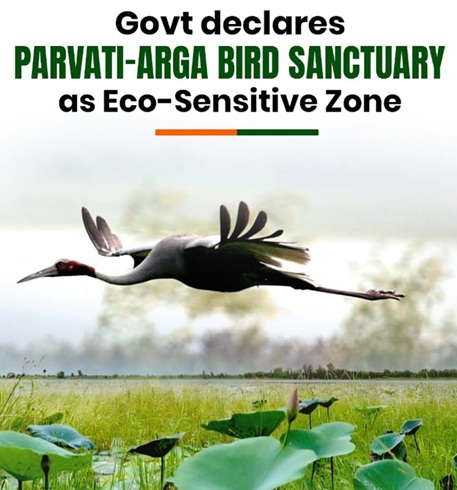
The Parvati–Arga Bird Sanctuary in Uttar Pradesh has been declared an Eco-Sensitive Zone (ESZ) by the Government. The move aims to strengthen ecological protection around the sanctuary by regulating developmental and human activities in its surrounding areas.
Background & Context

India’s protected areas face growing pressure from urbanisation, infrastructure expansion, pollution, and land-use change. To address these challenges, the government has increasingly relied on Eco-Sensitive Zones (ESZs) as a regulatory buffer around ecologically important regions.

Wetlands such as Parvati–Arga play a crucial role in biodiversity conservation, climate resilience, groundwater recharge, and migratory bird habitats. Declaring an ESZ around such areas aligns with India’s commitments under global biodiversity and wetland conservation frameworks, including the Ramsar Convention.

About Parvati–Arga Bird Sanctuary

Location

  • Situated in Gonda district, Uttar Pradesh

Ecological Features

  • A permanent freshwater wetland system
  • Comprises two oxbow lakes:
    • Parvati Lake
    • Arga Lake
  • Represents a typical Indo-Gangetic floodplain ecosystem

Ramsar Status

  • Designated as a Ramsar Site, recognising its international importance as a wetland ecosystem

Flora of the Sanctuary

  • Vegetation is representative of the Indo-Gangetic ecosystem
  • Supports aquatic plants, wetland grasses, and surrounding riparian vegetation
  • Presence of invasive species, notably:
    • Water hyacinth (Eichhornia crassipes), which threatens native biodiversity and water quality

Faunal Significance

Avifauna

The sanctuary is particularly important for threatened vulture species, including:

  • Critically Endangered
    • White-rumped vulture (Gyps bengalensis)
    • Indian vulture (Gyps indicus)
  • Endangered
    • Egyptian vulture (Neophron percnopterus)

Ecological Importance

  • Provides nesting and foraging grounds for resident and migratory birds
  • Acts as a key habitat for scavenger species crucial for ecosystem health

What is an Eco-Sensitive Zone (ESZ)?

Definition

  • Also known as Ecologically Fragile Areas (EFAs)
  • Areas notified by the Ministry of Environment, Forest and Climate Change (MoEFCC) around:
    • National Parks
    • Wildlife Sanctuaries
    • Protected Areas

Purpose of Declaring ESZs

  • To act as shock absorbers for protected areas by regulating human activities
  • To minimise habitat degradation due to industrialisation, mining, and urban expansion
  • To serve as a transition zone between:
    • Areas of high ecological protection
    • Areas with controlled and sustainable human use

Extent of Eco-Sensitive Zones

  • ESZs can extend up to 10 km around a protected area
  • The actual extent depends on:
    • Ecological sensitivity
    • Local geography
    • Anthropogenic pressures

Significance of ESZ Status for Parvati–Arga Sanctuary

Environmental Protection

  • Regulates construction, polluting industries, and land-use change
  • Protects wetland ecology and bird habitats

Biodiversity Conservation

  • Enhances protection for critically endangered vulture species
  • Helps control invasive species and habitat degradation

Sustainable Development

  • Balances conservation with livelihoods of local communities
  • Encourages eco-friendly activities and sustainable tourism

Challenges and Way Ahead

Challenges

  • Encroachment and pollution from nearby settlements
  • Spread of invasive species like water hyacinth
  • Enforcement gaps in ESZ regulations

Way Forward

  • Strengthen monitoring and local governance mechanisms
  • Community participation in wetland conservation
  • Scientific management of invasive species
  • Integration of wetland conservation with district-level planning

FAQs

Q1. Where is the Parvati–Arga Bird Sanctuary located ?

It is located in the Gonda district of Uttar Pradesh.

Q2. Why is Parvati–Arga important ecologically ?

It is a Ramsar-designated wetland supporting endangered vulture species and Indo-Gangetic wetland biodiversity.

Q3. What is an Eco-Sensitive Zone ?

It is a regulated buffer area around protected regions to reduce ecological damage from human activities.

Q4. Which ministry notifies ESZs in India ?

The Ministry of Environment, Forest and Climate Change (MoEFCC).

Q5. What is the maximum extent of an ESZ ?

An ESZ can extend up to 10 km around a protected area, depending on local conditions.

INS Vagsheer Strengthens India’s Undersea Combat Capability

Prelims: (Defence + Science & Technology + CA)
Mains: (GS 2 – Strategic Affairs, Civil–Military Relations; GS 3 – Defence Technology, Security)

Why in News ?

The President of India recently undertook a submarine sortie aboard INS Vagsheer, a Kalvari-class (Scorpene-class) submarine, from the Karwar naval base. With this, the President became the second Indian President to experience a submarine sortie, highlighting India’s growing maritime and undersea warfare capabilities.

Background & Context

Submarines form a critical pillar of modern naval warfare, offering stealth, deterrence, and sea-denial capabilities. For a country like India—with long coastlines, extensive maritime trade routes, and rising strategic competition in the Indian Ocean Region (IOR)—a strong submarine fleet is essential.

India’s submarine modernisation has gained momentum through Project-75, which aims to strengthen indigenous shipbuilding, enhance undersea warfare capability, and reduce dependence on imports. INS Vagsheer marks a significant milestone in this journey, symbolising both technological advancement and strategic deterrence.

About INS Vagsheer

Overview

  • INS Vagsheer is the sixth and final submarine of the first batch of Kalvari-class submarines under Project-75.
  • It is also known as part of the Scorpene-class, designed with French collaboration.

Naming

  • Named after the sandfish, a deadly deep-sea predator of the Indian Ocean
  • Reflects stealth, agility, and lethal striking power

Commissioning

  • Commissioned into the Indian Navy in 2025
  • Home port: Karwar Naval Base

Project-75 and Kalvari-Class Submarines

Project-75

  • A flagship submarine acquisition and indigenisation programme of the Indian Navy
  • Involves construction of six diesel-electric attack submarines

Sister Vessels

INS Vagsheer joins:

  • INS Kalvari
  • INS Khanderi
  • INS Karanj
  • INS Vela
  • INS Vagir

All six submarines are now operational, significantly boosting India’s undersea fleet strength.

Indigenous Manufacturing & Technology Transfer

  • Built by Mazagon Dock Shipbuilders Limited (MDL), Mumbai
  • Constructed with technology transfer from France
  • Represents a major success of:
    • Make in India
    • Atmanirbhar Bharat in Defence

Indigenous Systems on INS Vagsheer

  • Air-conditioning plant
  • Internal communication network
  • Ku-Band SATCOM system
  • High degree of localisation compared to earlier submarines

Key Features & Capabilities

Advanced Stealth

  • Extremely low radiated noise levels
  • Sophisticated hydrodynamic hull design
  • Among the quietest submarines globally

Weapon Systems

  • Heavy-weight torpedoes
  • Anti-ship missiles
  • Mine-laying capability

Operational Roles

  • Anti-Surface Warfare (ASuW)
  • Anti-Submarine Warfare (ASW)
  • Intelligence, Surveillance, and Reconnaissance (ISR)
  • Sea denial and deterrence missions

Strategic Significance of INS Vagsheer

Maritime Security

  • Enhances India’s ability to monitor and control strategic sea lanes
  • Strengthens deterrence in the Indian Ocean Region

Regional Balance of Power

  • Provides India an edge amid increasing submarine deployments by extra-regional powers
  • Reinforces India’s position as a net security provider in the IOR

Indigenous Defence Capability

  • Demonstrates India’s growing expertise in complex undersea platforms
  • Reduces long-term dependence on foreign defence imports

Civil–Military Symbolism

  • The President’s submarine sortie reflects:
    • Civilian leadership’s confidence in India’s armed forces
    • Recognition of naval personnel operating in high-risk environments
  • Enhances public awareness of India’s undersea warfare capability

Challenges and Way Ahead

Challenges

  • Ageing legacy submarines still in service
  • Need for advanced Air Independent Propulsion (AIP) systems
  • Delays in future submarine acquisition projects

Way Forward

  • Accelerate Project-75(I) for next-generation submarines
  • Increase indigenous R&D in propulsion and sensor technologies
  • Strengthen private sector participation in defence manufacturing
  • Enhance training and maintenance infrastructure for submariners

FAQs

Q1. What is INS Vagsheer ?

INS Vagsheer is a Kalvari-class (Scorpene-class) diesel-electric attack submarine of the Indian Navy.

Q2. Under which project was INS Vagsheer built ?

It was built under Project-75, India’s submarine modernisation programme.

Q3. Who built INS Vagsheer ?

Mazagon Dock Shipbuilders Limited (MDL) with French technology transfer.

Q4. Why is INS Vagsheer strategically important ?

It enhances India’s undersea warfare, stealth deterrence, and maritime security in the Indian Ocean.

Q5. How does INS Vagsheer support Atmanirbhar Bharat ?

By incorporating indigenous systems and boosting domestic shipbuilding capability.

PRAGATI Platform: Technology-Driven Governance in Action

Prelims: (Governance + CA)
Mains: (GS Paper 2 – Governance, Federalism, Public Administration, E-Governance)

Why in News ?

At the 5th Chief Secretaries’ Conference, the Prime Minister urged States to replicate the Centre’s PRAGATI system to strengthen technology-driven governance, improve project monitoring, and accelerate the implementation of key reforms.
Background & Context

India’s governance challenges have traditionally included delays in project execution, bureaucratic silos, weak Centre–State coordination, and slow grievance redressal mechanisms. Large infrastructure and welfare projects often suffer from time overruns due to fragmented accountability and procedural bottlenecks.

To address these systemic issues, the Government of India has increasingly relied on digital governance platforms that promote transparency, real-time monitoring, and outcome-based administration. The PRAGATI platform, launched in 2015, represents a shift from file-based governance to direct, technology-enabled executive oversight.

What is the PRAGATI Platform ? 

PRAGATI stands for Pro-Active Governance and Timely Implementation.

  • It is an ICT-enabled, multi-purpose governance platform initiated in 2015
  • Designed to ensure:
    • Timely implementation of government projects
    • Effective grievance redressal
    • High-level monitoring of critical infrastructure and policy reforms

The platform embodies the philosophy of “maximum governance with minimum government.”

Key Features of PRAGATI

Three-Tier Governance Architecture

PRAGATI operates through a three-tier system:

  1. Prime Minister’s Office (PMO)
  2. Union Government Secretaries
  3. Chief Secretaries of States

This structure enables direct communication across levels, bypassing conventional bureaucratic delays.

Prime Minister–Led Oversight

  • Periodic PRAGATI reviews are chaired by the Prime Minister
  • Ensures:
    • Swift decision-making
    • Resolution of inter-ministerial and Centre–State bottlenecks
    • Clear accountability at the highest executive level

Advanced Technology Integration

PRAGATI integrates multiple digital tools, including:

  • Video conferencing for real-time interaction
  • Geo-spatial mapping for project tracking
  • Drone feeds for on-ground verification
  • Centralised data dashboards for monitoring progress

Integration with National Digital Platforms

PRAGATI is not a standalone system. It is integrated with major national governance portals, including:

  • Centralised Public Grievance Redressal and Monitoring System (CPGRAMS)
  • PM Gati Shakti National Master Plan
  • PARIVESH (environmental clearance portal)
  • Project Monitoring Group (PMG) portal

This integration enables:

  • Real-time monitoring
  • Predictive tracking of delays
  • Cross-sectoral coordination

Role in Centre–State Coordination

  • Strengthens the “Team India” approach
  • Facilitates:
    • Resolution of inter-state disputes
    • Faster approvals for infrastructure and development projects
    • Alignment of national priorities with state-level execution

The Prime Minister’s call for States to replicate PRAGATI-like systems reflects its effectiveness in enhancing cooperative federalism.

Significance of PRAGATI

Governance Efficiency

  • Reduces procedural delays and red tape
  • Enables outcome-oriented reviews instead of routine file movement

Accountability

  • Senior officials are directly accountable for project delays
  • Ensures transparency in decision-making

Developmental Impact

  • Accelerates implementation of flagship programmes
  • Improves delivery of infrastructure, social sector, and reform initiatives

Digital Governance Model

  • Serves as a benchmark for technology-driven public administration
  • Demonstrates effective use of data, monitoring, and executive leadership

Challenges and Limitations

  • Heavy reliance on top-down monitoring
  • Effectiveness depends on:
    • Quality of data inputs
    • Administrative capacity at the state level
  • Risk of uneven adoption across States

Way Forward

  • Encourage States to develop PRAGATI-like platforms suited to local governance needs
  • Strengthen data quality and real-time reporting mechanisms
  • Institutionalise digital review systems beyond personality-driven oversight
  • Build capacity of state and district administrations in data-driven governance

Frequently Asked Questions (FAQs)

1. What does PRAGATI stand for ?

PRAGATI stands for Pro-Active Governance and Timely Implementation.

2. When was the PRAGATI platform launched ?

It was launched in 2015.

3. Who chairs PRAGATI review meetings ?

The Prime Minister of India chairs PRAGATI review meetings.

4. What is the main objective of PRAGATI ?

To ensure timely implementation of projects and effective grievance redressal through technology-enabled governance.

5. How does PRAGATI support cooperative federalism ?

By enabling direct Centre–State coordination and resolving inter-state and inter-ministerial bottlenecks.

Dulhasti Stage-II Project Gets Environmental Nod

Prelims: (Geography + CA)
Mains: (GS 1 – Physical Geography; GS 3 – Infrastructure, Energy Security, Disaster Management, Environment)

Why in News ? 

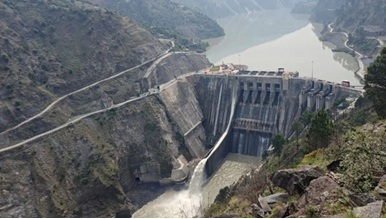
The Expert Appraisal Committee (EAC) of the Ministry of Environment, Forest and Climate Change (MoEF&CC) has recommended environmental clearance for the Dulhasti Stage-II hydropower project on the Chenab River in Jammu & Kashmir.
Background & Context

Hydropower projects in the Chenab basin are strategically significant for India due to their role in energy security, regional development, and utilisation of permissible rights under the Indus Waters Treaty (IWT), 1960.

In recent years, heightened geopolitical tensions and security concerns have accelerated India’s focus on maximising run-of-the-river hydropower potential in Jammu & Kashmir while remaining within treaty provisions. Dulhasti Stage-II represents a continuation of this approach by leveraging existing infrastructure to minimise environmental and social costs.

What is the Dulhasti Stage-II Hydropower Project ?

Location & Capacity

  • 260 MW (2 × 130 MW) underground powerhouse
  • Located on the Chenab River
  • Kishtwar District, Jammu & Kashmir

Project Design

  • A Run-of-the-River (ROR) hydropower project
  • Utilises existing infrastructure of Dulhasti Stage-I
  • Draws water from the Marusudar River (Chenab tributary) via the Pakal Dul Hydroelectric Project into the Dulhasti reservoir

Dulhasti Stage-I

  • 390 MW ROR project
  • Commissioned in 2007
  • Forms the backbone infrastructure for Stage-II

Pakal Dul Hydroelectric Project Linkage

  • 1,000 MW ROR hydropower project
  • Located on the Marusudar River
  • Features a 167-metre concrete-face rockfill dam
  • Tallest dam in the Indian part of the Indus River system
  • Acts as a feeder project for Dulhasti Stage-II

What is a Run-of-the-River (ROR) Project ? 

  • Generates electricity using the natural flow and elevation gradient of a river
  • Does not involve large storage reservoirs
  • Lower displacement and submergence compared to storage dams
  • Considered relatively eco-friendly, though not impact-free

Strategic Significance of Dulhasti Stage-II

Energy Security

  • Adds 260 MW to India’s hydropower capacity
  • Supports renewable energy targets and grid stability

Indus Waters Treaty Context

  • Project gained momentum after the suspension of routine engagement under IWT following the Pahalgam terror attack
  • Strengthens India’s utilisation of permissible hydropower rights on western rivers

Chenab Basin Cascade Development

Dulhasti Stage-II adds to an extensive hydropower cascade including:

Operational Projects

  • Dulhasti-I – 390 MW (Kishtwar)
  • Baglihar – 890 MW (Ramban)
  • Salal – Reasi

Under-Construction Projects

  • Ratle – 850 MW
  • Kiru – 624 MW
  • Kwar – 540 MW

This cascade enhances cumulative power generation while optimising river flow usage.

Expert Appraisal Committee (EAC) – MoEF&CC

About

  • A sector-specific, multi-disciplinary committee constituted under the EIA Notification, 2006

Primary Role

  • Screens, scopes, and appraises projects requiring environmental clearance
  • Provides recommendations to MoEF&CC

Structure

  • Nine EACs at the central level
  • Covers sectors such as:
    • River Valley & Hydroelectric Projects
    • Thermal & Coal Mining
    • Nuclear
    • Strategic & Defence Projects

Composition & Functioning

  • Up to 15 subject-matter experts
  • Reconstituted every three years
  • Operates on consensus and collective responsibility
  • Final decision rests with MoEF&CC

Indus Waters Treaty (1960)

Overview

  • Bilateral treaty between India and Pakistan
  • Brokered by the World Bank
  • Governs the Indus River system and its tributaries

Water Allocation

  • Eastern Rivers (Ravi, Beas, Sutlej): India
  • Western Rivers (Indus, Jhelum, Chenab): Pakistan
  • India allowed limited, non-consumptive use on western rivers for hydropower and domestic needs

Institutional Mechanism

  • Permanent Indus Commission (PIC) with annual meetings
  • Three-tier dispute resolution:
    1. PIC discussions
    2. Neutral Expert
    3. Court of Arbitration

Chenab River: Geographical Overview

Origin

  • Rises as Chandrabhaga near Baralacha Pass, Himachal Pradesh
  • Formed by confluence of Chandra and Bhaga rivers

Major Tributaries

  • Marusudar (largest)
  • Miyar Nalla
  • Bhut Nalla
  • Kalnai
  • Ans
  • Tawi
  • Neeru

Course

  • Flows through Kishtwar, Doda, Ramban, Reasi
  • Enters Pakistan’s Punjab plains
  • Joins the Sutlej → Panjnad → Indus

Environmental Concerns and Way Forward

Key Concerns

  • Cumulative ecological impact of multiple projects
  • Alteration of riverine ecology and sediment flow
  • Disaster vulnerability in seismic Himalayan zones

Way Forward

  • Basin-level cumulative impact assessments
  • Strict compliance with EIA conditions
  • Disaster-resilient design and monitoring
  • Balancing strategic interests with ecological sustainability

Biodiversity Hotspots

Meaning of Biodiversity Hotspots

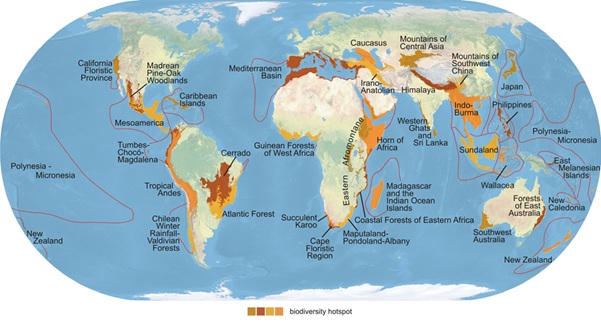
Biodiversity hotspots are biogeographic regions that are characterized by:

  • Extraordinary richness of flora and fauna, especially a high number of endemic species, and
  • Severe loss of natural habitat due to intense human activities.

Because of this combination of high biodiversity and high threat, these regions are considered ecologically fragile and top priorities for conservation.
Criteria for Declaring a Biodiversity Hotspot

A region must fulfill both of the following conditions:

  1. High Endemism
    • The area must contain at least 1,500 endemic species of vascular plants.
  2. Severe Habitat Loss
    • At least 70% of the original natural vegetation must have already been lost or degraded, indicating a critical level of threat.

Global Status

According to Conservation International, there are currently 36 recognized biodiversity hotspots worldwide. Although these hotspots together occupy only a small fraction of the Earth’s land surface, they:

  • Harbor a disproportionately large share of the world’s plant and animal species, and
  • Contain species that are found nowhere else on the planet.

Hence, their conservation is vital for global biodiversity survival.

Importance of Declaring Biodiversity Hotspots

  1. Global Conservation Priority
    • Hotspot status places the region at the top of the international conservation agenda.
  2. Access to Resources
    • Recognition helps attract greater financial support and technical assistance from:
      • Governments
      • Non-governmental organizations
      • International institutions
  3. Scientific and Educational Value
    • These regions act as natural laboratories for studying:
      • Evolutionary processes
      • Ecological balance
      • The role of endemic species in ecosystems

Biodiversity Hotspots in India

India forms part of four of the world’s 36 biodiversity hotspots, highlighting its global ecological significance:

  1. Western Ghats – Sri Lanka
  2. Himalaya
  3. Indo-Burma
  4. Sundaland (includes Andaman & Nicobar Islands)

Challenges to the Western Ghats Biodiversity Hotspot

Major threats affecting biodiversity in the Western Ghats include:

  • Deforestation
  • Mining activities
  • Large dams and infrastructure projects
  • Unplanned and rapid urbanization

These pressures have led to habitat degradation and fragmentation, endangering endemic species.

Major Conservation Measures in the Western Ghats

Gadgil Committee (2011)

  • Recommended declaring a large part of the Western Ghats as an Ecologically Sensitive Area (ESA).
  • Proposed strict restrictions on mining, large construction projects, and deforestation.

Kasturirangan Committee (2013)

  • Suggested reducing the ESA coverage to about 37% of the Western Ghats.
  • Advocated protection of ecologically critical zones while allowing regulated development in other areas.

Joint Forest Management (JFM)

  • Involves local communities as partners in forest conservation.
  • Provides them with sustainable livelihood benefits from forest resources.

Biosphere Reserve Status

  • Parts of the Western Ghats are designated as Biosphere Reserves.
  • The objective is to balance ecological conservation with sustainable development.

Eco-Bridge (Eco-duct)

What are Eco-Bridges?

Eco-bridges (also known as eco-ducts) are specially designed structures created to reconnect wildlife movement routes (wildlife corridors) that have been disrupted by human-made barriers such as:

  • Roads and highways
  • Railway lines
  • Mining activities
  • Deforestation

These structures—either overpasses or underpasses—allow animals to cross obstacles safely and without direct human contact.

Structural Features

  • Eco-bridges are usually covered with native vegetation so that they blend naturally with the surrounding landscape.
  • This natural design encourages animals to use them as familiar, fear-free pathways, preventing stress or behavioral disruption.

Importance of Eco-Bridges

1. Wildlife Connectivity

Eco-bridges:

  • Reconnect fragmented habitats
  • Maintain continuity of natural wildlife corridors
  • Enable species to move freely for feeding, breeding, and migration

As a result, they significantly reduce the negative impacts of habitat fragmentation.

2. Reduction in Road Accidents

  • Wildlife mortality on highways and railways is a major threat to biodiversity.
  • By providing safe alternative routes, eco-bridges substantially reduce human–wildlife conflicts and road/rail accidents.

3. Promotion of Sustainable Development

Eco-bridges help establish a practical balance between:

  • Infrastructure and economic development, and
  • Biodiversity conservation

This ensures that development continues while minimizing environmental damage.

Conclusion

Biodiversity hotspots represent the frontlines of conservation. Protecting them is not only essential for preserving unique species but also for maintaining ecosystem stability, climate resilience, and human well-being at both national and global levels.

« »
  • SUN
  • MON
  • TUE
  • WED
  • THU
  • FRI
  • SAT
Have any Query?

Our support team will be happy to assist you!

OR