The Ministry of Statistics and Programme Implementation (MoSPI) has launched a new web-based portal named PAIMANA for mandatory monitoring of Central Sector infrastructure projects with a project cost of ₹150 crore or more.
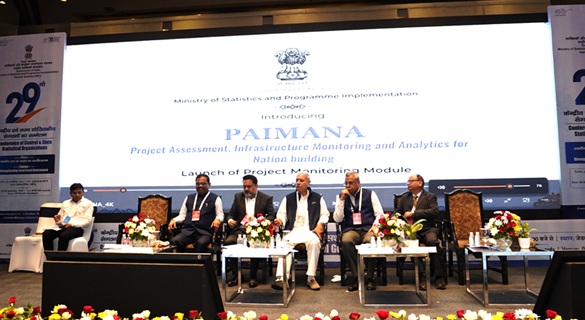
Project Appraisal, Infrastructure Monitoring And Nalytics for Nation Assistance
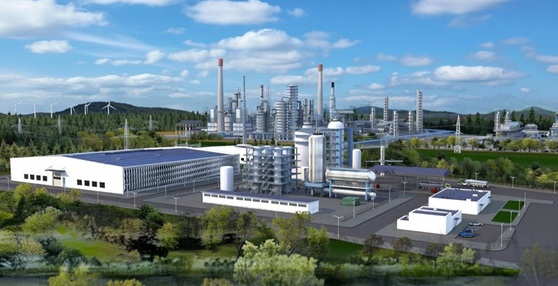
Assam Petrochemicals Limited (APL) signed a Memorandum of Understanding (MoU) with the Deendayal Port Authority (DPA) to establish a 150-tonne-per-day (TPD) e-methanol plant at Kandla Port in Gujarat, marking a significant step towards India's transition to clean energy and green transformation.
|
Article |
Name of the Provision |
Brief Description |
|
Article 21 |
Right to Life and Personal Dignity |
Guarantees the right to live with dignity, including health, hygiene, and personal liberty |
|
Article 14 |
Right to Equality |
Ensures equality before the law and equal protection of laws |
|
Article 15 |
Prohibition of Gender-Based Discrimination |
Prohibits discrimination on grounds of sex and other specified bases |
|
Article 21A |
Right to Education |
Provides free and compulsory education to children aged 6–14 years |
|
Article 47 (DPSP) |
Promotion of Public Health |
Directs the State to improve nutrition levels and public health |
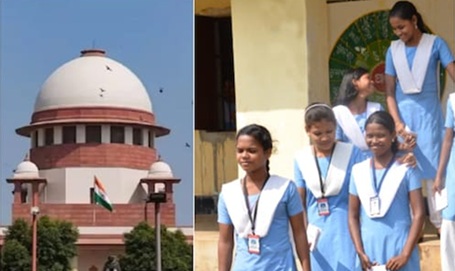
This Supreme Court decision integrates menstruation into the broader constitutional discourse of health, education, dignity, and equality. It not only provides a rights-based safeguard for girl students but also elevates the state's role from a welfare responsibility to a constitutional one. This decision marks a significant step towards gender justice and dignified education in Indian democracy.
| Prelims: (Economy + CA) Mains: (GS 3 – Inflation, Monetary Policy, Data Reforms) |
According to documents released by the Ministry of Statistics and Programme Implementation (MoSPI), India’s revised Consumer Price Index (CPI) series with 2024 as the base year will significantly reduce the weight of food and beverages from 45.86% to 36.75%.
At the same time, housing will account for a much larger share of the CPI basket. Along with improved methods to measure rent increases, this change is expected to push up measured housing inflation and exert upward pressure on headline retail inflation.
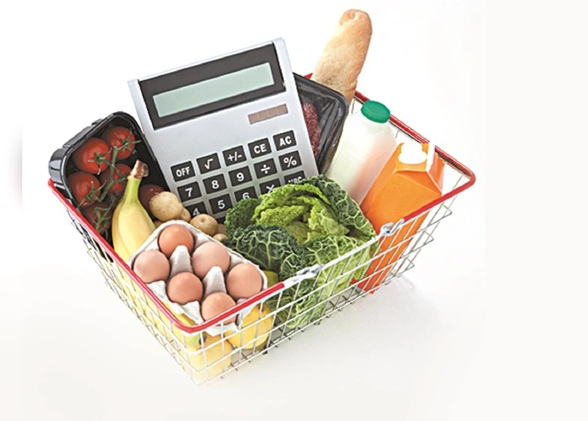
Food items dominate India’s CPI basket, meaning sharp swings in food prices often drive headline inflation—regardless of broader price trends in the economy.
Such episodes highlight how food price volatility can distort the inflation signal, complicating both economic analysis and policy decisions.
Experts estimate that recalculating CPI with the new weights (while keeping price indices unchanged) would imply:
Thus, the revised weights are expected to make headline inflation less volatile and more reflective of underlying price trends.
For the Reserve Bank of India (RBI), the heavy food weight poses challenges because:
Based on the 2023–24 Household Consumption Expenditure Survey (HCES):
These shifts justify reducing food’s weight to make CPI more current, stable, and representative of actual consumption patterns.
The RBI manages inflation mainly by influencing demand through interest rates. However, it has limited control over supply-side food price shocks, such as poor harvests or global commodity spikes.
In the past:
The Economic Survey 2023–24 suggested exploring inflation targeting that excludes food, but the RBI opposed this, arguing that persistent food inflation cannot be ignored.
Under the current Flexible Inflation Targeting (FIT) framework:
While the FIT framework is likely to remain unchanged, the lower food weight in CPI could give the RBI greater operational comfort in managing inflation and interest rates.
The increase reflects:
Additionally, methodological changes—such as excluding employer-provided accommodation from rent measurement—are expected to raise measured housing inflation.
Overall, the new CPI series is likely to produce inflation readings that are more representative of modern consumption, but also structurally higher in some periods due to housing costs.
To maximise the benefits of the new CPI series, policymakers should:
These steps will help ensure that inflation measurement remains robust, credible, and policy-relevant in a rapidly changing economy.
FAQsWhy is food’s weight being reduced in the CPI basket ? Because household spending on food has declined over time, and a high food weight makes inflation excessively volatile and less representative of current consumption patterns. How will the new CPI weights affect inflation readings ? CPI could be 20–30 basis points higher when food inflation is low and 20–30 basis points lower when food inflation is high, reducing overall volatility. Why is housing’s weight increasing in the new CPI ? Due to expanded coverage of residential utilities and higher spending on rent, as reflected in the latest household consumption data. How does this change help the RBI ? A lower food weight reduces the impact of supply-driven food price shocks on headline inflation, giving the RBI more operational flexibility in setting interest rates. When will the new CPI series be implemented ? The first inflation data under the new CPI series will be released in February, with detailed item-wise weights published beforehand. |
| Prelims: (Polity & Governance + CA) Mains: (GS 2 – Governance, Welfare Schemes, Service Delivery; GS 3 – Water Resources, Sustainable Development) |
A 2024 government-commissioned survey has revealed that although nearly 98% of rural households now have tap connections under the Jal Jeevan Mission (JJM), only about three-fourths actually receive a regular, safe, and adequate water supply, exposing a gap between coverage and functionality.
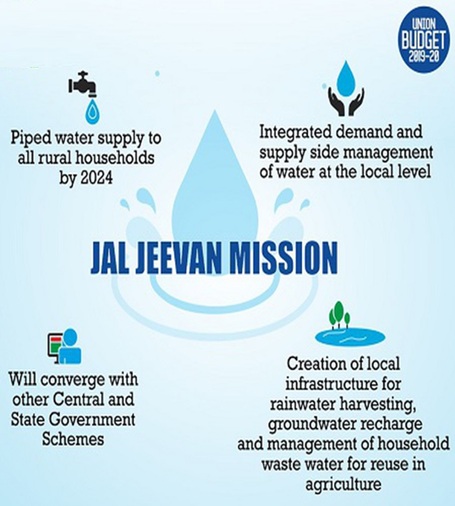
India has historically struggled with rural drinking water access due to groundwater depletion, water quality issues, and institutional fragmentation. Previous schemes focused largely on infrastructure creation rather than service delivery.
Launched in 2019, the Jal Jeevan Mission marked a paradigm shift by prioritising functional household tap connections (FHTCs) and regular service delivery rather than mere installation of infrastructure. It represents one of the largest public investments in water security globally and is central to achieving SDG 6 (Clean Water and Sanitation).
The Jal Jeevan Mission is a flagship programme of the Government of India aimed at providing:
Unlike earlier supply-driven schemes, JJM follows a service delivery approach, where success is measured by regularity, adequacy, and safety of water supply. The programme is implemented through a Centre-State partnership, with cost-sharing arrangements varying across States.
The Jal Jeevan Mission has expanded rural water infrastructure at an unprecedented scale:
However, these certifications are largely based on infrastructure availability, not on actual service delivery, and do not fully capture functionality, water quality, or reliability.
The core objective of JJM is not just installing taps, but ensuring functional and safe water supply. The 2024 Functionality Assessment Survey revealed major gaps:
When availability, regularity, and quality were assessed together, only around 75% of households were found to be benefiting from the scheme as intended, highlighting a significant gap between physical coverage and actual service outcomes.
The survey exposed sharp inter-State disparities:
These variations reflect differences in:
The Jal Jeevan Mission is among the most resource-intensive welfare programmes in India:
The original target of achieving 100% functional coverage by 2024 has now been extended to 2028, acknowledging difficulties related to:
Estimates suggest that addressing remaining uncovered and non-functional households could require nearly ₹4 lakh crore in additional investment.
To improve performance and accountability, JJM relies on:
The 2024 assessment covered over 2.3 lakh households across certified Har Ghar Jal villages, offering a more realistic picture beyond official coverage statistics.
However, the Ministry has noted that survey results are not directly comparable with earlier assessments due to changes in methodology and scope, indicating a need for consistent and standardised monitoring frameworks.
Ensuring long-term success of the Jal Jeevan Mission requires a strategic shift from infrastructure expansion to system sustainability:
Only by focusing on functionality, quality, and sustainability can tap coverage be translated into real improvements in health, productivity, and rural welfare.
FAQsWhat is the main objective of the Jal Jeevan Mission ? To provide functional household tap connections supplying 55 litres of safe drinking water per person per day to all rural households. Why is there a gap between tap coverage and actual water supply ? Because infrastructure availability does not always ensure regular water delivery, adequate quantity, or safe quality due to source, maintenance, and governance challenges. Which States are lagging behind in functionality under JJM ? States such as Bihar, Uttar Pradesh, Nagaland, and Sikkim have reported lower water availability and quantity compliance. What are the major financial challenges facing JJM ? High capital requirements, underutilisation of funds in some years, and the need for additional investments to achieve full functional coverage by 2028. What measures are needed to ensure sustainability of rural water supply ? Strengthening local institutions, improving source sustainability, enhancing water quality monitoring, and integrating water supply with climate resilience and health programmes. |
| Prelims: (Defence & Security + Science & Technology + CA) Mains: (GS 3 – Defence Technology, Indigenisation, Internal Security) |
Bengaluru-based defence manufacturer Alpha Design Technologies Ltd (ADTL) has completed a major upgrade of the Indian Air Force’s Pechora surface-to-air missile (SAM) system, aligning with the government’s push to modernise ageing military platforms through indigenous capability and self-reliance.

India’s air defence architecture includes a mix of legacy Soviet-era systems and modern indigenous and imported platforms. Many older systems, though structurally sound, require technological upgrades to remain effective against evolving aerial threats such as drones, cruise missiles, and electronic warfare environments.
The Pechora system, inducted decades ago, continues to serve as a critical component of India’s low- to medium-altitude air defence grid, especially for point defence of strategic installations. The recent upgrade reflects India’s broader defence policy focus on:
The Pechora, officially designated as the S-125 Neva/Pechora, is a Soviet-origin, medium-range surface-to-air missile (SAM) system designed to intercept low- and medium-altitude aerial targets.
It was originally developed to counter:
Over time, it has been adapted and upgraded by several countries, including India, to meet modern operational requirements.
The Pechora system comprises:
These parameters make Pechora particularly suited for point defence of high-value assets such as air bases, industrial installations, and urban centres.
The modernisation of Pechora by ADTL represents a major step in:
This aligns with national initiatives such as:
In the evolving security environment, aerial threats increasingly include:
Upgraded legacy systems like Pechora:
To further enhance air defence readiness, India should:
Such a multi-layered and indigenised approach will ensure sustained air defence preparedness in an increasingly contested aerial domain.
FAQsWhat is the Pechora missile system ? The Pechora, or S-125 Neva/Pechora, is a Soviet-origin medium-range surface-to-air missile system designed to intercept low- and medium-altitude aerial targets. Why is the Pechora system being upgraded ? To extend its service life, improve performance, and align it with modern air defence requirements through indigenous technology. What types of targets can Pechora effectively engage ? Low-flying aircraft, drones, cruise missiles, and slow-moving aerial threats. What are the range and altitude capabilities of the system ? It has a firing range of up to 30–35.4 km and can engage targets from 20 metres up to 20–25 km in altitude. How does the Pechora upgrade support India’s defence strategy ? It strengthens self-reliance, enhances layered air defence, and reduces dependence on foreign defence suppliers. |
| Prelims: (Science & Technology + Health + CA) Mains: (GS 2 – Public Health, Disease Control; GS 3 – Environment, Biodiversity & Zoonotic Diseases) |
A 29-year-old man in Karnataka recently lost his life after contracting Kyasanur Forest Disease (KFD), commonly known as monkey fever. The incident has brought renewed attention to a disease that often remains underreported until outbreaks turn fatal.
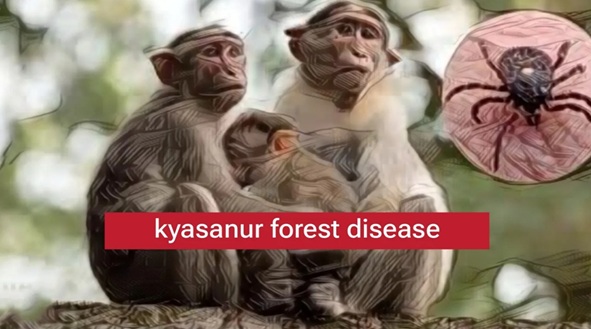
Kyasanur Forest Disease is a zoonotic viral illness that primarily affects forest-dwelling populations in southern India. First identified in 1957 in the Kyasanur Forest region of Karnataka, the disease has since remained endemic in parts of Karnataka and has gradually spread to neighbouring States.
The disease highlights the growing interface between human activity, wildlife habitats, and vector-borne infections, making it a key concern in the context of emerging infectious diseases and environmental change.
Kyasanur Forest Disease is a tick-borne viral haemorrhagic fever caused by the KFD virus, which belongs to:
It is also referred to as:
KFD is primarily reported from southern India, especially forested and semi-forested regions.
Originally confined to Karnataka, KFD has now been reported in:
Populations at higher risk include:
Seasonal patterns are observed, with most cases occurring during dry months, when human exposure to ticks increases.
KFD is transmitted through hard ticks, particularly Hemaphysalis spinigera.
Key modes of transmission include:
Importantly:
KFD typically presents with a sudden onset of symptoms, including:
In some cases, patients may develop:
The disease may follow a biphasic course, where initial recovery is followed by a second phase with neurological symptoms.
Early diagnosis and prompt supportive care significantly improve survival outcomes.
A vaccine against KFD is available in India and is recommended in endemic areas.
Key preventive measures include:
KFD represents a broader challenge of emerging zoonotic diseases linked to environmental change, deforestation, and human-wildlife interactions.
Going forward, priorities should include:
FAQsWhat causes Kyasanur Forest Disease ? KFD is caused by the Kyasanur Forest Disease virus, a member of the Flavivirus genus in the Flaviviridae family. How is KFD transmitted to humans ? Through bites from infected hard ticks or contact with infected animals, especially sick or dead monkeys. Can KFD spread from person to person ? No, KFD does not spread through human-to-human transmission. Is there a cure for KFD ? There is no specific cure; treatment is supportive and focused on managing symptoms and complications. How can KFD be prevented ? Through vaccination in endemic areas, tick control measures, protective clothing, avoiding forest exposure during outbreaks, and community awareness. |
| Prelims: (Economy + CA) Mains: (GS 3 – Indian Economy, Growth, Fiscal Policy, Investment) |
The Union Budget for 2026–27, to be presented by Finance Minister Nirmala Sitharaman, will outline:
While the Budget marks the start of a new financial year, it is rarely a blank slate. Fiscal realities, committed expenditures, and policy continuity from previous years significantly limit room for radical change, making current-year economic conditions crucial in shaping Budget choices.
A Union Budget operates within strong structural constraints:
External shocks—such as export slowdowns triggered by global trade tensions or US tariffs—often spill over into the next fiscal year, forcing the Budget to respond to inherited stresses rather than introducing entirely new priorities.
Thus, a review of the year just ended provides critical insight into what the upcoming Budget can realistically achieve.
Recent economic data point to several issues, but three macroeconomic challenges stand out as particularly relevant for Budget 2026–27:
Together, these threaten fiscal stability, revenue mobilisation, and long-term growth prospects.
While real GDP growth often dominates headlines, it is nominal GDP growth—the value of output at current prices—that matters most for Budget arithmetic. It forms the base for:
If nominal GDP grows slower than expected:
India’s nominal GDP growth has been decelerating for several years. For the current year, it is estimated at just 8%, far below:
This reflects a broader secular slowdown in the economy.
With the First Advance Estimates pegging nominal growth at 8%, fiscal space has tightened considerably. The foremost challenge for the Finance Minister will be to craft a strategy that:
Tax buoyancy measures how tax revenues respond to economic growth:
When nominal GDP growth is weak and buoyancy is low, revenue shortfalls multiply.
In effect, tax revenues are growing at barely half the pace anticipated relative to GDP.
Low tax buoyancy:
A central objective of recent economic policy has been to expand the role of the private sector under the principle of “Minimum Government, Maximum Governance.”
Since 2019, this strategy has included:
When investment did not respond as expected, the government shifted towards boosting demand, including:
Despite these measures and strong headline GDP growth:
Adding to the challenge:
The central policy question for Budget 2026–27 is:
This involves deciding:
To address the three macro challenges, the Budget must pursue a multi-pronged approach:
Only through such a calibrated approach can Budget 2026–27 navigate the tight fiscal environment while laying the foundation for durable, private investment–led growth.
FAQsWhy is nominal GDP growth more important for the Budget than real GDP growth ? Because tax revenues, spending plans, and borrowing needs are calculated on nominal GDP, not real GDP. What is tax buoyancy and why does it matter ? Tax buoyancy measures how tax revenues respond to GDP growth. Low buoyancy means revenues rise more slowly than the economy, tightening fiscal space. Why has private corporate investment remained weak despite policy incentives ? Firms remain cautious due to weak demand, insufficient sales growth, and global economic uncertainty, which reduce incentives for capacity expansion. How do weak revenues affect fiscal policy choices ? They force the government to choose between higher borrowing, which can raise interest rates, or cutting expenditure, which may slow growth. What is the key challenge for Budget 2026–27 ? Balancing growth revival, fiscal sustainability, and private investment stimulation in a constrained macroeconomic environment. |
| Prelims: (Social Issues + CA) Mains: (GS 2 – Health, Welfare, Governance; GS 3 – Fiscal Policy, Human Development) |
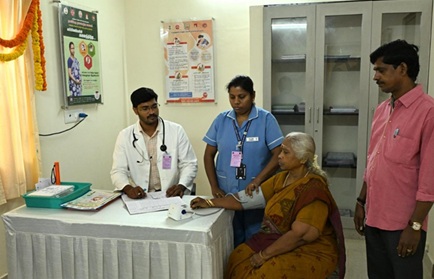
Recent data show that while States have steadily increased health expenditure, the Union government’s health spending as a share of GDP has declined in the post-pandemic period. This divergence has raised concerns about the Centre’s fiscal prioritisation of health, especially in the context of national commitments to strengthen public healthcare and reduce out-of-pocket expenditure.
RBI Data Trends: According to Reserve Bank of India data, the Union government’s health expenditure declined from:
Real-Term Decline: In real terms, the 2025–26 health allocation is 4.7% lower than actual spending in 2020–21 after adjusting for inflation.
Falling Budget Share: The share of health in the total Union Budget has also declined from 2.26% to 2.05%, signalling relative de-prioritisation.
Post-Pandemic Retrenchment: This indicates that the modest prioritisation of health during the pandemic has not been sustained in subsequent fiscal years.
Declining Transfers to States: The share of Union spending transferred to States through Centrally Sponsored Schemes (CSS) fell from:
Impact on National Health Mission (NHM): Key schemes such as the National Health Mission, central to strengthening rural and urban health infrastructure since 2005, have seen stagnation or real-term funding declines.
Real-Term Reduction: During the second tenure of the NDA government, NHM spending declined by 5.5% annually in real terms, weakening public health system capacity.
FAQs1. What is the National Health Policy (2017) target for public health spending ? It aims to raise total public health expenditure to 2.5% of GDP by 2025, with the Union government contributing about 40% of the total. 2. How has Union government health spending changed post-pandemic ? It declined from 0.37% of GDP in 2020–21 to 0.29% in 2025–26, indicating reduced fiscal priority. 3. Why are States increasing health spending while the Centre is reducing it ? States are compensating for rising healthcare needs and reduced Central transfers, despite having limited fiscal capacity. 4. Has the Health and Education Cess significantly boosted health budgets ? No. A large share of cess collections has been absorbed into general revenues, with only about one-fourth allocated to health. 5. What are the risks of declining Central health spending ? Higher out-of-pocket expenditure, strained State finances, weakened primary healthcare, and reduced preparedness for future health emergencies. |
| Prelims: (Environment & Ecology + CA) Mains: (GS 3 – Environment, Climate Change, Urbanisation; GS 2 – Governance, Local Bodies) |
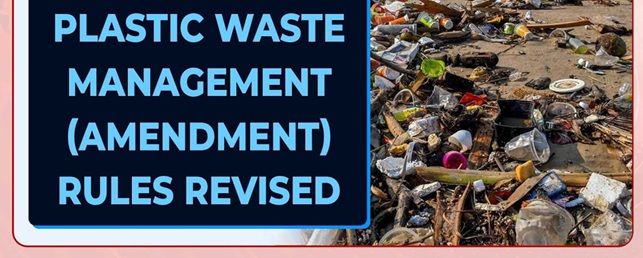
The Union government has notified the Solid Waste Management (SWM) Rules, 2026, making source-level processing of waste mandatory for bulk waste generators and local bodies across India. The rules mark a major shift in India’s urban environmental governance by strengthening accountability, reducing landfill dependence, and operationalising the circular economy framework.
1. Solid Waste Management in India: Status and Challenges
Legal Basis: India’s waste governance is guided by rules framed under the Environment (Protection) Act, 1986.
SWM Rules, 2016 – A Paradigm Shift: The 2016 rules marked a move from landfill-centric disposal to scientific waste management, emphasising:
Implementation Gaps: Weak enforcement, limited institutional capacity of ULBs, and unclear accountability mechanisms diluted the impact of these provisions.
Need for Reform: These regulatory shortcomings prompted the formulation of the SWM Rules, 2026, replacing the decade-old framework.
Stricter Compliance Regime: Notified by the Ministry of Environment, Forest and Climate Change, the rules come into effect from April 1, introducing a more enforceable and generator-focused framework.
Mandatory Source-Level Processing: The most significant reform is compulsory waste processing at source by bulk waste generators, who account for nearly one-third of urban solid waste.
Waste Hierarchy as the Guiding Principle: The framework prioritises:
Restricting Landfill Use: Landfills are to be used only for non-recyclable, non-recoverable, and inert waste, reinforcing the transition towards a circular economy.
Economic Disincentives for Dumping: Higher landfill fees for unsegregated waste aim to discourage dumping and incentivise source-level processing.
Entities classified as bulk waste generators include:
This covers:
This expansion significantly broadens regulatory coverage.
The rules prescribe four mandatory waste streams:
This detailed categorisation aims to:
Bulk waste generators must:
Digital Monitoring: A centralised online portal will enable real-time tracking, compliance monitoring, and enforcement.
Tourist Waste Management: Local authorities in hilly and island regions are empowered to:
This recognises ecological fragility and promotes sustainable tourism.
FAQs1. What is the most significant change introduced by the SWM Rules, 2026 ? Mandatory processing of waste at source by bulk waste generators, shifting responsibility away from urban local bodies. 2. Who qualifies as a bulk waste generator under the new rules ? Entities generating 100 kg or more waste daily, buildings over 20,000 sq. m., or facilities consuming over 40,000 litres of water per day. 3. What waste streams must be segregated under the new framework ? Wet waste, dry waste, sanitary waste, and special care waste (such as batteries and e-waste). 4. How do the new rules promote a circular economy ? By prioritising waste reduction, reuse, recycling, and recovery, and restricting landfill use to residual, inert waste. 5. What special powers are given to local bodies in hilly and island regions ? They can levy tourist waste management fees and regulate visitor numbers based on local waste-handling capacity. |
| Prelims: (Economy + CA) Mains: (GS 3 – Economic Growth, Employment, Inflation, Fiscal Policy; GS 2 – Governance, Public Policy) |
As the Union Budget 2026–27 approaches, policy focus is shifting away from short-term consumer relief measures towards other growth drivers. This makes it timely to assess whether household consumption—despite income tax cuts and GST rationalisation—has genuinely strengthened, or whether underlying wage and income weaknesses continue to constrain demand.
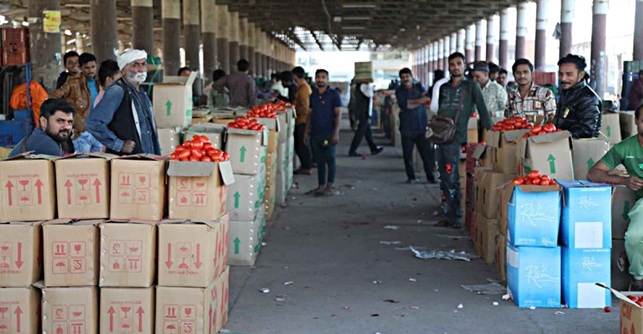
Debt Rising Faster Than Income: Between FY09 and FY23:
This indicates a growing household debt burden relative to income.
Impact on Investment: With households increasingly borrowing to sustain spending and long-term demand outlook uncertain, private investment remains subdued, as businesses hesitate to expand capacity.
FAQs1. Why is India’s consumption growth considered fragile ? Because recent spending increases are driven by tax cuts, low inflation, and borrowing rather than strong and sustained wage growth. 2. What explains the recent rise in real wages ? Primarily falling inflation, not significant increases in nominal wages. 3. Why is rising household debt a concern ? Because households are borrowing faster than incomes are growing, which may weaken long-term financial stability and consumption sustainability. 4. Does the Union Budget have scope to boost consumption further ? Limited fiscal space suggests the Budget will focus more on capital expenditure and exports rather than direct consumption stimulus. 5. What is needed to sustain long-term consumption growth ? Strong nominal wage growth, job creation, productivity gains, and improved income security across rural and urban sectors. |

Our support team will be happy to assist you!


 Contact Us
  New Batch : 9555124124/ 7428085757
  Tech Support : 9555124124/ 7428085757