
- UPSC Exam
- State PCS
- One Day Exam
- Current Affairs
- PT Quiz
- Downlaods
- About Coaching
- Blog
- Videos

| Prelims: (International Relations + CA) Mains: (GS 2 – International Relations; GS 3 – Energy Security; GS 3 – Infrastructure & Economic Stability) |
Amid disruptions in oil flows through the Strait of Hormuz due to escalating West Asia conflict, the Indian government and public sector refiners are considering increasing imports of Russian crude to maintain supply continuity.
India had recently reduced purchases of Russian oil during trade negotiations with the United States. However, with Hormuz shipments effectively suspended, abundant Russian supplies in Asian waters could help offset potential shortages.
India is the world’s third-largest crude oil consumer and imports over 88% of its oil requirements.
India also imports a significant portion of its natural gas from West Asia, much of which transits Hormuz.
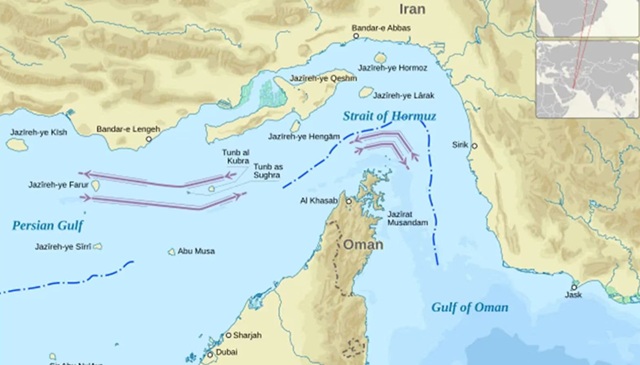
The Strait of Hormuz is a narrow maritime corridor between Iran and Oman connecting the Persian Gulf to the Arabian Sea.
Following statements from the Islamic Revolutionary Guard Corps (IRGC) regarding closure threats, traders and shipping companies suspended movement to avoid insurance and conflict risks. This has turned the Strait into a geopolitical flashpoint with global economic implications.
This earlier reduction provides flexibility to scale up Russian imports if Middle Eastern supply disruptions persist.
Indian refiners currently hold:
These buffers provide short-term insulation against supply shocks.
India can accelerate spot purchases from:
Russian crude in floating storage offers logistical convenience and quicker supply turnaround.
While crude oil has buffers, liquefied petroleum gas (LPG) and liquefied natural gas (LNG) pose greater risks.
A prolonged disruption could therefore affect cooking gas supply and industrial gas consumption more severely than crude oil.
1. Energy Security Stress Test
The disruption underscores India’s heavy reliance on West Asian energy corridors.
2. Strategic Diversification Imperative
Reinforces the need for diversified sourcing — geographically and politically.
3. Geopolitical Balancing
Increasing Russian imports could complicate India’s diplomatic balancing between Western partners and Moscow.
4. Inflationary Risks
Global oil price spikes could fuel domestic inflation and widen the current account deficit.
5. Supply Chain Realignment
Encourages long-term rethinking of energy trade routes and procurement strategies.
FAQs1. Why is the Strait of Hormuz critical for India ? Nearly half of India’s crude imports and a significant share of LNG shipments transit through this chokepoint. 2. Why is India considering higher Russian oil imports ? Russian crude is available in significant volumes and offers an alternative amid Hormuz disruptions. 3. Does India have sufficient oil reserves ? India maintains over 10 days of crude inventory and additional strategic reserves, offering short-term protection. 4. Why are LPG and LNG more vulnerable than crude oil ? India has limited strategic reserves for LPG and LNG, and most supplies transit through Hormuz. 5. What is the long-term solution to such disruptions ? Diversifying energy sources, expanding reserves, strengthening maritime security, and accelerating renewable energy adoption. |



Our support team will be happy to assist you!

 Contact Us
  New Batch : 9555124124/ 7428085757
  Tech Support : 9555124124/ 7428085757