Why in the News ?
Recently, scientists have made significant progress in research on exosomes. These are tiny particles released by most cells in the human body that could play a vital role in the early diagnosis and treatment of cancer, Alzheimer's, Parkinson's, heart disease, and other complex diseases. However, due to their extremely small size, studying them in detail has been challenging until now.
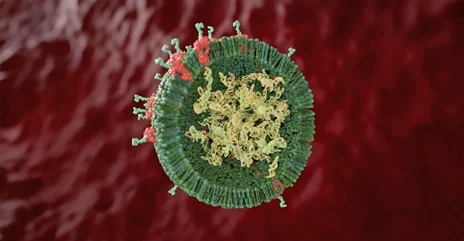
What are exosomes ?
- Exosomes are small extracellular vesicles secreted by cells. They facilitate the exchange of information and biological substances between cells and play a vital role in the regulation of various biological processes in the body.
- They typically range in size from 30 to 150 nanometers, meaning they are thousands of times smaller than the thickness of a human hair.
Key Features of Exosomes
- Surrounded by a Lipid Bilayer
- Exosomes are surrounded by a lipid bilayer membrane, which is similar to the cell membrane.
- This membrane protects the biological substances contained within them.
- Almost all cells produce them
- Almost all types of cells in the human body produce exosomes.
- They are found in various biological fluids, including blood, urine, saliva, milk, and cerebrospinal fluid (CSF).
- Carriers of biological substances
- Exosomes contain many important biomolecules, such as proteins, lipids, RNA (mRNA, miRNA), DNA fragments, and various signaling molecules.
How do exosomes function ?
- Exosomes carry biological signals from one cell to another.
- They are used for intercellular communication.
- They influence the behavior of new cells.
- They regulate the immune system.
- They aid in tissue repair.
- They transfer genetic material.
- For this reason, they are also called "biological messengers of cells."
Importance of Exosomes
- Early Detection of Cancer
-
- Cancer cells release large quantities of a specific type of exosome.
- They can be used for early diagnosis of cancer, assessment of tumor progression, monitoring of treatment effectiveness, and detection of cancer recurrence.
- Alzheimer's and Neurodegenerative Diseases
- Exosomes exchange information between brain cells.
- Their study is showing potential benefits in Alzheimer's disease, Parkinson's disease, Huntington's disease, and multiple sclerosis.
- Uses in Heart Diseases
- Exosomes may help repair damaged heart tissue, create new blood vessels, and regenerate heart cells.
- Regulation of the Immune System
- They regulate the body's immune response and play an important role in infections and inflammatory diseases.
- Drug Delivery
- In the future, scientists want to use exosomes as a natural drug delivery system.
- This will allow drugs to be delivered directly to diseased cells.
- Side effects will be reduced.
- Treatment will be more effective.
Key applications of exosomes
- Liquid biopsy of cancer
- Early diagnosis of Alzheimer's and Parkinson's
- Gene therapy
- Stem cell therapy
- Vaccine development
- Regenerative medicine
- Personalized medicine
Challenges
- Their extremely small size makes them difficult to study.
- Isolation into pure form is expensive and complex.
- Large-scale production remains challenging.
- Standardized techniques are lacking.
- More research is needed for clinical use.
Future Prospects
- Scientists believe that exosome-based technologies could revolutionize medical science in the coming years.
- They could open up new possibilities for rapid and accurate diagnosis, targeted treatments, personalized medicine, and the treatment of cancer, Alzheimer's, and other complex diseases.






 Contact Us
  New Batch : 9555124124/ 7428085757
  Tech Support : 9555124124/ 7428085757