Why in News?
- The Ministry of Tribal Affairs (MoTA) has clarified that the Forest Rights Act (FRA), 2006 does not contain any provision specifically requiring the consent of the Gram Sabha for obtaining Stage-II Forest Clearance.
- The clarification came during discussions between the Ministry of Tribal Affairs and the Ministry of Power over delays in government infrastructure projects caused by the requirement of obtaining consent from all concerned Gram Sabhas.
- The issue has gained importance after a Parliamentary Standing Committee identified the requirement of 100% Gram Sabha consent as a major bottleneck in forest clearance for several hydropower projects.
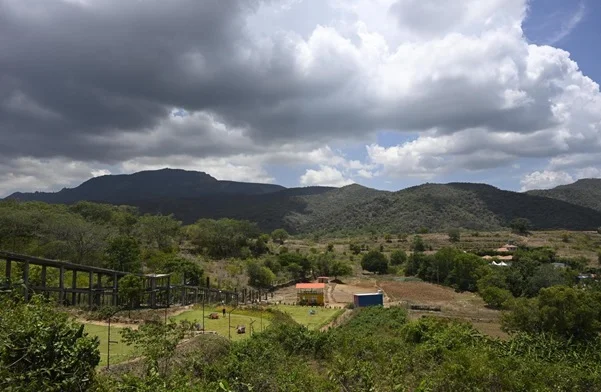
What is the Forest Rights Act, 2006?
The Scheduled Tribes and Other Traditional Forest Dwellers (Recognition of Forest Rights) Act, 2006, commonly known as the Forest Rights Act (FRA), was enacted to recognise and secure the forest rights of:
- Scheduled Tribes living in forest areas; and
- Other Traditional Forest Dwellers who have been dependent on forests for generations.
- The Act seeks to correct the historical injustice faced by forest-dwelling communities by legally recognising their traditional rights over forest resources.
Key Objectives of the Forest Rights Act
The major objectives of the FRA are:
- Recognition of forest rights of eligible forest-dwelling communities.
- Recognition of individual and community forest rights.
- Protection of the livelihood and traditional practices of forest-dependent communities.
- Greater participation of local communities in the management of forest resources.
- Empowerment of the Gram Sabha in the process of identifying and determining forest rights.
Role of Gram Sabha under the FRA
The Gram Sabha has a significant role under the Forest Rights Act.
It is involved in:
- Initiating the process of determining forest rights.
- Receiving and verifying claims.
- Preparing evidence regarding forest rights.
- Determining the nature and extent of individual and community forest rights.
- Identifying community forest resource rights.
However, the FRA does not explicitly state that 100% Gram Sabha consent is required for every proposal involving diversion of forest land for non-forest purposes.
What did the Ministry of Tribal Affairs say?
In an official communication to the NHPC Desk of the Ministry of Power on August 31, 2026, the Ministry of Tribal Affairs stated that:
- There is no provision in the FRA, 2006 and its Rules for obtaining Gram Sabha consent specifically for Stage-II Forest Clearance.
- Matters relating to such consent do not fall under the direct purview of the Ministry of Tribal Affairs.
This position has raised questions because the Ministry of Tribal Affairs is the nodal ministry for implementation of the Forest Rights Act.
Why is Gram Sabha Consent linked to Forest Clearance?
- Although the FRA itself does not expressly use the phrase “100% Gram Sabha consent” for forest diversion, the broader forest clearance framework requires the recognition and settlement of forest rights before forest land can be formally diverted.
- The process generally involves: Identification of FRA claimants → Recognition of forest rights → Vesting of rights → Completion of FRA-related processes → Forest diversion/clearance process
- The requirement of obtaining a No-Objection Certificate (NOC) or consent from concerned Gram Sabhas has therefore come to be commonly associated with the forest clearance process.
Parliamentary Committee's Concerns
The issue was highlighted by the Parliamentary Standing Committee on Public Undertakings in its report on NHPC Limited.
According to the Committee:
- Forest clearance for under-construction projects was taking an average of around 106 months.
- The requirement of consent from all concerned Gram Sabhas had emerged as a major bottleneck.
- Some projects were facing indefinite delays because consent from a small number of Gram Panchayats remained pending.
The Committee cited the Teesta-IV Hydroelectric Power Project as an example.
Proposal for 70–75% Consent
- NHPC suggested that for large hydropower infrastructure projects of national importance, a qualified super-majority model could be considered.
- Under this proposal:Consent from around 70–75% of affected Gram Sabhas could be considered sufficient.
- The Parliamentary Committee recommended that the Ministry of Power discuss the feasibility of such a proposal with the Ministry of Tribal Affairs.
Important
- The 70–75% consent model is a proposal/recommendation, not an existing legal requirement.
Key Issues Involved
1. Tribal Rights vs Infrastructure Development
The issue reflects the broader challenge of balancing tribal rights and environmental protection with the need for infrastructure development.
2. Role of Gram Sabha
The controversy raises questions about the appropriate role of Gram Sabhas in decisions affecting forests and communities dependent on forest resources.
3. Forest Governance
Multiple authorities—including Central ministries, State governments, forest departments and Gram Sabhas—are involved in forest-related decision-making. Clear delineation of responsibilities is therefore important.
4. Delays in Infrastructure Projects
Long clearance procedures can increase the cost and completion time of hydropower and other infrastructure projects.
5. Sustainable Development
Development projects in forest areas must balance:Economic Development + Environmental Conservation + Community Rights
Significance for India
The issue is important from the perspective of participatory governance and decentralisation. Gram Sabha participation ensures that local communities have a voice in decisions affecting their traditional livelihood and forest resources. At the same time, delays in strategically important infrastructure projects can have implications for:
- Energy security
- Regional development
- Infrastructure connectivity
- Project costs
- India's renewable energy transition
Therefore, India needs a rights-based and time-bound forest clearance mechanism rather than treating development and community rights as mutually exclusive.
Way Forward
- Clear Legal Framework :-The relationship between the Forest Rights Act and forest clearance procedures should be clearly defined.
- Meaningful Community Participation :-Gram Sabha participation should remain meaningful, particularly where the rights and livelihoods of forest-dependent communities are affected.
- Time-Bound Clearances :-A transparent and time-bound mechanism can reduce unnecessary delays without compromising legal safeguards.
- Better Centre-State Coordination :-Coordination between the Centre, States, Forest Departments and Tribal Affairs authorities should be strengthened.
- Rights Settlement Before Diversion :-Forest rights should be properly identified, recognised and settled before diversion decisions are implemented.
- Sustainable Development Approach :-Infrastructure development in forest areas should follow the principle of sustainable development, balancing economic needs with ecological and social concerns.
Frequently Asked Questions (FAQs)
Q1.What is the Forest Rights Act, 2006?
Answer -The Forest Rights Act, 2006 recognises and secures certain forest rights of Scheduled Tribes and other traditional forest-dwelling communities.
Q2.Does the FRA explicitly require 100% Gram Sabha consent for Stage-II Forest Clearance?
Answer -According to the recent clarification by the Ministry of Tribal Affairs, the FRA and its Rules do not contain a specific provision requiring Gram Sabha consent for Stage-II Forest Clearance.
Q3.Does the Gram Sabha have a role under the FRA?
Answer -Yes. Gram Sabha has a crucial role in the identification and determination of forest rights under the Act.
|







 Contact Us
  New Batch : 9555124124/ 7428085757
  Tech Support : 9555124124/ 7428085757