Prelims: World Health Organization, World Health Assembly, WHO Pandemic Agreement, Pathogen Access and Benefit-Sharing, One Health, International Health Regulations, TRIPS.
Mains: GS Paper II – International Institutions, Global Health Governance, Issues Relating to Health, India and the Global South; GS Paper III – Biotechnology, Intellectual Property Rights and Health Security.
Keywords: WHO Pandemic Agreement, Pandemic Treaty, PABS Annex, Pandemic Preparedness, Equitable Vaccine Access, One Health Approach, Global Health Security, India’s Vaccine Manufacturing. |
Why in News?
- On 12 October 2026, the United Nations General Assembly adopted the Political Declaration on Pandemic Prevention, Preparedness and Response (PPPR), following its consideration at the high-level meeting on 25 September 2026.
- The declaration renewed political support for stronger health systems, equitable access to medical products and sustained investment in pandemic preparedness.
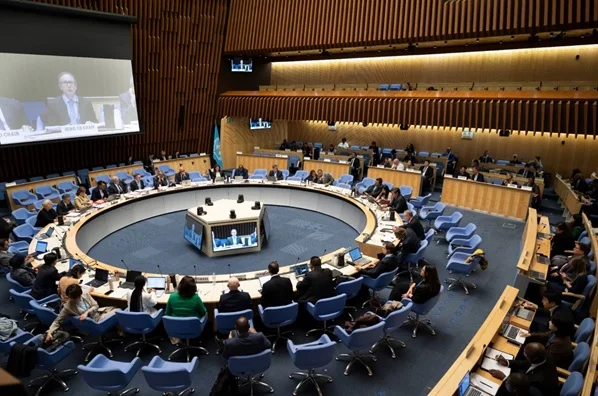
What Is the WHO Pandemic Agreement?
- The WHO Pandemic Agreement is an international treaty designed to improve cooperation in preventing, preparing for and responding to pandemics.
- Its central objective is to ensure that access to vaccines, medicines, diagnostics and other essential resources is more equitable during future emergencies.
- Adoption does not mean that the agreement is already in force. The PABS annex must first be adopted, enabling signature and subsequent ratification.
Pathogen Access and Benefit-Sharing System
The proposed PABS system links two responsibilities:
- Rapid sharing of pathogen materials and genetic sequence information.
- Fair access to vaccines, therapeutics and diagnostics developed using those resources.
Access to Pandemic-Related Medical Products
During a pandemic emergency, the agreement envisages participating manufacturers providing WHO with rapid access targeting 20% of their real-time production of relevant vaccines, therapeutics and diagnostics.
The arrangement includes:
- A minimum of 10% of real-time production as donations.
- The remaining percentage towards the target being made available at affordable prices.
- Allocation guided by public-health risks and needs.
The provision should not be described as a universal requirement that every pharmaceutical company must donate 20% of its production.
One Health Approach
The agreement promotes a One Health approach, recognising the connections between human, animal and environmental health.
Its preventive focus includes:
- Stronger coordination between health, veterinary and environmental authorities.
- Improved surveillance of diseases with pandemic potential.
- Identification of factors contributing to disease emergence and transmission.
For India, this approach is particularly relevant to coordination across public health, livestock management, wildlife protection and environmental monitoring.
Stronger Health Systems and Workforce
- Pandemic preparedness requires functioning health systems as well as medical supplies.
- The agreement addresses health-system resilience and the protection of health and care workers, including their safety and well-being.
- Practical priorities include adequate staffing, laboratory capacity, primary healthcare, emergency planning and reliable access to essential services.
Research, Technology Transfer and Manufacturing
- The framework promotes research cooperation and more geographically diversified production of pandemic-related health products.
- Technology transfer is pursued on mutually agreed terms, while existing rights and obligations under other international agreements remain relevant.
- For developing countries, access to manufacturing expertise, trained personnel and production technology is crucial alongside access to patents.
Supply Chains and Financing
- The agreement provides for a Global Supply Chain and Logistics Network and a Coordinating Financial Mechanism to support implementation.
- These arrangements aim to improve access to essential products and strengthen preparedness financing, particularly for developing countries. Their effectiveness will depend on operational arrangements and sustained support.
National Sovereignty
- The agreement does not give WHO authority to impose domestic lockdowns, vaccination mandates or national legislation.
- Countries retain responsibility for their health policies and constitutional processes. International cooperation under the agreement therefore operates alongside national decision-making.
Pandemic Agreement and UN Political Declaration: Key Differences
|
Basis
|
WHO Pandemic Agreement
|
UN Political Declaration on PPPR
|
|
Nature
|
International treaty
|
Non-binding political commitment
|
|
Institutional platform
|
World Health Assembly
|
UN General Assembly
|
|
Main purpose
|
Establish a framework for sustained pandemic cooperation
|
Mobilise political leadership and collective action
|
|
Legal effect
|
Binding on parties once applicable entry-into-force requirements are met
|
Does not itself create treaty obligations
|
|
Relationship
|
Provides the treaty framework
|
Reinforces political support for implementation and preparedness
|
The International Health Regulations (IHR) remain a complementary framework for international public-health emergency detection, notification and response.
Significance
- Promotes Equity in Global Health: Linking pathogen sharing with access to medical products can help address the unequal distribution of benefits witnessed during COVID-19.
- Encourages Preparedness Before Emergencies: Sustained investment in surveillance, healthcare workers and laboratories can reduce dependence on improvised responses after an outbreak spreads.
- Strengthens Collective Health Security: Infectious diseases cross borders. Better coordination and timely information-sharing can support earlier detection and more effective responses.
- Supports Regional Production Capacity: A wider manufacturing base could reduce excessive dependence on a limited number of suppliers and improve access during global shortages.
- Connects Health with Development: Pandemic preparedness also protects livelihoods, education, trade and public finances, making it an important component of development policy.
Challenges
- Unresolved PABS Arrangements: Negotiations must reconcile rapid scientific access with credible and timely benefit-sharing. WHO’s October 2026 update confirms that finalising the annex remains an outstanding step.
- Technology-Transfer Barriers: Agreement on licensing terms may not automatically provide the practical expertise and production capacity needed to manufacture complex medical products.
- Uncertain Financing: Preparedness requires continuous expenditure. Political commitments may deliver limited results unless supported by predictable funding.
- Unequal Implementation Capacity: Countries differ considerably in their laboratory infrastructure, regulatory capacity, health workforce and financial resources.
- Supply Nationalism: During emergencies, domestic political pressure may encourage stockpiling and restrictive trade measures, complicating equitable international distribution.
- Accountability and Public Trust: Implementation depends on credible reporting, transparent allocation and cooperation. Misleading claims about WHO’s powers can further weaken public support.
Conclusion
The WHO Pandemic Agreement offers an opportunity to make global pandemic cooperation more equitable and reliable. Its success will depend on a workable PABS system, sustainable financing and stronger national capacities. For India, the priority is to combine global health leadership with domestic preparedness, technological capability and affordable access to medical products.
Prelims MCQ
The WHO Pandemic Agreement was adopted under which provision of the WHO Constitution?
(a) Article 7
(b) Article 19
(c) Article 21
(d) Article 33
Mains Practice Question
“Equitable access to medical countermeasures is central to effective global pandemic preparedness.” Discuss the significance and implementation challenges of the WHO Pandemic Agreement, with particular reference to India.
|
FAQs
1. What is the WHO Pandemic Agreement?
It is an international treaty adopted in May 2025 to strengthen cooperation on pandemic prevention, preparedness and response, with an emphasis on equitable access to medical products.
2. Has the WHO Pandemic Agreement entered into force?
No. As of WHO’s 12 October 2026 update, the PABS annex remained under negotiation. Its adoption is necessary before the agreement can open for signature and ratification.
3. What does PABS mean?
PABS stands for Pathogen Access and Benefit-Sharing. It seeks to connect the sharing of pathogen materials and sequence information with fair access to resulting medical products.
4. Can WHO impose lockdowns under the agreement?
No. The agreement does not authorise WHO to impose lockdowns, vaccination mandates or domestic legislation.
5. Why is the agreement important for India?
It is relevant to India’s pharmaceutical manufacturing, access to technology, disease surveillance, medical supply security and advocacy for equitable global health cooperation.
|






 Contact Us
  New Batch : 9555124124/ 7428085757
  Tech Support : 9555124124/ 7428085757