Why in the news?
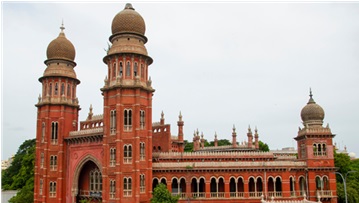
- The Madurai Bench of the Madras High Court has directed the Central Government to consider the application for Indian citizenship of a Sri Lankan Tamil refugee 'Mathin'.
Background of the case
- Mathin was born in Jaffna, Sri Lanka in 1975.
- Her parents were Tamils of Indian origin.
- In Sri Lanka, she was kept in a refugee camp and was not given Sri Lankan citizenship.
- When the civil war broke out in Sri Lanka in 1984, Mathin came to India with her family to save her life.
- In India too, she was kept in a refugee camp and was identified as a Sri Lankan citizen.
- She had applied for Indian citizenship in 2019, but no decision was taken on it.
High Court's comment
- The High Court said that she got married here, and her children were also born in India.
- Keeping these facts in mind, it is necessary to seriously consider their citizenship application.
- Instructions to Home Ministry:
- Justice GK Ilanthiraiyan has directed the Home Ministry Secretary to give a decision on Mathin's citizenship application within 12 weeks.
Possible impact of the comment
- This decision can also become an example for other Sri Lankan Tamil refugees.
- For those who have been living in India for a long time and are trying to get Indian citizenship.
People of which communities live in Sri Lanka?
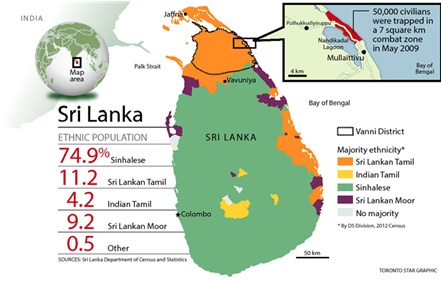
- Mainly two communities live in Sri Lanka-
- Sinhalese
- Tamil
- Sri Lankan Tamils
- Indian origin Tamils
- In Sri Lanka-
- 74.9% Sinhalese
- 11.2% Sri Lankan Tamils
- 4.2% Indian Tamils
How did Tamils reach Sri Lanka?
- Sri Lankan Tamils:
- The ancestors of Sri Lankan Tamils came to Sri Lanka from South India (mainly Tamil Nadu) centuries ago and settled there.
- These people have been living there since ancient times in Sri Lanka and are also called "Eelam Tamils".
- Indian origin Tamils:
- They were brought to Sri Lanka by the British from Tamil Nadu (India) in the 19th and 20th centuries.
- Their main purpose was to work as laborers in tea, rubber, and coffee plantations.
- They were always considered 'outsiders' in Sri Lanka.
- Both Sinhalese and Sri Lankan Tamils were not ready to accept them as their own.
Sinhalese and Tamil dispute
- There have been historical and cultural differences between the Sinhalese and Tamil communities.
- This led to violence and civil war from 1983 to 2009.
Tamils of Indian origin:
Situation after independence
- Sri Lanka became independent in 1948, but Tamils of Indian origin were not given citizenship.
- They were declared 'stateless' as citizens of no country.
India-Sri Lanka Accords
- Agreements were signed between India and Sri Lanka in 1964 and 1974, in which it was decided to give Indian citizenship to 6 lakh Tamils of Indian origin.
- Due to civil war and other reasons in Sri Lanka, this agreement could not be fully implemented.
Law of 2003
- Under a law in 2003, citizenship was given to those Tamils who came to India before 1982.
- Tamils who came after 1983 were declared 'illegal migrants'.
Civil war and migration
- Civil war continued in Sri Lanka from 1983 to 2009.
- During this period, thousands of Tamil people came to India to save their lives.
Status of refugees in India
- There is no special law for refugees in India.
- Because of this, there is no clear path for Tamil refugees from Sri Lanka to get citizenship or permanent residence.




 Contact Us
  New Batch : 9555124124/ 7428085757
  Tech Support : 9555124124/ 7428085757