New
Hindi Medium: (Delhi) - GS Foundation (P+M) : 6th July 2026, 6:00 PM Hindi Medium: (Prayagraj) - GS Foundation (P+M) : 5th July 2026, 8:00 AM English Medium: (Delhi) - GS Foundation (P+M) : 20th July 2026 English Medium: (Prayagraj) - GS Foundation (P+M) : 15th July 2026, 8:00 AM Hindi Medium: (Delhi) - GS Foundation (P+M) : 6th July 2026, 6:00 PM Hindi Medium: (Prayagraj) - GS Foundation (P+M) : 5th July 2026, 8:00 AM English Medium: (Delhi) - GS Foundation (P+M) : 20th July 2026 English Medium: (Prayagraj) - GS Foundation (P+M) : 15th July 2026, 8:00 AM

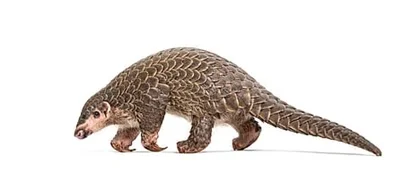
Himalayan pangolins are considered independent species, not subspecies of the Chinese pangolin

Preliminary Exam

Current Affairs Environment and Ecology, Biodiversity, Science and Technology

Main Exam:

GS Paper III: Environment, Biodiversity Conservation, Climate Change, Wildlife Conservation, Science and Technology

Why in the news ?

  • An international study recently published in the journal Communications Biology has re-recognized the Himalayan pangolin (Manis aurita) as an independent species, distinct from the Chinese pangolin (Manis pentadactyla). Researchers based this conclusion on extensive genomic and morphological analysis.
  • Scientists believe this discovery will be crucial for the conservation of one of the world's most trafficked and critically endangered mammals.

Key Points

  • The Himalayan pangolin is now recognized as an independent species, Manis aurita.
  • It was previously considered a subspecies of the Chinese pangolin, Manis pentadactyla.
  • The two species diverged approximately 1.8 million years ago due to climate change.
  • The research was published in the journal Communications Biology.
  • Major distribution in Nepal, South Tibet, and the northeastern states of India (especially Assam).
  • Illegal wildlife trade and inbreeding are its major threats.

What's the whole matter ?

  • For many decades, the Himalayan pangolin was considered a subspecies of the Chinese pangolin. It was classified based on the original specimen (lectotype) obtained from Nepal in 1836, but its actual taxonomic status was unclear.
  • A team of international researchers performed DNA sequencing of the original specimen and compared it with modern genetic data and anatomy. The study confirmed that the Himalayan pangolin is a distinct and independent species.

How did the two species diverge ?

  • According to research, the ancestors of the two species split into different regions during global climate change about 1.8 million years ago (Early Pleistocene Epoch).
  • The western group evolved in the Himalayan region to become Manis aurita.
  • The eastern group evolved in China and Southeast Asia to become Manis pentadactyla.
  • This process is called allopatric speciation, in which geographical barriers cause the evolution of new species.

The Role of Climate Change

  • According to the study, habitat in the Himalayan region became increasingly limited due to the extremely cold and dry climate during the Pleistocene.
  • As a result,
    • The Himalayan pangolin population declined drastically.
    • Its habitat became unstable.
    • Genetic diversity was affected.
  • Meanwhile, the coastal forests of southern China remained relatively stable, which made the Chinese pangolin population more secure.

Key Features of the Himalayan Pangolin

Research has found the Himalayan pangolin to differ from the Chinese pangolin in several ways.

Key Differences

Key Characteristics

Himalayan Pangolin

Chinese Pangolin

Scientific Name

Manis aurita

Manis pentadactyla

Average Length

About 95.2 cm

About 71.2 cm

Body Size

Large

Smaller

Skull

Large and robust

Relatively smaller

Ears

Small

Relatively larger

Nasal Bone

Short and broad

Long and narrow

  • Additionally, significant differences were found in several genes associated with olfaction in both species.

Distribution in India

  • The Himalayan pangolin has a limited natural distribution.
  • This species is found in:
  • Nepal
  • South Tibet
  • India's northeastern states
  • Assam in particular
  • According to researchers, the Brahmaputra Drainage and the Arakan Mountains played a key role in keeping the two species separate for millions of years.

Major Threats

1. Illegal Wildlife Trade

  • The Himalayan pangolin is among the most trafficked mammals in the world.
  • Its scales, meat, and other organs are used in the illegal wildlife trade and some traditional medicine systems.
  • The study also found that illegal products derived from this species are reaching the market through formal supply chains.

2. Inbreeding

  • Research found that overall, Himalayan pangolins have lower inbreeding than Chinese pangolins.
  • However, significant inbreeding has been observed in the population around the Kathmandu Valley.
  • This situation could lead to genetic weakness (Inbreeding Depression) in the future.

Researchers' Recommendations for Conservation

  • Scientists have suggested that Manis aurita be included as an independent species in CITES Appendix-I.
  • A complete ban on international commercial trade should be implemented.
  • The new taxonomic identification should be promptly incorporated into global conservation policies.
  • Illegal wildlife trafficking should be strictly monitored.
  • Scientific conservation programs should be implemented to maintain genetic diversity.

About Pangolins

Scientific Classification

  • Phylum: Chordata
  • Class: Mammalia
  • Order: Pholidota
  • Family: Manidae
  • Genus: Manis

Key Features

  • The world's only fully scaled mammal.
  • Main food: ants and termites.
  • Highly developed sense of smell.
  • Curls itself into a ball when threatened.
  • Nocturnal and solitary.

What is CITES Appendix-I ?

  • Appendix-I of the Convention on International Trade in Endangered Species of Wild Fauna and Flora (CITES) includes species that are at high risk of extinction.
  • International commercial trade in these species is almost completely prohibited.

Conclusion

The recognition of the Himalayan pangolin as an independent species is a significant achievement in the field of biogeographical classification and wildlife conservation. This study demonstrates that climate change, geographic isolation, and genetic evolution played crucial roles in the evolution of this species. Furthermore, this new identification provides a basis for more effective conservation strategies for the Himalayan pangolin.

Preliminary Exam Questions

Question: Consider the following statements regarding the recently discussed Himalayan pangolin (Manis aurita):

  1. It has recently been recognized as an extant species, distinct from the Chinese pangolin (Manis pentadactyla).
  2. It is the world's only fully scaled mammal.
  3. According to research, the Himalayan and Chinese pangolins diverged approximately 1.8 million years ago due to geographic separation (allopatric speciation).

Which of the above statements is/are correct?

(a) 1 and 2 only

(b) 2 and 3 only

(c) 1 and 3 only

(d) 1, 2, and 3

Mains Question

Question: "The Himalayan pangolin (Manis aurita) has recently been recognized as an independent species. Analyze the scientific basis of this discovery and its significance in the context of wildlife conservation."

FAQ: Himalayan Pangolin Declared Independent Species

 1. Question: Why is the Himalayan pangolin in the news ?

Answer : A recent study published in the journal Communications Biology recognized the Himalayan pangolin (Manis aurita) as an independent species, distinct from the Chinese pangolin (Manis pentadactyla).

2. Question: What was the Himalayan pangolin previously considered ?

Answer : It was previously considered a subspecies of the Chinese pangolin (Manis pentadactyla).

3. Question: Why did scientists consider it a separate species ?

Answer : DNA sequencing, genomic, and morphological analyses have proven that the Himalayan pangolin's genetic and physical characteristics are distinctly different from those of the Chinese pangolin.

4. Question: When did the Himalayan and Chinese pangolins diverge ?

Answer : About 1.8 million years ago, during the Pleistocene, the two species evolved separately due to climate change and geographic isolation (Allopatric Speciation).

5. Question: What is Allopatric Speciation ?

Answer : When populations of the same species become separated due to geographic barriers (such as mountains, rivers, or oceans) and new species evolve over time, it is called Allopatric Speciation.

Have any Query?

Our support team will be happy to assist you!

OR