Why in the news ?
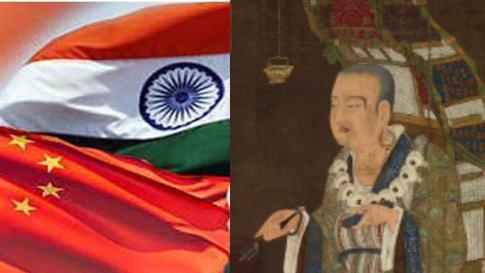
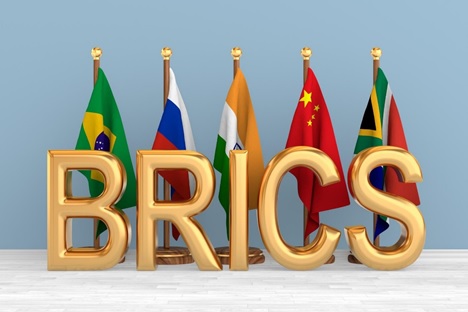
- Recently, BRICS countries have considered submitting joint nominations to various UNESCO lists to promote the preservation and global recognition of shared cultural heritage. In this regard, India and China are discussing the possibility of a joint nomination for UNESCO recognition of the travelogue "The Great Tang Records on the Western Regions," written by the renowned 7th-century Buddhist monk and scholar Xuanzang.
- This initiative not only underlines the historical and cultural ties between India and China, but is also considered an important step towards preserving shared heritage.
What is ‘The Great Tang Records on the Western Regions’ ?
- ‘The Great Tang Records on the Western Regions’ is a famous travelogue written by the 7th century Chinese Buddhist monk Hiuen Tsang. In Hindi it is generally called ‘Si-Yu-Ki’ or ‘Description of Western Regions’.
- This book gives a detailed description of the political, social, religious and cultural conditions of India and Central Asia.
- Hiuen Tsang traveled and studied in India for about 15 to 19 years and studied Buddhist philosophy in depth at Nalanda University in Bihar.
- His accounts are counted among the most important sources of the history of early medieval India.
Joint Nomination Proposal
- China is leading this proposal, while India is considering its support. The proposal is currently under consideration by India's Ministry of External Affairs. China has suggested through diplomatic channels a joint nomination of this text to the UNESCO list.
- If this proposal moves forward, it could become an important example of India-China cultural cooperation.
Other joint nomination plans of BRICS countries
- Several other proposals are also being considered to secure UNESCO recognition of shared cultural heritage among BRICS countries.
- Prominent among these are :
- Panchatantra - a joint nomination by India and Iran
- Philosophy of Satyagraha - a joint nomination by India and South Africa
Why are joint nominations important ?
1. Limited nomination opportunities at UNESCO
-
Each country is allowed to submit only two nominations per two years for UNESCO's heritage lists. However, no such limit applies to joint nominations. Therefore, many countries are prioritizing joint proposals for shared heritage sites.
2. Preservation of shared cultural heritage
- Many cultural traditions and knowledge systems have developed in more than one country. Joint nominations allow these heritage sites to gain wider recognition globally.
- Examples :
- Ramayana tradition - India and Indonesia
- Buddhist texts - India and China
- Panchatantra - India and Iran
3. Avoiding conflicts over cultural claims
Lessons learned from the Sowa-Rigpa dispute
- In 2017, India submitted a proposal to include the traditional Tibetan medical system, Sowa-Rigpa, on UNESCO's Intangible Cultural Heritage List. At the same time, China also submitted its claim to this heritage.
- To avoid such disputes, BRICS countries have emphasized increased coordination regarding cultural heritage.
BRICS Culture Working Group meeting
- The second meeting of the BRICS Culture Working Group was held in Varanasi in June 2026. Representatives from many countries including Brazil, China, South Africa, United Arab Emirates, Indonesia and Iran participated in it.
- Conservation of shared cultural heritages and promotion of joint nomination were discussed in the meeting. Its recommendations will be sent to the BRICS Culture Ministers' meeting to be held in Bhopal in August 2026.
Who was Xuanzang ?
-
Xuanzang was a renowned 7th-century Chinese Buddhist monk, philosopher, translator, and traveler. He is often called the "Prince of Pilgrims."
Purpose of Journey to India
Studies at Nalanda
Relationship with Harshavardhana
Return to China and Contributions
-
On his return to China in 645 AD, Xuanzang took with him numerous Buddhist texts, statues, and knowledge materials. He translated these texts into Chinese, which gave a new direction to the spread of Buddhism in China.
What is cultural heritage ?
-
Cultural heritage is heritage that reflects a society's identity, history, traditions, knowledge, art, customs, and lifestyle and is passed down from generation to generation.
Types of Cultural Heritage
1. Tangible Heritage
- Heritage that can be seen and touched.
- Examples :
- Taj Mahal
- Qutub Minar
- Forts and monuments
- Ancient manuscripts
2. Intangible Cultural Heritage
- Heritage that survives in the form of traditions, knowledge, and cultural expressions.
- Examples :
- Yoga
- Ramlila
- Classical dance
- Folk songs and folktales
- Traditional handicrafts
About the BRICS group :
- It was established in September 2006.
- Initially, it included Brazil, Russia, India, and China.
- It was originally named BRIC.
- South Africa joined in September 2010.
- It was renamed BRICS. (B-Brazil, R-Russia, I-India, C-China, and S-South Africa)
- It is headquartered in Shanghai, China.
- The presidency of the organization rotates annually among the members of the BRICS group in alphabetical order.
- The six new full members who joined BRICS are:
- Egypt, Ethiopia, Iran, Saudi Arabia, the United Arab Emirates, and Indonesia.
Conclusion
The joint effort by India and China to secure UNESCO recognition for the legacy of Xuanzang is an important example of cultural diplomacy. This initiative can not only bring global recognition to the shared historical heritage of both countries but also provide a new direction to cultural cooperation among BRICS countries.






 Contact Us
  New Batch : 9555124124/ 7428085757
  Tech Support : 9555124124/ 7428085757