Why in the news ?
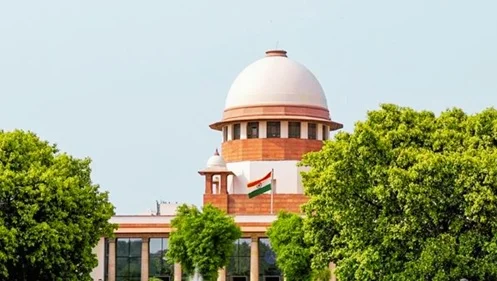
- Recently, the Supreme Court stressed the need to develop a uniform and effective trauma care system across states to reduce road accident deaths.
- Reports from 34 states and union territories presented before the Court revealed that no state in the country has fully implemented the five key life-saving measures required for accident victims.
- This situation is occurring when India is among the countries with the highest road accident deaths in the world.
The Challenge of Road Safety and Trauma Care in India
- Approximately 177,000 people die in road accidents in India every year. Experts believe a large number of these could have been saved if timely medical attention had been provided.
- The first hour after an accident, known as the "Golden Hour," is considered crucial for saving lives. During this time, prompt rescue, ambulance service, and proper medical treatment significantly reduce the risk of death.
- To this end, the Supreme Court, responding to a petition from the road safety organization SaveLIFE Foundation, directed states to develop a robust trauma care network.
Five Key Pillars of an Effective Trauma Care System
The Supreme Court placed special emphasis on five key measures to strengthen the accident response system :
1. Unified Emergency Helpline (112)
- A system was established to link police, fire, ambulance, and other emergency services across the country to a single number, 112, so that people do not have to remember different numbers in case of an emergency.
2. GPS-Enabled Ambulances
- All government and private ambulances should have GPS-based tracking systems so that the nearest ambulance can be dispatched immediately and its movement can be monitored in real time.
3. Good Samaritan Protection
4. Trauma Registry
5. Standardized Rescue Protocols
State reports expose unpreparedness
- Data presented before the Supreme Court revealed that no state is fully meeting these five standards.
- In particular, the eight states that account for nearly two-thirds of the country's road accident deaths—Uttar Pradesh, Tamil Nadu, Maharashtra, Madhya Pradesh, Karnataka, Rajasthan, Bihar, and Andhra Pradesh—have not fully implemented these measures.
Incomplete integration of the 112 emergency number
- The national emergency number 112, launched in 2019, was intended to bring all emergency services on a single platform.
- However, seven of the eight states with the highest number of road accident deaths have not yet fully integrated all helpline numbers.
- This results in people becoming confused between different numbers at the time of an accident, leading to delays in receiving assistance.
The Good Samaritan System Remains Weak
- In 2016, the Supreme Court provided legal protection to citizens who assist accident victims. Subsequently, the Central Government notified the Good Samaritan Rules, 2020.
- However, these rules have not been effectively implemented on the ground.
- Among states with high mortality rates, only Maharashtra and Karnataka have developed a system for redressing complaints related to Good Samaritans. Most states lack such a system.
- As a result, many people avoid helping accident victims due to fear of legal consequences.
A severe lack of trauma registries
- A trauma registry is considered the cornerstone of any modern emergency health system.
- It compiles detailed data related to the accident, ambulance response, hospital treatment, and patient outcomes.
- Yet, 22 of the country's 34 states and union territories do not have such a dedicated trauma registry.
- Tamil Nadu, Maharashtra, and Madhya Pradesh have shown relatively better progress in this direction.
- Tamil Nadu, in particular, has a real-time trauma registry system in place, which digitally records information from the scene of the accident to hospital treatment.
Rescue protocols also have significant gaps.
- Safely rescuing an injured person after an accident and transporting them to a hospital is a specialized process.
- Although seven of the eight major states have developed some form of rescue protocol, only 17 states nationwide have clear and formal rescue guidelines.
- This lack often leads to improper lifting or moving of an injured person, potentially worsening their condition.
GPS-based ambulance tracking remains incomplete.
- The Supreme Court directed that GPS tracking be implemented in all ambulances.
- However, in most states, this feature is limited to government ambulances. A large proportion of private ambulances remain unavailable.
- Nationally, GPS is either absent or partially implemented in 13 states.
- Furthermore, only Uttar Pradesh and Tamil Nadu have publicly available ambulance tracking dashboards. In other states, ordinary citizens cannot know whether the nearest ambulance has actually been dispatched.
Status of Major States
Uttar Pradesh
- State with the highest number of road deaths.
- Most helplines are linked to 112, but the 102 medical service is still separate.
- No Good Samaritan complaint system.
- Trauma registry under consideration.
Tamil Nadu
- Leading in the number of road accidents.
- Detailed rescue protocols and real-time trauma registry available.
- Partial integration of emergency numbers.
Maharashtra
- GPS facility only in MEMS-108 ambulances.
- Good Samaritan complaint redressal system available.
Madhya Pradesh
- Trauma care policy developed.
- Good Samaritan system in process.
Karnataka
- No trauma registry.
- Only 108 ambulances are monitored.
Rajasthan
Bihar
Andhra Pradesh
Why is this issue important ?
- According to the 2021 Emergency and Injury Care Report by NITI Aayog and AIIMS, approximately 30% of trauma-related deaths in India are due to delays in emergency medical assistance.
- This shows that road safety is not just about building better roads or enforcing traffic rules. Post-crash response systems are equally important.
The key questions are :
- Can accident victims be located in time?
- Can the nearest ambulance arrive quickly?
- Will ordinary citizens help without fear?
- Is the quality of treatment being scientifically evaluated?
- Unless these questions are answered positively, it will be difficult to significantly reduce road accident deaths in India.
Conclusion
The Supreme Court's recent review has made it clear that the weakest link in road safety in India is the post-crash emergency response system. Without the prompt implementation of systems such as effective medical assistance during the golden hour, a modern trauma care network, a GPS-based ambulance system, Good Samaritan protection, and a digital trauma registry, it will be impossible to prevent thousands of deaths in road accidents. The need now is not just to formulate policies, but to effectively implement them on the ground.






 Contact Us
  New Batch : 9555124124/ 7428085757
  Tech Support : 9555124124/ 7428085757