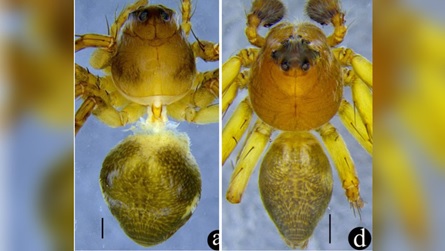
Recently, scientists discovered a new species of spider in Mawlyngot village in the East Khasi Hills district of Meghalaya. This new species has been named Hamataliwa mawlyngot.
This discovery was made by researchers from the Zoological Survey of India (ZSI) and the University of Calcutta, and the findings were published in the journal National Academy Science Letters.
Key Points
New Species: Hamataliwa mawlyngot
This is a new species of the lynx spider group.
It is named after the village of Mawlyngot, the site of its discovery.
This species was found on the mountain slopes of the East Khasi Hills.
First Recorded Appearance
This is the first recorded appearance of the genus Hamataliwa in Meghalaya.
This has expanded knowledge of the geographic distribution of this genus in India.
Characteristics of the Lynx Spider
It does not hunt by building a web.
It has keen eyesight and pursues prey at high speed.
It is an active hunter among bushes and leaves.
It preys on a variety of insects.
Ecological Importance
Helpful in biological pest control.
Beneficial predators in agricultural ecosystems.
Important role in maintaining biodiversity balance.
Significance of the Discovery
1. New Evidence of Biodiversity
This discovery shows that the biodiversity of Meghalaya and Northeast India is still not fully documented.

2. Indo-Burma Biodiversity Hotspot
The East Khasi Hills region is part of the world-renowned Indo-Burma Biodiversity Hotspot.
Characteristics of the Indo-Burma Hotspot
Among the most biodiverse regions in the world.
High levels of endemic species.
Many areas are still scientifically understudied.
3. Need for Conservation
Many species may become extinct before they are discovered.
Regular biodiversity surveys and habitat conservation are essential.
Importance of Biodiversity Conservation in India
Discovery of new species enriches scientific knowledge.