Why in News ?
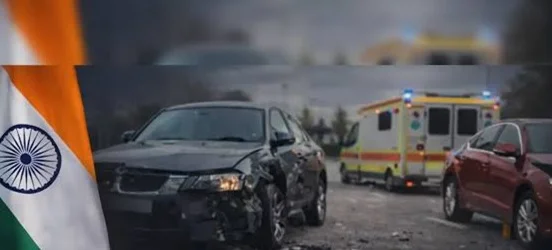
- Recently, the District Health and Family Welfare Officer (DHO) of Dakshina Kannada, Karnataka, clarified that facial identification will no longer be mandatory for road accident victims to avail benefits under the PM-RAHAT Scheme.
- The decision is considered a significant step towards ensuring prompt treatment after accidents and reducing administrative hurdles.
What is the PM-RAHAT Scheme ?
- PM-RAHAT (Road Accident Victim Hospitalization and Assured Treatment) is a Central Sector Scheme launched to provide timely and cashless medical treatment to road accident victims.
- It is administered by the Ministry of Road Transport and Highways (MoRTH).
- Under the scheme, every eligible road accident victim on any category of road is entitled to cashless treatment of up to ₹1.5 lakh for a period of seven days from the date of the accident.
- The scheme takes precedence over any other Central or State-level scheme.
Key Features of the Treatment Mechanism
- Road accident victims will receive immediate treatment at designated hospitals under the scheme.
- Stabilization treatment will be provided for up to 24 hours in non-life-threatening cases and up to 48 hours in life-threatening cases.
- The objective is to effectively utilize the “Golden Hour” following an accident and reduce mortality rates.
Digital Platform-Based Implementation
The PM-RAHAT Scheme has been implemented through the integration of two major digital systems :
1. eDAR (Electronic Detailed Accident Report)
- This platform is used by police officials for accident reporting and recording investigation-related details.
2. TMS 2.0 (Transaction Management System)
- Operated by the National Health Authority (NHA), this system enables hospitals to record treatment details, submit claims, and receive payments.
- Once treatment begins, the hospital generates a Treatment ID on the TMS platform, which is transmitted to the concerned police authorities through eDAR. Police are required to complete authentication within 24 hours in normal cases and within 48 hours in critical cases.
Integration with ERSS-112
- The scheme has been integrated with the Emergency Response Support System (ERSS-112).
- Through this system, accident victims or Good Samaritans can dial 112 to locate the nearest designated hospital and request ambulance assistance.
Payment Mechanism
Payments to hospitals under the scheme will be made through the Motor Vehicle Accident Fund (MVAF).
- In cases involving insured vehicles, payments will be drawn from contributions made by general insurance companies.
- In uninsured and hit-and-run cases, payments will be made through budgetary allocations of the Government of India.
Transparency and Accountability
- One of the most significant features of the scheme is its complete digital tracking system. From accident reporting and hospital admission to treatment, police authentication, claim processing, and final payment, every stage will be digitally recorded.
- This will reduce the possibility of fraud and enhance transparency in the implementation process.
Grievance Redressal Mechanism
- Under the scheme, a Grievance Redressal Officer (GRO) will be appointed in every district.
- The officer will function under the District Road Safety Committee, which is chaired by the District Collector or District Magistrate.




 Contact Us
  New Batch : 9555124124/ 7428085757
  Tech Support : 9555124124/ 7428085757