
- UPSC Exam
- State PCS
- One Day Exam
- Current Affairs
- PT Quiz
- Downlaods
- About Coaching
- Blog
- Videos

| Prelims : Polity (Union Territories, Constitutional Provisions) + CA Mains : GS Paper 2 – Governance, Federal Structure, Centre-State Relations |
The governance structure of Puducherry has come into focus due to ongoing debates over the powers of its elected government vis-à-vis the Lieutenant Governor.
Comparisons are being drawn with other Union Territories like Delhi and Jammu and Kashmir regarding administrative and legislative autonomy.
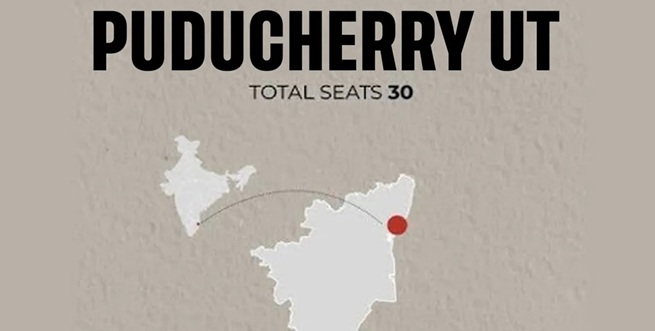
Union Territories (UTs) in India are governed directly by the Union Government, but some have been granted partial statehood features through legislatures.
Puducherry was formed from former French colonies and is governed under Article 239A, which provides for a legislature and Council of Ministers.
Delhi operates under Article 239AA, while Jammu and Kashmir was reorganised under the Jammu and Kashmir Reorganisation Act, 2019.
Frequent tussles between elected government and LG can affect policy implementation.
Limited autonomy raises concerns about the effectiveness of representative governance.
Differences among UTs highlight asymmetry in India’s quasi-federal structure.
Overlapping authority can delay decision-making and reduce governance efficiency.
Prelims
Q. Which of the following Union Territories has a legislature under Article 239A ?
(a) Delhi
(b) Puducherry
(c) Jammu and Kashmir
(d) Ladakh
Mains
“Union Territories with legislatures reflect the asymmetrical nature of Indian federalism.” Discuss with reference to Puducherry, Delhi, and Jammu & Kashmir.
FAQsQ1. Under which Article is Puducherry governed ? Article 239A. Q2. Why is Delhi different from other UTs ? It has special constitutional status under Article 239AA. Q3. Does Jammu & Kashmir have a legislature ? Yes, under the Reorganisation Act, 2019. Q4. What is unique about Puducherry ? It has geographically separated regions and nominated members. Q5. Why are UT governance issues important ? They affect federal balance and democratic functioning in India. |



Our support team will be happy to assist you!

 Contact Us
  New Batch : 9555124124/ 7428085757
  Tech Support : 9555124124/ 7428085757