Why in the News?
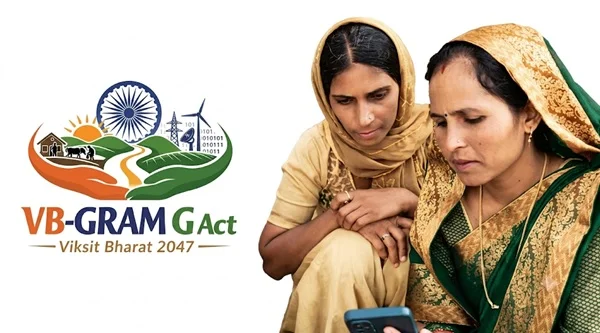
- The Ministry of Rural Development has notified the VB–G RAM G Grievance Redressal Rules, 2026 to ensure transparent, accountable and timely resolution of complaints related to the implementation of the scheme.
- Under the new rules, grievance redressal mechanisms will be established at the Gram Panchayat, Block and District levels.
Important Facts
- Ministry: Ministry of Rural Development
- Rules: VB–G RAM G Grievance Redressal Rules, 2026
- Grievance Redressal Levels: Gram Panchayat, Block and District
- Enquiry Timeline: 7 working days
- Complaint Resolution Timeline: 15 days
- Appeal Provision: Schedule I of the VB–G RAM G Act, 2025
- Key Objective: Transparency, accountability and time-bound grievance redressal.
Key Features of the Grievance Redressal Rules, 2026
1. Three-Tier Grievance Redressal Mechanism
The rules require State Governments to establish grievance redressal mechanisms at three levels:
- Gram Panchayat level
- Block level
- District level
Designated Grievance Redressal Officers will be responsible for receiving, registering, examining and resolving complaints. At the district level, the District Programme Coordinator will oversee the grievance redressal process.
2. Multiple Channels for Filing Complaints
Any person can file a complaint related to the implementation of the scheme through the following channels:
- In person before the designated Grievance Redressal Officer.
- Through speed post with proof of delivery.
- Through the Digital Public Infrastructure designated by the Central Government.
- Through telephone, designated helplines or other modes decided by the State Government.
3. Mandatory Registration of Complaints
- Complaints received in physical form at the Gram Panchayat, Block or District level must be registered on the designated digital platform on the same day or, if not possible, by the next working day.
- The complainant will receive an acknowledgement containing the registration number, date of receipt and designation of the receiving authority.
- No complaint can be refused registration on the grounds of its format, language, mode of submission or procedural deficiency.
4. Time-Bound Investigation and Resolution
The rules prescribe specific timelines for examining and resolving complaints.
- The Grievance Redressal Officer must complete the enquiry within 7 working days of receiving the complaint.
- The officer can seek relevant records, documents, reports and electronic data from concerned authorities.
- The complainant may be given an opportunity to present their case in person or through electronic means.
- Every complaint must be resolved within 15 days from the date of its receipt.
5. Digital Tracking of Complaints
- The designated Digital Public Infrastructure will enable end-to-end tracking of complaints, from registration to final disposal.
- The findings of the enquiry and action taken will also be recorded digitally. The complainant will be informed about the outcome through electronic or physical communication.
6. Escalation and Appeal Mechanism
- If a complaint remains unresolved within the prescribed 15-day period, it will be escalated to the next higher level under the grievance redressal mechanism established by the State Government.
- The higher authority will examine the complaint and take appropriate action. Appeals against orders passed under the grievance redressal mechanism will be filed and disposed of in accordance with Schedule I of the VB–G RAM G Act, 2025.
Significance of the New Rules
- The new rules aim to make the implementation of the VB–G RAM G scheme more transparent, accessible and accountable.
- The multi-tier grievance mechanism will help rural households raise complaints and seek timely solutions. Mandatory registration, digital tracking and fixed resolution timelines are expected to reduce delays and improve administrative accountability.
- The provisions will also strengthen the protection of the rights and entitlements of rural households under the scheme.
Important Provisions of the VB–G RAM G Act, 2025
The Viksit Bharat–Guarantee for Rozgar and Ajeevika Mission (Gramin) Act, 2025 provides a legal framework for rural employment and livelihood security.
- Key provisions of the Act:
- Guarantee of 125 Days of Employment: Every eligible rural household is entitled to 125 days of wage employment in a financial year, provided its adult members volunteer to undertake unskilled manual work.
- Focus on Rural Development: The Act focuses on water security, essential rural infrastructure, livelihood-related infrastructure and measures to reduce the impact of extreme weather events.
- Grievance Redressal Mechanism: The Act provides a system for receiving and registering complaints, issuing dated acknowledgements, conducting enquiries within a prescribed time limit and taking corrective action. Unresolved complaints can be escalated to higher authorities. These provisions are included in Schedule I.
- Ward-Level Complaint Mechanism: Schedule I also provides for receiving complaints at the ward level. Officials must remain available to receive complaints on at least one designated day every week.
Conclusion
The Grievance Redressal Rules, 2026 are an important step towards establishing a citizen-centric and transparent grievance redressal system under the VB–G RAM G Act. Their effective implementation will help ensure timely resolution of complaints and improve the delivery of employment and livelihood-related benefits to rural households.
Prelims Practice Question
Consider the following statements regarding the VB–G RAM G Grievance Redressal Rules, 2026:
- The grievance redressal mechanism will operate at the Gram Panchayat, Block and District levels.
- The enquiry into a complaint must be completed within 7 working days.
- Every complaint must be resolved within 30 days.
Which of the statements given above is/are correct?
(a) 1 and 2 only
(b) 2 and 3 only
(c) 1 and 3 only
(d) 1, 2 and 3
Mains Practice Question
Q. Discuss the significance of the VB–G RAM G Act, 2025 in strengthening rural employment and livelihood security in India. How can an effective grievance redressal mechanism improve its implementation?
|
FAQs
1. What is the full form of VB–G RAM G?
VB–G RAM G stands for Viksit Bharat–Guarantee for Rozgar and Ajeevika Mission (Gramin).
2. What is the main objective of the VB–G RAM G Act, 2025?
Its main objective is to provide guaranteed wage employment to rural households, strengthen rural livelihoods and create durable rural infrastructure.
3. Which ministry is responsible for implementing the VB–G RAM G framework?
The Ministry of Rural Development is responsible for its implementation.
4. What are the key features of the VB–G RAM G Grievance Redressal Rules, 2026?
The rules establish a multi-level, time-bound grievance redressal system at the Gram Panchayat, Block and District levels. They provide for complaint registration, enquiry, digital tracking and timely resolution.
5. What is the prescribed timeline for resolving grievances?
An enquiry must generally be completed within 7 working days, and the complaint must be resolved within 15 days of receipt.
|