Why in News?
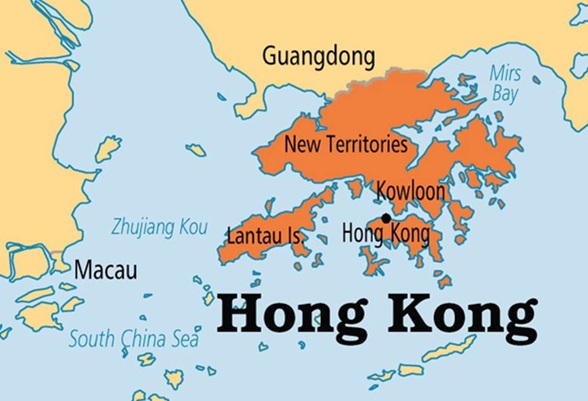
- On 20th July, Hong Kong issued its most severe warning for Typhoon Wipha.
- Wind speeds exceeded 167 km/h.
Key Points:
- Over 400 flights disrupted and more than 200 flights canceled due to Typhoon Wipha.
- The storm passed south of the Hong Kong Observatory, with the southern districts being most affected.
- Cathay Pacific canceled all flights considering passenger safety.
- In North Point, a scaffold collapsed and a construction site was damaged.
- The storm is moving towards China’s Guangdong province, and warning levels were lowered in Macau.
- Over 80,000 passengers affected, with public transport and ferry services suspended.
What is a Tropical Storm?
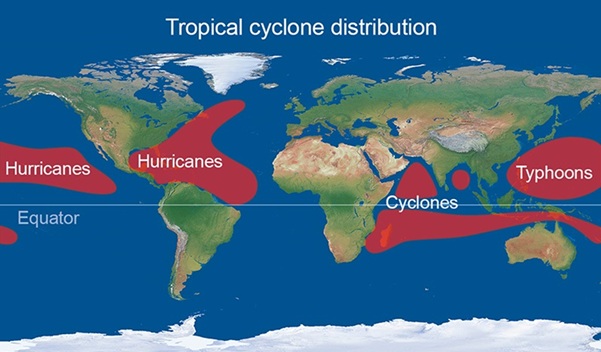
- A tropical storm is a type of rapidly rotating cyclone that originates over tropical oceans.
- It has a low-pressure center with clouds rotating around it.
Intensity and Impact of Tropical Storms:
- The intensity is based on wind speed.
- When the maximum sustained wind speed of a tropical cyclone is between 34 knots (63 km/h) and 47 knots (87 km/h), it is classified as a tropical storm.
- Such storms can bring torrential rain, strong winds, high sea waves, coastal flooding, and landslides.
- Winds rotate anticlockwise in the Northern Hemisphere and clockwise in the Southern Hemisphere.
Regional Names of Tropical Storms:
Depending on the geographic region, tropical storms are known by different names:
- Northern Atlantic: Hurricane
- Western North Pacific: Typhoon
- Indian Ocean & South Pacific Ocean: Tropical Cyclone
Formation Conditions for Tropical Cyclones:
Tropical cyclones form under the following favorable conditions:
- Warm ocean waters [typically 26–27°C (79–81°F)]
- Sufficient moisture in the atmosphere
- Low to moderate wind shear (variation in wind speed/direction)
- Coriolis force (caused by Earth’s rotation)
|
Question: In which region are tropical storms referred to as "Typhoons"?
(a) Northern Atlantic
(b) Indian Ocean
(c) South Pacific
(d) Western North Pacific
|






 Contact Us
  New Batch : 9555124124/ 7428085757
  Tech Support : 9555124124/ 7428085757