| Keywords: World Rabies Day 2026, Stronger Together, Rabies, One Health Approach, Zero by 30, Rabies Elimination, National Rabies Control Programme, NRCP, NAPRE, Dog-mediated Rabies, Louis Pasteur, Rabies Vaccine, Post-Exposure Prophylaxis, Zoonotic Disease, Public Health, Animal Vaccination, Rabies in India, WHO, ICMR, NCDC. |
Why in News?
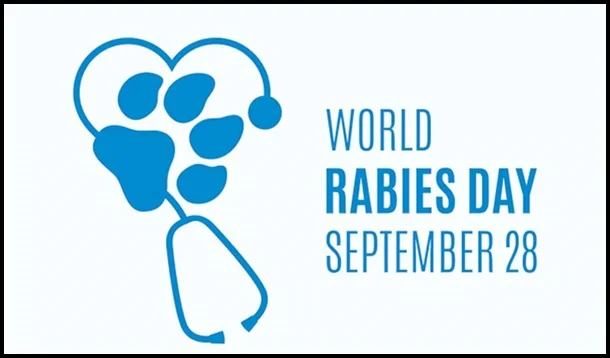
- World Rabies Day is observed every year on 28 September to raise awareness about rabies prevention and to highlight global efforts towards eliminating human deaths caused by this deadly but preventable disease.
- The theme of World Rabies Day 2026 is “Stronger Together”, highlighting the importance of cooperation among communities, health professionals, veterinarians, governments and international organisations in eliminating rabies.
- The day also marks the death anniversary of Louis Pasteur, the French chemist and microbiologist who developed the first successful rabies vaccine.
What is World Rabies Day?
- World Rabies Day is an international awareness day observed annually on 28 September. It focuses on preventing rabies, promoting vaccination, improving public awareness and strengthening global efforts to eliminate human deaths from dog-mediated rabies.
- Rabies is a viral zoonotic disease that affects the central nervous system. It is primarily transmitted through the saliva of an infected animal, usually through bites or scratches.
- Once clinical symptoms appear, rabies is almost invariably fatal. However, deaths can be prevented through timely wound management, vaccination and appropriate Post-Exposure Prophylaxis (PEP).
Why is 28 September Significant?
- The date is associated with Louis Pasteur, one of the pioneers of modern microbiology and vaccination.
- Pasteur and his collaborators developed the first effective rabies vaccine in the 1880s. World Rabies Day is observed on 28 September, the anniversary of Pasteur’s death, to recognise his contribution to rabies prevention and modern public health.
World Rabies Day 2026 Theme: “Stronger Together”
The theme “Stronger Together” underlines the fact that rabies elimination requires coordinated action across multiple sectors. Rabies cannot be addressed only through human healthcare. Effective elimination requires cooperation among:
- Human health authorities
- Veterinary services
- Animal welfare organisations
- Local governments
- Communities
- International organisations
- Researchers and public health institutions
The theme therefore reflects the importance of the One Health Approach, which recognises the interconnectedness of human, animal and environmental health.
Why is Rabies a Major Public Health Concern?
- Rabies remains a significant public health challenge, particularly in parts of Asia and Africa.
- According to the World Health Organization (WHO), rabies causes around 59,000 human deaths every year globally. More than 95% of human rabies deaths occur in Africa and Asia.
- Dogs are the major source of human rabies transmission, accounting for up to 99% of human rabies cases.
- Children are particularly vulnerable. Around 40% of people bitten by suspected rabid animals are children below 15 years of age.
- The disease disproportionately affects poor and rural communities where access to vaccines, healthcare facilities and veterinary services may be limited.
Rabies and the One Health Approach
- Rabies is an important example of why the One Health Approach is necessary.
- Since rabies involves both humans and animals, controlling the disease requires interventions across both sectors.
- Mass vaccination of dogs is particularly important because dogs are the primary source of human rabies transmission.
- Thus, preventing rabies at the animal level can significantly reduce the risk of human infection.
Global Goal: Zero by 30
A major international objective is the “Zero by 30” goal. It aims to achieve zero human deaths from dog-mediated rabies by 2030.
The initiative is based on coordinated action among international organisations and national governments, with a strong emphasis on:
- Mass dog vaccination
- Human post-exposure prophylaxis
- Disease surveillance
- Public awareness
- Veterinary healthcare
- Community participation
- One Health coordination
The goal demonstrates that rabies elimination requires action not only after exposure but also at the source of transmission.
India and Rabies
- Rabies remains an important public health concern in India.
- India has developed dedicated mechanisms to address the disease, including the National Rabies Control Programme (NRCP) and the National Action Plan for Dog Mediated Rabies Elimination from India by 2030 (NAPRE).
- The National Action Plan follows a One Health approach, bringing together the human health and animal health sectors.
- According to WHO, estimates based on an ICMR-National Institute of Epidemiology study indicate that India experiences millions of animal-bite cases every year, with dogs accounting for the majority of these incidents?
- India’s long-term objective is to achieve zero human deaths from dog-mediated rabies by 2030.
National Rabies Control Programme
The National Rabies Control Programme (NRCP) focuses on strengthening rabies prevention and control in India.
Its major objectives include:
- Ensuring access to anti-rabies vaccines.
- Improving availability of rabies immunoglobulin.
- Providing timely Post-Exposure Prophylaxis.
- Strengthening rabies surveillance.
- Training healthcare professionals.
- Improving laboratory diagnosis.
- Creating public awareness about rabies prevention.
- Supporting India’s goal of rabies elimination by 2030.
How Can Rabies Be Prevented?
Rabies is highly preventable when appropriate measures are taken immediately after exposure.
1. Vaccination of Dogs
Mass vaccination of dogs is one of the most important measures for preventing dog-mediated rabies transmission.
Vaccinating dogs helps control the disease at its primary source.
2. Immediate Wound Management
After an animal bite or suspected exposure, the wound should be immediately and thoroughly washed with soap and running water.
The affected person should seek medical attention without delay.
3. Post-Exposure Prophylaxis
Depending on the nature of exposure, healthcare professionals may recommend rabies vaccination and, where indicated, rabies immunoglobulin.
Timely PEP can prevent the disease from developing after exposure.
4. Public Awareness
Awareness is essential because delays in seeking medical care can increase the risk of death. Communities should understand that an apparently minor animal bite should not automatically be ignored.
Recent Global Example: Bhutan
- Bhutan provides an important example of successful rabies elimination efforts.
- In 2026, WHO highlighted Bhutan’s achievement in eliminating dog-mediated human rabies as a public health problem.
- The achievement demonstrates the importance of sustained dog vaccination, community participation, surveillance, political commitment and coordination between human and animal health sectors.
- For other rabies-endemic countries, such experiences provide useful lessons for strengthening elimination programmes.
Challenges in Rabies Elimination
1. Stray Dog Population
Managing and vaccinating large populations of free-roaming dogs remains a major challenge in many countries.
2. Access to Vaccines
Remote and vulnerable communities may face difficulties in accessing vaccines and other essential medical interventions.
3. Lack of Awareness
Misconceptions about animal bites and delays in seeking medical care can increase the risk of fatal outcomes.
4. Under-reporting
Weak surveillance and inadequate reporting can make it difficult to determine the actual burden of rabies.
5. Inter-sectoral Coordination
Effective rabies control requires coordination between health departments, veterinary authorities, municipalities and local communities.
6. Sustainable Financing
Rabies elimination requires long-term investment in animal vaccination, surveillance, healthcare infrastructure and public awareness.
Way Forward
India and other rabies-endemic countries need to strengthen a coordinated One Health strategy to achieve the Zero by 30 goal.
Key priorities include:
- Expanding mass dog vaccination.
- Strengthening animal-bite surveillance.
- Ensuring uninterrupted availability of anti-rabies vaccines and immunoglobulin.
- Improving veterinary and laboratory infrastructure.
- Increasing awareness in rural and vulnerable communities.
- Strengthening coordination between health and veterinary departments.
- Improving reporting and monitoring of rabies cases.
- Using digital technologies for disease surveillance.
- Increasing community participation in rabies prevention.
MCQ
Q. With reference to World Rabies Day, consider the following statements:
- World Rabies Day is observed every year on 28 September.
- The global goal is to eliminate human deaths from dog-mediated rabies by 2030.
- The One Health approach is important for rabies elimination.
- Louis Pasteur played a pioneering role in developing the rabies vaccine.
Which of the statements given above are correct?
A. 1 and 2 only
B. 1, 2 and 3 only
C. 2, 3 and 4 only
D. 1, 2, 3 and 4
|
FAQs
1. When is World Rabies Day observed?
World Rabies Day is observed every year on 28 September.
2. What is the theme of World Rabies Day 2026?
The theme of World Rabies Day 2026 is “Stronger Together.”
3. What is the Zero by 30 goal?
Zero by 30 is the global objective of achieving zero human deaths from dog-mediated rabies by 2030.
4. What is India’s National Rabies Control Programme?
The National Rabies Control Programme (NRCP) is an Indian government programme aimed at strengthening rabies prevention, treatment, surveillance and awareness.
5. Why is the One Health approach important for rabies?
Rabies affects both humans and animals. Therefore, effective control requires coordinated action involving human healthcare, veterinary services, animal vaccination, surveillance and community participation.
|







 Contact Us
  New Batch : 9555124124/ 7428085757
  Tech Support : 9555124124/ 7428085757