

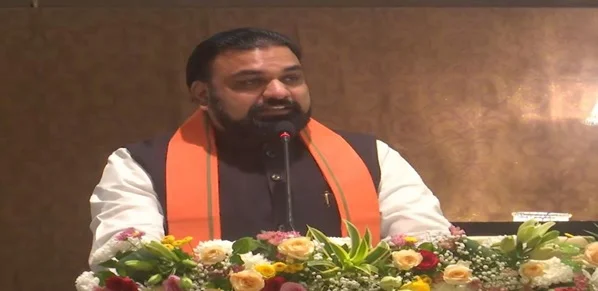
Bihar Becomes First State to Introduce Comprehensive Silt Management Policy 2026

Why in News?

  • On 3 November 2026, Bihar Chief Minister Samrat Choudhary stated that Bihar had become the first Indian state to introduce a comprehensive silt management policy.
  • The Bihar Water Source Restoration and Silt Management Policy, 2026 aims to restore the water-carrying capacity of rivers and reservoirs, reduce flood risks and promote the productive utilisation of accumulated silt.

Key Facts at a Glance

Particular

Details

Policy name

Bihar Water Source Restoration and Silt Management Policy, 2026

State

Bihar

Cabinet approval

15 September 2026

Gazette notification

17 September 2026

Notification number

803

Department

Water Resources Department, Bihar

Announced as India's first

Comprehensive state-level silt management policy

Associated initiative

Nadi Sanjeevani

Partner agency

National Highways Authority of India (NHAI)

Main objectives

Desilting, waterbody restoration, flood-risk management and productive reuse of sediments

Priority areas

Rivers, barrages, reservoirs, canals and other waterbodies

Major applications

Highway construction, embankment filling and other infrastructure works

Why Does Bihar Need a Silt Management Policy?

  • Bihar is highly vulnerable to recurring floods because of its location in the Ganga basin and its connection with several Himalayan rivers originating in Nepal.
  • These rivers carry substantial quantities of sediment, especially during the monsoon season, which can accumulate in river channels, reservoirs and other waterbodies.
  • Excessive sedimentation at vulnerable locations may reduce water-storage capacity, obstruct drainage and increase pressure on flood-protection infrastructure.
  • The problem also affects agricultural land, irrigation systems and the livelihoods of communities living in flood-prone regions.

Major Flood-Prone Rivers of Bihar

River

Origin / Important Geography

Significance

Ganga

Enters Bihar near Buxar

Principal drainage system of the state

Kosi

Himalayan basin in Nepal and Tibet

Known for historical channel shifts and major floods

Gandak

Nepal Himalayas

Important transboundary river and tributary of the Ganga

Bagmati

Shivapuri Hills, Nepal

Major flood-prone river of north Bihar

Kamla-Balan

Nepal Himalayas

Frequent flooding in the Mithila region

Mahananda

Darjeeling Hills, West Bengal

Important river of northeastern Bihar

Sone

Amarkantak region, Madhya Pradesh

Major southern tributary of the Ganga

What Is Silt Management?

  • Silt management refers to the scientific assessment, monitoring, removal, transportation and beneficial utilisation of sediment deposited in rivers, reservoirs, canals and other waterbodies.
  • Silt is a fine-grained sediment transported by flowing water. It commonly accumulates when water velocity decreases, allowing suspended particles to settle.

Difference Between Siltation, Desilting and Dredging

Term

Meaning

Siltation

Accumulation of fine sediment in a waterbody

Desilting

Removal of accumulated sediment to restore functional capacity

Dredging

Excavation of underwater material using mechanical or hydraulic methods

Sediment management

Broader planning of sediment movement, deposition, removal and reuse

Major Objectives of Bihar's Silt Management Policy 2026

  1. Water Resource Restoration: Restore the water-carrying and water-retention capacity of rivers, canals and reservoirs.
  2. Flood Risk Reduction: Address excessive sediment accumulation at critical locations and strengthen flood-management efforts.
  3. Infrastructure Development: Promote the reuse of technically suitable silt and excavated materials in roads, highways and other development projects.
  4. Agricultural Land Conservation: Reduce dependence on fertile agricultural topsoil for infrastructure-related earth filling.
  5. Water Security: Improve the functioning of water resources used for irrigation, domestic supply and other purposes.
  6. Sustainable Resource Management: Link river restoration with scientifically regulated sediment extraction and environmental safeguards.

Nadi Sanjeevani Initiative: Linking River Restoration with Highway Construction

  • The Nadi Sanjeevani Initiative aims to connect river desilting with infrastructure development by utilising suitable excavated sediments in National Highway projects.
  • Under the agreement between the Bihar government and NHAI, desilting activities will be undertaken following technical assessments and environmental safeguards.

Significance of the Policy

Area

Potential Significance

Flood Management

May reduce local drainage congestion and improve capacity at identified locations

Water Security

Restores storage and water-management functions of affected waterbodies

Agriculture

Helps protect fertile topsoil from being excavated for construction

Infrastructure

Provides an alternative source of suitable earth-fill material

Economy

Creates opportunities for resource recovery and cost-efficient construction

Environment

Encourages planned management of sediment with ecological safeguards

Governance

Promotes coordination between state agencies and NHAI

Challenges and Concerns

  • Environmental Impact: Unregulated dredging can disturb aquatic habitats, biodiversity and river ecosystems.
  • River Morphology: Excessive sediment extraction may alter channel depth, riverbank stability and natural sediment movement.
  • Technical Feasibility: Not all excavated silt is suitable for engineering applications.
  • Transportation Costs: Removing and transporting sediment over long distances can be expensive.
  • Transboundary Issues: Flood and sediment management in Bihar also depends on upstream river systems in Nepal.
  • Implementation Challenges: Effective monitoring is necessary to prevent excessive extraction and unauthorised mining.

Way Forward

  1. Adopt basin-level sediment management plans based on scientific river studies.
  2. Use satellite monitoring, bathymetric surveys and GIS to identify critical sedimentation zones.
  3. Conduct environmental impact assessments before major dredging operations.
  4. Promote suitable reuse of excavated material without compromising engineering standards.
  5. Strengthen inter-state and India–Nepal cooperation for flood forecasting and river-basin management.
  6. Establish transparent monitoring systems and regular evaluation of restoration outcomes.

Conclusion

  • The Bihar Water Source Restoration and Silt Management Policy, 2026 represents an important attempt to integrate flood management, water-resource restoration and infrastructure development. 
  • By promoting the productive reuse of accumulated sediments, the state seeks to transform an environmental challenge into an economic resource. However, its long-term success will depend on scientific planning, environmental safeguards and coordinated river-basin management.

Prelims Practice Question

Q. Consider the following statements regarding the Bihar Water Source Restoration and Silt Management Policy, 2026:

  1. It aims to restore the water-carrying capacity of rivers and reservoirs.
  2. It promotes the utilisation of suitable excavated silt in infrastructure development.
  3. It is implemented exclusively by the Ministry of Environment, Forest and Climate Change.

Which of the statements given above are correct?

(a) 1 and 2 only

(b) 2 and 3 only

(c) 1 and 3 only

(d) 1, 2 and 3

Mains Practice Question

Q. Discuss the significance of scientific sediment management in reducing flood risks and promoting sustainable infrastructure development in India.

FAQs

1. Which Indian state introduced the first comprehensive silt management policy?

Bihar, according to the announcement made by Chief Minister Samrat Choudhary on 3 November 2026.

2. What is the primary objective of Bihar's Silt Management Policy 2026?

To restore the functional capacity of rivers and waterbodies, improve sediment management and promote the productive reuse of excavated material.

3. What is the Nadi Sanjeevani Initiative?

It is an initiative linking river desilting and waterbody restoration with the reuse of suitable sediment in National Highway construction.

4. Which agency partnered with Bihar for the desilting initiative?

The National Highways Authority of India (NHAI).

5. How can silt management help reduce floods?

Targeted sediment removal can improve local drainage and water-carrying capacity. However, its effectiveness depends on river conditions and scientific assessment.




