New
Hindi Medium: (Delhi) - GS Foundation (P+M) : 21st Sept. 2026, 11:30 AM Hindi Medium: (Prayagraj) - GS Foundation (P+M) : 22nd Sept. 2026, 8:00 AM English Medium: (Delhi) - GS Foundation (P+M) : 6th Aug 2026 English Medium: (Prayagraj) - GS Foundation (P+M) : 19th Aug 2026, 11:00 AM Hindi Medium: (Delhi) - GS Foundation (P+M) : 21st Sept. 2026, 11:30 AM Hindi Medium: (Prayagraj) - GS Foundation (P+M) : 22nd Sept. 2026, 8:00 AM English Medium: (Delhi) - GS Foundation (P+M) : 6th Aug 2026 English Medium: (Prayagraj) - GS Foundation (P+M) : 19th Aug 2026, 11:00 AM

Current Affairs for 01 September 2026

INS Nipun Joins Indian Navy: Key Features of the New Deep-Sea Diving Vessel

Prelims: INS Nipun, Nistar Class, Diving Support Vessel (DSV), DSRV, Hindustan Shipyard Limited
Mains – GS Paper III: Defence Technology, Maritime Security, Naval Modernisation, Atmanirbhar Bharat
Keywords: INS Nipun, Indian Navy, Nistar Class, Deep-Sea Diving, Submarine Rescue, DSRV, Maritime Security

Why in News?

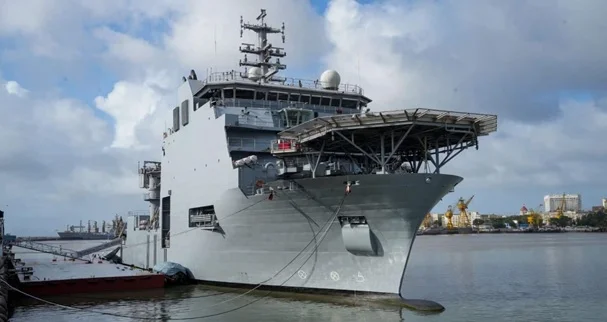
The Indian Navy has commissioned INS Nipun, its second indigenous Nistar-class Diving Support Vessel (DSV), at the Naval Dockyard, Mumbai.
Key Points

INS Nipun will strengthen the Navy's deep-sea diving, underwater intervention and submarine rescue capabilities, particularly on India's western coast.

What is INS Nipun?

  • INS Nipun is a specialised Diving Support Vessel (DSV) designed to support deep-sea diving and submarine rescue operations.
  • It is the second vessel of the Nistar class, following its sister ship INS Nistar, which serves with the Eastern Naval Command.
  • The word "Nipun" comes from Sanskrit and means skilled, proficient or adept.

Built in India

  • INS Nipun was built by Hindustan Shipyard Limited (HSL), Visakhapatnam.
  • The contract for INS Nistar and INS Nipun was signed in September 2018 for around ₹2,393 crore.
  • INS Nipun was handed over to the Indian Navy on 30 July 2026 after completing sea trials.
  • The vessel has nearly 75% indigenous content, strengthening Atmanirbhar Bharat and India's indigenous defence shipbuilding capability.

Key Features of INS Nipun

  • INS Nipun is approximately 118 metres long and has a displacement of more than 8,500 tonnes.
  • Its major capabilities include:
    • Saturation diving operations up to 300 metres depth
    • Side-stage diving operations up to 75 metres depth
    • Support for submarine rescue operations
    • Inspection, maintenance and repair of underwater infrastructure
    • Support for work on subsea cables and pipelines
    • Advanced medical facilities for diving-related emergencies

These capabilities allow naval divers to undertake complex operations at considerable depths for extended periods.

What is Saturation Diving?

  • Saturation diving is a specialised technique that allows divers to live and work under high-pressure conditions for long periods while conducting operations at great depths.
  • It reduces the need for repeated decompression and enables prolonged underwater work, making it useful for deep-sea repair, inspection and rescue missions.
  • INS Nipun can support saturation diving operations at depths of up to 300 metres.

Role in Submarine Rescue

  • INS Nipun acts as a mothership for Deep Submergence Rescue Vehicles (DSRVs).
  • DSRV is a specialised underwater vehicle used to rescue sailors trapped in a disabled or distressed submarine.
  • It can descend to the submarine, connect with its escape hatch and evacuate the crew safely.
  • INS Nipun provides the platform, equipment and support required for submarine rescue operations in deep waters.

INS Nipun and INS Nistar

  • INS Nistar supports deep-sea and submarine rescue operations on the eastern seaboard, while INS Nipun strengthens capability on the western seaboard.
  • Together, the two Nistar-class Diving Support Vessels provide the Indian Navy with two-coast submarine rescue and deep-sea intervention capability.
  • This enables a faster response to underwater emergencies across India’s maritime region.

Why is INS Nipun Important?

INS Nipun is important for the Indian Navy because it:

  • Strengthens India's submarine rescue capability
  • Enhances deep-sea diving and underwater intervention
  • Provides support for underwater inspection and repair
  • Improves operational readiness on India's western coast
  • Strengthens India's maritime security architecture
  • Promotes indigenous defence shipbuilding
  • Supports India's goal of becoming more self-reliant in advanced naval technology

Strategic Significance 

  • INS Nipun strengthens the Indian Navy’s submarine rescue, deep-sea intervention and underwater operational capabilities in the strategically important Indian Ocean Region.
  • It improves India’s underwater preparedness and maritime security, especially as the Navy’s submarine operations expand.
  • The vessel also provides specialised medical support for diving and submarine-rescue emergencies.
  • It is equipped with an 8-bed hospital, ICU, operating theatre and hyperbaric medical facilities.
  • Hyperbaric facilities help treat divers affected by pressure-related medical conditions during deep-sea operations.

Conclusion

The commissioning of INS Nipun strengthens the Indian Navy’s deep-sea diving, submarine rescue and underwater intervention capabilities. Along with INS Nistar, it enhances operational readiness across both seaboards while promoting self-reliance in indigenous defence shipbuilding.

Prelims Practice Question

1. INS Nipun, recently commissioned into the Indian Navy, is a:
A. Guided Missile Destroyer
B. Diving Support Vessel
C. Nuclear Submarine
D. Survey Vessel

Mains Practice Question

Discuss the significance of INS Nipun in strengthening India’s submarine rescue, deep-sea intervention and maritime security capabilities.

FAQs

1. What is INS Nipun?

INS Nipun is the Indian Navy’s second indigenous Nistar-class Diving Support Vessel (DSV).

2. Who built INS Nipun?

It was built by Hindustan Shipyard Limited (HSL), Visakhapatnam.

3. What is the main role of INS Nipun?

Its key roles include deep-sea diving, submarine rescue and underwater inspection and maintenance.

4. What is a DSRV?

Deep Submergence Rescue Vehicle (DSRV) is a specialised underwater vehicle used to rescue personnel from a distressed submarine.

5. What is the diving capability of INS Nipun?

It can support saturation diving up to 300 metres and side-stage diving up to 75 metres.

NHAI Makes AI-MC Mandatory for Highways Over 20 km: A Major Push for Quality & Transparency

Why in News?

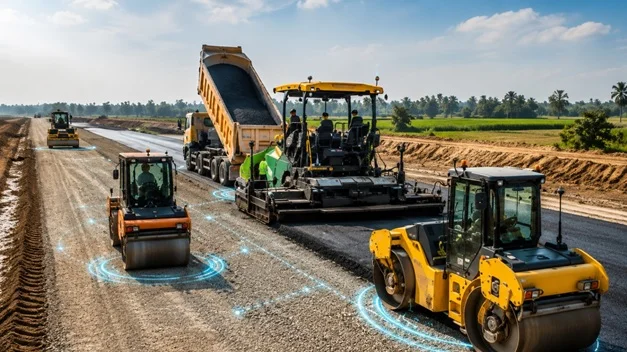
  • The National Highways Authority of India (NHAI) has made Automated and Intelligent Machine-Aided Construction (AI-MC) mandatory for highway projects that are more than 20 km long and cost over ₹500 crore.
  • The move aims to address concerns related to construction quality, durability, accuracy, transparency, and accountability in highway projects.
  • Under the new norms, contractors will be required to use AI-MC throughout the construction process and across the entire spatial footprint of the project.


What is AI-MC?

  • Automated and Intelligent Machine-Aided Construction (AI-MC) is a technology-driven construction system that uses on-board computers, sensors, positioning systems, and digital monitoring tools integrated with heavy construction machinery.
  • It can be deployed on machines such as: Graders, Pavers, Compactors, Dozers.
  • The technology enables real-time monitoring, automated execution, accurate measurements, and quality control during road construction.
  • Instead of relying primarily on manual inspection, AI-MC generates digital data on construction activities and helps ensure that work conforms to prescribed technical specifications.

Key Provisions of the New NHAI Norms

1. Mandatory for Large Highway Projects :-AI-MC will be compulsory for highway projects that meet both of the following criteria:

  • Length: More than 20 km
  • Project cost: More than ₹500 crore

2. End-to-End Deployment :-AI-MC will not be restricted to selected portions of a highway project.

Contractors will have to deploy the technology continuously throughout the project and across its entire spatial footprint.

3. Application Across Major Road Layers

The technology will be used across major stages of highway construction, including:

Road Construction Layer

Meaning

Embankment

Raised earth foundation supporting the road

Subgrade

Compacted soil layer forming the basic foundation of the pavement

Granular Sub-Base (GSB)

Layer of crushed stone, sand and gravel placed above the compacted soil

Pavement layers

Structural layers forming the road surface

4. Real-Time Data Sharing

  • Contractors will be required to share real-time construction data with NHAI officials.
  • This will create a digital record of construction activities from earthwork to pavement laying.

Why is AI-MC Being Introduced?

The rapid expansion of India's highway network has increased the need for high-quality, durable and technically compliant road construction.

Traditional monitoring often depends heavily on:

  • Manual inspections
  • Physical measurements
  • Site visits
  • Contractor-generated records

AI-MC can complement and reduce dependence on such manual processes by enabling continuous, technology-based monitoring and quality control.

Benefits of AI-MC

  1. Improved Construction Quality :-AI-MC can improve the accuracy and uniformity of different highway layers by monitoring construction parameters against prescribed standards.
  2. Reduction in Human Errors :-Automation and machine-based measurements can reduce errors associated with manual measurements and inspections.
  3. Better Durability of Roads :-Consistent construction of different road layers according to technical specifications can contribute to improved road durability and service life.
  4. Greater Transparency :-Real-time digital data can provide authorities with greater visibility into construction activities.
  5. Enhanced Accountability :-Digital records can help establish responsibility for deviations from prescribed construction standards.
  6. Prevention of Quality Compromise :-Continuous monitoring can reduce the possibility of contractors or sub-contractors compromising on construction standards.
  7. Data-Driven Governance ;-NHAI can use real-time construction data to identify deviations and undertake timely corrective action.

Why is End-to-End Deployment Important?

  • The effectiveness of AI-MC depends on its continuous and comprehensive deployment.
  • If the technology is used only at selected stages or on limited stretches, gaps may remain in the monitoring system.
  • End-to-end AI-MC can therefore create an integrated chain: Construction → Real-Time Monitoring → Digital Data → Quality Control → Accountability
  • This can help shift highway construction towards a more data-driven and technology-enabled system.

Challenges in Implementation

Despite its potential benefits, the implementation of AI-MC may face several challenges.

  1. Reluctance to Share Real-Time Data:-Some contractors may be reluctant to share continuous data with NHAI because real-time monitoring increases their accountability.
  2. High Initial Cost:-AI-enabled machinery, sensors, software and digital infrastructure may increase the initial cost of construction operations.
  3. 3Lack of Technical Skills :-Engineers, contractors and machine operators will require adequate training to operate AI-MC systems and interpret the resulting data.
  4. Data Reliability :-The usefulness of AI-MC depends on the accuracy and reliability of sensor-generated data. Mechanisms are therefore required to prevent data manipulation and technical errors.
  5. Digital Connectivity :-Reliable digital connectivity may be difficult to maintain at remote highway construction sites.
  6. Need for Institutional Capacity :-NHAI and other highway agencies need adequate technical capacity to process and act upon the large volume of real-time data generated by these systems.

AI-MC and the Lucknow-Kanpur Expressway

  • AI-MC was reportedly deployed earlier during the construction of the Lucknow-Kanpur Expressway.
  • However, its deployment was not uniform across the entire project or across all construction grades.
  • The new NHAI norms seek to move beyond such piecemeal deployment and ensure comprehensive use of the technology in eligible highway projects.

FAQs

Q. 1 What is AI-MC?

Answer Automated and Intelligent Machine-Aided Construction (AI-MC) is a technology-driven road construction system that uses sensors, on-board computers, positioning systems and digital monitoring tools integrated with construction machinery.

Q.2 Which highway projects will require mandatory AI-MC deployment?

Answer AI-MC will be mandatory for highway projects that are more than 20 km long and cost over ₹500 crore.

Q. 3 Which construction machinery can use AI-MC?

Answer AI-MC can be integrated with heavy construction equipment such as graders, pavers, compactors and dozers.

Q.4 What is the purpose of AI-MC in highway construction?

Answer The technology aims to improve construction quality, accuracy, uniformity, durability, transparency and accountability through real-time monitoring and digital quality control.

NASA’s Nancy Grace Roman Space Telescope Launch: Mission, Objectives, Dark Matter and Exoplanet Discoveries

Why in News?

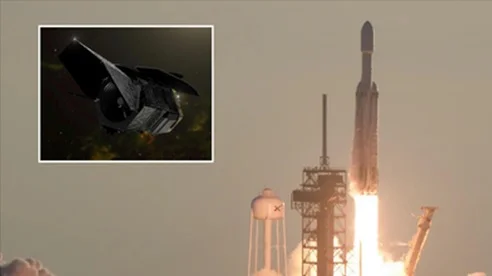
Recently, NASA’s newest flagship space observatory, the Nancy Grace Roman Space Telescope, was successfully launched from Florida aboard a SpaceX Falcon Heavy rocket.
What is the Nancy Grace Roman Space Telescope?

  • The Nancy Grace Roman Space Telescope is NASA’s next-generation space observatory designed to conduct large-scale surveys of the universe.
  • Named after Nancy Grace Roman, NASA’s first Chief Astronomer, the telescope will observe vast regions of space at unprecedented speed and scale.
  • Its primary mission is expected to last five years, although NASA estimates that it may have enough fuel to operate for up to another five years.

Key Features

Feature

Details

Name

Nancy Grace Roman Space Telescope

Agency

NASA

Launch Vehicle

SpaceX Falcon Heavy

Launch Site

Kennedy Space Center, Florida

Approximate Cost

$4.3 billion

Destination

Lagrange Point 2 (L2)

Distance from Earth

About 1.6 million km

Primary Mission

5 years

Major Focus

Dark Matter, Dark Energy, Exoplanets and Galaxy Evolution

Major Instrument

Wide Field Instrument

Experimental Instrument

Coronagraph

How is Roman Different from the Hubble Space Telescope?

  • One of Roman’s most important advantages is its extremely wide field of view.
  • Its field of view is expected to be more than 100 times wider than Hubble’s. 
  • Its Wide Field Instrument has sensitivity comparable to Hubble but can survey the sky approximately 1,000 times faster.
  • For example, a survey of the Milky Way that would take Hubble roughly 100 years could be completed by Roman in about one month.
  • Therefore, Roman is designed less as a replacement for Hubble and more as a wide-field survey telescope that can scan enormous portions of the sky.

Studying Dark Matter and Dark Energy

  • A major objective of the Roman Space Telescope is to investigate dark matter and dark energy, two poorly understood components that dominate the universe.
  • According to current estimates:
    • Ordinary matter: about 5%
    • Dark Matter: about 27%
    • Dark Energy: about 68%

Dark Matter

  • Dark matter does not emit, absorb, or reflect light in a way that allows it to be directly observed. Scientists infer its existence primarily through its gravitational effects on visible matter and light.
  • Roman will study billions of galaxies and their distribution to improve scientists’ understanding of how dark matter shapes the universe.

Dark Energy

  • Dark energy is associated with the accelerating expansion of the universe.
  • By studying the distribution and evolution of galaxies and other cosmic objects, Roman will help scientists investigate how the universe has expanded over time and what role dark energy has played in this expansion.

Creating a Massive 3D Map of the Universe

  • Roman is expected to create one of the most comprehensive three-dimensional maps of the universe ever produced.
  • Its major survey is expected to examine more than 2 billion galaxies.
  • Such a massive dataset will allow scientists to study:
    • The distribution of galaxies
    • The large-scale structure of the universe
    • The effects of dark matter
    • The expansion history of the universe
    • The evolution of galaxies over cosmic time
  • This information could provide important clues about the fundamental nature of dark matter and dark energy.

Searching for Thousands of Exoplanets

  • Another major objective of Roman is the search for exoplanets, or planets orbiting stars outside our Solar System.
  • NASA expects Roman to discover thousands of new planets and provide one of the most comprehensive statistical studies of planetary systems.
  • The telescope will particularly contribute to the discovery of planets that are difficult to detect using conventional methods.

Experimental Coronagraph

  • Roman also carries an experimental coronagraph.
  • A coronagraph is designed to block the intense light from a star so that much fainter objects, such as planets orbiting that star, can potentially be observed directly.
  • The technology could help advance future efforts to obtain direct images of exoplanets.

Roman vs Hubble vs James Webb

Roman will complement, rather than replace, NASA’s existing major space telescopes.

Feature

Hubble Space Telescope

James Webb Space Telescope

Nancy Grace Roman

Primary Strength

High-resolution observations

Deep and highly sensitive observations

Wide-field surveys

Major Wavelengths

Optical, UV, Infrared

Primarily Infrared

Primarily Infrared

Field of View

Relatively narrow

Relatively narrow

More than 100× wider than Hubble

Key Focus

Stars, galaxies, planets and nebulae

Early universe, galaxies and stars

Dark Energy, Dark Matter, Exoplanets

Approach

Detailed observations

Deep observations

Large-scale panoramic surveys

  • Roman will also complement major projects such as the European Space Agency’s Euclid mission and the Vera C. Rubin Observatory in Chile.
  • Once Roman identifies interesting objects, the James Webb Space Telescope can conduct more detailed follow-up observations.

What is Lagrange Point 2?

  • The Roman Space Telescope is heading towards Lagrange Point 2 (L2).
  • L2 is a region in space associated with the Sun-Earth system, located approximately 1.5 million kilometres beyond Earth in the direction away from the Sun.
  • Space telescopes can operate near L2 while maintaining a stable relationship with the Earth and Sun.
  • The James Webb Space Telescope also operates near L2.
  • Roman is expected to take more than three months to reach its destination.

Successful Falcon Heavy Launch

  • The telescope was launched aboard SpaceX’s Falcon Heavy rocket from NASA’s Kennedy Space Center in Florida.
  • Several minutes after launch, Falcon Heavy’s two reusable side boosters successfully returned and landed at Cape Canaveral.
  • The Roman telescope subsequently separated successfully from the rocket’s upper stage and began its journey towards L2.
  • The mission reportedly launched months ahead of schedule and within its planned budget.

Mission Duration and Future Refuelling

  • Roman has been designed for a primary mission of around five years.
  • NASA estimates that the spacecraft may carry enough fuel to operate for up to five additional years.
  • The telescope has also been designed with the possibility of future robotic refuelling, should suitable in-space refuelling technology become available.
  • This could potentially extend the scientific lifetime of the mission.

Who Was Nancy Grace Roman?

  • Nancy Grace Roman joined the newly established NASA in 1959 and became the agency’s first Chief Astronomer.
  • She played an important role in promoting the development and use of space-based observatories.
  • Her contributions to the development of space astronomy earned her the nickname “Mother of Hubble.”
  • Roman died in 2018 at the age of 93.
  • The Roman Space Telescope is NASA’s first space telescope named after a woman.

Roman’s Primary Mirror

  • The Roman Space Telescope has a primary mirror approximately 2.4 metres (nearly 8 feet) in diameter, similar in size to Hubble’s primary mirror.
  • An interesting feature of Roman’s history is that its mirror was originally surplus hardware from a spy satellite programme.
  • The National Reconnaissance Office (NRO) donated the mirror to NASA more than a decade ago, helping reduce the cost and development time of the mission.

Why is the Roman Space Telescope Important?

  • The mission could significantly expand our understanding of the universe by:
    • Mapping billions of galaxies across large regions of space.
    • Improving our understanding of Dark Matter and its gravitational effects.
    • Investigating the nature and role of Dark Energy.
    • Discovering thousands of exoplanets.
    • Providing a statistical census of planetary systems.
    • Studying the evolution and distribution of galaxies.
    • Supporting detailed follow-up observations by the James Webb Space Telescope.
    • Advancing technologies for the direct imaging of exoplanets.

Prelims Question

Q. With reference to the Nancy Grace Roman Space Telescope, consider the following statements:

  1. It is a NASA space observatory designed to study dark matter and dark energy.
  2. It will operate near the Sun-Earth Lagrange Point 2.
  3. Its field of view is more than 100 times wider than that of the Hubble Space Telescope.
  4. It has been designed primarily to replace the James Webb Space Telescope.

Which of the statements given above are correct?

  1. 1, 2 and 3 only

  2. 1 and 4 only

  3. 2 and 3 only

  4. 1, 2, 3 and 4

Mains Question 

.“The future of astronomy lies not only in observing deeper into space but also in surveying larger portions of the universe.” Discuss with reference to the Nancy Grace Roman Space Telescope.

FAQs

What is the Nancy Grace Roman Space Telescope?

It is NASA’s next-generation space observatory designed for large-scale surveys of the universe, including research on dark matter, dark energy, galaxy evolution and exoplanets.

Where will the Roman Space Telescope be located?

It will operate near Lagrange Point 2 (L2), approximately 1.6 million kilometres from Earth.

Which rocket launched the Roman Space Telescope?

It was launched aboard SpaceX’s Falcon Heavy rocket.

How much wider is Roman’s field of view compared with Hubble?

Roman’s field of view is expected to be more than 100 times wider than Hubble’s.

How many exoplanets could Roman discover?

NASA expects the telescope to discover thousands of exoplanets during its mission.

How long will the Roman Space Telescope operate?

Its primary mission is planned for five years, with the possibility of an additional five years depending on available fuel and mission conditions.

V-Dem’s democracy index rates of India at its lowest since 1975

Prelims: V-Dem Institute, Electoral Democracy Index, Liberal Democracy Index, Constitutional Democracy, Election Commission of India, Fundamental Rights
Mains: GS Paper II: Indian Constitution, Democracy, Electoral Reforms, Constitutional Institutions, Freedom of Speech, Civil Society, and Governance

Why in news?

Senior Congress leader and Rajya Sabha MP P. Chidambaram has drawn attention to India's position in the Electoral Democracy Index (EDI) published by the Sweden-based Varieties of Democracy (V-Dem) Institute.
What is the V-Dem Institute?

  • The Varieties of Democracy (V-Dem) Institute is an academic research institute based at the University of Gothenburg, Sweden.
  •  It describes democracy as a multidimensional concept rather than measuring it only through the existence of elections. Its dataset assesses different dimensions such as electoral, liberal, participatory, deliberative and egalitarian democracy. 
  • The 2026 dataset covers 179 countries for 2025. The V-Dem Dataset Version 16 and Democracy Report 2026, titled “Unraveling the Democratic Era?” were released in March 2026.

What is the Electoral Democracy Index (EDI)?

The EDI measures the extent to which the electoral principle of democracy is achieved in a country. The EDI broadly examines five major components:

Component

What it examines

Elected Officials

Whether political authority is held by elected representatives

Clean Elections

Whether elections are free from major fraud and systematic irregularities

Freedom of Association

Ability of political parties and civil society organisations to function

Freedom of Expression

Ability of citizens and media to express alternative political views

Suffrage

Extent to which adult citizens have voting rights

India's Position in V-Dem Democracy Report 2026

Indicator

India's Position/Score

Electoral Democracy Index

106th out of 179 countries

EDI Score

0.38

Liberal Democracy Index

105th

LDI Score

0.26

V-Dem Regime Classification

Electoral Autocracy

Why is 1975 Significant?

  • The comparison to 1975 is significant because that year marks the imposition of the “National Emergency (1975–77)” under Prime Minister Indira Gandhi-a period widely regarded as the most serious rupture in India's post-Independence democratic history, marked by suspension of civil liberties, press censorship, and large-scale detention of political opponents without trial. 
  • By stating that India's current score is the lowest since that period, Chidambaram's remark implies that, on V-Dem's metrics, India's electoral democracy indicators today are statistically comparable to their weakest historical point-a claim that itself has been the subject of considerable methodological debate. 

What Does “Electoral Autocracy” Mean?

Electoral autocracy is a regime in which multiparty elections for the executive exist but, according to V-Dem's criteria, the requirements necessary to make those elections meaningfully democratic are not sufficiently fulfilled. This does not mean elections do not occur. V-Dem's 2026 report places India in this category and argues that democratic institutions have weakened over time.

Electoral Democracy vs Liberal Democracy

  • Electoral Democracy: Primarily focuses on whether rulers are accountable to citizens through competitive elections, alongside universal suffrage, freedom of association, clean elections and freedom of expression.
  • Liberal Democracy: Goes further by examining whether electoral democracy is supported by rule of law, civil liberties, judicial and legislative constraints on the executive, protection of individual and minority rights, checks and balances. Thus, holding elections is not sufficient to achieve a high Liberal Democracy Index score.

How Does V-Dem Collect its Data?

  • V-Dem uses a combination of factual information and expert-coded assessments. According to its methodology, it draws on a pool of more than 4,000 country experts, and typically around five or more experts assess an expert-coded indicator for a particular country-year.
  • Statistical models are then used to aggregate judgments and account for differences in expert reliability, perceptions and uncertainty. This allows V-Dem to assess concepts that cannot always be directly observed. 

Why Have V-Dem's Rankings Been Criticised in India?

  • A 2022 working paper by members of the Economic Advisory Council to the Prime Minister (EAC-PM) criticised indices including V-Dem, Freedom House and the Economist Intelligence Unit's Democracy Index.
  • The paper raised concerns regarding dependence on assessments by relatively small groups of experts, subjectivity of some questions, transparency and comparability of assessments, suitability of applying identical questions across very different political systems; and omission of some factors that the authors believed were relevant to assessing democracy.
  • The paper argued that some global perception-based democracy indices have methodological limitations and called for greater transparency and accountability.
  • V-Dem says expert assessments are necessary because many dimensions of democracy cannot be measured through directly observable statistics alone. 
  • It uses multiple experts and statistical measurement models designed to reduce individual bias and explicitly reports uncertainty in its estimates.

Constitutional Foundations of Indian Democracy

  • Representative Government: India follows a parliamentary democratic system, with governments accountable to elected legislatures.
  • Universal Adult Suffrage: Article 326 provides for elections to the Lok Sabha and State Legislative Assemblies on the basis of adult suffrage, subject to constitutional and statutory qualifications.
  • Independent Election Commission: Article 324 provides for the Election Commission of India and vests it with the superintendence, direction and control of elections.
  • Freedom of Speech: Article 19(1)(a) guarantees freedom of speech and expression, subject to reasonable restrictions under Article 19(2).
  • Freedom of Association: Article 19(1)(c) protects the right to form associations or unions or cooperative societies, subject to constitutionally permitted restrictions.
  • Independent Judiciary: The Supreme Court and High Courts exercise judicial review, which serves as an important constitutional check on legislative and executive action.
  • Free and Fair Elections: The Supreme Court has repeatedly recognised free and fair elections as fundamental to India's constitutional democracy and linked democratic governance to the basic structure doctrine.

Why Does the Issue Matter for India?

  • Institutional credibility matters. Independent and trusted institutions—including election-management bodies, courts, legislatures and accountability mechanisms—are central to democratic legitimacy.
  • Freedom of expression and media pluralism matter. Citizens require access to competing ideas and information to make meaningful electoral choices. 
  • A strong opposition is part of parliamentary democracy. Democracy requires not merely majority rule but space for political competition, legislative scrutiny and dissent. 
  • Civil society strengthens participatory governance. Civil society organisations, academic institutions and citizen groups provide channels between the state and society beyond periodic elections. 
  • International perceptions have diplomatic significance. Democracy and rule of law increasingly feature in global discussions concerning governance, investment, human rights and international partnerships.

Prelims MCQ

Q. The Varieties of Democracy (V-Dem) Institute is based in which country?

A. Norway

B. Sweden

C. Switzerland

D. Denmark

Mains Practice Question

Q. “International democracy indices have raised concerns regarding the quality of electoral democracy in India. Critically examine the findings and limitations of such indices in the context of India’s constitutional and democratic framework.”

FAQs

What is the Electoral Democracy Index (EDI)?

The EDI assesses the extent to which a country fulfils key principles of electoral democracy, including meaningful elections and political freedoms.

Who publishes the Electoral Democracy Index?

It is produced by the Varieties of Democracy (V-Dem) Institute at the University of Gothenburg, Sweden.

What is India's rank in the Electoral Democracy Index discussed in the 2026 report?

India has been reported at 106th among 179 countries, with an EDI score of 0.38, based on 2025 data.

What does V-Dem's “electoral autocracy” classification mean?

In V-Dem's framework, it refers to a system where multiparty elections exist, but the institute assesses that sufficient conditions for meaningful electoral democracy are not fully met.

What dimensions of democracy does V-Dem study?

V-Dem distinguishes five broad principles: Electoral, Liberal, Participatory, Deliberative and Egalitarian Democracy.

India-Uzbekistan Relations: $5 Billion Trade, Key Agreements, Future deal, Significance and Challenges

Prelims: India–Uzbekistan Relations, Central Asia, Comprehensive Strategic Partnership, SCO, Critical Minerals, Uranium, Dustlik Exercise, Preferential Trade Agreement
Mains: GS Paper II: India and its Neighbourhood, Bilateral Relations, Central Asia, International Relations
GS Paper III: Energy Security, Critical Minerals, Trade, Connectivity, Defence Cooperation

Why in news?

Prime Minister Narendra Modi paid a State Visit to Uzbekistan from 29-30 August 2026, where he held talks with Uzbek President Shavkat Mirziyoyev. The two countries decided to elevate their relationship to a Comprehensive Strategic Partnership and set a target of increasing annual bilateral trade to USD 5 billion by 2030. 

What happened during PM Modi's 2026 Uzbekistan visit?

  • PM Modi and President Mirziyoyev held delegation-level discussions covering almost the entire spectrum of bilateral relations. 
  • The agenda included trade and investment, innovation and start-ups, Digital Public Infrastructure, UPI, defence and security, healthcare and pharmaceuticals, critical minerals, agriculture, education, tourism, space and people-to-people exchanges.
  • The two leaders also decided to establish a Foreign Ministers-led mechanism to oversee the Comprehensive Strategic Partnership and elevate the Inter-Governmental Commission to ministerial level.

What agreements were signed?

The summit resulted in the exchange of agreements and MoUs covering a broad range of areas.

Area

Cooperation

Mining

Geology/mining and mineral-resource cooperation

Economic Cooperation

Strengthening bilateral economic collaboration

Higher Education

Education and research cooperation

Environment

Environmental cooperation

Tourism

Expansion of tourism cooperation

Culture

Cultural cooperation

Ayurveda

Traditional medicine cooperation

Archives

Cooperation between archival institutions

Capacity Building

Training and institutional cooperation

Sister-State Relations

Sub-national cooperation

Buddhist Heritage

Restoration of Fayaz Tepa and Kara Tepa

Sanskrit

ICCR Sanskrit Chair in Tashkent

India-Uzbekistan Relations

  • India and Uzbekistan share centuries-old historical and cultural links arising from trade, movement of people, Buddhism and interactions between Central Asia and the Indian subcontinent.
  • Modern diplomatic relations were established after Uzbekistan became independent following the dissolution of the Soviet Union. Over time, the relationship expanded from political and cultural engagement into trade, defence, energy, connectivity and security cooperation.
  • The latest upgrade to a Comprehensive Strategic Partnership marks a significant broadening of these ties. Both sides have identified trade and investment, connectivity, digital transformation, energy transition, critical minerals, food security, healthcare, pharmaceuticals and education as priority sectors.

USD 5 Billion Trade Target by 2030

  • Bilateral trade crossed USD 1 billion in 2025, while the number of joint ventures has reportedly increased sevenfold in recent years. The two countries are also connected by 14 direct flights per week. India and Uzbekistan now want to increase annual bilateral trade to USD 5 billion by 2030.
  • Key sectors with significant trade potential include electrical goods, engineering products, automobiles, pharmaceuticals, agriculture and minerals. 
  • To achieve this target, both countries agreed to diversify traded goods, tackle non-tariff and investment barriers, promote industrial cooperation, digitise trade procedures and strengthen SME participation. A Joint Working Group will address non-tariff issues and investment barriers.

Major Future Deals

  • Preferential Trade Agreement: A Joint Feasibility Study for such an agreement has already been completed. During the 2026 summit, the leaders directed the concerned ministries to explore the next steps on a time-bound basis. 
  • Uranium and Nuclear Energy Cooperation: The official joint statement says India and Uzbekistan will explore deeper cooperation in nuclear energy, geology, mining and strategic minerals, including peaceful uses of nuclear energy. Recent reporting around the summit also indicates that the countries are working towards a long-term framework for uranium supplies to India. For India, such cooperation could help diversify nuclear-fuel supply sources as nuclear power becomes a larger part of its long-term clean-energy strategy.
  • Critical Minerals-An Emerging Strategic Partnership: India has also shown interest in participation by Indian companies in prospective mineral deposits in Uzbekistan. This is strategically important because critical minerals are essential for electric vehicles, renewable-energy systems, electronics, advanced manufacturing and defence technologies.
  • Defence and Security Cooperation: Both countries conduct the Dustlik joint military exercise. Its latest edition was held in Uzbekistan's Namangan Region in April 2026. The two sides are exploring opportunities in the defence-industrial domain, security cooperation also covers counter-terrorism, intelligence sharing, cyber threats, drug trafficking, organised crime and violent extremism. 
  • Connectivity-The Biggest Economic Requirement: India and Uzbekistan do not share a direct land border, and India's direct overland access to Central Asia is constrained. Therefore, both countries agreed to develop multimodal transport routes and logistics corridors and work towards reducing freight transportation costs. For India, wider regional connectivity initiatives involving routes through Iran and the International North–South Transport Corridor (INSTC) can potentially improve access to Central Asian markets. 
  • Digital Technology, AI and Space: The two countries agreed to deepen cooperation in Artificial Intelligence, IT, start-ups, cyber security, digital transformation and space. The first IT Park in Tashkent was established in 2019 based on the Indian model with support from Software Technology Parks of India (STPI
  • Pharmaceuticals and Healthcare: The countries are considering stronger cooperation around the Tashkent Pharma Park, including pharmaceutical manufacturing, localisation, technology transfer and investment. They also support the establishment of new medical centres, laboratories, research institutions and joint pharmaceutical manufacturing enterprises in Uzbekistan with Indian companies. 
  • Agriculture and Food Security: India and Uzbekistan agreed to strengthen agricultural value chains, agricultural exports, research, livestock, sustainable agriculture and food security. The two countries also plan to facilitate bilateral agricultural trade and cooperate on resource-efficient technologies. 

India–Uzbekistan Cooperation in Multilateral Forums

  • India and Uzbekistan also cooperate through platforms such as the Shanghai Cooperation Organisation (SCO) and the India-Central Asia dialogue format.
  • Uzbekistan reiterated support for India's candidature for permanent membership of a reformed UN Security Council. Both sides also agreed to strengthen coordination on Global South issues. 

Why is Uzbekistan strategically important for India?

  • Gateway to Central Asia: Uzbekistan occupies a central geographical position in Central Asia and is important to India's wider regional engagement.
  • Energy Security: Long-term uranium cooperation could diversify India's nuclear-fuel supplies.
  • Critical Minerals: Mineral partnerships can help India create resilient supply chains for clean-energy and advanced technologies.
  • Afghanistan: Its border with Afghanistan makes Uzbekistan an important security partner.
  • Market for Indian Companies: Pharmaceuticals, healthcare, automobiles, engineering, education, IT and digital services have considerable potential.
  • Counter-terrorism: Both countries have strong interests in preventing terrorism and extremism in the region.

What are the major challenges?

  • Lack of Direct Land Connectivity: India's biggest disadvantage is the absence of a direct land route to Uzbekistan.
  • High Logistics Costs: Longer transport routes make Indian goods less competitive.
  • Ambitious Trade Target: Reaching USD 5 billion by 2030 requires a substantial increase in commercial activity.
  • Regional Geopolitical Complexity: Central Asia sits at the intersection of major geopolitical interests.
  • China's Economic Presence: China already has extensive infrastructure, investment and trade links across Central Asia. India therefore faces considerable economic competition.
  • Russia's Historical Influence: Russia retains deep political, economic, cultural and security ties with the region.
  • Afghanistan Instability: Instability in Afghanistan can affect security and regional connectivity.

Prelims MCQ

Q. With reference to India–Uzbekistan relations, consider the following statements:

  1. India and Uzbekistan are members of the Shanghai Cooperation Organisation (SCO).
  2. DUSTLIK is a joint military exercise conducted by India and Uzbekistan.
  3. India and Uzbekistan have set a target of USD 5 billion in bilateral trade by 2030.

Which of the statements given above are correct?

     A. 1 and 2 only

     B. 2 and 3 only

     C. 1 and 3 only

     D. 1, 2 and 3

Mains Practice Question 

Q. “Uzbekistan occupies a significant place in India’s engagement with Central Asia.” Discuss.

FAQs

What is the India–Uzbekistan bilateral trade target for 2030?

Both countries have set a target of USD 5 billion by 2030.

What is the current status of India–Uzbekistan relations?

The relationship has been elevated to a Comprehensive Strategic Partnership.

Why is Uzbekistan important for India?

It is important for India's Central Asia outreach, energy security, critical minerals, trade and regional security.

What is the joint military exercise between India and Uzbekistan?

The two countries conduct the DUSTLIK joint military exercise.

What is the major challenge in India–Uzbekistan trade?

The lack of direct land connectivity and high transportation costs are major challenges.

ISRO EOS-05 Mission 2026: GSLV-F17, Key Features, Applications and Significance

Prelims : ISRO, EOS-05, GISAT-1A, Earth Observation Satellite, GSLV-F17, Geosynchronous Orbit, Cryogenic Upper Stage, Satish Dhawan Space Centre, Sriharikota, Disaster Management, Remote Sensing.
Mains – GS Paper III: Space Technology, Earth Observation, Remote Sensing, Disaster Management, Environmental Monitoring, Indigenous Space Technology, Geospatial Technology, Space-based Applications, Science and Technology, ISRO.
Keywords: ISRO EOS-05, GISAT-1A, GSLV-F17, EOS-05 Launch 2026, Earth Observation Satellite, Geosynchronous Orbit, Cryogenic Upper Stage, Sriharikota, Satish Dhawan Space Centre, Remote Sensing, Disaster Management, Environmental Monitoring, Space Technology, ISRO Mission 2026.

Why in News?

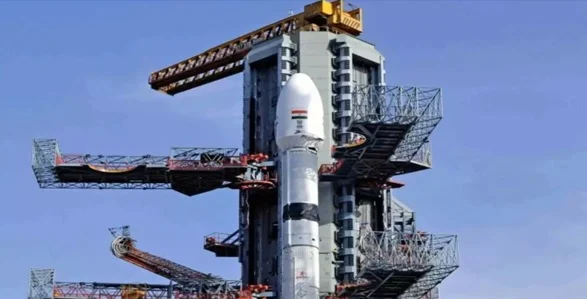
  • ISRO is set to launch the EOS-05 (GISAT-1A) Earth Observation Satellite aboard the GSLV-F17 rocket on September 4, 2026. 

Key Points

  • The mission aims to strengthen India’s Earth-observation and high-resolution imaging capabilities. 
  • Ahead of the launch, GSLV-F17 has been moved to the Second Launch Pad at Satish Dhawan Space Centre, Sriharikota.
  • The launch schedule may change due to weather, technical checks or operational requirements

What is EOS-05?

  • EOS-05 (GISAT-1A) is an advanced Earth Observation Satellite developed by ISRO. 
  • It is designed to provide high-resolution images of the Indian subcontinent and surrounding regions. 
  • Its frequent imaging capability will help monitor rapidly changing events. 
  • It can support disaster management, environmental monitoring and Earth observation.

What is Special About EOS-05?

  • EOS-05 will be India’s first imaging satellite from geosynchronous orbit. 
  • It can provide frequent images of a large geographical area, especially the Indian subcontinent. 
  • This capability will help track rapidly changing events more effectively. 
  • It can be useful for monitoring cyclones, floods, forest fires and other disasters.

Major Applications of EOS-05

  • Disaster Management: Monitoring cyclones, floods and other natural disasters. 
  • Forest Fire Monitoring: Early observation and tracking of forest fires. 
  • Environmental Monitoring: Tracking environmental and ecological changes. 
  • Land & Vegetation: Observing changes in land use and vegetation. 
  • Rapid Event Monitoring: Providing frequent images to track quickly changing events over large areas. 

What is GSLV-F17?

  • GSLV-F17 is a mission of ISRO’s Geosynchronous Satellite Launch Vehicle (GSLV). 
  • It will be the 19th flight of GSLV
  • It will carry the EOS-05 (GISAT-1A) Earth Observation Satellite. 
  • The satellite will initially be placed into a Sub-Geosynchronous Transfer Orbit (Sub-GTO). 
  • GSLV uses an indigenously developed cryogenic upper stage, enabling India to launch heavier satellites into higher orbits.

What is a Geosynchronous Orbit?

  • A Geosynchronous Orbit (GSO) is an orbit where a satellite takes about 24 hours to complete one revolution around the Earth. 
  • Its orbital period is nearly equal to the Earth’s rotation period. 
  • This allows the satellite to frequently observe the same broad region of the Earth. 
  • It is useful for communication, weather monitoring and Earth observation.

GISAT-1 and EOS-05

  • GISAT-1, later renamed EOS-03, was an earlier ISRO Earth Observation mission. 
  • It was launched aboard GSLV-F10 in August 2021. 
  • The mission was unsuccessful because the cryogenic upper stage could not ignite due to a technical anomaly. 
  • EOS-05 (GISAT-1A) is a renewed effort to strengthen India’s geosynchronous Earth-imaging capability. 

Significance of EOS-05 Mission

  • Better Earth Observation: Provides frequent images of the Indian subcontinent. 
  • Disaster Management: Helps monitor cyclones, floods, forest fires and other disasters. 
  • Environmental Monitoring: Supports tracking of land, vegetation and environmental changes. 
  • Near-Real-Time Monitoring: Helps observe and track rapidly changing events. 
  • Space Capabilities: Strengthens India’s capabilities in satellite technology, Earth observation and space missions.

Conclusion

The EOS-05 (GISAT-1A) mission is an important step in strengthening India’s Earth-observation capabilities. Its frequent imaging can support disaster management, environmental monitoring and rapid observation of changing events. A successful GSLV-F17 launch will further enhance India’s indigenous space capabilities.

Prelims Practice Question

1. EOS-05, recently in the news, is related to which of the following?

A. Navigation
B. Earth Observation
C. Human Spaceflight
D. Lunar Exploration

Mains Practice Question

Discuss the importance of Earth Observation Satellites in disaster management, environmental monitoring and sustainable development in India.

FAQs

1. What is EOS-05?

EOS-05 is an Earth Observation Satellite developed by ISRO.

2. What is another name for EOS-05?

EOS-05 is also known as GISAT-1A.

3. When is EOS-05 scheduled to launch?

It is scheduled for September 4, 2026.

4. Which rocket will launch EOS-05?

The satellite will be launched aboard GSLV-F17.

5. Where will EOS-05 be launched from?

It will be launched from the Second Launch Pad at Satish Dhawan Space Centre, Sriharikota.

Legal Metrology IST Rules, 2026: One Nation, One Time, One Standard

Prelims: Indian Standard Time (IST), CSIR-NPL, NavIC, Legal Metrology, White Rabbit Technology
Mains: GS-II – Governance | GS-III – Science & Technology, Digital Infrastructure, Cyber Security

Why in News?

The Union Government has notified the Legal Metrology (Indian Standard Time) Rules, 2026, making Indian Standard Time (IST) the common time reference for legal, administrative, commercial and other official purposes across India.

What Are the Legal Metrology (Indian Standard Time) Rules, 2026?

  • The Legal Metrology (Indian Standard Time) Rules, 2026 establish IST as the common official time reference across India.
  • Government departments, institutions, businesses and other stakeholders covered by the Rules will have a 180-day transition period to review their existing systems and make the required technical changes.
  • The objective is to create a uniform and reliable national timing framework for an increasingly digital economy.

Why Does India Need a Common Time Reference?

  • Modern digital infrastructure depends not only on accurate data but also on knowing exactly when an event or transaction occurred.
  • Different or unsynchronised time sources can create inconsistencies in the recording and coordination of digital activities.
  • A common national time reference can therefore improve the reliability of time-sensitive systems across sectors.

What Is Indian Standard Time (IST)?

  • Indian Standard Time (IST) is the standard time followed throughout India.
  • IST is based on the 82°30 East longitude, which passes near Mirzapur in Uttar Pradesh.
  • IST is 5 hours and 30 minutes ahead of Coordinated Universal Time (UTC+5:30).
  • India follows a single standard time despite its large geographical extent.

What Is the Role of CSIR-NPL?

  • The CSIR-National Physical Laboratory (CSIR-NPL) maintains India's national time standard.
  • It provides the scientific foundation required for accurate measurement and dissemination of Indian Standard Time.
  • Under the new framework, India's national timing infrastructure is being strengthened so that accurate IST can be disseminated through Indian institutions and Legal Metrology laboratories.

Push for Indian Timing Sources

  • One of the strategically important aspects of the new Rules is the push towards greater use of Indian timing sources.
  • Several critical systems currently use foreign satellite-based timing sources. Excessive dependence on external systems can create strategic and technological vulnerabilities, particularly for critical infrastructure.
  • The government is therefore developing domestic infrastructure for secure dissemination of IST.
  • The Rules provide for the use of NavIC and other approved Indian timing sources.

What Is NavIC?

  • Navigation with Indian Constellation (NavIC) is India's indigenous satellite-based navigation system developed by ISRO.
  • Apart from navigation and positioning, satellite navigation systems can provide highly accurate timing services.
  • The use of NavIC for time dissemination can strengthen India's domestic timing capability and provide additional options for critical systems.

What Is White Rabbit Technology?

  • White Rabbit is a high-precision network time synchronisation technology.
  • It enables highly accurate synchronisation of clocks across networked systems, making it useful for sectors where even very small timing differences can matter.
  • Under the ‘One Nation, One Time’ initiative, a White Rabbit Technology-based IST Dissemination Demonstration Network was commissioned in July 2026 at the Regional Reference Standard Laboratory (RRSL), Bengaluru.
  • The demonstration explored the dissemination of accurate IST across sectors such as banking, telecommunications, power, transportation and digital governance.

Why Is Accurate Time Important for Digital Infrastructure?

  • In the physical world, a difference of a few milliseconds may appear insignificant. In highly automated digital networks, however, accurate sequencing of events can be important.
  • For example, financial systems, telecom networks and power infrastructure continuously generate enormous numbers of time-stamped events.
  • A trusted common reference can help ensure that these events are recorded and coordinated using the same national time standard.

Strategic Significance for India

  1. Digital Sovereignty: A stronger indigenous timing infrastructure gives India greater control over an important layer of its digital ecosystem.
  2. Reduced External Dependence: Greater use of NavIC and approved Indian timing sources can reduce reliance on foreign satellite-based timing services.
  3. Critical Infrastructure Security: Banking, telecom, power and transport systems are critical national infrastructure. A secure domestic timing framework can improve their resilience.
  4. Reliable Digital Transactions: Uniform timing can strengthen consistency in the recording and sequencing of digital and financial transactions.
  5. Better Governance: Government databases, legal records and digital governance systems can operate with a common official time reference.
  6. Strategic Autonomy: Indigenous navigation and timing capabilities strengthen India's technological autonomy in strategically important infrastructure.

Challenges in Implementation

  • Technical Up gradation: Existing systems may need software, hardware or network changes to align with the prescribed timing framework.
  • Integration with Legacy Systems: Older digital infrastructure may not be designed for modern high-precision time synchronisation.
  • Large-Scale Coordination: Banks, telecom companies, government institutions, transport systems and power infrastructure operate different technological platforms, making nationwide coordination complex.
  • Cyber Security: As timing infrastructure becomes more important to critical digital systems, its protection against cyber threats and manipulation will also become important.
  • Capacity Building: Institutions will require technical expertise and appropriate infrastructure to implement the new framework effectively.

Why Has a 180-Day Transition Period Been Given?

The government has provided a 180-day window before the Rules come into force.

The period will allow stakeholders to:

  • Review their existing timing systems.
  • Identify technical gaps.
  • Upgrade relevant infrastructure.
  • Integrate approved timing sources.
  • Test synchronisation mechanisms.
  • Prepare for full compliance.

The transition period is therefore intended to ensure that implementation takes place without disrupting existing digital and administrative systems.

Way Forward

  • India needs to develop a robust nationwide architecture for disseminating accurate IST across critical sectors.
  • Integration of CSIR-NPL, NavIC, Legal Metrology laboratories and high-precision technologies such as White Rabbit can create a more resilient domestic timing ecosystem.
  • At the same time, implementation should focus on cyber security, interoperability, technical standards and capacity building.
  • In the long term, the initiative can become an important component of India's broader push towards digital sovereignty and strategic autonomy.

Conclusion

  • The Legal Metrology (Indian Standard Time) Rules, 2026 represent more than an attempt to standardise clocks. They seek to build a common timing foundation for India's rapidly expanding digital infrastructure.
  • By connecting IST, CSIR-NPL, NavIC, Indian timing infrastructure and high-precision synchronisation technologies, India can improve the reliability of critical digital systems while reducing dependence on external timing sources.

Prelims MCQs

Q. Which institution maintains India's national time standard?

A. ISRO
B. SEBI
C. CSIR-NPL
D. BIS

Mains Question

“A common and indigenous national time infrastructure is not merely a matter of standardisation but an important component of digital sovereignty and strategic autonomy.” Discuss in the context of the Legal Metrology (Indian Standard Time) Rules, 2026.

FAQs

What are the Legal Metrology (Indian Standard Time) Rules, 2026?

The Rules establish Indian Standard Time as the common time reference for legal, administrative, commercial and other official purposes in India.

When were the IST Rules, 2026 notified?

They were notified by the Ministry of Consumer Affairs on 27 August 2026.

When will the Rules come into force?

They will come into force 180 days after their publication in the Official Gazette.

Which institution maintains India's national time standard?

CSIR-National Physical Laboratory (CSIR-NPL) maintains India's national time standard.

What is the standard longitude of IST?

IST is based on 82°30 East longitude.

upsc english
« »
  • SUN
  • MON
  • TUE
  • WED
  • THU
  • FRI
  • SAT
Have any Query?

Our support team will be happy to assist you!

OR