
- UPSC Exam
- State PCS
- One Day Exam
- Current Affairs
- PT Quiz
- Downlaods
- About Coaching
- Blog
- Videos

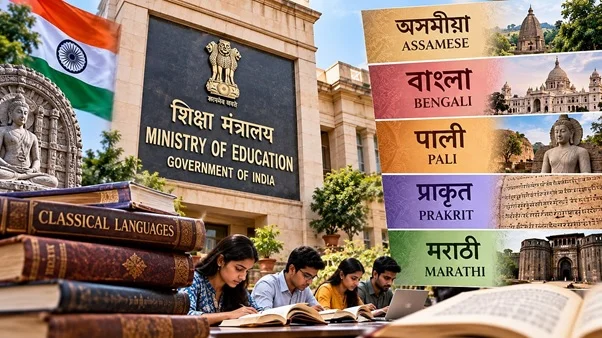
|
S. No. |
Language |
Year |
|
1 |
Tamil |
2004 |
|
2 |
Sanskrit |
2005 |
|
3 |
Telugu |
2008 |
|
4 |
Kannada |
2008 |
|
5 |
Malayalam |
2013 |
|
6 |
Odia |
2014 |
|
7 |
Marathi |
2024 |
|
8 |
Pali |
2024 |
|
9 |
Prakrit |
2024 |
|
10 |
Assamese |
2024 |
|
11 |
Bengali |
2024 |
The initiative will strengthen Classical Language studies through four broad areas:
The initiative will involve multiple stakeholders, including:
The five designated institutions will act as specialised academic centres for their respective Classical Languages.
Prelims Practice QuestionQ. With reference to the Centres of Excellence for Classical Languages recently approved by the Ministry of Education, consider the following pairs:
Which of the pairs given above are correctly matched? A. 1, 2 and 3 only Mains Practice QuestionQ. India’s Classical Languages represent an important component of its linguistic and literary heritage. Discuss the significance of establishing Centres of Excellence for their preservation, research and digitisation. |
Q1. How many Classical Languages are recognised in India?India currently has 11 recognised Classical Languages. Q2. Which languages were recognised as Classical Languages in 2024?Marathi, Pali, Prakrit, Assamese and Bengali were recognised as Classical Languages in 2024. Q3. Which institution will host the Centre of Excellence for Classical Assamese?The Centre for Classical Assamese will be established at Tezpur University, Assam. Q4. Which institution will host the Centre of Excellence for Classical Bengali?The Centre for Classical Bengali will be established at Visva-Bharati University, West Bengal. Q5. Which institution will host the Centre of Excellence for Classical Marathi?The Centre for Classical Marathi will be established at Deccan College Post-Graduate and Research Institute, Pune, Maharashtra. |
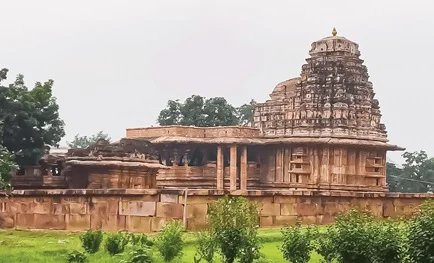
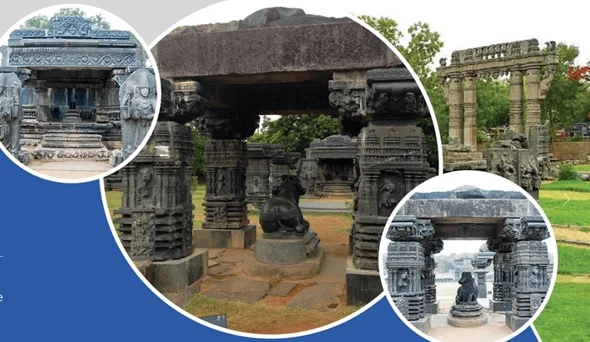
Question 1. Where is Ramappa Temple located?Answer: Ramappa Temple is located in Mulugu district of Telangana. Question 2. When was Ramappa Temple constructed?Answer: Ramappa Temple was constructed in 1213 CE during the reign of Kakatiya ruler Ganapati Deva. Question 3. Who built Ramappa Temple?Answer: The temple was built by Recharla Rudra, a general under Kakatiya ruler Ganapati Deva. Question 4. Why is the temple called Ramappa Temple?Answer: The temple is named after its chief sculptor Ramappa. It is considered one of the rare temples in India named after its chief sculptor. Question 5. When was Ramappa Temple declared a UNESCO World Heritage Site?Answer: In 2021, Ramappa Temple was inscribed on the UNESCO World Heritage List under the official name “Kakatiya Rudreshwara (Ramappa) Temple, Telangana.” |
The Delhi High Court held that a foreign national does not have an inherent or legally enforceable right to seek entry into India.
The court clarified that:
The key legislation involved in the case is the Immigration and Foreigners Act, 2025, which replaced the earlier Foreigners Act, 1946.
Q1. Does a valid visa guarantee entry into India?Answer: No. The Delhi High Court clarified that merely possessing a valid visa does not give a foreign national an inherent or legally enforceable right to enter India. Final entry is subject to immigration checks and applicable laws. Q2. Which law governs the entry of foreigners into India?Answer: The Immigration and Foreigners Act, 2025 provides the main legal framework governing the entry, stay and departure of foreigners in India. It replaced the Foreigners Act, 1946. Q3. Are foreign nationals protected under Article 21?Answer: Yes. Foreign nationals are entitled to the protection of Article 21 of the Constitution, which guarantees the protection of life and personal liberty. Q4. Can foreign nationals claim the right to reside and settle in India under Article 19(1)(e)?Answer: No. The right to reside and settle in India under Article 19(1)(e) is available only to Indian citizens. |
| Prelims: Animal Diplomacy, Soft Power, Panda Diplomacy, CITES, Project Cheetah, Giant Panda, Indian Peacock, Wildlife Conservation. Mains: GS Paper II: International Relations, Soft Power, Public Diplomacy and Multilateralism. |

|
Type |
Meaning |
Example |
|
Bilateral Diplomacy |
Engagement between two countries |
India-Japan relations |
|
Public Diplomacy |
Direct engagement with foreign publics |
Cultural outreach, international broadcasting |
|
Cultural Diplomacy |
Use of culture and heritage to build relations |
Yoga, art, literature, festivals |
|
Economic Diplomacy |
Use of trade, investment and economic relations |
FTAs, investment partnerships |
|
Climate Diplomacy |
International engagement on climate issues |
COP negotiations |
|
Humanitarian Diplomacy |
Humanitarian assistance and disaster-relief cooperation |
HADR operations |
|
Animal Diplomacy |
Use of animals as gifts, loans or symbols of cooperation |
Panda, elephant and koala diplomacy |
|
Conservation Diplomacy |
Cross-border cooperation for wildlife/ecosystem protection |
Project Cheetah and wildlife partnerships |
|
Animal Diplomacy |
Conservation Diplomacy |
|
Animal often serves as diplomatic symbol |
Conservation is the central objective |
|
Historically involved gifts |
Usually involves partnerships |
|
Focus on goodwill/prestige |
Focus on species and ecosystem protection |
|
Short-term symbolic impact possible |
Long-term scientific cooperation |
|
Public diplomacy important |
Science and environmental diplomacy important |
|
Eg.: Historical elephant gifts |
Eg.: Project Cheetah cooperation |
Prelims MCQQ. With reference to animal and wildlife diplomacy, consider the following statements:
Which of the statements given above are correct? (a) 1 and 2 only (b) 2 and 3 only (c) 1 and 3 only (d) 1, 2 and 3 Mains Practice QuestionQ. How can wildlife conservation strengthen India's soft power and international cooperation? |
What is animal diplomacy?Use of animals to promote diplomatic goodwill. What is Panda Diplomacy?China’s use of giant pandas in international relations. What is Koala Diplomacy?Australia’s use of koalas for public diplomacy. What is Orangutan Diplomacy?Malaysia’s conservation-based diplomatic initiative involving orangutans. What is India’s recent example of animal diplomacy?Donation of five peacocks to UN Geneva in 2026. |
| Prelims: NABARD, NABKISAN Finance Limited, Social Bonds, WASH, National Stock Exchange (NSE), Sustainable Finance, ESG, SDG 6, NBFC. Mains: GS Paper III: Indian Economy, Mobilisation of Resources, Infrastructure, Inclusive Growth and Sustainable Development. |
NABKISAN Finance Limited, a subsidiary of the National Bank for Agriculture and Rural Development (NABARD), listed India’s first Social Bond dedicated exclusively to the Water, Sanitation and Hygiene (WASH) sector on the National Stock Exchange (NSE), Mumbai, on 2 October 2026.

|
Particular |
Details |
|
Issuer |
NABKISAN Finance Limited |
|
Parent institution |
NABARD |
|
Type |
WASH-focused Social Bond |
|
Significance |
India's first Social Bond exclusively dedicated to WASH |
|
Amount raised |
₹180 crore |
|
Listing platform |
National Stock Exchange (NSE), Mumbai |
|
Tenure |
5 years |
|
Coupon rate |
8.10% |
|
Maturity |
September 2031 |
|
Subscription |
1.8 times |
|
CRISIL rating |
AAA (Stable) |
|
CARE rating |
AAA (Stable) |
|
Purpose |
Financing access to safe water, sanitation and hygiene |
|
Instrument |
Main Purpose |
|
Green Bond |
Environmental projects |
|
Social Bond |
Projects producing positive social outcomes |
|
Sustainability Bond |
Combination of eligible green and social projects |
|
Sustainability-linked Bond |
Financial characteristics linked to achievement of predefined sustainability/KPI targets |
Prelims MCQQ. With reference to Social Bonds, consider the following statements:
Which of the statements given above are correct? (a) 1 and 2 only (b) 2 and 3 only (c) 1 and 3 only (d) 1, 2 and 3 Mains Practice QuestionQ. How can Social Bonds support sustainable and inclusive development in India? |
What does WASH stand for?Water, Sanitation and Hygiene. Which institution issued India's first WASH-focused Social Bond?NABKISAN Finance Limited. LinkedIn How much did NABKISAN raise through the bond?₹180 crore. Ruralvoice Where was the bond listed?On the National Stock Exchange (NSE), Mumbai. Ruralvoice What is the coupon rate of the bond?8.10% |
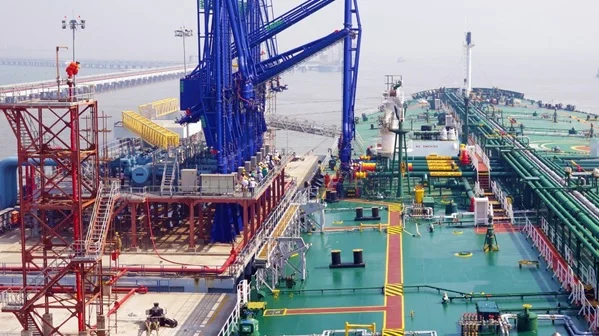
The initiative aims to:
A cleanliness drive was conducted at several locations of Mumbai Port, including:
The activities demonstrated the port’s focus on cleanliness, waste management and environmental sustainability.
The declaration of Jawahar Dweep as a plastic-free oil terminal represents an important step towards cleaner and more sustainable port operations. Expanding such initiatives, along with effective waste management and regular monitoring, can help reduce plastic pollution and support the development of environmentally responsible ports in India.
Prelims practice questionJawahar Dweep, which was recently declared plastic-free, is associated with which of the following? A. Mumbai Port Mains Practice QuestionQ. Sustainable port development is essential for balancing India’s economic growth with environmental protection. Discuss the challenges and suggest measures to promote sustainable port operations in India. |
1. What is Jawahar Dweep?Jawahar Dweep is an important marine oil terminal of Mumbai Port. 2. Why is Jawahar Dweep in the news?It has been declared India’s first plastic-free oil terminal. 3. Which organisation declared Jawahar Dweep plastic-free?The Mumbai Port Authority (MbPA). 4. What is the main objective of the initiative?The main objective is to reduce single-use plastic and promote sustainable port operations. 5. What are Oil Spill Response (OSR) facilities?OSR facilities are used to respond to and manage oil spills and reduce their impact on marine and coastal ecosystems. |
| Prelims: DPCO 2013, NPPA, NLEM, scheduled and non-scheduled medicines, ceiling price, Price to Retailer (PTR), 16% retailer margin, Essential Commodities Act, 1955, and Article 21 with the Right to Health. Mains: GS Paper II: Healthcare affordability, government policies, pharmaceutical price regulation, Right to Health. GS Paper III: Pharmaceutical sector, medicine pricing, consumer protection, out-of-pocket expenditure. Keywords: Medicine Pricing, DPCO 2013, NPPA, NLEM, Ceiling Price, Price to Retailer, MRP, Drug Price Control, Essential Medicines, Right to Health, Generic Medicines, Healthcare Affordability |

The Drugs (Prices Control) Order, 2013 is the principal framework for controlling prices of specified medicines in India. It empowers the government to regulate the prices of essential medicines and enables the NPPA to:
These are formulations included in Schedule I of the DPCO, based on the National List of Essential Medicines (NLEM). Their prices are subject to government regulation through the ceiling-price mechanism.
These are medicines outside the scheduled list and are not subject to the same direct ceiling-price mechanism.
However, the DPCO provides that their MRP cannot be increased by more than 10% during the preceding 12 months. NPPA can also monitor such medicines and take corrective measures where warranted.
For scheduled medicines, the NPPA uses a market-based pricing methodology.
The process broadly involves:
The National Pharmaceutical Pricing Authority (NPPA) plays a central role in India's drug-pricing system.
Its functions include:
As of 23 June 2026, NPPA reported ceiling prices for 935 formulations and retail prices fixed for 3,805 new drugs within the relevant DPCO framework.
Ceiling prices of scheduled formulations are generally revised annually based on the Wholesale Price Index (WPI). The purpose is to allow regulated prices to respond to changes in input and wholesale prices while maintaining the price-control framework.
The present framework does not impose the same ceiling-price mechanism on every medicine. This creates an important policy debate regarding medicines outside the scheduled list.
A restriction on subsequent price increases may not fully address an unusually high price established at the time of launch.
Large differences between procurement prices and patient-facing prices can increase healthcare expenditure, particularly when patients have limited choice of pharmacy.
Patients generally depend on doctors, hospitals and pharmacists for information about medicines and prices.
Excessive price controls may affect incentives for research, development and introduction of new medicines, while inadequate regulation can increase patient costs.
Prelims Practice MCQQ. With reference to medicine price regulation in India, consider the following statements:
Which of the statements given above are correct? A. 1 and 2 only Mains Practice QuestionIndia has a drug-price control framework, yet affordability of medicines remains a major public-health concern. Discuss the limitations of the existing medicine-pricing framework and suggest measures to improve transparency and affordability without undermining pharmaceutical innovation. |
1. What is DPCO 2013?The Drugs (Prices Control) Order, 2013 is India's principal framework for regulating prices of specified medicines. 2. What is NPPA?The National Pharmaceutical Pricing Authority (NPPA) is the government authority responsible for implementing and monitoring important aspects of drug-price regulation. 3. What is a ceiling price?A ceiling price is the maximum permissible price at which a scheduled formulation can generally be sold, subject to applicable taxes and regulatory provisions. 4. What is the 16% retailer margin?It is a 16% retailer margin used in the ceiling-price calculation for scheduled formulations. It should not be interpreted as a universal 16% profit cap on every medicine currently sold in India. 5. Why are non-scheduled medicines important in the current debate?Non-scheduled medicines are not subject to the same direct ceiling-price mechanism as scheduled formulations. Their initial pricing and the subsequent 10% annual increase restriction are therefore central to the ongoing debate over medicine affordability. |

Our support team will be happy to assist you!

 Contact Us
  New Batch : 9555124124/ 7428085757
  Tech Support : 9555124124/ 7428085757

