| Prelims: (Economy + CA) Mains: (GS 3 – Environment, Internal Security, Disaster Management, Federalism) |
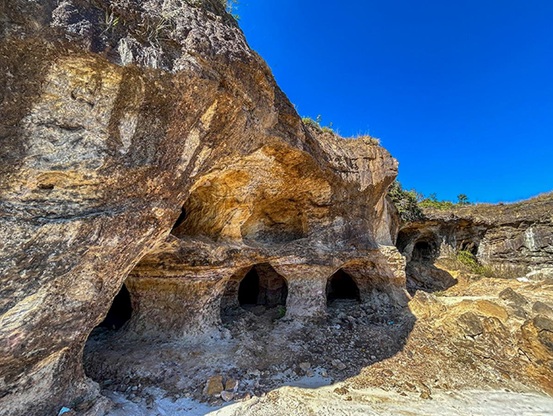
A deadly explosion in an illegally operating rat-hole coal mine in East Jaintia Hills district, Meghalaya, has resulted in the death of 25 miners. The incident has once again highlighted the persistence of illegal mining in the state despite a ban by the National Green Tribunal (NGT) and the Supreme Court. It raises serious concerns about regulatory enforcement, governance failure, labour safety, and disaster management preparedness.
3. Formalisation of the Mining Sector
4. Environmental Restoration
5. Worker Safety Framework
FAQs1. What is rat-hole mining and why is it banned ? Rat-hole mining involves manually digging narrow tunnels to extract coal. It is banned due to severe environmental damage and extremely unsafe working conditions. 2. Which authorities banned rat-hole mining in Meghalaya ? The National Green Tribunal (2014) banned it, and the ban was upheld by the Supreme Court. 3. Why does illegal mining persist despite judicial bans ? Weak enforcement, local complicity, regulatory ambiguity under the Sixth Schedule, and livelihood dependence contribute to its persistence. 4. What environmental damage does rat-hole mining cause ? It leads to acid mine drainage, water contamination, land instability, biodiversity loss, and long-term ecological degradation. 5. What reforms are needed to prevent such tragedies ? Strict enforcement, institutional accountability, formalisation of mining, environmental restoration, and strong worker safety frameworks are essential. |
| Prelims: (Defence + CA) Mains: (GS 3 – Defence Preparedness, Internal Security, Technology in Warfare) |
The Indian Air Force (IAF) will conduct Vayu Shakti 2026, a major air combat exercise near the Pakistan border, aimed at showcasing its full spectrum of offensive and defensive capabilities in a simulated war environment.
The exercise will be held at the Pokaran Field Firing Range in Jaisalmer district, Rajasthan, and is expected to be the IAF’s largest air combat drill of the year, involving nearly all frontline aircraft and air defence systems.
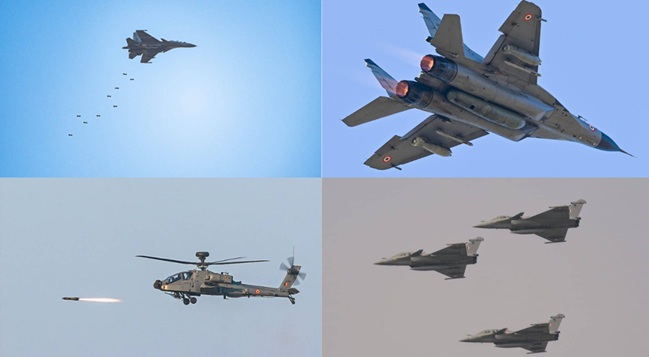
Almost all frontline fighter aircraft and air defence systems will be deployed, including:
These platforms will engage both ground and aerial targets with high precision.
This reflects the IAF’s shift towards network-centric warfare, where information superiority is as critical as kinetic power.
FAQs1. What is Vayu Shakti 2026 ? It is a major air combat exercise of the Indian Air Force showcasing offensive and defensive capabilities in a simulated war environment. 2. Where will Vayu Shakti 2026 be conducted ? At the Pokaran Field Firing Range in Jaisalmer district, Rajasthan. 3. Which aircraft will participate in the exercise ? Rafale, Su-30 MKI, Tejas, MiG-29, Jaguar, Mirage-2000, and Hawk aircraft, among others. 4. What is the role of IACCS in the exercise ? The Integrated Air Command and Control System enables real-time tracking, coordination, and decision-making during air operations. 5. Why is Vayu Shakti 2026 strategically important ? It strengthens deterrence, demonstrates combat readiness, showcases defence modernisation, and reinforces India’s regional air power. |
| Prelims: (Economy + CA) Mains: (GS 3 – Monetary Policy, Banking, Macroeconomic Stability) |
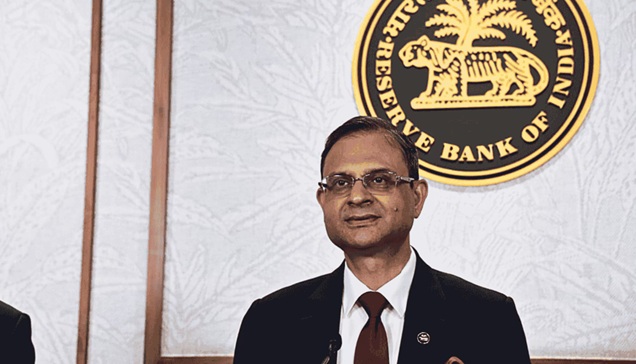
The Reserve Bank of India’s Monetary Policy Committee (MPC) decided to keep the repo rate unchanged at 5.25%, maintaining the status quo on interest rates. Consequently, bank lending and deposit rates — and EMIs on home and personal loans — are expected to remain stable.
The MPC revised India’s GDP growth projection upward to 7.4% for FY 2026 (from 7.3%) and retail inflation to 2.1% (from 2%), reflecting confidence in growth momentum alongside benign price pressures.
The committee also retained a neutral policy stance, signalling flexibility to respond to evolving domestic and global conditions. This decision comes after India’s recent trade agreements with the US and the European Union and follows the Union Budget, which shaped the broader macroeconomic context.
The pause follows a 25 basis point rate cut in December, which brought the repo rate to its current level. With cumulative rate cuts of 125 basis points in 2025, the decision marks a breather after a phase of sustained monetary easing.
The decision to pause reflects a combination of benign inflation, strong growth momentum, and external uncertainties.
RBI Governor Sanjay Malhotra noted that several FY26 Budget measures are expected to boost economic activity, including:
Together, these factors have strengthened the near-term growth outlook.
Since the December policy review, India has signed trade agreements with:
These agreements are expected to:
However, the RBI cautioned that geopolitical developments and global financial conditions still warrant close monitoring.
Additionally, statistical factors, such as a low GDP deflator due to low inflation, contributed to stronger growth in the first half of the fiscal year.
Inflation Outlook: Benign but Watched Closely
The RBI clarified that the upward revision is mainly due to higher prices of precious metals, contributing 60–70 basis points, while underlying inflation pressures remain subdued.
Thus, some borrowers may experience rate changes even without a repo rate move.
The RBI appears comfortable with a cautious, wait-and-watch stance.
The RBI Governor highlighted that recent and forthcoming trade agreements with the EU and the US are likely to sustain growth momentum over the medium term. He also noted that global growth could be marginally stronger than earlier projections, supported by:
Despite the positive outlook, risks remain significant:
FAQs1. What is the current repo rate in India ? The repo rate is 5.25%, unchanged after the latest MPC meeting. 2. Will EMIs on home and personal loans change ? No immediate change is expected for loans linked to the repo rate. MCLR-linked loans may still see adjustments. 3. Why did the RBI revise GDP growth upward for FY26 ? Due to strong consumption, supportive fiscal measures, trade agreements, and the impact of earlier rate cuts. 4. What does a “neutral policy stance” mean ? It means the RBI is open to either raising or cutting rates in the future, depending on economic conditions. 5. What are the main risks to the current outlook ? Geopolitical tensions, volatile crude oil prices, and diverging global monetary policies remain key risks. |
| Prelims: (International Relations + CA) Mains: (GS 2 – India’s Foreign Policy, Economic Diplomacy, Regional Groupings) |
India and the Gulf Cooperation Council (GCC) have signed the Terms of Reference (ToR) for a Free Trade Agreement (FTA) in New Delhi, formally launching negotiations for a comprehensive trade pact.
The move marks a significant step in deepening India’s economic engagement with West Asia, a region that plays a critical role in India’s energy security, diaspora welfare, remittance inflows, and trade diversification.
FAQs1. What is the Gulf Cooperation Council (GCC) ? The GCC is a regional political and economic alliance of six Gulf countries—Bahrain, Kuwait, Oman, Qatar, Saudi Arabia, and the UAE—established in 1981. 2. Why is the India–GCC FTA significant ? It aims to boost trade, investment, energy security, and strategic ties between India and the Gulf region. 3. What are India’s main exports to the GCC ? Engineering goods, rice, textiles, machinery, and gems and jewellery. 4. What does India mainly import from the GCC ? Crude oil, LNG, petrochemicals, and precious metals such as gold. 5. How will the FTA benefit India remembering UPSC exam perspective ? It supports trade diversification, strengthens energy security, promotes investment inflows, and enhances India’s strategic presence in West Asia—key themes in GS 2 and GS 3. |
| Prelims: (Economy + International Relations + CA) Mains: (GS 2 – Foreign Policy, Strategic Autonomy; GS 3 – Energy Security, Trade and Infrastructure) |
US President Donald Trump announced a sharp reduction in tariffs on Indian goods from 50% to 18%, claiming that India has agreed to stop buying Russian crude oil and instead increase purchases from the US and Venezuela. While India welcomed the trade deal, it has not confirmed any commitment to halt Russian oil imports, signalling that energy security remains its top priority.
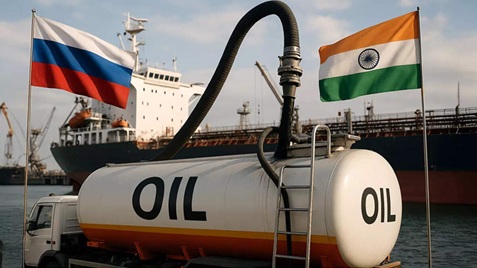
Completely stopping Russian oil imports is impractical in the current context due to:
Industry analysts therefore expect:
Replacing Russian crude is theoretically possible, as Russia accounted for less than 2% of India’s oil imports before the Ukraine war. However, the real challenge lies in how much and how fast alternative supplies can substitute Russian volumes.
FAQs1. Has India agreed to stop buying Russian oil ? No. India has not confirmed any commitment to halt Russian oil imports and continues to prioritise energy security. 2. Why is it difficult for India to stop importing Russian crude immediately ? Due to technical refinery constraints, long-term contracts, logistical limitations, and strategic autonomy concerns. 3. How much Russian oil does India currently import ? As of January 2026, India imports about 1.16 million barrels per day, accounting for roughly 22% of total crude imports. 4. Can US or Venezuelan oil fully replace Russian crude ? Not in the near term. US oil faces cost and compatibility issues, while Venezuelan oil is constrained by low production and high global demand. 5. What is India’s broader strategy on oil imports ? India follows a diversification strategy guided by market conditions, energy security, and strategic autonomy rather than political alignment. |

Traditionally, the Hakki-Pikki people have depended on:
However, forest conservation laws, wildlife protection regulations, and changes in the modern economy have severely affected these traditional livelihoods.
As a result, many community members now travel to distant regions and even foreign countries for trade, often without adequate institutional support.
In the recently presented Union Budget 2026–27, the Finance Minister announced the launch of the Mahatma Gandhi Gram Swaraj Initiative (MGGSI), which aims to strengthen traditional sectors such as khadi, handloom, and handicrafts.


Our support team will be happy to assist you!


 Contact Us
  New Batch : 9555124124/ 7428085757
  Tech Support : 9555124124/ 7428085757