New
GS Foundation (P+M) - Delhi : 19th Jan. 2026, 11:30 AM New Year offer UPTO 75% + 10% Off | Valid till 03 Jan 26 GS Foundation (P+M) - Prayagraj : 09th Jan. 2026, 11:00 AM New Year offer UPTO 75% + 10% Off | Valid till 03 Jan 26 GS Foundation (P+M) - Delhi : 19th Jan. 2026, 11:30 AM GS Foundation (P+M) - Prayagraj : 09th Jan. 2026, 11:00 AM

Current Affairs for 08 December 2025

Dr. Bhimrao Ambedkar's 70th Death Anniversary: ​​The Maker of Modern

(Prelims: Important Personalities)

Why in News

On December 6, 2025, India observed the 70th death anniversary (Mahaparinirvan Diwas) of Dr. Bhimrao Ramji Ambedkar.
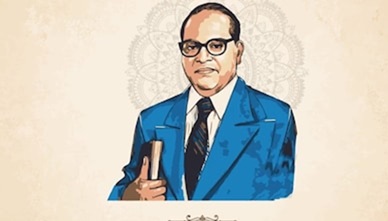
Dr. Bhimrao Ramji Ambedkar: Biography

  • Dr. Ambedkar (1891–1956) was a great jurist, economist, social reformer, and the chief architect of the Indian Constitution.
  • He fought throughout his life against casteism, untouchability, injustice, and social inequality.
  • His contribution to the creation of modern India's democratic and egalitarian structure is unparalleled.

Early Life and Education

  • Born: April 14, 1891, in Mahu (Madhya Pradesh), into the Mahar community.
  • Faced social discrimination since childhood.
  • After his primary education, he received the opportunity to study abroad through a scholarship from the Baroda State.
  • He pursued advanced studies in the United States and Britain and became one of the world's leading scholars.
  • His early research, such as "How Castes Formed" and "The Problem of the Rupee," earned him global recognition.

Contribution to the Freedom Movement and Social Reform

Social Movements Against Untouchability

  • Mahad Satyagraha (1927): A historic movement for the right of Dalits to draw water from public sources.
  • This was the first major organized movement for Dalit rights in India.

Temple Entry Movement

  • Kala Ram Temple Satyagraha (1930): A major struggle for religious equality and the right to worship.
  • This movement gave a new direction to the debate on social equality.

Demand for Political Representation

  • At the Round Table Conference (1930–1932), he made the political problems of Dalit society a topic of international discussion.
  • He presented the demand for separate electorates in a just manner.

Poona Pact (1932)

  • An agreement between Mahatma Gandhi and Ambedkar.
  • The provision of reserved seats in legislatures was decided in place of separate electorates.
  • The foundation of the modern reservation system was laid by this agreement.

Protector of Labor Rights

  • As the Labor Member of the Viceroy's Council from 1942 to 1946, his efforts led to important reforms such as the 8-hour workday, maternity benefits, paid leave, a labor dispute resolution system, and a labor welfare fund.

Creating the Indian Constitution

As Chairman of the Drafting Committee of the Constituent Assembly, he played a decisive role in the formulation of fundamental rights, a framework of equality, liberty, justice, and fraternity, a federal system, an independent judiciary, and protections for Scheduled Castes, Scheduled Tribes, and the underprivileged.

Contributions to Economic Thought

  • Inventor of Monetary Policy: His studies on the stability of the rupee later formed the foundation for the formation of the Reserve Bank of India.
  • ​​Financial Decentralization: His research on provincial finance laid the foundation for central-state financial relations.
  • Water and Energy Resources Planning: He promoted institutions such as multipurpose river projects, the Damodar Valley Project, and the Central Water Commission.
  • The system of employment exchange centers was a result of his efforts.
  • He expressed deep concern about the disproportionate burden of price rise (inflation) on the poor.

Important organizations associated with him

  • Bahishkrit Hitakarini Sabha (1923)
  • Independent Labour Party (1936)
  • Scheduled Caste Federation (1942)
  • Democratic Party (1956, formed after him)

Major works

  • Annihilation of Caste
  • The Problem of the Rupee
  • Who were the Shudras
  • Buddha and His Dhamma
  • Essays on the Untouchables and Untouchability
  • Buddha or Karl Marx
  • Major papers: Mooknayak, Bahishkrit Bharat, Janata, Samata

Late life

  • His health began to deteriorate from 1954, but he remained active in writing and parliamentary work.
  • "Buddha and His Dhamma" is his last and most important philosophical treatise.
  • On October 14, 1956, he embraced Buddhist ordination in Nagpur, along with five hundred thousand followers.
  • His final message was, "Political democracy cannot be sustainable unless it is founded on social democracy."
  • He attained Mahaparinirvana on December 6, 1956, in Delhi.
  • His memorial, Chaityabhoomi, Mumbai, remains a sacred site for millions of followers even today.
  • He was awarded the Bharat Ratna in 1990.

Conclusion

Dr. Ambedkar was not only the architect of the Constitution, but also the moral, social, economic, and democratic pillar of modern India. His message still reminds us that true progress lies in ensuring respect, equal opportunity, dignity, and justice for every individual. Even 70 years later, his ideology continues to influence both India's direction and future.

DGCA's Air Safety Reforms and Their Widespread Impact

(Prelims: Current Issues)

Context

A large number of flight cancellations and delays by IndiGo led to widespread dissatisfaction among passengers. On December 5, 2025, the DGCA granted IndiGo a temporary exemption from the new night-duty limit imposed on pilots. This move came amid persistent operational disruptions, crew shortages, and increasing passenger hardship.

What's the Issue ?

  • The new Flight Duty Time Limit (FDTL) regulations, effective November 1, 2025, increased the weekly mandatory rest period for pilots to 48 hours.
  • Pilots can now perform night landings only twice a week (previously, the limit was six).
  • IndiGo admitted that it miscalculated the required number of pilots, leading to misjudgments and shortfalls in planning.
  • As a result, more than 400 flights were cancelled, and thousands of passengers were stranded at airports for three days.
  • In light of this crisis, the DGCA exempted IndiGo from the night-flying ban until February 10, 2026.

Key DGCA rules related to FDTL

  • Increasing the mandatory weekly rest period for pilots to 48 hours.
  • Only two night-time landings per week are permitted.
  • According to the 'no leave substitution' rule, weekly rest cannot be substituted for leave.
  • The DGCA withdrew this provision in light of IndiGo's situation to increase pilot availability.
  • The DGCA provided additional flexibility based on the operational situation to ensure stable flight operations.

Impacts

  • Impact on passengers: Frequent flight cancellations cause significant inconvenience and financial loss.
  • Impact on Airline Operations: The DGCA's exemption will allow IndiGo to temporarily stabilize its flight schedule.
  • Safety Concerns: The new regulations were intended to prevent pilot fatigue. The exemptions have increased the challenge of balancing safety and comfort.
  • Regulatory Capacity Questioned: The DGCA's sudden rule changes have sparked debate about regulatory rigor and stability.
  • Impact on Other Airlines: This could lead other airlines to seek exemptions or more flexible regulations.

About DGCA

Introduction: DGCA is India's statutory civil aviation regulatory body, whose primary objective is to ensure aviation safety, maintain airworthiness, and enforce regulations in line with global standards.

Establishment

  • 1927: DGCA was established as a government organization.
  • 2020: It gained statutory status under the Aircraft (Amendment) Act, 2020.

Ministry

  • DGCA functions under the Ministry of Civil Aviation (MoCA).

Objective

To promote safe, efficient, and reliable air transport, strengthening India's civil aviation sector in accordance with international (ICAO) standards.

Main Functions

  1.  Safety Compliance and Regulation
    • Formulate and enforce Civil Aviation Requirements (CARs).
    • Inspect, audit, and surveillance of airlines, airports, MROs, and training institutions.
  2. Aircraft & Airport Certification
    • Register civil aircraft.
    • Issuance of Certificates of Airworthiness.
    • Inspection and certification of airports as per safety standards
  3. Licensing
    • Issuance of licenses to pilots, AMEs, ATCOs, cabin crew, flight dispatchers, etc.
    • Conduct examinations, skill tests, and regular evaluations.
  4.  Accident Investigation
    • Investigation of incidents involving up to 2250 kg of AUW.
    • Implementation of safety management and preventive programs.
  5. Air Transport Regulation
    • Issuance of Air Operator Certificates (AOCs).
    • Regulation of scheduled and non-scheduled domestic and international flights.
  6. ICAO Coordination
    • Alignment of Indian regulations with ICAO standards.
    • Participation in USOAP audits and harmonization of global standards.
  7. Training Monitoring
    • Approval and monitoring of flying schools, AME institutes, simulator centers, and other training institutions.
  8. Dangerous Goods & ANS Monitoring
    • Certification of operators handling dangerous goods.
    • Regulation of Air Navigation Services (ANS) and civil-military airspace coordination.

Carbon Capture, Utilisation and Storage (CCUS) and its Role in Climate Change Mitigation

What is CCUS?

  • Carbon Capture, Utilisation and Storage (CCUS) is a key pillar of modern climate strategy. Its main goals are:
    • Reducing CO₂ emissions from major point sources (thermal power plants, steel, cement, chemical industries)
    • Removing already-existing CO₂ from the atmosphere
    • Converting captured CO₂ into usable products or storing it permanently
  • According to the IPCC, CCUS technologies are essential for achieving global net-zero goals, particularly in hard-to-abate industrial sectors.

Carbon-Capture

India’s First CCUS R&D Roadmap for Net-Zero

  • India’s Department of Science & Technology (DST) launched its first CCUS R&D Roadmap in 2024–25.
  • This is considered a major step toward India’s Net-Zero target (2070).

Key Objectives of the Roadmap

  • Develop indigenous CCUS technologies
  • Identify cost-effective and scalable solutions
  • Provide a phased adoption pathway for industries
  • Strengthen energy security and climate action through domestic innovation

Three-Stage CCUS R&D Programme

Stage 1: End-of-Pipe (EP) Solutions

  • Integration of state-of-the-art CCUS technologies into existing industrial facilities.
  • Aim → Immediate reduction of emissions from current power and industrial plants.

Major technologies:

  • Solvent-based capture
  • Membrane separation
  • Oxy-fuel combustion
  • Post-combustion capture

Stage 2: CCUS-Compliant Design (CCD)

  • Design new industrial plants to be CCUS-ready.
  • Purpose → Ensure future compatibility so that CCUS can be added with minimal cost.

Expected benefits:

  • Lower long-term costs
  • Near carbon-neutrality of new industries

Stage 3: CCUS in One Pot (COP) – Integrated Emerging Technologies

  • Unified use of next-generation low-emission technologies such as photobiocatalytic and electrochemical conversion.
  • Aim → Capture, convert, and utilise/store CO₂ at the same site.

Potential technologies:

  • Artificial photosynthesis
  • Electrochemical CO₂ conversion
  • Bio-catalytic conversion

CCUS Process (Capture → Transport → Utilisation/Storage)

CCUS-Process

1. Capture

CO₂ is captured from:

  • Coal/gas power plants
  • Cement, steel, petrochemical industries
  • Direct Air Capture (DAC) from the atmosphere

Types of capture:

  1. Post-combustion capture
  2. Pre-combustion capture
  3. Oxy-fuel combustion

2. Transport

Captured CO₂ is compressed and transported through:

  • Pipelines
  • Ships
  • Trucks or rail (less common)

3. Storage (Sequestration)

CO₂ is stored permanently in geological formations such as:

  • Saline aquifers
  • Depleted oil and gas fields
  • Basalt formations

4. Utilisation

Captured CO₂ can be used as feedstock to produce:

  • Synthetic fuels (methanol, e-fuels)
  • Fertilisers
  • Building materials (carbonated concrete)
  • Algae-based bio-products

Role of CCUS in Climate Change Mitigation

1. Emission Reduction in Hard-to-Abate Sectors

  • Steel, cement, chemicals, refineries → difficult to decarbonise
  • CCUS offers a practical and immediate solution

2. Low-Carbon Power and Hydrogen Production

  • Coal, gas, and biomass plants with CCUS can supply low-carbon energy.
  • Essential for Blue Hydrogen production.

3. Negative Emissions (Removing CO₂ from Air)

  • Two major technologies:
  • DACCS Direct Air Capture + Storage
  • BECCSBio-energy with CCS

BECCS provides true negative emissions because biomass absorbs CO₂ during growth and emissions are captured after combustion.

CCUS in India: Challenges and Opportunities

Challenges

  • High cost (especially DAC)
  • Identifying large-scale storage sites
  • Lack of clear policy and regulation
  • Public acceptance issues
  • Slow industrial adoption

Opportunities

  • India has large basalt formations and saline aquifers suitable for CO₂ storage
  • Make in India can reduce technology cost
  • Integration with the National Green Hydrogen Mission
  • Enhances energy security and climate leadership
  • Potential to become a global CCUS technology hub

Global Scenario

  • The USA, Canada, and Norway lead in CCUS deployment.
  • Norway’s Sleipner Project (1996) is a successful long-term storage model.
  • USA supports CCUS through the 45Q Tax Credit.
  • IPCC estimates 15–20% of global net-zero mitigation may come from CCUS.

Key CCUS Initiatives in India

  • Pilot projects by ONGC, IOCL, NTPC
  • CCUS-related R&D under the National Green Hydrogen Mission
  • NITI Aayog’s India CCUS Roadmap (Draft 2022)
  • ONGC’s CO₂ storage potential study in the Kutch Basin

Conclusion

DST’s first CCUS R&D Roadmap provides a scientific and phased pathway that can help India:

  • Decarbonise industries
  • Achieve Net-Zero by 2070
  • Build advanced technological capabilities

CCUS is not the only solution, but it is an essential component of the net-zero strategy—especially in sectors where alternative green technologies are limited.

What is food irradiation? Benefits, types of radiation used, challenges, and a global perspective.

Food Irradiation 

Food irradiation is a safe, scientifically validated food-processing technology in which food items are exposed to controlled amounts of ionizing radiation to preserve them. The objective is to enhance food safety, increase shelf life, and control pests and pathogens. Reputed global organizations such as the American Medical Association (AMA), FAO, WHO, and IAEA have already declared this technology safe.
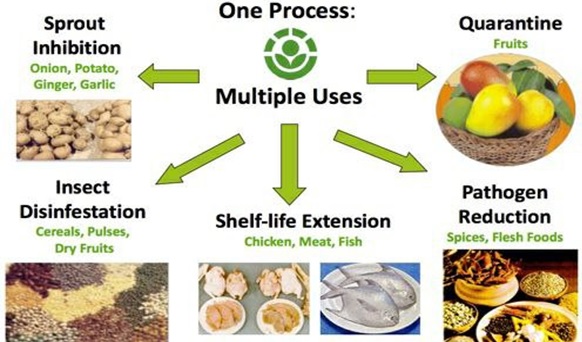
Food-irradiation

What is Food Irradiation?

It is a physical process in which food materials—fresh produce, grains, spices, seafood, meat—are treated with pre-determined radiant energy.

Objectives

  • Increase the shelf life of foods
  • Control or eliminate pests and pathogenic microorganisms
  • Prevent parasitic infections
  • Prevent sprouting (e.g., potatoes, onions)
  • Slow down ripening of fruits and vegetables
  • Reduce food-borne diseases

It is considered similar to other preservation techniques like microwaving and pasteurization.

How Does This Technology Work? 

When ionizing radiation interacts with food, two types of processes occur:

(A) Primary Processes

  • Energy + food → formation of ions and excited molecules
  • Breakage in DNA and cellular structures → pests/microbes destroyed

(B) Secondary Processes

  • Reactions between the primary products
  • Influenced by:
    • Moisture content of food
    • Presence of oxygen
    • pH

The compounds formed in these reactions are called radiolytic products. Scientific studies show these changes are extremely minimal and do not harm human health.

Importance of Radiolysis

  • Water molecules break into free radicals
  • These free radicals damage microbial DNA
    → Microorganisms and pests become inactive or are destroyed.

Advantages of Food Irradiation

(1) Improved Food Safety

  • Destroys pathogens like E. coli, Salmonella, Listeria.

(2) Maintains Food Quality

  • Taste, color, aroma, and nutrients remain largely intact.

(3) Pest Control (Disinfestation)

  • Eliminates pests from grains, pulses, spices
    → Facilitates export/import.

(4) Processing Efficiency

  • Highly effective when combined with cold storage or refrigeration.

(5) Alternative to Chemical Treatments

  • Safe alternative to methods like sulfur fumigation.

Is Food Irradiation Safe? 

Scientific consensus: The technology is safe.

Approved by:

  • WHO
  • FAO
  • IAEA
  • American Medical Association
  • Codex Alimentarius Commission

Scientific Findings

  • Food does not become radioactive
  • No evidence of toxicity, cancer risk, or nutrient loss
  • Used safely worldwide for over 50 years

Types of Radiation Used in Food Irradiation

(A) Gamma Rays

  • Source: Cobalt-60 (Co-60)
  • Deep penetration capability
  • Suitable for large-scale food processing
  • In India, BRIT supplies Co-60.

(B) X-Rays

  • Produced by hitting high-energy electron beams on a metal target
  • Suitable for packaged foods
  • Also used in industrial and pharmaceutical sectors.

(C) Electron Beam (e-Beam)

  • High-energy electrons from accelerators
  • Low penetration → ideal for surface or small packages
  • Fast processing.

Food Irradiation in India

Institutional Framework

  • Department of Atomic Energy (DAE)
  • BRIT – supplies Cobalt-60
  • Bhabha Atomic Research Centre (BARC) – R&D, technology development
  • Food Safety and Standards Authority of India (FSSAI) – regulation

Policy Support

PMKSY (Pradhan Mantri Kisan SAMPADA Yojana)

  • Supports establishment of multi-product irradiation units
  • Part of "Integrated Cold Chain & Value Addition Infrastructure"

Status (As of August 2025)

  • 16 project proposals approved
  • 9 units operational
  • Uses: spices, grains, onions-potatoes, seafood, fruits & vegetables

Major Irradiation Facilities in India

  • KRUSHAK (BARC, Lasalgaon) spices, onions
  • Vashi Irradiation Facility (Navi Mumbai)
  • Radiant Food Irradiation Plants (Private sector)

Challenges

  • Lack of consumer awareness
  • Unnecessary fear due to the word “radiation”
  • High initial investment
  • Limited commercial facilities
  • Transportation and logistical issues

Global Perspective

  • Widely used in the USA, France, Netherlands, China
  • Key technology for spices, meat, fruits & vegetables trade
  • Codex Alimentarius Commission has established global standards

Conclusion

Food irradiation is a scientific, safe, and environmentally friendly technology that can significantly improve food safety, agricultural exports, and supply-chain efficiency in India. With government support through PMKSY, its acceptance and application in India are steadily rising.

Right to Disconnect Bill Introduced in Parliament

Prelims: (Labour Laws + CA)
Mains: (GS-2 – Governance)

Why in News ?

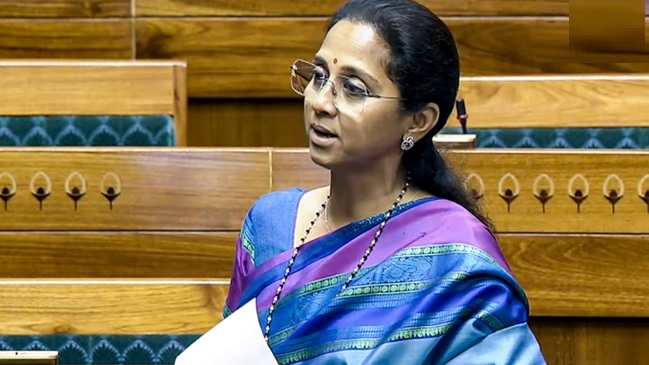
A Private Member’s Bill titled the Right to Disconnect Bill, 2025 has been introduced in the Lok Sabha to legally protect employees from work-related calls, messages, or emails outside designated office hours.
About the Right to Disconnect Bill, 2025

The Bill, introduced by MP Supriya Sule, seeks to formally recognise an employee's right to disengage from official communication once working hours end. It aims to restore work–life balance in the increasingly digital and ‘always-on’ work environment created by remote and hybrid work.

The legislation highlights a growing global concern: employees being expected to respond instantly, even during personal time, weekends, and holidays.

Key Provisions of the Bill

1. Protection from After-Hours Communication

  • Employees will not be obliged to respond to calls, emails, messages or digital notifications after office hours.
  • No disciplinary action can be taken for non-response.

2. Creation of an Employees’ Welfare Authority

  • The proposed authority will:
    • Monitor compliance
    • Issue guidelines
    • Collect data on after-hours work communication
    • Frame enforcement mechanisms

3. Mandatory Negotiation for Larger Workplaces

  • Companies with more than 10 employees must negotiate after-hours communication rules with staff/unions.

4. Overtime Compensation

  • If employees choose to work beyond official hours, it must be:
    • By mutual consent, and
    • Compensated through overtime wages.

5. Workplace Policies

  • Organisations will have to clearly define:
    • Working hours
    • Emergency communication protocols
    • Digital engagement expectations

Why the Bill Was Introduced

Recent surveys cited in parliamentary discussions show:

  • A large share of employees routinely receive calls/messages outside working hours.
  • Many fear professional repercussions if they do not respond immediately.
  • Digital work tools (Zoom, WhatsApp, Slack, email) have blurred professional boundaries.

The Bill aims to prevent burnout, improve mental health, and promote healthy workplace culture.

Global Context

Countries like France, Italy, Ireland, Portugal, and Spain have already enacted right-to-disconnect laws. India’s Bill reflects evolving conversations about digital rights, privacy, and humane work environments.

Significance

  • Promotes work-life balance
  • Protects mental health
  • Encourages transparent HR policies
  • Sets boundaries in remote and hybrid working models
  • Raises awareness, even if the Bill does not become law

(Note: Private member bills rarely become law, but are important for public and parliamentary debate.)

FAQs

1. What is the Right to Disconnect ?

It is the legal right of an employee to not respond to calls, texts, or emails after official working hours.

2. Does the Bill apply to all employees ?

Yes, but companies with 10+ employees must formally negotiate after-hours norms.

3. Is this Bill likely to become law ?

Most Private Member’s Bills are not passed, but they strongly influence policy discussions.

4. Why is such a law needed today ?

Digital tools and hybrid work models have erased boundaries between work and personal life, leading to stress and burnout.

5. What happens if employees work after hours ?

They must be paid overtime wages, and such work must be mutually agreed upon.

Onchocerciasis

Prelims: (WHO + CA)
Mains: (GS 2 – Governance; GS 3 - Health )

Why in News ?

The World Health Organization (WHO) has officially declared Niger free of onchocerciasis (river blindness), making it the first country in the WHO African Region to eliminate the disease.
This achievement marks a historic milestone in the fight against neglected tropical diseases (NTDs).
Background: Onchocerciasis, Africa’s Long Battle Against River Blindness

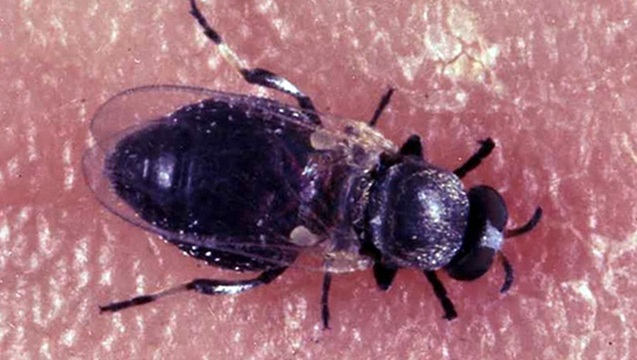
Onchocerciasis has been a major public health challenge across Africa for decades, especially in remote, underserved communities. The disease is transmitted by blackflies breeding near rivers—often where agriculture, fishing, and daily life are concentrated—making eradication difficult.

Global History of Control Efforts

  • The disease was first identified in the early 20th century.
  • Large-scale control began with:
    • Onchocerciasis Control Programme (OCP) in West Africa (1974–2002),
    • African Programme for Onchocerciasis Control (APOC) (1995–2015),
    • Followed by WHO’s Expanded Special Project for Elimination of NTDs (ESPEN).
  • The turning point was the donation of ivermectin (Mectizan) by Merck & Co. (1987) for as long as needed.

Niger’s Elimination Journey

Niger’s elimination is the result of:

  • Over 30 years of mass ivermectin distribution
  • Continuous entomological surveillance
  • Community-led health programmes
  • Strong political commitment and WHO technical support

Niger’s success proves that even vector-borne diseases entrenched in rural ecosystems can be eliminated with persistence.

What is Onchocerciasis (River Blindness) ?

Onchocerciasis is a parasitic infection caused by the filarial worm Onchocerca volvulus. It is transmitted to humans by the bite of infected Simulium blackflies, which breed in fast-flowing rivers and streams. Because transmission depends on the blackfly, the disease cannot spread directly from person to person.

Transmission Cycle

  1. An infected person has microfilariae (larvae) in their skin.
  2. A blackfly bites them and ingests these larvae.
  3. Inside the fly, the larvae mature into infectious forms.
  4. When the fly bites another human, the parasite enters the body.
  5. The worms settle in nodules, reproduce, and release more larvae, causing chronic disease.

This cycle keeps entire communities trapped in infection for generations.

Where is Onchocerciasis Found ?

  • Predominantly in sub-Saharan Africa (99% of global cases)
  • Limited presence in Brazil and Venezuela
  • A major NTD affecting impoverished rural populations

WHO identifies it as one of the most neglected diseases, primarily due to geographic isolation and weak health infrastructure.

Symptoms and Health Impact

  • Persistent itchy skin rashes
  • Skin thickening and disfigurement ("leopard skin")
  • Vision impairment
  • Progressive eye damage leading to permanent blindness

It is the second leading infectious cause of blindness worldwide, after trachoma.

Treatment and Elimination Strategy

1. Ivermectin (MDA Programmes)

The cornerstone of treatment is annual or biannual ivermectin, which:

  • Kills microfilariae
  • Prevents eye damage
  • Interrupts transmission

2. Vector Control

Involves spraying to reduce blackfly populations, especially in high-transmission zones.

3. Community-based Distribution

Local volunteers and health workers play a key role in mass drug administration (MDA).

4. Rigorous Surveillance

Countries must demonstrate:

  • No new infections
  • No vectors transmitting parasites
  • Sustained interruption for several years

before WHO certifies elimination.

Why Niger’s Achievement is Significant

  • First African nation to eliminate a disease that affects millions across the continent.
  • Demonstrates the success of:
    • Long-term public health planning
    • Cross-border coordination
    • Community health leadership
  • Sets a model for other African countries still battling the disease.
  • Strengthens global confidence that NTD elimination is achievable this century.

WHO considers this a breakthrough moment for Africa’s NTD roadmap.”

FAQs

1. What exactly is river blindness ?

A parasitic disease caused by Onchocerca volvulus that affects the skin and eyes, leading to severe itching and blindness.

2. How did Niger eliminate the disease ?

Through decades of mass ivermectin distribution, blackfly control, community-led programmes, and strong government–WHO coordination.

3. Does onchocerciasis spread from one infected person to another ?

No. Transmission happens only through the bite of infected blackflies.

4. Which regions still have the disease ?

Most cases remain in sub-Saharan Africa, with isolated pockets in South America.

5. What is the main treatment ?

Annual or biannual ivermectin tablets administered to entire communities to break the transmission cycle.

Centre Eases Penalties as UMEED Portal Registration Moves Forward

Prelims: (Minority Affairs + CA)
Mains: (GS-2 – Governance; GS-1 – Society)

Why in News ?

The Union Minister for Minority Affairs announced that the government will not impose penalties or strict action for the next three months on individuals or institutions that have not yet registered Waqf properties on the UMEED Portal, giving stakeholders additional time to complete documentation.
Background & Context

Waqf Management Challenges in India

Waqf properties, historically created for charitable, religious, educational, and community welfare purposes, constitute one of the largest public endowment ecosystems in India.
However, for decades, the sector has faced recurring challenges:

  • Lack of reliable records
  • Encroachment and illegal occupation
  • Mismanagement or loss of revenue
  • Absence of digital documentation
  • Overlapping jurisdiction and weak oversight

An expert committee in 2013 and subsequent audits repeatedly highlighted the need for digitization, central monitoring, and transparent management of Waqf assets.

Policy Shift Toward Digital Oversight

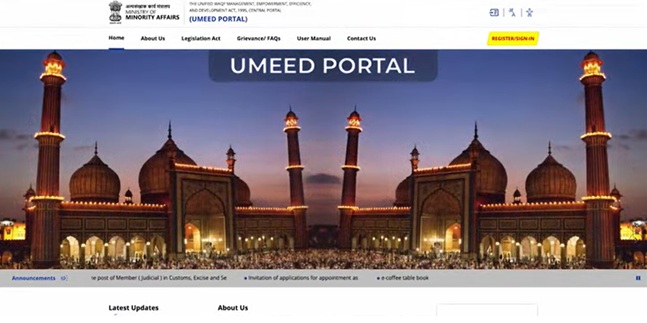
To address these concerns, the government introduced a framework for unified digital management, culminating in the creation of the UMEED Portal under the Unified Waqf Management, Empowerment, Efficiency and Development Act, 1995.

The portal aims to shift Waqf property governance from manual, fragmented records to centralized, real-time, transparent systems.

About the UMEED Portal

The Unified Waqf Management, Empowerment, Efficiency, and Development (UMEED) Portal is a centralized digital platform developed to modernize and streamline the management of Waqf properties across India.

It aims to:

  • Create a verified national database
  • Ensure transparency in property use and revenue
  • Strengthen regulatory oversight
  • Reduce disputes, encroachment, and misuse
  • Provide real-time monitoring tools to State Waqf Boards

The portal is managed by the Ministry of Minority Affairs, with registration facilitated through respective State Waqf Boards.

Legal Basis

  • The portal operates under the Unified Waqf Management, Empowerment, Efficiency and Development Act, 1995.
  • It strengthens compliance requirements and introduces digital verification mechanisms.

Key Features of the UMEED Portal

1. Digital Inventory & Geo-Tagging

  • All Waqf properties are entered into a central digital database.
  • Geo-tagging enables accurate location identification and prevents fraudulent claims.

2. Real-Time Uploading & Verification

  • State Waqf Boards can update property details instantly.
  • Automated workflows help flag inconsistencies and track pending verifications.

3. GIS Mapping Integration

  • Properties are mapped to ensure clarity of boundaries, ownership, and land usage.
  • Useful for dispute resolution and preventing encroachment.

4. Online Grievance Redressal

  • Citizens and beneficiaries can submit complaints through a dedicated portal.
  • Ensures faster processing and improved accountability.

5. Transparent Leasing & Usage Tracking

  • Records of rent, lease conditions, and tenants are available on the platform.
  • Prevents undervaluation or unauthorized leasing.

6. Public Access to Verified Records

  • Users can view authenticated details, enhancing trust and transparency.

7. Rule on Women-Owned Properties

  • Properties registered in the name of women will not be classified as Waqf properties.

Penalty Relaxation: A Temporary Relief

The Minister clarified that:

  • No penalties or punitive action will be taken for the next three months.
  • The extension is meant to help institutions that need more time to compile documentation.
  • State Boards have been instructed to assist beneficiaries in completing registrations.

This aims to ensure smooth onboarding rather than coercive enforcement.

Significance of the UMEED Portal

  • Brings transparency to a historically opaque sector
  • Helps prevent mismanagement and encroachment
  • Supports revenue optimization for community welfare
  • Modernizes record-keeping and reduces litigation
  • Strengthens the administrative capacity of State Waqf Boards
  • Empowers beneficiaries by ensuring property integrity

It marks a major shift from paper-based processes to digital governance.

FAQs

1. What is the main purpose of the UMEED Portal ?

To create a centralized digital system for registering, monitoring, and managing Waqf properties across India.

2. Why has the government paused penalties for three months ?

To give stakeholders additional time to register and verify documentation without fear of punitive action.

3. Who manages the portal ?

The Ministry of Minority Affairs, with support from State Waqf Boards.

4. Are women-owned properties considered Waqf ?

No. Properties registered in the names of women are not eligible to be classified as Waqf properties.

5. How does geo-tagging help ?

It accurately maps property boundaries, prevents illegal occupation, and creates reliable digital records.

PMFME Scheme Records Steady Expansion, Key Milestones Achieved

Prelims: (Government Schemes + CA)
Mains: (GS-3 – Economy)

Why in News ?

The Ministry of Food Processing Industries has reported significant progress under the Pradhan Mantri Formalisation of Micro Food Processing Enterprises (PMFME) Scheme, with major components showing substantial improvement as of 31 October 2025.
Pradhan Mantri Formalisation of Micro Food Processing Enterprises (PMFME) Scheme

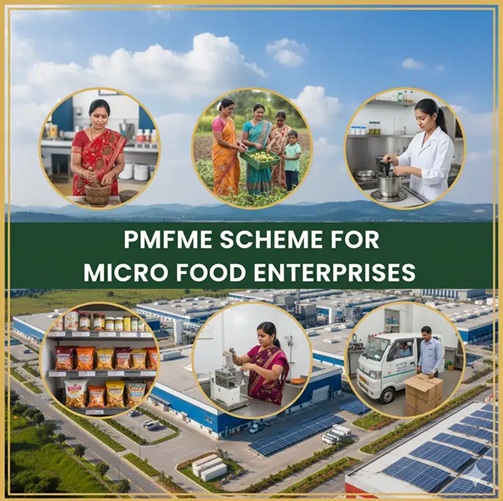
Launched on 29 June 2020, the PMFME Scheme is a Centrally Sponsored Scheme aimed at strengthening and formalising India’s vast network of micro-food processing enterprises.

It focuses on bringing traditional, unorganised, and small-scale food processing units into the formal economy, improving credit access, infrastructure support, branding, and standardisation.

Objectives of the PMFME Scheme

The scheme seeks to build the overall capability and competitiveness of micro food enterprises through:

1. Enhanced Access to Credit

  • Support to existing entrepreneurs, FPOs, SHGs, cooperatives
  • Facilitation of credit-linked subsidies

2. Integration Into Organised Supply Chains

  • Assistance in branding, packaging, and market linkages
  • Promoting cluster-based development

3. Formalisation of 2 Lakh Units

  • Target to formalise 200,000 existing enterprises across India

4. Strengthening Common Services

  • Shared processing facilities
  • Storage, labs, incubation centres
  • Training and R&D support

5. Improved Access to Professional Expertise

  • Technical assistance
  • DPR preparation and handholding support

Scheme Outlay

  • Total Outlay: ₹10,000 crore for 2020–25
  • Cost-Sharing Pattern:
    • 60:40 Centre : States
    • 90:10 Northeastern & Himalayan States
    • 60:40 UTs with Legislatures
    • 100% Central Funding – Other UTs

Coverage of the Scheme

  • Target of supporting 2,00,000 micro food processing units through direct, credit-linked assistance
  • Support for creating common infrastructure, institutional systems, and project management structures
  • Alignment with the One District One Product (ODOP) approach to boost local value chains

Key Benefits Under the PMFME Scheme

1. Support for Individual Micro Enterprises

  • 35% credit-linked subsidy, up to ₹10 lakh
  • Minimum 10% beneficiary contribution
  • Remainder financed through bank loans
  • Skill training and technology upgradation assistance

2. Support for FPOs, SHGs & Cooperatives

  • Seed capital of ₹4 lakh per SHG
  • 35% capital subsidy (up to ₹3 crore) for common infrastructure
  • 50% grant for branding & marketing
  • Handholding and skill development support

3. Institutional Strengthening

  • Capacity building in food processing institutes
  • Support for research, skilling, and incubation

4. Project Management Framework

  • Strengthening implementation through a multi-tier system
  • Emphasis on monitoring and technical support mechanisms

Eligible Beneficiaries

  • Farmer Producer Organisations (FPOs)
  • Self-Help Groups (SHGs)
  • Cooperatives
  • Existing micro food processing entrepreneurs
  • New units (only under ODOP category)
  • FAQs

    1. What is the main purpose of the PMFME Scheme ?

    To formalise and upgrade micro food processing units, enhancing credit access, infrastructure support, and market connectivity.

    2. How many enterprises will be supported ?

    The scheme aims to formalise and assist 2 lakh micro enterprises across India.

    3. What is the level of subsidy available for individuals ?

    Individual micro units receive 35% credit-linked subsidy, with a cap of ₹10 lakh.

    4. Are SHGs eligible for seed capital ?

    Yes. SHGs receive ₹4 lakh per group as seed capital for member-level support.

    5. What is ODOP and how is it linked to PMFME ?

    One District One Product (ODOP) promotes district-specific food products. New units under PMFME are supported only if they align with the district’s ODOP selection.

Nuclear Cooperation Boost: Kudankulam Back in Focus

Prelims: (Nuclear Technology + CA)
Mains: (GS 2 – International Relations; GS 3 – Security, Infrastructure)

Why in News ?

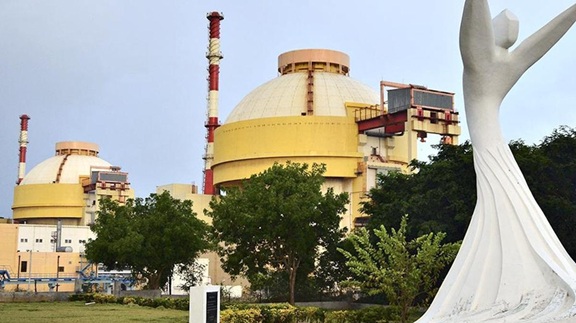
Russian President Vladimir Putin’s visit to India has renewed focus on the Kudankulam Nuclear Power Plant (KKNPP), as Russia accelerated fuel supply commitments and reiterated full support for completing India’s largest atomic energy project.
23rd India–Russia Annual Summit: Strategic Setting

The Kudankulam announcements took place during the 23rd Annual India–Russia Summit, held in New Delhi in December 2025 — a key diplomatic mechanism that has continued since 2000 despite global geopolitical disruptions.

The 23rd Summit focused on:

  • Long-term civil nuclear cooperation
  • Stable energy supply arrangements
  • Joint manufacturing in defence
  • Digital, economic and mobility partnerships
  • Discussions on small modular reactors (SMRs) and space cooperation

The Summit reaffirmed that energy—particularly nuclear energy—remains the most durable pillar of India–Russia strategic relations.
Kudankulam, being the flagship nuclear project, became a central highlight of the discussions.

Background 

The Kudankulam project traces its origins to the 1988 India–USSR agreement, one of the last major deals signed before the Soviet collapse.
However, due to geopolitical upheavals and India’s nuclear isolation after the 1998 Pokhran tests, construction stalled for years.

The project regained momentum after the 2008 India–US Civil Nuclear Agreement, which opened the door for nuclear cooperation with international partners, including Russia.

Since then:

  • Russia has emerged as India’s most consistent nuclear collaborator.
  • Kudankulam became a symbol of India’s return to the global civil nuclear framework.
  • Units 1 and 2 established the plant as a key pillar of India’s southern power grid.

Putin’s 2025 visit marks the most significant push for the project since its inception.

Kudankulam Nuclear Plant Back in Spotlight

President Putin, during his two-day visit to India, announced that the Kudankulam expansion is progressing rapidly and reaffirmed Russia’s strong backing for the project.

Russia’s state nuclear agency Rosatom recently delivered the first batch of nuclear fuel for Unit 3, marking a major milestone as the reactor moves closer to commissioning.
The fuel consignment was specially flown in from Russia, highlighting the priority Moscow attaches to the project.

Putin stated:

“Two out of six reactor units have already been connected to the energy network, and four are still under construction. Achieving full power output will make an impressive contribution to India’s energy requirements.”

Alongside the existing collaboration, Putin also proposed cooperation in:

  • Small Modular Reactors (SMRs)
  • Floating nuclear power plants
  • Nuclear applications in medicine and agriculture

Reiterating Russia’s role as India’s “most dependable energy partner,” Putin assured continued supply of oil, gas, coal, and nuclear materials without disruption.

About the Kudankulam Nuclear Power Plant

  • Located in Tamil Nadu, Kudankulam is India’s largest nuclear power station.
  • The plant is designed for six VVER-1000 light-water reactors, with a total planned capacity of 6,000 MW.

Reactor Status

  • Units 1 & 2 – Operational since 2013 and 2016
  • Units 3, 4, 5 & 6 – Under various stages of construction

Fuel Supply Framework

  • Russia provides lifetime fuel supply under a long-term arrangement.
  • The latest fuel assemblies for Unit 3 were produced at Novosibirsk Chemical Concentrates Plant.
  • Seven flights will complete the full fuel delivery under the 2024 agreement covering Units 3 and 4.

Why Kudankulam Matters

1. Strengthening the Southern Power Grid

Units 1 and 2 already supply 2,000 MW to Tamil Nadu and neighbouring states—easing peak load pressure and enabling reliable baseload electricity.

2. Boost to India’s Clean Energy Goals

  • Nuclear power reduces dependence on fossil fuels
  • Supports India’s aim to triple nuclear capacity in the coming years
  • Complements renewable energy expansion by providing consistent non-carbon baseload power

3. Enhancing Energy Security

Long-term fuel supply agreements with Russia ensure stability and predictability in nuclear operations.

Broader Impact: Deepening India–Russia Strategic Energy Partnership

  • Russia’s renewed commitment advances India’s ambitions in civil nuclear energy.
  • Progress on Units 3 and 4, along with discussions on SMRs, strengthens the technological and strategic depth of the partnership.
  • Kudankulam’s expansion plays a central role in India’s pursuit of energy diversification and decarbonisation, especially as renewable deployments scale up.

The project’s momentum highlights the alignment between India’s long-term energy planning and Russia’s strategic export priorities.

FAQs

1. Why has Kudankulam returned to the spotlight ?

Putin’s visit accelerated fuel supply and reaffirmed Russia’s commitment to completing all six units, fast-tracking the plant’s expansion.

2. What type of reactors does Kudankulam use ?

It uses VVER-1000 pressurized light-water reactors supplied by Russia.

3. Which units are currently operational ?

Units 1 and 2 are operational, while Units 3 to 6 are under construction.

4. Why is Kudankulam important for India’s energy sector ?

It strengthens the southern grid, increases clean energy capacity, reduces fossil fuel dependence, and contributes to long-term energy security.

5. What new areas of cooperation did Putin propose ?

Small Modular Reactors (SMRs), floating nuclear plants, and applications of nuclear technology in medicine and agriculture.

« »
  • SUN
  • MON
  • TUE
  • WED
  • THU
  • FRI
  • SAT
Have any Query?

Our support team will be happy to assist you!

OR