- UPSC Exam
- State PCS
- One Day Exam
- Current Affairs
- PT Quiz
- Downlaods
- About Coaching
- Blog
- Videos

This is one of the most frequently asked questions.
The answer lies in the energy content of ethanol.
1. Reduced Fuel Efficiency :- Due to its lower energy density, E20 petrol may deliver fewer kilometres per litre compared to conventional petrol.
2. Impact on Older Engines :- Ethanol is hygroscopic, meaning it absorbs moisture from the atmosphere.
This can increase the risk of :
3. Cold Starting Issues :- Because of ethanol's combustion characteristics, some older vehicles may experience difficulty starting in extremely cold weather.
4. Lack of Consumer Choice :- At present, most fuel stations in India primarily supply E20 petrol, leaving consumers with limited options to choose lower ethanol blends.
The chemical formula of ethanol is C₂H₅OH, whereas petrol contains heavier hydrocarbons.
Using ethanol helps :
Ethanol has a Research Octane Number (RON) of around 108, which is significantly higher than regular petrol.
A higher octane rating :
However, because ethanol has lower energy density, existing engines cannot fully utilize these advantages, resulting in reduced mileage.
Future engines specifically designed for E20 or E85 may achieve better efficiency.
Following the successful rollout of E20, the government plans to promote higher ethanol blends.
These fuels are primarily intended for flex-fuel vehicles.
Flex-fuel vehicles are specially designed automobiles that can operate on different proportions of petrol and ethanol.
These vehicles use :
According to the automobile industry, adopting E25 will require :
Experts believe that older vehicles and two-wheelers are likely to face the greatest challenges.
Brazil began its ethanol programme during the 1970s oil crisis.
Today, consumers in Brazil can choose between :
The Brazilian government also offers price incentives for ethanol, making flex-fuel vehicles highly popular.
India can learn that higher ethanol blends become successful when consumers are offered :
FAQs (Frequently Asked Questions)1. What is E20 Petrol ? Answer : E20 Petrol is a fuel blend containing 20% ethanol and 80% petrol. Its objective is to reduce petrol consumption, decrease dependence on crude oil imports, and promote environmental sustainability. 2. Why does E20 Petrol reduce mileage ? Answer : Ethanol has a lower calorific value (energy content) than petrol. As a result, vehicles require more fuel to travel the same distance, which may lead to lower fuel efficiency (mileage). 3. Can all vehicles run on E20 Petrol ? Answer : New E20-compatible vehicles are designed to run efficiently on E20 fuel. However, older vehicles that were designed only for E10 fuel may experience reduced performance and possible wear on certain engine and fuel system components. 4. Does E20 Petrol damage the engine ? Answer : E20-compatible vehicles generally do not face any problems. However, in older vehicles, ethanol may increase the risk of corrosion, deterioration of rubber components, and damage to certain parts of the fuel system over time. 5. What is Ethanol ? Answer : Ethanol is a renewable biofuel primarily produced from sugarcane, maize, and other agricultural feedstocks. It is considered more environmentally friendly than conventional petrol. 6. What is the difference between E20, E25 and E85 ? Answer :
7. What are Flex-Fuel Vehicles ? Answer : Flex-fuel vehicles are specially designed automobiles that can operate on different blends of ethanol and petrol, including E20, E85 and other ethanol-petrol mixtures, without major technical modifications. 8. Why is India promoting ethanol blending ? Answer : India is promoting ethanol blending to reduce crude oil imports, save foreign exchange, increase farmers' income, promote the biofuel industry, strengthen energy security, and reduce carbon emissions. 9. Is E20 Petrol better for the environment ? Answer : Yes. The use of ethanol helps reduce carbon dioxide (CO₂) emissions, lowers dependence on fossil fuels, and contributes to cleaner and more sustainable transportation. |
Prelims MCQ for UPSCQuestion 1. Consider the following statements regarding E20 petrol:
Select the correct answer using the code given below: (a) 1 and 2 only (b) 2 and 3 only (c) 1 and 3 only (d) 1, 2, and 3 |
|
Type |
Source |
Carbon Emissions |
|---|---|---|
|
Grey Hydrogen |
Natural Gas |
High |
|
Blue Hydrogen |
Natural Gas + Carbon Capture |
Moderate |
|
Green Hydrogen |
Renewable Energy + Electrolysis |
Nearly Zero |
An electrolyser is a machine that uses electricity to split water into hydrogen and oxygen. When renewable electricity is used, the hydrogen produced is known as Green Hydrogen.
Important: The BHEL–thyssenkrupp nucera collaboration focuses on Alkaline Electrolysers, which are currently the preferred technology for large-scale green hydrogen production.
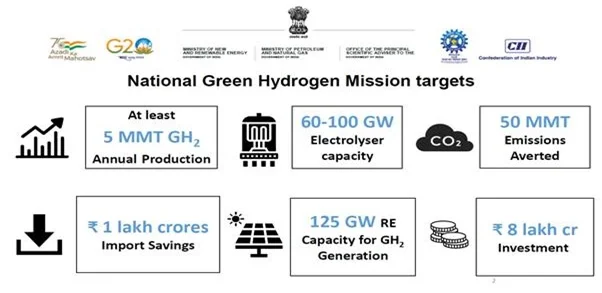
|
Particular |
Details |
|---|---|
|
Launch Year |
2023 |
|
Total Outlay |
₹19,744 Crore |
|
Target |
5 Million Metric Tonnes (MMT) annually by 2030 |
|
Renewable Capacity Target |
Around 125 GW |
Under the Strategic Collaboration Agreement:
Germany is among the global leaders in hydrogen technologies and electrolyser manufacturing.
|
India Brings |
Germany Brings |
|---|---|
|
Low-cost renewable energy |
Advanced electrolyser technology |
|
Large domestic market |
Research & innovation |
|
Manufacturing capability |
Industrial expertise |
|
Export potential |
Global hydrogen ecosystem |
The partnership combines India's manufacturing strengths with Germany's technological expertise
India should strengthen domestic R&D, promote indigenous manufacturing of electrolysers, expand renewable energy capacity, improve hydrogen storage and transport infrastructure, and encourage private sector participation. Technology partnerships should gradually evolve into domestic innovation, making India a global leader in the hydrogen economy
The collaboration between BHEL and thyssenkrupp nucera India is a significant step toward building India's green hydrogen ecosystem. By combining advanced technology with domestic manufacturing, the partnership supports the National Green Hydrogen Mission, enhances energy security, reduces import dependence, and strengthens India's position in the global clean-energy transition
Prelims MCQsQ. With reference to Green Hydrogen, consider the following statements:
Which of the statements given above is/are correct? (a) 1 and 2 only
Mains Practice QuestionDiscuss the significance of the National Green Hydrogen Mission for India's energy security and clean energy transition. How does the BHEL–thyssenkrupp nucera India collaboration support this mission? |
FAQs (Frequently Asked Questions)Q1. What is Green Hydrogen?Answer: Green Hydrogen is hydrogen produced by splitting water through electrolysis using electricity generated entirely from renewable sources such as solar and wind energy. It produces almost zero carbon emissions. Q2. Why is the BHEL–thyssenkrupp nucera India collaboration important?Answer: The partnership will help manufacture advanced alkaline electrolysers in India, promote technology transfer, reduce import dependence, and support the National Green Hydrogen Mission. Q3. What is an Alkaline Electrolyser?Answer: An alkaline electrolyser is a mature and cost-effective technology that uses an alkaline solution to split water into hydrogen and oxygen, making it suitable for large-scale green hydrogen production. Q4. What are the targets of the National Green Hydrogen Mission?Answer: The mission aims to produce 5 Million Metric Tonnes (MMT) of Green Hydrogen annually by 2030, develop about 125 GW of renewable energy capacity, and make India a global hub for green hydrogen. Q5. Which sectors will benefit the most from Green Hydrogen?Answer: Green Hydrogen will primarily help decarbonise hard-to-abate sectors such as steel, fertilizers, refineries, chemicals, shipping, and heavy transportation, reducing dependence on fossil fuels and lowering carbon emissions. |
|
Preliminary Examination History, Art & Culture Mains Examination GS Paper-I: Study of the major aspects of art, literature, and architecture from ancient to modern times within Indian culture. |
The Telangana government has announced the restoration of Hyderabad's historic Char Kaman. The government has granted administrative approval for the project and will soon issue a tender and appoint an expert consultant. The aim is to preserve the original architecture of these historic gates while protecting their structure.
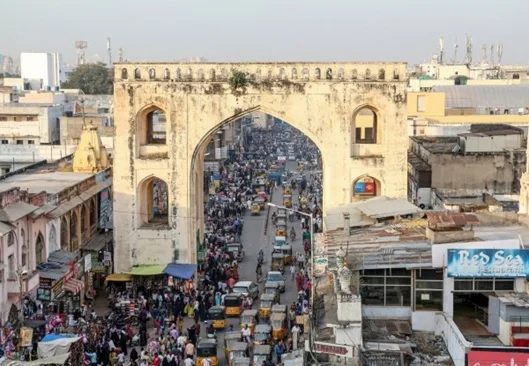
At the time of construction, these gates had different names than they do today.
|
Direction |
Original Name |
Meaning / Significance |
|
West Arch |
Daulat Khana-e-Ali |
Gateway to the Royal Residence |
|
East Arch |
Naqqar Khana |
Gateway of the Royal Drums (where ceremonial drums were played) |
|
Central Enclosure |
Jilau Khana |
Royal Vestibule (Forecourt of the Royal Palace) |
The Char Kaman are not just four gateways, but a precious relic of Hyderabad's glorious history, Qutub Shahi architecture, and urban planning. The Telangana government's restoration plan will significantly help preserve these historical monuments and safeguard their legacy for future generations.
Preliminary Exam QuestionsQuestion: Consider the following statements regarding the historic Char Kaman in Hyderabad:
Which of the above statements are correct?
Mains Question"Char Kaman is an important example of Hyderabad's Qutb Shahi architecture and medieval urban planning." In the context of this statement, discuss the historical significance of Char Kaman, its architectural features, and the need for its conservation. (250 words) |
FAQs (Frequently Asked Questions)1. What is Char Kaman? Answer: Char Kaman is a group of four historic ornamental gateways located around the Charminar in Hyderabad, built during the Qutb Shahi period. 2. Who built Char Kaman? Answer: Char Kaman was built around 1594 AD during the reign of Muhammad Quli Qutb Shah, the fifth ruler of the Qutb Shahi dynasty. 3. What are the four gates of Char Kaman? Answer: The four gates of Char Kaman are:
4. What is the historical significance of Char Kaman? Answer: Char Kaman represents Qutb Shahi architecture, medieval urban planning, and the main entrances to the royal palace complex of Hyderabad. It was also an important center of administrative and cultural activities. 5. What is the purpose of the restoration of the Char Kaman? Answer: The purpose of the restoration is to preserve the heritage of these historic gates by structurally repairing them, preserving their original architecture, and repairing the damage caused by urbanization and pollution. |
|
Particular |
Details |
|
Scheme |
Emergency Credit Line Guarantee Scheme (ECLGS) 5.0 |
|
Approval Date |
5 May 2026 |
|
Approved By |
Union Cabinet |
|
Objective |
To provide additional liquidity support to businesses affected by the West Asia crisis |
|
Total Proposed Additional Credit |
₹2.55 lakh crore |
|
Government Guarantee for Additional Loans to MSMEs |
100% |
|
Government Guarantee for Additional Loans to Other Businesses |
90% |
Since its launch, ECLGS 5.0 has achieved significant success in a short period.
The scheme has been specifically designed to support the MSME sector because:
Under ECLGS 5.0 :
To maximize awareness and ensure wider adoption of the scheme, the Department of Financial Services (DFS) has launched a nationwide outreach campaign.
The following institutions participated in these outreach programmes :
|
Question 1. Consider the following statements regarding the Emergency Credit Line Guarantee Scheme (ECLGS) 5.0 : 1. It was launched to provide additional liquidity to businesses affected by the geopolitical crisis in West Asia. 2. Under this scheme, 100% government guarantee is provided on additional loans to MSMEs and 90% guarantee for other businesses. 3. This scheme is implemented by the Reserve Bank of India (RBI). Which of the above statements is/are correct ? (A) 1 and 2 only (B) 2 and 3 only (C) 1 and 3 only (D) 1, 2, and 3 Question 1: Analyse the need, key features and potential impact of the Emergency Credit Line Guarantee Scheme (ECLGS) 5.0 on the MSME sector in the context of the geopolitical crisis in West Asia. |
FAQs1. What is the Emergency Credit Line Guarantee Scheme (ECLGS) 5.0 ? Answer : ECLGS 5.0 (Emergency Credit Line Guarantee Scheme 5.0) is a credit guarantee scheme launched by the Government of India to provide additional working capital (liquidity) to businesses affected by the geopolitical crisis in West Asia. 2. When was the Emergency Credit Line Guarantee Scheme (ECLGS) 5.0 approved ? Answer : The Union Cabinet approved ECLGS 5.0 on 5 May 2026. 3. What is the primary objective of the Emergency Credit Line Guarantee Scheme (ECLGS) 5.0 ? Answer : The primary objective of ECLGS 5.0 is to provide additional credit support to businesses, especially Micro, Small and Medium Enterprises (MSMEs), affected by the geopolitical crisis in West Asia, helping them overcome cash-flow and liquidity constraints. 4. What is the target amount of additional credit to be facilitated under the Emergency Credit Line Guarantee Scheme (ECLGS) 5.0 ? Answer : The scheme aims to facilitate additional credit of up to ₹2.55 lakh crore for eligible borrowers. |
Mains ExamGS Paper II : International Relations GS Paper III : Defence, Economy, Science & Technology |
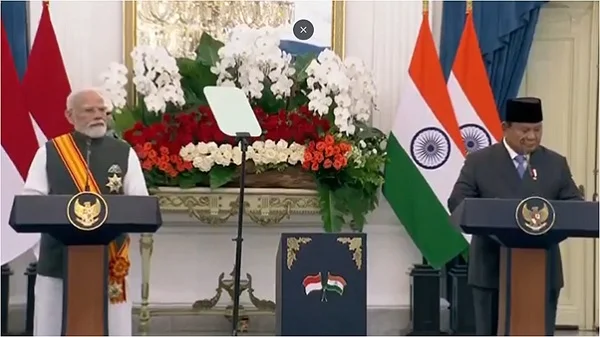
During his visit to Indonesia, Prime Minister Narendra Modi held bilateral talks with President Prabowo Subianto.
Another major highlight was that Prime Minister Modi was conferred Indonesia's highest civilian honour in recognition of his contribution to strengthening bilateral ties and promoting cooperation in the Indo-Pacific.
|
Agreement |
Significance |
|---|---|
|
BrahMos Missile |
Expansion of India's defence exports |
|
Astra Mk-1 Missile |
Export of indigenous air-to-air missile |
|
Critical Minerals |
Secure supply chain for clean energy and electronics |
|
Sabang Port |
Strategic access near the Strait of Malacca |
Defence cooperation has emerged as one of the strongest pillars of India–Indonesia relations.
The latest agreements focus on :
These initiatives also support India's Make in India and Atmanirbhar Bharat programmes.
Indonesia has agreed to procure additional BrahMos supersonic cruise missiles from India.
Earlier, Indonesia had already contracted one BrahMos missile battery. The latest understanding creates a framework for future procurement of additional missile systems.
BrahMos is a supersonic cruise missile jointly developed by India and Russia.
Indonesia plans to integrate the Astra Mk-1 Beyond Visual Range (BVR) Air-to-Air Missile into its fleet of 16 Su-30 fighter aircraft.
Integration will be carried out by Bharat Dynamics Limited (BDL).
Astra Mk-1 is India's first indigenously developed Beyond Visual Range Air-to-Air Missile (BVRAAM).
India is also developing Astra Mk-2, expected to have a range of nearly 160 km.
India and Indonesia have agreed to collaborate on developing resilient supply chains for critical minerals.
India plans to invest in Indonesia's :
Critical minerals are minerals essential for modern industries and national security.
They are required for manufacturing :
Indonesia possesses :
Nickel is a critical input for EV batteries and clean energy technologies.
The agreement helps India :
India and Indonesia have agreed to jointly develop Sabang Port in Indonesia's Aceh Province, located at the northern tip of Sumatra.
The port lies very close to the Strait of Malacca, one of the world's busiest maritime chokepoints.
It is located approximately 160 km from India's proposed Great Nicobar Transshipment Port.
Sabang is a deep-water port, capable of accommodating :
The Strait connects :
Nearly :
Pass through this route every year.
Sabang enhances India's ability to :
Defence
|
Maritime Security
|
Economic Security
|
Indo-Pacific Strategy
|
The India–Indonesia Strategic Partnership marks a significant step in advancing India's role as a leading security and development partner in the Indo-Pacific. Cooperation in BrahMos and Astra missile exports, critical minerals, and the development of Sabang Port strengthens India's defence exports, maritime security, energy resilience, and supply-chain diversification. Collectively, these initiatives reinforce India's Act East Policy, deepen engagement with ASEAN, and contribute to a free, open, inclusive, and rules-based Indo-Pacific, making the partnership highly relevant for both UPSC Prelims and Mains.
Prelims MCQQ. Consider the following statements regarding the India–Indonesia Strategic Partnership:
Which of the statements given above is/are correct? A. 1 and 2 only Mains Practice Question"India–Indonesia strategic cooperation reflects India's evolving Indo-Pacific vision and defence diplomacy." Discuss the strategic significance of recent agreements on defence, critical minerals, and maritime connectivity. |
FAQsQ1. Why is Indonesia important for India's Indo-Pacific strategy ? Indonesia sits near the Strait of Malacca, making it a key maritime partner for ensuring regional security, trade connectivity, and freedom of navigation. Q2. Why are critical minerals strategically important ? Critical minerals are essential for electric vehicles, renewable energy, semiconductors, defence equipment, and advanced manufacturing. Securing their supply is vital for economic and national security. Q3. What is the significance of the BrahMos missile export ? It strengthens India's defence exports, boosts indigenous manufacturing under Atmanirbhar Bharat, and enhances India's strategic influence in the Indo-Pacific. |
Preliminary ExamCurrent Affairs Environment and Ecology, Biodiversity, Science and Technology Main Exam:GS Paper III: Environment, Biodiversity Conservation, Climate Change, Wildlife Conservation, Science and Technology |

Research has found the Himalayan pangolin to differ from the Chinese pangolin in several ways.
|
Key Characteristics |
Himalayan Pangolin |
Chinese Pangolin |
|
Scientific Name |
Manis aurita |
Manis pentadactyla |
|
Average Length |
About 95.2 cm |
About 71.2 cm |
|
Body Size |
Large |
Smaller |
|
Skull |
Large and robust |
Relatively smaller |
|
Ears |
Small |
Relatively larger |
|
Nasal Bone |
Short and broad |
Long and narrow |
The recognition of the Himalayan pangolin as an independent species is a significant achievement in the field of biogeographical classification and wildlife conservation. This study demonstrates that climate change, geographic isolation, and genetic evolution played crucial roles in the evolution of this species. Furthermore, this new identification provides a basis for more effective conservation strategies for the Himalayan pangolin.
Preliminary Exam QuestionsQuestion: Consider the following statements regarding the recently discussed Himalayan pangolin (Manis aurita):
Which of the above statements is/are correct? (a) 1 and 2 only (b) 2 and 3 only (c) 1 and 3 only (d) 1, 2, and 3 Mains QuestionQuestion: "The Himalayan pangolin (Manis aurita) has recently been recognized as an independent species. Analyze the scientific basis of this discovery and its significance in the context of wildlife conservation." |
|
1. Question: Why is the Himalayan pangolin in the news ? Answer : A recent study published in the journal Communications Biology recognized the Himalayan pangolin (Manis aurita) as an independent species, distinct from the Chinese pangolin (Manis pentadactyla). 2. Question: What was the Himalayan pangolin previously considered ? Answer : It was previously considered a subspecies of the Chinese pangolin (Manis pentadactyla). 3. Question: Why did scientists consider it a separate species ? Answer : DNA sequencing, genomic, and morphological analyses have proven that the Himalayan pangolin's genetic and physical characteristics are distinctly different from those of the Chinese pangolin. 4. Question: When did the Himalayan and Chinese pangolins diverge ? Answer : About 1.8 million years ago, during the Pleistocene, the two species evolved separately due to climate change and geographic isolation (Allopatric Speciation). 5. Question: What is Allopatric Speciation ? Answer : When populations of the same species become separated due to geographic barriers (such as mountains, rivers, or oceans) and new species evolve over time, it is called Allopatric Speciation. |
|
Preliminary Exam Section 14 of the BC (Moratorium), the definition of 'proceeds of crime' under the PMLA, and the jurisdiction of the NCLAT/NCLT. Main Exam GS Paper III : Indian economy (banking, reforms, NPAs), corporate governance, money laundering, and national security. GS Paper II : Statutory Bodies (NCLT, NCLAT, ED), judicial review, and conflict of jurisdiction. |

The liquidator overseeing the company's bankruptcy proceedings argued in court that the Enforcement Directorate (ED) cannot seize or confiscate the company's assets while the moratorium is in effect, as this would result in loss of funds for the banks.
|
Law |
Main Objective |
|
Insolvency and Bankruptcy Code (IBC), 2016 |
To resolve financially distressed or insolvent companies in a time-bound manner and maximize recovery for banks and other creditors. |
|
Prevention of Money Laundering Act (PMLA), 2002 |
To prevent money laundering, identify, attach and confiscate the Proceeds of Crime, and curb financial and economic crimes. |
When a property is acquired from fraudulent proceeds and the company goes bankrupt, then both the laws come face to face.
Clearing this conflict once and for all, the NCLAT made the following key points :
This NCLAT decision is a major step towards cleaning up India's economic system. The message is clear: incurring business losses (for which the IBC exists) is one thing, but committing crimes and fraud (for which the PMLA exists) is quite another.
Preliminary Exam QuestionsQuestion: In the context of the recent legal clash between the Insolvency and Bankruptcy Code (IBC), 2016, and the Prevention of Money Laundering Act (PMLA), 2002, consider the following statements:
How many of the above statements are correct ? (a) Only one statement (b) Only two statements (c) All three statements (d) None of the statements are correct Mains ExamQuestion: "In the context of recent judicial decisions, analyze the growing legal conflict between the IBC moratorium and the attachment of properties under the PMLA and its economic impact." |
| Question : What is the main objective of the IBC ?
Answer : Resolution of insolvent companies and maximum recovery for creditors. Question : What is the main objective of the PMLA ? Answer : Preventing money laundering and confiscating assets acquired through crime. Question : Under which section is the moratorium provided ? Answer : Section 14 of the IBC. Question : What are 'Proceeds of Crime'? Answer : Money, property, or profits obtained through crime. Question : Under which law does the ED take action ? Answer : PMLA, 2002. |
Preliminary ExamCurrent Affairs + Defense Exercises + Military Technology Mains Exam:GS Paper III: Defense, Internal Security, Defense Technology, Indigenization, Maritime Security |
The Indian Navy will commission its sixth indigenously built stealth frigate, INS Mahendragiri (F38), built under Project 17A, in Visakhapatnam on July 11. This marks a significant milestone in India's indigenous warship building program and the Atmanirbhar Bharat Abhiyan.
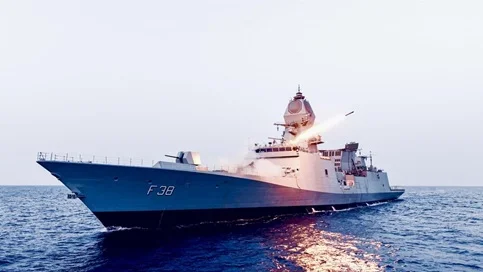
A total of 7 warships are being built under this project. They are being constructed by two major Indian shipyards:
All these ships are named after famous mountain ranges of India.
|
No. |
Warship |
Builder |
|
1 |
INS Nilgiri |
MDL |
|
2 |
INS Udaygiri |
MDL |
|
3 |
INS Himgiri |
GRSE |
|
4 |
INS Taragiri |
MDL |
|
5 |
INS Dunagiri |
GRSE |
|
6 |
INS Mahendragiri |
MDL |
|
7 |
INS Vindhyagiri |
GRSE |
The induction of INS Mahendragiri into the Indian Navy marks a significant milestone in India's indigenous defense production, technological self-reliance, and maritime security. This state-of-the-art stealth frigate will not only elevate the Indian Navy's combat capabilities to new heights but will also further strengthen India's strategic position in the Indian Ocean and Indo-Pacific region.
Key Words to RememberINS Mahendragiri, Project 17A, Nilgiri class, stealth frigate, Indian Navy, Warship Design Bureau (WDB), Mazagon Dock (MDL) |
Preliminary Exam QuestionsQ1. Consider the following statements regarding INS Mahendragiri:
Which of the above statements is/are correct ?
Mains QuestionQuestion: Evaluate the role of indigenous stealth frigates in strengthening India's maritime security. Explain this in the context of INS Mahendragiri. |
FAQs: INS MahendragiriQ1. What is INS Mahendragiri ? Answer: INS Mahendragiri is the sixth indigenous Nilgiri-class stealth frigate built under Project 17A of the Indian Navy. Q2. Who built INS Mahendragiri ? Answer: It was built by Mazagon Dock Shipbuilders Limited (MDL), Mumbai, and designed by the Warship Design Bureau (WDB) of the Indian Navy. Q3. What is Project 17A ? Answer: Project 17A is an indigenous warship construction project of the Indian Navy under which modern stealth frigates are being developed. Q4. What is the CODOG (Combined Diesel or Gas) system ? Answer: CODOG is a propulsion system that uses a diesel engine or gas turbine, depending on the requirement, allowing the ship to operate at high speeds and long ranges. Q5. Why is INS Mahendragiri important for the Indian Navy ? Answer: It will play a vital role in enhancing the Indian Navy's maritime warfare capabilities, strengthening its strategic presence in the Indian Ocean region, and bolstering India's maritime security. |
|
Prelims: Indian Polity Mains (GS-II): Functioning of the Judiciary, Constitutional Interpretation and the Rule of Law. |

PrelimsQ. The Doctrine of Per Incuriam is considered an exception to which Article of the Indian Constitution ? (a) Article 32 (b) Article 136 (c) Article 141 (d) Article 226 |
|
1. What is the Doctrine of Per Incuriam ? The Doctrine of Per Incuriam refers to a judicial decision delivered in ignorance of a binding law, statutory provision, or a binding judicial precedent. Such a judgment is not treated as a binding precedent. 2. What does the term Per Incuriam mean ? Per incuriam is a Latin term meaning "through lack of care" or "through inadvertence. 3. Does the doctrine apply to both Ratio Decidendi and Obiter Dicta ? No. The doctrine applies only to the Ratio Decidendi (the binding legal principle) and not to Obiter Dicta (incidental observations). 4. Why is the Doctrine of Per Incuriam important ? The doctrine ensures judicial consistency, prevents reliance on legally incorrect decisions, and maintains the integrity of the doctrine of stare decisis (judicial precedent). |
|
Prelims International Relations Mains GS Paper II – India and its Neighbourhood; Bilateral & Regional Groupings GS Paper III – Critical Minerals; Energy Security; Strategic Resources |
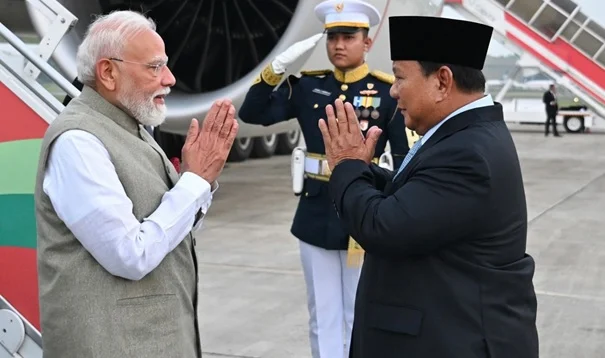
A Comprehensive Strategic Partnership is an advanced level of bilateral relationship involving cooperation across multiple sectors such as :
It reflects a long-term strategic commitment between two countries.
|
Year |
Development |
|---|---|
|
1950 |
India established diplomatic relations with Indonesia. |
|
2005 |
Strategic Partnership established. |
|
2018 |
Relationship upgraded to Comprehensive Strategic Partnership during PM Modi's visit. |
|
2023 |
Cooperation strengthened under India's ASEAN engagement and Indo-Pacific initiatives. |
|
2026 |
PM Modi's first bilateral visit to Indonesia after the CSP; focus on defence and critical minerals. |
Political Relations
|
Economic Relations
|
|
India imports |
India exports |
|---|---|
|
Palm Oil |
Refined petroleum |
|
Coal |
Pharmaceuticals |
|
Natural Gas |
Engineering goods |
|
Nickel-related products |
Rice |
Cooperation includes :
India and Indonesia are connected through :
The Sabang Port (Indonesia) lies close to India's Andaman & Nicobar Islands, making it strategically significant.
Critical minerals are essential for :
Indonesia possesses major reserves of :
Nickel is crucial for lithium-ion batteries.
Regular cooperation includes :
Both countries are members of :
Indonesia also plays a central role in ASEAN Outlook on the Indo-Pacific (AOIP).
Keywords to Remember
|
Prelims Practice QuestionsQ. With reference to India–Indonesia relations, consider the following statements :
Which of the statements given above are correct ? A. 1 and 2 only Mains Practice Question"India and Indonesia are emerging as key maritime partners in the Indo-Pacific. Examine the significance of India–Indonesia relations in ensuring regional security, resilient supply chains, and critical mineral cooperation." |
|
Q1. Why is PM Modi's Indonesia visit significant? Answer: It is the first bilateral visit since 2018, aimed at strengthening defence, critical minerals, trade, and Indo-Pacific cooperation. Q2. Why are critical minerals important for India? Answer: Critical minerals like nickel are essential for EV batteries, semiconductors, renewable energy, and defence manufacturing. Q3. How does India–Indonesia defence cooperation benefit both countries? Answer: It enhances maritime security, naval cooperation, and regional stability in the Indo-Pacific and Indian Ocean Region. Q4. What is the significance of the India–Indonesia Comprehensive Strategic Partnership (CSP)? Answer: The 2018 CSP expands cooperation in defence, trade, technology, maritime security, energy, and people-to-people ties. |

Our support team will be happy to assist you!

 Contact Us
  New Batch : 9555124124/ 7428085757
  Tech Support : 9555124124/ 7428085757