
This technique overcomes these challenges by combining spin noise spectroscopy with the detection of polarization fluctuations of laser light passing through an atomic sample to determine the natural fluctuations of atomic spins.
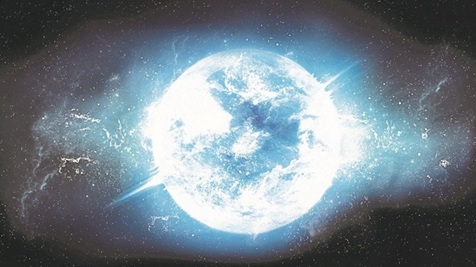
Recently, NASA's Imaging X-ray Polarization Explorer (IXPE) mission analyzed the internal structure of a white dwarf system for the first time in history. This research revealed many new and surprising insights into the gas dynamics and X-ray emission of a binary star, known as EX Hydrae.

Biomaterials can be broadly divided into three categories:
In the Indian context, biomaterials address multiple national priorities simultaneously.
India has the opportunity to establish global leadership in the biomaterials industry, but it also faces challenges.
The United Nations' declaration of 2026 as the "International Year of Grasslands and Pastoral Communities" acknowledges the fact that grasslands and their dependent communities have not received the appropriate attention in global environmental discourse. Amidst the threefold challenge of climate change, biodiversity loss, and land degradation, this declaration is both an opportunity and a warning.
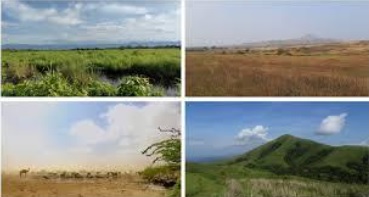
Globally, the division of work between the UNFCCC, CBD, and UNCCD has led to policy silos. Climate negotiations are limited to carbon, while biodiversity and land degradation are scattered across other forums. Although the 1992 Rio Convention laid the foundation for coordination, this coordination remains weak in practice.
The recommendation by the WWF and IUCN report to consider grasslands in an integrated manner across all three Rio Conventions offers a practical solution in this direction.
Conferences like COP 30 must now move beyond the narrow scope of "carbon management" and adopt a holistic, "biome-based" approach. The United Nations' declaration of 2026 as the "International Year of Grasslands and Pastoral Communities" is an opportunity for India to reform its national policies and present a science-based and community-led conservation model to the global stage.
| Prelims: (Polity & Governance + CA) Mains: (GS 2 – Governance & Regulatory Institutions; GS 3 – Infrastructure, Energy Security, Disaster Management) |
Parliament has passed the SHANTI Act, introducing sweeping reforms to India’s nuclear power framework by opening the sector to private participation and significantly modifying the country’s nuclear liability regime.

India’s civil nuclear programme has long been dominated by state control under the Atomic Energy framework. However, nuclear energy contributes only about 3% of India’s electricity generation, despite ambitious expansion targets:
Key constraints included:
Globally, nuclear accidents such as Three Mile Island accident, Chernobyl disaster, and Fukushima Daiichi nuclear disaster exposed design flaws, emergency failures, and supplier vulnerabilities. These events shaped international nuclear liability norms.
India’s earlier framework was seen as uniquely stringent compared to global conventions, affecting foreign investment inflows. The SHANTI Act seeks to realign India’s system with international practices.
India’s liability regime was governed by the Civil Liability for Nuclear Damage Act (CLNDA).
While strengthening accountability, suppliers argued that these provisions exposed them to unlimited liability, discouraging participation in India’s nuclear market.
The Act allows private companies to operate nuclear power plants, ending the Union government’s exclusive control. This marks a major structural shift in India’s atomic governance model.
This aligns India’s framework with international liability conventions.
The Act provides legislative backing for the Atomic Energy Regulatory Board (AERB).
However:
Historical disasters illustrate the scale of nuclear risk:
In contrast:
This gap raises concerns that statutory compensation may cover only a fraction of potential damages in a major disaster.
Critics argue:
The Act may:
Example:
Small Modular Reactors (SMRs), though promising, remain largely untested and may involve higher per-unit costs.
Nuclear energy offers:
However, financial viability and public trust remain crucial.
FAQs1. What is the SHANTI Act ? It is a new law reforming India’s nuclear sector by allowing private participation and altering nuclear liability provisions. 2. How does it differ from the CLNDA, 2010 ? It removes the operator’s right of recourse against suppliers and omits Section 46, thereby limiting supplier liability and victim remedies. 3. What is the total liability cap under the Act ? The total cap is 300 million Special Drawing Rights (approximately ₹3,900 crore). 4. Why was supplier indemnity introduced ? To align India with international nuclear liability norms and encourage foreign supplier participation. 5. What are the major concerns ? Low liability caps compared to potential damages, moral hazard risks, and limited regulatory independence. |
| Prelims: (Environment + CA) Mains: (GS 3 – Environment Conservation, Infrastructure Development; GS 2 – Governance & Environmental Regulation) |
The Standing Committee of the National Board for Wildlife (NBWL) has approved the diversion of 4.68 hectares of forest land from the Kapilash Wildlife Sanctuary for the construction of the 111 km six-lane Capital Region Ring Road (CRRR) project.

The decision has triggered discussions on balancing infrastructure development with wildlife conservation.
India’s rapid urbanisation and economic growth have increased the demand for:
At the same time, infrastructure expansion often intersects with protected forest areas and wildlife habitats, raising concerns over:
Under the Wildlife (Protection) Act, 1972, diversion of land within protected areas requires approval from the NBWL’s Standing Committee. The recent clearance for land diversion in Kapilash Wildlife Sanctuary highlights the delicate balance between development and ecological preservation.
The sanctuary forms part of the Eastern Ghats landscape and plays an important ecological role in central Odisha.
The sanctuary is dominated by:
The moist deciduous ecosystem supports rich undergrowth and seasonal diversity, contributing to:
Kapilash Wildlife Sanctuary supports diverse wildlife, including:
The sanctuary contributes to maintaining ecological connectivity in Odisha’s forest landscape.
The proposed Capital Region Ring Road (CRRR):
Although the diverted area is relatively small, concerns include:
Mitigation measures such as wildlife crossings, underpasses, and compensatory afforestation are expected to be part of project conditions.
The clearance highlights the ongoing challenge of reconciling:
The NBWL plays a critical regulatory role in evaluating:
Kapilash lies within the Eastern Ghats biodiversity zone, which:
Road expansion may increase:
The case underscores the need for:
FAQs1. Where is Kapilash Wildlife Sanctuary located ? It is located in Dhenkanal district of Odisha. 2. What type of forest is found there ? It is classified as Eastern Highlands moist deciduous forest. 3. Why is it in the news ? The NBWL has approved diversion of 4.68 hectares of forest land for the Capital Region Ring Road project. 4. What wildlife species are found in the sanctuary ? Elephants, sloth bears, jungle cats, pangolins, porcupines, spotted deer, peacocks, and kingfishers, among others. 5. Why is forest diversion controversial ? It may lead to habitat fragmentation, wildlife disturbance, and ecological imbalance, raising concerns about sustainable development. |
| Prelims: (Economy + CA) Mains: (GS 3 – Indian Economy, Monetary Policy, Inclusive Growth) |
On February 12, 2026, the Ministry of Statistics and Programme Implementation (MoSPI) released India’s first retail inflation data under the new Consumer Price Index (CPI) series (Base Year: 2024=100).

This marks a structural overhaul of how India measures the cost of living.
India’s economy has undergone significant structural transformation over the past decade:
The CPI is the primary inflation gauge for the Reserve Bank of India (RBI) and its Monetary Policy Committee (MPC), which operates under the inflation-targeting framework of 4% ± 2%.
The CPI is also used for:
Updating the base year ensures inflation measurement reflects current consumption realities and improves macroeconomic calibration.
The new CPI adopts 12 consumption divisions in line with COICOP 2018 (Classification of Individual Consumption According to Purpose).
This enhances global comparability and methodological robustness.
Newly Added Items:
Removed Items:
These changes reflect technological obsolescence and lifestyle shifts.
The integration of digital price data represents a major methodological advancement.
This significantly improves representativeness of household expenditure.
Headline CPI Inflation: 2.75%
Food Inflation (CFPI): 2.13%
Housing Inflation: 2.05%
Since this is the first release under the new base, long-term historical comparison is limited. A linking factor has been provided to compute backward-compatible values up to 2013.
Lower food weight may reduce volatility, providing clearer inflation signals to the RBI.
Captures:
Alignment with COICOP enhances global benchmarking and statistical credibility.
More accurate inflation measurement improves:
Represents modernization of India’s macroeconomic measurement framework.
Way Forward: Increase transparency in methodology and periodically update base years (every 5–10 years).
FAQs1. What is the new base year for India’s CPI ? The base year has been revised from 2012 to 2024. 2. Why was the CPI series revised ? To reflect changes in consumption behaviour, digitalisation, services growth, and updated household expenditure data. 3. How has the weight of food changed ? It has been reduced from 45.86% to 36.75%. 4. Why is CPI important for the RBI ? It is the primary inflation measure used for monetary policy under the 4% ± 2% inflation-targeting framework. 5. What is the January 2026 inflation rate under the new series ? Retail inflation stood at 2.75% (provisional). |
| Prelims: (Economy + CA) Mains: (GS 3 – Infrastructure, Energy Security, Environment; GS 1 – Geography) |
The Idukki Hydroelectric Project, Kerala’s largest hydel power project, has completed 50 years of operation. Over five decades, the Moolamattom underground power plant has generated 115,852.672 million units (MU) of electricity, marking a historic milestone in India’s hydroelectric development.
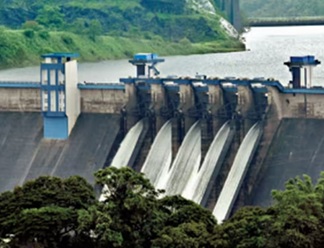
Hydroelectric power has been central to Kerala’s energy strategy due to:
The Periyar River, Kerala’s longest river, provides the foundation for the Idukki project. Conceived in the mid-20th century and commissioned in the 1970s, the project aimed to address:
At a time when India was focusing on large multipurpose river valley projects, Idukki emerged as a landmark engineering achievement in southern India.
The project consists of three dams:
Together, they create a large reservoir system to facilitate power generation.
The underground design enhances:
Power Generation and Performance
Over 50 years, the Moolamattom power plant has:
Hydropower remains vital for:
Although Kerala now supplements hydropower with thermal and renewable sources, Idukki remains a backbone of the state’s energy infrastructure.
The project significantly reduced dependence on imported power and fossil fuels, ensuring stable electricity supply.
Hydropower contributes to:
The double-curvature arch dam design and underground powerhouse represent milestones in Indian civil engineering.
Reliable electricity has supported:
While primarily a power project, the reservoir system also aids in:
FAQs1. Where is the Idukki Hydroelectric Project located ? It is built across the Periyar River in Idukki district, Kerala. 2. Why is the Idukki Dam significant ? It is one of the highest arch dams in the world and the first double-curvature arch dam in Asia. 3. What is unique about the Moolamattom power plant ? It is the longest underground power station in India and houses the largest pressure shaft in the country. 4. How much electricity has the project generated ? It has generated 115,852.672 million units (MU) over the past 50 years. 5. Why is the project important for Kerala ? It ensures energy security, supports economic growth, and contributes to renewable energy generation. |
| Prelims: (History & Culture + CA) Mains: (GS 1 – Indian Culture & Ancient Civilisations; GS 2 – India’s Cultural Diplomacy; GS 3 – Maritime Trade Networks) |
Two researchers have identified nearly 30 inscriptions in Tamil-Brahmi, Prakrit, and Sanskrit on tombs in the Valley of the Kings, Egypt. The discovery has sparked renewed interest in ancient India–Egypt maritime and cultural linkages, especially during the early historic period.
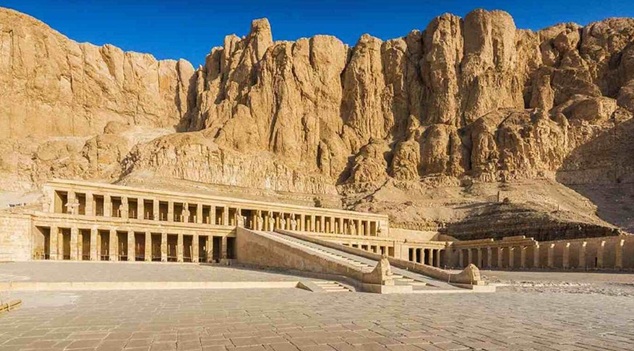
The discovery of Indian-language inscriptions in Egypt points toward possible transcontinental trade and cultural interactions between the Indian subcontinent and ancient Mediterranean civilisations.
India maintained vibrant maritime trade links with:
Particularly during the Sangam age and early centuries CE, South Indian traders were active across the Red Sea and Mediterranean networks.
If authenticated, the inscriptions could:
The Valley of the Kings is one of the most important archaeological sites in Egypt.
The tombs were:
In 1979, UNESCO designated the Valley of the Kings as part of the World Heritage Site of ancient Thebes.
The presence of these scripts in Egypt may indicate:
Ancient maritime trade routes connected:
Indian exports included:
Roman and Egyptian imports into India included:
Classical texts such as the Periplus of the Erythraean Sea describe robust Indo-Roman trade networks.
The inscriptions may serve as tangible proof of:
Such findings can strengthen:
If validated, the inscriptions may:
The discovery reinforces India’s historical identity as a maritime trading civilisation with extensive overseas networks.
Epigraphic evidence is crucial because:
FAQs1. What is the Valley of the Kings ? It is an archaeological site in Egypt where pharaohs of the New Kingdom (1539–1077 BCE) were buried. 2. Why is it in the news ? Nearly 30 inscriptions in Tamil-Brahmi, Prakrit, and Sanskrit were recently identified at tombs there. 3. Why are Tamil-Brahmi inscriptions significant ? They suggest possible ancient Indian trade or cultural presence in Egypt. 4. When was the Valley of the Kings declared a World Heritage Site ? It was designated a UNESCO World Heritage Site in 1979. 5. What does this discovery indicate ? It may provide evidence of early India–Egypt maritime and cultural connections, subject to further verification. |

Our support team will be happy to assist you!


 Contact Us
  New Batch : 9555124124/ 7428085757
  Tech Support : 9555124124/ 7428085757