
- UPSC Exam
- State PCS
- One Day Exam
- Current Affairs
- PT Quiz
- Downlaods
- About Coaching
- Blog
- Videos

| Prelims : Economy + CA Mains : GS Paper 3 – Inclusive Growth, Employment; GS Paper 1 – Society |
Recent policy discussions and economic analyses have highlighted that while India’s economic growth has successfully reduced extreme poverty, it has simultaneously led to the emergence of a “vulnerable middle class”, raising concerns about the sustainability, inclusiveness, and resilience of India’s growth model.
This issue has gained prominence as rising inflation, job uncertainty, and global economic instability are increasingly affecting households that are above the poverty line but still lack economic security.
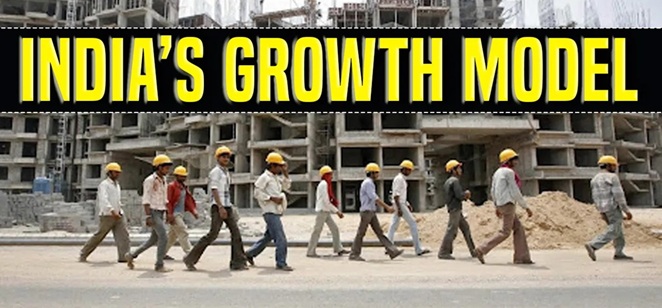
India’s growth trajectory over the past few decades has been characterised by relatively high GDP growth, expansion of welfare programmes, and increasing integration with the global economy.
Economic growth has contributed significantly to poverty reduction by improving access to basic services, increasing income levels, and strengthening welfare delivery systems through mechanisms such as direct benefit transfers and financial inclusion initiatives.
However, despite these achievements, the growth model has shown structural limitations, particularly in generating sufficient employment, ensuring income stability, and distributing the benefits of growth equitably across different sections of society.
As a result, while many households have moved above the poverty line, they have not necessarily achieved long-term financial security.
Traditional poverty measurement relies on a fixed income threshold to classify individuals as poor or non-poor, which provides only a limited understanding of economic well-being.
This binary approach fails to capture the lived realities of households that are just above the poverty line but remain highly vulnerable to economic shocks. It does not account for:
Therefore, there is a growing recognition of the need to move towards a broader framework that captures economic vulnerability and quality of life, rather than relying solely on poverty statistics.
Middle class vulnerability refers to a condition where households have crossed the poverty threshold but do not possess sufficient financial stability, income security, or resilience to sustain a decent standard of living over time.
Such households often exist in a precarious situation where :
As a result, even minor economic shocks—such as a medical emergency, job loss, or increase in living costs—can push them back into poverty.
Thus, instead of experiencing stable upward mobility, these households remain trapped in a cycle of economic fragility and uncertainty.
A large segment of the workforce, particularly those employed in the informal sector, earns low and unpredictable incomes, which makes it difficult for households to plan their finances or accumulate savings.
In the absence of stable earnings, households often struggle to meet basic expenses and are unable to invest in long-term assets such as education, housing, or healthcare.
Declining household savings and increasing reliance on credit further indicate that many families are living close to subsistence levels despite being classified as part of the middle class.
Middle-class households are increasingly vulnerable to various types of shocks, including job loss, health emergencies, inflation, and economic downturns.
With rising costs of essential services such as healthcare and education, even a temporary disruption in income can have long-lasting financial consequences.
The traditional notion of maintaining a few months’ worth of savings as a safety net is becoming inadequate in the face of rising economic uncertainty.
Despite sustained economic growth, real wages for a large section of the population have not increased proportionately.
This indicates a disconnect between GDP growth and income growth, suggesting that the benefits of economic expansion are not being evenly distributed.
As a result, households find it difficult to improve their standard of living over time, leading to frustration and economic insecurity.
One of the most significant structural issues in India’s growth model is the lack of sufficient formal employment opportunities.
A large proportion of the workforce remains engaged in informal employment, which is characterised by:
The limited growth of labour-intensive sectors, particularly manufacturing, has further constrained job creation, weakening the link between economic growth and employment generation.
India’s economy exhibits a structural imbalance where a significant portion of the workforce is still dependent on agriculture, even though the sector contributes a relatively smaller share to GDP.
At the same time, the manufacturing sector has not expanded enough to absorb surplus labour, while the services sector—though growing rapidly—does not generate sufficient employment opportunities for all skill levels.
This imbalance leads to underemployment and limits productivity gains, contributing to economic vulnerability.
Economic growth in India has been accompanied by increasing inequality, with wealth and income becoming concentrated among a smaller segment of the population.
The middle class does not benefit proportionately from growth, which restricts upward mobility and reinforces economic insecurity.
This growing inequality also affects access to opportunities, such as quality education and healthcare, further deepening vulnerability.
A particularly concerning trend is the high level of unemployment among educated youth.
Despite higher levels of education, many young individuals are unable to secure stable and well-paying jobs, which undermines the role of education as a pathway to economic mobility.
This not only affects individual aspirations but also has broader implications for economic productivity and social stability.
The vulnerability of the middle class is reflected in several economic indicators, such as :
These indicators suggest that a significant portion of the population remains economically insecure despite being above the poverty line.
India’s growth model reveals a fundamental challenge: while it has been effective in reducing poverty, it has not been equally successful in creating stable, secure, and well-paying employment opportunities.
This has resulted in a situation where economic mobility is not accompanied by economic security, leading to the emergence of a large vulnerable middle class.
The existence of a vulnerable middle class highlights the limitations of a growth model that does not adequately address inequality and employment.
If income growth remains stagnant and structural issues persist, India may struggle to transition to a high-income economy.
Since the middle class is a key driver of domestic consumption, its financial insecurity can weaken demand and slow down economic growth.
Economic vulnerability among the middle class can lead to increased demand for welfare support, social dissatisfaction, and potential political instability.
A comprehensive approach is required to address the structural challenges in India’s growth model.
Prelims
Q. Which of the following best describes “middle class vulnerability” ?
(a) High-income inequality
(b) Lack of economic security despite being above poverty line
(c) Decline in agricultural productivity
(d) Increase in government expenditure
Mains
“India’s growth model has reduced poverty but created a vulnerable middle class.” Critically analyse.
FAQsQ1. What is middle class vulnerability ? It refers to economic insecurity among households above the poverty line. Q2. Why is it rising in India ? Due to income instability, weak job creation, and inequality. Q3. What is the key structural issue ? The disconnect between economic growth and employment generation. Q4. Why is it important ? It affects consumption, growth, and social stability. Q5. What is the solution ? Inclusive growth with focus on jobs, wages, and social security. |
| Prelims : Geography + CA Mains : GS Paper 1 – Physical Geography; GS Paper 3 – Climate Change |
Recent scientific studies and climate assessments have raised serious concerns regarding the weakening of the Atlantic Meridional Overturning Circulation (AMOC), a crucial component of the Earth’s climate system.
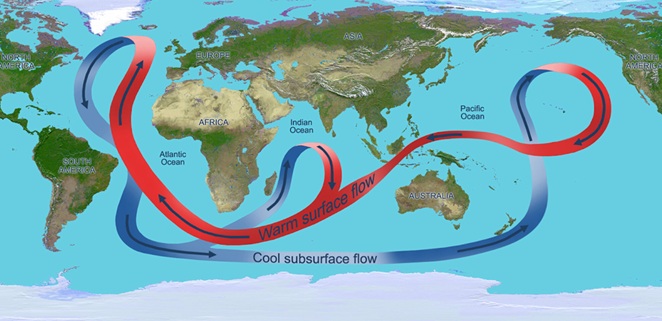
Emerging evidence suggests that :
These developments have intensified global attention on the possibility of abrupt climate change.
The Atlantic Meridional Overturning Circulation (AMOC) is a large-scale system of ocean currents in the Atlantic Ocean that operates like a global conveyor belt, continuously circulating water across different depths and latitudes.
It plays a central role in regulating global climate by :
The functioning of AMOC is governed by thermohaline circulation, which depends on variations in temperature and salinity.
Warm, saline water flows from the tropics toward the North Atlantic through surface currents such as the Gulf Stream. This process carries a large amount of heat energy, helping to moderate climates, especially in Western Europe.
As the warm water reaches higher latitudes, it loses heat to the atmosphere and becomes colder. At the same time, evaporation increases salinity, making the water denser.
The cold and saline water becomes sufficiently dense to sink in regions such as the Labrador Sea and the Greenland Sea, forming deep water masses known as North Atlantic Deep Water.
These deep waters then flow southward across the Atlantic Ocean at great depths, forming a return current that completes the circulation loop.
Over time, deep waters rise back to the surface in other ocean regions through upwelling, get warmed again, and re-enter the circulation cycle, maintaining continuity.
AMOC redistributes heat globally, ensuring that regions like Europe remain relatively warmer than other areas at similar latitudes, thereby stabilising global climate patterns.
It plays a vital role in the global carbon cycle by transporting carbon dioxide from the atmosphere into the deep ocean, acting as a long-term carbon sink.
The circulation helps in the movement of nutrients across ocean layers, supporting marine ecosystems and sustaining fisheries.
AMOC significantly affects rainfall patterns, monsoons, and storm systems across continents, including impacts on Africa, Europe, and Asia.
Rising global temperatures are warming ocean waters, reducing the temperature differences that drive circulation and weakening the overall system.
The influx of freshwater from melting ice reduces salinity in the North Atlantic, which decreases water density and inhibits the sinking process essential for AMOC.
Higher precipitation and Arctic ice melt further dilute ocean salinity, disrupting the thermohaline balance required for circulation.
Scientific evidence suggests that AMOC may already be weaker than at any time in the last thousand years, indicating a long-term declining trend.
A slowdown in heat transport could lead to colder climatic conditions in Europe despite overall global warming.
Changes in ocean circulation may alter rainfall patterns, particularly affecting monsoons in South Asia and Africa, with consequences for agriculture.
A weakened AMOC can cause sea levels to rise along certain coastlines, especially the eastern coast of North America.
The weakening circulation can contribute to :
Reduced nutrient circulation may adversely affect marine biodiversity, fisheries, and ocean productivity.
A complete collapse of AMOC could trigger abrupt and potentially irreversible climate changes across multiple regions.
Prelims
Q. The Atlantic Meridional Overturning Circulation (AMOC) primarily depends on :
(a) Wind patterns
(b) Temperature and salinity differences
(c) Earth’s rotation
(d) Tidal forces
Mains
“Discuss the mechanism of the Atlantic Meridional Overturning Circulation (AMOC) and examine the potential impacts of its weakening on global climate.”
FAQsQ1. What is AMOC ? It is a large-scale ocean circulation system in the Atlantic Ocean. Q2. What drives AMOC ? Differences in temperature and salinity. Q3. Why is it important ? It regulates climate and supports marine ecosystems. Q4. Why is it weakening ? Due to global warming and freshwater influx. Q5. What happens if it collapses ? It may lead to severe and abrupt climate changes globally. |
| Prelims: Agriculture + Governance + CA Mains : GS Paper 3 – Agriculture, Food Security, Technology in Governance; GS Paper 2 – Governance, Welfare Issues |
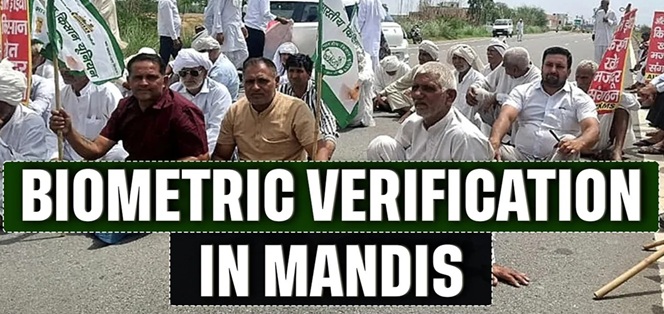
Farmers across Haryana have launched widespread protests against the introduction of a mandatory biometric verification system in mandis during the Rabi procurement season.
The protests have taken the form of prolonged sit-ins at procurement centres, road blockades, and coordinated mobilisation by farmer unions, indicating not just opposition to a specific policy but a broader dissatisfaction with how technological reforms are being implemented in agriculture.
Mandis in India are regulated agricultural markets established under state APMC laws, where farmers bring their produce for sale, particularly under the Minimum Support Price (MSP) system.
In these mandis, the procurement process typically involves multiple stakeholders, including government agencies, commission agents (arhatiyas), and traders, which historically has led to inefficiencies such as delays in payments, lack of transparency, and opportunities for malpractice.
The mandi system, therefore, represents both a critical support structure for farmers as well as a site of structural inefficiencies, which governments have increasingly tried to address through digital reforms.
The Haryana government introduced a technology-driven procurement mechanism aimed at digitising and authenticating the sale of agricultural produce in mandis.
Under the new system, farmers are required to authenticate their identity through Aadhaar-linked biometric verification, primarily using fingerprint scans, before they are allowed to sell their crops at procurement centres. This is intended to ensure that only genuine and registered farmers are able to participate in the procurement process.
The biometric system is integrated with the Meri Fasal-Mera Byora portal, which maintains a database of registered farmers, their landholdings, and crop details. This linkage ensures that the produce being sold corresponds with what has been officially registered, thereby reducing the scope for fraudulent transactions.
The system also mandates recording details such as vehicle registration numbers and capturing photographic evidence at the entry points of mandis. This step is aimed at creating a verifiable digital trail of crop movement and preventing the inflow of unauthorised produce.
Mandis and storage facilities have been brought under geofencing, allowing authorities to monitor the movement and storage of procured crops digitally. This enhances oversight and reduces the possibility of diversion or illegal stocking.
A three-tier verification system has been introduced to authenticate the identity of the farmer, the legitimacy of the crop, and the procurement transaction, thereby attempting to plug systemic loopholes that existed earlier.
The introduction of biometric verification is closely linked to the 2025 Karnal paddy procurement scam, which exposed large-scale irregularities in the mandi system.
In that case :
These irregularities resulted in significant financial losses to the government and raised serious concerns about the integrity of the procurement system.
Thus, the biometric system was envisioned as a reform measure to restore credibility, ensure accountability, and prevent recurrence of such frauds.
Farmers have argued that the biometric verification process is time-consuming and has significantly slowed down the procurement process. During peak harvest seasons, when timely sale of crops is critical, such delays lead to long queues in mandis and increase the risk of crop spoilage.
The system requires the registered farmer to be physically present for biometric authentication, which creates difficulties for elderly farmers, those with health issues, or those who rely on family members or labourers to carry out mandi transactions on their behalf. This requirement reduces operational flexibility that farmers traditionally enjoyed.
Several practical challenges have been reported, including fingerprint mismatches due to worn-out fingerprints of manual labourers, unreliable internet connectivity in rural areas, and frequent glitches in the digital portal. These issues disrupt the procurement process and create frustration among farmers.
Farmers perceive the new system as an additional bureaucratic layer that treats them with suspicion rather than as beneficiaries. The requirement of repeated verification and documentation is seen as an unnecessary burden imposed on already stressed agricultural communities.
Many farmers argue that previous scams were largely due to collusion among officials and traders, yet the burden of verification has now been shifted onto farmers. This has created a sense of injustice and mistrust towards the reform.
The protests are also influenced by underlying agrarian challenges such as crop losses due to unseasonal weather, delays in procurement, inadequate storage infrastructure, and payment-related issues. The biometric system has, therefore, acted as a trigger rather than the sole cause of discontent.
The government maintains that biometric verification is essential to ensure that only genuine farmers benefit from procurement at MSP and to prevent fraudulent practices that previously led to financial losses.
Authorities argue that digitisation of the procurement process will create a transparent and traceable system, reducing leakages and improving overall efficiency in agricultural marketing.
In response to farmer concerns, the government has allowed farmers to nominate a limited number of representatives who can act on their behalf, and has also relaxed certain procedural requirements to ease implementation.
Dedicated nodal officers and senior officials have been deployed at mandis to monitor the system’s functioning and address grievances in real time.
The controversy essentially reflects a mismatch between policy intent and ground-level execution.
While the government emphasises transparency, efficiency, and accountability through technological reforms, farmers experience these changes as cumbersome, exclusionary, and poorly implemented.
The issue highlights the increasing role of technology in agricultural governance and raises questions about how digital solutions can be effectively integrated into traditional systems.
The protests underscore a growing trust deficit, where farmers feel that policies are being imposed without adequate consultation or consideration of ground realities.
Since mandis play a crucial role in procurement under MSP, disruptions in their functioning can have broader implications for national food security and buffer stock management.
The situation illustrates the importance of inclusive policy design, stakeholder engagement, and phased implementation in ensuring the success of reforms.
A balanced approach is required to reconcile the objectives of transparency with the need for ease of access and inclusivity.
Prelims
Q. The “Meri Fasal-Mera Byora” portal is related to :
(a) Crop insurance
(b) Farmer registration for procurement
(c) Irrigation management
(d) Soil health monitoring
Mains
“Technological reforms in agriculture often face resistance at the ground level.” Discuss with reference to biometric verification in mandis in Haryana.
FAQsQ1. What is biometric verification in mandis ? It is an Aadhaar-based authentication system requiring farmers to verify their identity before selling crops. Q2. Why was it introduced ? To prevent fraud and ensure transparency after procurement irregularities. Q3. Why are farmers opposing it ? Due to procedural delays, technical issues, and increased burden. Q4. What is the main governance issue here ? Balancing transparency with accessibility and ease of use. Q5. What is the key takeaway ? Policy success depends on effective implementation and stakeholder trust. |
|
Prelims : Art & Culture+ CA |
The festival of Baisakhi 2026, celebrated on 14 April, has gained renewed attention due to its cultural, religious, and socio-economic relevance, especially in northern India.
In recent years, the festival has also intersected with contemporary developments such as farmer mobilisations and agrarian concerns, thereby enhancing its importance beyond a traditional celebration and bringing it into the domain of current affairs.
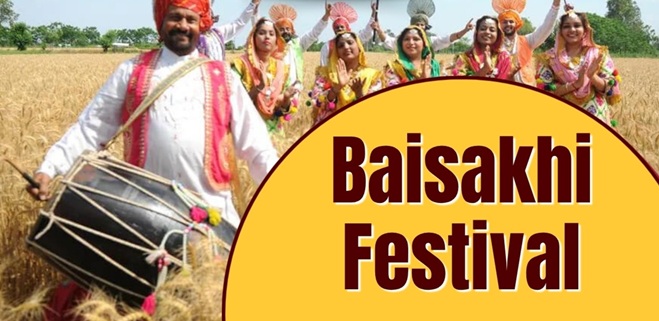
Baisakhi, also known as Vaisakhi, is one of the most significant festivals celebrated primarily in the states of Punjab and Haryana, although its cultural and religious importance extends across India and among the global Sikh diaspora.
It is a multi-dimensional festival, which simultaneously represents :
The festival marks the beginning of the month of Vaisakh according to the solar calendar and is associated with the Sun’s transition into the zodiac sign Aries (Mesha Sankranti).
Thus, Baisakhi forms part of a broader pattern of pan-Indian seasonal transitions and cultural renewal.
One of the most defining historical events associated with Baisakhi is the establishment of the Khalsa Panth by Guru Gobind Singh in 1699 at Anandpur Sahib.
On this day :
This event transformed Sikhism by giving it a collective identity rooted in both spirituality and martial tradition, making Baisakhi a cornerstone of Sikh religious history.
Baisakhi also carries a deeply tragic historical significance due to the Jallianwala Bagh Massacre of 13 April 1919 in Amritsar.
This incident became a turning point in India’s freedom struggle, strengthening the demand for independence and exposing the brutality of colonial governance.
Baisakhi marks the harvesting season of Rabi crops, particularly wheat, in northern India.
In states like Punjab and Haryana, where agriculture forms the backbone of the economy, Baisakhi is not merely symbolic but deeply connected to the economic well-being of farming communities.
Baisakhi holds profound religious significance for Sikhs as it commemorates the birth of the Khalsa Panth.
The festival reinforces the core Sikh values of :
Among Hindus, Baisakhi is observed as a solar New Year festival, associated with Mesha Sankranti.
Thus, Baisakhi reflects religious diversity and shared cultural traditions.
Baisakhi is also a vibrant cultural festival that showcases the richness of Punjabi traditions.
These cultural expressions strengthen :
The celebration of Baisakhi involves a combination of religious, cultural, and social practices.
In recent years, Baisakhi has also become associated with farmer identity and agrarian issues.
The festival reflects the continued importance of agriculture in India’s socio-economic landscape
Prelims
Q. Baisakhi is associated with which of the following events ?
(a) Birth of Guru Nanak
(b) Formation of Khalsa Panth
(c) Start of Mughal Empire
(d) Champaran Satyagraha
Mains
“Baisakhi reflects the intersection of agriculture, religion, and history in India.” Discuss.
FAQsQ1. When is Baisakhi celebrated ? It is celebrated on 13th or 14th April every year. Q2. Why is it important for Sikhs ? It marks the formation of the Khalsa Panth by Guru Gobind Singh. Q3. What is its agricultural significance ? It celebrates the harvest of Rabi crops, especially wheat. Q4. What historical event is linked with Baisakhi ? The Jallianwala Bagh Massacre of 1919. Q5. Why is it relevant today ? It represents cultural identity, agrarian significance, and socio-political relevance. |
| Prelims : International Relations, Geography (Strait of Hormuz) + Current Affairs Mains : GS Paper 2 – International Relations; GS Paper 3 – Economy, Energy Security |
The United States has imposed a naval blockade on Iran, particularly targeting maritime activity around the Strait of Hormuz, following the collapse of diplomatic negotiations.
This development has triggered widespread concerns across the global economy, as it directly affects one of the most critical energy supply routes in the world. The move has already led to rising oil prices, disruption in shipping activity, and fears of escalation into a larger geopolitical conflict.
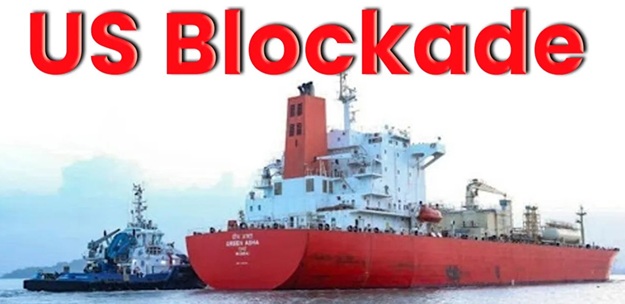
A naval blockade refers to a military strategy aimed at restricting a country’s maritime trade by preventing ships from entering or leaving its ports.
In this case, the United States has undertaken measures to :
This effectively isolates Iran from global maritime trade networks and is intended to exert economic and strategic pressure on the country.
The Strait of Hormuz is one of the most vital maritime chokepoints in the world, making this blockade particularly significant.
Any disruption in this region has immediate ripple effects across global energy markets and trade systems.
The blockade directly limits Iran’s ability to export oil, which reduces the overall supply available in global markets. Since oil markets are highly sensitive to supply changes, even a partial disruption creates significant upward pressure on prices.
In addition, the risk that the conflict could spread to other oil-producing countries further amplifies supply concerns, making markets react sharply.
The presence of military forces and the threat of interception discourage commercial vessels from operating freely in the region.
This disrupts not only oil trade but also the movement of other goods, affecting global supply chains.
Financial markets respond to geopolitical instability with heightened uncertainty.
This leads to price volatility and further instability in global markets.
The reduction in supply combined with heightened uncertainty leads to a rapid increase in global crude oil prices.
Higher oil prices have a cascading effect on economies worldwide, as oil is a fundamental input in transportation, manufacturing, and energy production.
Countries that rely heavily on oil imports face serious challenges:
Emerging economies, including India, are particularly affected due to their high dependence on imported energy.
Oil is central to global logistics, and any disruption affects transportation networks.
Thus, the blockade creates a chain reaction affecting multiple sectors beyond energy.
Shipping companies face increased operational risks while navigating conflict-prone regions.
These factors contribute to increased costs of goods globally.
The disruption is not limited to oil but extends to other commodities transported through the region, such as:
This broadens the scope of the economic impact.
Higher energy costs translate into increased production and transportation costs, which are eventually passed on to consumers in the form of higher prices.
This leads to inflationary pressures across economies, affecting both developed and developing nations.
Rising costs reduce consumer purchasing power and increase operational costs for businesses, leading to slower economic growth.
In extreme cases, economies may face stagflation, where inflation is high but growth remains stagnant.
Geopolitical uncertainty leads to instability in financial markets.
The blockade is perceived by Iran as an aggressive move, increasing the likelihood of retaliation and military confrontation.
The crisis highlights how global trade depends heavily on a few critical chokepoints, making the international system vulnerable to disruptions.
India, as a major oil-importing country, faces multiple challenges :
At the same time, India may respond by :
The blockade reflects a broader structural issue in the global system :
This highlights the fragility of globalisation and dependence on limited energy routes.
Prelims
Q. The Strait of Hormuz connects which of the following water bodies ?
(a) Arabian Sea and Red Sea
(b) Persian Gulf and Arabian Sea
(c) Mediterranean Sea and Red Sea
(d) Black Sea and Caspian Sea
Mains
“Geopolitical tensions in strategic chokepoints can disrupt global trade and energy security.” Discuss with reference to the US blockade on Iran.
FAQsQ1. What is a naval blockade? It is a military strategy to restrict maritime trade of a country. Q2. Why is the Strait of Hormuz important ? It is a major global oil transit route. Q3. Why did oil prices rise ? Due to supply disruptions and geopolitical uncertainty. Q4. How does it affect India ? Through higher oil prices and economic pressure. Q5. What is the key global concern ? Disruption of trade and energy security. |

Our support team will be happy to assist you!


 Contact Us
  New Batch : 9555124124/ 7428085757
  Tech Support : 9555124124/ 7428085757

