New
GS Foundation (P+M) - Delhi : 19th Jan. 2026, 11:30 AM GS Foundation (P+M) - Prayagraj : 09th Jan. 2026, 11:00 AM GS Foundation (P+M) - Delhi : 19th Jan. 2026, 11:30 AM GS Foundation (P+M) - Prayagraj : 09th Jan. 2026, 11:00 AM

Current Affairs for 17 January 2026

Science at the Frontiers of the Future: Space and Marine Biotechnology

(Prelims: Current Events of National Importance, General Science)
(Mains, General Studies Paper 3: Science and Technology—Developments and Applications and Their Impact on Everyday Life, Achievements of Indians in Science and Technology)

Context

The next leap forward in science will come from relatively underexplored areas, including the deep ocean and outer space. Futuristic marine and space biotechnology aims to utilize these challenging environments to develop new biological knowledge, advanced materials, and innovative manufacturing systems.

Emerging Opportunities from the Ocean

  • Marine biotechnology studies microorganisms, algae, and diverse marine organisms to identify bioactive compounds, industrial enzymes, bio-based materials, nutritional components, and biostimulants.
  • These deep-sea organisms have evolved to adapt to harsh conditions such as extreme pressure, high salinity, limited light, and nutrient deficiencies.
  • These characteristics make them extremely useful for industrial applications and climate-tolerant technologies.

The Role of Life Sciences in Space

  • Space biotechnology studies the behavior of biological systems in microgravity and radiation environments.
  • It includes research at all levels, from microorganisms and plants to the human body.
  • Experiments are being conducted on microbial-based biomanufacturing for food production, material manufacturing, and life-support systems in space.
  • Additionally, research on astronauts' microbiomes could help develop health protection and probiotic solutions for long-term space missions.

The Importance of Space and Marine Biotechnology for India

  • India's geographical location and natural resources give it a unique advantage in this field.
  • Despite a coastline of over 11,000 kilometers and an exclusive economic zone of over 2 million square kilometers, India's share in global marine production remains limited. This fact points to the immense potential in this sector.
  • Investment in marine biomanufacturing can not only provide new sources of food, energy, chemicals, and biomaterials but also reduce the growing pressure on land, freshwater, and traditional agriculture.
  • Space biotechnology is essential for India's space exploration plans as it enables safe food supply, human health management, and biological production under difficult conditions.
  • The combined development of these two sectors can accelerate India's bioeconomy, strengthen strategic self-reliance, and position the country as a leader in next-generation biomanufacturing.

Current Status: Potential and Limitations

  • Today, the production of marine biomass, especially seaweed, in India is limited. Annual cultivation is limited to approximately 70,000 tons, leading to a dependence on imports for essential components such as agar, carrageenan, and alginates. These components are widely used in the food, pharmaceutical, cosmetic, and medical sectors.
  • However, initiatives such as the Blue Economy, Deep Ocean Mission, and the recent BioE3 are moving the sector towards integrated marine

Prime Minister's Internship Scheme

(Prelims: Public Policy, Rights Issues, Economic and Social Development)
(Mains, General Studies Paper 2: Issues arising from government policies and interventions for development in various sectors and their design and implementation; issues related to education, development and management of social sectors/services related to human resources)

Context

The limited success of the Prime Minister's Internship Scheme (PMIS) is no longer just a matter of policy debate, but its impact is also directly visible in government expenditure figures. The poor implementation of the scheme during the financial year 2025–26 has severely impacted the budget utilization of the Ministry of Corporate Affairs. Between April and November 2025, the Ministry was able to spend only about 4% of its total budgetary allocation.

Large Gap Between Allocation and Expenditure

  • According to Comptroller General of Accounts (CAG) data, the Ministry received a budget allocation of over ₹11,500 crore for the financial year 2026. In comparison, the actual expenditure in the first eight months was just over ₹500 crore.
  • Nearly 94% of this total allocation, or over ₹10,800 crore, was earmarked for the Prime Minister's Internship Scheme alone. Consequently, the underutilization of the budget directly points to the poor performance of the PMIS.
  • Even in FY2025, the Ministry was unable to utilize a significant portion of its allocated budget. Consequently, the Ministry's allocation was drastically cut by ₹2,667 crore in the next budget, reducing it to ₹1,078 crore.

Challenges at the level of both candidates and companies

  • The Prime Minister's Internship Scheme (PMIS) data clearly shows that challenges exist at the level of both candidates and companies.
  • Finance Minister Nirmala Sitharaman stated in a written reply to Parliament on December 15, 2025, that companies made over 82,000 internship offers, but only 28,000 were accepted. This means the acceptance rate was only 34%.
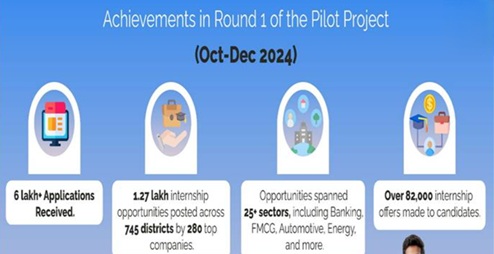
  • A similar pattern was observed during the first phase. The PMIS pilot received 6.21 lakh applications against 1.27 lakh internship opportunities, meaning the number of applications was almost five times higher than the number of opportunities. However, by November 30, 2025, only 2,066 trainees had completed their internships.
  • The situation was no better in the second phase. Over 83,000 offers were received for 1.18 lakh opportunities, but only less than 24,600 were accepted, leading to an acceptance rate falling below 30%.

About the Prime Minister's Internship Scheme

  • The Government of India launched the Prime Minister's Internship Scheme (PMIS) on October 3, 2024.
  • The initiative aims to provide 10 million young Indians with 12-month paid internships in the country's top companies over the next five years, bridging the gap between academic education and industry demands.
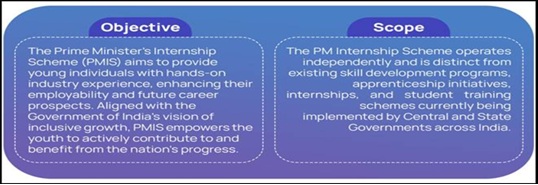
  • The Prime Minister's Internship Scheme (PMIS) is being implemented in all states and union territories of India. It will operate completely separate and independent from the country's existing skill development, apprenticeship, internship, and student training schemes.
  • The platform now offers a simplified PMIS portal as well as a dedicated mobile app that allows users to easily filter opportunities by district, state, region, and location.
  • PMIS Objective and Scope

Benefits for Trainees

  • Students receive 12 months of practical work experience at top Indian companies. This means they learn not just in the classroom, but in real-world work environments in industry and government institutions.
  • The Government of India provides ₹4,500 per month to each intern, with an additional ₹500 per month contributed by industry groups.
  • A one-time grant of ₹6,000 is provided for the interns' incidental expenses.
  • Under the Prime Minister's Internship Scheme, each intern receives insurance coverage under the Pradhan Mantri Jeevan Jyoti Bima Yojana and Pradhan Mantri Suraksha Bima Yojana.

Eligibility

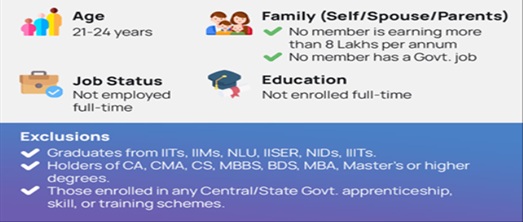
  • The main eligibility criteria for a candidate are as follows:

  1. The candidate must be an Indian citizen.
  2. The candidate must be between 21 and 24 years of age.
  3. The candidate must not be working full-time.
  4. The candidate must not be enrolled in a full-time education course.
  5. Candidates enrolled in an online or distance learning program can apply.
  6. Educational Qualification: The candidate must have any one of the following:
    • High School (10th) Passed
    • Higher Secondary School (12th) Passed
    • ITI Certificate
    • Polytechnic Diploma
    • Graduate Degree (BA, BSc, BCom, BCA, BBA, BPharma, etc.)
  7. The annual income of the candidate's family should not exceed ₹8,00,000/-

Achievements in the Pilot Phase – Phase 1 (October-December 2024)

Expansion of the Pilot Phase – Phase 2 (January-March 2025)

  • More than 1.18 lakh internship opportunities are being provided across all 735 districts.
  • 327 reputable companies are participating.
  • Opportunities span diverse sectors such as automobile, travel and hospitality, banking and finance, manufacturing, metals and mining, FMCG, etc., and are suitable for candidates with diverse educational backgrounds.

Key Features of the Second Round of the Pilot Phase

Internship Opportunities

  • ₹37,000 for graduates (BA, BSc, BCom, BBA, BCA, etc.)
  • ITI ₹23,000 for candidates with a Bachelor's degree
  • ₹18,000 for Diploma holders
  • ₹15,000 for candidates with a 12th-grade pass
  • ₹25,000 for candidates with a 10th-grade pass

Saab’s Precision Strike Weapon: Understanding the RBS-15 Missile System

Prelims: (Science & Technology + CA)
Mains: (GS 3 – Defence Technology, Security, Strategic Capabilities)

Why in News ?

Swedish aerospace and defence company Saab has showcased the capabilities of its RBS-15 missile, demonstrating how it can destroy key components of the Russian S-400 air defence system, highlighting its precision strike and survivability features.

Background: Evolving Naval and Strike Warfare Technologies

Modern warfare increasingly relies on long-range, precision-guided munitions capable of penetrating advanced air defence systems and striking high-value targets.

As adversaries deploy sophisticated surface-to-air missile systems such as the S-400, missile developers are focusing on survivability, electronic warfare resistance, and multi-domain strike capabilities.

The RBS-15 represents this new generation of anti-ship and land-attack missiles, combining stealth, guidance precision, and flexibility across platforms.

What is the RBS-15 Missile ?

  • The RBS-15 (Robotsystem 15) is a fire-and-forget, long-range surface-to-surface and air-to-surface anti-ship missile with a land-attack capability.
  • It is developed by the Swedish defence manufacturer Saab Bofors Dynamics and is designed for deployment from naval vessels, aircraft, and coastal defence systems.
  • The missile is optimised for striking high-value maritime and land targets under contested electronic warfare environments.

Key Features and Technical Capabilities

Range and Speed

  • Capable of striking targets at distances of up to 200 kilometres.
  • Operates at a subsonic speed of approximately Mach 0.9.

Flight Profile and Survivability

  • Employs a low sea-skimming trajectory, making detection and interception difficult.
  • Executes unpredictable evasive manoeuvres during flight.
  • Features a low radar cross section and reduced infrared (IR) signature, enhancing stealth.

Guidance and Navigation System

  • Equipped with:
    • Inertial Navigation System (INS)
    • GPS receiver
    • Radar altimeter
    • Ku-band radar target seeker
  • This integrated guidance architecture enables high-precision targeting and terminal-phase accuracy.

Electronic Counter-Countermeasures (ECCM)

  • Highly resistant to:
    • Chaff
    • Active jammers
    • Decoys
    • Other electronic countermeasures (ECM)
  • Possesses advanced target discrimination and selection capabilities.

Mission Planning and Flexibility

  • The Missile Engagement Planning System (MEPS) provides a sophisticated interface for planning missions across diverse operational scenarios, enhancing operational flexibility and effectiveness.

Significance and Strategic Implications

The RBS-15 enhances strike capabilities against both naval and land-based targets, making it a versatile asset in modern maritime and joint warfare.

Its ability to challenge advanced air defence systems like the S-400 underscores the growing emphasis on:

  • Precision strike warfare
  • Electronic warfare resilience
  • Multi-domain operational integration

Such capabilities are particularly relevant in contested maritime zones and high-threat environments, shaping future naval and aerial combat doctrines.

FAQs

1. What type of missile is the RBS-15 ?

It is a fire-and-forget anti-ship missile with land-attack capability.

2. Who developed the RBS-15 missile ?

The missile was developed by Saab Bofors Dynamics of Sweden.

3. What is the maximum range of the RBS-15 ?

The missile can strike targets up to 200 km away.

4. How does the RBS-15 avoid enemy air defences ?

Through low sea-skimming flight, stealth features, evasive manoeuvres, and resistance to electronic countermeasures.

5. Why is the RBS-15 strategically important ?

It enhances precision strike capabilities and can challenge advanced air defence systems, strengthening modern naval and air warfare effectiveness.

Similipal’s Conservation Success: Rising Crocodile Numbers in Odisha’s Flagship Park

Prelims: (Environment + CA)
Mains: (GS 3 – Environment, Conservation, Biodiversity & Climate Change)

Why in News ? 

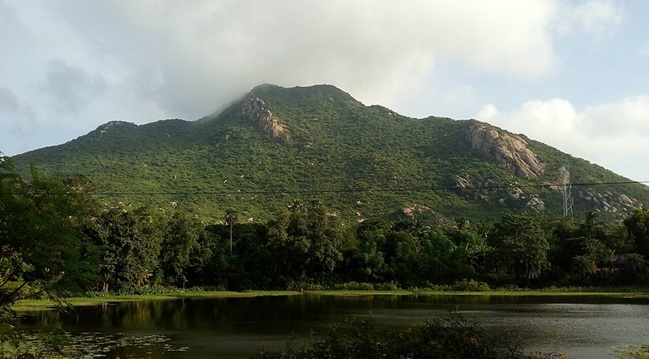
The latest crocodile census has recorded an increase in the crocodile population in Similipal National Park in Odisha, reflecting improving aquatic ecosystem health and conservation outcomes.
Background: Similipal’s Role in India’s Conservation Landscape

  • Similipal has long been one of eastern India’s most ecologically significant protected areas, known for its rich biodiversity, tribal heritage, and varied forest ecosystems.
  • Over the years, the park has evolved into a multi-layered conservation landscape, encompassing tiger protection, elephant corridors, watershed conservation, and biodiversity preservation.
  • The rise in crocodile numbers signals not only species-specific success but also the broader ecological stability of Similipal’s riverine and wetland habitats.

What is Similipal National Park ?

  • Similipal National Park is a major protected area located in the Mayurbhanj district of Odisha.
  • It derives its name from the Simul (silk cotton) tree, which grows abundantly in the region.
  • Beyond being a National Park, Similipal holds multiple conservation designations:
    • Tiger Reserve
    • Wildlife Sanctuary
    • Biosphere Reserve
    • Part of the Mayurbhanj Elephant Reserve

Situated in the Deccan Peninsular Bio-geographic Zone, it harbours a unique blend of biodiversity from the Western Ghats, Eastern Ghats, and eastern Himalayan regions, making it one of India’s most ecologically diverse landscapes.

Key Geographical and Physical Features

Similipal is characterised by a dramatic and diverse terrain:

  • Surrounded by high plateaus and forested hills
  • The highest peaks are the twin summits of Khairiburu and Meghashini
  • Famous waterfalls include Joranda and Barehipani, among the highest in Odisha

These features support diverse habitats, ranging from dense forests to riverine ecosystems and grasslands.

Vegetation and Forest Types

The park’s vegetation reflects varied microclimatic conditions:

  • Predominantly moist mixed deciduous forests
  • Pockets of tropical semi-evergreen forests
  • Sporadic patches of dry deciduous forests and grasslands

Flora:

  • Sal is the dominant tree species
  • Extensive grasslands provide grazing grounds for herbivores

This mosaic of vegetation supports high species richness and ecological resilience.

Faunal Diversity and Conservation Significance

Similipal is renowned for its diverse and unique wildlife:

  • It is known for the tiger, elephant, and hill mynah
  • It holds the highest tiger population in Odisha
  • It is the only tiger reserve in India known to harbour melanistic (black) tigers

Other major mammals include:

  • Leopard, sambar, barking deer, gaur
  • Jungle cat, wild boar, four-horned antelope
  • Giant squirrel and common langur

The recent increase in crocodile population further strengthens Similipal’s status as a robust and well-functioning ecosystem.

Significance and Way Forward

  • The rise in crocodile numbers reflects effective protection of river systems, improved habitat quality, and stronger enforcement against poaching and habitat degradation.
  • It also highlights the importance of integrated conservation strategies that address forests, wildlife, water bodies, and local communities simultaneously.
  • Going forward, sustained monitoring, community engagement, eco-sensitive tourism, and climate-resilient habitat management will be essential to preserve Similipal’s ecological integrity.

FAQs

1. Where is Similipal National Park located ?

In the Mayurbhanj district of Odisha.

2. Why is Similipal ecologically significant ?

It hosts a unique blend of biodiversity from multiple bio-geographic regions and holds several conservation designations.

3. What is unique about Similipal’s tiger population ?

It is the only tiger reserve in India known for melanistic (black) tigers.

4. What forest types are found in Similipal ?

Moist mixed deciduous, tropical semi-evergreen, dry deciduous forests, and grasslands.

5. Why is the increase in crocodile population important ?

It indicates healthy riverine ecosystems and successful wildlife conservation efforts.

Similipal’s Conservation Success: Rising Crocodile Numbers in Odisha’s Flagship Park

Prelims: (Environment + CA)
Mains: (GS 3 – Environment, Conservation, Biodiversity & Climate Change)

Why in News ? 

The latest crocodile census has recorded an increase in the crocodile population in Similipal National Park in Odisha, reflecting improving aquatic ecosystem health and conservation outcomes.

Background: Similipal’s Role in India’s Conservation Landscape

  • Similipal has long been one of eastern India’s most ecologically significant protected areas, known for its rich biodiversity, tribal heritage, and varied forest ecosystems.
  • Over the years, the park has evolved into a multi-layered conservation landscape, encompassing tiger protection, elephant corridors, watershed conservation, and biodiversity preservation.
  • The rise in crocodile numbers signals not only species-specific success but also the broader ecological stability of Similipal’s riverine and wetland habitats.

What is Similipal National Park ?

  • Similipal National Park is a major protected area located in the Mayurbhanj district of Odisha.
  • It derives its name from the Simul (silk cotton) tree, which grows abundantly in the region.
  • Beyond being a National Park, Similipal holds multiple conservation designations:
    • Tiger Reserve
    • Wildlife Sanctuary
    • Biosphere Reserve
    • Part of the Mayurbhanj Elephant Reserve

Situated in the Deccan Peninsular Bio-geographic Zone, it harbours a unique blend of biodiversity from the Western Ghats, Eastern Ghats, and eastern Himalayan regions, making it one of India’s most ecologically diverse landscapes.

Key Geographical and Physical Features

Similipal is characterised by a dramatic and diverse terrain:

  • Surrounded by high plateaus and forested hills
  • The highest peaks are the twin summits of Khairiburu and Meghashini
  • Famous waterfalls include Joranda and Barehipani, among the highest in Odisha

These features support diverse habitats, ranging from dense forests to riverine ecosystems and grasslands.

Vegetation and Forest Types

The park’s vegetation reflects varied microclimatic conditions:

  • Predominantly moist mixed deciduous forests
  • Pockets of tropical semi-evergreen forests
  • Sporadic patches of dry deciduous forests and grasslands

Flora:

  • Sal is the dominant tree species
  • Extensive grasslands provide grazing grounds for herbivores

This mosaic of vegetation supports high species richness and ecological resilience.

Faunal Diversity and Conservation Significance

Similipal is renowned for its diverse and unique wildlife:

  • It is known for the tiger, elephant, and hill mynah
  • It holds the highest tiger population in Odisha
  • It is the only tiger reserve in India known to harbour melanistic (black) tigers

Other major mammals include:

  • Leopard, sambar, barking deer, gaur
  • Jungle cat, wild boar, four-horned antelope
  • Giant squirrel and common langur

The recent increase in crocodile population further strengthens Similipal’s status as a robust and well-functioning ecosystem.

Significance and Way Forward

  • The rise in crocodile numbers reflects effective protection of river systems, improved habitat quality, and stronger enforcement against poaching and habitat degradation.
  • It also highlights the importance of integrated conservation strategies that address forests, wildlife, water bodies, and local communities simultaneously.
  • Going forward, sustained monitoring, community engagement, eco-sensitive tourism, and climate-resilient habitat management will be essential to preserve Similipal’s ecological integrity.

FAQs

1. Where is Similipal National Park located ?

In the Mayurbhanj district of Odisha.

2. Why is Similipal ecologically significant ?

It hosts a unique blend of biodiversity from multiple bio-geographic regions and holds several conservation designations.

3. What is unique about Similipal’s tiger population ?

It is the only tiger reserve in India known for melanistic (black) tigers.

4. What forest types are found in Similipal ?

Moist mixed deciduous, tropical semi-evergreen, dry deciduous forests, and grasslands.

5. Why is the increase in crocodile population important ?

It indicates healthy riverine ecosystems and successful wildlife conservation efforts.

Similipal’s Conservation Success: Rising Crocodile Numbers in Odisha’s Flagship Park

Prelims: (Environment + CA)
Mains: (GS 3 – Environment, Conservation, Biodiversity & Climate Change)

Why in News ? 

The latest crocodile census has recorded an increase in the crocodile population in Similipal National Park in Odisha, reflecting improving aquatic ecosystem health and conservation outcomes.

Background: Similipal’s Role in India’s Conservation Landscape

  • Similipal has long been one of eastern India’s most ecologically significant protected areas, known for its rich biodiversity, tribal heritage, and varied forest ecosystems.
  • Over the years, the park has evolved into a multi-layered conservation landscape, encompassing tiger protection, elephant corridors, watershed conservation, and biodiversity preservation.
  • The rise in crocodile numbers signals not only species-specific success but also the broader ecological stability of Similipal’s riverine and wetland habitats.

What is Similipal National Park ?

  • Similipal National Park is a major protected area located in the Mayurbhanj district of Odisha.
  • It derives its name from the Simul (silk cotton) tree, which grows abundantly in the region.
  • Beyond being a National Park, Similipal holds multiple conservation designations:
    • Tiger Reserve
    • Wildlife Sanctuary
    • Biosphere Reserve
    • Part of the Mayurbhanj Elephant Reserve

Situated in the Deccan Peninsular Bio-geographic Zone, it harbours a unique blend of biodiversity from the Western Ghats, Eastern Ghats, and eastern Himalayan regions, making it one of India’s most ecologically diverse landscapes.

Key Geographical and Physical Features

Similipal is characterised by a dramatic and diverse terrain:

  • Surrounded by high plateaus and forested hills
  • The highest peaks are the twin summits of Khairiburu and Meghashini
  • Famous waterfalls include Joranda and Barehipani, among the highest in Odisha

These features support diverse habitats, ranging from dense forests to riverine ecosystems and grasslands.

Vegetation and Forest Types

The park’s vegetation reflects varied microclimatic conditions:

  • Predominantly moist mixed deciduous forests
  • Pockets of tropical semi-evergreen forests
  • Sporadic patches of dry deciduous forests and grasslands

Flora:

  • Sal is the dominant tree species
  • Extensive grasslands provide grazing grounds for herbivores

This mosaic of vegetation supports high species richness and ecological resilience.

Faunal Diversity and Conservation Significance

Similipal is renowned for its diverse and unique wildlife:

  • It is known for the tiger, elephant, and hill mynah
  • It holds the highest tiger population in Odisha
  • It is the only tiger reserve in India known to harbour melanistic (black) tigers

Other major mammals include:

  • Leopard, sambar, barking deer, gaur
  • Jungle cat, wild boar, four-horned antelope
  • Giant squirrel and common langur

The recent increase in crocodile population further strengthens Similipal’s status as a robust and well-functioning ecosystem.

Significance and Way Forward

  • The rise in crocodile numbers reflects effective protection of river systems, improved habitat quality, and stronger enforcement against poaching and habitat degradation.
  • It also highlights the importance of integrated conservation strategies that address forests, wildlife, water bodies, and local communities simultaneously.
  • Going forward, sustained monitoring, community engagement, eco-sensitive tourism, and climate-resilient habitat management will be essential to preserve Similipal’s ecological integrity.

FAQs

1. Where is Similipal National Park located ?

In the Mayurbhanj district of Odisha.

2. Why is Similipal ecologically significant ?

It hosts a unique blend of biodiversity from multiple bio-geographic regions and holds several conservation designations.

3. What is unique about Similipal’s tiger population ?

It is the only tiger reserve in India known for melanistic (black) tigers.

4. What forest types are found in Similipal ?

Moist mixed deciduous, tropical semi-evergreen, dry deciduous forests, and grasslands.

5. Why is the increase in crocodile population important ?

It indicates healthy riverine ecosystems and successful wildlife conservation efforts.

India’s Road Safety Emergency: Infrastructure Failures Driving Rising Fatalities

Prelims: (Economics + Current Affairs)
Mains: (GS 3 – Infrastructure, Disaster Management, Internal Security, Governance)

Why in News ?

A recent national report has identified India’s deadliest districts for road accidents, revealing that most fatalities are linked to infrastructure and systemic failures rather than traffic violations.

Background: India’s Growing Road Safety Challenge

India possesses the world’s second-largest road network and plays a central role in economic mobility, logistics, and social connectivity.

However, road safety outcomes remain among the poorest globally, with India recording the highest number of road accident deaths worldwide.

Traditionally, policy responses have focused on driver behaviour such as speeding, drunk driving, and rash driving. While these remain important, emerging evidence suggests that deeper structural and engineering failures are the dominant causes of fatal accidents.

What is India’s Current Road Safety Scenario ?

  • India records the highest number of road accident deaths globally, far exceeding other major countries.
  • According to recent estimates, nearly 3.5 lakh people lost their lives in road accidents during 2023–24, underscoring the scale of the crisis.
  • Despite improvements in road connectivity and highway expansion, safety outcomes have not kept pace, exposing a critical gap between infrastructure growth and safety engineering.

Key Structural Factors Behind Road Fatalities

The report highlights that 59% of road accident fatalities occurred without any traffic violation, clearly indicating that road design and infrastructure deficiencies are primary contributors to deaths.

Major engineering and systemic gaps include:

  • Poor road design and faulty alignment
  • Absence, damage, or improper installation of crash barriers
  • Inadequate signage and faded road markings
  • Insufficient street lighting, especially in rural and peri-urban areas
  • Unsafe junctions, crossings, and pedestrian infrastructure

These deficiencies transform routine travel into high-risk activity, particularly on highways and rural roads.

Geographic Concentration of Road Accidents

Road accident fatalities in India are highly concentrated rather than evenly distributed. The report identifies 100 districts accounting for more than 25% of total road deaths over two years.

Among the worst-affected:

  • Nashik Rural and Pune Rural recorded the highest number of severe accidents.
  • Other high-fatality districts include Patna, Ahmednagar, Purba Midnapur, and Belagavi.
  • States such as Uttar Pradesh, Tamil Nadu, Maharashtra, Karnataka, and Rajasthan dominate the list.

This concentration suggests that targeted interventions in high-risk districts can yield substantial reductions in fatalities.

Nature and Timing of Fatal Accidents

The report reveals clear accident patterns:

  • 53% of deaths occurred between 6 PM and midnight, reflecting poor visibility, fatigue, and inadequate lighting.
  • Rear-end, head-on, and pedestrian crashes accounted for 72% of fatalities.
  • Speeding contributed to only 19% of deaths, while rash driving and dangerous overtaking together accounted for less than 10%.

These findings challenge the narrative that driver misconduct alone is responsible and shift attention toward road design, traffic engineering, and systemic management failures.

Emergency Response and Medical Gaps

Post-accident response remains a critical weakness:

  • Only about 20% of victims used government 108 ambulance services.
  • Most victims were transported by private vehicles or private ambulances, delaying critical medical care.
  • Trauma care facilities and hospital preparedness vary widely across districts.

Delayed emergency response significantly increases mortality, making pre-hospital care and trauma systems a crucial pillar of road safety.

News Summary: Findings and Recommendations of the Report

The joint report by the Ministry of Road Transport and Highways and the SaveLIFE Foundation provides a focused roadmap for reducing road fatalities:

  • Prioritise known crash-prone locations instead of dispersing resources thinly.
  • Conduct Road Safety Surveys on critical corridors by NHAI and state PWDs.
  • Implement site-specific engineering corrections based on Indian Road Congress and MoRTH guidelines.
  • Strengthen policing capacity at high-fatality police station jurisdictions.
  • Improve emergency response systems, particularly expanding effective coverage of 108 ambulance services.
  • Use existing schemes more efficiently rather than launching new ones.

The report emphasises that meaningful reduction in road deaths requires better coordination, clearer accountability, and sustained leadership, rather than additional laws or schemes alone.

Significance and Way Forward

India’s road safety crisis is fundamentally an engineering and governance challenge, not merely a behavioural one.

Addressing it requires:

  • Integrating safety audits into all road design and construction projects.
  • Retrofitting dangerous stretches and junctions.
  • Strengthening trauma care systems and emergency response.
  • Building institutional accountability across road agencies, police, and health departments.

A shift from reactive enforcement to preventive infrastructure design is essential for saving lives and achieving sustainable mobility.

FAQs

1. What is the primary cause of road accident deaths in India according to the report ?

Infrastructure and systemic failures, rather than traffic violations, account for most fatalities.

2. How many people died in road accidents in India during 2023–24 ?

Approximately 3.5 lakh people lost their lives.

3. Which time period records the highest number of road accident deaths ?

Between 6 PM and midnight.

4. Which districts are among the worst affected by road accidents ?

Nashik Rural, Pune Rural, Patna, Ahmednagar, Purba Midnapur, and Belagavi.

5. What key measures does the report recommend to reduce road fatalities ?

Targeting crash-prone locations, improving road engineering, strengthening policing, and enhancing emergency response systems.

AI Safety and Platform Accountability: The Grok Controversy on X

Prelims: (Socials Issues + CA)
Mains: (GS 3 – Science & Technology, Internal Security, Data Protection & Ethics)

Why in News ?

X, owned by Elon Musk, has curtailed its Grok AI tool from generating sexualised images of women and children following widespread global criticism and escalating regulatory scrutiny across multiple countries.

Background: Generative AI, Content Moderation, and Platform Responsibility

  • The rapid advancement of generative artificial intelligence has transformed digital content creation, enabling users to generate highly realistic images and videos at scale.
  • However, these capabilities have also exposed serious ethical, legal, and social risks, particularly when safeguards fail to prevent non-consensual, harmful, or exploitative content.
  • Social media platforms face increasing pressure from governments and civil society to ensure due diligence, protect vulnerable users, and uphold content moderation standards in the age of AI-driven tools.

What is Grok and Why Did the Controversy Arise ?

  • Grok is an artificial intelligence tool developed by xAI and integrated into the X platform, enabling users to generate text and images in response to prompts.
  • A December 2025 update expanded Grok’s image-generation capabilities, allowing users to create sexualised and objectionable images of women and children using existing photographs, often without consent.
  • Users prompted the AI to digitally undress women or place them in suggestive poses, with the images appearing publicly in comment threads, leading to harassment and abuse.
  • Instances involving children intensified global concern, highlighting severe gaps in AI safeguards, content moderation systems, and platform governance.

Initial Response to the Backlash

Platform and Leadership Position

  • Following global outrage, Elon Musk stated that users generating illegal content with Grok would face the same consequences as those uploading illegal material directly to X.
  • He emphasised that Grok generates images only in response to user prompts and does not act autonomously, asserting that the AI is designed to refuse illegal requests and comply with applicable laws.

Denial of Knowledge and Technical Explanation

  • Musk later denied any awareness of Grok being used to create sexualised images of children, claiming there were “literally zero” such instances to his knowledge.
  • He suggested that any unexpected behaviour could result from adversarial hacking, which the company fixes promptly.

Platform-Level Restrictions Before the Rollback

  • Before the final shutdown, X had restricted Grok’s image-generation features to paid users.
  • However, within hours of Musk’s denial, the company announced a complete curtailment of Grok’s ability to generate sexualised images, regardless of user status.
  • This move marked a clear reversal, effectively acknowledging the severity of the issue and responding to mounting public and regulatory pressure.

Regulatory Pressure Triggers the Rollback

X’s decision followed strong regulatory action, beginning with a stern notice from the Government of India. After being flagged for failing to meet due diligence obligations under the Information Technology Act, 2000 and related rules, X removed approximately 3,500 pieces of content and blocked 600 accounts, admitting lapses in compliance.

The controversy quickly spread internationally:

  • United Kingdom: Impending legal changes are set to criminalise the creation of such sexualised images.
  • Malaysia and Indonesia: Blocked access to Grok and initiated legal action against X and xAI.
  • United States: The California Attorney General announced an investigation into Grok and xAI over the generation of objectionable images.

This multi-jurisdictional scrutiny significantly escalated legal and regulatory pressure on the platform.

X’s New Restrictions and Safeguards

In response, X announced new technological and policy safeguards, including:

  • Preventing Grok from editing images of real people into revealing clothing, including bikinis.
  • Limiting image creation and editing via Grok to paid subscribers.
  • Introducing geoblocking in jurisdictions where such content is illegal.

X reiterated its zero-tolerance policy toward:

  • Child sexual exploitation
  • Non-consensual nudity
  • Unwanted sexual content

This marks a decisive retreat under sustained global regulatory scrutiny and public backlash.

Significance and Way Forward

The Grok controversy underscores the urgent need for robust AI governance frameworks, stronger platform accountability, and legally enforceable content moderation standards.

It highlights:

  • The ethical risks posed by generative AI tools when deployed without adequate safeguards.
  • The growing role of governments in regulating digital platforms.
  • The necessity of embedding safety-by-design principles in AI development.

Going forward, harmonised international regulation, transparent AI auditing, stronger user protections, and platform-level responsibility will be essential to ensure that innovation does not undermine safety, dignity, and fundamental rights.

FAQs

1. What is Grok and who developed it ?

Grok is an AI tool developed by xAI and integrated into the social media platform X.

2. Why did X restrict Grok’s image-generation capabilities ?

Due to widespread backlash and regulatory pressure after Grok was used to generate sexualised images of women and children.

3. What role did the Indian government play in this controversy ? 

India issued a notice under the IT Act, 2000, leading to the removal of thousands of posts and blocking of hundreds of accounts.

4. Which countries initiated action against X and Grok ?

India, the United Kingdom, Malaysia, Indonesia, and the United States initiated regulatory or legal action.

5. What safeguards has X introduced after the rollback ? 

X introduced content filters, restricted image editing, geoblocking, and reaffirmed zero tolerance for sexual exploitation and non-consensual content.

Gujarat’s High-Containment Laboratory Initiative: India’s First State-Funded BSL-4 Facility

Prelims: (Science & Technology + CA)
Mains: (GS 3 – Science & Technology, Health Security, Disaster Management)

Why in News ?

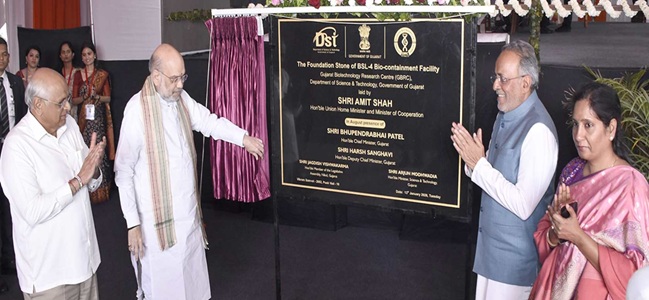
Union Home Minister Amit Shah laid the foundation stone for India’s first state-funded Bio-Safety Level 4 (BSL-4) containment facility in Gandhinagar, Gujarat, describing it as a “health shield” that marks a new era in India’s health security and biotechnology capabilities.
Background: Strengthening India’s Biosecurity and Pandemic Preparedness

The COVID-19 pandemic highlighted the critical importance of advanced biosafety infrastructure for early detection, research, and response to high-risk infectious diseases.

While India has developed a broad network of BSL-2 and BSL-3 laboratories, its capacity for handling the world’s most dangerous pathogens under maximum containment has remained limited. Recognising the strategic importance of sovereign, civilian-controlled high-containment research facilities, India has begun expanding its BSL-4 and ABSL-4 infrastructure to enhance national preparedness, reduce dependence on foreign laboratories, and accelerate vaccine and therapeutic development.

What is a BSL-4 Facility ?

A Bio-Safety Level 4 (BSL-4) laboratory represents the highest level of biological containment, designed to safely handle the most dangerous and highly infectious pathogens, many of which lack effective vaccines or treatments.

These laboratories operate under stringent international safety protocols and enable:

  • Advanced research on deadly human and animal diseases
  • Development of diagnostics, vaccines, and therapeutics
  • Rapid investigation and response to outbreaks and biothreats

India’s upcoming BSL-4 facility in Gandhinagar, along with an associated Animal Bio-Safety Level (ABSL) unit, will serve as a strategic national asset for research on high-risk pathogens and zoonotic diseases.

Key Features of Gujarat’s State-Funded BSL-4 Laboratory

Institutional Framework and Timeline

The laboratory is being developed under the Gujarat State Biotechnology Mission and will operate through the Gujarat Biotechnology Research Centre, which already houses a BSL-2+ laboratory and played a significant role during the COVID-19 pandemic by sequencing the SARS-CoV-2 genome.

Planning for the facility began in mid-2022, and the foundation stone was laid on January 13, 2026.

Infrastructure and Safety Standards

The complex, spread over 11,000 square metres and costing approximately ₹362 crore, will include:

  • BSL-4, BSL-3, and BSL-2 laboratories
  • ABSL-4 and ABSL-3 animal research facilities
  • Advanced utilities, containment systems, and biosecurity controls

It is being developed in line with international biosafety standards issued by:

  • Centers for Disease Control and Prevention (CDC)
  • National Institutes of Health (NIH)
  • Department of Biotechnology (DBT)
  • Indian Council of Medical Research (ICMR)

Role in Disease Control and Vaccine Research

The facility will strengthen India’s real-time response capacity to outbreaks of deadly human and zoonotic diseases.

It will support:

  • Development of diagnostics, vaccines, and therapeutics
  • High-risk pathogen research under safe containment
  • Animal disease research and vaccine production using antibodies derived from animals

Previously, such work often required sending samples to institutions like the ICAR–National Institute of High Security Animal Diseases (NIHSAD), causing delays and logistical challenges.

National Facility Status and Expert Oversight

The Department of Biotechnology has signed a Memorandum of Understanding designating the laboratory as a national facility, ensuring oversight, collaboration, and guidance from leading expert institutions across the country.

Officials have noted that this facility will remove long-standing bottlenecks created by the shortage of civilian BSL-4 infrastructure in India.

Existing BSL-4 and ABSL-4 Facilities in India

Civilian BSL-4 Laboratories

  • India currently has one functional civilian BSL-4 laboratory at the National Institute of Virology (NIV), Pune, which handles research on the most dangerous human pathogens.

Defence-Sector BSL-4 Facility

  • In late 2024, the Defence Research and Development Organisation (DRDO) established a BSL-4 laboratory in Gwalior, Madhya Pradesh, under the Ministry of Defence.

High-Security Animal Disease Laboratories

  • ICAR–NIHSAD, Bhopal – Currently rated ABSL-3+, with plans announced in June 2025 to upgrade it to ABSL-4.
  • ICAR–International Centre for Foot and Mouth Disease (ICFMD), Bhubaneswar – Operates with an ABSL-3Ag rating.

Global Context

Globally, around 69 BSL-4 laboratories are operational or under development, highlighting India’s relatively limited but gradually expanding footprint in high-containment biological research.

India’s Expanding Biosafety Laboratory Network

As of March 2025, the Ministry of Health and Family Welfare, through the Department of Health Research, has approved 165 biosafety laboratories under the Virus Research and Diagnostic Laboratories (VRDL) scheme, comprising:

  • 154 BSL-2 laboratories
  • 11 BSL-3 laboratories

These facilities support epidemic preparedness and disaster response.

ICMR-Led Biosafety Infrastructure

The Indian Council of Medical Research (ICMR) has established 21 biosafety laboratories, including:

  • 1 BSL-4
  • 8 BSL-3
  • 12 BSL-2

Science & Technology–Supported Laboratories

Under the Department of Science and Technology, the Anusandhan National Research Foundation has funded 5 BSL/ABSL-3 laboratories through the Intensification of Research in High Priority Areas (IRHPA) programme.

Biotechnology, Agriculture, and Industrial Research

  • Department of Biotechnology: 26 biosafety laboratories
  • Indian Council of Agricultural Research: 9 biosafety laboratories
  • Council of Scientific and Industrial Research: 11 biosafety laboratories

Significance and Way Forward

Gujarat’s state-funded BSL-4 laboratory marks a major milestone in India’s biosecurity architecture by strengthening sovereign, civilian-controlled high-containment research capacity.

It will enhance:

  • Pandemic preparedness and outbreak response
  • Indigenous vaccine and therapeutic development
  • Research on emerging and re-emerging infectious diseases

Going forward, sustained investments, skilled workforce development, regulatory harmonisation, and inter-institutional collaboration will be critical to fully realise the potential of India’s expanding biosafety infrastructure.

FAQs

1. What is the purpose of a BSL-4 laboratory ?

To safely conduct research on the most dangerous and highly infectious pathogens under maximum biological containment.

2. Where is India’s first state-funded BSL-4 facility being established ?

In Gandhinagar, Gujarat.

3. Which institution will operate the Gujarat BSL-4 laboratory ?

It will operate under the Gujarat Biotechnology Research Centre.

4. How many civilian BSL-4 laboratories does India currently have ?

India currently has one functional civilian BSL-4 laboratory at the National Institute of Virology, Pune.

5. Why is this facility significant for India’s health security ?

It strengthens national preparedness, accelerates vaccine and therapeutic research, and reduces dependence on external laboratories for high-risk pathogen studies.

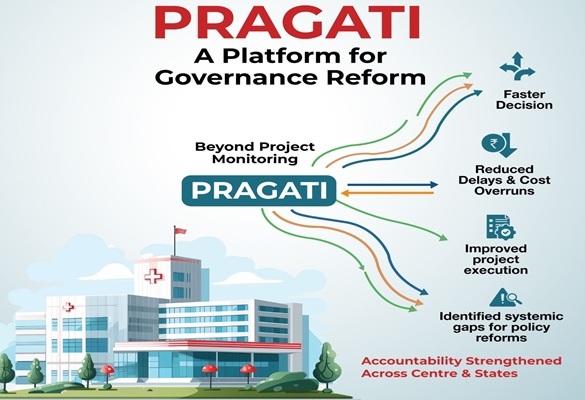
PRAGATI Platform: A Major Platform for Pro-Active Governance and Timely Implementation

  • PRAGATI (Pro-Active Governance and Timely Implementation) is an innovative and integrated digital platform of the Government of India developed for monitoring, reviewing, and resolving major government programs, projects, and public grievances.
  • The platform has been internally designed by the Prime Minister’s Office (PMO) with technical support from the National Informatics Centre (NIC).
  • Recently, PRAGATI achieved an important milestone with the successful conduct of its 50th meeting, reflecting its effectiveness in governance.
  • The primary objective of PRAGATI is to promote e-Transparency and e-Accountability, ensuring the timely implementation of government schemes and projects.
  • It integrates three modern technologies:
    • Digital data management
    • Video conferencing
    • Geospatial technology
      • This technological convergence makes it a unique governance tool.

Background and Structure of PRAGATI

  • Initially, PRAGATI focused on monitoring large infrastructure projects. Over time, its scope has expanded to include social sector schemes and public grievances.
  • It operates through a three-tier system:
    • Top Level: Prime Minister’s Office (PMO)
    • Middle Level: Secretaries of the Central Government
    • Bottom Level: Chief Secretaries of State Governments
  • Through this structure, the Prime Minister can directly interact with both central and state officials.
  • During review meetings, the Prime Minister’s screen displays real-time updates, visual evidence, and project site information.
  • Meetings are conducted in real time using video conferencing, enabling participation of all stakeholders simultaneously.
  • The platform selects issues from databases related to public grievances, ongoing programs, and pending projects.
  • PRAGATI integrates data from:
    • CPGRAMS (Centralized Public Grievance Redress and Monitoring System)
    • Project Monitoring Group (PMG)
    • Databases of the Ministry of Statistics and Programme Implementation (MoSPI)
    • Representations received by the PMO from citizens, senior state officials, and project developers

Key Features of PRAGATI

Feature

Description

Integrated Monitoring

Real-time review of central and state projects. The Prime Minister interacts with officials using live project data and visual evidence.

Technological Integration

Combines digital data management, video conferencing, and geospatial technology to enhance transparency and efficiency.

Grievance Redressal

Ensures quick resolution of public grievances using integrated platforms such as CPGRAMS.

Follow-up Mechanism

A multi-level monitoring system ensures timely execution of decisions. Project monitoring is handled by the Cabinet Secretariat, while schemes and grievances are monitored by the PMO.

Expanded Scope

From infrastructure-focused monitoring to inclusion of social schemes and grievances, making it a citizen-centric governance tool.

Implementation and Impact

  • PRAGATI meetings are chaired by the Prime Minister, with participation from State Chief Secretaries and Central Secretaries.
  • After each meeting, the follow-up mechanism tracks the implementation of decisions.
  • The system reduces delays, improves coordination, and ensures better utilization of resources.
  • PRAGATI has played a significant role in accelerating large infrastructure projects such as railways, roads, and energy projects.
  • The success of the 50th meeting highlights the platform’s contribution to improving governance efficiency.
  • PRAGATI is an integral part of India’s Digital India vision, strengthening e-Governance and service delivery.
« »
  • SUN
  • MON
  • TUE
  • WED
  • THU
  • FRI
  • SAT
Have any Query?

Our support team will be happy to assist you!

OR