| Prelims: (International Relations + CA) Mains: (GS 2 – International Relations, India–US Relations, Multilateralism; GS 3 – External Sector & Strategic Interests) |
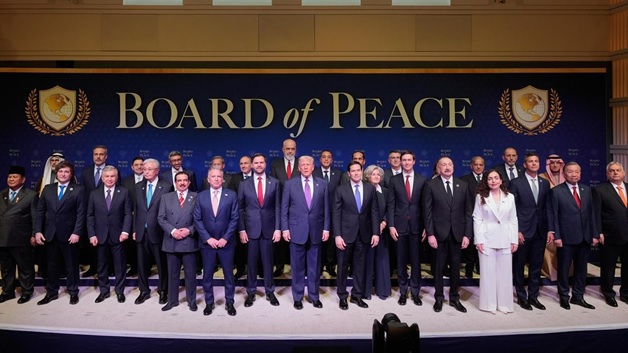
US President Donald Trump convened the first meeting of the “Board of Peace” in Washington to deliberate on Gaza’s reconstruction and broader global conflict issues. India participated in the meeting as an observer, signalling cautious engagement.
New Delhi stated that it supports diplomatic efforts aligned with United Nations Security Council Resolution 2803 and the broader Gaza Peace Plan. However, India chose not to become a formal member of the 27-country body.
Origin of the Initiative
The Board of Peace was initially announced as a mechanism to end the Israel–Gaza conflict. Over time, its mandate expanded to include addressing “global conflict,” raising concerns about its scope and institutional legitimacy.
Multilateral Sensitivities
The initiative operates outside established UN frameworks. While President Trump indicated it would function “in conjunction with the UN,” critics argue that it could sideline formal multilateral institutions.
India’s Diplomatic Calculus
India initially refrained from joining when the initiative was unveiled in Davos, opting to evaluate its composition, durability, and geopolitical implications before engaging.
India–US Strategic Relations: Observer participation signals continued diplomatic engagement with Washington.
Multilateral Norms: India must balance support for new diplomatic platforms with its longstanding commitment to UN-centered multilateralism.
West Asia Stability: Peace in Gaza and the broader region has economic and strategic implications for India.
India–Pakistan Dimension: Pakistan’s membership in the board adds a sensitive bilateral layer.
Global Governance Debate: The development raises questions about parallel diplomatic mechanisms outside traditional UN frameworks.
The 27-member board includes key West Asian states such as:
Other members include Argentina, Hungary, Vietnam, Cambodia, and Pakistan, represented by Prime Minister Shehbaz Sharif.
Observer Participation
Twenty-two countries joined as observers, including:
India participated as an observer, represented by its Deputy Chief of Mission in Washington.
Member Contributions
Nine member countries collectively pledged $7 billion for Gaza’s relief and reconstruction.
US Commitment
The United States pledged an additional $10 billion, described as an investment in regional stability.
Specific allocation mechanisms remain unclear.
Preserving Flexibility
Observer status allows India to monitor developments without formal endorsement.
Legitimacy Concerns
The absence of permanent UN Security Council members such as Russia, China, France, and the UK raises questions about the board’s representativeness.
Durability Assessment
India views the initiative partly as a leadership-driven project whose long-term relevance may depend on political continuity in Washington.
India remains cautious about parallel platforms that may dilute the centrality of the UN system.
While the board claims to complement UN efforts, its broad and undefined mandate creates institutional ambiguity.
India continues to advocate a two-state solution consistent with established international norms.
Mediation Claims
President Trump reiterated claims of preventing escalation between India and Pakistan—assertions New Delhi has consistently rejected.
Strategic Monitoring
With Pakistan as a board member, India’s observer role enables vigilance against any attempt to internationalise bilateral issues.
Complete absence could risk exclusion from discussions affecting regional narratives.
West Asia Stability
Peace in Gaza aligns with India’s broader regional interests.
Economic Corridors
Regional stability would support initiatives such as the India–Middle East–Europe Economic Corridor (IMEC).
Trade and Strategic Cooperation
India is simultaneously working to stabilise trade ties with the US and advance technology cooperation initiatives.
Diplomatic Balancing Act: India seeks to maintain goodwill with Washington without fully endorsing a controversial initiative.
Strategic Autonomy: Observer participation reflects calibrated engagement consistent with India’s multi-alignment approach.
Regional Stability Interests: Peace in West Asia is crucial for India’s energy security and diaspora welfare.
Multilateral Norm Debate: The emergence of alternative diplomatic forums challenges traditional UN-based processes.
Domestic Political Sensitivities: Engagement must align with India’s stated positions on Palestine and international mediation.
Maintain UN-Centric Diplomacy: Reaffirm commitment to established multilateral institutions.
Preserve Strategic Autonomy: Avoid entanglement in initiatives lacking broad legitimacy.
Enhance Regional Outreach: Deepen engagement with West Asian partners bilaterally.
Monitor Geopolitical Spillovers: Remain vigilant about India–Pakistan narratives.
Balance US Relations Carefully: Engage constructively while safeguarding independent foreign policy principles.
FAQs1. What is the Board of Peace? It is a US-led diplomatic initiative aimed initially at Gaza reconstruction, with an expanded mandate to address global conflicts. 2. Why did India join as an observer rather than a member? To maintain diplomatic engagement while preserving flexibility and avoiding full endorsement. 3. Why is the board controversial? Its broad mandate and absence of key UN Security Council members raise concerns about legitimacy. 4. How does Pakistan’s membership affect India? India seeks to prevent any attempt to internationalise bilateral issues by remaining engaged as an observer. 5. What are India’s broader interests in West Asia? Energy security, diaspora welfare, economic corridors, and support for a two-state solution. |
| Prelims: (Polity & Governance + CA) Mains: (GS 2 – Parliament & Accountability; GS 3 – Human Resources, Employment, Skill Development) |
The Public Accounts Committee (PAC) has criticised the government for the slow and poorly planned implementation of the SANKALP scheme, based on findings of a report by the Comptroller and Auditor General of India (CAG).
The PAC flagged underutilisation of funds, weak monitoring, and lack of preparedness in executing the scheme.
India’s demographic profile—with one of the world’s largest youth populations—makes skill development central to employment generation and economic growth. Recognising this, the government launched the Skill Acquisition and Knowledge Awareness for Livelihood Promotion (SANKALP) scheme to strengthen institutional frameworks and improve quality of short-term skill training.
However, persistent challenges such as fragmented implementation, weak industry alignment, and limited monitoring have affected outcomes in India’s skilling ecosystem.
The recent audit review highlights systemic issues in the design and execution of externally aided flagship programmes.
SANKALP (Skill Acquisition and Knowledge Awareness for Livelihood Promotion) is a flagship programme of the Ministry of Skill Development and Entrepreneurship.
Objectives
The scheme sought to improve employability outcomes and create a sustainable skilling ecosystem.
The financial structure combined domestic and external funding:
The scheme incorporated performance-based financing and incentives to promote accountability at national and State levels.
The CAG report, examined by the PAC, revealed significant gaps:
Key Audit Observations
The CAG attributed delays largely to administrative non-preparedness.
The PAC described implementation as “lackadaisical” and raised the following concerns:
Skill development requires coordination among the Centre, States, and private stakeholders. The PAC questioned the absence of a strong centralised monitoring system to track progress across States.
The Committee highlighted insufficient assessment of institutional readiness before scheme rollout, indicating gaps in planning and administrative capacity.
Members noted the absence of a clear roadmap to integrate vocational education into school curricula from primary to higher secondary levels.
This is significant in light of the National Education Policy 2020 (NEP 2020), which emphasises vocational exposure at early stages to improve long-term employability.
India’s demographic dividend presents both opportunity and risk:
Other initiatives like the Pradhan Mantri Kaushal Vikas Yojana (PMKVY) aim to enhance training quality and coverage, yet systemic challenges persist:
The SANKALP case illustrates the need for institutional preparedness, inter-ministerial coordination, and data-driven evaluation in large-scale social sector schemes.
Parliamentary Oversight
The PAC’s intervention reinforces Parliament’s role in financial accountability and oversight of public expenditure.
Fiscal Prudence
Underutilisation of externally aided loans increases fiscal inefficiency and opportunity costs.
Employment and Growth
Effective skill development is essential for:
Weak implementation undermines long-term economic competitiveness.
FAQs1. What is the SANKALP scheme? It is a flagship skill development programme aimed at strengthening institutional frameworks and improving employability through demand-driven skilling. 2. Why did the PAC criticise the scheme? Due to underutilisation of funds, weak monitoring, administrative delays, and lack of preparedness. 3. What role did the CAG play? The CAG audited the scheme’s financial and implementation performance and identified major shortfalls. 4. How is the scheme funded? Through a mix of World Bank loans, State contributions, and industry participation. 5. Why is skill development important for India? It is essential to harness India’s demographic dividend, improve employability, and sustain long-term economic growth. |
| Prelims: (International Relations + CA) Mains: (GS 2 – Separation of Powers, India–US Relations; GS 3 – External Sector, Global Trade Governance) |
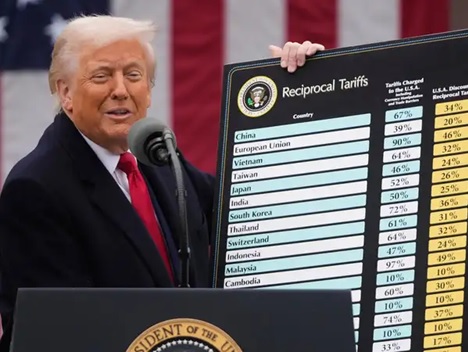
The Supreme Court of the United States, in a 6–3 ruling, struck down President Donald Trump’s sweeping tariffs imposed under the International Emergency Economic Powers Act (IEEPA), 1977.
The judgment marks a critical intervention in the debate over executive overreach and separation of powers in trade policy. The ruling also has implications for global trade and countries like India that were directly impacted by US tariff actions.
Expansion of Executive Trade Powers
The US Constitution vests the power to levy taxes and tariffs in Congress. However, over decades, Congress delegated limited trade-related authority to the President through statutory frameworks.
IEEPA (1977), enacted under President Jimmy Carter, was designed to address national emergencies involving foreign threats—primarily through asset freezes and sanctions—not broad tariff imposition.
Trump became the first US President to invoke IEEPA for imposing sweeping tariffs without Congressional approval.
Core Principle
Judicial Reasoning
Trump’s Tariff Strategy – Economic & Foreign Policy Instrument
Tariffs were used as:
“Liberation Day” Tariffs (April 2, 2025)
Following the ruling, refund liabilities may arise, adding fiscal uncertainty.
Three major lawsuits challenged the tariffs:
The Supreme Court decision reinforces limits on executive unilateralism in trade.
Following the ruling, alternative statutory routes were considered:
For the US Political System
For Global Trade
For India
Institutional Tensions
Risk of Renewed Protectionism
Global Supply Chain Stability
For India
FAQs1. Why did the Supreme Court strike down the tariffs? Because IEEPA does not explicitly authorize tariff imposition, and taxation authority lies with Congress. 2. What is IEEPA meant for? It is designed to address national emergencies through sanctions, asset freezes, and financial restrictions—not broad-based tariffs. 3. Can the President still impose tariffs? Yes, but through statutory mechanisms like Sections 122, 301, or 232, subject to procedural limits. 4. How does this affect India? India may gain relief in certain sectors but remains exposed to sector-specific tariffs under Section 232. 5. What is the larger global significance? The ruling reinforces constitutional limits while highlighting how trade policy increasingly functions as a geopolitical tool. |
| Prelims: (International Relations + CA) Mains: (GS 2 – International Relations; GS 3 – Energy Security, External Sector, Inflation & Fiscal Stability) |
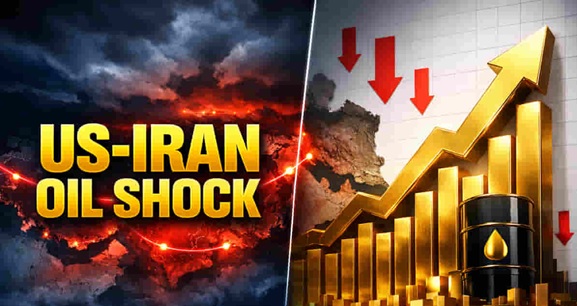
International oil prices have climbed to a six-month high amid escalating tensions between the United States and Iran, raising fears of potential American military strikes on Tehran.
Brent crude has risen above $71 per barrel, reflecting market anxiety over possible supply disruptions. Recent nuclear talks in Geneva showed limited progress, while statements from U.S. leadership urging Iran to agree to a “meaningful deal” within a short timeframe have intensified geopolitical uncertainty.
Oil markets are particularly concerned about the security of the Strait of Hormuz, a critical energy transit route.
Long-Standing Rivalry
US–Iran relations have remained strained over nuclear ambitions, sanctions, and regional security dynamics.
Gulf Energy Centrality
The Persian Gulf region accounts for a significant share of global oil exports. Any instability directly impacts global energy markets.
Strategic Chokepoints
The Strait of Hormuz connects the Persian Gulf to global markets, handling a substantial portion of global petroleum and LNG flows.
Recent Escalation
Increased U.S. military presence in the region and renewed diplomatic friction have revived fears of supply disruptions similar to past Gulf crises.
Global Energy Stability: Nearly one-fifth of global petroleum consumption passes through the Strait of Hormuz.
Macroeconomic Impact: Rising oil prices fuel inflation, strain fiscal balances, and weaken growth prospects.
Energy Security for Import-Dependent Countries: Large importers like India face heightened vulnerability.
Geopolitical Risk Premium: Oil prices now incorporate a risk premium linked to potential military escalation.
Global Economic Fragility: Sharp oil price spikes can destabilise already fragile global recovery trends.
Described by the U.S. Energy Information Administration as the world’s most important oil transit chokepoint, the Strait of Hormuz handles:
Major exporters such as Saudi Arabia, Iraq, UAE, and Kuwait depend heavily on this route.
Any blockage or disruption would significantly curtail global supply.
Bypass Infrastructure
Some pipelines bypass the Strait, but capacity remains limited.
Even at full utilisation, nearly 9 million barrels per day (around 9% of global demand) would remain vulnerable during major conflict.
Additional Chokepoints
The Bab el-Mandeb, linking the Red Sea to the Arabian Sea, is also exposed to proxy attacks, increasing supply chain fragility.
Limited Disruption (Targeting Iranian Exports Only)
Oil prices may rise by $10–12 per barrel as markets adjust supply flows.
Strait of Hormuz Disruption
If energy flows are throttled, prices could exceed $90 per barrel.
Attacks on Iranian Oil Infrastructure
Extended supply outages could push prices beyond $100 per barrel.
Broad Regional Conflict
If Gulf infrastructure is targeted, prices could surge past $130 per barrel, comparable to previous geopolitical shocks.
Although Iran has threatened to block the Strait, a complete closure would be economically self-damaging.
It could:
However, in a severe escalation scenario, strategic calculations may shift.
Rising Import Bill
India imports nearly 2 billion barrels of oil annually.
Every $1 increase in crude prices adds approximately $2 billion to the annual import bill.
Strategic Vulnerability
India imports over 88% of its crude requirements, with more than 40% passing through the Strait of Hormuz.
As the world’s third-largest oil consumer, supply disruptions pose serious macroeconomic risks.
Inflationary Pressures
Higher oil prices raise transportation and production costs, fuelling inflation.
Fiscal Stress
Increased fuel subsidies or excise duty adjustments may strain government finances.
Current Account Deficit (CAD): Higher oil prices widen the trade deficit.
Currency Depreciation Risk: Increased dollar demand for imports pressures the rupee.
Energy Transition Imperative: Volatility underscores the urgency of diversifying energy sources.
Geopolitical Balancing: India must carefully manage diplomatic ties with both Gulf nations and major global powers.
Diversify Energy Sources: Expand procurement from alternative suppliers and enhance strategic reserves.
Strengthen Strategic Petroleum Reserves: Increase buffer capacity to cushion short-term shocks.
Accelerate Renewable Energy Transition: Reduce long-term dependence on imported hydrocarbons.
Enhance Maritime Security Cooperation: Work with regional partners to ensure secure sea lanes.
Adopt Flexible Fiscal Strategy: Balance inflation control with fiscal sustainability.
FAQs1. Why are oil prices rising amid US–Iran tensions? Markets fear potential military conflict that could disrupt oil supplies from the Gulf region. 2. Why is the Strait of Hormuz important? It handles nearly one-fifth of global oil and LNG trade, making it a critical energy chokepoint. 3. How vulnerable is India to Gulf supply disruptions? India imports over 88% of its crude, with more than 40% transiting through the Strait of Hormuz. 4. What could happen if the Strait is blocked? Oil prices could spike sharply, possibly exceeding $100–130 per barrel depending on the scale of disruption. 5. How can India mitigate such risks? By diversifying import sources, strengthening strategic reserves, and accelerating renewable energy adoption. |
| Prelims: (Science & Technology + CA) Mains: (GS 3 – Security, Defence Technology, Emerging Technologies; GS 2 – International Relations) |
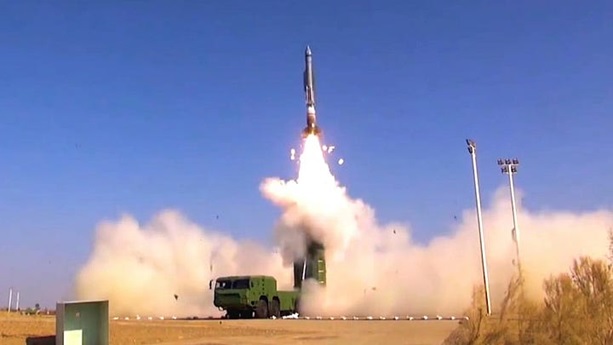
China recently showcased the CJ-1000, a land-based scramjet-powered hypersonic missile, during a military parade in Beijing. The unveiling has drawn global attention due to its reported operational status and advanced propulsion technology.
The missile is being described as a major leap in hypersonic cruise missile capability.
Rise of Hypersonic Weapons
Hypersonic weapons, capable of travelling at speeds above Mach 5, are increasingly central to modern military competition. Major powers including the United States, China, and Russia are investing heavily in such systems.
China’s Hypersonic Ambitions
China has previously demonstrated hypersonic glide vehicles. The CJ-1000 represents a shift toward scramjet-powered hypersonic cruise missile technology.
Platform Mobility
The CJ-1000 is reportedly mounted on a road-mobile transporter-erector-launcher (TEL), enhancing survivability and rapid deployment capability.
Strategic Deterrence: Long-range hypersonic missiles complicate adversary defence planning and strengthen second-strike credibility.
Reduced Detection Window: Low-altitude flight profiles make interception more difficult.
Technological Leap: Scramjet propulsion indicates advanced aerospace engineering capability.
Regional Security Implications: Extended range potentially alters the balance of power in the Indo-Pacific region.
Arms Race Dynamics: Development of operational scramjet systems may intensify hypersonic weapons competition globally.
The CJ-1000 is a road-mobile hypersonic cruise missile developed by China.
It is described as the world’s first operational land-based scramjet-powered hypersonic missile.
Estimated Range
The missile is estimated to have a range of at least 2,500 km.
Launch Platform
It is mounted on a diesel-electric hybrid transporter-erector-launcher (TEL), enabling mobility and rapid repositioning.
What is a Scramjet?
A scramjet (Supersonic Combustion Ramjet) engine allows combustion of fuel in a supersonic airflow.
Unlike traditional rocket engines, scramjets use atmospheric oxygen for combustion, reducing onboard oxidiser requirements.
Sustained Hypersonic Flight
The scramjet engine operates throughout cruise and terminal phases, sustaining hypersonic speed.
Flight Altitude
Lower altitude reduces radar detection range.
Propulsion
Manoeuvrability
Powered propulsion allows scramjet missiles greater mid-course corrections and terminal manoeuvres.
Reduced Detection Time: Lower flight altitude limits early radar tracking.
Continuous Propulsion: Active engine operation enhances speed retention and manoeuvrability.
Higher Accuracy: Sustained propulsion improves terminal guidance capability.
Interception Difficulty: Air defence systems have limited reaction time against fast, low-altitude threats.
Indo-Pacific Security
With an estimated range of 2,500 km, the missile potentially covers significant strategic areas in Asia.
Missile Defence Challenges
Traditional ballistic missile defence systems are optimised for high-altitude ballistic arcs, not low-altitude hypersonic cruise profiles.
Technological Signalling
Showcasing the missile during a parade signals operational readiness and deterrence posture.
Acceleration of Hypersonic Arms Race: Operational deployment may prompt counter-developments.
Pressure on Missile Defence Systems: Countries may need to invest in advanced tracking and interception technologies.
Shift in Warfare Doctrine: Hypersonic weapons blur the line between conventional and strategic deterrence.
Increased Strategic Instability Risks: Reduced response times may heighten miscalculation risks during crises.
Develop Advanced Detection Systems: Invest in space-based and over-the-horizon radar capabilities.
Strengthen Missile Defence Research: Focus on layered defence mechanisms.
Promote Arms Control Dialogue: Encourage international frameworks addressing hypersonic weapons.
Enhance Crisis Communication Channels: Prevent escalation due to compressed decision timelines.
Invest in Indigenous Capabilities: Strengthen domestic research in propulsion and hypersonic technology.
FAQs1. What is the CJ-1000 missile? It is a Chinese road-mobile, land-based hypersonic cruise missile powered by a scramjet engine. 2. What makes scramjet propulsion significant? It enables sustained hypersonic flight using atmospheric oxygen, improving efficiency and manoeuvrability. 3. How does it differ from hypersonic glide vehicles? Scramjet missiles maintain powered flight at lower altitudes, while glide vehicles rely on inertia after rocket boost. 4. Why are scramjet missiles harder to intercept? Their low-altitude trajectory and high manoeuvrability reduce radar detection time and complicate interception. 5. What are the broader security implications? They intensify global hypersonic competition and challenge existing missile defence architectures. |
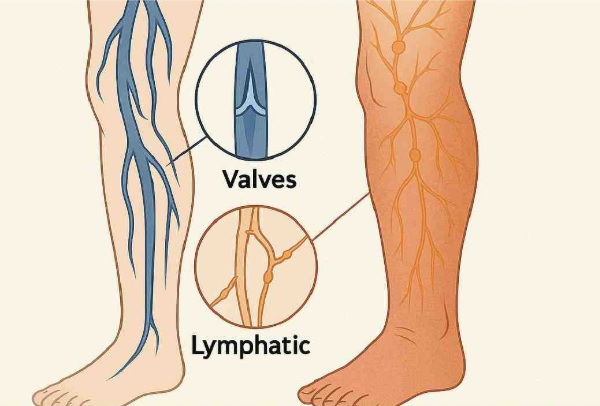
Lymphedema is an abnormal, persistent swelling of a body part (most commonly an arm or a leg) that occurs when the lymphatic system does not function properly.
The lymphatic system works as the body’s drainage and filtration network. It:
When this system becomes blocked or damaged, fluid accumulates in tissues → causing swelling (edema).
This condition is called lymphedema.
1. Primary Lymphedema
(Congenital / genetic)
2. Secondary Lymphedema (Most common)
Early Stage
Advanced Stage
Treatment
Important: Lymphedema is a chronic condition — it cannot usually be completely cured, but it can be effectively controlled.
Goals of Treatment
Scientists have recently identified a new cellular mechanism regulating lymph flow. This may lead to future targeted therapies — meaning lymphedema might one day be treated more effectively instead of only being managed.
Recently, DMK MP and senior advocate P. Wilson introduced a private member's bill in the Rajya Sabha. The primary objective of this bill is to ensure social diversity in the higher judiciary and establish regional benches of the Supreme Court to facilitate access to justice for ordinary citizens.

Proposed Reforms
Currently, the Supreme Court is located only in New Delhi, posing a major obstacle to legal costs and distance for citizens of South and East India. The pendency of cases has exceeded 90,000 as of January 2026.
This bill is a thought-provoking step towards making the Indian judiciary more democratic and accessible. This not only raises questions of representation but also emphasizes the need to modernize the justice infrastructure.

Our support team will be happy to assist you!


 Contact Us
  New Batch : 9555124124/ 7428085757
  Tech Support : 9555124124/ 7428085757