New
Hindi Medium: (Delhi) - GS Foundation (P+M) : 8th June 2026, 6:30 PM Hindi Medium: (Prayagraj) - GS Foundation (P+M) : 1st June 2026, 5:30 PM English Medium: (Prayagraj) - GS Foundation (P+M) : 7th June 2026, 8:00 AM Hindi Medium: (Delhi) - GS Foundation (P+M) : 8th June 2026, 6:30 PM Hindi Medium: (Prayagraj) - GS Foundation (P+M) : 1st June 2026, 5:30 PM English Medium: (Prayagraj) - GS Foundation (P+M) : 7th June 2026, 8:00 AM

Current Affairs for 21 May 2026

National One Health Mission: Governance, Objectives and Health Security Framework in India

Why in News

The fifth meeting of the Scientific Steering Committee of the National One Health Mission was recently held in New Delhi.

Governance Architecture

  • The mission was launched in 2024 to integrate human, animal, and environmental health systems.
  • The nodal implementing agency is the Indian Council of Medical Research (ICMR) under the Office of Principal Scientific Adviser (PSA).
  • The Executive Committee is chaired by the Ministry of Health and Family Welfare.
  • The Scientific Steering Committee is chaired by the Principal Scientific Adviser.

Health Security Dimensions

  • The mission aims to strengthen integrated disease surveillance and pandemic preparedness.
  • It promotes coordinated response mechanisms across veterinary, environmental, and public health sectors.
  • The approach recognizes interlinkages between zoonotic diseases and ecosystem degradation.

Policy Significance

  • The initiative supports India’s preparedness against future pandemics and antimicrobial resistance.
  • It enhances coordination among ministries, states, and scientific institutions.
  • The framework aligns with global “One Health” strategies promoted by international agencies.

Public Health Emergency of International Concern (PHEIC): Meaning, Framework, Declaration Process and Global Significance

Why in News

  • The World Health Organization (WHO) recently declared the Ebola outbreak in Democratic Republic of Congo (DRC) and Uganda a Public Health Emergency of International Concern (PHEIC). Global Health Governance.

  • A PHEIC is the highest level of global health alert issued by the WHO.
  • It is declared during extraordinary events posing risks through international disease spread.
  • The declaration is governed under the International Health Regulations (IHR), 2005.
  • The decision is taken by the IHR Emergency Committee, constituted after the 2002–04 SARS outbreak.
  • The declaration is reviewed every three months and renewed if necessary.

Institutional and Legal Framework

  • The IHR was first adopted by the World Health Assembly in 1969.
  • The regulations were comprehensively revised after the global SARS crisis.
  • The updated IHR 2005 became a legally binding agreement among 196 countries.
  • WHO acts as the coordinating authority for implementation of global health security measures.

Scope and Strategic Relevance

  • PHEIC declarations may involve infectious diseases, chemical hazards, or radioactive emergencies.
  • Such declarations enable coordinated global surveillance, travel advisories, and emergency responses.
  • They strengthen international cooperation for pandemic preparedness and disease containment.

Kumbhalgarh Fort – UNESCO Survey: The World’s Second Longest Continuous Wall .

Why in News ?

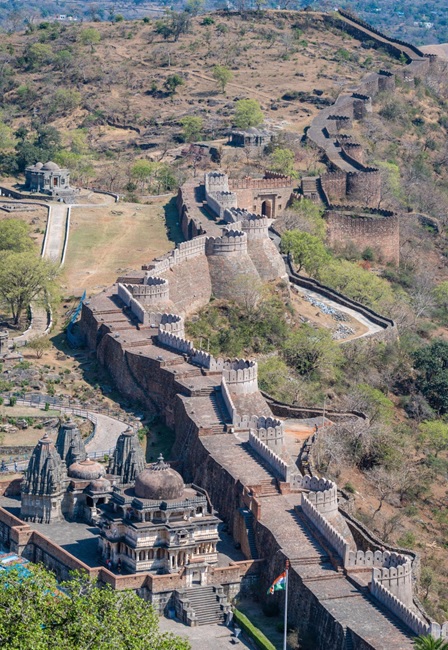
  • The wall of Kumbhalgarh Fort, located in Rajsamand district of Rajasthan and often called the “Great Wall of India,” has been recognized in a UNESCO survey as the world’s second longest continuous (intact) wall.
Kumbhalgarh Fort :

  • The Kumbhalgarh Fort and its massive wall are a remarkable example of Rajput military architecture and engineering. Located about 84 km from Udaipur (Rajasthan) in the Aravalli hills, this 15th-century fort holds historical significance as its wall is considered the second longest continuous wall in the world after the Great Wall of China.
  • This impregnable fort was built by the powerful ruler of Mewar, Rana Kumbha, between 1443 and 1458 AD. The chief architect of the fort was the famous architect “Mandan.”
  • UNESCO declared Kumbhalgarh a World Heritage Site in 2013 under the group “Hill Forts of Rajasthan.”

The Great Wall of India :

The wall of Kumbhalgarh is one of the greatest engineering achievements of medieval India :

  • Massive Length : The fort’s defensive wall is approximately 36 km long, running across mountain ridges and valleys.
  • Width : The wall is around 15 to 25 feet wide. According to historical accounts and local legends, it is so wide that eight horses can run side by side on it.
  •  Security System : The wall includes strong bastions and specially designed arrow slits for archers. The fort has seven massive and highly secure gates (locally called “pols”) for entry.

Because of its unique geographical location and strong fortifications, the fort was considered “invincible.”

Major Attractions of the Fort :

Within the 36 km long wall lies not just a palace but an entire self-sustained city :
  • 360+ Ancient Temples : The fort complex contains more than 360 temples, including around 300 Jain temples and several Hindu temples. The Nilkanth Mahadev Temple, known for its intricate stone carvings, is especially notable.
  • Badal Mahal (Palace of Clouds) : Located at the highest point of the fort, it offers stunning views of the Aravalli hills. On clear days, even the sand dunes of the Thar Desert can be seen from here.
  •  Birthplace of a Great Warrior : The fort is also the birthplace of the legendary and brave warrior Maharana Pratap.

National Centre for Sustainable Coastal Management (NCSCM) – Wetland Verification and Conservation

Why is it in the News ?

  • Recently, the National Centre for Sustainable Coastal Management (NCSCM) completed the documentation, satellite-based mapping, and ground-truthing of 23,404 wetlands out of Maharashtra’s total 23,415 wetlands. Only 11 wetlands, mainly located in Pune district, are still undergoing field verification. 
  • With the completion of this process, these wetlands can now be notified under the Wetlands (Conservation and Management) Rules, 2017, enabling them to receive formal legal protection. Experts consider this a major step toward conserving Maharashtra’s wetland ecosystems and strengthening climate change adaptation measures. 

What is Ground-truthing ?

Ground-truthing is a scientific and administrative process involving on-site inspection and verification of wetlands to establish consistency between satellite imagery, remote sensing data, and actual field conditions.

The process includes the following assessments :

1. Determination of Actual Existence and Area of Wetlands

  • Verification of whether the water body identified in satellite images actually exists and assessment of its real extent. 

2. Boundary Delineation

  • Identification of geographical boundaries, water spread area, and surrounding land-use patterns. 

3. Assessment of Ecological Condition

  • Evaluation of vegetation cover, biodiversity, water quality, and ecological health. 

4. Assessment of Land Use and Human Interference

  • Examination of encroachments, land filling, construction activities, and other anthropogenic pressures. 

5. Validation of Satellite Data

  • Matching remote sensing and GIS-based information with actual ground conditions. 

Ground-truthing is considered essential because wetlands cannot be officially notified under environmental regulations without field verification.

About the National Centre for Sustainable Coastal Management (NCSCM)

The National Centre for Sustainable Coastal Management (NCSCM) was established in 2011 by the Ministry of Environment, Forest and Climate Change (MoEFCC) as an autonomous research and policy institution.

Its objective is to support the conservation, sustainable utilization, restoration, and scientific management of India’s coastal and marine ecosystems.

Headquarters : Chennai, Tamil Nadu

Objectives and Functions of NCSCM

Promoting Coastal Conservation and Sustainable Development

  • Works to maintain environmental balance and ensure long-term conservation of coastal resources. 

Integrated Management of Coastal and Marine Areas

  • Supports the implementation of Integrated Coastal Zone Management (ICZM) in India. 

Protection of Socio-economic Interests of Coastal Communities

  • Provides policy support while considering livelihoods and welfare of traditional coastal and island communities. 

Scientific and Policy Support to Governments

  • Offers technical guidance to central and state governments on coastal management and environmental protection. 

Research and Capacity Building

  • Conducts studies on coastal resources, marine ecology, and climate change impacts. 

Major Research Divisions of NCSCM

1. Geospatial Sciences, Remote Sensing and GIS Division

  • Undertakes satellite mapping, geospatial analysis, coastal mapping, and wetland documentation. 

2. Integrated Social Sciences and Economics Division

  • Studies socio-economic conditions, livelihoods, and resource use patterns of coastal communities. 

3. Coastal Environmental Impact Assessment Division

  • Evaluates the ecological impacts of developmental activities on coastal ecosystems. 

4. Coastal and Marine Resource Conservation Division

  • Focuses on conservation of marine biodiversity, coral reefs, mangroves, and marine ecosystems. 

5. Knowledge, Governance and Policy Division

  • Strengthens policy formulation, institutional coordination, and environmental governance. 

6. Foresight Research and Integrated Island Management Unit

  • Conducts research on climate change, island ecosystems, and long-term coastal management strategies. 

Ecological Importance of Wetlands

Wetlands are regarded as among the most productive ecosystems on Earth because they provide multiple ecological services.

Flood Buffering

  • Store excess rainwater and reduce flood intensity in urban and rural areas. 

Natural Drainage System

  • Function as natural drainage networks and help control waterlogging. 

Groundwater Recharge

  • Support groundwater replenishment and improve water availability. 

Carbon Sequestration

  • Absorb and store carbon, contributing to climate change mitigation. 

Biodiversity Conservation

  • Provide habitats for migratory birds, aquatic organisms, and diverse vegetation. 

Climate Change Adaptation

  • Help reduce the impacts of extreme rainfall, sea-level rise, and extreme weather events. 
Way Forward

  • Expedite notification of verified wetlands. 
  • Ensure legal protection and prevent encroachments. 
  • Integrate wetlands into urban planning as natural drainage systems. 
  • Prioritize wetland conservation in climate change policies. 
  • Promote community participation for sustainable conservation models.

Sahayog Shivir Initiative

Context

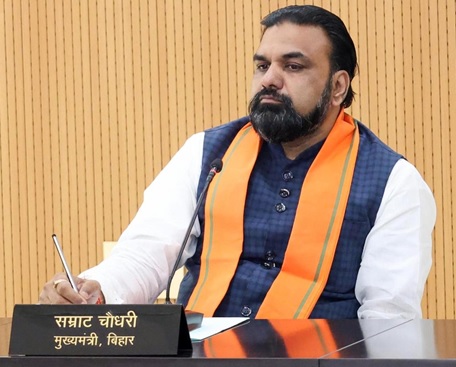
  • Recently, Bihar Chief Minister Samrat Chaudhary attended a camp organized in Dumri Buzurg Panchayat of Saran district, marking the first time that Sahayog Shivirs have been launched across Bihar to address public grievances. As announced by the Chief Minister, these camps will now be held on the first and third Tuesdays of every month to ensure timely resolution of public problems and complaints.
  • This initiative is part of the Jeevan Sugam Yojana launched under the state government's ambitious Saat Nischay-3 program, which aims to bring government services to people's doorsteps.

About the Sahayog Shivir Initiative

  • The Sahayog Portal is a centralized digital platform established by the Bihar government to ensure timely, transparent, and accountable redressal of public grievances, a real-time monitoring system.
  • This portal enables citizens to register complaints, receive status updates, send reminders, and provide feedback through an integrated online system.
  • This system is designed to strengthen accountable governance and ensure efficient service delivery across all departments of the Government of Bihar.
  • The Sahyog Portal - RTMS provides citizens with a simple and accessible way to voice their concerns without the need to visit multiple offices. This includes:
    • delays in public services,
    • documentation issues,
    • pension or local infrastructure concerns.
  • Each complaint is assigned a unique reference number for easy tracking, ensuring transparency and accountability.
  • By making grievance redressal more systematic and accessible, the Sahyog Portal - RTMS strengthens trust between citizens and the government and supports a more responsive and citizen-centric administration.

Key Features

  • Online Complaint Registration
  • Department-wise Complaint Forwarding
  • Timely Disposal Mechanism
  • SMS and Email Alerts
  • Real-Time Status Tracking
  • Enhancement of Metrics
  • Citizen Feedback and Ratings
  • Dashboard and Monitoring by Officials

How Does This System Work ?

  • A citizen registers their complaint online.
  • The complaint is automatically sent to the relevant department.
  • The department updates the action taken on the complaint and its status.
  • The citizen is notified.
  • If the complaint is not resolved within the stipulated timeframe, it is escalated to the next level.

Action and Penalty for Received Applications

  • All applications received at the camps will be processed and resolved without exception.
  • For this, the Chief Minister's Secretariat will issue the first notice to the concerned officer on the 10th day of receiving the application, the second notice on the 20th day and the third notice on the 25th day. The objective of this is to ensure that all complaints are resolved within the stipulated time limit.
  • It will be mandatory to resolve the application within a maximum of 30 days after receiving it. If any officer is negligent in this responsibility, strict action will be taken against him. If the order is not issued within the stipulated time limit, the officer of the concerned department will be considered automatically suspended on the 31st day.
« »
  • SUN
  • MON
  • TUE
  • WED
  • THU
  • FRI
  • SAT
Have any Query?

Our support team will be happy to assist you!

OR