
- UPSC Exam
- State PCS
- One Day Exam
- Current Affairs
- PT Quiz
- Downlaods
- About Coaching
- Blog
- Videos

| Prelims: Project Cheetah; Gandhi Sagar Wildlife Sanctuary; Kuno National Park; conservation translocation; genetic diversity. Mains: GS Paper III—Biodiversity conservation, species reintroduction and wildlife management. |
|
Cheetah |
Sex |
Country of origin |
Transfer to Gandhi Sagar |
|
Prabhas |
Male |
South Africa |
April 2025 |
|
Pawak |
Male |
South Africa |
April 2025 |
|
Dheera |
Female |
South Africa |
September 2025 |
|
Radha, formerly CCB-2 |
Female |
Botswana |
September 2026 |
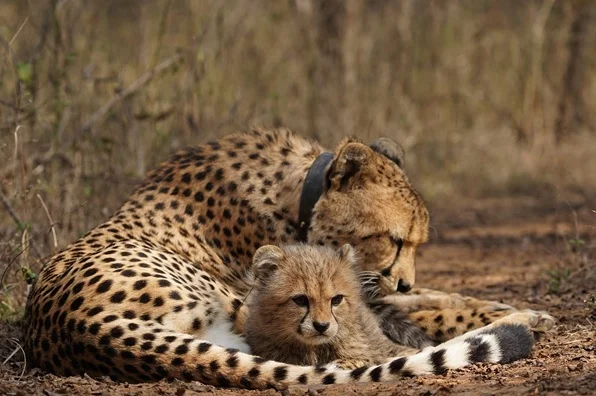
Prabhas and Pawak form a male coalition, a social association in which male cheetahs live together. Dheera occupies a separate enclosure, while Radha has been placed in another enclosure away from the existing animals.
According to the September 2026 report supplied, India had 56 cheetahs following Radha’s transfer:
|
Site |
Reported number |
|
Kuno National Park |
52 |
|
Gandhi Sagar Wildlife Sanctuary |
4 |
|
Total |
56 |
The total includes African-origin animals and cubs born in India. Radha’s movement redistributed the existing population between sites; it did not itself increase the national total.
Veerangana Durgavati Tiger Reserve, in Madhya Pradesh’s Bundelkhand region, reportedly has five secured enclosures prepared for cheetahs. Its inclusion would further expand the project’s geographical footprint. Prepared enclosures, however, are only one component of a suitable release site.
Maintaining cheetahs at multiple suitable sites can reduce the risk of a local disturbance affecting the entire introduced population. It also creates opportunities to compare survival, breeding and habitat use across landscapes.
A metapopulation consists of populations occupying separate habitat patches but linked through the movement of individuals. Where natural movement is limited, carefully planned transfers can help connect populations demographically and genetically.
This approach requires coordinated monitoring and decisions about which animals should move, when they should move and whether recipient sites can support them.
Cheetahs have unusually low genetic diversity, associated with historical population bottlenecks. Low diversity can contribute to reproductive difficulties and vulnerability to disease. Bringing together animals from different source populations may support genetic management. However, country of origin alone does not establish genetic unrelatedness. Breeding decisions should use genetic testing and pedigree records; animals from the same country need not be close relatives.
The presence of two males and two females creates opportunities for breeding at Gandhi Sagar. Successful population establishment will depend on compatibility, health, cub survival and the ability of subsequent generations to live independently.
These benefits depend on ecological outcomes and community participation rather than the number of animals transferred alone.
Suitable space must be supported by adequate wild prey, water and secure habitat. Enclosure readiness cannot substitute for a wider assessment of carrying capacity.
Translocated animals require careful monitoring during adaptation. Veterinary preparedness, disease surveillance and rapid responses to injuries remain essential.
A small population can be affected disproportionately by the loss of a breeding animal, reproductive failure or low cub survival. Genetic and demographic planning must therefore operate together.
A soft-release enclosure provides a controlled period of acclimatisation before possible release into the wider habitat. Long-term assessment should examine independent hunting, movement, survival and reproduction outside such enclosures.
Cheetah movement beyond protected areas could create livestock-related concerns. Local participation, clear communication and timely responses to losses are necessary to maintain support.
Prelims MCQsQ. Gandhi Sagar Wildlife Sanctuary, recently in the news under Project Cheetah, is located in: (a) Rajasthan Mains Practice Question“Expanding species reintroduction programmes across multiple habitats requires integrated ecological, genetic and community-based management.” Discuss with reference to Project Cheetah. |
1. Why is Gandhi Sagar Wildlife Sanctuary in the news?It received Radha, a female cheetah from Botswana transferred from Kuno, on 20 September 2026. Her arrival brought its cheetah population to four. 2. Who is Radha under Project Cheetah?Radha is a three-year-old Botswanan female previously identified as CCB-2. She was renamed before being released into a soft-release enclosure at Gandhi Sagar. 3. How many cheetahs were reported in India after this transfer?The September 2026 report put the total at 56: 52 at Kuno National Park and four at Gandhi Sagar Wildlife Sanctuary. This is a dated population figure. 4. Why is Project Cheetah expanding beyond Kuno?Multiple sites can reduce dependence on a single habitat and provide additional opportunities for breeding and coordinated population management. 5. Which site is being prepared as a third cheetah habitat?Veerangana Durgavati Tiger Reserve in Madhya Pradesh’s Bundelkhand region has reportedly prepared five secured enclosures to receive cheetahs. |
| Prelims: Natural gas, LNG and regasification, PNGRB, common carrier capacity, and pipeline geography. Mains: GS Paper III—Energy infrastructure, industrial development, energy security and environmental sustainability. |
Indian Oil Corporation’s board has approved an investment of ₹2,448.70 crore for the Kochi–Kanyakumari–Thoothukudi Natural Gas Pipeline (KTPL). The investment was announced on 21 September 2026. The proposed project will strengthen natural gas transmission infrastructure in Kerala and southern Tamil Nadu.

|
Feature |
Details |
|
Project |
Kochi–Kanyakumari–Thoothukudi Natural Gas Pipeline (KTPL) |
|
Developer |
Indian Oil Corporation Limited |
|
Approved investment |
₹2,448.70 crore, approximately ₹2,449 crore |
|
Length |
424.65 km |
|
States covered |
Kerala and Tamil Nadu |
|
Proposed origin |
Kochi LNG terminal |
|
Destination |
Thoothukudi, also known as Tuticorin |
|
System capacity |
6.84 million metric standard cubic metres per day (MMSCMD) |
|
Common carrier capacity |
At least 1.71 MMSCMD |
|
Expected users |
City gas distribution networks, industries, power plants and other downstream consumers |
The announcement concerns investment approval; it does not mean that the pipeline has been commissioned. The supplied report does not specify a commissioning date.
These are general implementation considerations; the supplied announcement does not establish that KTPL has encountered these problems.
Prelims MCQsQ. The Kochi–Kanyakumari–Thoothukudi Natural Gas Pipeline will connect locations in which states? (a) Karnataka and Andhra Pradesh Mains Practice Question“Natural gas transmission infrastructure can support industrial development, but its benefits depend on affordability and last-mile connectivity.” Discuss with reference to the Kochi–Kanyakumari–Thoothukudi pipeline. |
1. What is the KTPL project?KTPL is IndianOil’s proposed 424.65-km natural gas pipeline connecting Kochi in Kerala with Thoothukudi in Tamil Nadu through Kanyakumari. 2. How much investment has IndianOil approved?IndianOil’s board has approved ₹2,448.70 crore, approximately ₹2,449 crore. 3. What is the pipeline’s planned capacity?Its system capacity will be 6.84 MMSCMD, including at least 1.71 MMSCMD of common carrier capacity. 4. Who is expected to benefit?Expected users include industries, power plants and city gas distribution networks. Household and transport benefits will depend on local connections and distribution infrastructure. 5. Is the pipeline already operational?The announcement relates to investment approval. It does not establish that the pipeline is operational, and the supplied report gives no commissioning date. |
World Rose Day for Cancer Patients 2026 is observed on September 22 to express love, compassion and solidarity with people living with cancer.

|
Observance |
World Rose Day for Cancer Patients |
|
Date |
22 September |
|
Main objective |
Supporting cancer patients and spreading awareness |
|
Symbol |
Rose — representing love, care and hope |
|
Historical association |
Melinda Rose, a young Canadian cancer patient |
|
Focus areas |
Emotional support, cancer awareness, early detection and compassionate care |
|
Cancer type |
Affected organ or tissue |
|
Breast cancer |
Breast tissue |
|
Lung cancer |
Lungs |
|
Colorectal cancer |
Colon or rectum |
|
Cervical cancer |
Cervix |
|
Oral cancer |
Mouth and oral cavity |
|
Leukaemia |
Blood-forming tissues |
|
Lymphoma |
Lymphatic system |
|
Prostate cancer |
Prostate gland |
|
Measure |
Importance |
|
Avoid tobacco |
Reduces the risk of several cancers, including lung and oral cancer |
|
Avoid alcohol |
Reduces alcohol-associated cancer risks |
|
Maintain a healthy weight |
Helps lower the risk of certain cancers |
|
Stay physically active |
Supports long-term health and cancer risk reduction |
|
HPV vaccination |
Helps prevent HPV-associated cancers, particularly cervical cancer |
|
Hepatitis B vaccination |
Helps reduce hepatitis B-associated liver cancer risk |
|
Appropriate screening |
Can detect certain cancers or precancerous changes earlier |
|
Organisation or initiative |
Main role |
|
World Health Organization (WHO) |
Global cancer-control guidance and health-system support |
|
International Agency for Research on Cancer (IARC) |
Cancer research, surveillance and global statistics |
|
WHO Global Breast Cancer Initiative |
Improving breast cancer detection, diagnosis and treatment |
|
WHO Cervical Cancer Elimination Initiative |
Advancing HPV vaccination, screening and treatment |
|
WHO Global Initiative for Childhood Cancer |
Improving childhood cancer survival and care |
|
International Atomic Energy Agency (IAEA) |
Supporting safe access to radiation medicine and cancer care |
When is World Rose Day 2026 celebrated?World Rose Day is observed on 22 September every year. Why is World Rose Day celebrated?To spread hope, love and awareness among cancer patients. Who is World Rose Day associated with?Melinda Rose, a young Canadian cancer patient. What does the rose symbolise on this day?Love, hope, care and compassion. What is the main objective of World Rose Day?To provide emotional support to cancer patients. |
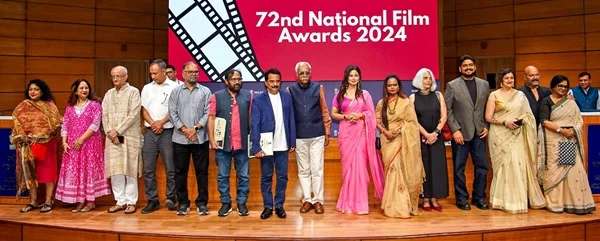
The National Film Awards are divided into three main sections, along with the Dadasaheb Phalke Award, which is the highest honour in Indian cinema.
|
Section |
Categories |
Award |
Cash Prize |
|---|---|---|---|
|
Feature Films |
26 (with special mentions) |
Swarna Kamal / Rajat Kamal |
₹3 lakh / ₹2 lakh |
|
Non-Feature Films |
16 (with special mentions) |
Swarna Kamal / Rajat Kamal |
₹3 lakh / ₹2 lakh |
|
Best Writing on Cinema |
2 |
Swarna Kamal |
₹1 lakh |
|
Dadasaheb Phalke Award |
1 |
Swarna Kamal + Shawl |
₹10 lakh |
The National Film Awards aim to:
The awards also provide national recognition to films that may not have a large commercial audience.
The awards are divided into three main sections:
This section covers full-length films and includes awards such as:
This section includes documentaries, short films, animation and other related forms.
Important categories include:
This section recognises:
|
Award Category |
Film |
Awardee |
|---|---|---|
|
Best Feature Film |
Article 370 (Hindi) |
Jio Studios & B62 Studios; Director – Aditya Suhas Jambhale |
|
Best Direction |
Amaran (Tamil) |
Rajkumar Periasamy |
|
Best Actor in a Leading Role |
Bramayugam (Malayalam) |
Mammootty |
|
Best Actor in a Leading Role |
Chandu Champion (Hindi) |
Kartik Aaryan |
|
Best Actress in a Leading Role |
Article 370 (Hindi) |
Yami Gautam |
|
Best Actor in a Supporting Role |
Bhakshak (Hindi) |
Sanjay Mishra |
|
Best Actress in a Supporting Role |
Maharaja (Tamil) |
Sachana Namidass |
|
Best Actress in a Supporting Role |
Mithya (Kannada) |
Ropashree Varkady |
|
Best Debut Film of a Director |
Swatantrya Veer Savarkar (Hindi) |
Randeep Hooda |
|
Best Popular Film Providing Wholesome Entertainment |
Kalki 2898 AD (Telugu) |
Vyjayanthi Movies; Director – Nag Ashwin |
|
Best Feature Film Promoting National, Social and Environmental Values |
Captain Miller (Tamil) |
Sathya Jyothi Films; Director – Arun Matheswaran |
|
Best Children's Film |
35 - Chinna Katha Kaadu (Telugu) |
Nanda Kishore Emani |
|
Best Non-Feature Film |
Bhangaar (Marathi & English) |
Sumira Roy |
|
Best Documentary |
Ram-Nami (Hindi) |
Bharatbala Ganapathy |
|
Best Debut Film of a Director – Non-Feature |
Angen (Santhali) |
Ravi Raj Murmu |
|
Best Direction – Non-Feature |
Statue of Unity - Ekta ka Prateek (Hindi) |
Aanand L Rai |
|
Best Book on Cinema |
Naaniruvude Nimagaagi Naadiruvude Nanagaagi (Kannada) |
Kenchanuru Pradeep Kumar Shetty |
|
Best Film Critic |
Hindi |
Sanjeev Shrivastava |
Films certified by the Central Board of Film Certification (CBFC) during the relevant award year are eligible for consideration.
Entries are invited for the three major sections, and separate juries are constituted for:
The jury members are selected from the fields of cinema, art, culture and humanities.
Some important eligibility conditions include:
Prelims Practice QuestionWith reference to the National Film Awards, consider the following statements:
Which of the statements given above are correct? A. 1 and 2 only Mains Practice QuestionQ. How do the National Film Awards contribute to promoting India's artistic excellence, linguistic diversity and cultural unity? Discuss. |
1. When were the National Film Awards instituted?The National Film Awards were instituted in 1954. 2. Which ministry confers the National Film Awards?The awards are conferred by the Ministry of Information and Broadcasting. 3. When was the Dadasaheb Phalke Award instituted?The Dadasaheb Phalke Award was instituted in 1969. 4. Who was the first recipient of the Dadasaheb Phalke Award?Devika Rani was the first recipient of the Dadasaheb Phalke Award. 5. Who won Best Feature Film at the 72nd National Film Awards?Article 370 won the Best Feature Film award. |
| Prelims: Chapar thermal power project; Dhubri district; ultra-supercritical technology; pumped storage. Mains: GS II—development and displacement; GS III—energy infrastructure, investment, environmental pollution and sustainable development. Keywords: Ultra-supercritical technology, Pumped storage, Commissioning, Emissions intensity, Rehabilitation |
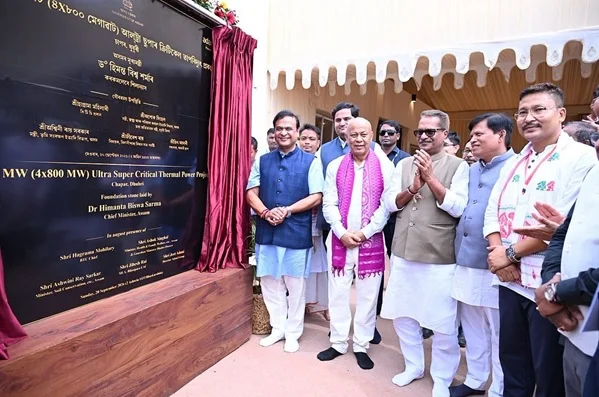
|
Parameter |
Details |
|
Location |
Chapar, Dhubri district, Assam |
|
Developer |
Adani Power Limited |
|
Proposed capacity |
3,200 MW |
|
Unit configuration |
Four units of 800 MW each |
|
Announced investment |
₹48,000 crore |
|
Technology |
Ultra-supercritical thermal generation |
|
Commissioning schedule |
In phases from December 2030 |
|
Wider power investment |
₹63,000 crore, including this thermal plant and two pumped storage projects |
|
Pumped storage component |
₹15,000 crore with a combined capacity of 2,700 MW |
The thermal plant’s 3,200 MW capacity and the pumped storage projects’ 2,700 MW capacity serve different functions. Pumped storage stores energy for later use and should not be treated as an equivalent addition to primary electricity generation.
The supplied report states that the site involved clearance of alleged encroachments from more than 3,500 bighas, approximately 1,157 acres, affecting around 2,500 families, mostly described as migrant Muslims. Some families reportedly received ₹50,000 each.
These are reported figures; they do not establish that every affected household received compensation or adequate rehabilitation. Housing, livelihoods, access to services and grievance resolution require attention.
Coal-based generation creates concerns over greenhouse-gas emissions, air quality, ash disposal and water use. Technology upgrades can reduce emissions intensity but do not remove these impacts.
A plant of this scale requires dependable fuel supply and transport infrastructure. Disruptions or higher fuel and logistics costs could affect generation costs.
The commissioning schedule depends on construction progress, equipment delivery, approvals and supporting infrastructure. Transmission capacity must be ready to carry the electricity generated.
The stated objective of affordable power is an expected outcome, not an established tariff result. Actual costs will depend on financing, fuel, plant utilisation and power-purchase arrangements.
Prelims MCQsQ. Consider the following statements about ultra-supercritical thermal power technology:
Which of the statements given above are correct? (a) 1 and 2 only Mains Practice Question“Large energy projects must balance electricity security with environmental sustainability and social justice.” Discuss with reference to Assam’s proposed Chapar thermal power project. (250 words) |
1. What is the Chapar thermal power project?It is Adani Power Limited’s proposed 3,200 MW ultra-supercritical thermal power plant at Chapar in Assam’s Dhubri district. 2. What is its estimated investment and unit configuration?The announced investment is ₹48,000 crore, and the plant will comprise four units of 800 MW each. 3. When is the project expected to begin operations?Commissioning is planned in phases from December 2030. This does not mean that all four units will necessarily begin operating together. 4. Why is ultra-supercritical technology significant?It improves thermal efficiency and can reduce fuel consumption per unit of electricity compared with conventional subcritical technology. It does not make coal-based power emission-free. 5. What are the main concerns surrounding the project?Key concerns include rehabilitation of displaced families, pollution, water use, ash management, fuel logistics, timely completion and electricity affordability. |

Our support team will be happy to assist you!

 Contact Us
  New Batch : 9555124124/ 7428085757
  Tech Support : 9555124124/ 7428085757

