
- UPSC Exam
- State PCS
- One Day Exam
- Current Affairs
- PT Quiz
- Downlaods
- About Coaching
- Blog
- Videos

| Prelims: Article 263, Inter-State Council, Article 356, Article 239AB, President's Rule, Governor, Lieutenant Governor, Sarkaria Commission, Centre-State Relations. Mains: GS Paper II: Indian Constitution, Federalism, Centre-State Relations, Constitutional Bodies and Inter-Governmental Coordination. |
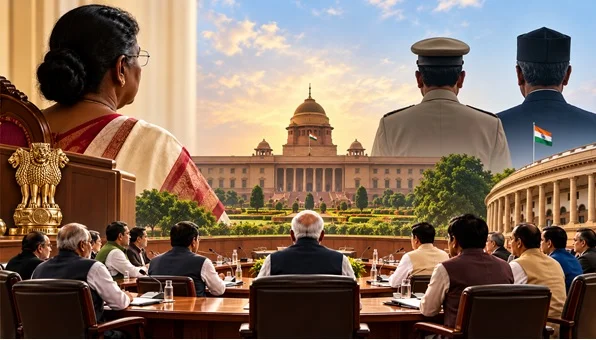
President Droupadi Murmu has issued the Inter-State Council (Amendment) Order, 2026, modifying the Inter-State Council Order, 1990.
|
Particular |
Details |
|
Amendment |
Inter-State Council (Amendment) Order, 2026 |
|
Issuing authority |
President of India |
|
Constitutional basis |
Article 263 |
|
Ministry |
Ministry of Home Affairs |
|
Gazette publication |
18 September 2026 |
|
Original order |
Inter-State Council Order, 1990 |
|
Original establishment |
28 May 1990 |
|
Provision amended |
Proviso to Clause 2 |
|
Territories covered |
States, NCT of Delhi, Puducherry and Jammu & Kashmir |
|
Nature of change |
Attendance of Governors/LGs in specified circumstances |
|
Member |
Position |
|
Prime Minister |
Chairperson |
|
Chief Ministers of all States |
Members |
|
Chief Ministers of UTs having Legislative Assemblies |
Members |
|
Administrators of UTs without Legislative Assemblies |
Members |
|
Six Union Cabinet Ministers nominated by the Prime Minister |
Members |
|
Provision |
Earlier Position |
Current Position |
|
Article 356 |
During President’s Rule, the President may assume specified State government functions. The Governor ordinarily continues as the constitutional head. |
The Governor of a State under President’s Rule shall be invited to the Inter-State Council. |
|
Article 239AB |
Allows suspension of specified provisions of Article 239AA or laws made under it when Delhi’s administration cannot be carried on under the constitutional framework. |
Delhi’s Lieutenant Governor shall be invited to the Council when an order under Article 239AB is in force. |
|
Section 51 |
Allows the President to suspend relevant statutory provisions and make consequential arrangements during a failure of constitutional machinery. |
Puducherry’s Lieutenant Governor shall be invited to the Council when an order under Section 51 is in force. |
|
Section 73 |
Provides for presidential action when the administration of the UT of Jammu & Kashmir cannot be carried on under the applicable statutory framework. |
Jammu & Kashmir’s Lieutenant Governor shall be invited to the Council when an order under Section 73 is in force. |
|
Basis |
Inter-State Council |
Zonal Council |
|
Nature |
Constitutional mechanism |
Statutory bodies |
|
Legal Basis |
Article 263 |
States Reorganisation Act, 1956 |
|
Chairperson |
Prime Minister |
Union Home Minister |
|
Scope |
National-level Centre-State and inter-State coordination |
Regional inter-State coordination |
|
Number |
One |
Five |
|
Main function |
Discussion and recommendations on matters of common interest |
Regional cooperation and resolution of common issues |
Prelims MCQQ. With reference to the Inter-State Council, consider the following statements:
Which of the statements given above are correct? (a) 1 and 2 only (b) 2 and 3 only (c) 1 and 3 only (d) 1, 2 and 3 Mains Practice QuestionQ. Discuss the role of the Inter-State Council in strengthening cooperative federalism in India. |
Who issued the Inter-State Council (Amendment) Order, 2026?President Droupadi Murmu, exercising powers under Article 263. When was the amendment published?It was published in the Gazette of India on 18 September 2026. Who chairs the Inter-State Council?The Prime Minister of India. Which Article provides for President's Rule in States?Article 356 of the Constitution. Which Article governs the corresponding arrangement for Delhi?Article 239AB. |
| Prelims: Mahanadi Offshore Basin, ONGC, natural gas, Samudra Manthan initiative and offshore exploration. Mains: GS Paper III—Energy infrastructure, resource mobilisation, domestic hydrocarbon production and environmental sustainability. |
|
Parameter |
Details |
|
Organisation |
Oil and Natural Gas Corporation (ONGC) |
|
Basin |
Mahanadi Offshore Basin |
|
Location |
About 43 km off Konark, Odisha |
|
Sea |
Bay of Bengal |
|
Exploratory well |
MN-DW18-1-H-D |
|
Discovery date |
September 18, 2026 |
|
Reported target drilling depth |
1,623 metres |
|
Gas-bearing interval |
1,441–1,452 metres |
|
Drillship |
Platinum Explorer |
|
Current status |
Gas discovered; appraisal and commercial evaluation pending |
Prelims Practice QuestionsQ. The Mahanadi Offshore Basin, recently in the news for a natural gas discovery, is located in: (a) Arabian Sea off Gujarat Mains Practice Question“Offshore hydrocarbon discoveries can strengthen India’s energy security, but converting geological potential into commercial production remains challenging.” Discuss with reference to ONGC’s Mahanadi Basin gas discovery. |
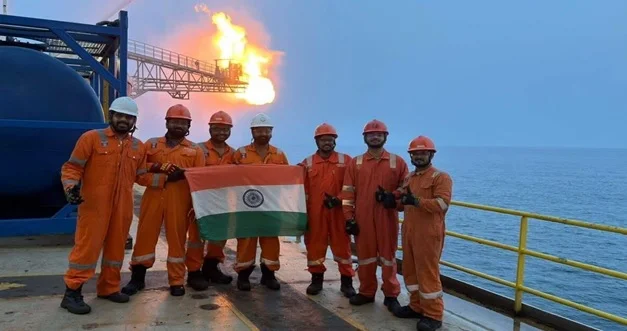
1. Where has ONGC discovered natural gas?ONGC discovered gas in the Mahanadi Offshore Basin, approximately 43 km off the Konark coast in Odisha, in the Bay of Bengal. 2. Which well recorded the discovery?The discovery was made in the MN-DW18-1-H-D exploratory well on September 18, 2026. 3. At what depth was gas encountered?Gas was encountered in the reported well-depth interval of 1,441–1,452 metres. The well’s reported target depth was 1,623 metres. 4. Has commercial production started?Commercial production has not been established in the reported announcement. ONGC must complete further appraisal and commercial evaluation before determining development prospects. 5. Why is the discovery important for India?It strengthens the Mahanadi Basin’s exploration prospects and could contribute to domestic gas supply if commercially developed. Its eventual contribution will depend on recoverable volumes, costs and infrastructure. |

India’s wind energy expansion faces challenges such as:
Wind energy can play a crucial role in India’s clean energy transition, energy security, and climate goals by expanding renewable capacity and reducing dependence on fossil fuels.
Prelims Practice QuestionIndia added over how much wind energy capacity in FY 2025–26? Mains Practice QuestionQ. Discuss the role of wind energy in India’s transition towards clean energy and achieving its renewable energy targets. |
1. What is India’s wind energy capacity as of August 2026?India’s installed wind energy capacity was 58.52 GW as of August 31, 2026. 2. How much wind energy capacity is India expected to add in FY 2026–27?India is on track to add around 7.5–8 GW of wind energy capacity in FY 2026–27. 3. What is India’s wind energy target for 2030?India aims to achieve more than 100 GW of installed wind energy capacity by 2030. 4. What is India’s broader renewable energy capacity target?India has set a target of achieving 500 GW of renewable energy capacity by 2030. 5. Why is wind energy important for India?Wind energy helps diversify India’s energy mix, reduce dependence on fossil fuels, improve energy security, and support its climate and clean-energy goals. |
| Prelims: Ayurveda Day, Ministry of Ayush, CCRAS, traditional medicine, safety dossiers and National Ayush Mission. Mains: GS Paper II public health and healthcare delivery; GS Paper III scientific research, innovation and protection of traditional knowledge. Keywords: CCRAS, AGNI, Safety dossier, Ayurveda Day |
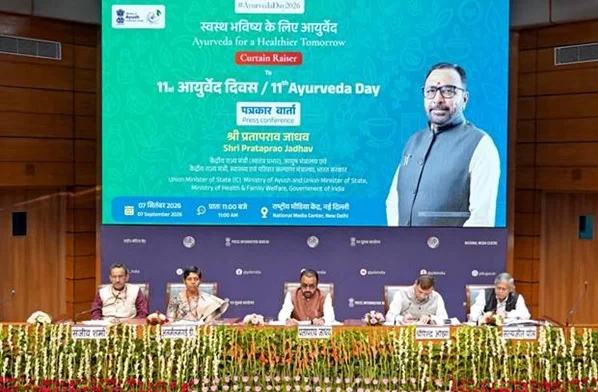
Ayurveda is an Indian traditional medical system concerned with health, illness, diet and lifestyle. Its classical literature includes the Charaka Samhita and Sushruta Samhita. Contemporary policy places growing emphasis on evaluating traditional practices through scientific research and quality standards.
The Research and Information System for Developing Countries (RIS) has prepared the first-ever report on this sector, scheduled for release at the national programme. It assesses Ayush services.
Policy significance: Sector-level evidence can help identify service gaps and guide planning. However, a sector report should not be confused with clinical evidence establishing the effectiveness of individual treatments.
The planned releases include safety dossiers on Gokshura (Tribulus terrestris) and Chandrasura (Lepidium sativum), along with Standard Treatment Guidelines on Skin Disorders.
Safety documentation and treatment guidance serve different purposes: the former brings together safety evidence, while the latter supports more consistent clinical decisions. Their practical value depends on the quality of underlying evidence and implementation.
Other announced releases include:
CCRAS stands for Central Council for Research in Ayurvedic Sciences, while AGNI means Ayurveda Gyan Naipunya Initiative.
Scientific sessions are scheduled to examine Ayurveda’s road to 2047 and its potential contribution to reducing the burden of non-communicable diseases (NCDs). The policy question is how specific, adequately evaluated interventions can contribute to prevention and care within a coordinated health system.
The following points explain the potential policy implications of the announced initiatives.
Systematic documentation can help preserve traditional knowledge and make it available for rigorous investigation. Research priorities should respond to public health needs, with transparent methods and publication of both favourable and unfavourable findings.
Reliable services and credible research could support skilled employment, research partnerships and responsible wellness tourism. Such opportunities depend on quality assurance and accurate communication of benefits and limitations.
The 11th Ayurveda Day places evidence, research and community wellbeing at the centre of the discussion on traditional medicine. Its lasting contribution will depend on how effectively the announced resources support reliable research, safe practice and measurable improvements in healthcare.
Prelims MCQs1. With reference to Ayurveda Day, consider the following statements:
Which of the statements given above are correct? (a) 1 and 2 only Mains Practice Question“The integration of traditional medicine into public healthcare requires scientific validation, quality assurance and patient-centred governance.” Discuss with reference to India’s Ayurveda ecosystem. |
1. When is the 11th Ayurveda Day being observed?It is scheduled for 23 September 2026, with the main national programme in Nagpur, Maharashtra. 2. What is the theme of Ayurveda Day 2026?The theme is “Ayurveda for a Healthier Tomorrow.” 3. Why is Ayurveda Day no longer tied to Dhanteras?The government adopted a fixed date from 2025 to improve consistency, planning and global participation. 4. Who prepared the first Ayush Services Sector report?It was prepared by the Research and Information System for Developing Countries (RIS). 5. What is the CCRAS–AGNI portal mentioned in the announcement?It is the CCRAS–AGNI Assessment Scale Web Portal, listed among the planned launches. AGNI expands to Ayurveda Gyan Naipunya Initiative. |

Sagarmala Finance Corporation plans to issue 10-year bonds to raise funds for the maritime sector.
The proposed issue includes:
The company plans to invite coupon and commitment bids from investors.
According to the company, the funds raised through the blue bond will be used for various maritime and coastal development activities.
These include:
The company plans to utilise the funds during the current financial year.
India’s first proposed blue bond by Sagarmala Finance Corporation marks a new development in sustainable maritime financing. Such instruments can help mobilise funds for ports, coastal infrastructure and other projects while supporting the sustainable use of marine resources.
Prelims practice questionQ1. India’s first proposed Blue Bond is being issued by which institution? A. State Bank of India Mains practice QuestionQ. What are Blue Bonds? Discuss their significance in financing India’s Blue Economy and the key challenges associated with their development. |
1. What is a Blue Bond?A Blue Bond is a debt instrument used to raise funds for sustainable projects related to oceans, seas and other water resources. 2. Which institution is planning to issue India’s first Blue Bond?Sagarmala Finance Corporation Limited (SMFCL) is planning to issue India’s first Blue Bond. 3. How much does Sagarmala Finance Corporation plan to raise?The lender plans to raise ₹600 crore, including a ₹500 crore greenshoe option. 4. What will the Blue Bond funds be used for?The funds will be used for maritime-sector lending, greenfield port projects, coastal road networks and other maritime infrastructure projects. 5. What is the tenure of the proposed Blue Bond?The proposed bond will have a 10-year tenure. |
| Prelims: Hepatitis B and C, National Viral Hepatitis Control Programme (NVHCP), vaccination, World Hepatitis Day, SDG 3. Mains: GS Paper II Public health, government interventions, equitable access to healthcare and international cooperation. Keywords: Viral hepatitis, Cirrhosis, Direct-acting antivirals, Antenatal screening, Elimination as a public health threat |
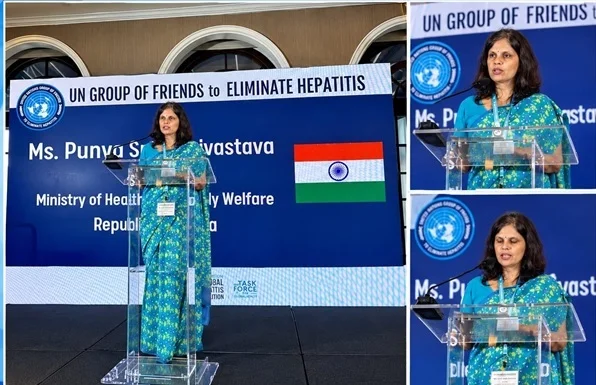
The Health Secretary’s remarks, as reported in the supplied text, emphasised services across the entire course of care. Prevention must be accompanied by accessible testing, timely diagnosis, appropriate treatment and support that helps patients remain connected to healthcare services.
India highlighted antenatal screening and Hepatitis B vaccination as important interventions. WHO recommends a Hepatitis B vaccine birth dose within 24 hours, followed by completion of the recommended vaccination schedule. Screening during pregnancy helps identify mothers who need further assessment and preventive care. [3]
The statement highlighted free diagnosis and treatment as central to India’s response. Their public health value depends on patients being able to reach services, receive confirmatory testing where required and obtain follow-up care without avoidable delays.
India also highlighted safe blood transfusion services, counselling and rehabilitation support for people who inject drugs. These measures need to be supported by infection prevention and respectful, confidential care that encourages people to seek help.
The Health Secretary called for sustained cooperation, equitable access to prevention, testing and treatment, and stronger health systems. This places hepatitis elimination within the wider debate on affordable healthcare and international responsibility.
|
Aspect |
Hepatitis B |
Hepatitis C |
|
Causative agent |
Hepatitis B virus (HBV) |
Hepatitis C virus (HCV) |
|
Main transmission routes |
Infected blood and body fluids; mother-to-child transmission during birth |
Primarily exposure to infected blood, including shared injecting equipment and unsafe procedures |
|
Vaccine |
An effective vaccine is available |
No effective vaccine is currently available |
|
Treatment |
Antiviral medicines suppress infection and reduce complications; treatment is often long-term |
Direct-acting antivirals can cure more than 95% of infections |
Both infections may initially have few or no symptoms, making testing important.
The main implementation challenges include:
Prelims MCQsQ. Consider the following statements:
Which of the statements given above are correct? (a) 1 and 2 only Mains Practice Question“Achieving hepatitis elimination requires both effective medical interventions and equitable health service delivery.” Discuss with reference to India’s 2030 commitment. |
1. What is India’s hepatitis elimination target?India has reaffirmed its commitment to eliminating Hepatitis B and C as public health threats by 2030, according to the supplied report. 2. Which programme supports India’s response to viral hepatitis?The National Viral Hepatitis Control Programme, launched on 28 July 2018, is a key national initiative. 3. Is a vaccine available for both Hepatitis B and C?No. An effective vaccine is available for Hepatitis B, while no effective Hepatitis C vaccine is currently available. 4. Can Hepatitis C be cured?Yes. Direct-acting antiviral medicines can cure more than 95% of infections. 5. Does the 2030 target mean zero hepatitis cases?No. It means reducing transmission and deaths to defined public health thresholds, with prevention and care continuing thereafter. |

Our support team will be happy to assist you!

 Contact Us
  New Batch : 9555124124/ 7428085757
  Tech Support : 9555124124/ 7428085757

