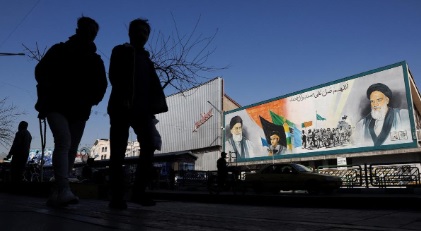
The Iranian nuclear issue reinforces an eternal truth of international relations. No matter how deep the conflict, a solution ultimately emerges through dialogue. Agreements like the JCPOA may not be perfect, but they manage risks better than uncontrolled conflict. Lasting security is possible only through sustained diplomacy, as the alternative of war and retaliation is not only uncertain but also extremely destructive to the global economy.
| Prelims: (Economy + CA) Mains: (GS 3 – Energy Security, Renewable Energy Transition; GS 2 – Welfare Schemes & Governance) |
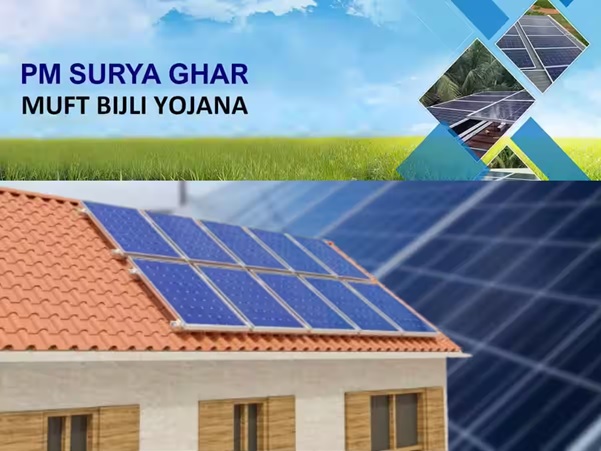
The Union Minister recently announced that rooftop solar installations under the PM Surya Ghar: Muft Bijli Yojana have crossed 30 lakh households since its launch in February 2024.
The milestone highlights accelerating adoption of decentralised solar power across India.
India has committed to expanding non-fossil fuel capacity and promoting distributed renewable energy as part of its climate and energy transition goals.
Rooftop solar is seen as a key pillar in:
The PM Surya Ghar scheme was launched in 2024 to accelerate rooftop solar penetration in the residential sector.
The PM Surya Ghar: Muft Bijli Yojana aims to provide free electricity to households by promoting rooftop solar installations.
Core Objective
The scheme provides financial assistance as follows:
This structure ensures affordability while encouraging optimal system sizing.
This promotes grassroots-level ownership and monitoring.
National Level
State Level
Role of DISCOMs
DISCOMs receive performance-linked incentives for installing additional grid-connected rooftop solar capacity beyond baseline levels.
A household must:
FAQs1. What is PM Surya Ghar: Muft Bijli Yojana? A central scheme promoting rooftop solar installations to provide free electricity to households. 2. What subsidy does it provide? 60% subsidy up to 2 kW and 40% for 2–3 kW systems, capped at 3 kW. 3. Who implements the scheme? At the national level by NPIA and at the state level by DISCOMs as SIAs. 4. What is a Model Solar Village? A demonstration village in each district showcasing decentralised solar adoption. 5. Why is rooftop solar important? It reduces electricity bills, strengthens energy security, and supports climate goals. |
| Prelims: (International Relations + CA) Mains: (GS 2 – International Institutions; GS 3 – Energy Security, Climate Change & Energy Transition) |
At its recent ministerial meeting in Paris, the International Energy Agency acknowledged progress on India’s request for full membership.
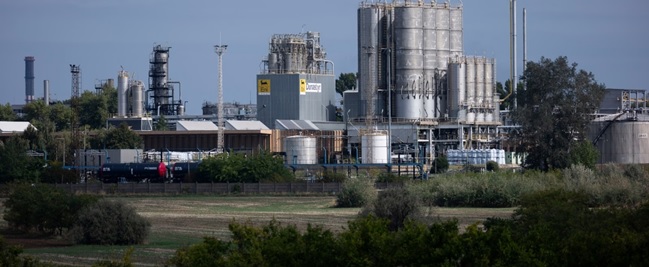
The IEA was established in 1974 in response to the global oil crisis triggered by the Arab oil embargo during the Yom Kippur War.
Core Mandate
Emergency Mechanism
A key requirement for members is maintaining minimum strategic oil stocks.
This mechanism has been activated during:
Membership Structure
Expansion of IEA Membership
In 2015, the IEA created the Associate Membership category for non-OECD countries.
Associate members:
India became an associate member in 2017, marking a significant shift in the IEA’s engagement with emerging economies.
Over time, the IEA’s mandate expanded beyond oil security to include:
At its founding, IEA members accounted for over 60% of global energy demand.
That share declined to around 40% a decade ago.
However, when associate members such as India, China, Brazil, South Africa, Indonesia, Egypt, and Thailand are included, the broader IEA framework now represents nearly 80% of global energy demand.
This expansion underscores the IEA’s evolving global relevance.
India formally submitted its request for full membership in October 2023.
The issue has also featured prominently in India–US bilateral discussions.
Why India Seeks Full Membership
Decision-Making Power: As an associate member, India participates in discussions but lacks voting rights.
Strategic Influence: Full membership would allow India to shape global energy governance rules.
Access to Data and Knowledge: The IEA maintains one of the world’s most comprehensive energy databases and policy platforms.
Energy Security Coordination: Membership enhances coordination during global supply disruptions.
The major challenge lies in the IEA’s founding charter, which restricts membership to OECD countries.
Since India does not intend to join the OECD, full membership would require:
Both options involve political consensus among current members, making the process complex and time-consuming rather than automatic.
Brazil, another non-OECD country, has also sought full membership, adding to the broader debate on reforming the IEA’s structure.
The IEA has expressed strong support for India’s bid, recognising:
Growing India–IEA Engagement
LiFE Initiative Collaboration
The IEA prepared a special report on India’s LiFE (Lifestyle for Environment) initiative, estimating that widespread lifestyle changes could avoid up to 2 billion tonnes of global emissions by 2030.
FAQs1. What is the IEA? An intergovernmental organisation established in 1974 to ensure global energy security and coordinate oil supply responses. 2. Why can’t India easily become a full member? Because IEA membership is legally restricted to OECD countries. 3. What is India’s current status in the IEA? India is an associate member since 2017. 4. Why does India want full membership? To gain voting rights and influence global energy governance decisions. 5. How has the IEA’s role evolved? It has expanded from oil security to renewable energy, decarbonisation, and critical minerals governance. |
| Prelims: (Defence & Security + CA) Mains: (GS 3 – Internal Security; Terrorism; Role of Technology in Security Challenges) |
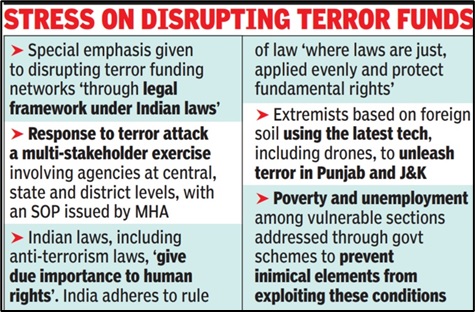
The Centre has launched ‘Prahaar’, India’s first comprehensive counter-terrorism policy. Built on a zero-tolerance approach, it emphasises intelligence-led prevention and coordinated responses to extremist violence.
The framework aims to dismantle terror networks by cutting off access to funding, weapons, and safe havens, both within India and abroad, targeting not just terrorists but also their financiers and supporters.
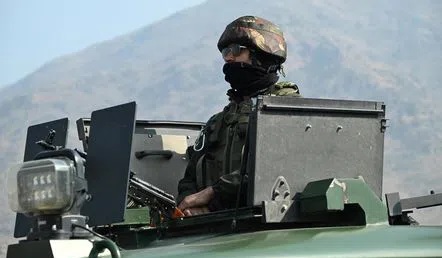
India has faced persistent security challenges, including cross-border terrorism, radicalisation, sleeper cells, and technology-enabled terror financing. While India has strong legal instruments such as the Unlawful Activities (Prevention) Act (UAPA) and a robust institutional mechanism involving the NIA, IB, and state police forces, there has been no single integrated doctrine outlining a comprehensive national counter-terror strategy.
‘Prahaar’ seeks to fill this gap by institutionalising a unified, doctrine-based approach to counter-terrorism rooted in prevention, coordination, and resilience.
The policy adopts a whole-of-government and whole-of-society approach, integrating intelligence, law enforcement, legal safeguards, and international cooperation.
Each letter of “Prahaar” represents a pillar:
FAQs1. What is ‘Prahaar’? India’s first comprehensive counter-terrorism policy aimed at strengthening coordinated and intelligence-driven action against terrorism. 2. What makes Prahaar different from previous measures? It institutionalises a unified doctrine combining prevention, response, legal safeguards, and resilience under one structured framework. 3. Does Prahaar address online radicalisation? Yes, it focuses on countering cyber propaganda, encrypted communication misuse, and cryptocurrency-based terror financing. 4. How does Prahaar ensure human rights? It emphasises due process, graded response, and legal redressal mechanisms within counter-terror operations. 5. Why is international cooperation important under Prahaar? Terror networks are transnational; extradition treaties, intelligence sharing, and UN cooperation are critical to dismantling global linkages. |
| Prelims: (Art & Cultural + CA) Mains: (GS 2 – Government Policies & Interventions; GS 3 – Tourism & Economic Development) |
The Union Civil Aviation Minister recently stated that the Centre is preparing plans to further develop tourist destinations around prominent temples in Andhra Pradesh under the PRASHAD scheme.
The announcement highlights the government’s renewed focus on spiritual tourism and infrastructure augmentation at major pilgrimage centres.

Launched in 2014–15, the PRASHAD scheme was conceptualised to promote holistic development of pilgrimage destinations across India. It aims to integrate spiritual heritage preservation with modern tourism infrastructure to enhance the overall experience for pilgrims.
PRASHAD stands for Pilgrimage Rejuvenation and Spiritual Heritage Augmentation Drive.
Launch and Ministry
The core objective of the scheme is the integrated development of identified pilgrimage and heritage destinations.
It seeks to:
The scheme focuses on infrastructure creation such as:
The Ministry of Tourism has established a Mission Directorate to implement the scheme.
The Directorate:
India has a rich spiritual heritage with prominent temple towns and pilgrimage circuits. Infrastructure development under PRASHAD enhances tourism potential and promotes cultural preservation.
The scheme contributes to:
By focusing on pilgrimage towns, often located in semi-urban or rural areas, the scheme supports inclusive economic growth.
FAQs1. What does PRASHAD stand for? Pilgrimage Rejuvenation and Spiritual Heritage Augmentation Drive. 2. Which ministry implements the scheme? The Ministry of Tourism. 3. What type of scheme is PRASHAD? It is a Central Sector Scheme with 100% central funding for public components. 4. When was the scheme launched? It was launched in 2014–15. 5. Does the scheme allow private participation? Yes, through CSR contributions and Public-Private Partnerships (PPP). |
| Prelims: (Polity & Governance + CA) Mains: (GS 2 – Constitutional Bodies; Electoral Reforms; Separation of Powers; Democratic Accountability) |
The independence of the Election Commission has come under debate following allegations of irregularities in electoral roll revisions and a proposed motion to remove the Chief Election Commissioner (CEC).
Concerns have been raised regarding large-scale deletions of voter names during the Special Intensive Revision (SIR) exercise and the broader implications for institutional autonomy.
The Election Commission of India (ECI) is one of the most critical constitutional institutions safeguarding India’s democratic framework. Any controversy relating to electoral roll revisions, appointment procedures, or removal of commissioners directly impacts public trust in the integrity of elections.
The present debate also follows the enactment of the Chief Election Commissioner and Other Election Commissioners (Appointment, Conditions of Office and Terms of Office) Act, 2023, and judicial scrutiny over its validity.
Free and fair elections form part of the Basic Structure of the Constitution, as recognised by the Supreme Court in Indira Gandhi vs. Raj Narain.
Constitutional Basis
Recent allegations of “vote theft” and mass deletions of names during SIR exercises in certain States have raised concerns about procedural fairness and electoral integrity.
Any perceived dilution of electoral processes affects the legitimacy of democratic institutions.
Article 324
Article 324 vests in the Election Commission of India the powers of superintendence, direction, and control over elections to:
This ensures:
Since 1993, the Commission has functioned as a multi-member body, a structure upheld in T. N. Seshan vs. Union of India.
The CEC acts as Chairperson, and decisions are taken collectively.
The appointment process became contentious after the 2023 Act.
Critics argue that the exclusion of the Chief Justice of India (CJI) from the Selection Committee weakens institutional independence.
This issue arose after the Supreme Court’s ruling in Anoop Baranwal vs. Union of India, which had temporarily mandated inclusion of the CJI in the selection panel until Parliament enacted a law.
The validity of the 2023 Act is currently under judicial review.
Removal of the CEC
Under Article 324(5), the CEC can be removed only in the same manner and on the same grounds as a Supreme Court judge under Article 124(4).
Grounds:
Procedure:
This makes removal extremely difficult, reinforcing autonomy.
Other Election Commissioners may be removed by the President on the recommendation of the CEC.
However, in Vineet Narain vs. Union of India, the Supreme Court held that such advice must not be arbitrary, thereby preventing misuse of executive discretion.
Recent controversies include:
Since electoral rolls form the foundation of democratic participation, any irregularities risk undermining constitutional guarantees under Article 326.
Challenges to revision exercises have reached the Supreme Court, highlighting the tension between administrative efficiency and democratic legitimacy.
FAQs1. Why is the Election Commission’s independence important? It ensures free and fair elections, a core feature of the Constitution’s Basic Structure. 2. How can the CEC be removed? Only through a rigorous process similar to that for removing a Supreme Court judge. 3. What is the controversy over the 2023 Act? It excludes the Chief Justice of India from the selection committee, raising concerns over executive dominance. 4. What is Special Intensive Revision (SIR)? A comprehensive update of electoral rolls to ensure accuracy and eliminate duplication. 5. Is the appointment law under challenge? Yes, its constitutional validity is currently under judicial scrutiny. |
Recently, a rare Ferruginous Pochard was spotted among a flock of Common Pochards at Amur Lake in Chennai. This species is seen in limited numbers in India, making such sightings significant for birdwatchers and conservationists.

The Ferruginous Pochard (scientific name: Aythya nyroca) is a medium-sized diving duck.
It is also known as:
The male is easily identified by its bright white eye and rich reddish-brown (chestnut) plumage.
This species prefers shallow freshwater bodies such as:
Ideal habitats contain:
Such environments provide food, breeding grounds, and protection.
The Ferruginous Pochard is mainly distributed across:
It is particularly found in countries such as China, Mongolia, Portugal, France, Albania, Austria, Belgium, and Bosnia.
Diet:-The Ferruginous Pochard has an omnivorous diet
The species faces serious threats mainly due to human activities:
Destruction and degradation of wetlands are rapidly reducing its breeding habitats.
This status indicates that if current threats continue, the species may soon qualify as Vulnerable.
For the conservation of this species and other migratory birds in India, the following measures are crucial:

Our support team will be happy to assist you!


 Contact Us
  New Batch : 9555124124/ 7428085757
  Tech Support : 9555124124/ 7428085757