
- UPSC Exam
- State PCS
- One Day Exam
- Current Affairs
- PT Quiz
- Downlaods
- About Coaching
- Blog
- Videos

Recently, a rare Ferruginous Pochard was spotted among a flock of Common Pochards at Amur Lake in Chennai. This species is seen in limited numbers in India, making such sightings significant for birdwatchers and conservationists.
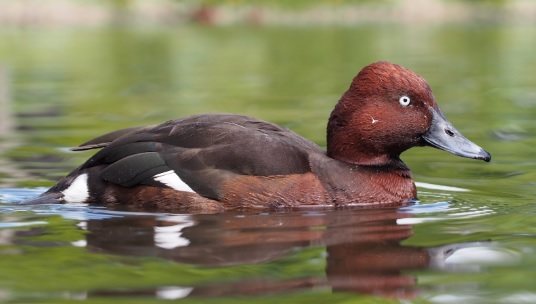
The Ferruginous Pochard (scientific name: Aythya nyroca) is a medium-sized diving duck.
It is also known as:
The male is easily identified by its bright white eye and rich reddish-brown (chestnut) plumage.
This species prefers shallow freshwater bodies such as:
Ideal habitats contain:
Such environments provide food, breeding grounds, and protection.
The Ferruginous Pochard is mainly distributed across:
It is particularly found in countries such as China, Mongolia, Portugal, France, Albania, Austria, Belgium, and Bosnia.
Diet:-The Ferruginous Pochard has an omnivorous diet
The species faces serious threats mainly due to human activities:
Destruction and degradation of wetlands are rapidly reducing its breeding habitats.
This status indicates that if current threats continue, the species may soon qualify as Vulnerable.
For the conservation of this species and other migratory birds in India, the following measures are crucial:



Our support team will be happy to assist you!


 Contact Us
  New Batch : 9555124124/ 7428085757
  Tech Support : 9555124124/ 7428085757