
| Prelims: Typhoon Champi 2026, Taiwan Typhoon, Tropical Cyclone, Super Typhoon, Storm Surge, Coriolis Force, Tropical Cyclone Formation, Western Pacific, Taiwan Central Weather Administration, IMD, Disaster Management Mains: GS Paper I: Geography, Disaster Management, Climate Change, Tropical Cyclones, Disaster Risk Reduction, Early Warning Systems, Climate Resilience |
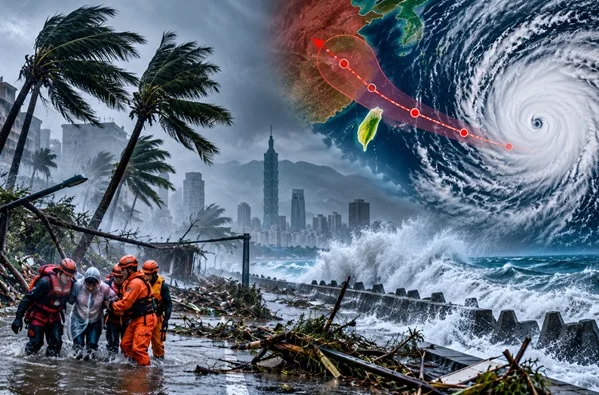
Typhoon Champi swept past Taiwan on 24 October 2026, killing one person and injuring 527 others, as powerful winds and torrential rainfall caused widespread damage and disrupted transportation and electricity supplies.
|
Particulars |
Details |
|
Name |
Typhoon Champi |
|
Date of major impact on Taiwan |
23–24 October 2026 |
|
Affected region |
Taiwan and western Pacific |
|
Deaths in Taiwan |
1 |
|
Injuries in Taiwan |
527 |
|
Wind gusts near storm centre |
Around 126 km/h on 24 October |
|
Earlier intensity |
Super typhoon |
|
Current movement |
North towards China's coast |
|
Landfall in China |
Not expected at the time of reporting |
|
Weather agency |
Taiwan Central Weather Administration |
|
Major concerns |
Strong winds, heavy rainfall, coastal waves and power disruption |
|
Term |
Region |
|
Cyclone |
Indian Ocean and South Pacific |
|
Typhoon |
North-western Pacific Ocean |
|
Hurricane |
Atlantic Ocean and north-eastern Pacific Ocean |
|
Storm surge |
Tsunami |
|
Mainly caused by storm winds and pressure |
Mainly caused by underwater earthquakes, landslides or volcanic activity |
|
Associated with tropical cyclones and severe storms |
Associated with sudden displacement of water |
|
Usually linked to storm duration and coastal weather |
May involve multiple powerful waves |
|
Institution |
Role |
|
India Meteorological Department (IMD) |
Weather forecasting and cyclone warnings |
|
National Disaster Management Authority (NDMA) |
National disaster management policies and guidelines |
|
National Disaster Response Force (NDRF) |
Disaster response and rescue operations |
|
State Disaster Management Authorities |
State-level disaster planning and coordination |
|
Indian National Centre for Ocean Information Services (INCOIS) |
Ocean information, including tsunami and coastal hazard-related services |
Prelims MCQsQ. Typhoons are tropical cyclones that occur in which region? A. Northwestern Pacific UPSC Mains QuestionQ. How do tropical cyclones affect coastal communities? Discuss measures to reduce their impact. |
What is Typhoon Champi?A tropical cyclone that swept past Taiwan in October 2026. When did Champi affect Taiwan?23–24 October 2026. How many people died in Taiwan?One person, according to reports on 24 October. How many people were injured?527 people. Where is Champi moving?North towards China's coast, with its forecast track potentially extending towards southern Japan. |
| Prelims: NavIC, IRNSS, satellite navigation, L5 and S-bands, NVS-03 Mains: Space technology, national security, self-reliance, disaster management and digital connectivity Keywords: NavIC, NVS-03, ISRO, IRNSS, GPS, satellite navigation, atomic clock |
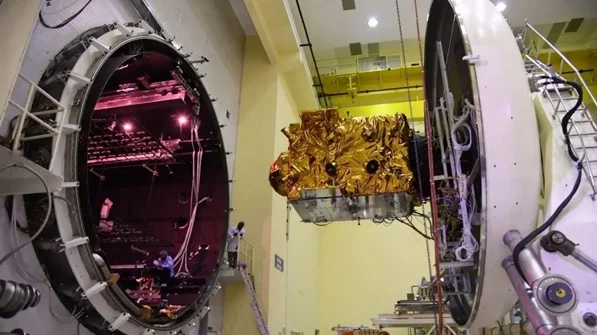
NVS-03 is the third satellite in NavIC’s second-generation series. Its launch is scheduled for October 30, 2026. If it is successfully placed in orbit and becomes operational, the number of NavIC satellites providing PNT services could rise to four. This could make standalone positioning possible again.
NVS-03 could:
NavIC satellites transmit precisely timed signals to Earth. A receiver estimates its position and time by measuring how long the signals take to arrive. According to ISRO, at least four operational satellites are needed for basic positioning.
NavIC provides two types of services:
NavIC signals are available in the L5 and S-bands. The second-generation satellites are also introducing the L1 band to support civilian use and improve compatibility with other global navigation satellite systems.
|
Feature |
NavIC |
GPS |
|
Full name |
Navigation with Indian Constellation |
Global Positioning System |
|
Operated by |
India |
United States |
|
Coverage |
India and the region extending about 1,500 km beyond its boundary |
Global |
|
Main purpose |
Regional PNT services centred on India |
PNT services worldwide |
|
Services |
Civilian SPS and authorised-user RS |
Civilian and authorised-user services |
NavIC is best understood as a regional system and complement to global systems such as GPS, rather than as a global replacement. ISRO says NavIC’s SPS signals can work alongside GPS, GLONASS, Galileo and BeiDou.
Prelims MCQConsider the following statements about NavIC:
Which of the statements given above is/are correct? A. 1 and 2 only Mains QuestionWhy is NavIC important for India’s strategic autonomy and civilian services? Discuss the opportunities associated with NVS-03 and the challenges to ensuring the continuity of NavIC services. |
1. What is the full form of NavIC?NavIC stands for Navigation with Indian Constellation. It was earlier called IRNSS. 2. Is NavIC India’s GPS?NavIC is India’s own satellite navigation system, but it is regional rather than global. Its main service area covers India and the surrounding region. 3. When is NVS-03 scheduled to launch?NVS-03 is scheduled for launch on October 30, 2026. The launch and operational schedule may change. 4. Why could NavIC not provide standalone positioning?'In July 2026, the government said that three satellites were providing PNT services, while at least four operational satellites were needed for basic positioning. The timing service remained functional. 5. Does a disruption to NavIC mean that phone location services stop working?Not necessarily. Many devices also use other GNSS signals, including GPS. |
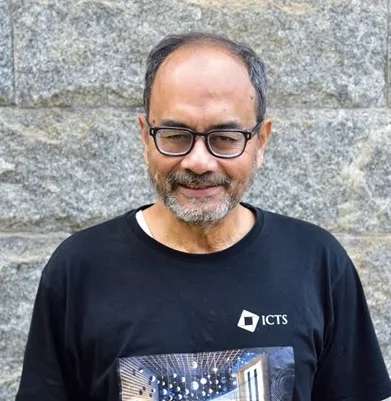
As part of the recognition, Ashoke Sen delivered the 2026 Oskar Klein Memorial Lecture at Stockholm University's AlbaNova Centre on October 22, 2026.
Elections were recently held for 28 seats in the Legislative Councils of Uttar Pradesh, Bihar, Maharashtra, and Karnataka.
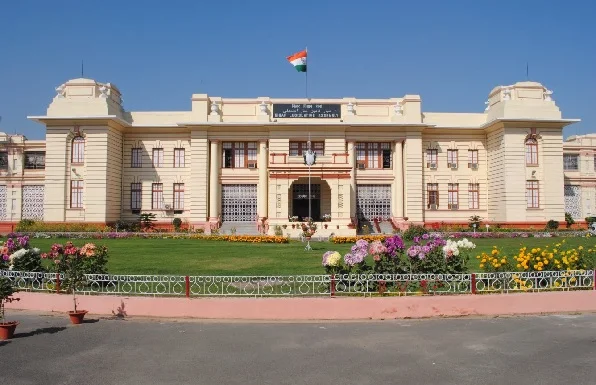
The Legislative Council (the Upper House) plays a vital role within the state legislatures of India.
Preliminary Examination QuestionQuestion: According to Article 171 of the Indian Constitution, what is the maximum number of members a Legislative Council can have, relative to the total number of members in the State Legislative Assembly? (a) One-fourth (b) One-third (c) Half (d) Two-thirds Main Examination QuestionQuestion: Evaluate the role of the Legislative Council as the upper house of a state legislature. Does it strengthen the federal system and democratic representation? |
Question: Which article of the Indian Constitution provides for the creation or abolition of a Legislative Council in a state?Answer: Article 169; under this, Parliament can enact a law to create or abolish a Legislative Council in a state. Question: What majority is required in the State Legislative Assembly to pass a resolution for the creation or abolition of a Legislative Council?Answer: The resolution must be passed by a majority of the total membership of the Legislative Assembly and by a majority of at least two-thirds of the members present and voting. Question: By what majority does Parliament pass a resolution regarding the creation or abolition of a Legislative Council?Answer: Parliament can pass it by a simple majority. Question: What is the maximum number of members a Legislative Council can have?Answer: According to Article 171, the total number of members in a Legislative Council cannot exceed one-third of the total number of members in the State Legislative Assembly. However, a Legislative Council must generally have a minimum of 40 members. Question: Why is the Legislative Council called a permanent house?Answer: Because the Legislative Council is never dissolved. Each member has a tenure of six years, and approximately one-third of its members retire every two years. |
United Nations Day is observed every year on 24 October to mark the anniversary of the entry into force of the United Nations Charter in 1945.
|
Fact |
Detail |
|
United Nations Day |
24 October |
|
Year of establishment of UN |
1945 |
|
UN Charter signed |
26 June 1945 |
|
UN Charter came into force |
24 October 1945 |
|
Original member states |
51 |
|
Current member states |
193 |
|
Headquarters |
New York City, USA |
|
Founding document |
United Nations Charter |
|
Main objectives |
Peace, security, human rights and international cooperation |
|
UN Day officially designated |
1947 |
|
First annual observance |
1948 |
|
Universal Declaration of Human Rights |
1948 |
|
Sustainable Development Goals adopted |
2015 |
|
Organ |
Main Function |
|
General Assembly |
Provides a forum for all member states to discuss international issues. |
|
Security Council |
Has primary responsibility for maintaining international peace and security. |
|
Economic and Social Council (ECOSOC) |
Coordinates work on economic, social and related development issues. |
|
International Court of Justice (ICJ) |
Settles legal disputes between states that fall within its jurisdiction and gives advisory opinions. |
|
Secretariat |
Carries out the day-to-day administrative work of the UN. |
|
Trusteeship Council |
Suspended its operations in 1994 after the completion of its original mission. |
Prelims MCQQ. United Nations Day is observed on which date? A. 5 June Mains Practice QuestionsExplain the role of the United Nations in maintaining international peace and security. Discuss its major limitations. |
When is United Nations Day observed?24 October. When was the United Nations established?24 October 1945. What is the UN Charter?The UN Charter is the founding document of the United Nations. It defines the organisation's objectives, principles, structure and powers. How many member states does the UN have?193 member states. Where is the UN headquarters located?New York City, United States. |
| Prelims: Khet Bachao Abhiyan 2026, Soil Health, Dhaincha, Green Manuring, Soil Testing, Balanced Fertilizer Use, ICAR, CCARI Goa, Rabi Crops, Sustainable Agriculture, North Goa, Revora Mains: GS Paper III: Indian Agriculture, Soil Conservation, Sustainable Farming, Climate-Resilient Agriculture, Agricultural Productivity, Natural Resource Management, Organic Farming and Crop Diversification |
The Khet Bachao Abhiyan (Rabi 2026) was inaugurated on 22 October 2026 at Revora village, Bardez taluka, North Goa, to promote soil health conservation, balanced fertilizer use and sustainable farming practices.
|
Fact |
Answer |
|
Campaign |
Khet Bachao Abhiyan |
|
Edition |
Rabi 2026 |
|
Revora programme date |
22 October 2026 |
|
Location |
Revora, North Goa |
|
Nationwide launch |
Karnal, Haryana |
|
Campaign period |
22 October–30 November 2026 |
|
Main objective |
Soil health and sustainable farming |
|
Farmers at Revora |
62 |
|
Female participants |
38 |
|
Main agricultural focus |
Balanced fertilizer use and soil-test-based nutrient management |
|
Associated institute |
ICAR-CCARI, Goa |
|
Campaign period |
22 October to 30 November 2026 |
|
Launch location |
Karnal, Haryana |
|
Launching authority |
Ministry of Agriculture and Farmers Welfare |
|
Major focus |
Soil health, balanced fertilizer use and sustainable agriculture |
|
Implementation |
Agriculture departments, ICAR institutions, KVKs and ATMA |
|
Resource |
Agricultural use |
|
Cow dung |
Farmyard manure and compost |
|
Cow urine |
Potential ingredient in suitable organic farming formulations |
|
Farm waste |
Composting and nutrient recycling |
|
Biofertilizers |
Support nutrient availability and soil fertility |
|
Particulars |
Details |
|
Total farmers |
62 |
|
Male farmers |
24 |
|
Female farmers |
38 |
|
Villages represented |
5 nearby village panchayats |
|
Chilli and palak seeds |
Distributed by ATMA, North Goa |
|
Compost |
Distributed by Vanrai NGO |
|
Dhaincha seeds |
Distributed by ICAR-KVK, CCARI |
|
Concept |
Meaning |
|
Soil testing |
Testing soil to understand its nutrient status |
|
Balanced fertilization |
Applying nutrients in appropriate proportions |
|
Organic manure |
Nutrient-rich material obtained from organic sources |
|
Biofertilizers |
Microorganisms that support nutrient availability |
|
Biopesticides |
Biological agents used to manage pests |
|
Green manuring |
Growing plants and incorporating them into soil to improve fertility |
|
Crop diversification |
Growing different crops instead of relying on a single crop |
|
Integrated pest management |
Combining suitable methods to control pests |
Prelims MCQQ. Khet Bachao Abhiyan primarily aims to promote: A. Industrial development Mains Practice QuestionQ. How can soil health management promote sustainable agriculture in India? |
What is Khet Bachao Abhiyan?An initiative to promote soil health, balanced fertilizer use and sustainable agriculture. Where was Khet Bachao Abhiyan Rabi 2026 inaugurated in Goa?Revora, Bardez taluka, North Goa. When was the Revora programme held?22 October 2026. What is the nationwide campaign period?22 October to 30 November 2026. Where was the nationwide campaign launched?Karnal, Haryana. |
| Keywords: Indo-Pacific Regional Dialogue, IPRD-2026, Indian Navy, National Maritime Foundation, Indo-Pacific Oceans Initiative, IPOI, MAHASAGAR, maritime cooperation, ocean governance, climate resilience |
The three-day dialogue is expected to include maritime practitioners, scientists, academicians, policymakers and experts from 18 countries. The event will provide a platform for regional participants to share ideas and explore ways to work together.
The conference will hold five professional thematic sessions:
The discussions will examine ways to develop:
The dialogue aims to identify specific, actionable measures that countries can pursue through existing bilateral, trilateral and plurilateral mechanisms.
IPRD-2026 will look beyond science, technology, engineering and mathematics (STEM). Social sciences, life sciences and the humanities will also be considered relevant to understanding complex maritime challenges.
IPRD-2026 will bring regional experts together to discuss how science, technology and academic cooperation can strengthen maritime cooperation in the Indo-Pacific. The dialogue’s long-term value will depend on turning its discussions into sustained partnerships and actionable regional initiatives.
Prelims MCQWith reference to the Indo-Pacific Regional Dialogue 2026, consider the following statements:
Which of the statements given above are correct? A. 1 only Mains QuestionDiscuss how scientific, technological and academic cooperation can help address shared maritime challenges in the Indo-Pacific. |
1. What is the Indo-Pacific Regional Dialogue?It is the Indian Navy’s annual international strategic outreach initiative on regional maritime issues and cooperation. 2. When and where will IPRD-2026 be held?It is scheduled for 3–5 November 2026 in New Delhi. 3. What is the theme of IPRD-2026?The theme is “Science, Technology and Academic Cooperation in the Indo-Pacific.” 4. Which organisation is associated with the Indian Navy in hosting the dialogue?The National Maritime Foundation is the Navy’s knowledge partner and the dialogue’s principal organiser. 5. How is IPRD linked to the Indo-Pacific Oceans Initiative?IPRD supports practical regional cooperation within the broader framework of the Indo-Pacific Oceans Initiative, alongside India’s MAHASAGAR vision. |