
- UPSC Exam
- State PCS
- One Day Exam
- Current Affairs
- PT Quiz
- Downlaods
- About Coaching
- Blog
- Videos

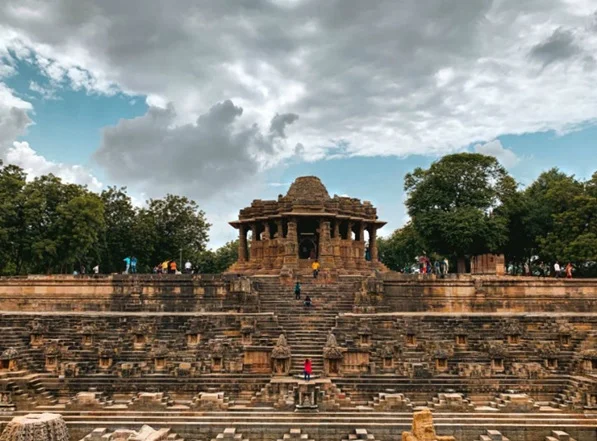
UPSC Prelims MCQ: Modhera Sun TempleQuestion 1. Consider the following statements regarding the Modhera Sun Temple:
How many of the above statements are correct? (a) Only one |
Q1. Where is the Modhera Sun Temple located?Answer: The Modhera Sun Temple is located in Mehsana district of Gujarat. Q2. Who built the Modhera Sun Temple?Answer: The Modhera Sun Temple was built in the 11th century during the reign of Chalukya ruler Bhima I. Q3. What special achievement is Modhera known for?Answer: Modhera is known for being developed as India’s first 24×7 solar village (Solar Village). Q4. When was the Modhera Solar Village initiative inaugurated?Answer: The Modhera Solar Village initiative was inaugurated in 2022 by Prime Minister Narendra Modi. Q5. Who protects the Modhera Sun Temple?Answer: The Modhera Sun Temple is a protected monument under the Archaeological Survey of India (ASI). |
| Prelims: WorldSkills Competition, WorldSkills Shanghai 2026, India’s 10th rank, Skill India, vocational education, technical skills, Industry 4.0 and demographic dividend. Mains: Skill Development, Vocational Education, Human Resource Development, Employment, Industry 4.0, Demographic Dividend, Industry Skill Linkages and Future Skills. Keywords: WorldSkills Shanghai 2026, India WorldSkills ranking, WorldSkills Competition, Skill India, vocational education in India, skill development, WorldSkills India. |
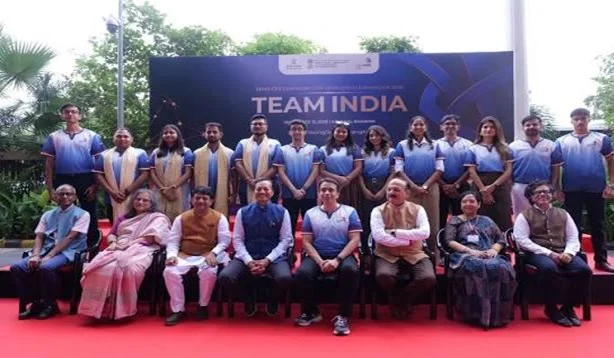
India’s performance has shown a gradual improvement over the past 15 years.
|
Year |
Host City |
India’s Position |
|---|---|---|
|
2011 |
London |
39th |
|
2013 |
Leipzig |
33rd |
|
2015 |
São Paulo |
29th |
|
2017 |
Abu Dhabi |
19th |
|
2019 |
Kazan |
13th |
|
2022 |
Special Edition |
11th |
|
2024 |
Lyon |
13th |
|
2026 |
Shanghai |
10th |
This progression reflects the increasing emphasis on vocational education, industry-oriented training and international skill standards in India.
India participated in 63 skill categories with a contingent of 70 competitors.
India secured:
The Indian contingent also participated in newer areas such as Digital Interactive Media Design, Software Testing, Unmanned Aerial Systems, Aircraft Maintenance, Intelligent Security Technology and Optoelectronic Technology. This indicates a shift from conventional vocational skills towards technology-intensive and future-oriented skills.
India has one of the world's largest young populations. Converting this demographic advantage into economic growth requires not only education but also employable and industry-relevant skills.
Automation, artificial intelligence, robotics and advanced manufacturing are changing the nature of employment.
India needs workers capable of operating and developing these technologies. Competitions such as WorldSkills expose young professionals to global standards in these emerging sectors.
Vocational education has traditionally received less social recognition than conventional academic education in India.
International achievements can contribute to greater visibility and recognition of technical and vocational careers.
International skill competitions provide a benchmark against which the capabilities of Indian workers can be compared with global occupational standards.
This can support India's ambitions in manufacturing, services and global workforce mobility.
Women also formed part of India's Shanghai contingent, participating in areas including logistics, hospitality, bakery, beauty and visual merchandising. Greater participation of women in technical and vocational skills can contribute to a more inclusive workforce.
One of the important aspects of India's WorldSkills journey is the changing nature of the skills in which Indian participants compete.
Earlier participation was more closely associated with conventional vocational trades. Increasingly, India is entering areas linked with:
This transition is important because the future labour market will increasingly demand a combination of technical expertise, digital literacy and problem-solving capabilities.
Despite the improvement in international competitions, several structural challenges remain.
MCQWith reference to WorldSkills Shanghai 2026, consider the following statements:
Which of the statements given above are correct? A. 1 and 2 only Mains Question“India’s progress from 39th position in 2011 to the Top 10 in WorldSkills reflects the changing nature of India’s skill development ecosystem.” Discuss the significance of vocational education and the major challenges in aligning skills with the requirements of Industry 4.0. |
1. What is the WorldSkills Competition?It is an international competition that evaluates young professionals in technical and vocational skills according to global occupational standards. 2. What position did India secure at WorldSkills Shanghai 2026?India secured the 10th position. 3. What was India’s position in WorldSkills 2011?India stood 39th at WorldSkills London 2011. 4. How many Silver Medals did India win at Shanghai 2026?India won six Silver Medals. 5. Why is WorldSkills important for India?It provides an international benchmark for technical and vocational skills and highlights the importance of industry-relevant workforce development. |
|
S. No. |
Artist |
Awarded Artwork |
Medium |
Category |
|
1 |
Chandra Shekhar Sain |
My Entire World - I |
Terracotta |
Sculpture |
|
2 |
Gopal Chandra Naskar |
The Tune of The Srimad Bhagavad Gita |
Acrylic on Canvas |
Painting |
|
3 |
Kishore Kumar Narkhadiwala |
Paryavaran |
Oil on Canvas |
Painting |
|
4 |
Mrinal De |
Hopeless Settlement |
Acrylic on Canvas |
Painting |
|
5 |
Nidhi Chopra |
Tangible Dreams |
Ceramic |
Sculpture |
|
6 |
Nimai Singh Sarungbam |
Mudra - I |
Teak Wood |
Sculpture |
|
7 |
Pankaj Kumar Sharma |
Haloed Traveler - II |
Panel Works |
Drawing |
|
8 |
Pooja Rajput |
Prakriti Shoshan |
White Marble |
Sculpture |
|
9 |
Praveen Kumar |
Where The Walls Remember |
Mixed Media |
Painting |
|
10 |
Pritam Madhukar Devaskar |
Of Time and The City |
Etching |
Printmaking |
|
11 |
Rajendra Prasad |
Sujata With Buddha |
Water Colour (Wash) |
Painting |
|
12 |
Ramesh Vitthal Thorat |
Untitled - II |
Oil on Canvas |
Painting |
|
13 |
Raviram Ramakrishnan |
Fisherwoman |
Oxidised and Welded Copper |
Sculpture |
|
14 |
Sanjay Kumar |
When Memories Come Back - 7 |
Mixed Media |
Painting |
|
15 |
Sanjay Kumar Sahani |
Youth |
Oil on Canvas |
Painting |
|
16 |
Sanjeeb Kumar Gogoi |
Aakar Nirankar - II |
Acrylic and Oil on Canvas |
Painting |
|
17 |
Santa Deb |
Attraction of Simplicity |
Ceramic |
Sculpture |
|
18 |
Siddharth Shahajirao Shingade |
Trees |
Mixed Media |
Painting |
|
19 |
Usharanjan Mandal |
Wheel of A Crowded City |
Mixed Media |
Other Medium |
|
20 |
Vijendra Sharma |
Life 2025 |
Oil on Canvas |
Painting |
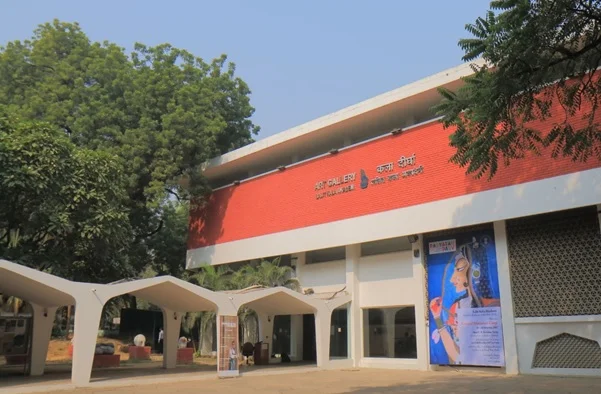
Q1. How many artists were honoured with the Lalit Kala Akademi Awards 2026?Answer:- A total of 20 artists were honoured with the Lalit Kala Akademi Awards at the 65th National Exhibition of Art. Q2. During which exhibition were the Lalit Kala Akademi Awards 2026 presented?Answer:- The awards were presented during the 65th National Exhibition of Art (NEA). Q3. When was the Lalit Kala Akademi established?Answer:- The Lalit Kala Akademi was established on 5 August 1954 by the Government of India. Q4. Where is the headquarters of the Lalit Kala Akademi located?Answer:- The headquarters of the Lalit Kala Akademi is located at Ravindra Bhavan, Mandi House, New Delhi. Q5. Under which ministry does the Lalit Kala Akademi function?Answer:- The Lalit Kala Akademi functions as an autonomous organisation under the Ministry of Culture. Q6. What is the primary objective of the Lalit Kala Akademi?Answer:- Its primary objective is to promote visual arts, encourage artists, and provide a national platform for artistic expression. |
| Prelims: West Bengal Public Safety and Control of Anti-Social Activities Bill 2026, Preventive Detention, NDPS Act 1985, PITNDPS Act 1988, Article 22, Article 200, Article 201, Article 254, State List and Concurrent List. Mains: GS Paper II: Indian Constitution, Fundamental Rights, Federalism, Centre-State Relations, Governor and President, Legislative Powers and Constitutional Safeguards. |
The West Bengal Public Safety and Control of Anti-Social Activities Bill, 2026, commonly called the Anti-Goonda Bill, has come under scrutiny over a possible overlap with existing Central narcotics legislation.

|
Particular |
Details |
|
Official Name |
West Bengal Public Safety and Control of Anti-Social Activities Bill, 2026 |
|
Popular Name |
Anti-Goonda Bill |
|
State |
West Bengal |
|
Passed on |
29 June 2026 |
|
Nature |
Preventive detention/public-order legislation |
|
Maximum Detention |
Up to 12 months |
|
Externment |
Entry into specified area/district(s) may be prohibited for up to one year |
|
Central Law in Question |
PITNDPS Act, 1988 |
|
Constitutional Issue |
Possible repugnancy/overlap under Article 254 |
|
NDPS Act, 1985 |
PITNDPS Act, 1988 |
|
Deals primarily with narcotic drugs and psychotropic substance offences |
Specifically provides preventive detention against illicit narcotics trafficking |
|
Criminal law framework |
Preventive-detention framework |
|
Punishment for specified offences |
Prevention of illicit traffic through detention |
Prelims MCQQ. With reference to State legislation in India, consider the following statements:
Which of the statements given above are correct? (a) 1 and 2 only (b) 2 and 3 only (c) 1 and 3 only (d) 1, 2 and 3 Mains Practice QuestionQ. Examine the constitutional issues that may arise when a State law is inconsistent with an existing Parliamentary law. |
When was the Bill passed by the West Bengal Assembly?It was passed on 29 June 2026. The Indian Express How long can preventive detention extend under the proposed Bill?The Bill provides for detention for up to 12 months. The Indian Express Which Central law created the major overlap concern?PITNDPS Act, 1988 Which Article deals with repugnancy between Central and State laws?Article 254 of the Constitution. Which Article deals with State Bills reserved for the President?Article 201. |
| Prelims: Global Cities Index 2026, Oxford Economics, Urbanisation, Human Capital, Quality of Life, Environment, Governance, and Sustainable Cities. Mains: GS Paper I: Urbanisation, Problems and Remedies; Population and Urban Development. GS Paper II: Governance and Urban Governance. GS Paper III: Infrastructure, Sustainable Development, Economic Growth and Environmental Sustainability. |
Oxford Economics has released the 2026 Global Cities Index, assessing 1,000 major cities worldwide.

|
Particular |
Details |
|
Index |
Global Cities Index 2026 |
|
Released by |
Oxford Economics |
|
Cities Covered |
1,000 |
|
City’s position |
New York(1st) followed by London, Paris |
|
Top Indian City |
Delhi |
|
Delhi's Global Rank |
268 |
|
2nd Indian City |
Bengaluru (311) |
|
3rd Indian City |
Mumbai (320) |
|
Major Categories |
Economics, Human Capital, Quality of Life, Environment and Governance |
|
Rank |
City |
Country |
|
1 |
New York |
United States |
|
2 |
London |
United Kingdom |
|
3 |
Paris |
France |
|
4 |
Seattle |
United States |
|
5 |
San Francisco |
United States |
|
6 |
Dublin |
Ireland |
|
7 |
Boston |
United States |
|
8 |
San Jose |
United States |
|
9 |
Tokyo |
Japan |
|
10 |
Zurich |
Switzerland |
Prelims MCQQ. With reference to the Global Cities Index 2026, consider the following statements:
Which of the statements given above are correct? (a) 1 and 2 only Mains Practice QuestionQ. Rapid urbanisation in India has created opportunities for economic growth while posing serious challenges to urban governance and quality of life. |
Who releases the Global Cities Index?It is released by Oxford Economics. How many cities are covered in the 2026 Global Cities Index?The index covers 1,000 cities worldwide. Which city topped the Global Cities Index 2026?New York ranked first, followed by London and Paris. Which is the highest-ranked Indian city?Delhi, at 268th globally. What are the five categories of the index?Economics, Human Capital, Quality of Life, Environment and Governance. |
| Prelims: International Relations, Climate Change, Law of the Sea, Small Island Developing States, Global Governance Mains Perspective: GS Paper III Environment & Climate Change GS Paper II International Relations, International Institutions and International Law Keywords: Sea-level rise, UN Political Declaration 2026, Small Island Developing States, SIDS, statehood, UNCLOS, maritime zones, Exclusive Economic Zone, climate-induced displacement |
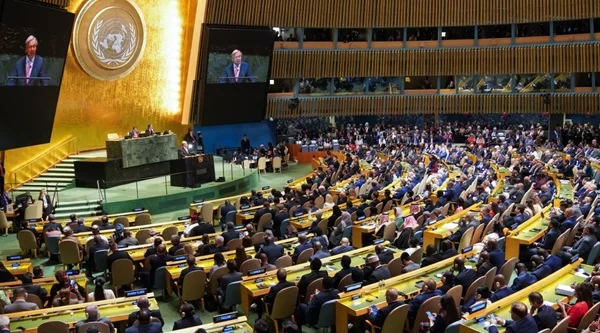
The declaration is a political, non-legally binding commitment adopted at a high-level UN meeting on sea-level rise. Its central objective is to establish greater international cooperation on the consequences of rising seas, particularly for vulnerable states.
The declaration addresses three interconnected issues:
The UN meeting specifically identified statehood, maritime zones and protection of affected populations as major legal and humanitarian concerns.
If a country's physical territory becomes uninhabitable or disappears, questions could arise regarding:
The UN declaration supports a “presumption in favour of continued statehood”, providing an important political basis for maintaining the international legal identity of vulnerable countries.
One of the most important aspects of the declaration concerns maritime zones. Under UNCLOS, coastal states possess maritime zones such as:
For small island states, these maritime areas can be far more significant economically than their land territory.
The UN General Assembly President noted that global mean sea level increased from around 2.1 mm annually during 1993–2002 to approximately 4.7 mm annually during 2015–2024.
Major impacts include
The UN has warned that rising seas could contribute to displacement affecting up to 1.2 billion people by 2050, when combined with related pressures such as flooding, water stress and food insecurity.
India is also vulnerable because of its long coastline, densely populated coastal regions, major ports and economically important coastal cities.
Potential impacts include:
Cities such as Mumbai, Kolkata and other densely populated coastal areas require long-term adaptation planning. The issue is therefore relevant to India's climate security, coastal management, disaster management and blue economy.
The declaration is a political declaration rather than a legally binding treaty. Its effectiveness will therefore depend heavily on implementation and subsequent state practice.
Developing countries require substantial resources for coastal protection, resilient infrastructure, relocation and disaster preparedness.
The challenge is particularly severe for small states with limited fiscal capacity.
Some communities may eventually need to relocate. This creates difficult questions concerning:
Even if the principle of stability is politically accepted, questions surrounding baselines, maritime boundaries and implementation under UNCLOS remain legally complex.
For island communities, losing physical territory can also mean losing sacred places, historical sites, traditional livelihoods and cultural landscapes.
MCQConsider the following statements regarding the UN Political Declaration on sea-level rise:
Which of the statements given above are correct? A. 1 and 2 only Mains Question“Sea-level rise is no longer merely an environmental challenge but a question of sovereignty, international law and human security.” Discuss in the context of the UN Political Declaration on sea-level rise. |
1. What did the UN declare on sea-level rise in 2026?The UN General Assembly adopted a Political Declaration addressing the existential threats posed by sea-level rise and supporting international cooperation on statehood, maritime zones, adaptation and protection of affected populations. 2. Does a country automatically lose statehood if it becomes submerged?The declaration supports a presumption in favour of continued statehood, meaning physical territorial loss due to sea-level rise should not automatically result in the disappearance of a state's international legal identity. 3. Why is UNCLOS important in the sea-level-rise debate?UNCLOS provides the principal international legal framework governing maritime zones, including territorial seas and EEZs. Stability of these zones is particularly important for small island states. 4. How does sea-level rise affect India?India faces risks to coastal cities, ports, agriculture, fisheries, groundwater and coastal infrastructure, making sea-level rise an important component of India's climate and disaster-management strategy. 5. Is the UN declaration legally binding?No. It is a political declaration. Its significance lies in establishing common political commitments and strengthening international consensus rather than creating a new legally binding treaty. |
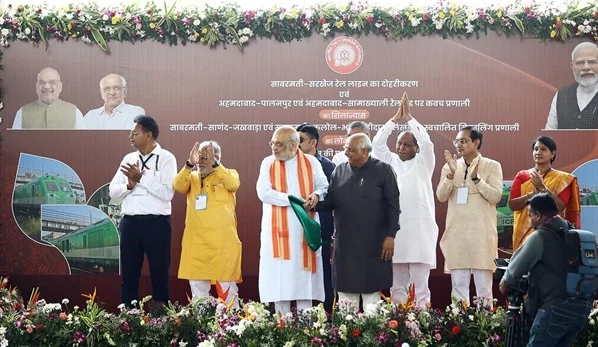
The train uses an LNG-diesel dual-fuel technology in its Driving Power Cars (DPCs).
Under the project:
The dual-fuel system also allows the train to continue operating on diesel when LNG is not available.
Along with the LNG-powered train, several railway projects were inaugurated or launched at Sabarmati.
The introduction of LNG technology in railway operations is significant for several reasons:
The launch of India’s first LNG-powered train from Sabarmati marks a new step towards the use of alternative fuels in railway transport. Along with the LNG train, projects related to Kavach, automatic signalling, railway line doubling and WAG-12 locomotive maintenance are aimed at improving railway safety, capacity and operational efficiency in Gujarat.
Prelims Practice QuestionConsider the following statements regarding India’s first LNG-powered train:
Which of the statements given above is/are correct? (a) 1 and 2 only Mains Practice Question“Discuss the role of railway electrification, alternative fuels and indigenous safety technologies in transforming India’s railway infrastructure.” |
1. What is India’s first LNG-powered train?It is a railway train using LNG-diesel dual-fuel technology, allowing LNG to partially replace conventional diesel fuel. 2. Where was India’s first LNG-powered train flagged off?It was flagged off from Sabarmati Railway Station in Ahmedabad, Gujarat, on September 27, 2026. 3. What is the significance of LNG in Railways?LNG can help reduce diesel consumption, fuel costs and certain emissions, making it a potential alternative fuel for suitable railway operations. 4. What is Kavach?Kavach is India’s indigenous Automatic Train Protection (ATP) system, developed to enhance railway safety. 5. What is WAG-12?WAG-12 is a high-power electric freight locomotive designed for hauling heavy and long freight trains. |
| Mains: GS Paper II: Centre-State Relations, Governance, Fundamental Rights, Rule of Law GS Paper III: Internal Security, Insurgency, Border Management, Role of Armed Forces in Internal Security. Keywords: AFSPA 1958, Armed Forces Special Powers Act, disturbed area, Section 3 AFSPA, Section 4 AFSPA, Section 7 AFSPA, Manipur, Nagaland, Arunachal Pradesh, Northeast India, insurgency, internal security, counter-insurgency, human rights, Centre-State relations |
The Ministry of Home Affairs has extended the Armed Forces (Special Powers) Act, 1958 (AFSPA) in specified areas of Manipur, Nagaland and Arunachal Pradesh for another six months from October 1, 2026. The extension follows a review of the law-and-order situation in the three northeastern states.
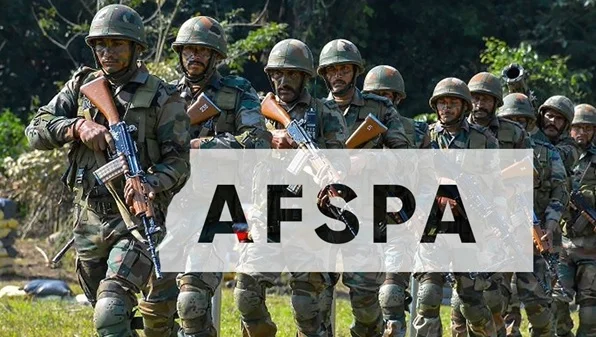
The Northeast is strategically significant because of its:
In such areas, the armed forces may be deployed in support of civil administration when ordinary policing capabilities are considered insufficient to deal with the security situation.
AFSPA creates a difficult policy balance between operational effectiveness and civilian accountability.
Therefore, the key governance challenge is to ensure that security personnel have adequate operational capability while mechanisms for investigation, oversight and accountability remain effective.
The extraordinary powers available to security personnel have generated concerns regarding alleged excessive use of force, custodial deaths, disappearances and accountability.
These concerns have contributed to demands for stronger safeguards and greater transparency.
Critics have particularly focused on the legal protection available to personnel operating under AFSPA.
The challenge is to ensure that legitimate counter-insurgency operations can continue while credible allegations of abuse are investigated effectively.
Repeated extensions raise an important policy question: whether extraordinary security legislation should remain applicable for extended periods or whether its geographical scope should be progressively reduced as the security situation improves.
Long-term military deployment can affect relations between security forces and local communities. Consequently, counter-insurgency measures need to be accompanied by political dialogue, development, institution-building and confidence-building measures.
MCQQ. Consider the following statements regarding the Armed Forces (Special Powers) Act, 1958:
Which of the statements given above is/are correct? A. 1 and 2 only Mains Question“AFSPA seeks to address extraordinary internal-security challenges, but its prolonged application raises questions of accountability and civilian rights.” Discuss the need to balance national security with democratic accountability. |
1. What is AFSPA?AFSPA is the Armed Forces (Special Powers) Act, 1958, which provides specified powers to armed forces personnel operating in areas officially declared as disturbed. 2. Which section allows declaration of a disturbed area?Section 3 of AFSPA provides for declaration of an area as a disturbed area. 3. Where has AFSPA been extended from October 1, 2026?It has been extended in specified areas of Manipur, Nagaland and Arunachal Pradesh for six months. 4. Is the whole of Manipur under AFSPA?The October 2026 notification covers the entire state except areas under 13 police stations in five districts. 5. Why is AFSPA important for UPSC?AFSPA connects internal security, insurgency, human rights, Centre-State relations, constitutional governance and civil-military relations, making it relevant particularly to GS Paper 3, with linkages to GS Paper 2. |

Our support team will be happy to assist you!

 Contact Us
  New Batch : 9555124124/ 7428085757
  Tech Support : 9555124124/ 7428085757

