Current Affairs for 31 October 2026

Chhattisgarh Foundation Day: Key facts, Historical Background, Geographical and Economic Significance

Why in news?

Chhattisgarh celebrates its Foundation Day on 1 November every year, commemorating its establishment as a separate state in 2000 following its separation from Madhya Pradesh.
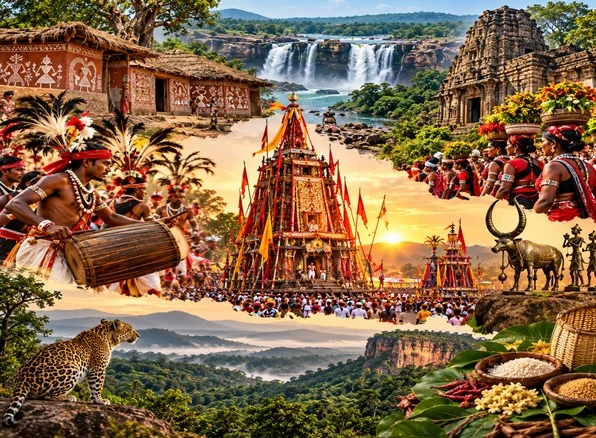
Key Facts

Particular

Details

Formation Day

1 November 2000

Formation Act

Madhya Pradesh Reorganisation Act, 2000

Parent State

Madhya Pradesh

State number at formation

26th state of India

Capital

Raipur

First Chief Minister

Ajit Jogi

First Governor

D.N. Sahay

High Court

Chhattisgarh High Court, Bilaspur

Major river

Mahanadi

Famous waterfall

Chitrakote

Famous festival

Bastar Dussehra

Popular identity

Rice Bowl of Central India

Important mineral

Iron ore and coal

Historical Background

  • Chhattisgarh before independence
    • The region now known as Chhattisgarh has a long history associated with ancient kingdoms and regional political formations.
    • Historically, parts of the region were associated with Dakshina Kosala, Kalachuri rulers, Nagavanshi traditions, Maratha administration and British colonial administration.
    • The name Chhattisgarh is traditionally associated with the historical concept of thirty-six forts, although the exact historical origin of the name is debated.
    • Following independence, the region became part of Madhya Pradesh in 1956.
  • Why was a separate state demanded?
    • The demand for a separate Chhattisgarh was based on several regional concerns.
    • Regional identity: The region had distinct cultural, linguistic and historical traditions.
    • Administrative accessibility: Supporters argued that a separate state would make governance more accessible to people living in geographically remote areas.
    • Economic development: Despite its mineral wealth, several parts of the region experienced developmental challenges.
    • Tribal welfare: The region has a significant tribal population, and the movement highlighted the need for better attention to tribal development and local governance.
  • Formation of Chhattisgarh
    • The Government of India and the Madhya Pradesh Legislature undertook the necessary constitutional and legislative process for the creation of the new state.
    • Parliament passed the Madhya Pradesh Reorganisation Act, 2000. Under Section 3 of the Act, Chhattisgarh was formed from the specified territories of Madhya Pradesh.
    • On 1 November 2000, Chhattisgarh officially came into existence. Ajit Jogi became the first Chief Minister of Chhattisgarh. 

Constitutional and Legislative Framework

Particular

Details

Name of legislation

Madhya Pradesh Reorganisation Act

Year

2000

Act number

Act 28 of 2000

Date of enactment

25 August 2000

Effective date

1 November 2000

New state created

Chhattisgarh

Parent state

Madhya Pradesh

Geographical Significance

Feature

Details

Location

Central India

Capital

Raipur

Major river

Mahanadi

Other important rivers

Indravati, Hasdeo, Shivnath and Arpa

Important plateau

Chhattisgarh Plain

Mountain system

Maikal and surrounding hill ranges

Natural resources

Coal, iron ore, bauxite and limestone

Mahanadi River

  • The Mahanadi is one of the most important rivers of Chhattisgarh.
  • It originates in the Sihawa hills of present-day Dhamtari district and flows through Chhattisgarh and Odisha before draining into the Bay of Bengal.
  • The river is important for irrigation, agriculture, drinking water and industrial activities.
  • The Hirakud Dam in Odisha is one of the major multipurpose projects associated with the Mahanadi River system.

Natural Resources and Mineral Wealth

Mineral

Major industrial application

Coal

Thermal power generation

Iron ore

Iron and steel production

Bauxite

Aluminium industry

Limestone

Cement manufacturing

Dolomite

Steel and refractory industries

Tin ore

Industrial applications

Major industrial centres

  • Bhilai: Known for the Bhilai Steel Plant.
  • Korba: An important centre of coal mining and thermal power generation.
  • Raipur: A major commercial and industrial centre.
  • Bailadila: Famous for high-grade iron ore deposits.

Bhilai Steel Plant

  • The Bhilai Steel Plant is one of India's major integrated steel plants.
  • It was established with Soviet assistance and has played an important role in India's industrial development.
  • The plant is particularly associated with the production of railway rails and other steel products.

Tribal Heritage and Cultural Identity

  • Chhattisgarh has a rich tribal population and a distinctive cultural heritage.
  • Important tribal communities include Gond, Baiga, Halba, Muria, Maria, Oraon and Kanwar.
  • Their traditional knowledge systems, folk music, dances, handicrafts and forest-based livelihoods form an important part of the state's identity.

Bastar Dussehra: A unique cultural festival

  • Unlike the conventional Dussehra celebrations associated with the victory of Lord Rama over Ravana, Bastar Dussehra is primarily associated with the worship of Goddess Danteshwari.
  • It is famous for its elaborate rituals, traditional processions and participation of tribal communities.

Traditional art and handicrafts

  • The state is known for several traditional crafts, including Dhokra metal craft, Bell-metal work, Wooden carvings, Tribal jewellery, Bamboo handicrafts and Traditional terracotta art.

Natural and Archaeological Heritage

  • Chitrakote Waterfall: Located on the Indravati River in Bastar, Chitrakote is one of India's most spectacular waterfalls. It is widely known as the Niagara Falls of India because of its broad horseshoe-shaped appearance.
  • Kanger Valley National Park: Kanger Valley National Park is known for its rich biodiversity, forests, limestone caves and wildlife. The park is particularly famous for the Kutumsar and Kailash caves.
  • Sirpur: Sirpur is an important archaeological and historical site. It contains remains of ancient Buddhist, Hindu and Jain religious establishments. The site reflects the region's historical importance as a centre of religious and cultural exchange.

Economic Significance

  • Agriculture: The state is traditionally associated with rice cultivation. It is popularly known as the Rice Bowl of Central India. Major crops include Rice, Maize, Pulses, Oilseeds and Sugarcane.
  • Energy sector: Chhattisgarh is an important contributor to India's power generation capacity because of its coal reserves and thermal power infrastructure.
  • Industrial development: Steel, aluminium, cement and power industries are among the major industrial activities of the state. 

Tribal Development and Environmental Challenges

  • Regional inequality: Economic development remains uneven across districts.
  • Tribal welfare: Access to education, healthcare, infrastructure and livelihood opportunities requires continued attention.
  • Forest conservation: Mining and industrial expansion create pressures on forest ecosystems.
  • Displacement: Development projects can affect forest-dependent and tribal communities.
  • Naxalism and internal security: Parts of the Bastar region have experienced Left-Wing Extremism, creating challenges for governance and development.

Prelims MCQs

Q. Chhattisgarh was created as a separate state under which of the following legislations?

(a) Madhya Pradesh Reorganisation Act, 2000

(b) States Reorganisation Act, 1956

(c) Bihar Reorganisation Act, 2000

(d) Uttar Pradesh Reorganisation Act, 2000

Mains Practice Question 

Q. Examine the socio-economic and administrative factors behind the creation of Chhattisgarh in 2000.

FAQ

When is Chhattisgarh Foundation Day celebrated?

1 November.

In which year was Chhattisgarh formed?

2000.

Who was its first Chief Minister?

Ajit Jogi.

What is the capital of Chhattisgarh?

Raipur.

Why is Chhattisgarh called the Rice Bowl of Central India?

Because of the historical importance of rice cultivation in its agricultural economy.

Kerala Formation Day: Key Facts, Historical Background, Geographical Significance and Cultural Heritage

Why in news?

Kerala celebrates Kerala Piravi on 1 November every year, marking the formation of the modern state of Kerala in 1956.
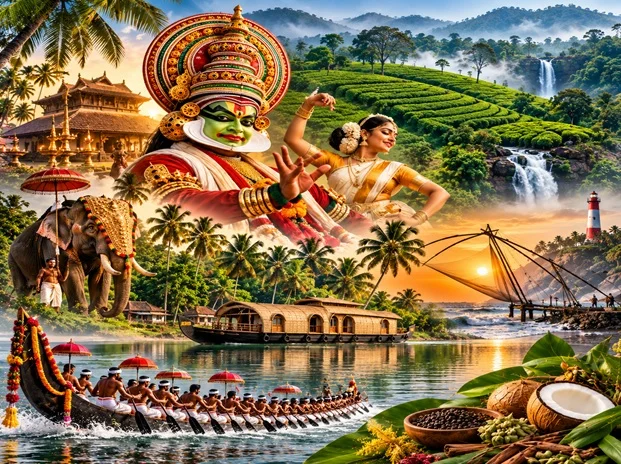
Key Facts

Particular

Details

Formation Day

1 November 1956

Celebration

Kerala Piravi

Formation Act

States Reorganisation Act, 1956

Earlier integrated state

Travancore-Cochin

Capital

Thiruvananthapuram

First Chief Minister

E. M. S. Namboodiripad

First Governor

Burgula Ramakrishna Rao

Official Language

Malayalam

High Court

Kerala High Court

Major river

Periyar

Largest lake

Vembanad

Classical dance forms

Kathakali and Mohiniyattam

Major festival

Onam

Historical Background

  • Kerala before independence
    • Before independence, Malayalam-speaking regions were divided among different administrative territories.The three principal regions were Travancore, Cochin and Malabar.
    • Travancore and Cochin were princely states, while Malabar was administered as part of the Madras Presidency under British rule.
    • This administrative division meant that Malayalam-speaking people were governed through different political and administrative systems.
    • The demand for a unified Malayalam-speaking state gradually gained momentum.
  • Formation of Travancore-Cochin in 1949
    • Following India's independence, an important step towards regional integration took place on 1 July 1949.
    • The princely states of Travancore and Cochin were integrated to form the Travancore-Cochin State.
    • This integration laid the foundation for the later formation of Kerala.
  • Aikya Kerala Movement
    • The demand for the unification of Malayalam-speaking regions became known as the Aikya Kerala Movement.
    • The movement aimed to bring Malayalam-speaking territories under one administrative unit.
    • Its major objectives included:
      • Promoting Malayalam linguistic identity.
      • Unifying historically connected regions.
      • Improving administrative coordination.
      • Strengthening regional political representation.
      • Preserving the cultural and literary traditions of Malayalam-speaking people.

Formation of Kerala

  • The States Reorganisation Act, 1956, provided the legal framework for the formation of Kerala.
  • On 1 November 1956, the modern state of Kerala came into existence through the integration of:
    • Travancore-Cochin, excluding the present Kanyakumari district and Shencottah Taluk, which were transferred to Madras State.
    • Malabar district of the erstwhile Madras State.
    • Kasaragod Taluk of South Kanara district.
  • Burgula Ramakrishna Rao became the first Governor of Kerala, and E. M. S. Namboodiripad became its first Chief Minister. 

Geographical Significance of Kerala

  • Kerala is situated between the Arabian Sea in the west and the Western Ghats in the east.
  • Its geographical diversity includes coastal plains, backwaters, midland regions and mountainous landscapes.

Feature

Details

Location

Southwestern India

Capital

Thiruvananthapuram

Coastline

Arabian Sea

Mountain range

Western Ghats

Major rivers

Periyar, Bharathapuzha and Pamba

Important lake

Vembanad Lake

Important hill station

Munnar

Neighbouring states

Karnataka and Tamil Nadu

Western Ghats and biodiversity

  • The Western Ghats are among the world's important biodiversity hotspots.
  • Kerala's portion of the Western Ghats contains tropical evergreen forests, endemic species and several protected areas.
  • Important protected areas include:
    • Periyar Tiger Reserve.
    • Eravikulam National Park.
    • Silent Valley National Park.
    • Wayanad Wildlife Sanctuary.
    • Parambikulam Tiger Reserve.

Backwater ecosystem

  • Kerala's backwaters form an interconnected network of lakes, lagoons, rivers and canals.
  • Vembanad Lake is the largest lake in Kerala and an important part of its backwater ecosystem.
  • These water bodies support fisheries, agriculture, tourism and inland transportation.

Cultural Heritage of Kerala

  • Kathakali: Kathakali is a classical dance-drama form characterised by elaborate costumes, facial expressions, hand gestures and dramatic storytelling. It traditionally draws inspiration from Indian epics and mythological narratives.
  • Mohiniyattam: Mohiniyattam is a classical dance form associated with Kerala. It is known for graceful movements, expressive gestures and elegant costumes.
  • Theyyam: Theyyam is a traditional ritual performance mainly associated with northern Kerala. It combines dance, music, elaborate costumes and religious traditions.
  • Kalaripayattu: Kalaripayattu is an ancient martial art traditionally associated with Kerala. It involves physical training, flexibility, weapon techniques and disciplined movements.

Onam: Kerala's most important festival

  • It is traditionally associated with the legendary King Mahabali.
  • Important features include Pookalam (floral decorations), Onam Sadya (traditional feast), Vallam Kali (boat races), Pulikali (tiger dance), traditional cultural performances.

Kerala's Social Reform Movements

Social reformer

Contribution

Sree Narayana Guru

Promoted social equality and challenged caste discrimination

Ayyankali

Worked for the rights and education of oppressed communities

Chattampi Swamikal

Contributed to social and religious reform

Vakkom Moulavi

Promoted education and social reform among Muslims

Sahodaran Ayyappan

Advocated social equality and anti-caste reform

Vaikom Satyagraha

  • The Vaikom Satyagraha of 1924-1925 was an important movement against caste-based restrictions on access to public roads surrounding the Vaikom Mahadeva Temple.
  • It became a significant milestone in India's struggle against untouchability and social discrimination.
  • The movement also attracted support from national leaders, including Mahatma Gandhi.

Kerala's Development Model

  • Kerala is frequently discussed in development economics and public administration because of its achievements in human development.
  • The Kerala Development Model highlights the importance of social investment and public welfare.

Major characteristics

  • Education: Kerala has historically achieved high literacy and educational attainment.
  • Healthcare: The state has developed an extensive public healthcare network.
  • Life expectancy: Kerala has consistently performed strongly on life expectancy indicators.
  • Gender and social development: Social reform movements and public welfare initiatives have contributed to improvements in social indicators.
  • Decentralised governance: Kerala has placed considerable emphasis on local self-government and participatory planning.

People's Plan Campaign

  • Kerala launched the People's Plan Campaign in 1996.
  • It aimed to strengthen decentralised planning by transferring substantial planning responsibilities and resources to local self-government institutions.
  • The campaign is an important example of participatory governance in India.

Economic Significance of Kerala

Sector

Significance

Tourism

Backwaters, beaches, hill stations and cultural tourism

Agriculture

Rubber, coconut, spices and tea

Fisheries

Marine fisheries and seafood exports

Services

Education, healthcare and financial services

Remittances

Important source of household income

Traditional industries

Coir, handloom and cashew processing

Spice trade and maritime history

  • Kerala has historically been an important centre of the international spice trade.
  • Its coastline attracted traders from West Asia, Europe and other regions.
  • Black pepper, cardamom, cinnamon and other spices played a major role in its commercial history.

Environmental Challenges 

  • Floods and extreme rainfall events.
  • Landslides in the Western Ghats.
  • Coastal erosion.
  • Wetland degradation.
  • Human-wildlife conflict.
  • Pressure from unplanned urbanisation and tourism.

Prelims MCQs

Q. Which movement was associated with the unification of Malayalam-speaking regions?

A. Punjabi Suba Movement

B. Aikya Kerala Movement

C. Telangana Movement

D. Ekikarana Movement

Mains Practice Question

Q. Kerala's formation in 1956 was closely associated with the linguistic reorganisation of Indian states. Discuss. 

FAQs

When is Kerala Piravi celebrated?

1 November.

In which year was Kerala formed?

1956.

Which regions were integrated to form Kerala?

Travancore-Cochin, Malabar and Kasaragod Taluk of South Kanara.

Who was the first Chief Minister of Kerala?

E. M. S. Namboodiripad.

What was the Aikya Kerala Movement?

It was a movement for the unification of Malayalam-speaking regions into a single state.

High-Level Committee on Banking for Viksit Bharat: A Roadmap for Banking Sector Reforms

Why in News?

  • On October 30, 2026, the Central Government constituted a High-Level Committee on Banking for Viksit Bharat to review India's banking sector and recommend structural, institutional, regulatory and legislative reforms to make it globally competitive, financially inclusive and resilient.
  • The committee will be chaired by Suresh N. Patel, former Central Vigilance Commissioner, and will submit its recommendations within six months.
  • The committee was announced by Finance Minister Nirmala Sitharaman in her Union Budget Speech 2026–27.

About the High-Level Committee on Banking for Viksit Bharat

The committee has been constituted to assess the existing banking framework and identify reforms required to support India's long-term economic growth and the vision of Viksit Bharat.

Composition of the Committee

The committee consists of five members:

  • Suresh N. Patel – Former Central Vigilance Commissioner (Chairperson).
  • Shirish Chandra Murmu – Deputy Governor, Reserve Bank of India.
  • Padmaja Chunduru – Former Managing Director and CEO, Indian Bank.
  • N. S. Vishwanathan – Former Deputy Governor, Reserve Bank of India.
  • Joint Secretary (Banking) – Department of Financial Services (Member Secretary).

Tenure: Six months.

Seven Key Terms of Reference of the Committee

The committee has been assigned seven major responsibilities:

1. Review of Banking Practices and Prudential Norms

  • Assess existing banking practices and prudential norms in India.
  • Identify global best practices and adapt them to Indian conditions.
  • Develop a roadmap for creating globally competitive Indian banks.

2. Regulatory and Legal Reforms

  • Review the existing regulatory and legal framework governing banks.
  • Examine the functioning of Regional Rural Banks (RRBs) and Cooperative Banks.
  • Recommend reforms to improve operational efficiency and ease of banking.

3. Long-Term Capital Requirements

  • Assess the long-term capital requirements of banks.
  • Examine the funding needs of Development Financial Institutions (DFIs) and Non-Banking Financial Companies (NBFCs).
  • Suggest funding sources and mechanisms to support credit growth.

4. Cost of Capital and Private Investment

  • Examine differences in the cost of capital for businesses.
  • Recommend policy measures to encourage private investment.
  • Promote sustainable and long-term economic growth.

5. Artificial Intelligence and Digital Innovation

  • Prepare a roadmap for Artificial Intelligence (AI) and digital innovation in banking institutions.
  • Recommend safeguards against cyber risks.
  • Suggest strategies for talent acquisition and capacity building to develop a future-ready banking workforce.

6. Priority Sector Lending and Lead Bank Scheme

  • Review the effectiveness and relevance of the Priority Sector Lending (PSL) framework.
  • Assess the functioning of the Lead Bank Scheme.
  • Improve coordination and ensure inclusive, balanced and data-driven credit delivery.

7. Other Recommendations

  • Examine any additional banking-related matters referred to the committee by the Government of India.

Significance of the Committee for Viksit Bharat

  1. Strengthening the Banking System: Structural and institutional reforms can improve the efficiency, stability and competitiveness of Indian banks.
  2. Supporting Economic Growth: A strong banking system ensures adequate credit availability for industries, infrastructure, agriculture and small businesses.
  3. Promoting Financial Inclusion: Reforms in Priority Sector Lending and the Lead Bank Scheme can improve access to institutional credit for weaker and underserved sections.
  4. Encouraging Private Investment: Measures to reduce the cost of capital can encourage private investment, industrial expansion and employment generation.
  5. Promoting Digital Banking: AI and digital technologies can improve banking efficiency, customer services, fraud detection and financial access.
  6. Strengthening Cybersecurity: Appropriate safeguards can address emerging threats associated with digital banking, cyber fraud and data breaches.
  7. Improving Global Competitiveness: Adoption of international best practices can help Indian banks become more efficient and competitive in global financial markets.

Major Challenges Facing India's Banking Sector

Despite significant progress, India's banking sector faces several structural and emerging challenges:

  • Cybersecurity Threats: Increasing digital transactions have expanded the risk of cyberattacks, phishing and financial fraud.
  • Governance Issues: Weak internal controls, accountability gaps and operational inefficiencies can affect banking performance.
  • Credit Access: Small and Medium Enterprises (SMEs), farmers and economically weaker sections often face difficulties accessing affordable institutional credit.
  • Capital Requirements: Banks require adequate capital to finance infrastructure, industrial expansion and long-term economic development.
  • Technology Gap: Differences in technological capabilities among public sector, private sector, cooperative and regional rural banks affect service delivery.
  • Human Resource Challenges: Rapid technological changes require continuous training, specialised skills and institutional capacity building.
  • Cost of Credit: High borrowing costs can discourage private investment and affect the competitiveness of Indian businesses.

Way Forward

  • Strengthen Banking Governance: Improve transparency, accountability, risk management and institutional autonomy.
  • Promote Technology Adoption: Encourage responsible use of AI, digital banking and data analytics.
  • Enhance Cybersecurity: Strengthen cyber-risk monitoring, data protection and fraud prevention mechanisms.
  • Improve Credit Delivery: Make institutional credit more accessible to MSMEs, farmers, women and vulnerable sections.
  • Ensure Adequate Capital: Develop sustainable funding mechanisms for banks, DFIs and NBFCs.
  • Build Human Resources: Invest in specialised training and capacity building to prepare banking professionals for emerging technologies.
  • Adopt Global Best Practices: Align India's banking framework with international standards while considering domestic economic requirements.

Conclusion

  • A strong, inclusive and resilient banking system is essential for achieving the vision of Viksit Bharat. 
  • The High-Level Committee on Banking for Viksit Bharat provides an opportunity to undertake comprehensive reforms in banking governance, capital mobilisation, digital innovation and financial inclusion.
  • Its recommendations can help develop a future-ready banking system capable of supporting India's ambition of becoming a developed economy by 2047.

Andhra Pradesh Formation Day: Key Facts, Historical Background, Cultural, Historical and Economic Significance

Why in news?

Andhra Pradesh observes its Formation Day on 1 November, commemorating the creation of the state in 1956 through the merger of Andhra State with the Telugu-speaking areas of the erstwhile Hyderabad State.
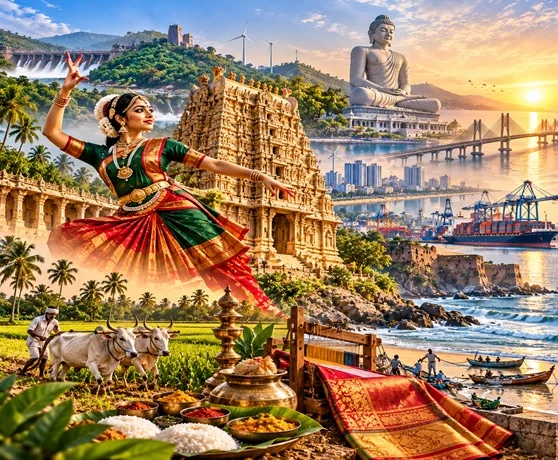
Key Facts 

Particular

Details

Formation of Andhra State

1 October 1953

Formation of Andhra Pradesh

1 November 1956

Formation legislation

Andhra State Act,1953 & States Reorganisation Act, 1956

First Chief Minister of Andhra State

Tanguturi Prakasam Pantulu

First Chief Minister of Andhra Pradesh

Neelam Sanjiva Reddy

Capital region

Amaravati

Major language

Telugu

Classical dance

Kuchipudi

Major rivers

Godavari and Krishna

Bifurcation

2 June 2014

New state created

Telangana

Bifurcation legislation

Andhra Pradesh Reorganisation Act, 2014

Historical Background

  • Telugu-speaking regions before independence
    • Before independence, a significant part of the Telugu-speaking population lived in the Madras Presidency, while other Telugu-speaking areas were part of the princely Hyderabad State.
    • The Telugu-speaking population increasingly demanded a separate administrative unit to protect its language, literature and cultural identity. The demand gained momentum after independence.
  • Potti Sriramulu and the Andhra Movement
    • One of the most important personalities associated with the movement was Potti Sriramulu.
    • He was an Indian freedom fighter and social reformer who undertook a fast-unto-death demanding a separate state for Telugu-speaking people.
    • His fast began on 19 October 1952. After 58 days of fasting, he died on 15 December 1952. His death triggered widespread protests and public demonstrations across Telugu-speaking regions.
    • The movement created enormous political pressure on the Government of India to consider the demand for a separate Andhra State.
  • Formation of Andhra State: 1 October 1953
    • Following the movement, the Government of India accepted the demand for a separate Telugu-speaking state.
    • The Andhra State Act, 1953, provided the legal framework for its establishment. On 1 October 1953, Andhra State was formed by separating Telugu-speaking areas from the erstwhile Madras State.
    • Andhra became the first state formed on a linguistic basis after India's independence. Kurnool became its capital. Tanguturi Prakasam Pantulu became its first Chief Minister.

States Reorganisation Commission and Formation of Andhra Pradesh

  • The formation of Andhra State increased demands for the reorganisation of other Indian territories on linguistic lines.
  • In December 1953, the Government of India established the States Reorganisation Commission.
  • It was chaired by Fazl Ali, with K.M. Panikkar and H.N. Kunzru as members.
  • The commission examined linguistic, administrative, geographical, economic and national considerations.

Formation of Andhra Pradesh in 1956

  • The States Reorganisation Act, 1956, provided the legal framework for reorganising India's states.
  • On 1 November 1956, Andhra State was merged with the Telugu-speaking Telangana region of the erstwhile Hyderabad State. The new state was named Andhra Pradesh. Hyderabad became its capital.
  • Neelam Sanjiva Reddy became the first Chief Minister of the newly formed Andhra Pradesh.

The Telangana Movement and Bifurcation of Andhra Pradesh

  • The formation of Andhra Pradesh in 1956 did not end regional political aspirations.
  • Over the following decades, demands for a separate Telangana state gained momentum.
  • The movement was influenced by concerns relating to regional economic development, employment opportunities, political representation, irrigation and water-resource allocation, public expenditure and administrative priorities and regional identity and cultural aspirations.

The creation of Telangana in 2014

  • After years of political mobilisation and negotiations, Parliament passed the Andhra Pradesh Reorganisation Act, 2014.
  • The Act provided for the bifurcation of Andhra Pradesh.
  • On 2 June 2014, Telangana became a separate state. It became the 29th state of India at that time.
  • Following bifurcation; Andhra Pradesh continued as a separate state. Telangana became a separate state with Hyderabad as its capital.
  • Hyderabad was designated as the common capital for Andhra Pradesh and Telangana for a period not exceeding ten years under the Act .

Constitutional and Legislative Framework

  • Article 3 empowers Parliament to form new states and alter the area, boundaries or names of existing states.

Legislation

Year

Significance

Andhra State Act

1953

Established Andhra State

States Reorganisation Act

1956

Created Andhra Pradesh by merging Andhra State with Telangana region

Andhra Pradesh Reorganisation Act

2014

Provided for the creation of Telangana

Geographical Significance

  • Andhra Pradesh is located on India's southeastern coast, along the Bay of Bengal.
  • It has an extensive coastline, fertile river deltas, agricultural plains and parts of the Eastern Ghats.

Feature

Details

Location

Southeastern India

Capital

Amaravati (state's capital region)

Coastline

Along the Bay of Bengal

Major rivers

Godavari, Krishna and Penna

Mountain system

Eastern Ghats

Important natural region

Araku Valley

Major agricultural areas

Krishna-Godavari delta

Godavari and Krishna river systems

  • The Godavari and Krishna rivers are central to Andhra Pradesh's agriculture and water-resource management.
  • Their extensive delta regions support rice cultivation and other agricultural activities.
  • The rivers also play an important role in irrigation, drinking-water supply and hydropower development.

Cultural and Historical Heritage

  • Kuchipudi: Kuchipudi is one of India's recognised classical dance forms and originated in Andhra Pradesh. It combines dance, music, expressive gestures and dramatic storytelling.
  • Amaravati Buddhist Heritage: Amaravati is historically associated with an important Buddhist centre. The Amaravati Stupa and its sculptural traditions represent significant developments in ancient Indian Buddhist art.
  • Tirupati: The Sri Venkateswara Temple at Tirumala is among India's most prominent pilgrimage destinations.
  • Lepakshi: Lepakshi is famous for its Vijayanagara-era temple architecture, murals and the celebrated hanging pillar of the Veerabhadra Temple.
  • Telugu Literature: Telugu has a rich literary tradition, with important contributions from poets such as Nannaya, Tikkana and Yerrapragada, collectively associated with the Telugu Mahabharata tradition.

Economic Significance

  • Agriculture: Major agricultural products include Rice,Chilli, Tobacco, Cotton, Sugarcane and Horticultural crops. The Krishna and Godavari delta regions are particularly important for agricultural production.
  • Fisheries and aquaculture: Andhra Pradesh is an important centre for fisheries and aquaculture. Its long coastline, inland water resources and aquaculture infrastructure contribute to seafood production and exports.
  • Ports and industrial development: Visakhapatnam is an important port city and industrial centre. The state's coastline offers significant opportunities for maritime trade, logistics, fisheries and industrial development.

Prelims MCQs

Q. Which of the following states was the first to be formed on a linguistic basis in independent India?

(a) Andhra State

(b) Kerala

(c) Karnataka

(d) Maharashtra

Mains Practice Question 

Q. The formation of Andhra Pradesh in 1956 marked an important phase in India's linguistic reorganisation. Discuss. 

FAQs

When is Andhra Pradesh Formation Day celebrated?

1 November.

When was Andhra State established?

1 October 1953.

Who was the first Chief Minister of Andhra State?

Tanguturi Prakasam Pantulu.

Who was the first Chief Minister of Andhra Pradesh after its formation in 1956?

Neelam Sanjiva Reddy.

Which state was created from Andhra Pradesh in 2014?

Telangana.

Madhya Pradesh Foundation Day: Key Facts, Historical Background, Geography, Culture and Tribal Heritage

Why in news?

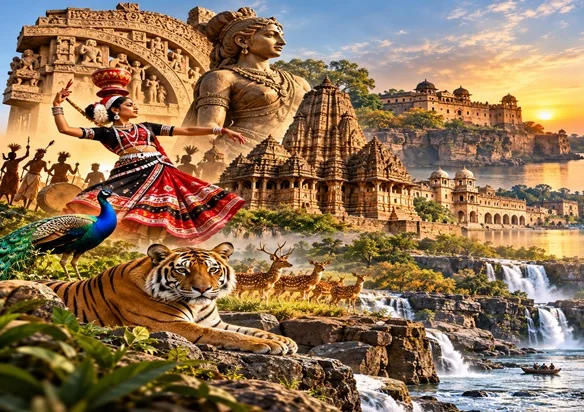
Madhya Pradesh celebrates its Foundation Day on 1 November every year, commemorating its formation in its reorganised form on 1 November 1956 under the States Reorganisation Act, 1956.
Key Facts 

Particular

Details

Formation Day

1 November 1956

Formation Act

States Reorganisation Act, 1956

Capital

Bhopal

First Chief Minister of reorganised state

Ravishankar Shukla

First Governor

Pattabhi Sitaramayya

Principal official language

Hindi

High Court

Madhya Pradesh High Court, Jabalpur

Famous river

Narmada

Popular identity

Heart of India

UNESCO World Heritage properties

Sanchi, Khajuraho and Bhimbetka

State separated in 2000

Chhattisgarh

Historical Background

  • Before 1956, central India was divided into several administrative units.
  • The major political and administrative territories included:
  • The existing Madhya Pradesh, largely comprising the former Central Provinces and Berar.
    • Madhya Bharat.
    • Vindhya Pradesh.
    • Bhopal State.
  • Following independence, the integration of princely states and administrative reorganisation created the need for a more systematic state structure.

The States Reorganisation Act, 1956

  • The States Reorganisation Commission, established in 1953 under Fazl Ali, examined the restructuring of India's internal boundaries.
  • Its recommendations resulted in the States Reorganisation Act, 1956.
  • On 1 November 1956, the reorganised Madhya Pradesh came into existence.
  • The new state incorporated the existing Madhya Pradesh, with the transfer of its Marathi-speaking Vidarbha region to Bombay State, Madhya Bharat, Vindhya Pradesh and Bhopal State.
  • Nagpur, which had been the capital of the former Madhya Pradesh, became part of Bombay State.
  • Bhopal was selected as the capital of the reorganised Madhya Pradesh.
  • The first Chief Minister of the reorganised Madhya Pradesh was Pandit Ravishankar Shukla.

A major territorial change in 2000

  • The territorial evolution of Madhya Pradesh continued after 1956.
  • The southeastern region of the state was separated under the Madhya Pradesh Reorganisation Act, 2000.
  • On 1 November 2000, Chhattisgarh was established as a separate state.

Constitutional and Legislative Background

  • The formation of Madhya Pradesh in 1956 was part of the implementation of the States Reorganisation Act, 1956 under Section 9 of the States Reorganisation Act, 1956. 
  • The legislation was passed by Parliament under the constitutional framework relating to the formation and reorganisation of states.

Article

Subject

Article 1

Name and territory of the Union

Article 2

Admission or establishment of new states

Article 3

Formation of new states and alteration of areas, boundaries or names

Article 4

Supplemental, incidental and consequential provisions

Geographical Significance

  • Madhya Pradesh, popularly known as the Heart of India.
  • Its landscape includes plateaus, hills, river valleys, forests and fertile agricultural plains.

Feature

Details

Location

Central India

Capital

Bhopal

Major river

Narmada

Other important rivers

Chambal, Betwa, Son, Ken and Tapti

Mountain ranges

Vindhya and Satpura

Important plateau

Malwa Plateau

Major natural resources

Forests and minerals

Narmada River: The Lifeline of Central India

  • The Narmada is one of the most important rivers of central India.
  • It originates at Amarkantak in Madhya Pradesh and flows westward through a rift valley between the Vindhya and Satpura ranges.
  • It eventually drains into the Arabian Sea through the Gulf of Khambhat.
  • The Narmada is also associated with important multipurpose river valley projects, including the Sardar Sarovar Project.

Forests and biodiversity

  • Madhya Pradesh has extensive forest areas and is particularly important for tiger conservation.
  • Some prominent protected areas include Kanha National Park, Bandhavgarh National Park, Pench National Park, Satpura National Park, Panna National Park and Kuno National Park.
  • These protected areas support diverse wildlife populations and play an important role in biodiversity conservation.

Cultural Heritage

  • Sanchi: A centre of Buddhist heritage
    • Sanchi is famous for its Great Stupa, which is traditionally associated with Emperor Ashoka.
    • The site contains stupas, monasteries, temples and other structures that reflect the development of Buddhist architecture over several centuries.
  • Khajuraho: An architectural masterpiece
    • The Khajuraho temples were primarily constructed under the patronage of the Chandela dynasty.
    • They are internationally recognised for their intricate sculptures, elaborate carvings and architectural excellence.
  • Bhimbetka: Windows into prehistoric life
    • The Bhimbetka Rock Shelters provide important archaeological evidence of prehistoric human life.
    • Their rock paintings depict animals, hunting activities, dances and scenes from everyday life.

Economic Importance 

  • Agriculture: Major crops include Soybean, Wheat, Gram, Rice, Pulses and Mustard. Madhya Pradesh is particularly recognised for soybean cultivation and its contribution to India's pulses and oilseed production.
  • Mineral resources: The Panna region is particularly famous for diamond deposits.

Mineral

Economic importance

Coal

Power generation and industry

Limestone

Cement industry

Manganese

Metallurgical industry

Bauxite

Aluminium production

Diamond

Precious mineral resources

  • Tourism: The state attracts visitors through heritage tourism, religious tourism, wildlife tourism and eco-tourism. Important destinations include Ujjain, Omkareshwar, Maheshwar, Mandu, Orchha, Gwalior and Pachmarhi.

Tribal Heritage and Social Diversity

  • Important tribal communities include Bhil, Gond, Baiga, Korku, Sahariya and Bharia.
  • Their traditional knowledge, languages, festivals, art forms and forest-based livelihoods form an important part of the state's cultural identity.
  • Traditional Gond painting is particularly recognised for its distinctive patterns, colours and representations of nature.

Prelims MCQs

Q. Madhya Pradesh was reorganised into its present form on 1 November 1956 under which of the following Acts?

(a) Government of India Act, 1935

(b) States Reorganisation Act, 1956

(c) Indian Independence Act, 1947

(d) Constitution (Seventh Amendment) Act, 1956

Mains Practice Question 

Q. Discuss the major historical and administrative developments that shaped the formation of Madhya Pradesh in 1956.

FAQs

When is Madhya Pradesh Foundation Day celebrated?

1 November.

When was Madhya Pradesh formed in its reorganised form?

1 November 1956.

Who was its first Chief Minister after the 1956 reorganisation?

Ravishankar Shukla.

Which state was carved out of Madhya Pradesh in 2000?

Chhattisgarh.

How many UNESCO World Heritage properties are located in Madhya Pradesh?

Three: Sanchi, Khajuraho and Bhimbetka.

Haryana Foundation Day: Key facts, Historical Background, Economic and Cultural Significance

Why in news?

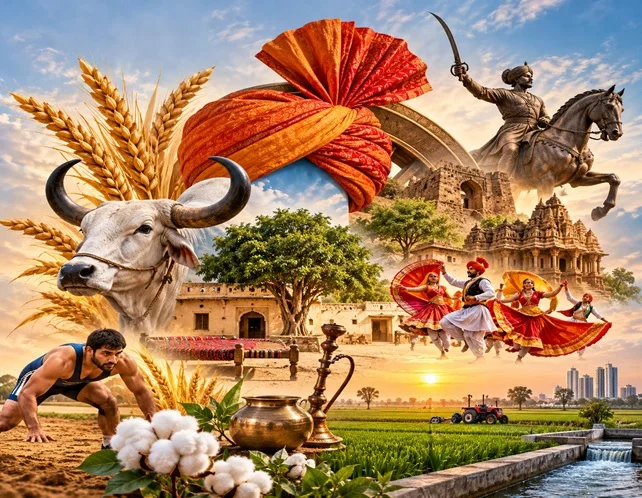
Haryana celebrates its Foundation Day on 1 November every year, commemorating its formation as a separate state in 1966 following its separation from the erstwhile Punjab.
Key Facts

Particular

Details

Formation Day

1 November 1966

Formation Act

Punjab Reorganisation Act, 1966

Parent State

Punjab

Capital

Chandigarh

First Chief Minister

Bhagwat Dayal Sharma

First Governor

Dharma Vira

Official Language

Hindi

High Court

Punjab and Haryana High Court

Famous historical site

Kurukshetra

Important Harappan site

Rakhigarhi

Major agricultural identity

Wheat and rice production

Famous industrial hub

Gurugram

Historical Background

  • Haryana before independence
    • Historically, the Haryana region was associated with several ancient kingdoms and empires.
    • During British rule, much of the region was administered as part of the Punjab Province.
    • After India's independence in 1947, the Haryana region continued to remain part of the reorganised Punjab.
    • However, differences in language, cultural traditions and regional aspirations gradually strengthened the demand for a separate administrative identity.
  • The demand for a separate Haryana
    • The movement for a separate Haryana gained momentum during the 1950s and 1960s. Major factors behind the demand were: 
      • Linguistic identity: A large section of the population in the region spoke Hindi and its regional dialects, particularly Haryanvi.
      • Cultural identity: The region had distinct social traditions, customs and historical characteristics.
      • Administrative considerations: Supporters argued that a separate state would allow better governance and regional development.
      • Regional aspirations: The demand reflected the desire for greater political representation and administrative attention.
  • Formation of Haryana in 1966
    • The Government of India appointed a commission headed by Justice J.C. Shah to examine the territorial reorganisation of Punjab.
    • The commission examined the division of territories between the Hindi-speaking and Punjabi-speaking regions.
    • Subsequently, Parliament passed the Punjab Reorganisation Act, 1966. The Act came into effect on 1 November 1966, resulting in the formation of Haryana as a separate state. The reorganisation resulted in:
      • the creation of Chandigarh as a Union Territory.
      • Chandigarh becoming the shared capital of Punjab and Haryana.
      • the transfer of certain hill areas to Himachal Pradesh.
      • Bhagwat Dayal Sharma became the first Chief Minister of Haryana.

Constitutional and Legislative Background

  • The principal constitutional provision governing the creation of new states is Article 3 of the Indian Constitution.
  • Article 3 (Formation of New States): Under Article 3, Parliament has the power to:
    • form a new state by separating territory from an existing state.
    • unite two or more states or parts of states.
    • increase or diminish the area of any state.
    • alter the boundaries of a state.
    • change the name of a state.

Geographical and Cultural Significance of Haryana

Geographical features

Feature

Details

Location

Northern India

Capital

Chandigarh

Major river boundary

Yamuna

Mountain ranges

Shivalik Hills and Aravalli Hills

Major geographical region

Indo-Gangetic Plain

Important neighbouring state

Punjab, Rajasthan, Uttar Pradesh and Himachal Pradesh

Union Territory neighbour

Delhi and Chandigarh

  • Cultural heritage
    • Folk dances: Phag, Dhamal, Loor and Khoria are among the traditional folk dances associated with Haryana.
    • Folk music: Ragini is an important traditional musical and poetic form.
    • Festivals: Teej, Baisakhi, Gugga Navami and the Surajkund International Crafts Mela reflect the state's cultural diversity.
    • Traditional language: Haryanvi is widely spoken, while Hindi is the official language.
  • Historical and Archaeological Heritage

Historical site

Significance

Kurukshetra

Traditionally associated with the Mahabharata & the Bhagavad Gita

Panipat

Site of three major battles in Indian history

Rakhigarhi

One of the largest known Harappan archaeological sites

Jyotisar

Traditionally associated with the sermon of the Bhagavad Gita

Agroha

Associated with the historical and cultural heritage of the region

Three Battles of Panipat

Battle

Year

Major opposing forces

First Battle of Panipat

1526

Babur and Ibrahim Lodi

Second Battle of Panipat

1556

Akbar's forces and Hemu

Third Battle of Panipat

1761

Ahmad Shah Abdali and the Marathas

  • Rakhigarhi
    • Rakhigarhi, situated in Haryana's Hisar district, is one of the most significant archaeological sites associated with the Indus Valley Civilisation.
    • It provides valuable evidence regarding the settlement patterns, urban planning, economic activities and material culture of the Harappan civilisation.

Haryana's Contribution to India's Economy

  • Agriculture and the Green Revolution
    • Haryana played a major role in India's Green Revolution during the 1960s and 1970s.
    • The expansion of irrigation facilities, high-yielding varieties of seeds, fertilisers, agricultural mechanisation and rural infrastructure helped improve agricultural productivity.
    • Major agricultural crops include Wheat, Rice, Mustard, Cotton, Sugarcane and Bajra.

Industrial development

Industrial centre

Major economic activity

Gurugram

IT, automobiles, financial and corporate services

Faridabad

Engineering and manufacturing

Panipat

Textiles, petrochemicals and refining

Manesar

Automobile and manufacturing industries

Hisar

Steel and agro-based industries

Haryana and Sports: A Major Sporting Powerhouse

  • Haryana has earned national and international recognition for producing outstanding athletes.
  • The state has made significant contributions to wrestling, boxing, athletics, hockey and other competitive sports.
  • Some prominent athletes associated with Haryana include:
    • Neeraj Chopra: Javelin Throw
    • Sakshi Malik: Wrestling
    • Bajrang Punia: Wrestling
    • Vinesh Phogat: Wrestling
    • Manu Bhaker: Shooting
  • The state's sporting culture is supported by traditional akharas, sports academies, training facilities and government initiatives.

Prelims MCQs

Q. Haryana was carved out of which former state following the recommendations of the Shah Commission?

 (a) Rajasthan

(b) Punjab

(c) Uttar Pradesh

(d) Himachal Pradesh 

Mains Practice Question

Q. Examine the historical and administrative factors that led to the formation of Haryana in 1966.

FAQs

When was Haryana established?

1 November 1966.

From which state was Haryana separated?

Punjab.

Who was Haryana's first Chief Minister?

Bhagwat Dayal Sharma.

Which city serves as the shared capital of Haryana and Punjab?

Chandigarh.

Which commission examined the division of Punjab?

The Shah Commission, headed by Justice J.C. Shah.

Ayushman Vay Vandana Scheme Completes Two Years, Records 23.46 Lakh Hospital Admissions

Why in News?

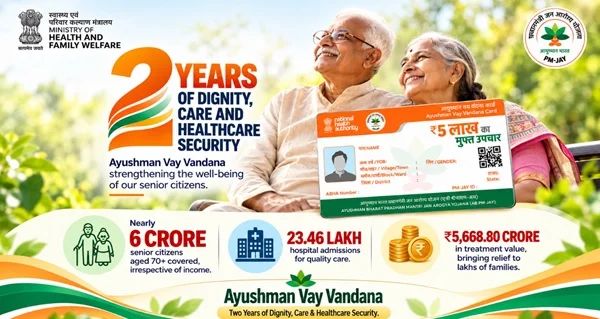
  • The Ayushman Vay Vandana initiative completed two years on 29 October 2026. According to official data, the scheme has recorded 23.46 lakh authorised hospital admissions worth ₹5,668.80 crore as of 20 October 2026.
  • Launched by Prime Minister Narendra Modi on 29 October 2024, the initiative provides health coverage to all senior citizens aged 70 years and above, irrespective of their income or socio-economic status.

About Ayushman Vay Vandana Scheme

  • Ayushman Vay Vandana is an extension of the Ayushman Bharat–Pradhan Mantri Jan Arogya Yojana (AB PM-JAY). It aims to provide financial protection and improve access to hospital-based healthcare services for senior citizens.
  • The scheme is implemented by the National Health Authority (NHA) under the Ministry of Health and Family Welfare.
  • Its primary objective is to ensure that elderly citizens can access quality healthcare without facing financial difficulties due to hospitalisation expenses.

Key Features of the Scheme

  • Eligibility: All Indian citizens aged 70 years and above are eligible, irrespective of their income or socio-economic background.
  • Health Coverage: Eligible senior citizens receive health coverage of up to ₹5 lakh per family annually for secondary and tertiary care hospitalisation.
  • Additional Coverage: Senior citizens aged 70 years and above belonging to families already covered under AB PM-JAY receive an additional top-up cover of up to ₹5 lakh annually, exclusively for themselves. This is separate from the existing family health coverage available to members below 70 years of age.
  • Beneficiary Coverage: The initiative aims to benefit approximately 6 crore senior citizens belonging to around 4.5 crore families across India.
  • Financial Protection: It reduces the financial burden of hospitalisation and helps elderly citizens access essential medical treatment.

Performance and Key Achievements

  • As of 20 October 2026, the initiative had recorded the following achievements:
    • Total authorised hospital admissions: 23.46 lakh.
    • Value of authorised hospital care: ₹5,668.80 crore.
    • Most frequently availed treatment: Cataract surgery, accounting for 4.71 lakh procedures (approximately 20.1%).
    • Second most frequently availed treatment: Chronic haemodialysis, with approximately 2.90 lakh procedures.
    • Highest treatment expenditure: Percutaneous Transluminal Coronary Angioplasty (PTCA), accounting for approximately ₹649 crore.
  • Other commonly availed treatments include total knee replacement, management of acute exacerbations of Chronic Obstructive Pulmonary Disease (COPD), acute febrile illness, acute kidney injury and renal failure.
  • These figures highlight the importance of the scheme in providing financial support for both routine surgical procedures and specialised medical treatments.

Significance of the Scheme

  1. Improved Healthcare Access: It enables senior citizens to access hospital-based healthcare services without significant financial barriers.
  2. Financial Security: It protects elderly citizens and their families from high hospitalisation expenses.
  3. Inclusive Healthcare: By covering all eligible citizens aged 70 years and above, irrespective of their economic status, the scheme promotes inclusive healthcare.
  4. Support for Chronic Diseases: Coverage for treatments such as haemodialysis and cardiac procedures helps senior citizens requiring specialised medical care.
  5.  Strengthening Social Security: It recognises the healthcare needs of the elderly and strengthens their financial and social security.

Conclusion

Ayushman Vay Vandana is an important step towards expanding publicly funded healthcare coverage for India's elderly population. By providing health coverage irrespective of socio-economic status, the initiative aims to ensure dignified ageing, accessible healthcare and financial protection for senior citizens. Its continued expansion can contribute to building a more inclusive and accessible healthcare system in India.

FAQs

1. When was the Ayushman Vay Vandana initiative launched?

It was launched on 29 October 2024 by Prime Minister Narendra Modi.

2. Who is eligible for the Ayushman Vay Vandana scheme?

All Indian citizens aged 70 years and above, irrespective of their income or socio-economic status.

3. What is the annual health coverage under the scheme?

Eligible senior citizens receive health coverage of up to ₹5 lakh per family annually.

4. Which organisation implements the scheme?

The National Health Authority (NHA) under the Ministry of Health and Family Welfare.

5. How many hospital admissions have been recorded under the scheme?

As of 20 October 2026, the scheme recorded 23.46 lakh authorised hospital admissions worth ₹5,668.80 crore.

upsc english
« »
  • SUN
  • MON
  • TUE
  • WED
  • THU
  • FRI
  • SAT