Why in News ?
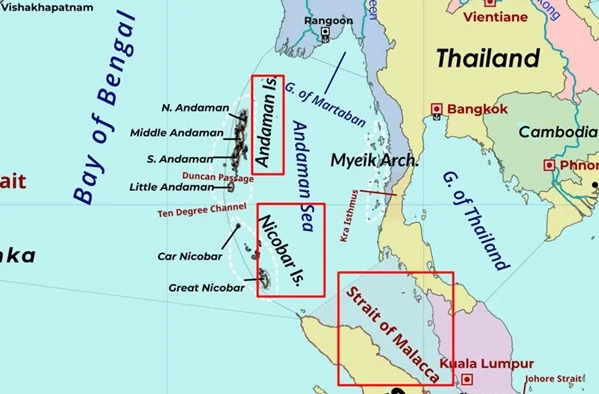
- India is hosting the first-ever BIMSTEC Maritime Security Exercise from October 30 to November 3, 2026, in the Andaman and Nicobar Islands.
- All seven BIMSTEC member countries—Bangladesh, Bhutan, India, Myanmar, Nepal, Sri Lanka and Thailand—are participating in the exercise.
- Organised by the Indian Navy, the exercise aims to strengthen maritime security, regional coordination, operational capabilities and cooperation among member countries in the Bay of Bengal.
- The exercise comprises two phases: the Harbour Phase and the Sea Phase.
BIMSTEC Maritime Security Exercise 2026
- Duration: October 30 to November 3, 2026.
- Host Country: India.
- Venue: Andaman and Nicobar Islands.
- Organiser: Indian Navy.
- Participating Countries: All seven BIMSTEC member countries.
- Major Phases: Harbour Phase and Sea Phase.
- Key Objectives: To promote maritime security, operational interoperability, Maritime Domain Awareness and regional cooperation.
What is BIMSTEC?
- BIMSTEC stands for Bay of Bengal Initiative for Multi-Sectoral Technical and Economic Cooperation.
- It is a regional organisation comprising countries located around the Bay of Bengal in South and Southeast Asia.
- It was established on June 6, 1997, through the Bangkok Declaration.
Member Countries (7)
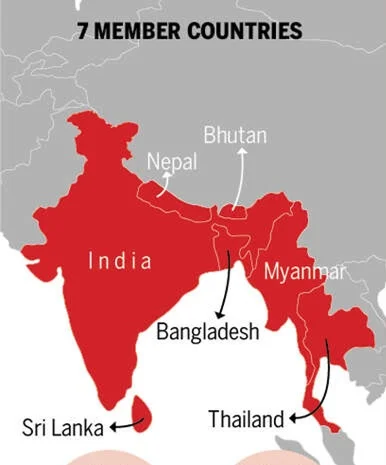
- Bangladesh
- Bhutan
- India
- Myanmar
- Nepal
- Sri Lanka
- Thailand
Headquarters: Dhaka, Bangladesh.
Major Areas of Cooperation under BIMSTEC
BIMSTEC has identified seven major sectors for regional cooperation:
- Trade, Investment and Development.
- Environment and Climate Change.
- Security.
- Agriculture and Food Security.
- People-to-People Contact.
- Science, Technology and Innovation.
- Connectivity.
Significance of the Maritime Security Exercise
- Regional Maritime Security: It will enhance cooperation in addressing challenges such as piracy, illegal trafficking, human trafficking and illegal fishing in the Bay of Bengal.
- Operational Interoperability: It will improve coordination among the navies and coast guards of member countries and strengthen their ability to conduct joint operations.
- Maritime Domain Awareness: It will facilitate maritime surveillance, information sharing and the identification of suspicious activities.
- Trade and Energy Security: The Bay of Bengal is an important maritime route for international trade and energy transportation. Ensuring its security is essential for regional economic stability.
- India's Regional Role: The exercise will support India's maritime cooperation initiatives, including SAGAR (Security and Growth for All in the Region) and MAHASAGAR (Mutual and Holistic Advancement for Security and Growth Across Regions).
Strategic Significance of the Andaman and Nicobar Islands for India
The Andaman and Nicobar Islands are an important component of India's maritime strategy in the Indian Ocean Region.
- They are located near the western entrance of the Strait of Malacca.
- The Strait of Malacca is a major maritime trade route connecting the Indian Ocean with the Pacific Ocean.
- The islands enable India to monitor maritime activities in Southeast Asia and East Asia.
- The region is strategically important for maritime security, Search and Rescue (SAR) operations, and Humanitarian Assistance and Disaster Relief (HADR).
Andaman and Nicobar Command (ANC): It is India's first integrated tri-service command, established in 2001. It brings together the operational capabilities of the Indian Army, Navy and Air Force.
Major Challenges Facing BIMSTEC
- Economic and strategic disparities among member countries.
- Regional geopolitical competition and the influence of external powers.
- Maritime piracy, illegal trafficking and other non-traditional security threats.
- Limited institutional coordination among member countries.
- Delays in implementing regional connectivity and trade projects.
- Climate change, rising sea temperatures and increasing pressure on marine ecosystems.
Way Forward
- BIMSTEC member countries should promote regular joint maritime exercises and strengthen information-sharing mechanisms.
- There is a need to improve maritime surveillance systems, coordination among coast guards and disaster management capabilities.
- Furthermore, cooperation in regional connectivity projects, the Blue Economy and sustainable marine resource management should be strengthened.
- These efforts can help transform the Bay of Bengal into a hub of economic growth, maritime security and regional stability.