| Keywords: International Day of Rural Women 2026, Rural Women Farmers, UN Women, Sustainable Agriculture, Women’s Land Rights, Food Security, Biodiversity Conservation, Unpaid Care Work. |
Why in News?
- International Day of Rural Women on 15 October 2026, UN Women has issued a statement highlighting rural women’s contributions to agriculture, livelihoods and environmental protection.
- The theme highlighted in the statement is “Rural Women Farmers Caring for Mother Nature.”
- It recognises their work in conserving seeds, protecting biodiversity, managing water and restoring degraded land.
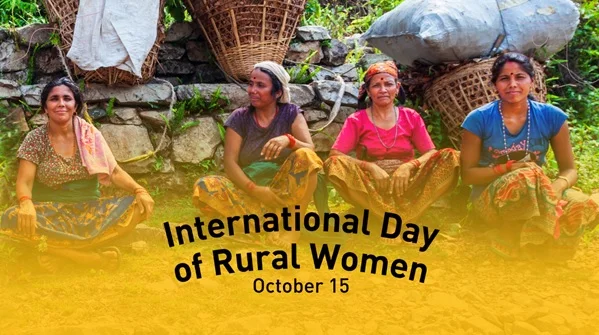
What is International Day of Rural Women?
- The United Nations General Assembly, through Resolution 62/136 adopted on 18 December 2007, designated 15 October as the International Day of Rural Women.
- The first observance took place on 15 October 2008.
- The day recognises the contribution of rural women, including indigenous women, to agricultural development, food security and the reduction of rural poverty.
- The UN General Assembly has also declared 2026 the International Year of the Woman Farmer, giving additional attention to women’s participation in sustainable agrifood systems.
Theme: Rural Women Farmers Caring for Mother Nature
The theme connects women’s agricultural work with the protection of natural resources. The statement highlights four important contributions:
- Seed conservation: Preserving seeds and agricultural diversity.
- Biodiversity protection: Supporting the conservation of species and ecosystems.
- Water management: Managing a resource essential for farming and household needs.
- Land restoration: Helping restore degraded land and sustain its productive capacity.
It presents rural women as knowledge holders and leaders whose work supports both communities and the environment.
Stronger Rights over Land and Natural Resources
UN Women emphasises the need for enforceable rights to land, water and other natural resources.
- Rural women should have secure rights over the resources on which their livelihoods depend.
- Their contribution to agriculture should be matched by influence over resource management.
- Policies should address the gap between women’s responsibilities and their decision-making power.
Equal Access to Economic Opportunities
The statement calls for equal access to:
- Finance and financial services.
- Markets and trading opportunities.
- Agricultural technology.
- Agricultural services, advice and training.
These measures can help women improve their productivity, strengthen livelihoods and exercise greater control over economic decisions.
Recognition of Unpaid Care Work
UN Women stresses that unpaid care work must be recognised, reduced and redistributed.
|
Priority
|
Meaning
|
|
Recognise
|
Acknowledge the value of unpaid domestic and caregiving work.
|
|
Reduce
|
Improve services and infrastructure that reduce the time and effort required for these tasks.
|
|
Redistribute
|
Share responsibilities more fairly within households and through public and community support.
|
Addressing care responsibilities can give rural women more time for education, paid work, agricultural training and public participation.
Decent Work, Social Protection and Infrastructure
The statement also highlights the need for:
- Decent work and better working conditions.
- Social protection against livelihood shocks.
- Resilient infrastructure that supports rural communities.
- Services that enable women to participate more fully in economic life.
Participation in Agricultural and Environmental Decisions
Rural women should help shape agricultural policies and influence how environmental funding is allocated.
The statement identifies three areas where their participation is essential:
- Addressing climate change.
- Protecting biodiversity.
- Restoring degraded land.
Their leadership should be reflected in policy commitments, budgets and implementation, alongside recognition of their contributions.
Connection with the Three Rio Conventions
The statement identifies meetings under the three Rio Conventions as opportunities to strengthen women’s participation in environmental action.
|
Convention
|
Main focus
|
|
United Nations Framework Convention on Climate Change UNFCCC
|
Climate change
|
|
Convention on Biological Diversity CBD
|
Biodiversity conservation, sustainable use and fair benefit-sharing
|
|
United Nations Convention to Combat Desertification UNCCD
|
Desertification, land degradation and drought
|
These conventions address interconnected environmental challenges. Women’s knowledge and participation can help connect agricultural development with climate, biodiversity and land-restoration objectives.
Direct Investment in Rural Women
- UN Women calls on governments, financial institutions, businesses and development partners to invest directly in rural women.
- Its central message is that women’s contributions to food systems and environmental conservation should be matched by adequate rights, resources and power.
Significance
- Food security: Supporting women farmers can strengthen agricultural livelihoods and community food supplies.
- Environmental sustainability: Their knowledge can contribute to seed conservation, biodiversity protection and responsible resource management.
- Climate resilience: Access to finance, technology and services can improve their ability to respond to environmental shocks.
- Gender equality: Greater control over resources and participation in decisions can help address structural inequalities.
- Inclusive development: Investment in rural women can connect livelihood improvement with environmental protection.
Relevance for India
- Recognising Women as Farmers: The statement provides a useful framework for strengthening recognition of women’s agricultural work. Policy attention should extend to their access to productive resources, training, markets and decision-making.
- Strengthening Existing Rural Livelihood Initiatives: India’s Mahila Kisan Sashaktikaran Pariyojana (MKSP) was launched as a subcomponent of Deendayal Antyodaya Yojana–National Rural Livelihoods Mission (DAY-NRLM) to empower women in agriculture and strengthen agriculture-based livelihoods.
- Supporting Women’s Collectives: Self-help groups and women-led producer organisations can provide platforms for collective purchasing, marketing, training and participation in local development decisions.
- Linking Empowerment with Environmental Planning: The statement suggests a policy opportunity for India: involve women farmers more directly in local water management, biodiversity conservation and land-restoration planning.
Challenges
- Unequal resource access: Limited control over land, water and productive assets.
- Financial barriers: Inadequate access to suitable finance and investment.
- Technology and service gaps: Unequal access to agricultural advice, tools and training.
- Unpaid care responsibilities: Competing demands on women’s time and labour.
- Limited representation: Insufficient influence over policies, institutions and funding decisions.
- Environmental pressures: Climate change, biodiversity loss and land degradation threaten the resources supporting rural livelihoods.
Way Forward
- Strengthen resource rights: Make women’s rights to land, water and natural resources enforceable and accessible.
- Improve financial inclusion: Design financial services and investment mechanisms around women farmers’ needs.
- Expand agricultural support: Improve access to technology, extension services, training and markets.
- Address unpaid care work: Invest in services and infrastructure while promoting shared care responsibilities.
- Ensure meaningful participation: Include rural women in agricultural policymaking and environmental funding decisions.
- Support collective institutions: Strengthen women’s groups and producer organisations.
- Track measurable outcomes: Assess progress through women’s access to resources, control over income and influence over decisions.
Conclusion
The International Day of Rural Women 2026 highlights the close relationship between gender equality, sustainable agriculture and environmental protection. Recognising rural women’s contributions must be accompanied by secure rights, adequate investment and meaningful decision-making power.
Prelims Practice Question
Which of the following is NOT one of the three Rio Conventions?
(a) United Nations Framework Convention on Climate Change
(b) Convention on Biological Diversity
(c) United Nations Convention to Combat Desertification
(d) Ramsar Convention on Wetlands
Mains Practice Question
“Rural women’s empowerment is essential for sustainable agriculture and environmental resilience.” Discuss with reference to resource rights, unpaid care work and participation in decision-making.
|
FAQs
1. When is the International Day of Rural Women observed?
It is observed annually on 15 October. The first observance was held in 2008.
2. What is the theme highlighted in UN Women’s statement for 2026?
The theme is “Rural Women Farmers Caring for Mother Nature.”
3. Why are rural women important for environmental protection?
They contribute to seed conservation, biodiversity protection, water management and the restoration of degraded land.
4. What are the main demands of UN Women’s statement?
The statement calls for stronger resource rights, equal economic opportunities, social protection, recognition of unpaid care work and meaningful participation in decisions.
5. Why is 2026 particularly significant for women farmers?
The United Nations has declared 2026 the International Year of the Woman Farmer, creating an opportunity to advance women’s recognition and empowerment in agrifood systems.
|






 Contact Us
  New Batch : 9555124124/ 7428085757
  Tech Support : 9555124124/ 7428085757