Prelims : Art & Culture + Geography + CA
Mains : GS Paper 1 – Indian Culture, Architecture |
Why in News ?
Recent developments and debates regarding construction and infrastructure projects on Chamundi Hills have brought attention to the preservation of the Shree Chamundeshwari Temple and its surrounding heritage landscape.
Concerns have been raised about balancing tourism development and heritage conservation.
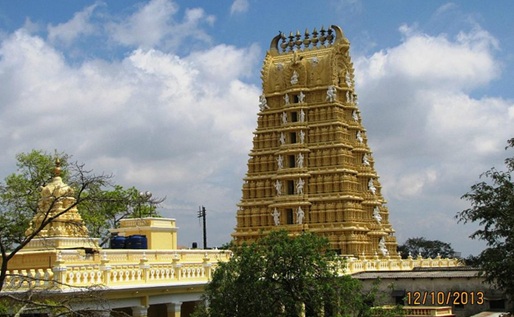
Background and Context
The Shree Chamundeshwari Temple is one of the most important Shakti Peethas in South India.
It is located atop Chamundi Hills in Mysuru, Karnataka.
The temple is dedicated to Goddess Chamundeshwari, a fierce form of Durga, regarded as the guardian deity of Mysuru.
Location
- Situated at an altitude of ~1000 metres above sea level
- Overlooks the city of Mysuru
- Accessible via :
- Road
- Traditional 1000-step stairway pilgrimage route
Architectural Features
1. Dravidian Style Architecture
The temple follows the Dravidian style, typical of South Indian temples :
- Pyramid-shaped tower (Gopuram)
- Intricate carvings and sculptures
2. Rajagopuram (Main Tower)
- A seven-tiered gopuram
- Decorated with detailed mythological figures
- Acts as the most iconic visual element of the temple
3. Sanctum (Garbhagriha)
- Houses the idol of Goddess Chamundeshwari
- Idol is depicted as :
- Slayer of demon Mahishasura
- Symbol of power and protection
4. Temple Complex
- Includes smaller shrines and mandapas
- Presence of a large Nandi statue on the hill pathway
Deity
- Presiding deity : Goddess Chamundeshwari (form of Durga)
- Associated with the legend of Mahishasura Mardini
The city name Mysuru is derived from Mahishasura.
Cultural and Religious Significance
1. Mysuru Dasara Festival
- The temple plays a central role in the famous Dasara celebrations
- Historically patronised by the Wodeyar dynasty
2. Pilgrimage Importance
- One of the most visited temples in Karnataka
- Attracts lakhs of devotees annually
3. Symbol of Regional Identity
- Considered the protecting deity of Mysuru region
- Integral to Karnataka’s cultural heritage
Latest Developments / Issues
1. Heritage vs Development Debate
- Infrastructure projects under government schemes have sparked concerns
- Issues include :
- Impact on heritage structures
- Environmental degradation of hills
2. Conservation Concerns
- Experts warn construction activities may violate heritage norms
- Risk to temple’s architectural integrity and surrounding ecosystem
3. Administrative and Local Issues
- Governance of temple area and development authorities under scrutiny
- Debate on preserving sanctity vs improving tourist facilities
Significance for UPSC
1. Art & Culture
- Example of Dravidian temple architecture
2. Geography
- Hill temple + cultural landscape
3. Society & Heritage
- Case study of:
- Heritage conservation
- Religious tourism vs sustainability
Challenges
- Balancing tourism with ecological protection
- Preserving heritage structures
- Managing large pilgrim influx
Way Forward
- Adopt eco-sensitive tourism models
- Strict enforcement of heritage protection laws
- Involve local communities in conservation
- Promote sustainable infrastructure
Practice Questions
Prelims
Q. Shree Chamundeshwari Temple is located in which state ?
(a) Tamil Nadu
(b) Karnataka
(c) Andhra Pradesh
(d) Kerala
Mains
“Discuss the architectural features and cultural significance of hill temples in India with reference to Chamundeshwari Temple.”
FAQs
Q1. Where is Chamundeshwari Temple located ?
On Chamundi Hills in Mysuru, Karnataka.
Q2. Which deity is worshipped here ?
Goddess Chamundeshwari (form of Durga).
Q3. What is its architectural style ?
Dravidian temple architecture.
Q4. Why is it important ?
It is the guardian deity temple of Mysuru and central to Dasara celebrations.
Q5. What are current concerns?
Heritage conservation vs development activities.
|







 Contact Us
  New Batch : 9555124124/ 7428085757
  Tech Support : 9555124124/ 7428085757