- UPSC Exam
- State PCS
- One Day Exam
- Current Affairs
- PT Quiz
- Downlaods
- About Coaching
- Blog
- Videos

PrelimsCurrent Events of National & International Importance | Environment | Species |
A rare alpine flowering plant, Cyananthus hookeri, has been recorded in Arunachal Pradesh after a gap of 158 years, making it one of the most significant botanical rediscoveries in India. Researchers have also proposed that the species should be placed under the endangered category in India because of its limited population and fragile habitat.

The species has a restricted distribution across the eastern Himalayan region and is known from :
Despite occurring in multiple countries, its populations are small, isolated, and sparsely distributed.
Cyananthus hookeri thrives in cold alpine ecosystems, where environmental conditions are highly demanding.
It survives in :
These harsh conditions naturally restrict its abundance.
Scientists have recommended listing the species as Endangered in India under the IUCN Red List criteria due to :
UPSC PrelimsGeography, Environment & Ecology, Disaster Management, Climate Change, Remote Sensing & GIS, Current Affairs. UPSC MainsGS Paper III : Disaster Management, Environment, Climate Change, Science & Technology, Internal Security & Disaster Resilience, Infrastructure and Sustainable Development. |
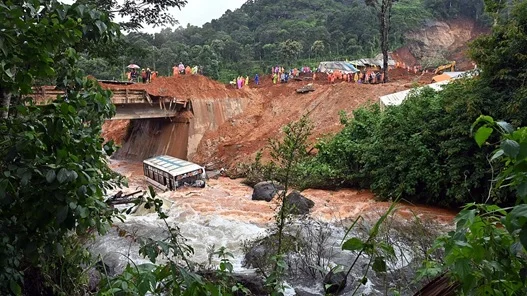
A Landslide Early Warning System (LEWS) is a scientific mechanism that monitors landslide-prone areas, predicts the likelihood of slope failure, and issues timely alerts to authorities and communities, enabling evacuation before a disaster occurs.
Developed by institutions such as Amrita University, this approach involves installing scientific instruments on highly vulnerable slopes.
The sensors continuously monitor changes in slope stability. If any parameter crosses a predefined safety threshold, an automatic warning is sent to local authorities, allowing evacuation before slope failure occurs.
Developed by IIT Mandi, this model estimates landslide probability over large geographical regions.
Experts believe that India can establish a comprehensive nationwide Landslide Early Warning System (LEWS) within the next two years with adequate institutional support and investment.
|
Institution |
Role |
|
National Disaster Management Authority (NDMA) |
National disaster management policy and coordination |
|
India Meteorological Department (IMD) |
Weather and rainfall forecasting |
|
Geological Survey of India (GSI) |
Landslide hazard mapping and geological assessment |
|
State Disaster Management Authorities (SDMAs) |
State-level implementation |
|
Local Administration |
Evacuation, public awareness, and emergency response |
Prelims Practice QuestionsQ. With reference to the Landslide Early Warning System (LEWS) in India, consider the following statements:
Which of the statements given above is/are correct?
Mains Probable Question"With climate change increasing the frequency of extreme rainfall events, landslides have emerged as a major disaster risk in India. Discuss the need for a robust Landslide Early Warning System and examine the challenges in implementing it." |
FAQs on Landslide Early Warning System (LEWS) in IndiaQ1. What is a Landslide Early Warning System (LEWS) ? Answer : A Landslide Early Warning System (LEWS) is a scientific system that monitors landslide-prone areas, predicts the possibility of slope failure, and provides timely alerts to authorities and communities to enable evacuation and reduce casualties. Q2. Why is a Landslide Early Warning System important for India ? Answer : India is highly vulnerable to landslides, particularly in the Himalayas and the Western Ghats. An effective LEWS helps minimize loss of life, protect critical infrastructure, and improve disaster preparedness through timely warnings and evacuations. Q3. According to the National Disaster Management Authority (NDMA), what percentage of India's landmass is prone to landslides ? Answer : According to the NDMA, around 13% of India's landmass (approximately 0.42 million square kilometres) is vulnerable to landslides. Q4. Which regions of India are most susceptible to landslides ? Answer : The most landslide-prone regions are The Himalayan region ,The Western Ghats ,Parts of Mizoram, Manipur, Uttarakhand, and Himachal Pradesh. |
|
Keywords: Government waives import duty, battery manufacturing inputs, display assembly components, customs duty exemption, Make in India, electronics manufacturing, lithium-ion battery, PLI Scheme, semiconductor ecosystem, UPSC Current Affairs 2026 Focus Areas: Prelims | Electronics Manufacturing | Industrial Policy GS Paper III (Economy, Science & Technology, and Manufacturing) |

|
Year |
Development |
|---|---|
|
2014 |
Launch of Make in India initiative to promote domestic manufacturing. |
|
2019 |
National Policy on Electronics (NPE 2019) announced. |
|
2020 |
Production Linked Incentive (PLI) Scheme for Large Scale Electronics Manufacturing launched. |
|
2021 |
PLI Scheme for Advanced Chemistry Cell (ACC) Battery Storage approved. |
|
2022 |
Semicon India Programme launched to develop semiconductor and display manufacturing ecosystem. |
|
2026 |
Government waives customs duty on critical battery and display manufacturing inputs to reduce production costs. |
India is rapidly expanding its electronics and battery manufacturing ecosystem. However, many specialized machines and components still need to be imported. High import duties increase manufacturing costs, making Indian products less competitive. The new exemption is expected to:
|
Aspect |
Details |
|---|---|
|
Policy |
Customs Duty Exemption |
|
Implemented By |
Ministry of Finance |
|
Beneficiary Sector |
Electronics & Battery Manufacturing |
|
Major Products |
Smartphones, EV Batteries, TVs, Laptops, Energy Storage Systems |
|
Objective |
Reduce production cost and encourage domestic manufacturing |
|
Related Initiatives |
Make in India, Atmanirbhar Bharat, PLI Scheme, ACC Battery Storage, Semicon India |
The Government has waived customs duty on several essential inputs and machinery required for manufacturing:
|
For Display Manufacturing
|
For Battery Manufacturing
|
1. Backlight Unit (BLU)
2. Display Frames
3. Anisotropic Conductive Film (ACF)
4. Cathode & Anode Extrusion Coating Machines
5. Powder Dryers
6. Slurry Transfer Systems
|
Stage |
Purpose |
|---|---|
|
Raw Material Mixing |
Preparation of cathode and anode materials |
|
Slurry Preparation |
Mixing active chemicals into slurry |
|
Coating |
Applying slurry on electrodes using coating machines |
|
Drying |
Removing moisture using powder dryers |
|
Cell Assembly |
Assembling battery cells |
|
Testing |
Quality and safety testing |
|
Economic Benefit |
Impact |
|---|---|
|
Manufacturing Cost |
Reduced |
|
Foreign Investment |
Likely to increase |
|
Employment |
More skilled jobs |
|
Exports |
Improved competitiveness |
|
Import Dependence |
Reduced over time |
|
EV Adoption |
Batteries become relatively cheaper |
|
Electronics Manufacturing |
Faster expansion |
The exemption is expected to benefit manufacturers of:
Large manufacturing companies operating in India under the Production Linked Incentive (PLI) Scheme are likely to benefit significantly.
The decision supports several flagship programmes:
The policy is expected to:
Despite the exemption, India still faces several challenges:
India should focus on:
The customs duty exemption on battery and display manufacturing inputs is a significant step toward making India a global manufacturing hub for electronics and clean energy technologies. By lowering production costs and encouraging local manufacturing, the policy complements the government's long-term vision of Make in India, Atmanirbhar Bharat, and sustainable industrial growth. Over time, it can improve export competitiveness, attract investment, and accelerate India's transition towards an advanced manufacturing economy.
Prelims MCQQ. The Government recently waived customs duty on several inputs such as backlight units, anisotropic conductive film, cathode extrusion coating machines, and slurry transfer systems. This decision primarily aims to: A. Increase imports of finished electronic products Mains Practice Question“Customs duty exemptions on critical manufacturing inputs can accelerate India's electronics manufacturing ecosystem”. Discuss in the context of Make in India and Atmanirbhar Bharat. |
1. Why has the government waived customs duty on these items?To reduce manufacturing costs, promote domestic production, and strengthen India's electronics and battery manufacturing ecosystem. 2. Which industries will benefit the most?The policy will primarily benefit the electronics, electric vehicle (EV), battery storage, smartphone, laptop, and display manufacturing sectors. 3. What is Anisotropic Conductive Film (ACF)?ACF is a special adhesive film used to electrically connect display panels with circuit boards while allowing current to flow only in the required direction. 4. How does this support the Make in India initiative?Lower import costs for essential manufacturing inputs encourage companies to produce more value-added products within India, boosting local manufacturing and employment. 5. Why are battery manufacturing machines important?Machines such as cathode and anode coating systems, powder dryers, and slurry transfer systems are critical for producing high-quality lithium-ion batteries used in EVs and energy storage systems. |
|
Keywords: BOHR Satellite, SpaceX Falcon 9, Nuclear-Powered Commercial Satellite, City Labs BOHR Satellite, Betavoltaic Battery, NanoTritium Battery, Space Nuclear Technology, SpaceX Transporter-17, Commercial Space Technology, UPSC Science and Technology. Focus Areas Prelims: Science & Technology, Space Technology, Nuclear Energy, Mains (GS Paper III): Science & Technology—Developments and Applications, Space Technology, Emerging Technologies, Commercial Space Sector, Nuclear Technology in Space Exploration. |
The world's first commercially built nuclear-powered satellite, BOHR (Betavoltaic Orbital High-Reliability), has successfully entered orbit aboard a SpaceX Falcon 9 rocket during the Transporter-17 rideshare mission. Developed by City Labs, a Florida-based aerospace company, BOHR demonstrates betavoltaic nuclear battery technology, which generates electricity from the radioactive decay of tritium.
|
Particular |
Details |
|---|---|
|
Satellite Name |
BOHR (Betavoltaic Orbital High-Reliability) |
|
Developed By |
City Labs, Florida, USA |
|
Launch Vehicle |
SpaceX Falcon 9 |
|
Mission |
Transporter-17 |
|
Launch Site |
Vandenberg Space Force Base, California |
|
Technology |
Betavoltaic Nuclear Battery |
|
Objective |
Demonstrate long-life nuclear power technology in orbit |
Betavoltaic technology is a type of nuclear battery that converts the energy released during the radioactive decay of tritium into electrical power.
Unlike a nuclear reactor, no chain reaction takes place.
The BOHR satellite uses Nano Tritium battery technology, developed by City Labs.
It is the first commercially built satellite designed to demonstrate betavoltaic nuclear battery technology in orbit.
Nuclear batteries can continue producing electricity for years without depending on sunlight.
Such technology could power spacecraft operating far beyond Earth where solar energy becomes weak.
The mission opens new opportunities for private companies developing advanced space power systems.
|
Feature |
Beta voltaic Battery |
Nuclear Reactor |
|---|---|---|
|
Energy Source |
Tritium decay |
Nuclear fission |
|
Chain Reaction |
No |
Yes |
|
Power Output |
Low |
Very High |
|
Safety |
Higher |
More complex |
|
Best Use |
Small satellites |
Large spacecraft or future lunar bases |
Although India currently relies mainly on solar-powered spacecraft, future long-duration missions such as:
Could benefit from advanced nuclear power technologies.
The successful launch of BOHR aboard SpaceX's Falcon 9 marks an important milestone in commercial space technology. By demonstrating betavoltaic nuclear battery technology in orbit, the mission highlights an alternative to conventional solar-powered systems for long-duration and deep-space applications. Although BOHR does not use a nuclear reactor, its innovative power source could influence the future design of commercial satellites, scientific missions, and next-generation space infrastructure, making it a noteworthy development from both technological and UPSC perspectives.
|
Topic |
Fact |
|---|---|
|
Satellite |
BOHR |
|
Full Form |
Betavoltaic Orbital High-Reliability |
|
Developer |
City Labs |
|
Launch Vehicle |
SpaceX Falcon 9 |
|
Mission |
Transporter-17 |
|
Launch Site |
Vandenberg Space Force Base |
|
Technology |
Betavoltaic Nuclear Battery |
|
Fuel |
Tritium |
|
Power Source |
NanoTritium Battery |
Prelims Practice QuestionQ. The recently launched BOHR Satellite, seen in the news, is significant because it: A. Is the world's first satellite powered by a nuclear fusion reactor Mains Practice Question"Discuss the significance of nuclear-based power systems for future commercial satellites and deep-space exploration. Examine the opportunities and challenges associated with their use." |
Q.1. What is BOHR?BOHR is the world's first commercially built satellite designed to demonstrate betavoltaic nuclear battery technology in space. Q.2. Who developed BOHR?BOHR was developed by City Labs, a Florida-based aerospace company. Q.3. Did SpaceX build the satellite?No. SpaceX provided the launch vehicle (Falcon 9), while the satellite was developed by City Labs. Q.4. How does the BOHR satellite generate electricity?It uses a NanoTritium betavoltaic battery, which converts energy from the radioactive decay of tritium into electricity. Q.5. Why is BOHR important?It demonstrates a new commercial approach to long-life space power systems that could support future satellites and deep-space missions. |
PrelimsEconomy | Social Security | Governance | Current Affairs MainsGS Paper II – Welfare Schemes & Governance | GS Paper III – Inclusive Growth and Digital Governance |

The new EPFO portal represents a major shift from a region-centric administrative model to a member-centric digital service model.
|
Aspect |
Earlier System |
New Centralised Portal (CITES 2.01) |
|
Database |
Separate regional databases |
Single national database |
|
Access to Records |
Mostly tied to the originating regional office |
Accessible from any authorised EPFO office |
|
Claim Processing |
Significant manual verification; processing often slower |
Greater automation and standardised workflows improve efficiency |
|
PF Transfer |
Transfers between employers could involve multiple verification steps |
Simplified through the centralised database and UAN integration |
|
Transparency |
Limited real-time visibility into claim progress |
Better online visibility of claim status and account information |
|
Paperwork |
Greater reliance on physical forms and manual documentation |
Increased use of digital services and electronic verification |
|
Data Consistency |
Higher possibility of duplicate or inconsistent records |
Single source of truth improves consistency |
|
Grievance Handling |
Depended on regional records and office-specific processes |
Easier access to complete member records supports faster resolution |
|
Support for Migrant Workers |
Administrative hurdles when changing states or employers |
Better portability for a mobile workforce |
|
Governance Model |
Decentralised administration |
Digitally integrated and citizen-centric administration |
PRELIMINARY MCQQ. Consider the following statements regarding the Employees' Provident Fund Organisation (EPFO): 1. EPFO functions under the Ministry of Labour and Employment. 2. EPFO administers the Employees' Pension Scheme (EPS). 3. The Centralised IT Enabled Services (CITES 2.01) platform replaces fragmented regional databases with a unified member database. 4. Universal Account Number (UAN) is issued by the Reserve Bank of India. Which of the statements given above are correct? A. 1 and 2 only B. 1, 2 and 3 only C. 2, 3 and 4 only D. 1, 2, 3 and 4 MAINS PRACTICE QUESTIONQ. Digital governance reforms are transforming the delivery of social security services in India. Discuss the significance of EPFO's Centralised IT Enabled Services (CITES 2.01) platform in improving transparency, efficiency, and portability of social security benefits. Also examine the challenges associated with its implementation. |
FAQs1. What is the new EPFO portal ?The new EPFO portal is built on the Centralised IT Enabled Services (CITES 2.01) platform, which uses a unified national member database to improve service delivery, claim processing, and portability. 2. Why was a new EPFO portal introduced ?It was introduced to replace fragmented regional databases, reduce delays, improve transparency, simplify PF transfers, and provide faster digital services to members. 3. What is a centralised member database ?It is a single national repository of EPFO member records that can be accessed by authorised EPFO offices across India, ensuring consistency and reducing duplication. 4. What is the Universal Account Number (UAN) ?The UAN is a unique number allotted by EPFO that links all Provident Fund accounts of an employee throughout their career, making PF management easier. 5. How does the portal benefit employers ?It simplifies compliance, reduces paperwork, improves data accuracy, streamlines employee onboarding, and enhances coordination with EPFO. |
|
Keywords: CAMPA, River Dolphin Conservation, Project Snow Leopard Phase-II, Indian Rhinoceros Conservation, Wild Water Buffalo Conservation, Sangai Conservation, Sacred Groves, Aastha Van Sanrakshan Yojana, Compensatory Afforestation, NPV, Biodiversity Conservation, Forest Restoration, MoEFCC, GIS Lab, MISHTI, Mangrove Restoration. Focus Area Prelims: Environment & Ecology, Government Schemes Mains (GS-3): Biodiversity Conservation, Wildlife Protection, Forest Governance, Compensatory Afforestation, Ecosystem Restoration, Climate Change, and Community-Based Conservation. |
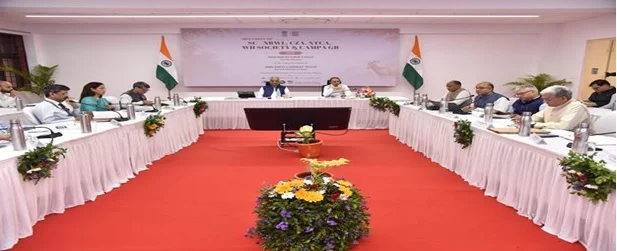
CAMPA Approves Four New National Conservation Projects
Four major species-specific conservation programmes received approval.
|
Project |
Objective |
|---|---|
|
River Dolphin Conservation Project |
Recovery Action Plan and Scientific Study |
|
Project Snow Leopard Phase-II |
Population Estimation & Habitat Conservation |
|
Indian Rhinoceros Conservation Action Plan |
Long-term Rhino Conservation |
|
Wild Water Buffalo Conservation Programme |
Pan-India Conservation Strategy |
These projects were recommended by the Executive Committee of National CAMPA before receiving final approval.
CAMPA (Compensatory Afforestation Fund Management and Planning Authority) is the statutory authority responsible for managing funds collected from agencies diverting forest land for non-forest purposes.
It ensures that ecological losses caused by forest diversion are compensated through afforestation, restoration, and wildlife conservation activities.
Whenever forest land is diverted for projects like roads, mines, dams or industries, the user agency must pay:
NPV represents the economic value of ecological services lost due to forest diversion. These funds are managed under CAMPA.
The decisions reflect a shift from plantation-centric forestry towards landscape-level ecosystem restoration and species-specific conservation. The approval of dedicated projects for river dolphins, snow leopards, rhinos, and wild water buffalo strengthens India's commitment to achieving the targets of the Kunming-Montreal Global Biodiversity Framework, while initiatives such as Aastha Van Sanrakshan Yojana, GIS-based monitoring, mangrove restoration, and urban forestry promote technology-driven and community-led conservation.
Prepare India's first comprehensive Recovery Action Plan for river dolphins.

River dolphins are considered indicators of healthy freshwater ecosystems.
This is the second phase of India's flagship high-altitude conservation programme.

|
Major Components
|
States Covered
|
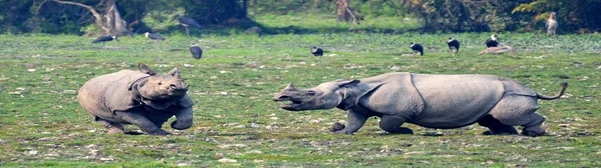
Strengthen conservation of India's one-horned rhinoceros
.
|
Focus Areas
|
Major States
|
India approved its first Pan-India Conservation Approach

|
Focus
|
Major States
|
CAMPA also approved continued funding for the conservation of Sangai, the famous brow-antlered deer of Manipur.
One of the biggest announcements of the meeting.
Sacred groves act as:
The Governing Body reviewed the establishment of a dedicated GIS Monitoring Laboratory.
The GIS Lab will monitor:
States and Union Territories will now submit their Annual Plans of Operation (APOs) exclusively through an online portal.
The Governing Body reviewed progress under the Mangrove Initiative for Shoreline Habitats and Tangible Incomes (MISHTI).
CAMPA reviewed progress of urban forestry.
The recent CAMPA decisions reflect India's shift from compensatory afforestation to ecosystem-based biodiversity conservation through species-specific projects, technology-driven monitoring, and community participation. For UPSC Prelims, aspirants should focus on CAMPA, the Compensatory Afforestation Fund Act, 2016, flagship conservation projects, and protected species. For GS Paper III (Environment), the topic is important for themes such as forest governance, ecological restoration, climate resilience, and sustainable development. It can also be linked with India's commitments under the Kunming–Montreal Global Biodiversity Framework and the Sustainable Development Goals (SDGs), making it highly relevant for both UPSC and State PCS examinations.
|
Q. Consider the following statements regarding the National CAMPA:
Which of the statements given above is/are correct? A. 1 only Mains Practice QuestionDiscuss the role of the Compensatory Afforestation Fund Management and Planning Authority (CAMPA) in biodiversity conservation and ecological restoration. How can technology and community participation improve its effectiveness? |
Q1. What is CAMPA?Answer: CAMPA (Compensatory Afforestation Fund Management and Planning Authority) is a statutory body under the Ministry of Environment, Forest and Climate Change that manages funds collected for compensatory afforestation after the diversion of forest land for non-forest purposes. Q2. What is the Compensatory Afforestation Fund Act, 2016?Answer: The Act provides the legal framework for managing and utilizing CAMPA funds for afforestation, forest conservation, wildlife protection, and ecological restoration. Q3. What is Net Present Value (NPV) in forest conservation?Answer: NPV is the monetary value paid by agencies diverting forest land to compensate for the loss of ecological services provided by forests. Q4. Why river dolphins are considered indicator species?Answer: River dolphins indicate the health of freshwater ecosystems because they require clean water, adequate fish populations, and an undisturbed river habitat. Q5. Why are sacred groves important for UPSC?Answer: Sacred groves are community-protected forest patches that conserve biodiversity, protect water sources, preserve indigenous traditions, and act as natural carbon sinks. |
|
Prelims: Current Affairs, Polity, Governance and Public Health. MainsUPSC GS Paper II: Government Policies & Interventions, Governance and Public Health. |
|
Schedule |
Purpose |
|
Schedule H |
Prescription-only medicines; cannot be sold without a registered medical practitioner's prescription. |
|
Schedule H1 |
Certain critical medicines (e.g., specific antibiotics and anti-TB drugs); requires prescription and mandatory record-keeping by pharmacies. |
|
Schedule X |
Narcotic and psychotropic medicines; subject to strict licensing and record maintenance. |
|
Schedule K |
Lists drugs exempted from certain provisions of the Rules under specified conditions. |
|
Schedule M |
Good Manufacturing Practices (GMP) for pharmaceutical manufacturing units. |
|
Schedule Y |
Requirements for clinical trials and approval of new drugs (many provisions have since been superseded by the New Drugs and Clinical Trials Rules, 2019). |
The Drugs and Cosmetics Act, 1940 is the primary legislation in India that regulates the import, manufacture, distribution, sale, and quality of drugs, cosmetics, and certain medical devices. It aims to ensure that medicines and cosmetics available in the country are safe, effective, and of standard quality, thereby protecting public health.
|
Q. With reference to the recent amendment to the Drugs Rules, 1945, consider the following statements:
Which of the statements given above is/are correct?
Mains Practice QuestionsQ. The recent amendment to the Drugs Rules, 1945 seeks to strengthen regulatory oversight of medicinal formulations containing high concentrations of ethyl alcohol. Discuss the rationale behind this amendment and examine its likely impact on public health and pharmaceutical regulation in India. (250 Words) |
Q1. Why is the amendment to the Drugs Rules, 1945 in the news?Answer: The Union Ministry of Health and Family Welfare has amended the Drugs Rules, 1945 to strengthen regulation of medicinal formulations containing high concentrations of ethyl alcohol and prevent their misuse for intoxication. Q2. What is the key change introduced by the amendment?Answer: The amendment removes the Schedule K licensing exemption for medicinal formulations containing more than 12% v/v ethyl alcohol in quantities exceeding 30 ml. These products now require a licence under the Drugs and Cosmetics Act, 1940. Q3. Why was this amendment necessary?Answer: Some medicinal formulations contain 80-90% v/v ethyl alcohol, making them susceptible to misuse as intoxicating substances. Several State governments also raised concerns about their diversion and misuse. Q4. What is Schedule K under the Drugs Rules, 1945?Answer: Schedule K lists certain drugs and medicinal preparations that are exempt from specific provisions of the Drugs Rules, including licensing requirements, subject to prescribed conditions. Q5. What is Schedule H1?Answer: Schedule H1 is a category of prescription medicines that can be sold only on the prescription of a registered medical practitioner. Pharmacies are also required to maintain detailed records of their sale. |

Bacterial infections are the most common cause of neonatal sepsis.
Major pathogens include :
The Herpes Simplex Virus (HSV) can also cause severe neonatal infections, particularly when the mother acquires a primary HSV infection during pregnancy.
Neonatal sepsis remains one of the leading causes of newborn deaths in India despite improvements in neonatal healthcare.
According to recent studies :
The microbiological profile of neonatal sepsis in India differs significantly from that seen in developed countries.
In high-income countries :
The NeoSep1 trial aims to develop evidence-based treatment strategies tailored to the realities of low- and middle-income countries, including India.
Its key objectives include :
NeoSep1 uses an innovative Personalised Randomised Controlled Trial (PRACTical) design.
Key features include :
This approach enables physicians to identify the most suitable treatment strategies for their local healthcare settings.
According to Dr. Nishad Plakkal, Principal Investigator of NeoSep1 in India and Head of the Department of Neonatology at JIPMER :
To assess death within 28 days of enrolment.
Neonatal sepsis is treatable if diagnosed early.
Treatment generally includes :
Experts believe that the trial could :
Antimicrobial resistance is rapidly reducing the effectiveness of antibiotics that have been used for decades to treat neonatal sepsis. As a result, newborns suffering from severe bloodstream infections face an increasing risk of death, particularly in low- and middle-income countries. India's participation in the international NeoSep1 trial marks a significant step towards developing safer, more effective, and affordable antibiotic treatments tailored to local disease patterns. The findings of this landmark study are expected to strengthen neonatal healthcare, improve clinical decision-making, and ultimately save thousands of newborn lives.
Q1. What is the NeoSep1 Trial ?Answer : NeoSep1 (Neonatal Sepsis Trial-1) is an international, multi-centre clinical trial that evaluates safe, effective, and affordable antibiotic combinations for treating neonatal sepsis, particularly infections caused by antimicrobial-resistant (AMR) bacteria. Q2. Why is the NeoSep1 Trial significant for India ?Answer : India has a high burden of neonatal sepsis and increasing antimicrobial resistance. The trial will generate India-specific evidence on antibiotic effectiveness, helping clinicians choose the most appropriate treatment and reducing neonatal deaths. Q4. What is neonatal sepsis?Answer : Neonatal sepsis is a life-threatening bloodstream infection occurring in newborns up to 90 days of age. It is most common among premature and low-birth-weight infants due to their immature immune systems. |

Our support team will be happy to assist you!

 Contact Us
  New Batch : 9555124124/ 7428085757
  Tech Support : 9555124124/ 7428085757