
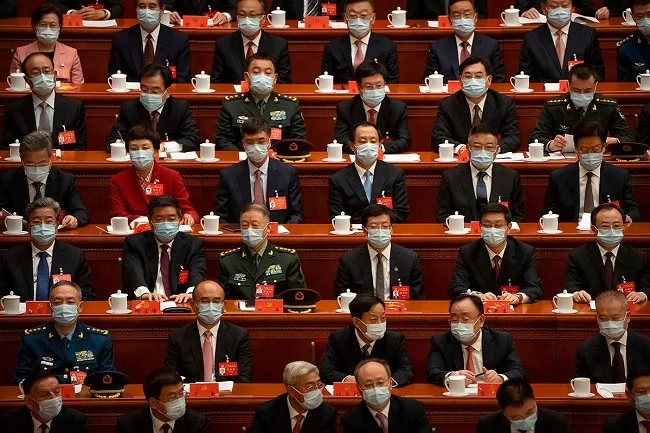
General Secretary of the Communist Party
- This is the most powerful political position within the Party and plays a central role in determining China’s ideological and political direction.
President of the People’s Republic of China
Chairman of the Central Military Commission
Politburo Standing Committee
National People’s Congress (NPC)
Provinces and Autonomous Regions - China is divided into provinces andautonomous regions. Tibet and Xinjiang, for example, have the status of autonomous regions.
Counties and Townships
In China, the presidency alone does not explain the full extent of political power. The country’s most powerful leader generally holds three key positions simultaneously:
The combination of these three positions enables the leader to exercise extensive influence over the Party, the military, and the state.
- Although Xi Jinping is China’s most powerful leader and has significantly strengthened his control over the Party, military, and government, he continues to face a longstanding governance problem: the substantial gap between orders issued at the top and their implementation at the grassroots level.
- The Fifth Plenum is not merely about tightening administrative controls or imposing stricter rules. It is also a test of whether Xi Jinping’s strict disciplinary system can improve the functioning of the Communist Party or instead intensify fear, administrative inertia, and inefficiency among officials.
Preliminary Examination QuestionQuestion: What does the term Plenum mean? (a) Joint sitting of Parliament (b) Full meeting of a Central Committee (c) Special meeting of the judiciary (d) Annual conference of the Cabinet Main Examination QuestionQuestion: “The centralization of political power does not necessarily guarantee good governance and administrative efficiency.” Critically examine this statement in the context of Xi Jinping’s leadership in China. |
Q1. What is a Plenum?Answer: A Plenum is a full meeting of an organization’s central committee. In the context of the Chinese Communist Party, it discusses party strategy, economic policy, administration, security, and leadership-related issues. Q2. How can an anti-corruption campaign lead to administrative inaction?Answer: Fear of strict disciplinary action may discourage officials from taking necessary but risky decisions. Instead of encouraging innovation, officials may focus on avoiding mistakes and satisfying their superiors. Q3. What is the CCDI?Answer: The Central Commission for Discipline Inspection is the Chinese Communist Party’s principal internal disciplinary body. Its major responsibilities include investigating violations of party discipline and corruption-related cases. Q4. What does “Self-Revolution” mean?Answer: Self-Revolution refers to the Party’s efforts to reform itself by addressing corruption, indiscipline, and organizational weaknesses. Xi Jinping’s political thought places particular emphasis on the Party’s capacity for self-correction and internal discipline. Q5. What is the difference between the CMC and the PLA?Answer: The PLA is China’s armed forces, whereas the CMC, or Central Military Commission, is the principal institution through which the Communist Party exercises leadership and control over the military. |
| Prelims: Science and Technology, Defence Technology, Missile Systems, Scramjet Engines, DRDO Mains: GS Paper III – Science and Technology, Indigenisation of Technology, Defence Manufacturing and National Security Keywords: Scramjet Engine, Hypersonic Missile, DRDO, HSTDV, Air-Breathing Propulsion, Supersonic Combustion, Atmanirbhar Bharat |
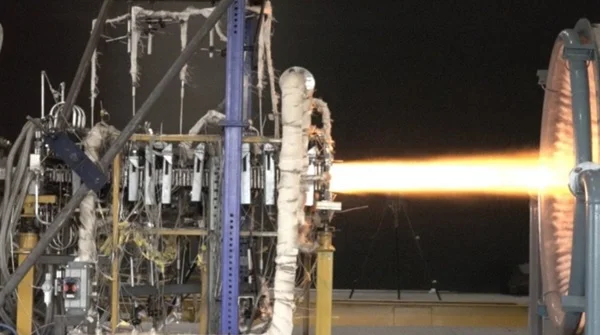
India's Ministry of Defence has floated a tender for 500 scramjet propulsion systems to support the country's hypersonic missile development programme.
|
Feature |
Turbojet |
Ramjet |
Scramjet |
|
Air compression |
Mechanical compressor |
Forward speed |
Very high forward speed |
|
Compressor and turbine |
Present |
Absent |
Absent |
|
Airflow during combustion |
Subsonic |
Subsonic |
Supersonic |
|
Thrust at standstill |
Yes |
No |
No |
|
Main application |
Jet aircraft |
Supersonic missiles |
Hypersonic vehicles and missiles |
Hypersonic missiles are designed to travel at speeds of Mach 5 or higher, meaning at least five times the local speed of sound.
UPSC Prelims Practice QuestionQ. With reference to Scramjet Engines, consider the following statements:
Which of the statements given above are correct? (a) 1 and 2 only UPSC Mains Practice QuestionDiscuss the strategic significance of indigenous scramjet propulsion technology for India's hypersonic missile programme. Examine the major technological challenges associated with its development. |
1. What is the full form of Scramjet?Scramjet stands for Supersonic Combustion Ramjet. It is an air-breathing jet engine in which combustion occurs while the airflow remains supersonic. 2. What is the difference between Ramjet and Scramjet engines?In a ramjet, airflow is slowed to subsonic speed before combustion. In a scramjet, combustion takes place in supersonic airflow. 3. Can a scramjet engine operate without a rocket booster?A scramjet requires initial acceleration to a sufficiently high speed. A rocket booster is a common method, although other acceleration systems may also be used. 4. Which DRDO programme demonstrated scramjet technology?DRDO's Hypersonic Technology Demonstrator Vehicle (HSTDV) demonstrated indigenous scramjet-powered hypersonic flight during its September 7, 2020 test. 5. Are all hypersonic missiles powered by scramjet engines?No. Hypersonic cruise missiles may use scramjet propulsion, while hypersonic glide vehicles and ballistic missiles can achieve hypersonic speeds without scramjet engines. |

The proposed authority covers the following six districts:
Article 371A provides special constitutional provisions for Nagaland. It was introduced through the Constitution (Thirteenth Amendment) Act, 1962.
Its major provisions include:
Key fact: Article 371A protects Nagaland's distinctive social, cultural and customary institutions. The FNTA arrangement is being developed within this broader constitutional framework.
UPSC Prelims Practice MCQQuestion: With reference to Article 371A of the Indian Constitution, consider the following statements:
Which of the statements given above is/are correct? (a) 1 and 2 only |
1. What is the Frontier Nagaland Territorial Authority?Answer -The FNTA is a proposed regional self-governance arrangement intended to provide legislative, executive and financial autonomy to six districts of Eastern Nagaland. 2. Which districts are covered under the FNTA?Answer -Tuensang, Mon, Longleng, Kiphire, Noklak and Shamator. 3. What is the main objective of the FNTA?Answer -To address the social, economic, educational, cultural and linguistic aspirations of Eastern Nagaland through decentralised self-governance. 4. Which constitutional article provides special provisions for Nagaland?Answer -Article 371A. |
The Uttarakhand State Disaster Response Force (SDRF) has received the ISO 9001:2015 Quality Management System Certification, becoming India’s first disaster response force to achieve this recognition. The certification was officially awarded on October 8, 2026, following an audit conducted by the Bureau of Indian Standards (BIS).

ISO 9001:2015 is an international standard for Quality Management Systems (QMS) developed by the International Organization for Standardization (ISO). It establishes requirements for systematic processes, quality assurance, documentation, accountability and continuous improvement within an organisation.
The certification helps organisations improve operational efficiency, ensure consistency in their procedures and identify areas requiring improvement. It does not directly certify that every operation will be successful; rather, it evaluates the organisation’s quality management processes.
Uttarakhand is particularly vulnerable to natural disasters because of its Himalayan geography, steep slopes, fragile mountain ecosystems and exposure to extreme weather events.
Major hazards include:
According to the reported information, more than 40 SDRF teams remain on standby around the clock across Uttarakhand to respond to emergencies.
Despite institutional improvements, several challenges remain:
The ISO 9001:2015 certification awarded to Uttarakhand SDRF represents an important step towards strengthening institutional quality management in disaster response. However, effective disaster management requires more than certification. Continuous training, modern equipment, scientific risk assessment, community participation and inter-agency coordination are essential to building a resilient Himalayan state.
|
1. Which Indian disaster response force has received ISO 9001:2015 certification? Answer :-The Uttarakhand State Disaster Response Force (SDRF). 2. When was the certification awarded? Answer :-October 8, 2026. 3. What is the main objective of ISO 9001:2015? Answer :-To establish and improve a Quality Management System through standardised processes, documentation, accountability and continuous improvement. 4. Why is disaster preparedness particularly important in Uttarakhand? Answer :-Its fragile Himalayan terrain and exposure to earthquakes, landslides, cloudbursts, flash floods and avalanches make effective preparedness and rapid emergency response essential. |

To make organic farming economically sustainable, Ladakh needs to strengthen the entire agricultural value chain.
Ladakh’s declaration as India’s first fully organic Union Territory marks an important step towards sustainable agriculture in the Himalayan region. However, the long-term success of this initiative will depend on maintaining organic standards, protecting natural resources and ensuring that farmers receive tangible economic benefits. With effective implementation and strong market connections, Ladakh could offer valuable lessons for sustainable farming in other ecologically sensitive regions of India.
Prelims Practice QuestionWhich Union Territory of India has become the first fully organic Union Territory? (a) Jammu and Kashmir Mains Practice Question“Discuss the potential of organic farming in promoting sustainable agriculture and improving rural livelihoods in ecologically fragile regions such as Ladakh. Highlight the major challenges and suggest suitable measures.” |
1. Which Union Territory has become India’s first fully organic Union Territory?Ladakh has been declared India’s first fully organic Union Territory. 2. Which districts are covered under Ladakh’s organic farming transition?The transition covers Leh and Kargil districts. 3. Which crops are associated with Ladakh’s organic agriculture?Important crops and products include apricots, sea buckthorn, buckwheat, barley and vegetables. 4. What are the major benefits of organic farming in Ladakh?Organic farming can support soil health, reduce chemical contamination, conserve the fragile ecosystem and create opportunities for better market access. 5. What are the major challenges facing organic farming in Ladakh?Key challenges include water scarcity, a short growing season, high transportation costs, certification requirements and limited access to markets. |
| Prelims: Hack the Fork; NIFTEM-K; Alternative Proteins; Precision Fermentation; Artificial Intelligence. Mains: GS Paper III—Food Processing, Science and Technology, Biotechnology, Food Security and Environmental Sustainability. Keywords: Hack the Fork 2026, NIFTEM-K, AI in food technology, alternative proteins, precision fermentation, sustainable food systems, food innovation. |

|
Aspect |
Details |
|
Host institution |
NIFTEM-K, Kundli, Haryana |
|
Dates and duration |
October 24–25, 2026; 24 hours |
|
Organisers |
France-based non-profit initiative Hack the Fork, in collaboration with NIFTEM-K |
|
Central focus |
AI applications in alternative proteins and sustainable food systems |
|
Applications |
More than 85 teams applied; 25 were shortlisted |
|
Final participation |
22 teams comprising over 90 participants from 10 states |
|
Participating institutions |
Included IITs, IIITs and the University of Delhi |
|
Inauguration |
Alice Pjie, Director of Hack the Fork |
|
Coordination |
Dr Vimal Pant, Professor at NIFTEM-K and CEO of NTIBIF |
|
Rewards |
₹1.5 lakh prize pool and opportunities to enter NIFTEM-K’s Startup Incubation Programme |
Alternative proteins are foods or ingredients developed as alternatives to conventional animal-derived products such as meat, dairy and eggs. Three major technological approaches are plant-based production, fermentation and animal-cell cultivation. These approaches differ in their raw materials and production processes.
|
Category |
How it works |
Illustrative products |
|
Plant-based proteins |
Plant ingredients are processed and combined to achieve desired nutritional and functional properties |
Soy- or pea-based meat alternatives |
|
Fermentation-derived proteins |
Microorganisms produce protein-rich biomass or specific food ingredients |
Fungal protein and fermentation-produced dairy proteins |
|
Cultivated meat |
Animal cells are grown under controlled conditions to produce meat |
Cell-cultivated meat products |
The following are illustrative applications, rather than confirmed outcomes of the participating teams.
|
Area |
Potential AI application |
Practical value |
|
Product formulation |
Predict suitable ingredient combinations |
Reduce trial-and-error experimentation |
|
Nutritional optimisation |
Compare formulations against nutritional targets |
Support better-balanced product development |
|
Fermentation |
Analyse production data and predict process performance |
Improve consistency and identify problems early |
|
Food safety |
Flag unusual patterns in sensor or inspection data |
Support timely investigation |
|
Shelf-life management |
Estimate deterioration using storage and product data |
Improve inventory decisions |
|
Food waste reduction |
Forecast demand and identify surplus |
Reduce avoidable losses |
|
Consumer preferences |
Analyse feedback on taste, texture and price |
Guide product improvements |
|
Challenge |
Why it matters |
|
Limited quality data |
AI predictions may be unreliable when datasets are small or unrepresentative |
|
High development costs |
Equipment, experimentation and pilot production can be expensive |
|
Scale-up difficulties |
A process that works in a laboratory may behave differently at industrial scale |
|
Taste and affordability |
Consumers assess products through everyday experience and price |
|
Nutritional variation |
Products differ in protein quality, sodium, fat and other nutrients |
|
Safety validation |
Novel ingredients and processes require appropriate scientific assessment |
|
Environmental uncertainty |
Energy sources, ingredients and production methods influence actual impacts |
|
Access for smaller firms |
Technical expertise and infrastructure may remain concentrated in larger organisations |
Prelims MCQWith reference to alternative proteins, consider the following statements:
Which of the statements given above are correct? (a) 1 and 2 only Mains Practice Question“Artificial intelligence can support sustainable food innovation, but technological potential alone cannot ensure food and nutritional security.” Discuss with reference to alternative proteins in India. |
1. What is Hack the Fork 2026?focusing on AI applications in alternative proteins and food systems. 2. Where is NIFTEM-K located?The National Institute of Food Technology Entrepreneurship and Management, Kundli, is located in Kundli, Haryana. 3. What are alternative proteins?They are foods or ingredients developed as alternatives to conventional animal-derived products. 4. How can AI help the food industry?AI can support ingredient selection, process optimisation, demand forecasting, quality monitoring and food-waste reduction. 5. Are alternative proteins always healthier and more sustainable?No |

| Prelims: Cyclone Arnab, Bay of Bengal, Tropical Cyclone, India Meteorological Department (IMD), Cyclone Naming, Coriolis Effect, North Indian Ocean, Disaster Management Act 2005, NDRF, Storm Surge, Coastal Vulnerability. Mains: GS Paper III: Disaster Management, Environment, Geography, Climate Change, Disaster Risk Reduction, Early Warning Systems, Coastal Resilience, Disaster Preparedness, and Institutional Coordination. |
On October 26, 2026, the India Meteorological Department (IMD) reported that a deep depression over the east-central and adjoining southeast Bay of Bengal intensified into Cyclonic Storm Arnab.

|
Particular |
Details |
|
Name |
Cyclone Arnab |
|
Name contributed by |
Bangladesh |
|
Formation region |
East-central and adjoining southeast Bay of Bengal |
|
Current status |
Cyclonic Storm |
|
Date of intensification |
October 26, 2026 |
|
Monitoring agency |
India Meteorological Department |
|
Expected direction |
West-northwestwards, followed by northwestwards |
|
Expected landfall |
Andhra Pradesh–Yanam coast |
|
Expected landfall area |
Between Bapatla and Visakhapatnam |
|
Expected landfall date |
October 28, 2026 |
|
Forecast wind speed near landfall |
115–125 km/h, gusting up to 140 km/h |
|
Major states under alert |
Andhra Pradesh and Odisha |
|
System |
Maximum sustained wind speed |
|
Depression |
31–49 km/h |
|
Deep Depression |
50–61 km/h |
|
Cyclonic Storm |
62–88 km/h |
|
Severe Cyclonic Storm |
89–117 km/h |
|
Very Severe Cyclonic Storm |
118–166 km/h |
|
Extremely Severe Cyclonic Storm |
167–221 km/h |
|
Super Cyclonic Storm |
222 km/h or more |
|
National Disaster Management Authority (NDMA) |
Provides national-level disaster management policies, guidelines and coordination. |
|
India Meteorological Department (IMD) |
Provides weather forecasting, cyclone tracking and warnings. |
|
National Disaster Response Force (NDRF) |
Conducts specialised disaster response, rescue and relief operations. |
|
State Disaster Management Authorities (SDMAs) |
Coordinate disaster preparedness and response at the state level. |
|
District Disaster Management Authorities (DDMAs) |
Coordinate local preparedness, evacuation, emergency response and relief operations. |
|
Disaster Management Act, 2005 |
Provides the institutional and legal framework for disaster management in India. It focuses on prevention, mitigation, preparedness, response and recovery. |
Prelims MCQQ. With reference to Cyclone Arnab, consider the following statements:
Which of the statements given above are correct? A. 1 and 2 only B. 2 and 3 only C. 1 and 3 only D. 1, 2 and 3 Mains Practice QuestionQ. Discuss the vulnerability of India's eastern coast to tropical cyclones. |
What is Cyclone Arnab?A tropical cyclone that developed over the Bay of Bengal and intensified into a cyclonic storm on October 26, 2026. When is Cyclone Arnab expected to make landfall?Around October 28, 2026, between Bapatla and Visakhapatnam. Which states are likely to be affected?Andhra Pradesh, Southern and coastal Odisha. Which country contributed the name Arnab?Bangladesh. Which agency monitors Cyclone Arnab?The India Meteorological Department (IMD). |
| Prelims: Awards and honours; Indian music and culture; Assam Mains: GS I – Indian culture; GS II – Centre–State cultural initiatives; GS IV – role of art and artists in promoting social harmony Keywords: Bhupen Hazarika, Usha Mangeshkar, Assam, Bharat Ratna, birth centenary, Indian music, cultural heritage |

|
Feature |
Details |
|
Award name |
Bharat Ratna Dr. Bhupen Hazarika National Award |
|
Instituted by |
Government of Assam |
|
First recipient |
Usha Mangeshkar |
|
Award presentation |
November 29, 2026 |
|
Venue |
Bharat Mandapam, New Delhi |
|
Presenter |
Prime Minister Narendra Modi, as announced |
|
Frequency |
Once every three years |
|
Award components |
₹10 lakh and a citation |
|
Eligible fields |
Music, arts or cinema |
The award’s name honours Dr. Hazarika, who received the Bharat Ratna posthumously in 2019. The new Assam government award is a separate award.
Prelims MCQThe inaugural Bharat Ratna Dr. Bhupen Hazarika National Award will be presented to whom? A. Kavita Krishnamurthy Mains QuestionDiscuss how state-supported cultural awards and commemorations can contribute to the preservation of India’s diverse artistic heritage. |
1. Who will receive the first Bhupen Hazarika National Award?Singer Usha Mangeshkar. 2. Who instituted the award?The Government of Assam. 3. When and where is the award scheduled to be presented?At Bharat Mandapam in New Delhi on November 29, 2026. 4. What does the award comprise?A cash prize of ₹10 lakh and a citation. 5. Is this the same as the Bharat Ratna?No. The award is instituted by the Assam government. Dr. Bhupen Hazarika separately received the Bharat Ratna posthumously in 2019. |
| Prelims: Periodic Labour Force Survey (PLFS), NSO, MoSPI, Gig and Platform Workers, LFPR, WPR, Unemployment Rate. Mains: GS Paper II Gender Equality and Social Security; GS Paper III—Employment, Inclusive Growth and the Indian Economy. Keywords: PLFS Revamp 2027, Digital Platform Workers, Unpaid Care Work, Gig Economy, Labour Statistics, Women’s Workforce Participation. |

|
Indicator |
Meaning |
|
Labour Force Participation Rate (LFPR) |
Percentage of the population working, seeking work or available for work. |
|
Worker Population Ratio (WPR) |
Percentage of the population that is employed. |
|
Unemployment Rate (UR) |
Percentage of unemployed persons within the labour force. |
These indicators must be interpreted with reference to the specified age group and measurement approach. Under Current Weekly Status (CWS), activity is assessed over the preceding seven days.
The existing experimental approach did not capture an adequate number of digital platform workers. The proposal therefore introduces a separate Second Stage Stratum (SSS)—a household sampling category—to improve their representation. The revised design envisages:
An additional screening question will identify households with members who engaged in digital platform work during the specified reference period.
New questions will cover:
These questions will apply to persons aged 15 years and above, in both rural and urban areas, during the first survey visit, enabling annual reporting.
Fresh samples for the 2027–2028 survey cycle will use an updated sampling frame. The revision seeks to reflect changes in urbanisation, new settlements and administrative boundaries, improving the survey’s representation of the population.
During January–March 2027, monthly estimates will pool samples from the existing and updated frames. Relative Standard Error estimates will not be published for these three months.
The proposed changes could strengthen policymaking in several ways:
The reform has practical implications for India’s employment and development policies.
These are potential policy applications of improved data, rather than benefits guaranteed by the survey redesign.
The proposed PLFS revamp from January 2027 could provide a more complete picture of India’s changing world of work. Its value will depend on accurate implementation and the use of findings to improve employment opportunities, recognise care responsibilities and strengthen worker protection.
Prelims MCQWith reference to the proposed PLFS changes from January 2027, consider the following statements:
Which of the statements given above are correct? (a) 1 and 2 only Mains Question“Reliable labour statistics must capture both emerging employment arrangements and unpaid contributions to household well-being.” Discuss the significance and implementation challenges of the proposed PLFS revamp. |
1. What is the PLFS?The Periodic Labour Force Survey is conducted by the NSO to measure employment, unemployment and labour-force participation in India. 2. When are the proposed PLFS changes expected?The changes are proposed from January 2027, following the October 2026 announcement and consultation process. 3. Why is a separate category proposed for platform workers?The experimental approach used in 2026 did not capture enough platform workers. A dedicated sampling category aims to improve their representation. 4. Which unpaid activities will the revised survey measure?It will cover own-use production of goods, unpaid household and caregiving activities, volunteering and unpaid trainee work. 5. Will unpaid household work automatically count as employment?No. Measuring an activity and classifying it as employment are separate statistical decisions. The proposal does not automatically turn all unpaid domestic work into employment. |