New
Hindi Medium: (Delhi) - GS Foundation (P+M) : 21st Sept. 2026, 11:30 AM Hindi Medium: (Prayagraj) - GS Foundation (P+M) : 22nd Sept. 2026, 8:00 AM English Medium: (Delhi) - GS Foundation (P+M) : 6th Aug 2026 English Medium: (Prayagraj) - GS Foundation (P+M) : 19th Aug 2026, 11:00 AM Hindi Medium: (Delhi) - GS Foundation (P+M) : 21st Sept. 2026, 11:30 AM Hindi Medium: (Prayagraj) - GS Foundation (P+M) : 22nd Sept. 2026, 8:00 AM English Medium: (Delhi) - GS Foundation (P+M) : 6th Aug 2026 English Medium: (Prayagraj) - GS Foundation (P+M) : 19th Aug 2026, 11:00 AM

Current Affairs for 08 September 2026

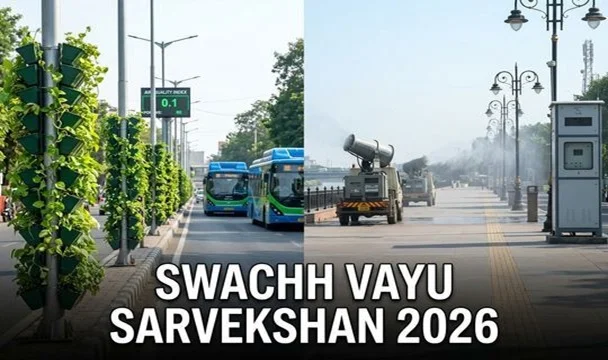
Swachh Vayu Sarvekshan 2026: Lucknow Tops Million-Plus Cities, Indore Ranks Second

Prelims: Environment & Ecology | Air Pollution | NCAP | PM10 | NAAQS | CPCB | Urban Governance
Mains: GS Paper III: Environmental Pollution and Degradation, Conservation, Urbanisation and Environmental Governance
Keywords: Swachh Vayu Sarvekshan, National Clean Air Programme, NCAP, PM10, NAAQS, CPCB, Non-Attainment Cities, Air Pollution, Road Dust, Electric Mobility, Urban Governance, Airshed Management, Waste Management, and Particulate Matter

Why in News?

  • Lucknow has secured the first position among million-plus cities in the Swachh Vayu Sarvekshan 2026.
  • Indore secured the second position, while Jabalpur ranked third.
  • The survey evaluates cities on their efforts to control major sources of air pollution such as road dust, waste, vehicles and industries.
  • Despite topping the ranking, Lucknow's annual PM10 concentration remains above India's prescribed ambient air-quality standard.

What is Swachh Vayu Sarvekshan?

  • Swachh Vayu Sarvekshan (SVS) is a national assessment of cities covered under the National Clean Air Programme (NCAP).
  • It encourages cities to identify pollution sources, implement targeted interventions and strengthen urban air-quality management.

Swachh Vayu Sarvekshan 2026 Rankings

Population Category

First

Second

Third

More than 10 lakh

Lucknow

Indore

Jabalpur

3–10 lakh

Rourkela

Firozabad & Guntur – Joint

Amravati

Below 3 lakh

Kalinga Nagar

Angul

Talcher

Awards were also introduced for municipal wards that demonstrated improvements in air-quality management.

Why Did Lucknow Rank First?

Lucknow adopted several measures aimed at controlling different sources of urban air pollution.

  1. Electric Waste Collection VehiclesThe city added electric vehicles to its waste collection fleet.
  2. This can help reduce: Diesel Consumption Vehicular Emissions Urban Air Pollution
  3. Mechanised Road Sweeping: Mechanised sweepers have been deployed to control road dust. Road and resuspended dust are important contributors to particulate pollution in many Indian cities.
  4. Legacy Waste Management: The city has also undertaken measures to manage legacy waste accumulated at old dumping sites. Scientific management of such waste can reduce dust, waste burning and local environmental pollution.
  5. Multi-Sector Pollution Control: Lucknow's performance reflects interventions across several sectors: Waste Management + Road Dust Control + Cleaner Vehicles + Urban Management This integrated approach helped the city secure the top position.

Why Did Jabalpur Perform Well?

Jabalpur's major interventions included:

  • A waste-to-energy plant
  • 100% waste collection
  • Scientific waste disposal
  • Mechanised street sweeping
  • Promotion of electric vehicles

How Did the Ranking Change from the Previous Year?

  • In the previous survey, Indore topped the million-plus population category, followed by Jabalpur. Agra and Surat jointly occupied the third position.
  • Bottom Five Among Million-Plus Cities:
  • The bottom five cities in the million-plus category included: Chennai, Jamshedpur, Kota, Kolkata, Madurai
  • Among India's major metropolitan cities: Delhi - 30th, Mumbai -37th 
  • Their rankings highlight the complexity of managing air pollution in large and densely populated urban centres.

Key Parameters of Swachh Vayu Sarvekshan

  • Cities are assessed on their performance across multiple pollution-control areas.
  • Waste Management: Assessment includes scientific collection, processing and disposal of municipal solid waste.
  • Road Dust Control: Cities are evaluated on measures such as mechanised road sweeping and dust-control practices.
  • Construction and Demolition Dust: Measures to control dust generated from construction and demolition activities are assessed.
  • Vehicular Pollution: Cities receive recognition for measures aimed at reducing transport-related emissions and promoting cleaner mobility.
  • Industrial Pollution: Monitoring and control of emissions from industrial activities form another important component.
  • PM10 Reduction: Actual improvement in PM10 concentrations is also considered.
  • However, improvement in PM10 concentration carries only about 2.5% weightage in the overall assessment.

What are National Ambient Air Quality Standards?

  • The National Ambient Air Quality Standards (NAAQS) prescribe permissible levels of major air pollutants in ambient air.
  • For PM10, India's prescribed annual average standard is: 60 µg/m³
  • Lucknow's reported annual concentration of around 137 µg/m³ therefore remains significantly above the prescribed standard despite substantial improvement from earlier levels.

What is the National Clean Air Programme?

  • The National Clean Air Programme (NCAP) was launched by the Government of India in: January 2019
  • It provides a national framework for tackling air pollution in targeted Indian cities.
  • The programme seeks to improve air quality through city-specific action plans, monitoring, pollution-control measures and coordination between different levels of government.

How is NCAP Funded?

Air-quality improvement programmes receive financial support through multiple channels.

These include:

  • Union Ministry of Environment, Forest and Climate Change
  • 15th Finance Commission grants
  • Convergence with funds from the Ministry of Housing and Urban Affairs
  • Support through programmes of the Ministry of Heavy Industries

Significance of Swachh Vayu Sarvekshan

1. Promotes Competitive Federalism

Ranking cities encourages urban administrations to compete in adopting better pollution-control measures.

2. Strengthens Municipal Accountability

Urban local bodies become active stakeholders in air-quality management.

3. Encourages Source-Based Intervention

The survey promotes targeted action against road dust, waste burning, construction emissions, vehicles and industries.

4. Promotes Best-Practice Sharing

Successful interventions adopted by cities such as Lucknow, Indore and Jabalpur can be studied and replicated by other cities.

5. Links Environment with Urban Governance

Air quality is increasingly treated not merely as an environmental issue but also as a question of transport planning, waste management, infrastructure and municipal governance.

Prelims MCQs

Q. Consider the following statements regarding PM10:

  1. PM10 refers to particulate matter with an aerodynamic diameter of 10 micrometres or less.
  2. Road dust and construction activities can contribute to PM10 pollution.
  3. PM10 is exclusively produced by vehicular emissions.

Which of the statements given above are correct?

A. 1 only
B. 1 and 2 only
C. 2 and 3 only
D. 1, 2 and 3

Mains Question

“A high ranking in clean-air governance does not necessarily imply attainment of clean-air standards.” Discuss in the context of Swachh Vayu Sarvekshan 2026 and India's National Clean Air Programme.

FAQs

What is Swachh Vayu Sarvekshan?

Swachh Vayu Sarvekshan is a national assessment framework that evaluates cities covered under the National Clean Air Programme on their efforts and performance in reducing different sources of air pollution.

Which city topped Swachh Vayu Sarvekshan 2026?

Lucknow topped the million-plus population category, followed by Indore and Jabalpur.

When was the National Clean Air Programme launched?

The National Clean Air Programme was launched in January 2019.

What is India's annual standard for PM10?

The prescribed annual average standard for PM10 under India's National Ambient Air Quality Standards is 60 µg/m³.

What is the main objective of NCAP?

NCAP aims to improve air quality in targeted Indian cities through pollution monitoring, city-specific action plans, source-based interventions and coordinated governance.

Army Launches AASHVAST Lab to Identify Chinese Components in Drones

Prelims: Defence Technology, Drones/UAVs, Cybersecurity, Electronic Warfare, GPS Spoofing & Jamming.
Mains GS-III: Science & Technology, Defence Indigenisation, Cybersecurity, Emerging Technologies.
Keyword: National Security, Technological Sovereignty, Atmanirbhar Bharat in Defence, Cyber Resilience.

Why in News?

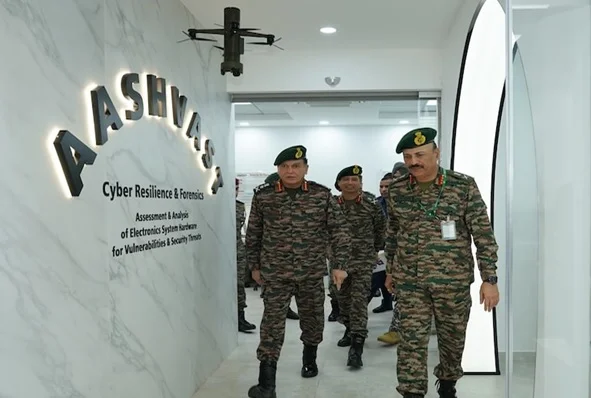
The Indian Army has established the AASHVAST facility in New Delhi to examine the electronic hardware, firmware and software used in military drones.
Important Points

  • Army Chief General Dhiraj Seth inaugurated the facility on August 14, 2026. The facility is aimed at strengthening the security and reliability of critical defence electronics.
  • AASHVAST stands for Assessment and Analysis of Electronic Systems Hardware for Vulnerabilities and Security Threats
  • The facility can help identify potentially embedded Chinese components and other security vulnerabilities. 
  • It checks for hidden passwords, encryption keys and remote-access mechanisms. 
  • It verifies whether drones can receive software updates only from authorised manufacturers. 
  • It also assesses risks related to GPS spoofing and jamming
  • AASHVAST is designed as an air-gapped and read-only facility, operating offline without modifying the equipment under examination. 
  • It also supports the growth of India’s domestic defence ecosystem.

What is AASHVAST?

  • AASHVAST stands for Assessment and Analysis of Electronic Systems Hardware for Vulnerabilities and Security Threats.
  • The AASHVAST suite was developed by QuickPay Tech for the Directorate General of Electronics and Mechanical Engineering (DG EME) as an analysis and validation system for assessing security vulnerabilities in defence electronics.
  • The facility is designed to assess the security and integrity of electronic systems used in critical defence platforms.
  • The system focuses on an important area that conventional physical inspections may overlook-the security of firmware and embedded software

Key Features 

The AASHVAST facility has been designed as an air-gapped and read-only system.

This means:

  • It operates offline.
  • It does not write or modify data on the equipment being examined.
  • Software can be extracted from a drone's flight controller or camera payload.
  • Stored software images can also be analysed.
  • Identified vulnerabilities are categorised according to their severity.
  • Technical findings are converted into a simple security assessment.

The final findings are compiled into a single security record that can be used by both technicians and officers responsible for accepting the equipment.

What Does the AASHVAST Lab Check?

The facility examines both the hardware and software of military drones. Key checks include:

  • Verifying whether the drone and its components are genuine.
  • Detecting unauthorised hardware or software modifications.
  • Identifying hidden passwords and encryption keys.
  • Detecting possible remote-access mechanisms.
  • Checking whether software updates can be received only from authorised manufacturers.
  • Examining location-related controls and navigation functions.
  • Assessing vulnerabilities related to GPS spoofing and jamming.

Why Is Drone Software Security Important?

A drone may appear physically secure during a conventional inspection, but vulnerabilities can remain hidden in its firmware, software and electronic systems.

A detailed software examination can reveal:

  • Hidden credentials and access keys
  • Unauthorised command pathways
  • Remote-access features
  • Modified flight restrictions
  • Other software-based vulnerabilities

Such vulnerabilities could potentially allow unauthorised access or affect the drone's operation.

Why Is the AASHVAST Lab Important?

The facility is important because modern military drones rely heavily on software and electronic systems for navigation, communication and mission execution.

By examining these systems before deployment, the Army can:

  • Improve the cybersecurity of military drones.
  • Identify hidden security vulnerabilities.
  • Detect unauthorised modifications.
  • Reduce risks from compromised components.
  • Strengthen the cyber resilience of critical defence platforms.
  • Improve the reliability and operational readiness of unmanned systems.
  • Support India's growing domestic defence ecosystem.

Challenges

  • Rapid technological changes: Drone technology and software are developing quickly, making regular security testing necessary. 
  • Hidden vulnerabilities: Some security weaknesses may remain difficult to detect even after detailed testing. 
  • Dependence on foreign components: Identifying and replacing potentially risky foreign hardware and software can be challenging. 
  • Cyber threats: Hackers and adversaries can use malware, remote access or other methods to target drone systems. 
  • GPS spoofing and jamming: Disrupting a drone’s navigation can affect its operation during military missions. 
  • Software supply-chain risks: Unauthorised changes or compromised software updates can create security risks. 
  • Need for skilled personnel: Advanced testing requires trained experts in electronics, software and cybersecurity. 
  • Continuous monitoring: Drone security cannot be a one-time exercise; systems need regular testing and updates. 

Conclusion

The AASHVAST Lab is an important step towards improving the security of India’s military drones. It will help the Indian Army detect hidden vulnerabilities, unauthorised changes and security risks in drone hardware and software. The facility will strengthen the security, reliability and operational readiness of military unmanned systems.

Prelims Practice Question 

Q. With reference to the AASHVAST facility, consider the following statements:

  1. It has been established by the Indian Army in New Delhi. 
  2. It is designed to examine the hardware, firmware and software of military drones. 
  3. It can assess vulnerabilities related to GPS spoofing and jamming. 
  4. It operates as an air-gapped and read-only facility. 

Which of the statements given above are correct?

A. 1 and 2 only
B. 1, 2 and 3 only
C. 1, 2, 3 and 4
D. 2 and 4 only

Mains practice Question

Q. What is the significance of the AASHVAST facility for India’s defence cybersecurity and operational readiness? Discuss the major challenges in securing military drones from cyber and electronic threats.

FAQs

Q1. What is AASHVAST?

AASHVAST stands for Assessment and Analysis of Electronic Systems Hardware for Vulnerabilities and Security Threats.

Q2. Where has the AASHVAST facility been established?

It has been established by the Indian Army in New Delhi.

Q3. What is the main purpose of AASHVAST?

It examines military drones for hardware, firmware and software vulnerabilities, including unauthorised modifications and potential security risks.

Q4. Why is AASHVAST important?

It strengthens the cybersecurity, reliability and operational readiness of military unmanned systems.

Q5. What threats can affect military drones?

Major threats include GPS spoofing, jamming, malware, unauthorised remote access and compromised software or firmware.

Global 6G Network Initiative: India Joined Mission

Prelims: 6G Technology, Bharat 6G Mission, India Semiconductor Mission, G20
Mains: Science & Technology, Digital Infrastructure, India-US Relations, Emerging Technologies
Keywords: 6G | Bharat 6G Mission | India-US Technology Cooperation | Artificial Intelligence | Semiconductor Mission 2.0 | G20 Innovation Ministerial | Digital Infrastructure | Telecom Security | Emerging Technologies

Why in News?

  • India has joined the United States and 24 other countries in an international initiative aimed at shaping the development and deployment of next-generation 6G telecommunications networks.
  • The US Department of Commerce announced India’s participation on 7 September 2026, stating that the initiative seeks to ensure that future communication networks reflect shared security interests, strengthen technological competitiveness and promote innovation in 6G.

What is 6G Technology?

  • 6G (Sixth Generation) refers to the next generation of wireless communication technology after 5G. It is expected to provide extremely high-speed connectivity, ultra-low latency and much greater integration between humans, machines, sensors and intelligent digital systems.
  • Unlike earlier generations that primarily focused on improving mobile communication, 6G is expected to support a much broader digital ecosystem involving Artificial Intelligence, robotics, autonomous systems, smart factories, Internet of Things (IoT), immersive communication and machine-to-machine connectivity.

Thus, the transition can broadly be understood as:

  • 4G = Mobile Internet
  • 5G = Connected Devices
  • 6G = Intelligent Connected Ecosystem

What is the Global 6G Initiative?

India has joined the US and 24 other countries in an effort to cooperate on the future development of 6G networks.

The initiative focuses particularly on:

  • Network Security
  • Technological Innovation
  • Global Competitiveness
  • Network Resilience
  • Interoperability
  • Trusted Artificial Intelligence

Participating countries are expected to increase cooperation on 6G development and related technological issues over the coming period. India’s participation also provides an opportunity to contribute to discussions surrounding future international telecommunications standards.

India-US Technology Cooperation

  • India’s entry into the initiative came against the backdrop of expanding India-US cooperation in critical and emerging technologies.
  • During the bilateral meeting between Jitin Prasada and Howard Lutnick, the two countries discussed strengthening cooperation in three important technological areas:Semiconductors + Artificial Intelligence + Data Centres
  • India also encouraged greater US investment under India Semiconductor Mission 2.0 (ISM 2.0) and proposed deeper cooperation in artificial intelligence, including mechanisms relating to AI safeguards.
  • This indicates that India-US technology cooperation is gradually expanding from individual sectors towards a wider strategic technology ecosystem.

G20 Innovation Ministers’ Meeting 2026

  • The G20 Innovation Ministers’ Meeting was held on 1–2 September 2026 in Chapel Hill, North Carolina, United States.
  • It was hosted by the US Department of Commerce and the White House Office of Science and Technology Policy (OSTP).
  • At the conclusion of the meeting, G20 Ministers reached consensus on an Innovation Ministerial Statement, which recognised the potential of emerging technologies to increase productivity, prosperity and economic opportunities.

Bharat 6G Mission

  • India is simultaneously pursuing its domestic 6G ambitions through the Bharat 6G Mission.
  • The broader objective is to make India an important global centre for the development of 6G technologies, intellectual property, products and affordable telecom solutions.
  • India also seeks greater participation in international standard-setting processes.
  • This represents an important change in India's telecom strategy.

Why is Joining the Global 6G Initiative Important for India?

1. Role in Global Standard Setting

Telecommunications technologies operate according to international standards. Early participation in the development of 6G could give India greater influence over future technological standards rather than merely adopting standards developed elsewhere.

2. Strengthening Technology Security

Telecommunications networks form part of a country's critical digital infrastructure. Cooperation with international partners can help India develop more secure, trusted and resilient communication networks.

3. Boost to Indian Innovation

The initiative could provide greater opportunities for Indian universities, research institutions, telecom companies and startups to participate in global research and development ecosystems.

4. Semiconductor Opportunity

Advanced telecommunications networks require sophisticated semiconductor chips. Therefore, India's 6G ambitions can complement the India Semiconductor Mission and domestic electronics manufacturing ecosystem.

5. Strategic Technology Partnership

6G is increasingly linked with AI, autonomous systems, robotics, cloud computing and advanced computing. Cooperation in these sectors can further strengthen the strategic technology dimension of India-US relations.

Challenges Before India

  • Despite its growing ambitions, India faces several challenges in becoming a major 6G power.
  • The country needs significantly greater investment in advanced telecom research, semiconductor manufacturing, patents and intellectual property creation.
  • India will also need to ensure affordable deployment of future networks because advanced communication infrastructure must reach rural and remote areas rather than remain concentrated in major urban centres.
  • Cybersecurity, data protection, spectrum management and dependence on imported high-end telecom components will remain important concerns.
  • Another challenge will be balancing cooperation with different technology powers while maintaining India's objective of strategic autonomy and technological sovereignty.

Way Forward

  • India should use its participation in the global initiative to increase its role in international 6G standard-setting institutions and strengthen collaboration between government, academia, startups and telecom companies.
  • Investment in indigenous chips, telecom equipment, AI systems, satellite communication and advanced wireless research must be accelerated.
  • India should also focus on developing affordable 6G solutions suitable for developing countries. Such an approach could enable India to emerge as a major provider of digital infrastructure solutions to the Global South.
  • The long-term objective should be to move from “Make in India” towards “Innovate in India and Standardise Globally.”

Conclusion

  • India joining the international 6G initiative with the United States and other partner countries is more than a telecommunications development. It reflects India's ambition to participate in shaping the architecture of the next global digital economy.
  • Combined with the Bharat 6G Mission, semiconductor manufacturing, AI development and data-centre expansion, India has an opportunity to move higher in the global technology value chain.
  • 5G connected India to the digital revolution; 6G offers India an opportunity to help shape it.

Prelims MCQs

Q. The G20 Innovation Ministers’ Meeting 2026 was held in:

A. New Delhi
B. Geneva
C. Chapel Hill, North Carolina
D. Tokyo

Mains Question

“India’s participation in global 6G initiatives represents its transition from a technology consumer to a potential technology standard-setter.” Discuss the significance and challenges of India’s emerging 6G strategy.

FAQs

What is 6G?

6G is the sixth generation of wireless mobile communication technology and the successor to 5G. It is expected to provide faster connectivity, lower latency and deeper integration of AI, machines and digital networks.

What is Bharat 6G Mission?

Bharat 6G Mission is India's initiative to develop domestic capabilities in next-generation telecommunications technology and increase India's contribution to global 6G intellectual property, products and standards.

Why is 6G strategically important?

6G could become critical infrastructure for AI, robotics, autonomous systems, smart industries and machine-to-machine communication. Therefore, control over its technologies and standards has economic as well as strategic importance.

NITI Aayog Launches PACT for India’s Electric Freight Revolution

Prelims: PACT, NITI Aayog, e-FAST India, ZET Marketplace, Electric Freight Vehicles, Zero-Emission Freight.
Mains GS-III: Environment, Infrastructure & Science & Technology.
Keywords: NITI Aayog PACT, Platform for Aggregating Clean Transport, Electric Freight Vehicles, Electric Trucks, Zero-Emission Freight, e-FAST India Summit 2026, ZET Marketplace, Electric Mobility, Green Logistics, Charging Infrastructure, Transport Decarbonisation, Clean Transportation, Sustainable Freight Transport, Clean Energy Transition.

Why in News?

NITI Aayog has launched the Platform for Aggregating Clean Transport (PACT) to accelerate the adoption of electric trucks and promote zero-emission freight transport in India.

Important Points

  • PACT stands for Platform for Aggregating Clean Transport. 
  • Launched at: 5th e-FAST India Summit 2026. 
  • It will aggregate demand for electric freight vehicles from shippers and logistics companies. 
  • It will connect fleet operators, truck manufacturers, financiers, charging providers and technology companies. 
  • Focus is on deploying electric medium- and heavy-duty trucks along identified freight corridors. 
  • Electric freight vehicle deployments rose from 201 in FY2024-25 to 826 in FY2025-26. 
  • 3,000+ electric medium- and heavy-duty trucks were operating in India as of 7 September 2026. 
  • ZET Marketplace was also introduced to facilitate partnerships among electric-freight stakeholders. 
  • PACT aims to address key challenges such as charging infrastructure, financing, vehicle demand and coordination
  • Significance: It can help move India’s electric freight sector from small pilot projects to large-scale commercial deployment.

What is PACT?

PACT stands for Platform for Aggregating Clean Transport.

It is designed to:

  • Aggregate demand for electric freight vehicles from shippers and logistics companies.
  • Connect freight customers with electric truck manufacturers.
  • Link fleet operators with financing institutions.
  • Help charging-point operators identify commercially viable locations.
  • Connect businesses with technology providers.
  • Support the deployment of electric trucks along major freight corridors.

Why is PACT Important?

  • Electric trucks are still at an early stage in India. One major challenge is the lack of coordination between different stakeholders.
  • For example, manufacturers need clear demand before increasing production, while charging companies need enough electric trucks on the road to justify investment in charging stations.
  • PACT aims to bridge this gap by bringing these stakeholders together.

Major Benefits

  • Boosts electric truck adoption by creating clearer demand signals.
  • Supports charging infrastructure along important freight corridors.
  • Improves access to financing for electric-freight projects.
  • Helps manufacturers plan production based on market demand.
  • Encourages private investment in clean freight transport.
  • Promotes zero-emission mobility and reduces dependence on diesel.
  • Helps develop scalable and commercially viable electric freight business models.

Growth of Electric Freight Vehicles

According to NITI Aayog, electric freight vehicle deployments have increased significantly:

Financial Year

Electric Freight Vehicle Deployments

FY 2024-25

201

FY 2025-26

826

The government also reported that more than 3,000 electric medium- and heavy-duty trucks were operating in India as of 7 September 2026.This shows growing interest in electric freight, although the sector is still at an early stage.

ZET Marketplace

The ZET Marketplace was also introduced at the e-FAST India Summit 2026.

It aims to connect:

  • Electric truck manufacturers
  • Logistics companies
  • Charging providers
  • Financial institutions
  • Technology companies

The platform can help these stakeholders identify business opportunities and form partnerships for zero-emission freight projects.

Key Challenges

The success of electric freight will depend on addressing several challenges, including:

  • High upfront cost of electric trucks
  • Availability of charging infrastructure
  • Charging time
  • Vehicle range
  • Payload requirements
  • Battery life and health
  • Access to suitable financing
  • Operating and maintenance costs

Zero-Emission Freight

Zero-Emission Freight means transporting goods without producing direct emissions of greenhouse gases or air pollutants from the vehicle during operation.

About NITI Aayog

  • NITI Aayog is the Government of India’s premier public policy think tank. 
  • It is responsible for accelerating economic development and promoting cooperative federalism
  • It works to involve State Governments in the economic policymaking process

About e-FAST India

  • e-FAST India is a NITI Aayog-led platform
  • It aims to accelerate zero-emission freight transport in India. 
  • It focuses on the medium- and heavy-duty vehicle segments
  • It brings together key stakeholders, including government, OEMs, logistics service providers, financiers, shippers and charging-point operators
  • The platform promotes collaboration between government and industry to support the transition to clean freight transport.

Conclusion

PACT is an important step towards building a coordinated electric freight ecosystem in India. By bringing together demand, vehicle manufacturers, charging infrastructure, financing and technology providers, the platform aims to move electric freight beyond small pilot projects and towards large-scale commercial deployment.

Prelims practice question MCQs

Consider the following statements regarding PACT:

  1. PACT stands for Platform for Aggregating Clean Transport. 
  2. It has been launched by NITI Aayog. 
  3. It focuses on promoting zero-emission freight transport. 

Which of the statements given above is/are correct?

A. 1 only
B. 1 and 2 only
C. 2 and 3 only
D. 1, 2 and 3

Mains practice Question

Q. “India’s transition towards zero-emission freight requires ecosystem-level coordination rather than merely increasing electric vehicle production.” Discuss the role of NITI Aayog’s PACT initiative in addressing this challenge.

FAQs

Q1. What is PACT?

PACT stands for Platform for Aggregating Clean Transport, launched by NITI Aayog to accelerate zero-emission freight transport.

Q2. What is the main objective of PACT?

It aims to aggregate demand for electric freight vehicles and connect freight users with manufacturers, financiers, charging providers and technology companies.

Q3. What is e-FAST India?

e-FAST India is a NITI Aayog-led Electric Freight Accelerator for Sustainable Transport initiative.

Q4. What is the ZET Marketplace?

It is a platform designed to connect stakeholders involved in zero-emission trucking and facilitate commercial partnerships.

Q5. Why is PACT important for India?

It can help overcome coordination gaps related to electric truck demand, charging infrastructure, financing and vehicle deployment, supporting India’s transport decarbonisation goals.

International Literacy Day 2026: Theme, Key Facts, History, India’s Initiatives and UNESCO Literacy Prizes

Why in News?

International Literacy Day is being observed worldwide on 8 September 2026. This year's observance is particularly significant because it marks 60 years since UNESCO proclaimed International Literacy Day in 1966.

Key Facts 

Particular

Fact

Observed on

8 September 

Proclaimed by

UNESCO

Proclaimed in

1966, at UNESCO’s 14th General Conference

First observed

1967

2026 Theme

Literacy for people, the planet and prosperity

2026 Global Celebration

Chiapas, Mexico (8–9 September 2026)

Global Concern

Around 739 million youth and adults lack basic literacy skills

Related SDG

SDG 4 (Quality Education)

UNESCO Literacy Prizes

6 awards annually (3 King Sejong + 3 Confucius)

History of International Literacy Day

  • The idea of an international day dedicated to literacy emerged from growing global concern over widespread illiteracy and unequal access to education.
  • UNESCO proclaimed 8 September as International Literacy Day in 1966 during the 14th session of its General Conference. The first observance took place in 1967. 

What Does Literacy Mean?

  • Traditionally, literacy referred primarily to the ability to read, write and understand basic written information. However, contemporary societies require a much broader range of capabilities.
  • Modern literacy can be understood through several dimensions:
    • Foundational literacy: basic reading, writing and comprehension.
    • Numeracy: ability to understand and use basic mathematical concepts.
    • Digital literacy: ability to access and effectively use digital technologies.
    • Financial literacy: understanding basic financial concepts and making informed financial decisions.
    • Media and information literacy: ability to critically evaluate information and recognise misinformation.
    • Functional literacy: using literacy skills effectively in everyday life and work.
    • Environmental literacy: understanding environmental issues and making informed choices regarding sustainability.

Global Literacy Situation

  • According to UNESCO's latest data, the global literacy rate is approximately 88% among adults aged 15 years and above, while the global youth literacy rate is around 93%.
  • Approximately 739 million adults aged 15 and above still lack basic literacy skills, and around two-thirds of them are women. UNESCO also reports serious challenges in children's learning outcomes, demonstrating that school enrolment alone does not guarantee literacy.
  • Sub-Saharan Africa and Central and Southern Asia account for a particularly large proportion of adults without basic literacy skills.

The Gender Dimension

  • Literacy remains closely connected with gender equality. Women constitute around two-thirds of adults globally who lack basic literacy skills.
  • Female literacy can produce intergenerational benefits. Educated women generally have greater access to employment and information, greater capacity to participate in household decision-making and better ability to support the education and health of their children. 

Literacy in India

  • India has achieved considerable improvement in literacy since Independence, although differences persist across gender, regions and rural-urban populations.
  • According to the Periodic Labour Force Survey (PLFS) 2023–24, cited by the Ministry of Education, India's overall literacy rate reached approximately 80.9%, compared with 74.04% in Census 2011. Rural literacy stood at around 77.5%, urban literacy at 88.9%, while female literacy was about 74.6%.

ULLAS (Understanding of Lifelong Learning for All in Society)

  • ULLAS also known as the Nav Bharat Saaksharta Karyakram. It is a Centrally Sponsored Scheme aligned with the recommendations of the National Education Policy (NEP) 2020. It primarily targets people aged 15 years and above who could not obtain formal schooling.
  • The programme is being implemented for five years from FY 2022-23 to FY 2026-27, with an approved financial outlay of approximately 1,037.90 crore.
  • ULLAS focuses on five major areas:
    • Foundational literacy and numeracy
    • Critical life skills
    • Basic education
    • Vocational skills
    • Continuing education

Why is Literacy Important?

  • Economic level: Literacy strengthens human capital, improves employability and enables workers to acquire new skills. With increasing digitisation of economies, literacy is also becoming essential for accessing digital payments, banking, government services and online employment opportunities.
  • Social level: Literacy can contribute to improved health awareness, women's empowerment, reduced inequality and stronger participation in democratic institutions.
  • Political level: Citizens who can access and critically evaluate information are better equipped to understand public policies and participate meaningfully in democratic processes.

Literacy in the Digital Age

  • Being able to read a printed document is no longer sufficient for full participation in modern society. People increasingly need to navigate smartphones, digital payments, online government portals, social media, artificial intelligence tools and digital learning platforms. 
  • Technology can expand literacy programmes to remote populations through online learning, mobile applications and digital educational content. 
  • At the same time, the digital divide can reinforce existing inequalities if poor, rural, elderly or marginalised populations lack devices, connectivity or digital skills.
  • Digital literacy is also crucial for combating misinformation, disinformation, online fraud and manipulated content.

Major Challenges to Universal Literacy

  • Poverty and socio-economic inequality
  • Gender discrimination and barriers faced by women and girls
  • School dropout and irregular attendance
  • Poor foundational learning outcomes
  • Shortage of trained teachers and learning materials in some regions
  • Rural, tribal and geographically remote populations
  • Language barriers and inadequate mother-tongue learning resources
  • Digital divide and Adult illiteracy
  • Learning disruptions caused by conflict, migration and disaster
  • Gap between basic literacy and functional/digital literacy

UNESCO International Literacy Prizes

Prize

Started

Supported by

Main Focus

UNESCO King Sejong Literacy Prize

1989

Government of Republic of Korea (South Korea)


Mother-tongue and multilingual literacy

UNESCO Confucius Prize for Literacy

2005

Government of People's Republic of China


Functional literacy, technology-based learning, rural adults and out-of-school youth

FAQs

When is International Literacy Day observed?

International Literacy Day is observed every year on 8 September.

Which organisation observes International Literacy Day?

It is led globally by UNESCO (United Nations Educational, Scientific and Cultural Organization).

When was International Literacy Day proclaimed?

UNESCO proclaimed International Literacy Day in 1966, and it was first celebrated in 1967.

What is the theme of International Literacy Day 2026?

The 2026 theme is “Literacy for people, the planet and prosperity.”

Why is International Literacy Day 2026 significant?

The year 2026 marks the 60th anniversary of the proclamation of International Literacy Day.

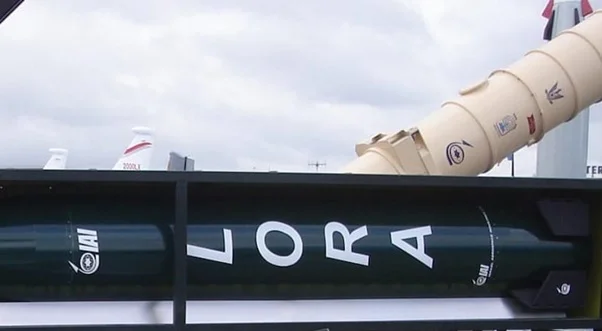
LORA Missile System: Israel’s Long-Range Ballistic Missile Successfully Tested by German Navy

Prelims: Defence Technology, Ballistic Missiles, Israel, Germany, LORA Missile, Navigation Systems
Mains: GS Paper 2: International Relations GS Paper 3: Defence Technology, Security and Indigenisation
Keywords: LORA Missile, Long Range Artillery, Israel Aerospace Industries, IAI, German Navy, Ballistic Missile, Air LORA, GPS, INS, Precision Strike, Standoff Weapon, Naval Missile, Israel-Germany Defence Cooperation

Why in News?

  • Israel Aerospace Industries (IAI) announced that the German Navy successfully completed a dual operational test of the naval version of the LORA ballistic missile.
  • The tests demonstrated the missile system’s ability to be deployed and operated from a naval platform.

What is the LORA Missile System?

  • LORA stands for Long Range Artillery.
  • It is a high-precision ballistic missile system developed and manufactured by Israel Aerospace Industries (IAI).
  • The system is designed to strike strategic targets at short-to-medium ranges while maintaining high accuracy.
  • It uses a solid-fuel propulsion system, which allows faster launch preparation and easier storage compared with many liquid-fuel missile systems.

Key Features of LORA Missile

  • Developer: Israel Aerospace Industries
  • Type: Short-to-medium-range ballistic missile
  • Maximum Range: Around 500 km
  • Warhead: Approximately 400–600 kg
  • Propulsion: Solid fuel
  • Guidance: GPS and Inertial Navigation System
  • Accuracy: Circular Error Probable of less than 10 metres according to IAI-linked open-source specifications
  • Speed: Supersonic
  • Launch Platforms: Land, naval and air platforms

How Does LORA Work?

  • After launch, the missile follows a high-altitude ballistic trajectory towards its target.
  • During flight, the missile uses its navigation and guidance systems to maintain its intended course.
  • As it approaches the target, it transitions towards a steep terminal trajectory.
  • The terminal dive improves the effectiveness and precision of the strike against designated targets.

LORA Guidance System

  • LORA primarily combines two navigation technologies.
  • GPS Navigation: Satellite-based positioning information helps the missile determine its location and correct its flight path.

Inertial Navigation System

  • The Inertial Navigation System uses onboard sensors to calculate the missile’s position, direction and movement.
  • INS is particularly important because it does not depend continuously on external signals for navigation.
  • The combination of GPS and INS improves the missile's overall accuracy and navigation reliability.

Different Variants of LORA

  • The LORA weapon family has been developed for deployment from different platforms.
  • Surface-to-Surface: The missile can be launched from land-based platforms against targets located on land.
  • Sea-to-Surface: Naval platforms can launch the missile against land-based strategic targets.
  • Sea-to-Sea: The system can also be configured for maritime strike roles.
  • Air LORA: Air LORA is an air-launched version designed as a deep standoff weapon. It enables aircraft to engage targets from considerable distances, reducing their exposure to hostile air-defence systems.

Why is the German Navy Test Significant?

  • The test demonstrated that the LORA system can operate from an operational naval platform rather than remaining limited to land-based deployment.
  • It also validated the functioning of the complete weapon system, including command infrastructure, launcher and missile.
  • For Israel, the successful test highlights the international reach of its defence technology industry.
  • For European countries, such systems can contribute to long-range precision-strike capabilities amid changing security conditions in Europe.

Strategic Importance of Naval LORA

  • A naval ballistic missile capability can significantly expand the geographical area from which precision strikes can be conducted.
  • Warships equipped with such systems can reposition before launching missiles, increasing operational flexibility.
  • The approximately 500-km strike range can allow naval forces to engage targets located deep inland while remaining offshore.
  • Such capabilities also strengthen conventional deterrence by increasing the number of potential launch locations available to military planners.

LORA and European Security

  • The test comes amid growing European investment in missile capabilities, air defence and long-range precision weapons.
  • Recent conflicts have demonstrated the growing military importance of missiles, drones and precision-strike systems.
  • Israel has emerged as an important supplier of advanced defence technologies to several European countries.
  • The LORA test therefore reflects the broader strengthening of defence-industrial cooperation between Israel and Europe.

Why are Solid-Fuel Missiles Important?

  • Solid-fuel missiles generally require less preparation before launch.
  • They can remain stored for longer periods and can be deployed more rapidly than many liquid-fuel systems.
  • This improves operational readiness and makes missile units more responsive during a military crisis.
  • Mobility and shorter preparation times can also make such systems more difficult for an adversary to detect and neutralise before launch.

Challenges

  • Ballistic missile proliferation can contribute to regional arms races.
  • GPS-dependent systems may face electronic warfare and signal-jamming challenges.
  • Advanced missile systems also require sophisticated intelligence, surveillance, reconnaissance and targeting networks.
  • The spread of long-range precision weapons can reduce warning times during military crises and increase escalation risks.

Way Forward

  • Countries need to balance technological modernisation with mechanisms for strategic stability.
  • Greater attention should be given to missile-defence capabilities and electronic warfare resilience.
  • Reliable command-and-control systems will become increasingly important as precision-strike weapons proliferate.
  • For India, continued investment in indigenous missile technology, navigation systems, sensors and integrated defence networks remains strategically important.

Conclusion

  • The successful German Navy test of the LORA missile highlights the growing importance of long-range, high-precision and multi-platform strike capabilities in modern warfare. 
  • The ability to deploy ballistic missiles from naval platforms provides greater operational flexibility and expands conventional deterrence options. 

Prelims MCQs

Q1. LORA missile system has been developed by which organisation?

A. Rafael Advanced Defense Systems
B. Israel Aerospace Industries
C. Lockheed Martin
D. MBDA

Mains Question

Discuss how the growing deployment of long-range precision-strike weapons from land, sea and air platforms is transforming conventional deterrence and modern warfare.

FAQs

What does LORA stand for?

LORA stands for Long Range Artillery.

Which country developed LORA?

The missile system was developed by Israel through Israel Aerospace Industries.

What is the range of LORA?

The missile can strike targets at ranges of up to approximately 500 km, depending on the configuration.

What type of missile is LORA?

It is a high-precision ballistic missile using solid-fuel propulsion.

What navigation system does LORA use?

It uses a combination of GPS and Inertial Navigation System (INS).

What is Air LORA?

Air LORA is an air-launched variant designed to provide aircraft with long-range standoff strike capability.

International Day of Clean Air for Blue Skies 2026: Theme, Background, Air Pollution, Climate Change and India’s steps

Why in News?

The International Day of Clean Air for Blue Skies is being observed on 7 September 2026 worldwide. 
Key Facts 

Particular

Details

Observed on

7 September

2026 Theme

Clean Air for Climate Action

Established by

United Nations General Assembly

UN Resolution

A/RES/74/212

Resolution adopted

19 December 2019

First observed

7 September 2020

Facilitated by

United Nations Environment Programme (UNEP)

Background of the day

  • The first International Day of Clean Air for Blue Skies was observed on 7 September 2020, with “Clean Air for All” as its theme. The UN invited UNEP to facilitate the observance in collaboration with relevant organisations.
  • The Day seeks to build a global community of action, recognising that air pollution often crosses political and geographical boundaries and therefore requires cooperation at the individual, local, national, regional and international levels.

International Day of Clean Air for Blue Skies 2026

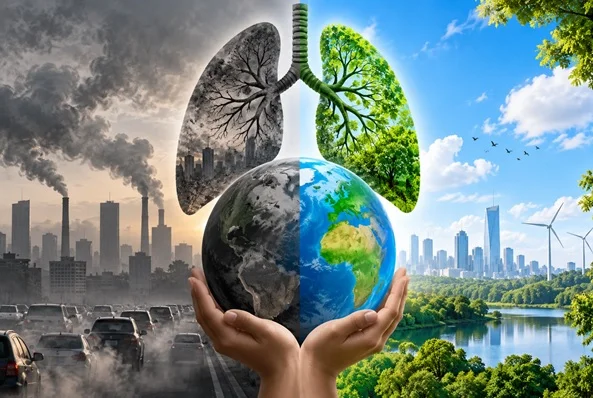
  • The 2026 observance goes beyond viewing clean air only as an environmental issue. It stresses that reducing air pollution can generate substantial benefits for health, economic prosperity and climate stability.
  • Many major sources of air pollution particularly the burning of fossil fuels and biomass also release greenhouse gases. The 2026 campaign therefore focuses on the idea Clean Air Action, Climate Action, Better Health, Stronger Economy and Climate Benefits. 
  • The campaign also highlights new findings from the Global Economic Assessment of Integrated Climate and Clean Air Action, with 25 proven measures and policy reforms demonstrating how coordinated action can produce multiple benefits.

What is Air Pollution?

  • Air pollution occurs when harmful chemical, physical or biological agents contaminate the atmosphere and alter its natural characteristics. Major sources include motor vehicles, industries, household cooking and heating, power generation, waste burning, agricultural activities and forest fires.
  • Important air pollutants include Particulate Matter (PM2.5 and PM10), Nitrogen dioxide (NO), Sulphur dioxide (SO), Carbon monoxide (CO), Ground-level ozone (O), Lead (Pb), Ammonia (NH) and Volatile organic compounds and other toxic pollutants
  • India's National Ambient Air Quality Standards cover 12 parameters, including PM2.5, PM10, SO, NO, CO, ozone, lead, ammonia, benzene, benzo(a)pyrene, arsenic and nickel.

Why is Air Pollution a Major Global Concern?

  • WHO estimates that in 2019, 99% of the global population lived in places where WHO air-quality guideline levels were not met. The combined effects of ambient and household air pollution are associated with approximately 6.7 million premature deaths annually.
  • Outdoor air pollution alone was estimated to cause around 4.2 million premature deaths in 2019, with approximately 89% of these deaths occurring in low- and middle-income countries.
  • Long-term exposure to polluted air can cause respiratory diseases, cardiovascular diseases, stroke, lung cancer and premature mortality

Air Pollution and Climate Change

  • Air pollution and climate change are closely interconnected because several activities responsible for air pollution also contribute to global warming.
  • Fossil-fuel/Biomass burning → Air Pollutants + Greenhouse Gases → Poor Air Quality + Global Warming
  • Air pollution affects ecosystems, biodiversity, agricultural productivity and economic development. 
  • The United Nations identifies air pollution as a problem that can worsen climate change, impose economic losses and reduce agricultural productivity.

Air Pollution and Sustainable Development Goals

SDG 3 (Good Health and Well-being)

Ensure healthy lives and promote well-being for all ages.

SDG 7 (Affordable and Clean Energy)

Ensure that everyone has access to affordable, reliable, sustainable, and modern energy sources

SDG 11 (Sustainable Cities and Communities)

Create cities and human settlements that are inclusive, safe, resilient, and sustainable

SDG 12 (Responsible Consumption and Production)

Ensure your consumption and production patterns are sustainable

SDG 13 (Climate Action)

Take immediate steps to combat climate change and its consequences

Measures taken by India 

  • The Ministry of Environment, Forest and Climate Change (MoEFCC) launched the National Clean Air Programme (NCAP) in January 2019 as a long-term national strategy for improving air quality.
  • The programme initially aimed at reducing particulate-matter concentrations by 20–30% from the 2017 baseline. The target was subsequently revised to achieve up to 40% reduction in PM10 levels or achievement of the national standard of 60 µg/m³ by 2025-26.
  • According to a July 2026 government update, clean-air action plans were being implemented for 130 cities. During FY 2025-26, 108 cities recorded reductions in annual PM10 concentrations compared with 2017-18; 26 achieved reductions exceeding 40%, while 14 cities met the National Ambient Air Quality Standards.
  • The Pradhan Mantri Ujjwala Yojana (PMUY) has also contributed to the transition towards cleaner household cooking fuels. By 2026, the government highlighted that the programme had expanded LPG access to more than 10 crore women, while noting that sustained usage and affordability remain important priorities.

Prelims MCQ

Q. With reference to the “International Day of Clean Air for Blue Skies”, consider the following statements:

  1. It is observed every year on 7 September.
  2. It was designated by the United Nations General Assembly in 2019.
  3. UNEP facilitates its observance in collaboration with relevant organisations.

Which of the statements given above is/are correct?

A. 1 and 2 only

B. 2 and 3 only

C. 1 and 3 only

D. 1, 2 and 3

Mains Practice Question 

Q. “Air pollution is a major challenge for public health and the environment in India.” Discuss the causes of air pollution and suggest measures to control it.

FAQs

When is the International Day of Clean Air for Blue Skies observed?

It is observed every year on 7 September.

Who established the International Day of Clean Air for Blue Skies?

It was designated by the United Nations General Assembly (UNGA) in 2019.

Which UN resolution established the Day?

It was established through UN General Assembly Resolution A/RES/74/212.

When was the first International Day of Clean Air for Blue Skies observed?

The first observance took place on 7 September 2020.

How many cities are covered under NCAP?

As of 2026, city-specific Clean Air Action Plans have been prepared for 130 cities.

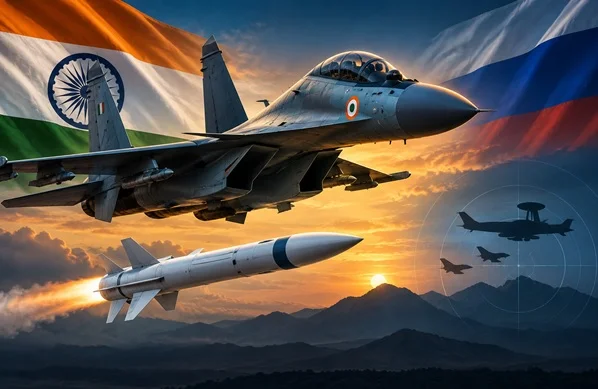
India’s Su-30MKI to Integrate Russian RVV-BD Missile: Key Facts, Range Missile, Importance of Radar, Strategic Significance and Challenges

Prelims: Su-30MKI, RVV-BD, BVR air-to-air missiles, Astra missile, BrahMos, Defence Acquisition Council, HAL, DRDO and India-Russia defence cooperation.
Mains: GS Paper II (International Relations): India-Russia strategic partnership, defence cooperation and India's strategic autonomy.
GS Paper III (Security & Defence Technology): Fighter-aircraft modernisation, missile technology, indigenous defence production, Atmanirbhar Bharat and technological self-reliance.

Why in news?

  • The Defence Ministry is taking up a proposal to modify the Su-30MKI so it can employ the RVV-BD, a Russian very-long-range air-to-air missile. 

Key Facts 

Particular

Details

Aircraft

Su-30MKI

Operator

Indian Air Force

Missile proposed

RVV-BD

Origin of missile

Russia

Type

Very/long-range air-to-air missile

Reported range for proposed weapon

Up to ~300 km

Primary role

Beyond-Visual-Range aerial engagement

Potential high-value targets

AEW&C/AWACS, reconnaissance and other support aircraft

Proposal considered by

Defence Acquisition Council

Su-30MKI fleet

More than 260 aircraft reported in service

Related Indian missile programme

Astra family

What is the Su-30MKI?

  • A twin-engine, two-seat, multirole fighter aircraft developed from Russia’s Su-30 family and customised for India. 
  • It combines a Russian-origin airframe with a mix of systems and weapons developed or sourced from multiple countries, while India has progressively increased indigenous maintenance, production and integration capabilities.
  • The aircraft is produced in India under licence by Hindustan Aeronautics Limited (HAL) and constitutes one of the largest components of the IAF’s combat fleet. More than 260 Su-30MKIs are currently reported to be in service.
  • Su-30MKI's broad roles are Air Superiority, Air Defence, Ground Attack, Maritime Strike and Long-Range Strike. 

What is the RVV-BD Missile?

  • A Russian long-range air-to-air missile intended to engage aerial targets at extended distances. It belongs to the broader lineage associated with Russia’s R-37 family of long-range missiles. Contemporary reporting on the Indian proposal describes a capability of engaging targets at distances of up to around 300 km.
  • It is particularly relevant for engaging high-value airborne platforms such as AEW&C/AWACS aircraft, reconnaissance aircraft and other high-value support aircraft. 
  • These aircraft often operate behind frontline fighters and provide surveillance, command-and-control or other force-multiplying capabilities.

What is a Beyond-Visual-Range Missile?

  • A BVR air-to-air missile allows a fighter to engage an aerial target at a distance where the pilot cannot directly see it.
  • Traditional close-range combat: Fighter Visual contact Short-range missile/gun Target
  • BVR combat: Sensor detects target Target data processed Missile launched from long distance Missile guides towards target

Why Does India Want the RVV-BD?

  • A fighter carrying a very-long-range missile could potentially threaten high-value support aircraft without first having to penetrate deeply into heavily defended airspace.
  • Existing situation: Su-30MKI Radar/Sensors Existing BVR weapons
  • Proposed capability: Upgraded Su-30MKI Long-range detection/targeting network RVV-BD Engagement at much greater distance

Why are AWACS/AEW&C Aircraft important?

  • Airborne Warning and Control System (AWACS) and Airborne Early Warning and Control (AEW&C) aircraft act as airborne surveillance and command nodes.
  • They can help detect aircraft at long distances, track multiple targets, coordinate fighter operations, improve situational awareness, support command and control. 

What Modifications would Su-30MKI need?

  • The fighter and weapon need to communicate effectively. Integration can require changes to weapons-management software, avionics and interfaces, targeting and radar compatibility, launch and guidance functions and testing and certification.
  • Reports on the current proposal specifically indicate modifications to the Su-30MKI for operational integration of the RVV-BD. The precise technical configuration, however, has not been publicly detailed.

Why Radar matters

  • A very-long-range missile is useful only if the wider combat network can provide sufficiently accurate target information.
  • Long-range Sensor + Targeting Data + Long-range Missile = Effective BVR Capability
  • Better radar, avionics, electronic warfare and networking can substantially improve the aircraft's ability to exploit long-range weapons.

Su-30MKI Modernisation

  • The Ministry of Defence’s own reporting confirms continuing work related to indigenous systems for the Su-30MKI; for example, its annual reporting has referenced an indigenous Radar Warning Receiver (R-118) for the aircraft.
  • The larger modernisation concept commonly referred to as the “Super Sukhoi” upgrade has been associated with improvements in radar, avionics, electronic warfare, weapons integration, cockpit systems and indigenous content. 
  • The RVV-BD proposal should therefore be understood as part of a broader effort to keep the Su-30MKI effective in an increasingly complex air-combat environment, although it is a distinct proposal rather than necessarily the same procurement package.

Astra vs RVV-BD

  • RVV-BD: Could provide a very-long-range capability based on an established Russian missile family.
  • Astra family: Builds India's indigenous technological base and progressively reduces dependence on imported air-to-air weapons.

Su-30MKI and BrahMos

RVV-BD

BrahMos

Air-to-air missile

Primarily air-launched cruise missile for surface targets

Targets aircraft

Targets land/sea targets

BVR air combat

Long-range precision strike

Strengthens air superiority

Strengthens strike capability

What is the Defence Acquisition Council?

  • The DAC is the Defence Ministry's apex body for major capital-acquisition decisions. It is chaired by the Defence Minister.
  • A proposal being considered by the DAC does not mean that the weapon has already been purchased. Defence acquisition generally involves multiple subsequent stages.

Strategic Importance 

  • Longer Air-to-Air Engagement Range: The proposed missile could significantly expand the distance at which the Su-30MKI can threaten certain aerial targets.
  • Threat to High-Value Platforms: The ability to threaten AEW&C and reconnaissance platforms could affect an adversary's surveillance and command network.
  • Stand-Off Capability: Longer-range weapons allow fighters to engage some targets without approaching as closely to hostile aircraft or air-defence systems.
  • Extending Su-30MKI Relevance: New sensors, electronic warfare systems and weapons can help keep the large Su-30MKI fleet operationally relevant even as newer-generation fighters enter service.

India's Air-Combat Modernisation

  • The RVV-BD proposal should also be viewed within India's wider effort to modernise its air-combat capability.
  • This includes Su-30MKI modernisation, Rafale fleet, Tejas programme, Astra missile family, BrahMos integration, AEW&C capabilities and Air-defence systems.
  • The objective is not merely to acquire individual weapons but to create an increasingly networked air-combat ecosystem.

India-Russia Defence Cooperation

  • Russia has historically been a major source of military platforms and technology for India, including Su-30MKI fighters, MiG-series aircraft, T-90 tanks, S-400 air-defence systems and various naval platforms and systems.
  • India's defence policy increasingly emphasises Atmanirbhar Bharat, domestic manufacturing and indigenous research and development.

Challenges

  • Integration Complexity: A new weapon needs extensive software, avionics and flight testing before operational clearance.
  • Cost: Modernising a large fighter fleet and acquiring sophisticated missiles can require substantial expenditure.
  • Foreign Dependence: Continued reliance on imported high-end weapons can create supply-chain and geopolitical vulnerabilities.
  • Sensor-Weapon Matching: A very-long-range missile achieves its full potential only when supported by adequate detection, tracking and targeting capabilities.
  • Electronic Warfare: Modern BVR warfare involves intense electronic countermeasures, meaning nominal missile range alone does not determine combat effectiveness.

Prelims MCQ

Q. With reference to the RVV-BD missile, consider the following statements:

  1. It is a Russian-origin long-range air-to-air missile.
  2. India is considering its integration with the Su-30MKI fighter aircraft.
  3. It is primarily meant for engaging ground targets.

Which of the statements given above is/are correct?

A. 1 only

B. 1 and 2 only

C. 2 and 3 only

D. 1, 2 and 3

Mains Practice Question 

Q. How can the modernisation of fighter aircraft strengthen India’s air defence capabilities? Discuss.

FAQs

What is the RVV-BD?

The RVV-BD is a Russian-origin long-range air-to-air missile designed to engage aerial targets at extended ranges.

Which Indian fighter aircraft is proposed to carry the RVV-BD?

India is considering integrating it with the Indian Air Force's Su-30MKI fighter aircraft.

What is the reported range of the RVV-BD?

Current reporting on India's proposal describes an engagement range of up to around 300 km, although actual effective range varies with operational conditions.

What is the Su-30MKI?

The Su-30MKI is a twin-engine, two-seat multirole fighter aircraft and a major component of the Indian Air Force's combat fleet.

What is the Defence Acquisition Council (DAC)?

The DAC is the Defence Ministry's apex body for major capital acquisition decisions and is chaired by the Defence Minister.

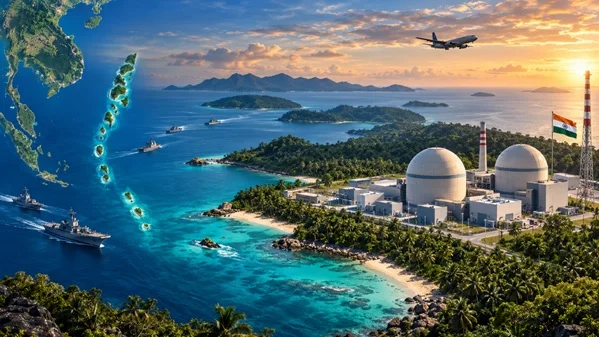
India Eyes Nuclear Power in Andaman and Nicobar Islands

Prelims: Small Modular Reactors (SMRs), Bhabha Atomic Research Centre (BARC), Department of Atomic Energy, Andaman and Nicobar Islands, Great Nicobar Project, Galathea Bay, Strait of Malacca
Mains: GS Paper 2: Government Policies and Strategic Infrastructure GS Paper 3 Energy Security, Nuclear Technology, Infrastructure and Environment
Keywords: Small Modular Reactors, BARC, Department of Atomic Energy, Andaman and Nicobar Islands, Great Nicobar Island, Galathea Bay, Strait of Malacca, INS Baaz, Nuclear Energy, Energy Security, Indo-Pacific

Why in News?

  • The Bhabha Atomic Research Centre (BARC) has undertaken an assessment of potential sites in the Andaman and Nicobar Islands for the deployment of Small Modular Reactors (SMRs).
  • The five-day assessment is being conducted from 4 to 8 September 2026.
  • Potential sites across all three districts of the Union Territory are being examined.
  • The move comes amid expectations of rising electricity demand due to major infrastructure development in the islands.

Background

  • The Andaman and Nicobar Islands currently depend heavily on diesel generator sets for electricity generation.
  • Diesel fuel has to be transported from mainland India, increasing transportation costs and supply dependence.
  • Earlier proposals involving offshore LNG regasification and geothermal energy have not become operationally viable.
  • Growing infrastructure development, particularly in Great Nicobar, is expected to increase the need for reliable electricity.
  • Small Modular Reactors are therefore being explored as a possible long-term energy option for the islands.

What are Small Modular Reactors?

  • Small Modular Reactors are advanced nuclear reactors with a smaller power capacity than conventional large nuclear reactors.
  • They are designed around modular construction, allowing major components to be manufactured separately and assembled at the proposed location.
  • Their smaller size makes them potentially suitable for remote and geographically isolated regions.
  • SMRs can provide continuous electricity and are being considered by several countries as part of future low-carbon energy systems.

Key Features of Small Modular Reactors

  • Smaller Size: SMRs have a lower generation capacity and generally require less land than large conventional nuclear power plants.
  • Modular Construction: Major reactor components can potentially be manufactured in factories and transported to the site for installation.
  • Flexible Deployment: They can be considered for remote regions, islands and areas where very large nuclear power plants may not be suitable.
  • Reliable Electricity: Nuclear reactors can provide continuous electricity without depending on weather conditions.
  • Low-Carbon Energy: Nuclear power produces very low operational carbon emissions and can support clean-energy goals.

Energy Profile of Andaman and Nicobar Islands

  • The islands are geographically separated from India's mainland electricity grid.
  • Electricity generation depends significantly on diesel-based systems.
  • Fuel transportation from mainland India creates logistical and economic challenges.
  • Renewable energy is being expanded, but reliable round-the-clock electricity remains important for major infrastructure.
  • The proposed SMRs are being examined in the context of future electricity requirements.

Great Nicobar Project

The proposed nuclear power initiative is significant because of the development planned under the Great Nicobar Island Project.

Major components include:

  • International Container Transhipment Terminal at Galathea Bay
  • Greenfield international airport
  • Township development
  • Associated power infrastructure
  • Connectivity and supporting infrastructure

These projects are expected to substantially increase electricity demand on Great Nicobar Island.

Strategic Importance of Andaman and Nicobar Islands

  • The Andaman and Nicobar Islands occupy an important position in the eastern Indian Ocean.
  • They are located close to major international shipping routes connecting the Indian Ocean with Southeast Asia.
  • Their proximity to the Strait of Malacca increases their maritime importance.
  • The islands support India's wider security and connectivity interests in the Indo-Pacific region.
  • Development of reliable infrastructure in the islands is therefore important from both civilian and strategic perspectives.

Strait of Malacca

  • The Strait of Malacca lies between the Malay Peninsula and the Indonesian island of Sumatra.
  • It is one of the world's most important maritime chokepoints.
  • It provides a major shipping route between the Indian Ocean and the South China Sea.
  • A significant amount of international trade and energy transportation passes through the region.
  • The Andaman and Nicobar Islands are strategically located near the western approaches to this important maritime route.

INS Baaz

  • INS Baaz is a naval air station located at Campbell Bay on Great Nicobar Island.
  • It was commissioned in 2012.
  • It is India's southernmost naval air station.
  • Its location is important for monitoring maritime activity around the Six Degree Channel and approaches towards the Strait of Malacca.

Significance

  • Energy Security: SMRs could help reduce the islands' dependence on diesel fuel transported from mainland India.
  • Reliable Power Supply: They could provide continuous electricity for critical civilian infrastructure and growing urban requirements.
  • Infrastructure Development: Reliable electricity would support the port, airport, township and other infrastructure planned under the Great Nicobar Project.
  • Strategic Importance: Improved energy infrastructure can strengthen India's presence and capabilities in the strategically important island territory.
  • Clean Energy: Nuclear energy can provide low-carbon electricity and complement renewable energy sources.
  • Technological Development: Deployment of SMRs could help India gain operational experience with emerging nuclear reactor technologies.

Way Forward

  • Conduct comprehensive seismic and environmental assessments before finalising any reactor site.
  • Establish strong nuclear safety and disaster-management mechanisms.
  • Ensure that infrastructure development does not cause irreversible ecological damage.

Conclusion

  • The exploration of Small Modular Reactors in the Andaman and Nicobar Islands reflects India's effort to find reliable long-term energy solutions for remote regions. Growing electricity requirements associated with the Great Nicobar Project have increased the need for dependable power infrastructure.
  • However, the ecological sensitivity and seismic vulnerability of the islands make safety and environmental assessment particularly important. Any future deployment of SMRs will therefore require a careful balance between energy requirements, strategic infrastructure, environmental protection and nuclear safety.

Prelims MCQs

Q1. Small Modular Reactors (SMRs) are best described as:

(a) Nuclear reactors designed exclusively for submarines
(b) Smaller nuclear reactors designed with modular construction
(c) Fusion reactors used for electricity generation
(d) Nuclear reactors without radioactive fuel

Mains Question

Discuss the significance of Small Modular Reactors for meeting the energy requirements of remote and strategically important regions such as the Andaman and Nicobar Islands. Also examine the environmental and safety challenges associated with their deployment.

FAQs

What are Small Modular Reactors?

Small Modular Reactors are relatively small nuclear reactors designed around modular construction and flexible deployment.

Why are SMRs being considered for Andaman and Nicobar Islands?

They are being explored to meet growing electricity demand and reduce dependence on diesel-based power generation.

Which organisation is assessing potential SMR sites?

The Bhabha Atomic Research Centre under the Department of Atomic Energy is assessing potential sites.

Why is Great Nicobar Island important?

It is strategically located near important international shipping routes and is the site of major proposed port, airport and infrastructure projects.

What is the importance of the Strait of Malacca?

It is a major maritime chokepoint connecting the Indian Ocean with the South China Sea and is important for global trade and energy transportation.

Gegeneophis chandgadi: New Caecilian Species Discovered in Maharashtra

Prelims: Environment & Ecology, Biodiversity, Amphibians, Western Ghats, New Species
Mains: GS Paper III: Biodiversity, Environment and Conservation
Keywords: Gegeneophis chandgadi, Caecilian, Amphibian, Gymnophiona, Apoda, Western Ghats, Maharashtra, Annuli, Fossorial Species, Biodiversity, Endemism

Why in News?

  • Scientists have discovered a new species of legless, worm-like amphibian named Gegeneophis chandgadi from Maharashtra.
  • The species belongs to the group of amphibians known as caecilians, which spend most of their lives underground.

About Gegeneophis chandgadi

  • Gegeneophis chandgadi is a newly identified species of caecilian.
  • It was discovered in a rural region of Maharashtra.
  • It is a legless, worm-like amphibian adapted to an underground lifestyle.
  • The species has a slender, flesh-coloured body.
  • Its body is surrounded by characteristic ring-like folds known as annuli.
  • Primary annuli occur along its body, while secondary annuli are concentrated mainly on the posterior half.

Why is it Named ‘chandgadi’?

  • The species name chandgadi has been given as a tribute to the local culture of the region where it was discovered.
  • It derives from Chandgadi, a distinct local dialect of Marathi spoken by communities in the area.
  • Thus, the scientific naming of the species also recognises the region's linguistic and cultural identity.
  • The species has been reported from Maharashtra.
  • Researchers have highlighted the northern Western Ghats as an important hotspot for caecilian diversity.
  • The Western Ghats are globally recognised for their high levels of biodiversity and endemism.

What are Caecilians?

  • Caecilians are a group of legless amphibians that superficially resemble large earthworms or small snakes.
  • Despite their appearance, they are neither worms nor reptiles.
  • They belong to the class Amphibia and are generally classified under the order Gymnophiona, also known as Apoda.
  • Most caecilians are highly adapted to a burrowing or fossorial lifestyle.

Key Features of Caecilians

  • They have no arms or legs.
  • Their bodies are elongated and cylindrical.
  • Their shiny skin contains ring-like folds called annuli.
  • Most species spend much of their lives underground.
  • Their skull is hard, thick and adapted for digging through soil.
  • They are generally associated with moist tropical environments.
  • Their underground lifestyle makes them difficult to observe and study.

Habitat

Most caecilians occur in moist tropical and subtropical regions.

They are mainly distributed across:

  • South and Central America
  • Sub-Saharan Africa
  • South Asia
  • Southeast Asia

Most caecilians are terrestrial and live underground, although some species are associated with aquatic environments.

Western Ghats and Biodiversity

  • The discovery of Gegeneophis chandgadi once again highlights the ecological importance of the Western Ghats.
  • The Western Ghats are one of the world's major biodiversity-rich regions and contain a large number of endemic plants and animals.
  • The region's combination of high rainfall, forests, moist soil and geographical isolation has contributed to the evolution of several unique amphibian species.

Significance of the Discovery

  • Biodiversity Documentation: The discovery adds a new species to India's documented amphibian diversity.
  • Western Ghats Biodiversity: It strengthens the understanding of the Western Ghats as an important centre of amphibian diversity and endemism.
  • Hidden Biodiversity: Since caecilians spend most of their lives underground, many species may remain scientifically undocumented.
  • Conservation Importance: The discovery underlines the need to conserve soil ecosystems, forests and other microhabitats that support fossorial species.
  • Local Cultural Recognition: Naming the species after the Chandgadi dialect links biodiversity documentation with local cultural heritage.

Challenges to Caecilian Conservation

Caecilians are particularly difficult to conserve because their underground lifestyle means that their population size and distribution are often poorly understood.

Major potential threats include:

  • Habitat destruction
  • Deforestation
  • Changes in soil moisture
  • Agricultural expansion
  • Infrastructure development
  • Pollution and pesticide use
  • Climate change

Loss of healthy soil ecosystems can directly affect these underground amphibians.

India Relevance

  • India is home to significant amphibian diversity, particularly in biodiversity-rich regions such as the Western Ghats and Northeast India.
  • New species discoveries demonstrate that India's biodiversity is still not completely documented.
  • Such discoveries can help scientists identify previously unknown habitats and improve conservation planning.
  • They also reinforce the importance of protecting biodiversity hotspots from habitat fragmentation and unsustainable development.

Way Forward

  • Conduct systematic surveys of underground biodiversity.
  • Strengthen research on India's amphibian species.
  • Protect important habitats in the Western Ghats.
  • Promote conservation of soil and forest ecosystems.
  • Involve local communities in biodiversity conservation.
  • Document species before habitat degradation leads to their disappearance.
  • Strengthen long-term monitoring of newly discovered species.

Conclusion

  • The discovery of Gegeneophis chandgadi demonstrates that India's biodiversity, particularly in the Western Ghats, continues to hold species that remain unknown to science. Since caecilians live predominantly underground and are difficult to detect, their study can provide valuable insights into India's hidden biodiversity.
  • Protecting their habitats and strengthening scientific surveys will be important for conserving these lesser-known components of India's natural heritage.

Prelims MCQs

Q. Gegeneophis chandgadi has been discovered in which Indian state?

A. Kerala
B. Karnataka
C. Maharashtra
D. Tamil Nadu

Mains Question

The discovery of new amphibian species in the Western Ghats highlights both India's rich biodiversity and gaps in its scientific documentation. Discuss the ecological significance of such discoveries and the challenges associated with conserving lesser-known species.

FAQs

What is Gegeneophis chandgadi?

It is a newly identified species of legless, worm-like amphibian belonging to the caecilian group and discovered in Maharashtra.

Is Gegeneophis chandgadi a snake?

No. Although it may resemble a small snake or large earthworm, it is an amphibian.

What are caecilians?

Caecilians are elongated, limbless amphibians, most of which are adapted to living underground.

What are annuli?

Annuli are ring-like skin folds that encircle the bodies of caecilians.

Why was the species named chandgadi?

The name honours the Chandgadi dialect of Marathi spoken by people in the region where the species was discovered.

Why is this discovery important for UPSC?

It is relevant to biodiversity, Western Ghats, endemic species, amphibians, biodiversity hotspots and species conservation, making it important particularly for Prelims and GS Paper III.

Bhutan Eliminates Dog-Mediated Rabies: WHO Validation, One Health Approach and India Lessons

Prelims: Science & Technology / Health, Rabies, One Health Approach, WHO, National Rabies Control Programme
Mains: GS Paper II Health, Government Policies and Interventions GS Paper III Science & Technology, One Health, Disease Control
Keywords: Rabies, Bhutan, WHO, Zoonotic Disease, Lyssavirus, One Health, Post-Exposure Prophylaxis, Rabies Vaccine, Rabies Immunoglobulin, National Rabies Control Programme

Why in News?

  • Bhutan has become the first country in WHO’s South-East Asia Region to eliminate dog-transmitted human rabies as a public health problem.
  • The achievement has been officially validated by the World Health Organization (WHO).
  • Bhutan recorded its last human death due to rabies in June 2023.
  • The achievement is important for the global target of ending human deaths from dog-mediated rabies by 2030.

Background

  • Rabies remains a major neglected public-health problem, particularly in Asia and Africa. Although the disease is almost completely preventable through timely vaccination and post-exposure treatment, it is almost always fatal once clinical symptoms develop.
  • Globally, rabies is estimated to cause around 59,000 human deaths annually. Dogs are the principal source of human rabies transmission.
  • Bhutan adopted a coordinated One Health approach, bringing together human health services, veterinary services, local communities and volunteers to control rabies at its source.

What is Rabies?

  • Rabies is a viral zoonotic disease affecting the central nervous system.
  • It is caused by viruses belonging to the Lyssavirus genus.
  • It spreads to humans mainly through the saliva of infected animals, usually through bites or scratches.
  • Domestic dogs are responsible for the overwhelming majority of human rabies cases globally.
  • Once clinical symptoms appear, rabies is almost always fatal.
  • However, rabies is preventable through timely Post-Exposure Prophylaxis (PEP).

WHO Criteria for Validation

WHO validation of elimination of dog-transmitted human rabies as a public health problem requires:

  • No human deaths from dog-transmitted rabies for at least two years.
  • A country must demonstrate effective surveillance.
  • It must maintain the capacity to prevent transmission from re-emerging.
  • Effective systems for prevention, detection and response must remain operational.

These criteria were laid out under the WHO Expert Consultation on Rabies, 2018.

How Did Bhutan Eliminate Dog-Transmitted Human Rabies?

  1. Mass Dog Vaccination: Bhutan focused on vaccinating dogs, attacking the disease at its primary source.
  2. Dog Population ManagementBhutan combined vaccination with systematic management of the dog population, helping make disease-control programmes more effective.
  3. Post-Exposure Prophylaxis: People potentially exposed to rabies were provided timely treatment. Thorough washing of the wound immediately with soap and water is an important first step after possible exposure.
  4. Integrated Surveillance: Human and animal health authorities coordinated surveillance and information-sharing. When a suspected case emerged, both sectors could conduct joint field investigations and trace potential exposures.
  5. Community Participation: Health workers, veterinary professionals and De-suung volunteers, known as the “Guardians of Peace,” helped extend vaccination, dog-population management and public awareness across Bhutan.

Why is Bhutan’s Achievement Significant?

  • Regional First: First country in WHO South-East Asia Region to achieve this validation.
  • Proof of Prevention: Shows that rabies deaths can be prevented through sustained vaccination and treatment.
  • One Health Model: Demonstrates practical implementation of human-animal health coordination.
  • Global Goal: Supports the international objective of ending dog-mediated human rabies deaths by 2030.
  • Model for India: Bhutan's experience provides lessons for neighbouring countries with a high rabies burden.

Rabies Situation in India

India continues to carry a substantial rabies burden.

  • Rabies remains endemic in most parts of India.
  • According to the cited report, Andaman & Nicobar Islands and Lakshadweep are exceptions.
  • Dogs are responsible for the overwhelming majority of reported rabies mortality and morbidity in India.
  • Challenges include large free-roaming dog populations, uneven dog vaccination, gaps in animal birth-control programmes and delayed access to appropriate treatment after bites.

National Rabies Control Programme

India implements the National Rabies Control Programme (NRCP) to prevent and control human rabies.

Its major objectives include:

  • Ensuring availability of rabies vaccines and immunoglobulins.
  • Strengthening rabies surveillance.
  • Improving management of animal-bite cases.
  • Training healthcare workers.
  • Increasing public awareness.
  • Promoting coordination between human and animal health sectors.
  • Progressively achieving zero human deaths from dog-mediated rabies by 2030.

Significance for India

Bhutan provides an important policy model for India.

India can strengthen:

  • Mass dog vaccination
  • Animal Birth Control programmes
  • Universal availability of PEP
  • Rabies surveillance
  • Human-animal health data integration
  • Municipal-level implementation
  • Community awareness
  • One Health coordination

The key lesson is that rabies elimination cannot be achieved through the health sector alone.

Challenges for India

  • Large free-roaming dog population.
  • Inadequate vaccination coverage among dogs.
  • Uneven implementation by urban and rural local bodies.
  • Lack of public awareness about immediate wound washing and PEP.
  • Gaps in surveillance and reporting.
  • Availability and accessibility of vaccines and rabies immunoglobulin in some areas.
  • Coordination gaps between veterinary, health and municipal authorities.

Way Forward

  • India needs to shift from primarily treating human exposures to simultaneously breaking transmission at the animal source.
  • This integrated strategy can accelerate India's progress towards zero dog-mediated human rabies deaths by 2030.

Conclusion

  • Bhutan’s achievement demonstrates that rabies elimination is possible through sustained dog vaccination, timely PEP, surveillance, community participation and One Health coordination. 
  • For India, the central lesson is clear: controlling rabies requires simultaneously protecting people after exposure and stopping transmission among dogs at its source.

Prelims MCQs

Q. Recently, which country became the first in the WHO South-East Asia Region to eliminate dog-transmitted human rabies as a public health problem?

A. India
B. Sri Lanka
C. Bhutan
D. Thailand

Mains Question

“Bhutan’s elimination of dog-transmitted human rabies demonstrates the importance of the One Health approach in controlling zoonotic diseases.” Discuss the lessons that India can draw from Bhutan’s experience.

FAQs

Why is rabies considered extremely dangerous?

Because once clinical symptoms appear, rabies is almost always fatal.

Can rabies be prevented after a dog bite?

Yes. Immediate wound washing and timely, complete post-exposure prophylaxis (PEP) can prevent rabies after exposure.

What is the One Health approach?

It is an integrated approach recognising that human, animal and environmental health are interconnected.

What is the global rabies target?

The global objective is to achieve zero human deaths from dog-mediated rabies by 2030.

Drug-Free India by 2029: Government Unveils Three-Year Roadmap to Combat Narcotics

Prelims: Narcotics Control Bureau (NCB), NCORD Mechanism, Drug Trafficking, Narco-Terrorism, Narcotic Drugs and Psychotropic Substances
Mains: GS Paper II Government Policies and Inter-agency Coordination
GS Paper III Internal Security, Organised Crime, Terror Financing and Drug Trafficking

Why in News?

Union Home Minister Amit Shah has unveiled a three-year roadmap and vision document aimed at making India “drug-free” by 2029.
Important Point

  • The period 2026–2029 will be pursued in mission mode against the narcotics menace.
  • The government has identified drug trafficking as a major national security challenge.
  • The strategy will focus on Supply Reduction, Demand Reduction and Harm Reduction.
  • A four-pillar roadmap has been prepared to strengthen India's anti-narcotics architecture.

What is the Drug-Free India 2029 Roadmap?

The roadmap seeks to transform India's fight against narcotics into a coordinated, continuous and outcome-oriented national campaign.

Under the mission-mode approach, each objective will have:

  • A specific timeline
  • A responsible ministry/agency
  • Measurable outcomes
  • Quarterly reviews
  • Result-based accountability

The larger objective is not merely to seize drugs but to dismantle the entire narcotics ecosystem, including traffickers, suppliers, distributors, financiers and associated networks.

Three Major Outcomes

The strategy is built around three broad outcomes:

  1. Supply Reduction: The government seeks to disrupt the availability and trafficking of illegal drugs by targeting the entire supply chain. The approach will focus on identifying kingpins, suppliers, distributors, associates and trafficking networks, rather than concentrating only on individual seizures.
  2. Demand Reduction: Reducing the demand for narcotics is considered essential for achieving a drug-free society. This involves awareness, prevention and interventions aimed particularly at protecting vulnerable sections of society and younger generations.
  3. Harm Reduction: The strategy also recognises the need to reduce the social and health-related damage caused by substance abuse. It seeks to complement law enforcement with measures addressing the consequences of drug dependence.

Four-Pillar Roadmap

Pillar 1: Intelligence and Operation-Based Enforcement

The government plans to strengthen intelligence-led anti-narcotics operations. Instead of focusing primarily on seizures, enforcement agencies will target the entire criminal network behind drug trafficking.

Pillar 2: Precursor and Synthetic Drugs Control

Greater attention will be given to controlling precursor chemicals and synthetic drugs. Precursor chemicals are substances that may have legitimate industrial or pharmaceutical uses but can also be diverted for manufacturing illicit drugs. Synthetic drugs pose an emerging challenge because they can be manufactured through chemical processes without depending entirely on traditional narcotic crops.

Pillar 3: Demand and Harm Reduction

Enforcement alone cannot eliminate the narcotics problem. Awareness, prevention and rehabilitation-related interventions become important components of the broader anti-drug strategy.

Pillar 4: Capacity Building and Coordination

Drug trafficking frequently involves multiple states, agencies and international networks.

Therefore, the roadmap emphasises better:

  • Institutional capacity
  • Intelligence sharing
  • Inter-agency coordination
  • Centre-State cooperation
  • Training and technological capabilities

What is the NCORD Mechanism?

  • The Narco Coordination Centre (NCORD) mechanism provides an institutional framework for coordination among various agencies involved in combating narcotics trafficking.
  • A four-tier NCORD mechanism was established to improve coordination from the national level down to the local level.
  • The government has also sought to integrate State and Union Territory police forces into the national anti-narcotics strategy.
  • Dedicated Anti-Narcotics Task Forces (ANTFs) have been established across States and Union Territories.

Drug Seizures in India

According to figures cited by the Union Home Minister:

Period

Narcotics & Psychotropic Substances Seized

2004–2014

26 lakh kg

2014–July 2026

More than 1.19 crore kg

The government has highlighted this increase as an indicator of intensified enforcement against narcotics networks. However, seizure data should be interpreted carefully because higher seizures can reflect stronger enforcement, greater interdiction, changes in trafficking volumes, or a combination of these factors.

Drugs and National Security

Drug trafficking is not merely a law-and-order or public-health challenge. It can have significant implications for India's internal and national security.

Narco-Terrorism

  • Illegal narcotics generate large amounts of illicit money.
  • This nexus between narcotics trafficking and terrorism is commonly described as Narco-Terrorism.
  • The government has therefore increasingly treated narcotics control as an important component of the country's national security strategy.

Significance of the Drug-Free India Mission

  1. National Security: Breaking narcotics networks can help disrupt organised crime and potential terror-financing channels.
  2. Protection of Youth: Drug dependence can adversely affect health, education, productivity and the future prospects of young people.
  3. Organised Crime Control: Drug trafficking networks may overlap with money laundering, arms trafficking and other forms of transnational organised crime.
  4. Centre-State Coordination: NCORD and Anti-Narcotics Task Forces can strengthen coordination between central agencies and State police forces.
  5. Network-Based Enforcement: Targeting kingpins and financial networks can potentially create a greater deterrent effect than isolated seizures.

Major Challenges

  • Porous Borders: India's extensive land and maritime boundaries create significant surveillance and interdiction challenges.
  • Synthetic Drugs: Synthetic narcotics can be produced in clandestine laboratories, making detection and control more difficult.
  • Darknet and Technology: Encrypted communication, darknet marketplaces and digital payment mechanisms can facilitate new forms of drug trafficking.
  • International Networks: Major narcotics networks often operate across jurisdictions, requiring international intelligence and law-enforcement cooperation.
  • Money Laundering: Tracing the proceeds of narcotics trafficking and disrupting financial networks remains crucial.
  • Rehabilitation: A purely enforcement-driven strategy cannot address addiction unless accompanied by prevention, treatment and rehabilitation mechanisms.

Way Forward

  • India needs a whole-of-government and whole-of-society approach to achieve the goal of a drug-free country.
  • Technology-driven surveillance, stronger control of precursor chemicals, financial intelligence and coordinated action against interstate and international trafficking networks will remain crucial.

Conclusion

  • The Drug-Free India by 2029 roadmap marks an attempt to move India's anti-narcotics policy beyond isolated seizures towards a network-centric and coordinated national strategy.
  • Its success will depend not only on dismantling trafficking networks but also on controlling illicit finances, synthetic drugs and precursor chemicals while simultaneously reducing demand and strengthening prevention, treatment and rehabilitation.

Prelims MCQ

Q. Consider the following statements regarding India's anti-narcotics strategy:

  1. NCORD is associated with coordination among agencies dealing with narcotics control.
  2. India's new strategy emphasises supply reduction, demand reduction and harm reduction.
  3. The Golden Crescent traditionally includes Afghanistan, Pakistan and Iran.

Which of the statements given above are correct?

A. 1 and 2 only
B. 2 and 3 only
C. 1 and 3 only
D. 1, 2 and 3

Mains Question

“Drug trafficking in India has evolved from a law-and-order challenge into a multidimensional national security threat.” Discuss in the context of organised crime, narco-terrorism and India's evolving anti-narcotics strategy.

FAQs

What is India's target for becoming drug-free?

The government has announced a roadmap aimed at achieving a Drug-Free India by 2029, with 2026–2029 being pursued as a mission-mode period.

What are the three outcomes of the strategy?

The three outcomes are Supply Reduction, Demand Reduction and Harm Reduction.

What are the four pillars of the roadmap?

The four pillars are intelligence and operation-based enforcement; precursor and synthetic drugs control; demand and harm reduction; and capacity building and coordination.

What is NCORD?

NCORD stands for Narco Coordination Centre and is a mechanism designed to strengthen coordination among agencies involved in narcotics control.

What is narco-terrorism?

Narco-terrorism broadly refers to the nexus in which proceeds from illegal narcotics trafficking are used to support or finance terrorist activities and networks

Anak Krakatau Volcano Eruption 2026: Key Facts, Sunda Strait, Ring of Fire, Types of Eruption, Importance for India and Significance

Prelims: Location of Anak Krakatau, Sunda Strait, Java and Sumatra, Pacific Ring of Fire, convergent plate boundaries, subduction zones, types of volcanic eruptions and volcano-generated tsunamis.
Mains: GS Paper I (Geography): Plate tectonics, distribution of volcanoes and earthquakes, Pacific Ring of Fire, convergent plate boundaries and geographical features of Indonesia.
GS Paper III (Disaster Management): Volcanic hazards, tsunami risk, volcanic ash and aviation safety, early-warning systems, hazard mapping and disaster preparedness. 

Why in News?

Anak Krakatau entered a prolonged eruptive episode beginning late on 4 September 2026. Indonesia’s Centre for Volcanology and Geological Hazard Mitigation (PVMBG) recorded continuous eruption-related seismic activity from 11:07 p.m. on 4 September until 12:04 a.m. on 6 September, an episode lasting about 25 hours. 
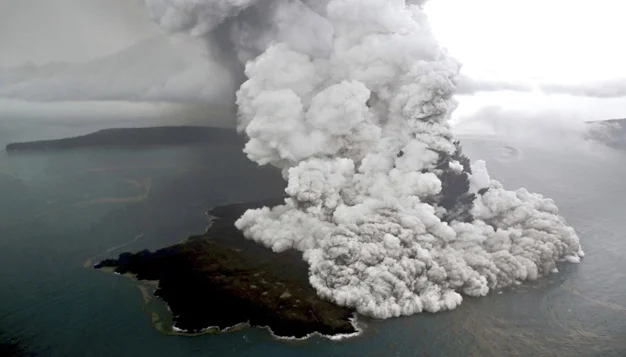
Key Facts 

Particular

Details

Volcano

Anak Krakatau

Country

Indonesia

Location

Sunda Strait

Between

Java and Sumatra

Province

Lampung

Type

Active volcanic island

Current alert level

Level III-Siaga

Major current hazard

Volcanic ash, lava and incandescent material

Major aviation impact

Eight airports affected/closed

Passengers affected

Around 170,000

Historical connection

Krakatau eruption of 1883

Major recent disaster

2018 Anak Krakatau flank collapse and tsunami

What is Anak Krakatau?

  • Anak Krakatau meaning “Child of Krakatau” is an active volcanic island in the Sunda Strait, the waterway separating the Indonesian islands of Java and Sumatra.
  • Administratively, it falls within South Lampung Regency, Lampung Province. Indonesia monitors the volcano from observation posts at Kalianda in Lampung and Pasauran in Banten.

Why is the Sunda Strait Important?

  • The Sunda Strait separates Sumatra in the west and Java in the east. It also connects the Java Sea with the Indian Ocean. The strait is significant because it lies near an active tectonic boundary and hosts the Krakatau volcanic complex. 

What happened during the 2026 Eruption?

  • Official Indonesian geological authorities reported eruptions on 2 and 3 July 2026, after a relatively long eruptive pause. Since 2 July, Anak Krakatau has remained at Level III (Siaga).
  • Activity continued with Strombolian-type eruptions, producing volcanic ash and incandescent material. On 5 September, authorities described continuous eruptive activity resembling a lava fountain, accompanied by lava flows and rumbling sounds.
  • The continuous eruptive episode subsequently ended after approximately 25 hours, but PVMBG maintained Level III because significant volcanic activity continued and further eruptions remained possible.

What is a Strombolian Eruption?

  • A type of volcanic eruption characterised by relatively frequent explosive bursts produced when gas bubbles rise through magma and burst near the surface. It can eject gas, volcanic ash, lava fragments and incandescent material. The name comes from Stromboli volcano in Italy.

Scale of Aviation Disruption

  • By 7 September, volcanic ash had caused major disruption across western Indonesia. Approximately 1,558 flights were delayed or cancelled across eight airports, affecting roughly 170,000 passengers. Jakarta’s Soekarno-Hatta airport alone accounted for nearly 1,000 affected flights.
  • International and domestic connections were affected, including services linking Indonesia with destinations such as Singapore, Doha, Sydney and Kuala Lumpur.

The 2018 Anak Krakatau Tsunami

  • On 22 December 2018, part of Anak Krakatau's volcanic edifice collapsed during eruptive activity, generating a tsunami in the Sunda Strait. Indonesia's geological authorities identify the partial collapse of Anak Krakatau as the mechanism behind the tsunami. More than 400 people were killed in the disaster. This event was particularly dangerous because the tsunami was not generated by the conventional mechanism of a large tectonic earthquake.

Why is Indonesia So Volcanically Active?

Indonesia lies along the Pacific Ring of Fire, one of the most tectonically active regions on Earth. The Indonesian archipelago sits near the interaction of several major tectonic plates and microplates. Around Java and Sumatra, the Indo-Australian Plate moves beneath the Sunda/Eurasian margin along the Sunda subduction zone.

What is the Pacific Ring of Fire?

  • A broad horseshoe-shaped belt surrounding much of the Pacific Ocean where tectonic activity produces a high concentration of Earthquakes, Volcanoes, Ocean trenches and Island arcs.
  • It stretches through areas including New Zealand, Indonesia, Philippines, Japan, Kamchatka, Alaska and Western Americas.  Subduction zones are especially important in producing the region's volcanic arcs.

Types of Volcanic Hazards

  • Primary Hazards
    • Lava flows: molten rock moving across the surface.
    • Pyroclastic flows: extremely hot, fast-moving mixtures of gas, ash and volcanic fragments.
    • Ash fall: fine volcanic particles deposited over large areas.
    • Ballistic projectiles: rocks and incandescent fragments thrown from the crater.
    • Volcanic gases: potentially harmful gases released from magma.
  • Secondary Hazards
    • Lahars: volcanic ash and debris mixed with water, producing destructive mudflows.
    • Landslides/flank collapse: instability of the volcanic edifice.
    • Tsunamis: possible when volcanic activity or collapse rapidly displaces seawater.

Why Volcanic Ash travel far from a Volcano?

  • The height of the eruption column and atmospheric winds determine how far ash can travel.

Explosive eruption → Ash injected high into atmosphere → Upper-level winds transport particles → Ash plume spreads over distant regions

  • In the current eruption, ash reached heights reported up to approximately 50,000 feet, helping explain why aviation was affected far beyond the immediate crater area.

Indonesia's Volcano Monitoring System

  • Indonesia's volcanoes are monitored principally by the Centre for Volcanology and Geological Hazard Mitigation (PVMBG) under the country's Geological Agency.
  • Monitoring can involve seismic instruments, visual observations, satellite imagery, gas measurements, ground deformation and thermal observations. 
  • Anak Krakatau itself is monitored from observation stations on both the Lampung and Banten sides of the Sunda Strait. Indonesia also uses the MAGMA Indonesia platform for official geological-hazard information.

Disaster Management Response

  • Indonesia's National Disaster Mitigation Agency (BNPB) and other authorities activated measures to reduce risks from the eruption.
  • Authorities advised people to wear masks, limit outdoor exposure and remain outside the restricted area. Officials also experimented with weather-modification operations aimed at inducing rainfall to help remove ash from the atmosphere.
  • The event illustrates the importance of monitoring, early warning, hazard zonation, public communication, transport management, health protection and emergency preparedness. 

Why This Event is Important for India

  • India also faces volcanic, earthquake and tsunami risks in parts of its territory and surrounding seas. The Andaman and Nicobar Islands lie in a tectonically active zone associated with the broader Sunda-Andaman subduction system.
  • The event therefore reinforces the importance of:
    • Tsunami early-warning systems
    • Seismic monitoring
    • Coastal disaster preparedness
    • Satellite-based hazard monitoring
    • International data sharing
    • Aviation management during volcanic ash events

Significance of the Anak Krakatau Eruption

  • It demonstrates the continuing geological dynamism of the Sunda volcanic arc.
  • The cancellation of more than 1,500 flights illustrates how natural hazards can disrupt global transportation networks and economic activity.
  • Anak Krakatau's 2018 history demonstrates the importance of recognising non-earthquake sources of tsunamis.
  • The eruption underscores the importance of combining scientific monitoring, hazard mapping, aviation safety, public-health precautions and disaster preparedness.

Prelims MCQ

Q. With reference to Anak Krakatau volcano, consider the following statements:

  1. It is located in the Sunda Strait between Java and Sumatra.
  2. It is associated with the Pacific Ring of Fire.
  3. It emerged from the volcanic system associated with the historic Krakatau eruption.

Which of the statements given above is/are correct?

A. 1 and 2 only

B. 2 and 3 only

C. 1 and 3 only

D. 1, 2 and 3

Mains Practice Question 

Q. Why is Indonesia highly prone to volcanic eruptions? Discuss the major hazards associated with volcanic activity.

FAQs 

What is Anak Krakatau?

Anak Krakatau is an active volcanic island in Indonesia. Its name means “Child of Krakatau.”

What happened at Anak Krakatau in 2018?

A major flank collapse during volcanic activity displaced seawater and generated a deadly tsunami in the Sunda Strait.

What is a Strombolian eruption?

It is an eruption characterised by intermittent explosive bursts that can eject lava fragments, volcanic ash and gases.

What is the Sunda Strait?

The Sunda Strait is a waterway separating the Indonesian islands of Java and Sumatra and connecting the Java Sea with the Indian Ocean.

Where is Anak Krakatau located?

It is located in the Sunda Strait between Java and Sumatra in Indonesia.

First India-China Corps Commander Meeting Held in Arunachal Pradesh

Prelims: India and its Neighbourhood- International Relations; Indian and World Geography.
Mains: GS-II - India and its Neighbourhood Relations, Bilateral/Regional Groupings; GS-III - Security Challenges and their Management in Border Areas.
Keywords: India-China, Corps Commander Meeting, Arunachal Pradesh, Eastern Sector, LAC, Vacha-Damai, 3 Corps, Taksing, Upper Subansiri, Border Personnel Meeting Point, WMCC, Special Representatives, Galwan Valley, Border Management, Military Dialogue, Border Security, BRICS Summit.

Why in News?

India and China held their first Corps Commander-level military meeting in the Eastern Sector at Arunachal Pradesh on September 6, 2026. The meeting is significant as the Corps Commander-level dialogue mechanism, which has mainly focused on the Ladakh sector, has now been extended to the Eastern Sector.

Important Points

  • Location: The meeting was held at the Vacha-Damai Border Personnel Meeting Point (BPM)
  • Indian Delegation: Led by Lieutenant General Girish Kalia, Commander of the 3 Corps (Spear Corps)
  • Area of Responsibility: The 3 Corps, headquartered at Rangapahar, Nagaland, is responsible for operational areas along the LAC in Arunachal Pradesh. 
  • Taksing Tension: The meeting took place amid reports of Chinese activity and alleged incursions in the Taksing area of Upper Subansiri district. 
  • Expansion of Dialogue: The meeting indicates an expansion of the military communication mechanism beyond the Ladakh sector
  • New Meeting Points: India and China have agreed to establish two additional Border Personnel Meeting Points - one in the Eastern Sector and another in the Central Sector. 
  • Hotlines: The two sides have also agreed to establish new hotlines to improve communication and confidence-building. 
  • BRICS: Meeting held ahead of the 18th BRICS Summit in New Delhi.

Who Led the Meeting?

  • The Indian delegation was led by Lieutenant General Girish Kalia, Commander of the 3 Corps (Spear Corps). The 12-member Indian delegation also included an Inspector General of the Indo-Tibetan Border Police (ITBP).
  • The 3 Corps is headquartered at Rangapahar in Nagaland and is responsible for operational areas along the LAC in Arunachal Pradesh.
  • The Indian Army has two Corps formations responsible for the Arunachal Pradesh frontier:
    • 4 Corps - headquartered at Tezpur, Assam
    • 3 Corps -  headquartered at Rangapahar, Nagaland

Why Is the Meeting Important?

  • The Corps Commander-level mechanism has traditionally been used mainly to manage tensions along the India-China border in Ladakh.
  • This mechanism became particularly important after the Galwan Valley clash in June 2020, which resulted in casualties on both sides. Since then, India and China have continued military and diplomatic discussions to maintain peace and stability along the LAC.
  • The latest meeting is significant because the mechanism has now been used in the Eastern Sector in Arunachal Pradesh as well.
  • This indicates an effort to expand military communication and strengthen mechanisms for managing tensions along different sectors of the India-China border.

Border Tensions in Taksing

  • The meeting took place amid reports of Chinese activity and alleged incursions in the Taksing area of Upper Subansiri district.
  • It followed recent India-China diplomatic engagements, including the 36th WMCC meeting on August 6, 2026, and the 25th Special Representatives’ talks in Beijing on August 26.
  • The talks, led by Ajit Doval and Wang Yi, resulted in an eight-point agreement, including two new Border Personnel Meeting Points and new hotlines to improve border communication.

India-China Border Dispute

The India-China border dispute mainly concerns the 3,488-km-long Line of Actual Control (LAC) between the two countries. The border is divided into three sectors:

  • Western Sector: Ladakh - the main area of military tensions, including the Galwan Valley clash in 2020
  • Middle Sector: Himachal Pradesh and Uttarakhand - comparatively less disputed. 
  • Eastern Sector: Arunachal Pradesh and Sikkim - China claims a large part of Arunachal Pradesh as “South Tibet”, while India considers Arunachal Pradesh an integral part of the country. 

Why Arunachal Pradesh Is Important?

  • Arunachal Pradesh is strategically important because of its location along the India-China border. China disputes India's sovereignty over the state and particularly objects to India's administrative control over areas such as Tawang.
  • The recent Corps Commander-level meeting in Arunachal Pradesh is important because it extends a military dialogue mechanism that has largely been associated with Ladakh to the Eastern Sector.

India Strengthens Border Preparedness

  • The Indian Army has also been reviewing its operational preparedness along the India-China frontier.
  • Recently, Army Chief General Dhiraj Seth visited the headquarters of the 3 Corps. Formation commanders briefed him about the Army's operational readiness and measures being taken to strengthen its combat capabilities.

BRICS Summit Connection

  • The meeting comes just days before India hosts the 18th BRICS Summit in New Delhi from September 11 to 13, 2026.
  • Chinese President Xi Jinping is expected to attend the summit. The timing of the military meeting is therefore significant as India and China continue efforts to manage border tensions while maintaining diplomatic engagement.

Conclusion 

The first Corps Commander-level meeting in Arunachal Pradesh marks an important development in India-China border management. It shows that the military dialogue mechanism is expanding beyond Ladakh and could help both sides improve communication, manage local tensions and maintain stability along the LAC.

Prelims Practice Question 

Q. With reference to the recent India-China Corps Commander-level meeting, consider the following statements:

  1. The meeting was held in Arunachal Pradesh. 
  2. It marked an expansion of the military dialogue mechanism beyond Ladakh. 
  3. The meeting was held at the Vacha-Damai Border Personnel Meeting Point. 

Which of the statements given above is/are correct?

A. 1 only
B. 1 and 2 only
C. 2 and 3 only
D. 1, 2 and 3

Mains practice Question

Q. The expansion of India-China military dialogue to the Eastern Sector reflects the changing dynamics of border management along the Line of Actual Control (LAC). Discuss its significance for India-China relations and border stability.

FAQs

1. Where was the India-China Corps Commander-level meeting held?

It was held at the Vacha-Damai Border Personnel Meeting Point in Arunachal Pradesh.

2. Why was the meeting significant?

It was the first Corps Commander-level meeting in the Eastern Sector, expanding the military dialogue mechanism beyond Ladakh.

3. Who led the Indian delegation?

The Indian delegation was led by Lieutenant General Girish Kalia, Commander of 3 Corps.

4. What is the LAC?

The Line of Actual Control (LAC) is the de facto boundary separating Indian- and Chinese-controlled territories.

5. What was the meeting held amid?

It took place amid reports of tension and Chinese activity in the Taksing area of Arunachal Pradesh.

Forest Rights Act and Gram Sabha Consent: What Is the Legal Position?

Why in News?

  • The Ministry of Tribal Affairs (MoTA) has clarified that the Forest Rights Act (FRA), 2006 does not contain any provision specifically requiring the consent of the Gram Sabha for obtaining Stage-II Forest Clearance.
  • The clarification came during discussions between the Ministry of Tribal Affairs and the Ministry of Power over delays in government infrastructure projects caused by the requirement of obtaining consent from all concerned Gram Sabhas.
  • The issue has gained importance after a Parliamentary Standing Committee identified the requirement of 100% Gram Sabha consent as a major bottleneck in forest clearance for several hydropower projects.

What is the Forest Rights Act, 2006?

The Scheduled Tribes and Other Traditional Forest Dwellers (Recognition of Forest Rights) Act, 2006, commonly known as the Forest Rights Act (FRA), was enacted to recognise and secure the forest rights of:

  • Scheduled Tribes living in forest areas; and
  • Other Traditional Forest Dwellers who have been dependent on forests for generations.
  • The Act seeks to correct the historical injustice faced by forest-dwelling communities by legally recognising their traditional rights over forest resources.

Key Objectives of the Forest Rights Act

The major objectives of the FRA are:

  1. Recognition of forest rights of eligible forest-dwelling communities.
  2. Recognition of individual and community forest rights.
  3. Protection of the livelihood and traditional practices of forest-dependent communities.
  4. Greater participation of local communities in the management of forest resources.
  5. Empowerment of the Gram Sabha in the process of identifying and determining forest rights.

Role of Gram Sabha under the FRA

The Gram Sabha has a significant role under the Forest Rights Act.

It is involved in:

  • Initiating the process of determining forest rights.
  • Receiving and verifying claims.
  • Preparing evidence regarding forest rights.
  • Determining the nature and extent of individual and community forest rights.
  • Identifying community forest resource rights.

However, the FRA does not explicitly state that 100% Gram Sabha consent is required for every proposal involving diversion of forest land for non-forest purposes.

What did the Ministry of Tribal Affairs say?

In an official communication to the NHPC Desk of the Ministry of Power on August 31, 2026, the Ministry of Tribal Affairs stated that:

  • There is no provision in the FRA, 2006 and its Rules for obtaining Gram Sabha consent specifically for Stage-II Forest Clearance.
  • Matters relating to such consent do not fall under the direct purview of the Ministry of Tribal Affairs.

This position has raised questions because the Ministry of Tribal Affairs is the nodal ministry for implementation of the Forest Rights Act.

Why is Gram Sabha Consent linked to Forest Clearance?

  • Although the FRA itself does not expressly use the phrase “100% Gram Sabha consent” for forest diversion, the broader forest clearance framework requires the recognition and settlement of forest rights before forest land can be formally diverted.
  • The process generally involves: Identification of FRA claimants Recognition of forest rights Vesting of rights Completion of FRA-related processes Forest diversion/clearance process
  • The requirement of obtaining a No-Objection Certificate (NOC) or consent from concerned Gram Sabhas has therefore come to be commonly associated with the forest clearance process.

Parliamentary Committee's Concerns

The issue was highlighted by the Parliamentary Standing Committee on Public Undertakings in its report on NHPC Limited.

According to the Committee:

  • Forest clearance for under-construction projects was taking an average of around 106 months.
  • The requirement of consent from all concerned Gram Sabhas had emerged as a major bottleneck.
  • Some projects were facing indefinite delays because consent from a small number of Gram Panchayats remained pending.

The Committee cited the Teesta-IV Hydroelectric Power Project as an example.

Proposal for 70–75% Consent

  • NHPC suggested that for large hydropower infrastructure projects of national importance, a qualified super-majority model could be considered.
  • Under this proposal:Consent from around 70–75% of affected Gram Sabhas could be considered sufficient.
  • The Parliamentary Committee recommended that the Ministry of Power discuss the feasibility of such a proposal with the Ministry of Tribal Affairs.

Important

  • The 70–75% consent model is a proposal/recommendation, not an existing legal requirement.

Key Issues Involved

1. Tribal Rights vs Infrastructure Development

The issue reflects the broader challenge of balancing tribal rights and environmental protection with the need for infrastructure development.

2. Role of Gram Sabha

The controversy raises questions about the appropriate role of Gram Sabhas in decisions affecting forests and communities dependent on forest resources.

3. Forest Governance

Multiple authorities—including Central ministries, State governments, forest departments and Gram Sabhas—are involved in forest-related decision-making. Clear delineation of responsibilities is therefore important.

4. Delays in Infrastructure Projects

Long clearance procedures can increase the cost and completion time of hydropower and other infrastructure projects.

5. Sustainable Development

Development projects in forest areas must balance:Economic Development + Environmental Conservation + Community Rights

Significance for India

The issue is important from the perspective of participatory governance and decentralisation. Gram Sabha participation ensures that local communities have a voice in decisions affecting their traditional livelihood and forest resources. At the same time, delays in strategically important infrastructure projects can have implications for:

  • Energy security
  • Regional development
  • Infrastructure connectivity
  • Project costs
  • India's renewable energy transition

Therefore, India needs a rights-based and time-bound forest clearance mechanism rather than treating development and community rights as mutually exclusive.

Way Forward

  • Clear Legal Framework :-The relationship between the Forest Rights Act and forest clearance procedures should be clearly defined.
  • Meaningful Community Participation :-Gram Sabha participation should remain meaningful, particularly where the rights and livelihoods of forest-dependent communities are affected.
  • Time-Bound Clearances :-A transparent and time-bound mechanism can reduce unnecessary delays without compromising legal safeguards.
  • Better Centre-State Coordination :-Coordination between the Centre, States, Forest Departments and Tribal Affairs authorities should be strengthened.
  • Rights Settlement Before Diversion :-Forest rights should be properly identified, recognised and settled before diversion decisions are implemented.
  • Sustainable Development Approach :-Infrastructure development in forest areas should follow the principle of sustainable development, balancing economic needs with ecological and social concerns.

Frequently Asked Questions (FAQs)

Q1.What is the Forest Rights Act, 2006?

Answer -The Forest Rights Act, 2006 recognises and secures certain forest rights of Scheduled Tribes and other traditional forest-dwelling communities.

Q2.Does the FRA explicitly require 100% Gram Sabha consent for Stage-II Forest Clearance?

Answer -According to the recent clarification by the Ministry of Tribal Affairs, the FRA and its Rules do not contain a specific provision requiring Gram Sabha consent for Stage-II Forest Clearance.

Q3.Does the Gram Sabha have a role under the FRA?

Answer -Yes. Gram Sabha has a crucial role in the identification and determination of forest rights under the Act.

upsc english
« »
  • SUN
  • MON
  • TUE
  • WED
  • THU
  • FRI
  • SAT
Have any Query?

Our support team will be happy to assist you!

OR