New
Hindi Medium: (Delhi) - GS Foundation (P+M) : 21st Sept. 2026, 11:30 AM Hindi Medium: (Prayagraj) - GS Foundation (P+M) : 22nd Sept. 2026, 8:00 AM English Medium: (Delhi) - GS Foundation (P+M) : 6th Aug 2026 English Medium: (Prayagraj) - GS Foundation (P+M) : 19th Aug 2026, 11:00 AM Hindi Medium: (Delhi) - GS Foundation (P+M) : 21st Sept. 2026, 11:30 AM Hindi Medium: (Prayagraj) - GS Foundation (P+M) : 22nd Sept. 2026, 8:00 AM English Medium: (Delhi) - GS Foundation (P+M) : 6th Aug 2026 English Medium: (Prayagraj) - GS Foundation (P+M) : 19th Aug 2026, 11:00 AM

Current Affairs for 04 September 2026

Falkland Islands Dispute: Argentina Intensifies Sovereignty Push against Britain

Prelims: Falkland Islands (Malvinas), South Atlantic Ocean, Argentina–UK Dispute, British Overseas Territory, 1982 Falklands War, Sea Lion Oilfield, UN Decolonisation, Self-Determination
Mains: GS Paper II International Relations, Territorial Disputes, United Nations, Decolonisation GS Paper I World Geography and Mapping GS Paper III Energy Resources and Geopolitics

Why in News?

Argentine President Javier Milei has intensified Argentina’s sovereignty claim over the Falkland Islands, known in Argentina as Islas Malvinas, by announcing plans for tougher sanctions against companies involved in oil development around the British-administered islands.

What are the Falkland Islands?

The Falkland Islands are an archipelago located in the South Atlantic Ocean, approximately 500 km east of the Argentine mainland.

The territory consists of:

  • East Falkland
  • West Falkland
  • Around 778 smaller islands

The islands are located roughly 13,000 km from Britain, making their geographical proximity to Argentina a major element of Argentina's sovereignty argument. The Falklands are presently administered by the United Kingdom as a British Overseas Territory, but Argentina claims sovereignty over them and calls them Islas Malvinas.

2013 Referendum: Why is it Important?

  • In 2013, Falkland Islanders were asked whether they wanted the islands to retain their existing political status as an Overseas Territory of the United Kingdom.
  • Britain uses the referendum as strong evidence for its argument that the wishes of Falkland Islanders must be respected.
  • Argentina rejected the referendum, arguing that Britain cannot use a population established after its 1833 takeover to determine sovereignty over disputed territory.

What Does the United Nations Say?

  • The Falkland Islands are included on the United Nations list of Non-Self-Governing Territories.
  • The UN framework recognises the existence of a sovereignty dispute between Argentina and the United Kingdom and has repeatedly encouraged the two governments to resume negotiations to find a peaceful solution.

Why Has the Dispute Escalated Again in 2026?

The immediate trigger is oil. President Javier Milei announced plans in September 2026 to introduce legislation imposing stronger penalties on companies operating around the Falkland Islands without Argentine authorisation.

The proposed measures could target:

  • Oil companies
  • Investors/shareholders
  • Company directors
  • Suppliers and contractors

Why Doesn't Argentina Use Military Force?

President Milei has explicitly favoured a diplomatic route rather than military action. The lessons of the 1982 war remain important, while Britain continues to maintain substantial defence capabilities on the islands.

Significance for International Relations

  1. Self-Determination vs Territorial Integrity: Britain stresses the political wishes of the islanders, while Argentina emphasises territorial integrity and decolonisation.
  2. Colonial Legacy: The dispute demonstrates how colonial-era territorial arrangements continue to influence contemporary international relations.
  3. Resource Geopolitics: Offshore oil and fisheries have added an economic dimension to the sovereignty dispute.
  4. Great-Power Politics: The positions of the United States and China can influence the diplomatic environment surrounding the dispute.
  5. Maritime Geopolitics: Control over islands can create wider strategic, economic and security significance far beyond their physical size.

India Relevance

India does not have a direct role in the Falklands dispute, but the issue has conceptual relevance for Indian foreign-policy studies.

It illustrates the importance of:

  • Territorial sovereignty
  • Peaceful resolution of disputes
  • UN mechanisms
  • Maritime jurisdiction
  • Island geopolitics
  • Natural-resource competition
  • Colonial legacies

Challenges in Resolving the Dispute

  • The dispute remains difficult because the two sides begin from fundamentally different principles.
  • Britain considers the wishes of the islanders central to any settlement.
  • Argentina disputes the applicability of self-determination in this case and considers the matter one of territorial decolonisation.
  • Meanwhile, offshore energy development, fisheries, military presence and involvement of external powers increase the strategic stakes.

Way Forward

  • A sustainable solution requires both sides to avoid military escalation and maintain diplomatic engagement.
  • Possible confidence-building measures can include cooperation on fisheries, transportation, humanitarian issues and regional connectivity.
  • The UN framework continues to emphasise peaceful negotiations, while any durable arrangement would need to address the deep disagreement between Argentina's sovereignty claim and the political wishes expressed by the Falkland Islanders.

Conclusion

  • The Falkland Islands dispute has evolved from a historic Argentina–Britain territorial conflict into a wider geopolitical issue involving self-determination, decolonisation, maritime resources, oil, military strategy and great-power diplomacy.
  • The latest confrontation over the Sea Lion oilfield demonstrates how natural resources can revive long-standing territorial disputes. With Argentina intensifying diplomatic and economic pressure, Britain defending the islanders' right to self-determination, China supporting Argentina's position and the United States reviewing its policy, the Falklands are once again becoming an important geopolitical flashpoint in the South Atlantic.

Prelims MCQs

Q. The Falkland Islands, are located in:

A. North Atlantic Ocean
B. South Atlantic Ocean
C. South Pacific Ocean
D. Southern Indian Ocean

Mains Question

“The Falkland Islands dispute represents not merely an unresolved colonial legacy but an intersection of territorial sovereignty, self-determination, energy resources and great-power geopolitics.” Discuss.

FAQs

What are the Falkland Islands called in Argentina?

Argentina calls them the Islas Malvinas.

Which country currently controls the Falkland Islands?

They are currently administered by the United Kingdom as a British Overseas Territory.

Which country claims the islands?

Argentina claims sovereignty over them.

Where are the Falkland Islands located?

They are located in the South Atlantic Ocean, approximately 500 km east of mainland Argentina.

When did Argentina and Britain fight the Falklands War?

The war took place in 1982.

Why is the issue again in the news in 2026?

Argentina has announced plans for stronger sanctions against companies participating in oil development around the islands without Argentine authorisation, particularly in connection with the Sea Lion oilfield.

Osbeckia ulotricha: New Flowering Plant Species Discovered in the Western Ghats

Prelims: Environment & Ecology, Biodiversity, Western Ghats, Biosphere Reserves, Species in News
Mains: GS Paper III – Environment, Biodiversity and Conservation

Why in News?

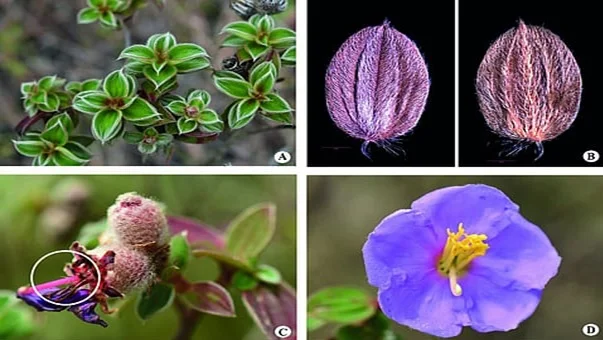
Recently, scientists from the Botanical Survey of India (BSI) discovered a new flowering plant species named Osbeckia ulotricha in the Agasthyamala Biosphere Reserve of the Western Ghats. The newly identified species belongs to the Melastomataceae family and has been recorded from the high-altitude shola-grassland ecosystem.
About Osbeckia ulotricha

Osbeckia ulotricha is a newly identified flowering plant species belonging to the genus Osbeckia.

Key Facts

  • Scientific Name: Osbeckia ulotricha
  • Family: Melastomataceae
  • Genus: Osbeckia
  • Discovered by: Scientists from the Botanical Survey of India
  • Location: Agasthyamala Biosphere Reserve
  • Region: Southern Western Ghats
  • Elevation: Around 1,200–1,500 metres
  • Habitat: Shola forests and montane grasslands
  • Flowering and Fruiting: February to May

Characteristics of Osbeckia ulotricha

1. Woolly-Haired Species: One of the most distinctive features of Osbeckia ulotricha is its characteristic woolly or curly hair covering.

2. Leaves: Its leaves are primarily clustered near the apex of the plant.

3. Hypanthium: The species possesses a distinctive sub-globose hypanthium, or an almost rounded floral base. A hypanthium is a cup-like or tubular structure of a flower formed around the ovary.

4. Ovary: Its ovary is crowned with true bristles, which are fine and relatively stiff hairs present at the top.

5. Flowering and Fruiting: The species mainly flowers and produces fruits between February and May.

Habitat of Osbeckia ulotricha

The species has been recorded at elevations of approximately 1,200–1,500 metres.

It primarily grows along the damp margins of: Tropical Montane Wet Temperate Forests (Shola Forests) and Montane Temperate Grasslands

About Agasthyamala Biosphere Reserve

The discovery has also brought the Agasthyamala Biosphere Reserve (ABR) into focus.

Location

Agasthyamala Biosphere Reserve is located in the southern part of the Western Ghats. It extends across two Indian states: Kerala + Tamil Nadu The region is known for its exceptional biological diversity and high level of endemism.

Establishment and UNESCO Status

The Agasthyamala Biosphere Reserve was established in 2001. In 2016, it was included in UNESCO's World Network of Biosphere Reserves (WNBR). Its international recognition highlights the ecological importance of the southern Western Ghats.

Vegetation of Agasthyamala

The biosphere reserve contains diverse vegetation types due to variations in altitude, rainfall and climate.

Major vegetation types include:

  • Tropical Evergreen Forests
  • Semi-Evergreen Forests
  • Moist Deciduous Forests
  • Montane Rainforests
  • Shola Forests
  • Montane Grasslands

The Shola-Grassland ecosystem is particularly important because it supports several endemic and high-altitude species.

What are Shola Forests?

Shola forests are patches of montane evergreen forests found in the higher elevations of the Western Ghats, particularly in southern India. They generally occur together with rolling grasslands, forming a unique:

SHOLA–GRASSLAND MOSAIC

These ecosystems play an important role in:

  • Biodiversity conservation
  • Water regulation
  • Carbon storage
  • Soil conservation
  • Supporting endemic species

They are also highly sensitive to changes in temperature, rainfall patterns, invasive species and human activities. Rivers Originating from the Agasthyamala Region Agasthyamala is also an important watershed region of the southern Western Ghats.

Important rivers associated with the region include:

  • Thamirabarani
  • Neyyar
  • Karamana

Therefore, conservation of the Agasthyamala landscape is important not only for biodiversity but also for regional water security.

Protected Areas in Agasthyamala Biosphere Reserve

The biosphere reserve encompasses several important protected areas.

Kerala

  • Shendurney Wildlife Sanctuary
  • Peppara Wildlife Sanctuary
  • Neyyar Wildlife Sanctuary

Tamil Nadu

  • Kalakkad-Mundanthurai Tiger Reserve (KMTR)

Together, these protected areas form an important conservation landscape in the southern Western Ghats.

Why is the Western Ghats Important?

  • The Western Ghats is one of the world's most important biodiversity-rich regions and is recognised as a major biodiversity hotspot.
  • The region exhibits a very high degree of endemism, meaning that many species found here occur nowhere else in the world.
  • The discovery of Osbeckia ulotricha demonstrates that the Western Ghats still contain biological diversity that remains scientifically undocumented.

Significance of the Discovery

  1. Biodiversity Documentation: The discovery adds a new species to India's documented floral diversity and improves scientific understanding of the Western Ghats.
  2. High Endemism: Its restricted distribution highlights the high degree of endemism and micro-endemism in the Western Ghats.
  3. Shola Ecosystem Conservation: The species' association with the shola-grassland ecosystem underlines the need to protect these fragile high-altitude habitats.
  4. Climate Change Vulnerability: High-altitude species can be particularly vulnerable to changes in temperature and rainfall patterns caused by climate change.
  5. Conservation Planning: Species with highly restricted geographical ranges require detailed population surveys, habitat mapping and long-term monitoring.

Key Challenges

The Western Ghats and its endemic species face several ecological pressures, including:

  • Habitat loss
  • Habitat fragmentation
  • Climate change
  • Invasive alien species
  • Tourism pressure
  • Infrastructure development
  • Forest degradation
  • Changing rainfall patterns

Species with a very small geographical range can be particularly vulnerable because even limited habitat degradation may affect a significant proportion of their population.

Significance for India

  • The discovery reinforces India's position as one of the world's megadiverse countries.
  • It also highlights three important conservation priorities: Western Ghats Conservation + Protection of Endemic Species + Restoration of Fragile Shola Ecosystems
  • Protecting such habitats is important for biodiversity, ecosystem services, water security and climate resilience.

Prelims MCQ

Q. Consider the following statements regarding Osbeckia ulotricha:

  1. It is a newly identified flowering plant belonging to the Melastomataceae family.
  2. It has been discovered in the Agasthyamala Biosphere Reserve.
  3. Its habitat is associated with high-altitude shola forests and montane grasslands.

Which of the statements given above are correct?

(a) 1 and 2 only
(b) 2 and 3 only
(c) 1 and 3 only
(d) 1, 2 and 3

Mains Question

Q. “The discovery of new endemic species highlights both the exceptional biodiversity and ecological vulnerability of the Western Ghats.” Discuss in the context of the recent discovery of Osbeckia ulotricha.

FAQs

Q1. What is Osbeckia ulotricha?

Osbeckia ulotricha is a newly identified flowering plant species belonging to the Melastomataceae family.

Q2. Where was Osbeckia ulotricha discovered?

It was discovered in the Agasthyamala Biosphere Reserve in the southern Western Ghats.

Q3. Which states share the Agasthyamala Biosphere Reserve?

The biosphere reserve extends across Kerala and Tamil Nadu.

Q4. When was Agasthyamala included in UNESCO's World Network of Biosphere Reserves?

It was included in 2016.

Q5. At what elevation is Osbeckia ulotricha found?

It is associated with elevations of approximately 1,200–1,500 metres.

Rajnath Singh Launches ‘Raksha’ Framework to Strengthen Defence Diplomacy

Prelims 

Raksha Framework, Defence Diplomacy, Defence Partnerships, Make in India, Defence Exports, Indian Ocean Region, Maritime Security.

Mains

GS Paper II: International Relations – Bilateral and multilateral defence partnerships, Indo-Pacific and strategic diplomacy.
GS Paper III: Defence Technology, Indigenous Defence Production, Defence Exports and Maritime Security.

Keywords

Raksha Framework, Defence Diplomacy, Defence Partnerships, Make in India, Defence Exports, Maritime Security, Indian Ocean Region (IOR), Strategic Autonomy.

Why in News?

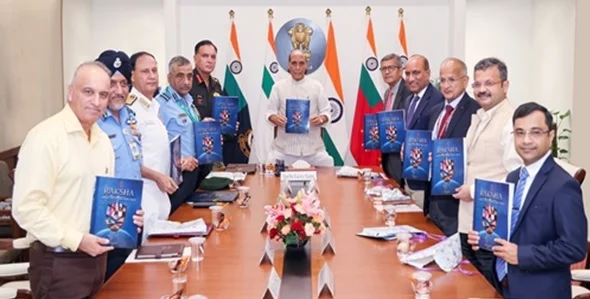
  • Defence Minister Rajnath Singh released ‘Raksha’, a comprehensive strategic framework for India’s defence diplomacy on December 3, 2026.

Important Points

  • Focus: Defence diplomacy and global defence partnerships
  • Key initiative: Make in India and defence exports
  • Major regional focus: Indian Ocean Region
  • Key roles: Net Security Provider and First Responder
  • Approach: Bilateral and multilateral defence cooperation
  • Objective: Strengthen India’s strategic position and global defence partnerships
  • The framework presents India’s vision and roadmap for the next 10 years to strengthen defence partnerships and expand strategic cooperation with friendly countries.

What is the ‘Raksha’ Framework?

  • Raksha’ is a strategic framework aimed at aligning India’s national security interests with proactive international defence cooperation.
  • It focuses on strengthening relations with friendly countries while promoting India as a reliable security and defence partner.

Key Features of the ‘Raksha’ Framework

1. Strengthening Defence Partnerships

  • The framework aims to deepen bilateral and multilateral defence partnerships with friendly countries. 
  • It also focuses on expanding:
    • Joint military exercises
    • Defence training programmes
    • Capacity-building initiatives
    • Strategic cooperation

2. Promoting Defence Exports

  • A major focus is on increasing indigenous defence exports under the Make in India initiative.
  • India aims to become a reliable global defence manufacturing partner by promoting cooperation in indigenously developed defence platforms and technologies.

3. Focus on Maritime Security

  • The framework gives special importance to maritime security in the Indian Ocean Region (IOR).
  • It seeks to strengthen India’s role as a Net Security Provider and First Responder in the region and contribute to peace, stability and security in the Indian Ocean.

4. Greater Global Strategic Engagement

  • The framework provides a long-term roadmap for India’s engagement with the global security community.
  • It aims to enhance India’s role in promoting:
    • Peace and stability
    • Strategic partnerships
    • International cooperation
    • A rules-based international order

Significance for India

1. Strengthens Strategic Partnerships

  • It can help India build stronger and more long-term defence relationships with friendly countries.

2. Boosts Defence Industry

  • Greater defence cooperation and exports can support domestic defence manufacturing, innovation and employment.

3. Enhances Maritime Security

  • A stronger role in the Indian Ocean can help India address challenges such as piracy, maritime terrorism, illegal fishing and humanitarian emergencies.

4. Increases India’s Global Role

  • The framework can strengthen India’s position as a responsible security partner and contribute to regional and global stability.

5. Supports Strategic Autonomy

  • Diversifying defence partnerships can help India reduce excessive dependence on any single country and strengthen its strategic autonomy.

Key Challenges

1. Balancing Multiple Partnerships

  • India has defence and strategic relationships with different major powers. Maintaining these relationships while protecting national interests can be challenging.

2. Dependence on Foreign Technology

  • Despite progress in indigenous production, India still depends on foreign sources for several critical defence technologies and systems.

3. Competition in Global Defence Markets

  • India faces strong competition from established defence exporters such as the United States, Russia, France and Israel.

4. Technology Transfer

  • Securing advanced technology and meaningful technology transfer from foreign partners remains a challenge.

5. Changing Geopolitical Environment

  • Conflicts, tensions and shifting alliances in regions such as the Indo-Pacific, Europe and West Asia can complicate India’s defence diplomacy.

6. Balancing Exports and National Security

  • While increasing defence exports is important, India must ensure that exports remain consistent with national security and strategic interests.

Way Forward

  • India needs to focus on indigenous R&D, defence manufacturing, technology development and deeper international cooperation
  • A balanced approach combining strategic autonomy with strong global partnerships can help India emerge as a reliable defence and security partner.

Conclusion

The Raksha’ Framework provides a long-term vision for India’s defence diplomacy. By strengthening defence partnerships, promoting indigenous defence exports and enhancing maritime security, it can help India play a greater role in maintaining regional stability and a rules-based international order.

Prelims Practice Question

Q. With reference to the ‘Raksha’ Framework, consider the following statements:

  1. It provides a 10-year roadmap for India’s defence diplomacy. 
  2. It focuses on strengthening bilateral and multilateral defence partnerships. 
  3. It seeks to promote indigenous defence exports under Make in India. 
  4. It focuses only on land-based security and does not cover maritime security. 

Which of the statements given above is/are correct?

A. 1, 2 and 3 only
B. 1 and 4 only
C. 2 and 3 only
D. 1, 2, 3 and 4

Mains Practice Question

Q. Discuss the significance of the ‘Raksha’ Framework in strengthening India’s defence diplomacy and global defence partnerships. What challenges could India face in implementing its vision?

FAQs

Q1. What is the ‘Raksha’ Framework?

It is a 10-year strategic framework for strengthening India’s defence diplomacy and global defence partnerships.

Q2. What are the major focus areas of the framework?

Defence partnerships, joint military exercises, training, capacity building, defence exports and maritime security.

Q3. How does it support Make in India?

It promotes indigenous defence production and aims to expand India’s defence exports and global manufacturing partnerships.

Q4. Why is the Indian Ocean Region important in the framework?

It seeks to strengthen India’s role as a Net Security Provider and First Responder in the Indian Ocean Region.

Q5. What is the significance of the framework?

It aims to strengthen India’s strategic partnerships, enhance defence capabilities and increase its role in maintaining regional and global security.

India’s R&D Ecosystem: Challenges, Industry–Academia Gap and the Path to a Knowledge-Based Economy

Why in News?

  • The NITI Aayog report ‘Ease of Doing R&D in India’ highlights several structural challenges in India’s Research and Development (R&D) ecosystem. 
  • These include low R&D expenditure, excessive dependence on public funding, weak industry–academia linkages, and difficulties in converting research into commercially viable products.For India’s goal of becoming a developed country by 2047, strengthening R&D and building an innovation-driven economy are essential.


India’s R&D Landscape

India’s Gross Expenditure on Research and Development (GERD) has remained below 1% of GDP for a long period.

In comparison:

  • South Korea: around 4.8% of GDP
  • USA: around 3.5%
  • China: more than 2.4%

India also has a structural imbalance in R&D financing.

  • Government accounts for nearly 60% of total R&D expenditure.
  • The private sector contributes less than 36%.
  • In advanced economies such as the USA, South Korea and Japan, the private sector contributes around 70–80% of total R&D investment.

Major areas of public R&D spending

  • Government-funded R&D is largely concentrated in:
  • Defence ,Space,Atomic energy,Government research laboratories,Strategic technologies Major institutions include ISRO, DRDO, CSIR and the Department of Atomic Energy.
  • While this has strengthened India’s strategic capabilities, greater private-sector participation is required to expand innovation across the wider economy.

Major Challenges in India’s R&D Ecosystem

1. Low R&D Expenditure

India’s R&D expenditure remains significantly lower than that of major innovation-driven economies.

Low investment limits:

  • Advanced scientific research
  • Research infrastructure
  • Availability of modern laboratories
  • Development of Deep-Tech technologies
  • Support for researchers and technology startups

Increasing R&D expenditure is therefore essential for technological competitiveness.

2. Excessive Dependence on Public Funding

India’s R&D system is heavily dependent on government funding.

In developed economies, private companies undertake a much larger share of R&D because research can generate:

  • New products,
  • Patents,
  • Competitive advantage,
  • Higher-value exports,
  • Commercial returns In India, private investment remains limited because R&D often involves high risks, high initial costs and long gestation periods.

3. Industry-Academia Gap

  • A major weakness of India’s R&D ecosystem is the disconnect between academic research and industrial requirements.
  • Focus of academic institutions
  • Universities and public laboratories often prioritise:
    • Research publications
    • Academic promotion
    • Patents
    • Institutional rankings
    • Basic research

Focus of industry

Industry generally prioritises:

  • Market demand
  • Commercial viability
  • Product development
  • Cost effectiveness
  • Profitability

As a result, many promising technologies developed in laboratories fail to reach the market.

Consequences

The industry–academia gap leads to:

  • Under-utilisation of research
  • Low technology transfer
  • Limited commercialisation of patents
  • Greater dependence on imported technology
  • Weak innovation–manufacturing linkages

4. Dependence on Imported Technology

Indian industries have often preferred importing established technologies instead of investing in long-term, high-risk research in domestic universities and public institutions.

This can result in:

  • Technological dependence
  • Higher vulnerability to global supply-chain disruptions
  • Weak indigenous technological capabilities
  • Strategic vulnerabilities
  • Reduced technological sovereignty

Developing indigenous capabilities is particularly important in strategic sectors.

5. The ‘Valley of Death’ in Deep-Tech

The ‘Valley of Death’ refers to the funding gap between early-stage research and commercialisation. Government grants and academic funding can often support research and proof-of-concept development at early stages.

Technology Readiness Levels (TRL)

Technology Readiness Levels (TRLs) measure the maturity of a technology from early research to commercial deployment.

TRL

Stage

TRL 1

Basic scientific principles identified

TRL 2–3

Technology concept and proof of concept

TRL 4–6

Prototype development and testing

TRL 7

Demonstration in an operational environment

TRL 8

Complete and qualified system

TRL 9

Actual operational/commercial deployment

The TRL 4–7 stage is particularly important because it requires significant investment in prototyping, testing and real-world validation.

Importance of R&D in Strategic Sectors

R&D is a major driver of:

  • Productivity
  • Industrialisation
  • Economic growth
  • Technological competitiveness
  • National security

Its importance is particularly high in Deep-Tech sectors, such as:

  • Artificial Intelligence
  • Quantum Computing
  • Semiconductors
  • Advanced Robotics
  • Space Technology
  • Defence Electronics
  • Advanced Materials

Strategic significance

Strong domestic R&D capabilities can help India achieve:

  • Technological sovereignty
  • Strategic autonomy
  • National security
  • Economic resilience
  • Reduced import dependence
  • Greater control over critical supply chains

Weak domestic capabilities, on the other hand, can expose India to export restrictions, trade bottlenecks and supply-chain disruptions.

India’s Patent Landscape

  • India has witnessed a significant increase in domestic intellectual property filings.
  • Domestic IP filings increased from around 4.78 lakh in 2020–21 to 6.90 lakh in 2024–25, a rise of about 44%.
  • India was also the world’s sixth-largest patent filer in 2023.
  • However, an increase in patent filings does not automatically translate into successful commercialisation.

Major problems

  1. Academic incentives: Universities may file patents mainly to meet promotion, tenure and ranking requirements rather than market demand.
  2. Limited international patenting: Indian firms often focus more on domestic markets, limiting their ability to develop globally competitive technologies.
  3. Weak technology-transfer mechanisms: Many universities lack professional Technology Transfer Offices (TTOs) capable of connecting researchers with industry and facilitating licensing and commercialisation.

Government Initiatives to Bridge the Gap

1. Biotechnology Industry Research Assistance Council (BIRAC)

BIRAC was established in 2012 under the Department of Biotechnology. It acts as an interface between industry and academia and supports biotechnology innovation through: Seed funding,Grants,Bio-incubators,Startup support, Early-stage commercialisation, It helps reduce the risks associated with early-stage biotechnology innovation.

2. IMPRINT

  • IMPRINT – Impacting Research Innovation and Technology was launched in 2015.
  • Its objective was to orient academic research towards solving important engineering and technological challenges.
  • It promoted collaboration among: Academic institutions , Government ministries, Industry partners This helped align research with national developmental priorities.

3. Anusandhan National Research Foundation (ANRF)

The ANRF was established under the ANRF Act, 2023. Its major objectives include:

  • Promoting research and innovation
  • Strengthening research institutions
  • Encouraging industry–academia collaboration
  • Increasing private-sector participation
  • Expanding research funding

It has a planned allocation of ₹50,000 crore over five years (2023–2028). An important objective is to increase funding from industry, philanthropic institutions and other non-government sources.

4. PAIR Programme

Partnerships for Accelerated Innovation and Research (PAIR) seeks to connect established research institutions with State Public Universities.

Its objective is to:

  • Expand research capacity
  • Democratise research funding
  • Reduce concentration of research in a few premier institutions
  • Promote innovation across different regions of India

Way Forward

1. Increase R&D Investment

India should progressively increase R&D expenditure as a share of GDP.

Greater investment should be directed towards:

  • Deep-Tech
  • Strategic technologies
  • Advanced manufacturing
  • Emerging technologies

2. Increase Private-Sector Participation

The government can encourage private R&D investment through:

  • Tax incentives
  • Grants
  • Risk-sharing mechanisms
  • Venture capital support
  • Public–Private Partnerships

The objective should be to shift from a predominantly government-funded R&D model to a collaborative public–private model.

3. Strengthen Industry–Academia Collaboration

Universities and industries should collaborate through:

  • Joint research projects
  • Industry-funded research
  • Joint laboratories
  • Faculty–industry programmes
  • Internships
  • Technology-transfer partnerships

This can ensure that research addresses real-world industrial requirements.

4. Strengthen Technology Transfer Offices

Professional Technology Transfer Offices (TTOs) should be established across higher educational institutions.

They can facilitate the complete innovation chain: Research → Patent → Licensing → Startup → Product → Market

5. Address the ‘Valley of Death’

Government support should extend beyond early-stage research to the TRL 4–7 stage.

Possible measures include:

  • Deep-Tech grants
  • Patient capital
  • Venture capital
  • Tax incentives
  • Government procurement
  • Industry partnerships

This can help promising technologies move from laboratories to markets.

6. Democratise Research Funding

Research funding should reach beyond IITs and other premier institutions. ANRF’s PAIR hub-and-spoke model can help strengthen research capacity in:

  • State universities
  • Emerging research institutions
  • Underfunded regions

This can create a more geographically balanced R&D ecosystem.

R&D and India’s Goal of Becoming a Knowledge-Based Economy

A strong R&D ecosystem is essential if India wants to move from a largely service-led economy towards a technology-intensive manufacturing and innovation-led economy.

R&D can help India:

  • Increase productivity
  • Develop high-value industries
  • Create skilled employment
  • Improve global competitiveness
  • Reduce dependence on imported technologies
  • Increase high-value exports
  • Strengthen strategic autonomy
  • Build technological sovereignty

Thus, R&D is not merely a scientific activity; it is a critical foundation for India’s economic transformation and national security.

Conclusion

  • India has significant scientific talent, a growing startup ecosystem and strong research institutions. However, low R&D expenditure, excessive dependence on public funding, weak industry–academia linkages, limited technology transfer and the ‘Valley of Death’ continue to constrain its innovation potential.
  • India needs to move from “research generation” to “research-to-market” by integrating government, academia, industry and investors.
  • A stronger university–industry–government ecosystem, supported by patient capital and effective technology-transfer mechanisms, can enable India to convert scientific knowledge into globally competitive technologies.
  • This will be crucial for achieving the vision of a developed, self-reliant and knowledge-based India by 2047.

FAQs

1. What is R&D and why is it important for India?

Answer :-R&D (Research and Development) involves creating new knowledge, technologies, products and processes. It is important for India because it improves productivity, promotes innovation, strengthens strategic autonomy and supports the transition towards a knowledge-based economy.

2. What are the major challenges facing India’s R&D ecosystem?

Answer :-The major challenges include low R&D expenditure, excessive dependence on public funding, limited private-sector participation, weak industry–academia linkages, dependence on imported technology, inadequate technology transfer and the ‘Valley of Death’ in Deep-Tech commercialisation.

3. How much does India spend on R&D?

Answer :-India’s Gross Expenditure on Research and Development (GERD) has remained below 1% of GDP, significantly lower than countries such as South Korea, the USA and China.

4. Why is private-sector participation important in R&D?

Answer :-Private-sector investment connects research with market requirements and helps finance high-risk, long-term innovation. Greater private participation can improve commercialisation, product development and global competitiveness.

5. What is the Industry–Academia Gap?

Answer :-The Industry–Academia Gap refers to the disconnect between academic research and industrial requirements. Universities often focus on publications and patents, while industries focus on market demand, commercial viability and product development.

6. What is the ‘Valley of Death’ in Deep-Tech?

Answer :-The ‘Valley of Death’ refers to the funding and commercialisation gap between early-stage research and market deployment. Many promising technologies fail to progress because they require substantial investment during the prototyping, testing and validation stages.

CHAAYANKAN: Tea Board, ISRO-NRSC and NIT Rourkela Launch AI-Based Project

Prelims: CHAAYANKAN, Tea Board, NRSC-ISRO, NIT Rourkela, AI, Machine Learning, Geospatial Technology. Remote Sensing, Satellite, Drones, Crop Health, Pest Detection, Yield Estimation. 

GS Paper II – Governance: Technology-enabled governance and data-driven policymaking.
GS Paper III – Agriculture, S&T & Environment: AI, Remote Sensing, Geospatial Technology & Precision Agriculture.

Keywords: CHAAYANKAN, Tea Board of India, AI-based Tea Plantation Monitoring, Geospatial Technology, Remote Sensing, Satellite Data, Drone Technology, Crop Health, Pest & Disease Detection, Green Leaf Yield Estimation.

Why in News?

The Tea Board of India, in collaboration with the National Remote Sensing Centre (NRSC) of ISRO and NIT Rourkela, has launched CHAAYANKAN, a research and development project to use Artificial Intelligence (AI) and geospatial technology for better monitoring of tea plantations.

Important Points

  • The full name of CHAAYANKAN is “Comprehensive AI-based Geospatial Data Analytics for Tea Plantation Monitoring.”
  • The project is planned to continue until March 2029.
  • Uses AI, satellite data, drones and weather information. 
  • Helps in tea-garden mapping, crop-health monitoring, pest/disease detection and yield estimation. 
  • Initially focuses on Assam, West Bengal, Kerala and Tamil Nadu. 
  • Aim: Improve tea productivity and provide better data for policymaking.

What is CHAAYANKAN?

  • CHAAYANKAN is an AI-based technology project designed to collect, analyse and use geographical and environmental data to monitor tea plantations.
  • It will combine satellite data, drone-based information, weather data, field observations and Artificial Intelligence to provide a detailed picture of tea-growing areas.

Key Features of CHAAYANKAN

1. Mapping of Tea Plantations

The system will use satellite and geospatial data to identify and map tea gardens accurately.

2. Monitoring Crop Health

AI will help assess the health and condition of tea plants by analysing satellite images and other field data.

3. Early Detection of Pests and Diseases

The system will help identify early signs of pest attacks and diseases, allowing tea growers to take timely action.

4. Estimation of Green Leaf Yield

CHAAYANKAN will use data and AI models to estimate the quantity of green tea leaves that can be produced.

5. Use of Weather Data

Weather information such as temperature, rainfall and other environmental conditions will be used to understand their impact on tea plantations.

6. Use of Drones and Satellite Technology

Drones will provide detailed field-level information, while satellites will help monitor large tea-growing areas.

States Covered Under the Project

The project will initially focus on major tea-producing states, including:

  • Assam
  • West Bengal
  • Kerala
  • Tamil Nadu

These states are among India's important tea-growing regions.

How Will AI Help?

CHAAYANKAN will use Artificial Intelligence and Machine Learning to analyse large amounts of plantation-related data. It will also use real-time field data and insect-related studies to improve the identification of pest risks and support better plantation management.

Organisations Involved

Organisation

Role

Tea Board of India

Implementation and support for the tea-sector project

ISRO's National Remote Sensing Centre (NRSC)

Satellite and remote-sensing technology

NIT Rourkela

Research, AI and data-analysis support

What is Geospatial Technology?

Geospatial technology refers to technologies used to collect, analyse and display information linked to a particular location on Earth. It includes technologies such as satellite imagery, remote sensing, Geographic Information Systems (GIS) and GPS.

What is Remote Sensing?

Remote sensing means collecting information about an object or area without directly coming into physical contact with it. In this project, satellite images and other remote-sensing technologies will help monitor tea plantations over large areas.

Significance of CHAAYANKAN

The project can help make tea plantation management more scientific, efficient and data-driven.

It is expected to:

  • Improve monitoring of tea gardens.
  • Help detect pests and diseases at an early stage.
  • Improve crop-health assessment.
  • Provide better estimates of green leaf production.
  • Support farmers and tea growers in making timely decisions.
  • Provide policymakers with better and more reliable data.
  • Strengthen the productivity and sustainability of India's tea sector.

Conclusion

CHAAYANKAN represents the use of AI, satellite technology, drones, weather data and field information to modernise tea plantation monitoring in India. By providing timely and accurate information, the project aims to improve productivity for tea growers and support better policymaking for India's tea industry.

Prelims Practice Question

Q1. Consider the following statements regarding CHAAYANKAN:

  1. It is an AI-based project for monitoring tea plantations. 
  2. It involves the Tea Board of India, ISRO’s NRSC and NIT Rourkela. 
  3. It uses satellite data, drones and weather information. 
  4. It is initially focused on Assam, West Bengal, Kerala and Tamil Nadu. 

Which of the statements given above are correct?

A. 1 and 2 only
B. 1, 2 and 3 only
C. 2, 3 and 4 only
D. 1, 2, 3 and 4

Mains Practice Question

Q. How can the CHAAYANKAN project improve tea plantation management, productivity and evidence-based policymaking through AI, remote sensing and geospatial technology?

FAQs

Q1. What is CHAAYANKAN?

CHAAYANKAN is an AI-based geospatial data analytics project for monitoring tea plantations.

Q2. What is the full form of CHAAYANKAN?

Comprehensive AI-based Geospatial Data Analytics for Tea Plantation Monitoring.

Q3. Which organisations are involved in CHAAYANKAN?

The Tea Board of India, ISRO’s National Remote Sensing Centre (NRSC), and NIT Rourkela.

Q4. What technologies will CHAAYANKAN use?

It will use AI, Machine Learning, satellite data, drones, weather information and field data.

Q5. What are the major applications of CHAAYANKAN?

It will help with tea-garden mapping, crop-health monitoring, early pest and disease detection, and green-leaf yield estimation.

World Archery Para Series 2026: India to Host Historic Event in Ahmedabad

Prelims: Sports | Para Archery | World Archery Para Series | Sports Authority of India | Archery Association of India
Mains: GS-II – Social Justice & Inclusion | Persons with Disabilities | Sports Governance | India as a Global Sporting Destination
Keywords: World Archery Para Series 2026, Ahmedabad, Sabarmati Riverfront, Para Archery, Harvinder Singh, Sheetal Devi, Archery Association of India, Inclusive Sports, Paralympics

Why in News?

India is set to host the Hyundai World Archery Para Series (WAPS) 2026 for the first time. The international para-archery competition will be held from 5–9 September 2026 at the Sabarmati Riverfront in Ahmedabad, Gujarat.

About World Archery Para Series 2026

The World Archery Para Series brings leading para-archers from different countries together for international-level competition.

The Ahmedabad edition will feature competitions across major para-archery categories, including:

  • Recurve Open
  • Compound Open
  • W1
  • Visually Impaired

The event provides athletes with an international competitive platform while increasing the visibility and recognition of para-archery.

Who is Organising the Event?

The event is being organised by the Archery Association of India (AAI) with support from:

  • Government of Gujarat
  • Sports Authority of Gujarat
  • Sports Authority of India (SAI)

The selection of Ahmedabad also reflects India's increasing capacity to organise major international sporting competitions.

Participating Countries

Athletes from 20 countries are expected to participate in the series. These include India, China, Great Britain, France, Germany, Hungary, Indonesia, Iran, Kazakhstan, Mexico, Slovakia, United States, Uzbekistan, Bangladesh, Bhutan, Cyprus, Czechia, Iraq, Russian Federation and Sri Lanka.

Thus, the event brings together athletes from Asia, Europe and North America.

Leading Indian Para-Archers

  • Harvinder Singh: Harvinder Singh is one of India's leading para-archers and became the Paralympic champion at Paris 2024. His achievements have played an important role in increasing the visibility of para-archery in India.
  • Sheetal Devi: Sheetal Devi is among India's most prominent para-archers. She has emerged as a World Para Archery Champion and Paralympic medallist, becoming an important face of India's para-sports ecosystem.
  • Rakesh Kumar: Rakesh Kumar is an Arjuna Awardee and World Para Archery medallist. He is among India's experienced international para-archery competitors.
  • Shyam Sunder Swami: Paralympian Shyam Sunder Swami will also be among the prominent Indian competitors at the tournament.

What is Para Archery?

  • Para archery is the competitive form of archery designed for eligible athletes with disabilities.
  • Depending on their classification, athletes compete in different categories and may use assistive devices permitted under competition rules.
  • International para-archery includes both Recurve and Compound events along with specialised classifications such as W1.
  • Para archery is also part of the Paralympic Games.

Understanding the Major Categories

  • Recurve Open: Athletes use a recurve bow, the type of bow traditionally associated with Olympic-style archery. Eligible para-athletes with physical impairments compete under the classification rules applicable to this category.
  • Compound Open: Athletes compete using a compound bow, which uses a system of cams and cables to assist in drawing and holding the bow.
  • W1 Category: W1 is designed for athletes with significant physical impairment affecting both the upper and lower limbs. Specific equipment and competition rules apply to this classification.
  • Visually Impaired Category: This category enables athletes with visual impairment to participate in competitive archery using appropriate adaptations and assistance permitted under the rules.

Why is Hosting the Event Important for India?

  1. First World Archery Para Series in India : Hosting the tournament for the first time represents an important milestone in the development of India's para-sports ecosystem.
  2. Boost to Para Sports :  International competitions provide Indian para-athletes with greater exposure to world-class competition without always having to travel abroad.
  3. Encouraging Inclusive Sports:  The event strengthens the idea that sporting infrastructure and opportunities should be accessible to athletes with different abilities.
  4. International Sporting Destination: Hosting more than 100 athletes from 20 countries strengthens India's profile as a destination for international sporting competitions.
  5. Inspiration for Young Athletes: Successful Indian para-athletes such as Harvinder Singh and Sheetal Devi can inspire more young athletes to enter competitive para-sports.
  6. Preparation for Future Events: India is also expected to host international archery events in 2027, including an Asia Cup Archery tournament. The Ahmedabad event can therefore contribute to institutional experience in organising future international competitions.

Why Ahmedabad?

  • Ahmedabad has increasingly emerged as an important centre for hosting major sporting events.
  • The Sabarmati Riverfront will provide the main setting for the competition.
  • Hosting an international para-sports tournament also provides an opportunity to demonstrate accessible sporting infrastructure, event management capability and international-standard facilities.
  • The event can further strengthen Gujarat's position on India's sports tourism and sporting-event map.

Para Sports and India

  • India's performance in international para-sports has improved considerably in recent years.
  • Achievements at the Paralympic Games and other international competitions have increased public attention towards para-athletes.

India's progress can be strengthened further through:

  • Accessible sports infrastructure
  • Identification of talent at the grassroots level
  • Specialised coaching
  • Sports science support
  • Financial assistance
  • International competition exposure
  • Accessible training centres
  • Greater media visibility

Hosting international tournaments within India can complement these measures.

Challenges for Para Sports in India

Despite growing international success, India's para-sports ecosystem continues to require sustained development.

Important areas include:

  • Availability of accessible sporting facilities
  • Identification of para-athletes at grassroots level
  • Availability of specialised coaches
  • Access to modern sporting equipment
  • Financial support for athletes
  • Sports science and rehabilitation facilities
  • Regular domestic competitions
  • International exposure
  • Public awareness and media coverage

Addressing these issues is necessary for creating a sustainable pipeline of para-athletes.

Way Forward

  • India should use major international events such as the World Archery Para Series to create a long-term para-sports ecosystem rather than treating them merely as individual tournaments.
  • Greater emphasis should be placed on accessible infrastructure, grassroots talent identification, professional coaching and sports science.
  • Schools, universities and local sporting institutions can also play an important role in identifying athletes with sporting potential.
  • India should additionally seek to host more international para-sport competitions, helping domestic athletes gain exposure while strengthening the country's capabilities as a global sporting destination.

Key Facts for Prelims

Particular

Details

Event

Hyundai World Archery Para Series 2026

Host Country

India

Host City

Ahmedabad, Gujarat

Venue

Sabarmati Riverfront

Competition Dates

5–9 September 2026

Opening Ceremony

4 September 2026

Expected Athletes

100+

Participating Countries

20

Indian Organiser

Archery Association of India

Major Categories

Recurve Open, Compound Open, W1, Visually Impaired

Prominent Indian Athletes

Harvinder Singh, Sheetal Devi, Rakesh Kumar, Shyam Sunder Swami

UPSC Prelims MCQ

Q. Consider the following statements regarding the World Archery Para Series 2026:

  1. India is hosting the World Archery Para Series for the first time.
  2. The event is being held in Ahmedabad.
  3. The competition includes Recurve Open and Compound Open categories.

Which of the statements given above are correct?

(a) 1 and 2 only
(b) 2 and 3 only
(c) 1 and 3 only
(d) 1, 2 and 3

UPSC Mains Question

Q. India's improving performance in para-sports must be complemented by the development of an inclusive and accessible sporting ecosystem. Discuss in the context of India's growing role in hosting international para-sport events.

FAQs

Where will the World Archery Para Series 2026 be held?

The competition will be held at the Sabarmati Riverfront in Ahmedabad, Gujarat.

When will the event take place?

The main competition is scheduled from 5 to 9 September 2026, with the opening ceremony scheduled for September 4.

Why is the 2026 edition important for India?

It marks the first time India is hosting the World Archery Para Series.

How many athletes will participate?

More than 100 athletes from 20 countries are expected to participate.

Who are the prominent Indian athletes?

Prominent Indian contenders include Harvinder Singh, Sheetal Devi, Rakesh Kumar and Shyam Sunder Swami.

Which categories will be contested?

The event will include Recurve Open, Compound Open, W1 and Visually Impaired categories.

Teachers Day 2026: history, Dr. Sarvepalli Radhakrishnan life and career, National Teachers’ Awards

Why in news?

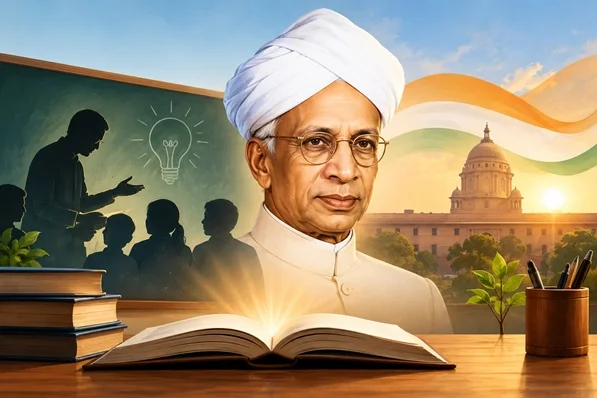
India celebrates Teachers’ Day every year on 5 September to honour teachers and recognise their contribution to education, society and nation-building. The day commemorates the birth anniversary of Dr. Sarvepalli Radhakrishnan, one of India’s most distinguished philosophers, educationists and statesmen, who later became the first Vice-President and second President of India.
History of Teachers’ Day in India

  • After Dr. Radhakrishnan became the President of India in 1962, some of his students and friends reportedly wanted to celebrate his birthday on 5 September. Instead of treating the occasion merely as a personal birthday celebration, Radhakrishnan suggested that it would be more meaningful to observe the day in honour of teachers. Consequently, 5 September came to be celebrated as Teachers’ Day in India from 1962 onwards.
  • The occasion therefore honours not only Dr. Radhakrishnan but the contribution of the entire teaching community to Indian society.

Why is Teachers’ Day Celebrated?

  • Teachers’ Day recognises that teachers play several roles simultaneously. They are not merely providers of academic information. Teachers can serve as educators, mentors, guides, value builders and nation builders.
  • Teachers influence the intellectual development of students while helping them develop discipline, confidence, creativity, ethical values and social responsibility. 

Dr. Radhakrishnan’s Life at a Glance

1888

Born on 5 September

Academic Career

Professor and philosopher

1931–1936

Vice-Chancellor, Andhra University

1939–1948

Vice-Chancellor, Banaras Hindu University

1948–49

Chairman, University Education Commission

1949–1952

Ambassador to the Soviet Union

1952–1962

First Vice-President of India

1954

Awarded Bharat Ratna

1962–1967

Second President of India

1962 onwards

5 September observed as Teachers’ Day in India

1975

Passed away on 17 April

Who Was Dr. Sarvepalli Radhakrishnan?

  • Dr. Sarvepalli Radhakrishnan (1888–1975) was an eminent Indian philosopher, academic, teacher and statesman. He became internationally recognised for his scholarship on Indian philosophy, comparative religion and ethics. His academic writings helped introduce and interpret Indian philosophical traditions to a wider global audience.
  • His journey was remarkable as teacher, professor, philosopher, Vice-Chancellor, diplomat, Vice-President and President of India.  His life therefore represents a unique combination of education, scholarship and public service.

Early Life of Dr. Sarvepalli Radhakrishnan

  • Dr. Sarvepalli Radhakrishnan was born on 5 September 1888 in southern India. He pursued higher education at Madras Christian College, where philosophy became a major area of his academic interest.
  • At a time when Western academic interpretations often misunderstood or underestimated Indian philosophical traditions, Radhakrishnan emerged as an important scholar who explained Indian thought through rigorous academic study.

Academic and Teaching Career

  • Dr. Radhakrishnan began his professional life as a teacher and academic. He taught philosophy at major institutions and eventually became associated with universities such as the University of Mysore and the University of Calcutta.
  • He was appointed to the prestigious Spalding Professorship of Eastern Religions and Ethics at the University of Oxford. Through his academic work, he sought to create an intellectual bridge between Indian and Western philosophical traditions.

Dr. Radhakrishnan as a Philosopher

  • His scholarship dealt extensively with Indian philosophy, Hindu philosophical traditions, Comparative religion, Ethics, Spirituality and Relationship between Eastern and Western thought. 
  • Some of his well-known works include:
    • Indian Philosophy
    • The Hindu View of Life
    • An Idealist View of Life
    • Eastern Religions and Western Thought
    • The Principal Upanishads
    • The Bhagavadgita

Role in Indian Education

  • Dr. Radhakrishnan’s contribution to education extended beyond classrooms and universities. After Independence, he chaired the University Education Commission (1948-49), popularly associated with his name as the Radhakrishnan Commission.
  • The Commission examined the state of university education in independent India and made recommendations concerning higher education, teaching standards, university administration and the broader purpose of education.
  • Its work became an important milestone in the evolution of India’s post-independence higher-education system.

Achievements: 

  • First Vice-President of India: Dr. Sarvepalli Radhakrishnan became the first Vice-President of India in 1952. He served in the position for ten years, from 1952 to 1962. As Vice-President, he was also associated with the functioning of the Rajya Sabha as its ex-officio Chairman, giving him an important role in India's parliamentary system.
  • Second President of India: In 1962, Dr. Radhakrishnan became the second President of India, succeeding Dr. Rajendra Prasad. He served from 13 May 1962 to 13 May 1967. His presidency coincided with an important and challenging period in Indian history, including major security and political developments.
  • Bharat Ratna and Other Recognition: Dr. Sarvepalli Radhakrishnan was awarded the Bharat Ratna in 1954, India’s highest civilian honour. The honour recognised his exceptional contribution to intellectual life, education and public service.

Teachers’ Day and National Teachers’ Awards

  • Teachers’ Day is also associated with the recognition of outstanding educators through the National Teachers’ Awards. The Ministry of Education states that these awards recognise teachers whose commitment has enriched students’ lives and improved the quality of school education.
  • The selection framework evaluates teachers particularly on their educational impact, innovative practices, learning outcomes, experiential learning, extracurricular contributions, mentoring and community engagement.

Teachers’ Day in India vs World Teachers’ Day

Teachers’ Day in India

World Teachers’ Day

5 September

5 October

Linked to Dr. S. Radhakrishnan’s birth anniversary

International observance

Primarily celebrated in India

Observed globally

India has observed it since 1962

UNESCO-led international observance

FAQs

Why is Teachers’ Day celebrated on 5 September?

It marks the birth anniversary of Dr. Sarvepalli Radhakrishnan, an eminent teacher, philosopher and former President of India.

When was Teachers’ Day first celebrated in India?

India began observing 5 September as Teachers’ Day in 1962.

When was Dr. Sarvepalli Radhakrishnan born?

He was born on 5 September 1888.

Which major civilian award did Dr. Radhakrishnan receive?

He was awarded the Bharat Ratna in 1954.

Which universities did Dr. Radhakrishnan serve as Vice-Chancellor?

He served as Vice-Chancellor of Andhra University and Banaras Hindu University (BHU).

India’s First Geosynchronous Earth Imaging Satellite: Key Facts, ISRO EOS-05 Mission, GSLV-F17 Launch, Applications and Strategic Importance

Prelims: EOS-05, GSLV-F17, Geosynchronous Orbit, Geostationary Orbit, Sub-GTO, Earth Observation Satellites, GSLV, Cryogenic Engine, Satish Dhawan Space Centre.
Mains: GS Paper III: Space Technology, Indigenisation of Technology, Disaster Management, Applications of Remote Sensing, Agriculture and Environmental Monitoring.

Why in news?

ISRO has scheduled the GSLV-F17/EOS-05 mission for September 4, 2026. The launch is scheduled for 2:55 AM IST from Sriharikota.
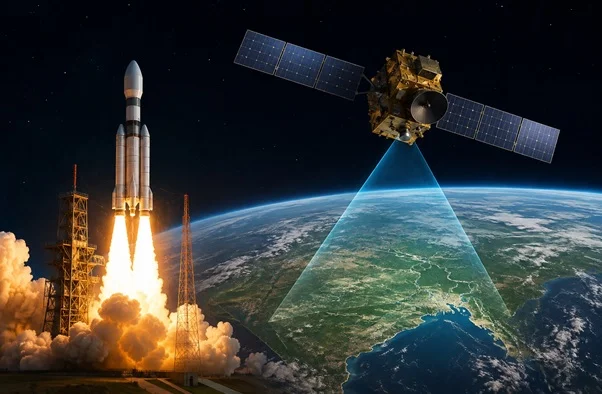
Key Facts

Feature

Details

Satellite

EOS-05

Type

Earth Observation Satellite

Launch Vehicle

GSLV-F17

Launch Date

September 4, 2026

Launch Time

2:55 AM IST

Launch Site

Satish Dhawan Space Centre, Sriharikota

Launch Pad

Second Launch Pad

Initial Orbit

Sub-Geosynchronous Transfer Orbit (Sub-GTO)

Major distinction

India's first imaging satellite from geosynchronous orbit

Organisation

ISRO

What is EOS-05?

  • An advanced Earth-observation spacecraft designed to obtain images of the Earth's surface for monitoring and observation applications.
  • Its defining feature is its intended operation from geosynchronous orbit. Most conventional remote-sensing satellites operate in Low Earth Orbit (LEO) and observe a location as they repeatedly pass over it. 
  • A geosynchronous imaging platform, by contrast, can repeatedly view a very large region from roughly 36,000 km above Earth, offering much greater temporal continuity for regional monitoring.

What is a Geosynchronous Orbit?

  • An orbit in which a satellite's orbital period is approximately equal to Earth's rotation period-about 24 hours. A special case is the geostationary orbit, where the satellite travels in a circular orbit above the equator and appears nearly stationary over one longitude.
  • For Earth observation, this high-altitude perspective can provide large-area coverage, repeated observations, frequent monitoring and quicker identification of changes. 

What is Sub-GTO?

  • The GSLV-F17 will not directly place EOS-05 into its final operational orbit. ISRO states that the spacecraft will initially be injected into a Sub-Geosynchronous Transfer Orbit (Sub-GTO).
  • A transfer orbit acts as an intermediate trajectory. After separation from the launch vehicle, the spacecraft can use its onboard propulsion and orbital manoeuvres to move toward its intended operational orbit.

Why is Geosynchronous Earth Observation Important?

  • A conventional LEO remote-sensing satellite travels around Earth and can observe a particular region only when its orbit brings it over that area. EOS-05's high-altitude geosynchronous perspective is intended to allow repeated monitoring of a large region. This could complement India's existing LEO Earth-observation satellites rather than replace them.

LEO vs Geosynchronous Earth Observation

Low Earth Orbit Satellites

EOS-05-type Geosynchronous Observation

Much closer to Earth

Around 36,000 km altitude in operational GSO

Pass over regions periodically

Can repeatedly observe a broad region

Often provides finer spatial detail

Emphasises wide coverage and temporal frequency

Excellent for detailed mapping

Useful for monitoring rapidly changing conditions

Major Applications of EOS-05

  • The spacecraft's repeated large-area observation capability can strengthen India's ability to monitor changes on the Earth's surface.
  • Potential civilian applications include disaster monitoring, agriculture and vegetation assessment, environmental monitoring, land-use changes, water resources, floods, cyclones and forest fires.
  • The principal advantage is the possibility of observing evolving situations more frequently than with satellites that only pass over an area periodically.
  • Earth-observation satellites primarily provide observations and data; they do not independently constitute an end-to-end disaster-warning system.
  • Satellite information normally has to be combined with meteorological observations, ground sensors, models and disaster-management agencies.

Strategic Importance

  • A December 2025 parliamentary reply from the Department of Space explicitly described GSLV-F17/EOS-05 as the launch of an Earth Observation Satellite for a "strategic user."
  • A satellite capable of frequently revisiting broad areas can strengthen situational awareness and strategic monitoring. At the same time, specific claims about its classified capabilities, targets or surveillance performance should be treated cautiously unless officially disclosed.

GSLV-F17 Launch Vehicle

  • GSLV is one of India's operational launch-vehicle families and is designed to carry satellites toward higher-energy orbits, including transfer orbits used for geosynchronous missions. ISRO currently lists PSLV, GSLV and LVM3 among India's operational launch vehicles. GSLV programme is India's indigenous cryogenic upper-stage technology, which is crucial for high-energy orbital missions.

The Earlier GISAT Attempt

  • In August 2021, ISRO launched EOS-03/GISAT-1 aboard GSLV-F10. The mission could not accomplish its objective after the cryogenic upper stage failed to ignite.
  • EOS-05 therefore represents an important renewed effort to establish an operational Indian imaging capability from geosynchronous orbit.

Why EOS-05 Matters for India

  • It can improve temporal resolution-how frequently a region can be observed. 
  • Its broad field of view can support large-area monitoring. 
  • It can complement India's existing remote-sensing and meteorological satellites. 
  • Its potential applications extend across governance, agriculture, environment, disaster management and strategic requirements.

Significance for Disaster Management

  • India is vulnerable to a wide variety of natural hazards, including cyclones, floods, landslides, forest fires, drought and coastal hazards. 
  • Satellite imagery is an important part of disaster management because it can help identify the extent of flooding, monitor environmental changes, assess affected areas and support response planning.
  • Effective disaster management ultimately depends on integrating satellite data, weather satellites, river gauges, ground sensors, forecasting models, disaster-management agencies and local administration. 

Challenges and Limitations

  • A geosynchronous imaging satellite also involves technological trade-offs. Because it operates far farther from Earth than LEO remote-sensing satellites, obtaining detailed imagery requires sophisticated optics, detectors, pointing accuracy and data-processing systems. Cloud cover can also limit observations by optical sensors.

Significance for India's Space Programme

  • Technological significance: It aims to establish India's first imaging satellite capability from geosynchronous orbit.
  • Developmental significance: Frequent Earth observation can strengthen disaster management, agriculture, environmental monitoring and resource management.

Prelims MCQ

Q. EOS-05, recently in the news, is primarily associated with which of the following?

A. Satellite navigation

B. Earth observation

C. Human spaceflight

D. Space astronomy

Mains Practice Question 

Q. How can Earth Observation Satellites contribute to India’s developmental and strategic requirements? Discuss with reference to the EOS-05 mission.

FAQs

Which rocket will launch EOS-05?

EOS-05 is scheduled to be launched aboard GSLV-F17, the 19th flight of India's Geosynchronous Satellite Launch Vehicle.

When will EOS-05 be launched?

The mission is scheduled for 4 September 2026 at 2:55 AM IST.

From where will EOS-05 be launched?

It will be launched from the Satish Dhawan Space Centre (SDSC-SHAR), Sriharikota.

What is the main significance of EOS-05?

Its major significance lies in strengthening India's capability for frequent, large-area Earth observation from geosynchronous orbit.

What is a geosynchronous orbit?

A geosynchronous orbit is one in which a satellite's orbital period matches Earth's rotation period, approximately 24 hours.

Ladakh Autonomous Hill Development Councils: Powers, Functions, Latest Expansion and Challenges

Prelims: Indian Polity & Governance, Local Self-Government,  Ladakh Autonomous Hill Development Councils (LAHDCs), Sixth Schedule of the Constitution, Articles 244(2) and 275(1), Ladakh Administrative Reorganisation, Jammu and Kashmir Reorganisation Act, 2019
Mains: GS Paper II: Polity, Constitution, Governance and Federalism
GS Paper III: Internal Security & Border Management

Why in News?

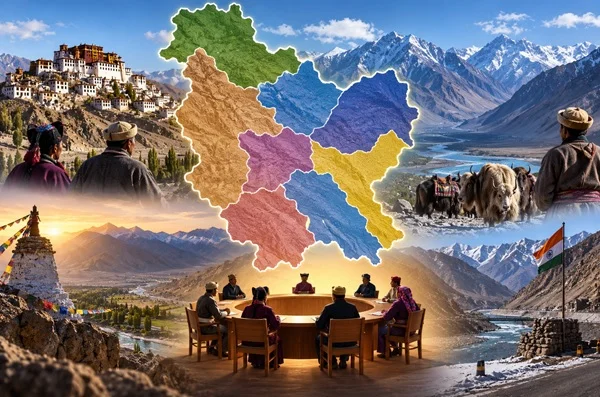
  • On 3 September 2026, Ladakh Lieutenant Governor Vinai Kumar Saxena approved the notification for establishing Ladakh Autonomous Hill Development Councils in all seven districts.

How Did Ladakh Go From 2 to 7 Districts? 

  • For years, Ladakh had only two districts (Leh and Kargil). In August 2024, the Ministry of Home Affairs gave in-principle approval for the creation of five additional districts.
  • On 27 April 2026, the Ladakh administration formally notified five new districts (Sham, Nubra, Changthang, Zanskar, Drass). The new districts were formally inaugurated on 29 April 2026.

Where Did the Five New Districts Come From?

  • Three new districts were carved out of the erstwhile Leh district (Nubra, Sham, Changthang and remaining Leh).
  • Two new districts were carved out of Kargil (Zanskar, Drass and remaining Kargil). 
  • The headquarters of the new districts are Sham (Khaltse), Nubra (Diskit), Changthang (Nyoma), Zanskar (Padum), Drass (Drass-Ranbirpura). 

What is LAHDC?

  • LAHDC stands for Ladakh Autonomous Hill Development Council. It is an elected institution of local self-governance designed to provide greater participation to local communities in development planning and administration.
  • Ladakh's hill councils historically functioned at the district level, particularly in Leh and Kargil. Their central purpose is to allow locally elected representatives to participate more directly in decisions concerning development priorities and local requirements.

Elections in the New Hill Councils

  • The establishment of the new councils is intended to pave the way for elected local self-governance in the five newly created districts. Once the institutional and electoral arrangements are completed, residents will be able to elect representatives to their respective councils.
  • This is important because merely creating a new administrative district creates government offices and officials, whereas an elected council adds an element of democratic representation and participatory governance.

What Do Autonomous Hill Development Councils Do?

  • Broadly, hill development councils are designed to participate in planning and implementation of development programmes suited to local requirements.
  • Areas relevant to local development can include agriculture, rural development, local infrastructure, education, public health, tourism, cultural activities, local roads, water management, environmental concerns, employment-oriented development, and welfare programmes.
  • Local representatives who understand regional geography, climate and social requirements can participate in deciding how resources should be used.

Why Does Ladakh Need Decentralised Governance?

  • Vast Geographical Area: Settlements are spread across an enormous mountainous region. People in remote areas may have to travel very long distances to access administrative services.
  • Difficult Terrain: High-altitude Mountains, passes, snow and severe winter conditions can make physical connectivity difficult.
  • Sparse Population: Ladakh's population is distributed across widely separated settlements, making conventional administrative delivery challenging.
  • Distinct Local Requirements: The needs of Changthang may differ significantly from those of Leh, Kargil, Drass, Nubra or Zanskar.
  • Border Location: Ladakh shares sensitive international frontiers and has immense strategic importance for India. Strong local governance and development are therefore also important for maintaining resilient border communities.

Significance of the Decision

  • Strengthening Grassroots Democracy: The most important impact is the expansion of elected local governance. Instead of development being shaped exclusively through the bureaucracy, local elected representatives can have a greater role.
  • Decentralisation of Governance: The decision reflects the principle: Power closer to people better understanding of local needs more responsive development
  • Representation for New Districts: The five new districts were created only in April 2026. Providing them with their own hill councils helps ensure that the administrative restructuring is accompanied by a mechanism for local democratic participation.
  • Region-Specific Development: Different parts of Ladakh have different development requirements.
    • Changthang: high-altitude pastoral communities and border-region challenges.
    • Nubra: tourism, connectivity and remote settlements.
    • Zanskar: difficult accessibility and infrastructure requirements.
    • Drass: extreme climate and strategic location.
    • Sham: rural development, connectivity and local economic needs.
  • Improved Service Delivery: Administrative decentralisation can reduce dependence on Leh and Kargil for every government-related requirement. It can potentially improve grievance redressal, local infrastructure planning, mwelfare implementation, public services and administrative accessibility.
  • Inclusive Development: Decentralised institutions can provide remote communities with a greater role in determining development priorities. This is particularly relevant for geographically isolated villages and tribal communities.
  • Strengthening Border Areas: Better roads, communications, health facilities, schools, livelihood opportunities and public services can encourage communities to remain economically viable in remote border regions.

Administrative Reforms in Ladakh During 2026

Period

Key Development

April 2026

Five new districts (Sham, Nubra, Changthang, Zanskar and Drass) were notified and inaugurated. 

May 2026

A UT-level committee was constituted to facilitate the operationalisation of the new districts

July 2026

17 new tehsils were created, increasing Ladakh’s total number of tehsils from 15 to 32

July 2026

The decision to extend the LAHDC framework to all seven districts of Ladakh was announced

September 2026

The Lieutenant Governor approved the notification for LAHDCs in all seven districts, strengthening decentralised govern

What is the Sixth Schedule Demand in Ladakh?

  • Since Ladakh became a Union Territory in 2019, several political and civil-society groups have sought stronger constitutional safeguards.
  • Among the major issues raised in public debate have been protection of land, jobs, culture, environment, tribal identity, and political representation.
  • There have also been demands concerning statehood and stronger constitutional safeguards, including demands associated with Sixth Schedule protection.

LAHDC vs Panchayati Raj Institutions

  • Panchayati Raj: Panchayati Raj Institutions form the rural local-government framework associated with Part IX of the Constitution and the 73rd Constitutional Amendment.
  • LAHDC: LAHDCs are special hill-development governance institutions created under Ladakh's applicable statutory framework. Their purpose is to provide greater autonomy and local participation at the hill/district level.

Challenges Ahead

  • Financial Resources: Local councils need adequate financial resources to implement development plans. Without sufficient funding, decentralisation may remain largely administrative.
  • Clear Division of Powers: Responsibilities of the UT administration, Deputy Commissioners, LAHDCs, Panchayati Raj Institutions, and other local authorities need clear coordination.
  • Administrative Capacity: New districts and councils require trained officials, offices, infrastructure, digital systems, staff, and financial-management capacity.
  • Difficult Geography: Decentralisation cannot by itself eliminate Ladakh's geographical difficulties. Connectivity and service delivery will remain challenging in remote high-altitude settlements.
  • Environmental Fragility: Ladakh has an extremely fragile mountain ecosystem. Development decisions involving tourism, roads, construction, water, waste, energy, and urban expansion must therefore balance economic development with ecological sustainability.
  • Local Aspirations: The new LAHDC arrangement will operate alongside wider debates over political representation and constitutional safeguards in Ladakh.

Prelims MCQ

Q. With reference to the Ladakh Autonomous Hill Development Councils (LAHDCs), consider the following statements:

  1. The LAHDC framework is being extended to all seven districts of Ladakh.
  2. Ladakh is a Union Territory without a legislature.
  3. LAHDCs are constitutional Autonomous District Councils established directly under the Sixth Schedule.

Which of the statements given above is/are correct?

A. 1 and 2 only

B. 2 and 3 only

C. 1 and 3 only

D. 1, 2 and 3

Mains Practice Question 

Q. Discuss how the expansion of Autonomous Hill Development Councils to all districts of Ladakh can strengthen decentralised governance and grassroots democracy in the Union Territory.

FAQs

What is LAHDC?

LAHDC stands for Ladakh Autonomous Hill Development Council.

How many districts does Ladakh have?

Ladakh has seven districts.

When were the five new districts notified?

They were notified in April 2026.

Which districts already had LAHDCs?

Leh and Kargil already had autonomous hill development councils.

How many LAHDCs will Ladakh have?

The LAHDC framework is being extended to all seven districts.

India-Belgium Relations: MoUs on Renewable Energy, Defence, Semiconductors and Critical Minerals

Prelims: India-Belgium Relations, IMEC, Green Hydrogen, Critical Minerals, Zorawar Light Tank
Mains: GS Paper II – International Relations | GS Paper III – Energy, Defence, Science & Technology
Keywords: India-Belgium Relations | IMEC | Semiconductor Ecosystem | Critical Minerals | Green Hydrogen | Renewable Energy | Defence Industrial Cooperation | Zorawar Light Tank | Migration and Mobility Partnership | India-EU Relations | Critical Mineral Recycling

Why in News?

India and Belgium signed multiple Memoranda of Understanding (MoUs) and agreements during bilateral engagements in New Delhi. Prime Minister Narendra Modi and Belgian Prime Minister Bart De Wever held bilateral talks at Hyderabad House.
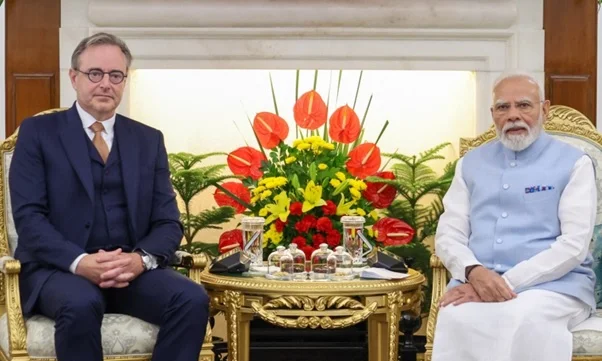
Important Point

  • The cooperation covers several strategic sectors, including renewable energy, defence-industrial cooperation, semiconductors, migration and mobility, and critical minerals processing and recycling.
  • Both countries also set an objective of doubling bilateral trade over the next five years.
  • Bart De Wever’s three-day visit is significant as it marks the first official visit by a Belgian Prime Minister to India in around two decades.

Background: India-Belgium Relations

  • India and Belgium share longstanding diplomatic and economic relations. Belgium is an important European partner for India and is strategically located at the heart of Western Europe.
  • Economic relations have traditionally been supported by trade in diamonds, pharmaceuticals, chemicals, machinery and engineering products. In recent years, bilateral engagement has expanded into emerging strategic sectors such as clean energy, defence manufacturing, semiconductor technology and critical minerals.
  • The latest agreements indicate a shift in the relationship from primarily trade-oriented cooperation towards a broader technology and strategic partnership.

Why is it important for India?

  • India has set ambitious renewable energy and decarbonisation targets. European technological expertise can complement India's large domestic renewable-energy market and manufacturing capacity.
  • Cooperation in green hydrogen and energy storage is particularly important because these technologies can help decarbonise sectors where direct electrification is difficult.

Zorawar Light Tank

  • Zorawar is India's indigenous light tank project designed to provide greater mobility and operational flexibility, particularly in challenging high-altitude terrain.
  • For India, international technological partnerships combined with domestic manufacturing can contribute to the broader objective of Atmanirbhar Bharat in defence.

Significance for India

1. Clean Energy Transition

Cooperation in green hydrogen, solar power, offshore wind and energy storage can support India's transition towards a low-carbon economy.

2. Defence Indigenisation

Belgian technological expertise combined with India's manufacturing capacity can contribute to indigenous defence production and reduce external dependence.

3. Semiconductor Ecosystem

Engagement with IMEC can strengthen India's efforts to build capabilities across the semiconductor value chain.

4. Critical Mineral Security

Processing and recycling cooperation can help diversify India's critical-mineral supply chains and improve resource security.

5. Skilled Mobility

A Migration and Mobility Partnership can provide greater opportunities for Indian students, professionals and researchers in Europe.

6. Stronger India-Europe Partnership

Belgium is an important member of the European Union. Stronger India-Belgium relations can therefore complement India's wider engagement with Europe.

India-Belgium Cooperation at a Glance

Sector

Key Cooperation

Renewable Energy

Green Hydrogen, Solar, Offshore Wind, Energy Storage

Defence

Industrial cooperation, technology and training

Semiconductors

Cooperation involving IMEC

Critical Minerals

Processing and recycling

Mobility

Professionals, students and researchers

Trade

Objective to double bilateral trade in five years

Maritime Cooperation

Planned visit of Belgian frigate LEOPOLD I

Challenges

Despite the growing partnership, several challenges need attention.

  • Technology transfer: Advanced technologies, particularly in defence and semiconductors, often involve intellectual-property and export-control concerns.
  • Implementation: Signing MoUs alone does not guarantee outcomes. Cooperation needs to translate into investments, joint research and commercially viable projects.
  • Critical-mineral supply chains: Processing and recycling infrastructure requires substantial investment, technology and environmental safeguards.
  • Mobility regulations: Differences in immigration, qualification recognition and labour regulations may affect implementation of mobility arrangements.

Way Forward

  • India and Belgium should move from broad agreements towards specific projects, investment commitments and technology partnerships.
  • Joint research programmes involving universities, companies and research institutions can strengthen cooperation in semiconductors and clean energy.
  • In defence, collaboration should focus on co-development, co-production and integration with India's domestic defence manufacturing ecosystem.
  • Both countries can also develop circular-economy partnerships for recovering critical minerals from electronic waste and batteries.
  • A structured mobility agreement can further strengthen people-to-people relations and connect India's skilled workforce with Belgium's research and industrial ecosystem.

Prelims MCQs

Q. IMEC, recently seen in the context of India-Belgium relations, is primarily associated with:

A. Nuclear energy
B. Semiconductor and nanoelectronics research
C. Critical mineral mining
D. Naval shipbuilding

Mains Question

Q. India-Belgium relations are gradually expanding from traditional trade ties to cooperation in strategic technologies. Discuss with reference to renewable energy, defence, semiconductors and critical minerals.

FAQs

Why were India and Belgium in the news in September 2026?

India and Belgium signed and announced agreements covering renewable energy, defence-industrial cooperation, semiconductors, critical minerals and mobility during high-level bilateral engagements in New Delhi.

What is IMEC?

IMEC is a Belgium-based research and innovation institution known globally for advanced semiconductor and nanoelectronics research.

Why are critical minerals important for India?

Critical minerals are required for batteries, electric vehicles, renewable-energy technologies, electronics, semiconductors and defence systems. Secure and diversified supplies are therefore strategically important.

What is the significance of renewable-energy cooperation?

It can facilitate cooperation in green hydrogen, solar energy, offshore wind, energy storage and pumped-storage technologies while supporting India's clean-energy transition.

What is the target for India-Belgium bilateral trade?

The two countries have set an objective of doubling bilateral trade over the next five years.

DRDO and University of Hyderabad Develop BAM-H24: Next-Generation Solid Rocket Propellant Fuel

Prelims: Science & Technology | Defence Technology | Rocket Propulsion | DRDO | High-Energy Materials
Mains: GS-III – Science & Technology | Defence Indigenisation | Space Technology | Atmanirbhar Bharat
Keywords: BAM-H24, DRDO, University of Hyderabad, ACRHEM, Solid Rocket Propellant, Specific Impulse, Burn Rate Accelerator, High-Energy Materials, Missile Technology, Launch Vehicles

Why in News?

Researchers associated with the Defence Research and Development Organisation (DRDO) and the University of Hyderabad (UoH) have developed a next-generation energetic compound called BAM-H24 for use in solid rocket propulsion.
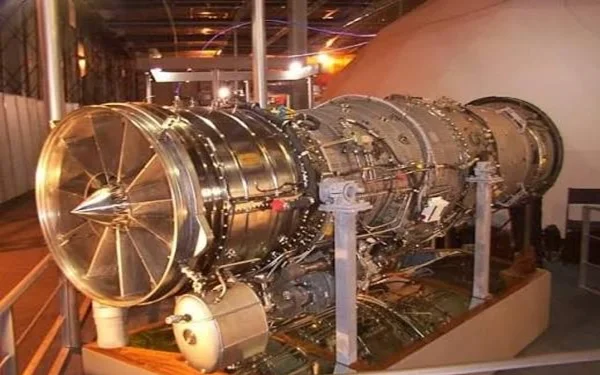

What is BAM-H24?

  • BAM-H24 is a newly developed high-energy compound intended for advanced solid rocket propellant formulations.
  • It has been developed by researchers from the Advanced Centre of Research in High Energy Materials (ACRHEM), University of Hyderabad, in collaboration with DRDO-linked research efforts.
  • The research covers its synthesis, structural characteristics and energetic properties.

BAM-H24 can potentially work as:

  • Solid rocket propellant fuel
  • Fuel additive
  • Burn rate accelerator
  • Component of advanced high-energy material formulations

Thus, BAM-H24 may help improve both the performance and safety of future propulsion systems.

What is a Solid Rocket Propellant?

  • A rocket requires thrust to move forward. This thrust is generated when a propellant undergoes combustion and produces high-temperature gases.
  • Rocket propulsion systems can broadly use solid, liquid or hybrid propellants.
  • In a solid rocket motor, the fuel and oxidising components are incorporated into a solid propellant grain stored inside the rocket motor.
  • Once ignited, the propellant burns and produces gases at high pressure. These gases escape through the nozzle and generate thrust.

Basic Process

Solid Propellant → Ignition → Combustion → High-Pressure Gas → Nozzle → Thrust

Solid propulsion is particularly useful in many missile applications because it can offer compactness, rapid readiness, relatively simple storage and fewer mechanical components compared with many liquid-propellant systems.

Key Features of BAM-H24

1. High Chemical and Thermal Stability

BAM-H24 exhibits strong chemical and thermal stability. This is important because energetic materials may have to remain stored for considerable periods while maintaining their required characteristics.

2. Reduced Sensitivity

One of its important characteristics is its relatively high insensitivity to impact and friction. Reduced sensitivity can lower the possibility of accidental initiation during manufacturing, transportation, handling and storage.

This can improve operational safety for personnel working with energetic materials.

3. High Specific Impulse Potential

Researchers expect BAM-H24-based formulations to provide high specific impulse. Specific impulse is an important measure of rocket propulsion efficiency. In simple terms, it indicates how effectively a propulsion system uses its propellant to generate thrust.

Higher Specific Impulse → Greater Propulsion Efficiency

4. Reduced Ignition Delay

BAM-H24 is also expected to offer reduced ignition delay. Ignition delay refers to the time between the initiation command/ignition process and effective combustion of the propellant.

Reducing this delay can be useful for propulsion systems requiring rapid and predictable performance.

5. Non-Hygroscopic Nature

Another important property of BAM-H24 is its non-hygroscopic nature. A hygroscopic material absorbs moisture from its surroundings. Moisture can adversely affect the physical and chemical properties of some energetic materials. BAM-H24's resistance to water absorption can therefore help preserve propellant integrity, particularly during storage in humid or demanding environmental conditions.

What is a Burn Rate Accelerator?

The burn rate of a solid propellant determines how quickly its surface burns and produces gases. A burn rate accelerator is an additive used to modify or increase this combustion rate.

Controlling the burn rate is important because it influences:

  • Chamber pressure
  • Thrust generation
  • Combustion behaviour
  • Overall propulsion performance

BAM-H24 could potentially be incorporated into high-energy formulations as a burn rate accelerator.

What is Specific Impulse?

Specific Impulse (Isp) is one of the most important parameters used to compare rocket propulsion systems. It represents the efficiency with which a rocket engine or motor uses its propellant.

A propulsion system capable of achieving higher specific impulse can potentially obtain greater performance from a given quantity of propellant, although actual system performance depends on the complete propellant formulation and motor design.

Why is BAM-H24 Important for India?

1. Defence Indigenisation

Advanced energetic materials are critical components of modern missile and propulsion technologies. Developing such materials domestically can reduce dependence on foreign technologies and strengthen India's indigenous defence ecosystem.

2. Missile Technology

Solid propulsion is widely important for missile systems because of characteristics such as storage readiness and rapid launch capability.

A safer and more efficient energetic material could contribute to the development of future propulsion technologies.

3. Space Launch Vehicles

The potential applications of BAM-H24 are not restricted to defence systems. Researchers have also identified possible applications in launch vehicles.

Therefore, developments in high-energy materials can have both strategic and space-technology relevance.

4. Safer Manufacturing and Storage

Energetic materials must be manufactured, transported and stored under strict safety conditions. BAM-H24's reduced sensitivity to impact and friction could help minimise accidental hazards and improve safety during different stages of the propellant lifecycle.

5. Strategic Self-Reliance

Propulsion technology is an important part of a country's strategic technological capability. Domestic research in high-energy materials supports India's broader objective of developing critical defence technologies under Atmanirbhar Bharat.

Role of ACRHEM

The Advanced Centre of Research in High Energy Materials (ACRHEM) is associated with the University of Hyderabad and conducts research in areas related to high-energy materials.

Such materials have applications in areas including:

  • Propulsion
  • Defence technologies
  • Energetic compounds
  • Advanced material science

The BAM-H24 innovation demonstrates the importance of collaboration between academic research institutions and India's defence R&D ecosystem.

Way Forward

  • India needs to strengthen cooperation between DRDO, universities, research laboratories and domestic industry to move advanced materials from laboratory-scale innovation to reliable production.
  • Future efforts should focus on scalability, safety validation, propulsion testing and manufacturing capability.
  • Such an ecosystem can help India move from simply developing advanced technologies to achieving domestic production and long-term strategic technological autonomy.

Prelims MCQs

Q1. BAM-H24, recently in news, is associated with:

(a) Hypersonic wind tunnel
(b) Solid rocket propulsion
(c) Nuclear reactor coolant
(d) Quantum communication

Mains Question

Q. Indigenous development of advanced high-energy materials is essential for India's strategic autonomy in defence and space technologies. Discuss in the context of recent developments in solid rocket propulsion.

FAQs

What is BAM-H24?

BAM-H24 is a newly developed boron-, hydrogen- and nitrogen-rich energetic compound with potential applications in advanced solid rocket propellant formulations.

Who developed BAM-H24?

It was developed by researchers associated with DRDO and the Advanced Centre of Research in High Energy Materials (ACRHEM), University of Hyderabad.

Where can BAM-H24 be used?

It has potential applications as a solid rocket propellant fuel, fuel additive and burn rate accelerator, including possible use in missile systems and launch vehicles.

Why is BAM-H24 considered safer?

It demonstrates strong stability and reduced sensitivity to impact and friction, which could lower risks during manufacturing, handling and storage.

Why is its non-hygroscopic nature important?

It means the material does not readily absorb moisture, helping maintain the integrity of propellant formulations under humid storage conditions.

Ahuti Mk II: Hyderabad Defence Startup Develops India’s Fastest Multirotor Interceptor Drone

Prelims: Science & Technology | Defence Technology | UAVs | Counter-Drone Systems
Mains: GS-III – Science & Technology | Defence Indigenisation | Emerging Technologies | Internal & External Security
Key Terms: Ahuti Mk II | Apollyon Dynamics | Multirotor UAV | Interceptor Drone | Counter-UAS | Loitering Munition | Shahed Drone | Defence Startup | BITS Pilani Hyderabad | Defence Indigenisation | Drone Warfare

Why in News?

Hyderabad-based defence technology start up Apollyon Dynamics has developed the Ahuti Mk II, an electric multirotor interceptor drone that achieved a certified top speed of 498 kmph

What is Ahuti Mk II?

  • Ahuti Mk II is an electric multirotor unmanned aerial vehicle (UAV) developed by Hyderabad-based Apollyon Dynamics.
  • Unlike conventional multirotor drones, which generally prioritise hovering, stability, surveillance and payload carrying, Ahuti Mk II has been optimised primarily for speed and aerial interception.
  • Its key purpose is to rapidly approach an incoming aerial threat such as a hostile UAV or loitering munition.

Key Features

Feature

Details

Name

Ahuti Mk II

Developer

Apollyon Dynamics

Location

Hyderabad, Telangana

Incubation

BITS Pilani, Hyderabad Campus

Type

Electric Multirotor Interceptor UAV

Top Speed

498 kmph

Recognition

India Book of Records

Primary Role

High-speed aerial interception

Potential Targets

Hostile drones and loitering munitions

Power Requirement

Burst current of around 400 amperes

The company says the 498 kmph speed substantially exceeds the earlier recorded Indian benchmark of around 325 kmph.

What is an Interceptor Drone?

  • An interceptor drone is a UAV designed primarily to detect, pursue and potentially neutralise another aerial platform.
  • Its role can be understood through a simple sequence: Enemy Drone Detected Interceptor Launched Rapid Pursuit Target Interception
  • This is different from a conventional drone whose primary purpose may be photography, reconnaissance, mapping or payload delivery.
  • For an interceptor, closing speed becomes particularly important. The faster the interceptor reaches the hostile drone, the smaller the reaction window available to the incoming threat.

Why Was Ahuti Mk II Developed?

The development reflects the changing nature of modern warfare.

Recent conflicts have demonstrated the growing battlefield importance of relatively inexpensive one-way attack drones, FPV drones and loitering munitions. Such systems can create a difficult cost equation for conventional air-defence networks.

Apollyon Dynamics has specifically pointed to the increasing use of Shahed-class drones in recent conflicts as one factor behind its focus on high-speed interception.

What is a Multirotor UAV?

A multirotor UAV is an unmanned aircraft that uses multiple rotors to generate lift and control its movement.

Common configurations include:

  • 4 Rotors Quadcopter
  • 6 Rotors Hexacopter
  • 8 Rotors Octocopter
  • Multirotor drones are generally known for their ability to hover, take off and land vertically, and manoeuvre in confined areas.
  • However, these advantages generally come with limitations in speed, range and endurance compared with some fixed-wing aircraft.
  • Ahuti Mk II is therefore noteworthy because its design pushes a multirotor platform towards a specialised high-speed interception role.

Ahuti Mk II vs Conventional Multirotor Drone

Conventional Multirotor Drone

Ahuti Mk II

Stability-focused

Speed-focused

Hovering

Rapid pursuit

Photography/Mapping

Interception

Surveillance

Counter-UAS role

Payload delivery

Rapid closing of aerial threats

Thus, Ahuti Mk II represents a different design philosophy: “Not primarily to hover, but to intercept.”

What are Loitering Munitions?

  • A loitering munition is a weapon system that can remain airborne over an area while searching for a target and then attack once a suitable target is identified.
  • It combines some characteristics of a: Drone + Guided Munition
  • Unlike a conventional missile that is generally launched toward a predetermined target or target area, a loitering munition can spend time searching or waiting before conducting its strike.
  • The proliferation of such weapons has increased demand for Counter-Unmanned Aircraft Systems (C-UAS).

What are Shahed-Class Drones?

  • Iranian-designed Shahed-series one-way attack UAVs have become prominent examples of relatively low-cost long-range attack drones in recent conflicts.
  • Their battlefield significance lies not only in individual destructive capability but also in their potential use in larger numbers.
  • A swarm or repeated waves of inexpensive drones can force defenders to expend expensive surface-to-air missiles or other air-defence resources.

What is Counter-Drone Technology?

Counter-drone or Counter-UAS (C-UAS) technology refers to systems designed to detect, track, identify and neutralise hostile or unauthorised drones.

Counter-drone systems can broadly use two approaches:

Soft Kill

The drone is disrupted without physically destroying it.

Examples include:

  • Electronic jamming
  • Communication disruption
  • Navigation interference
  • Cyber/electronic countermeasures

Hard Kill

The hostile drone is physically intercepted or destroyed.

Possible systems include:

  • Air-defence missiles
  • Guns
  • Directed-energy systems
  • Interceptor drones

Ahuti Mk II fits into the broader development of high-speed physical interception solutions.

Indian Army Connection

  • Apollyon Dynamics has previously supplied high-speed kamikaze drones to the Indian Army, with earlier systems capable of reaching around 300 kmph, according to its founder.
  • The company has also reportedly tested systems at military firing and operational ranges including Babina and Gopalpur, with support from the Indian Army for the trials.

Challenges

  • Despite its record speed, a high-speed interceptor drone must solve several additional operational challenges before such technology can become a comprehensive battlefield solution.
  • Detection and Tracking: The interceptor first needs reliable information about where the hostile drone is located.
  • Guidance and Autonomy: At very high speeds, accurate navigation, target tracking and autonomous decision-making become technically demanding.
  • Range and Endurance: Higher speed can increase power consumption, creating a trade-off between speed, range and endurance.
  • Electronic Warfare: Modern battlefields contain heavy electronic interference and jamming.
  • Mass Production: A successful counter-drone platform must ultimately be produced in sufficient numbers and at an affordable cost.

Way Forward

  • India should continue integrating defence startups, universities, the armed forces and established defence manufacturers into a common innovation ecosystem.
  • Greater emphasis should be placed on autonomous target recognition, AI-enabled tracking, electronic warfare resistance, swarm defence and affordable hard-kill interceptors.
  • Equally important will be rapid testing, military certification and scalable domestic manufacturing.
  • The long-term objective should be to create a layered indigenous counter-drone ecosystem capable of addressing threats ranging from small commercial drones to sophisticated loitering munitions.

Prelims MCQs

Q1. Ahuti Mk II, recently seen in news, is related to:

A. Hypersonic cruise missile
B. High-speed multirotor interceptor drone
C. Anti-satellite weapon
D. Autonomous underwater vehicle

Mains Question

“The proliferation of low-cost drones and loitering munitions is changing the economics of modern air defence.” Discuss the statement in the context of India's emerging indigenous counter-drone technologies.

FAQs

What is Ahuti Mk II?

Ahuti Mk II is a high-speed electric multirotor interceptor UAV developed by Hyderabad-based defence startup Apollyon Dynamics.

What is the maximum speed of Ahuti Mk II?

It has achieved a certified top speed of 498 kmph.
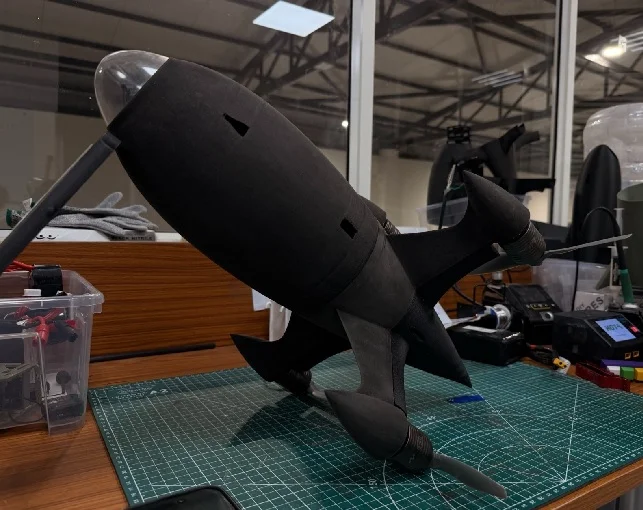
Who developed Ahuti Mk II?

It was developed by Apollyon Dynamics, a defence technology startup incubated at BITS Pilani Hyderabad Campus.

Why is Ahuti Mk II important?

It has been designed specifically for rapid interception of aerial threats such as hostile drones and loitering munitions, highlighting India's growing indigenous counter-drone capabilities.

Which record has Ahuti Mk II achieved?

Its 498 kmph performance has been recognised by the India Book of Records for maximum speed achieved by a multirotor UAV in India.

IAF Successfully Tests Indigenous Long-Range Glide Bomb Khagantak-243

Prelims: Glide Bomb, LRGB, Precision Strike, Stand-off Weapon, Indigenous Defence Technology
Mains: GS Paper-III Science & Technology + Internal Security
Keywords: Khagantak-243, Indigenous Defence Technology, Defence R&D, Aatmanirbhar Bharat 

Why in News?

The Indian Air Force (IAF) has successfully conducted the drop trial of the indigenously designed and developed Long Range Glide Bomb (LRGB), Khagantak-243.
Important Points

  • The system is expected to strengthen India’s long-range precision-strike capabilities.
  • The development supports the government’s Aatmanirbhar Bharat initiative in the defence sector.
  • The successful trial of Khagantak-243 is significant because it can help strengthen India’s ability to develop and manufacture long-range air-to-ground precision weapons domestically.
  • Such weapons can improve the operational flexibility of the Indian Air Force and support precision strikes while keeping aircraft at safer distances from certain enemy air-defence systems.

What is Khagantak-243?

  • Khagantak-243 is an indigenous Long Range Glide Bomb (LRGB) designed to provide aircraft with a long-range precision-strike capability.
  • Unlike conventional bombs, glide bombs can travel towards their target after being released from an aircraft. This allows combat aircraft to engage targets from a stand-off distance, reducing the need to fly directly over or close to the target area.

Significance of Khagantak-243

The successful trial is significant for India because:

  1. Indigenous Defence Technology: It strengthens domestic development of advanced air-launched weapons.
  2. Precision Strike: It enhances India’s ability to conduct accurate long-range strikes.
  3. Reduced Import Dependence: Indigenous weapons can reduce dependence on foreign defence systems.
  4. Boost to Defence Industry: It can encourage Indian companies and defence industries to develop advanced weapon technologies.
  5. Aatmanirbhar Bharat: The system supports India’s broader goal of self-reliance in defence production.

What is Stand-off Capability?

  • Stand-off capability allows an aircraft to launch a weapon from a distance rather than approaching very close to the target.
  • This can help aircraft remain outside the effective range of certain enemy air-defence systems, while still engaging designated targets.

What is a Glide Bomb?

  • A glide bomb is an aerial weapon that can travel towards its target after being released from an aircraft.
  • Unlike conventional free-fall bombs, glide bombs can cover a longer distance by using aerodynamic lift. This allows aircraft to attack targets without necessarily flying directly over them.

Conclusion

The successful drop trial of Khagantak-243 marks another step towards strengthening India’s indigenous precision-strike capabilities. It also supports the vision of Aatmanirbhar Bharat in the defence sector by promoting domestic development of advanced military technologies. 

Prelims Practice Question 

Q. With reference to ‘Khagantak-243’, recently seen in the news, consider the following statements:

  1. It is a Long Range Glide Bomb (LRGB). 
  2. It has been indigenously designed and developed. 
  3. It is associated with the Indian Air Force. 

Which of the statements given above are correct?

A. 1 and 2 only
B. 2 and 3 only
C. 1 and 3 only
D. 1, 2 and 3

Mains Practice Question 

Q. Discuss the significance of indigenous long-range precision-strike weapons in strengthening India’s defence preparedness, strategic autonomy and the vision of Aatmanirbhar Bharat. 

FAQs

Q1. What is Khagantak-243?

Khagantak-243 is an indigenously designed and developed Long Range Glide Bomb (LRGB).

Q2. Who conducted the trial of Khagantak-243?

The Indian Air Force (IAF) conducted its successful drop trial.

Q3. What is a glide bomb?

A glide bomb is an aerial weapon that travels towards its target by gliding after being released from an aircraft.

Q4. What is the significance of Khagantak-243?

It strengthens India’s indigenous precision-strike capability and supports defence self-reliance.

Q5. How does Khagantak-243 support Aatmanirbhar Bharat?

Its indigenous development helps promote domestic defence design, manufacturing and technology development.

Declining Cotton Cultivation in North India: Causes, Pink Bollworm and Bt Cotton

Why in News? 

Cotton cultivation is declining sharply across the traditional cotton belt of Punjab, Haryana and Rajasthan. Farmers are increasingly shifting from cotton to paddy and other crops because of assured procurement, relatively stable returns, rising cultivation costs and recurring pest attacks. The decline is particularly significant because these three states form India’s Northern Cotton Zone.
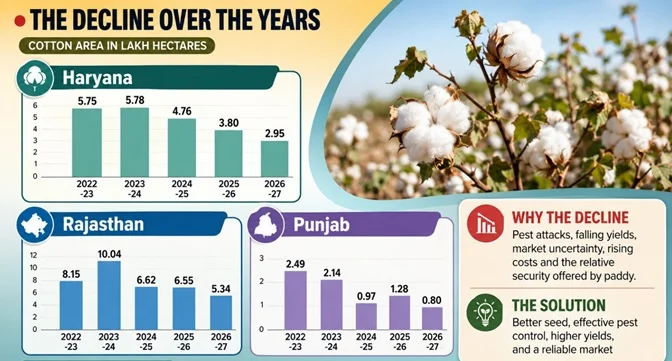
Key Data

State

Cotton Area: Previous Year

Cotton Area: Current Year

Decline

Punjab

1.28 lakh ha

0.80 lakh ha

37.5%

Haryana

3.80 lakh ha

2.95 lakh ha

~85,000 ha

Rajasthan

6.55 lakh ha

5.34 lakh ha

18.5%

Total

11.83 lakh ha

9.09 lakh ha

23.2%

Punjab: Long-term Decline

  • Punjab had nearly 7 lakh hectares under cotton in the late 1980s. The area remained above 4–5 lakh hectares in several years but has now fallen to around 80,000 hectares.
  • The decline accelerated after the 2015 whitefly attack, followed by repeated pink bollworm infestations since 2021.

Why Are Farmers Moving Away from Cotton?

1. Assured Procurement of Paddy

  • Farmers prefer paddy because of:
    • Assured government procurement 
    • MSP support 
    • Extensive mandi network 
    • Relatively predictable returns 
    • Timely payments 
  • Cotton, in comparison, involves greater production and market risks.

2. Recurring Pest Attacks

  • Cotton farmers face serious losses from pests such as:Whitefly ,Pink Bollworm These pests reduce both yield and fibre quality.

3. Declining Effectiveness of Bt Cotton

  • Bt cotton initially provided effective protection against several bollworm pests. However, prolonged exposure has resulted in the evolution of insect resistance, particularly in pink bollworm populations.

4. Rising Cultivation Costs

  • Farmers increasingly spend on : Pesticides ,Pest management, Seeds, Irrigation ,Other farm inputs. If yields remain low, cultivation becomes economically unattractive.

5. Increasing Irrigation Availability

  • In parts of Punjab, particularly the Malwa region, the expansion of tubewell irrigation has made paddy cultivation possible in areas where farmers earlier depended on cotton because groundwater was less accessible.

What Is Pink Bollworm?

  • Pink bollworm (Pectinophora gossypiella) is a major insect pest of cotton.
  • Its larvae enter the cotton boll and feed on developing seeds and lint.

Impact

  • Reduction in cotton yield 
  • Damage to seeds 
  • Discolouration of lint 
  • Deterioration of fibre quality 
  • Higher pesticide expenditure 
  • Economic losses to farmers 

Why Has Bt Cotton Become Vulnerable to Pink Bollworm?

What is Bt Cotton?

  • Bt cotton is a genetically modified (GM) cotton containing genes derived from the soil bacterium Bacillus thuringiensis.
  • Major Bt cotton hybrids in India contain genes such as:cry1Ac ,cry2Ab  These genes produce Bt proteins that are toxic to certain bollworm pests.

The Resistance Problem

  • The important concept here is evolutionary resistance.
  • Pink bollworm is a monophagous pest, meaning it primarily feeds on cotton.
  • As a result, the pest population is continuously exposed to Bt cotton during the cotton-growing season.
  • Over successive generations: Continuous Bt exposure → Selection of resistant insects → Resistant population increases → Effectiveness of Bt cotton declines
  • A relatively short life cycle of around 25–35 days allows several generations to occur during a cotton season, accelerating the evolution of resistance.

Important distinction

  • Pink bollworm Monophagous
  • American bollworm Polyphagous

A polyphagous pest can feed on several host crops, including crops such as maize, sorghum, tomato, okra, chickpea and cowpea.

Is Bt Cotton a Failure?

  • Bt cotton played a major role in increasing India's cotton production and reducing losses from several bollworm pests during its initial adoption.
  • However, its effectiveness has been reduced in some areas because of:
  • Evolution of pest resistance 
  • Repeated use of similar Bt traits 
  • Changing pest populations 
  • Inadequate pest-management practices 

Therefore, the solution is not simply to abandon Bt cotton but to combine improved varieties with Integrated Pest Management (IPM), pest surveillance and better agricultural practices.

Optimal Conditions for Cotton Cultivation

Cotton is a tropical and subtropical crop and is often described as a semi-xerophyte.

Temperature

  • Minimum temperature for good germination: around 15°C 
  • Optimum temperature for vegetative growth: 21–27°C 
  • Can tolerate temperatures up to around 43°C 
  • Warm days and cool nights during fruiting favour boll and fibre development. 

Soil

Cotton requires well-drained soils and is sensitive to waterlogging.

Suitable soils include:

  • Northern India: Well-drained alluvial soils 
  • Central India: Black clayey soils 
  • Southern India: Black and mixed black-red soils 

Major Cotton-Growing Zones of India

India's major cotton-producing states are divided into three agro-ecological zones.

Zone

States

Northern Zone

Punjab, Haryana, Rajasthan

Central Zone

Gujarat, Maharashtra, Madhya Pradesh

Southern Zone

Telangana, Andhra Pradesh, Karnataka

Species of Cotton in India

India is unique in cultivating all four major species of cotton:

  1. Gossypium arboreum – Asian cotton 
  2. Gossypium herbaceum – Asian cotton 
  3. Gossypium barbadense – Egyptian cotton 
  4. Gossypium hirsutum – American Upland cotton 

Government Measures to Revive Cotton Production

1. Mission for Cotton Productivity

  • The Union Government approved the Mission for Cotton Productivity for 2026–27 to 2030–31 with an outlay of ₹5,659 crore.
  • Target Increase lint productivity from: 441 kg/ha → 755 kg/ha by 2031

Major Focus Areas

  • Development of high-yielding seeds 
  • High Density Planting System (HDPS
  • Closer Spacing (CS
  • Modernisation of ginning and processing 
  • Better cotton testing infrastructure 
  • Digital integration of mandis 
  • Improved cotton quality and branding 

2. Kapas Kisan App

The Kapas Kisan App facilitates cotton procurement from farmers under the Minimum Support Price (MSP) system.

3. Kasturi Cotton Bharat

The Kasturi Cotton Bharat initiative focuses on:

  • Quality improvement 
  • Branding of Indian cotton 
  • Traceability 
  • Improving the global positioning of Indian cotton 

4. Cotton Corporation of India

The Cotton Corporation of India (CCI) is the designated government agency for undertaking MSP operations when kapas prices fall below the MSP level.

Why Does Declining Cotton Matter?

  • Cotton is not merely a cash crop. It supports a large value chain:Farmer Ginning Spinning Textile Industry Garments Export
  • Therefore, declining cotton production can affect:
    • Farmers' incomes 
    • Textile industries 
    • Rural employment 
    • Cotton exports 
    • Availability of raw material 
    • India's position in the global textile market 
  • This makes cotton production important for the government's 5F vision: Farm → Fibre → Factory → Fashion → Foreign

Way Forward

1. Promote Integrated Pest Management

  • Combine biological, cultural, mechanical and chemical methods instead of relying excessively on pesticides or a single Bt trait.

2. Develop Pest- and Climate-Resilient Varieties

  • Invest in improved cotton varieties capable of dealing with emerging pests, heat and changing rainfall patterns.

3. Strengthen Pest Surveillance

  • Early detection of pink bollworm and other pests can reduce crop losses.

4. Improve Market Support

  • Better price realisation, timely procurement and reliable markets can make cotton economically attractive.

5. Promote Sustainable Cropping Patterns

  • Crop choices should balance farmer income, water availability and ecological sustainability.

Frequently Asked Questions (FAQs)

1. Why is cotton cultivation declining in North India?

Answer :- Cotton cultivation is declining mainly due to recurring whitefly and pink bollworm attacks, declining effectiveness of Bt cotton, rising cultivation costs, lower and uncertain yields, and competition from paddy, which offers relatively assured procurement and stable returns.

2. Which states constitute the Northern Cotton Zone of India?

Answer :-The Northern Cotton Zone comprises Punjab, Haryana and Rajasthan.

3. What is Pink Bollworm?

Answer :-Pink Bollworm (Pectinophora gossypiella) is a major insect pest of cotton. Its larvae enter cotton bolls and damage the developing seeds and lint, reducing yield and fibre quality.

Universal Vaccine against Pneumonia and Meningitis: New Breakthrough, Reverse Vaccinology, major limitation and significance of research

Why in News?

  • A team of researchers has developed an experimental protein-based pneumococcal vaccine using a technique known as reverse vaccinology. 

What is Streptococcus pneumoniae?

  • Streptococcus pneumoniae, commonly called pneumococcus, is a bacterium that can colonise the human nose and throat without necessarily causing illness. Under certain conditions, however, it can invade other parts of the body and cause serious disease.
  • It can cause Pneumonia (Lungs), Meningitis (Meninges), Sepsis (Bloodstream). Collectively, infections caused by this bacterium are known as pneumococcal diseases.

What is Pneumonia?

  • An infection affecting the lungs, particularly the tiny air sacs called alveoli. It can be caused by several types of pathogens, including bacteria, viruses and fungi.
  • Pneumonia can be particularly dangerous for young children, older adults and people with weakened immune systems.

What is Meningitis?

  • Meningitis is inflammation of the meninges, the protective membranes surrounding the brain and spinal cord. It may be caused by bacteria, viruses, fungi and other pathogens.
  • WHO notes that survivors of bacterial meningitis can also suffer long-term complications such as hearing loss, seizures, limb weakness and problems with vision, speech or memory.

Why is developing a Universal Pneumococcal Vaccine difficult?

  • The central challenge is the enormous diversity of Streptococcus pneumoniae. There are more than 100 known serotypes.

What is a Serotype?

  • A serotype is a distinct variation within a species of microorganism that differs in its surface antigens and can therefore be recognised differently by the immune system. Different pneumococcal serotypes have different capsular polysaccharides surrounding the bacterial cell.

How do existing Pneumococcal Vaccines work?

Current pneumococcal vaccines primarily target the bacterium's capsular polysaccharides. The capsule is an outer layer made largely of complex sugars. Because different serotypes possess different capsular structures, vaccines generally need to incorporate antigens from several important serotypes. Two broad approaches are particularly important.

  • Pneumococcal Polysaccharide Vaccines: These contain purified capsular polysaccharides from multiple pneumococcal serotypes. A well-known example is PPSV23 (Pneumovax 23). It targets 23 pneumococcal serotypes. Pure polysaccharide vaccines do not generate equally strong immune responses in all age groups, particularly young children.
  • Pneumococcal Conjugate Vaccines: Scientists developed Pneumococcal Conjugate Vaccines (PCVs) to produce stronger and more durable immune responses. In these vaccines:

Capsular polysaccharide + Carrier protein → Conjugate vaccine

Attaching the polysaccharide antigen to a carrier protein helps the immune system generate a stronger immune response and immunological memory.

Major Limitation of Existing Vaccines

  • Adding more serotype-specific polysaccharides can broaden protection, but the approach becomes increasingly complex and costly as the number of targeted serotypes rises.
  • There is another important phenomenon known as serotype replacement. When vaccination reduces disease caused by targeted serotypes, other non-vaccine serotypes can sometimes occupy the ecological space left behind.

What is the new approach?

  • Instead of targeting the serotype-specific polysaccharide capsule, researchers searched for proteins shared across pneumococcal serotypes.
  • The central idea is: Old approach: Target what differs between serotypes.

New approach: Target what many serotypes have in common

What is Reverse Vaccinology?

  • A modern vaccine-development approach in which scientists begin with the genome of a pathogen and use computational and bioinformatics tools to identify genes encoding promising vaccine antigens.
  • Traditional vaccine development broadly proceeds as pathogen, culture, identify components, test antigens and vaccine. 
  • It reverses much of this process genome, bioinformatics analysis, candidate genes, candidate proteins, experimental testing and vaccine candidate. 

Why is Reverse Vaccinology important?

  • It can help identify proteins that occur across many strains, are exposed on the pathogen's surface, can be recognised by the immune system, generate a strong immune response and are sufficiently different from human proteins.

How did scientists search for a Universal Pneumococcal Target?

  • The S. pneumoniae genome contains more than 2,000 genes, with around 1,300 genes shared across serotypes, according to the research summary.
  • Researchers analysed genomic information from more than 20,000 pneumococcal isolates spanning nearly 100 serotypes using computational and bioinformatics tools.
  • They searched for proteins meeting three broad conditions.
  • Accessible to the Immune System: The protein should preferably be located on or exposed near the bacterial surface, allowing antibodies and immune cells to recognise it.
  • Different from Human Proteins: The candidate should have little similarity to human proteins, reducing the risk of immune responses against the body's own tissues.
  • Strong Immunogenic Potential: It should be capable of triggering a strong and durable immune response against pneumococcus.

The Three Proteins: Z, P and Y

After screening potential targets, the researchers selected three candidate proteins:

  • Z (Zinc Metalloprotease B): A bacterial protein identified as a potential target for immune recognition.
  • P (Pneumococcal Adherence Virulence Factor A): A protein associated with pneumococcal interaction with the host.
  • Y (YfhO-like Protein): A third conserved protein selected through genomic and structural analysis.

The researchers produced these proteins in the laboratory and combined them to construct the experimental vaccine.

What is ZPY-CpG-Ch?

  • Z + P + Y = the three selected pneumococcal proteins.
  • The formulation also contained two components designed to enhance the immune response:
    • CpG: a synthetic DNA-based immune stimulant.
    • Chitosan (Ch): a polysaccharide-based polymer used in the formulation.
    • Z + P + Y + CpG + Chitosan ZPY-CpG-Ch experimental vaccine

What did the Mouse Experiments show?

  • Researchers vaccinated laboratory mice with the experimental formulation and subsequently exposed those to potentially lethal S. pneumoniae infections.
  • Against highly virulent serotype 1, vaccinated mice showed approximately 80–100% survival, whereas the unvaccinated controls succumbed to the challenge. The level of protection was reported to be comparable in the experiment to PCV13.

Did it work against Non-Vaccine Serotypes?

  • Researchers also challenged vaccinated mice with pneumococcal serotypes not covered by the comparator vaccine.
  • The experimental formulation provided complete protection against serotype 11A, complete protection against serotype 33F, and about 50% protection against serotype 8.
  • These results support the idea that targeting conserved proteins could provide broader protection across different pneumococcal serotypes.
  • also provided protection against a lethal pneumococcal challenge. This provided evidence that antibody-mediated immunity contributed to the vaccine's protective effect.

Link between Pneumococcal Disease and Antibiotic Resistance

  • The search for a broader vaccine also has implications for Antimicrobial Resistance (AMR). Some pneumococcal strains can be resistant to antibiotics. Reducing pneumococcal infections through vaccination can potentially reduce the need for antibiotic treatment and therefore lower one source of selective pressure contributing to AMR. Serotype replacement can further complicate the problem when emerging non-vaccine serotypes possess or acquire antibiotic-resistance genes.

Is a Universal Vaccine Now Available?

  • The experimental vaccine has so far been tested primarily in laboratory mice, and researchers examined protection against only a small fraction of the more than 100 pneumococcal serotypes. Results obtained in animals do not automatically translate into safety and effectiveness in humans.

Why is the research significant?

  • The study demonstrates an important conceptual shift. Instead of continuously expanding vaccines by adding more serotype-specific polysaccharides, researchers are exploring whether conserved proteins can provide protection across a much wider range of pneumococcal strains.
  • If successful, such a strategy could potentially broaden vaccine coverage, reduce serotype replacement, simplify vaccine composition, reduce pneumococcal disease and contribute to controlling antimicrobial resistance. 

Importance for India

  • The research is particularly relevant for India because pneumonia and other respiratory infections remain important public-health concerns, especially among children.
  • India's Universal Immunisation Programme (UIP) includes pneumococcal vaccination for children, making developments in next-generation pneumococcal vaccines relevant to India's broader efforts to reduce vaccine-preventable childhood morbidity and mortality.
  • A future broadly protective pneumococcal vaccine could potentially simplify protection against multiple serotypes and improve long-term disease control, although the present experimental formulation is still far from routine human use.

Challenges Ahead

  • Human effectiveness: Protection observed in mice may not translate directly to humans.
  • Serotype coverage: The vaccine has been experimentally tested against only a handful of pneumococcal serotypes.
  • Colonisation: It protected against disease but did not eliminate upper respiratory bacterial carriage.
  • Duration of immunity: Researchers need to determine how long protection lasts.
  • Manufacturing and affordability: Any eventual universal vaccine must be scalable and affordable, especially for low- and middle-income countries.

Prelims MCQ

Q. What is ‘Reverse Vaccinology’?

A. Using antibiotics to develop vaccines

B. Using genomic and computational analysis to identify potential vaccine antigens

C. Developing vaccines only from weakened pathogens

D. Producing vaccines without identifying antigens  

Mains Practice Question 

Q. “Next-generation vaccines can play an important role in addressing antimicrobial resistance.” Examine the statement with reference to pneumococcal disease.

FAQs

What is a universal pneumococcal vaccine?

A vaccine designed to protect against multiple serotypes of Streptococcus pneumoniae.

What is Streptococcus pneumoniae?

A bacterium that can cause pneumonia, meningitis and sepsis.

Is this a universal vaccine for all pneumonia and meningitis?

No. It specifically targets diseases caused by S. pneumoniae.

Why is a universal pneumococcal vaccine needed?

Because S. pneumoniae has more than 100 serotypes, while current vaccines cover only selected ones.

What is ZPY-CpG-Ch?

It is an experimental protein-based pneumococcal vaccine candidate.

upsc english
« »
  • SUN
  • MON
  • TUE
  • WED
  • THU
  • FRI
  • SAT
Have any Query?

Our support team will be happy to assist you!

OR